



Originally published in November 2019. Last updated on January 28, 2025.
Great news—you got a lead! But your work’s not done yet. You’ll need to create and send a quote to win the job and turn them into a paying customer.
Writing a detailed, professional job quote that clearly outlines the work and its associated costs helps foster trust and transparency. It also allows you to make upsells, test out pricing packages, and offer tiered pricing options for different budgets.
Follow these steps to learn how to write a professional quote for a job that converts more leads, keeps cash flow steady, and boosts profit.
1. Choose a template
While you can create quotes manually, using a template keeps them consistent and ensures you don’t miss important information.
That said, you have various options depending on your needs and budget. You can create your own template or download one from Microsft Word or Google Docs, or you can use Jobber’s free quotation template.
No matter which template you choose, make sure it covers all the necessary information, such as:
- Your business name and contact details
- A unique quote number
- The client’s name, address, and phone number
- The date it’s being issued
- A list of products and services with prices
- Any relevant estimate disclaimers
- An expiry date, if relevant
- The total amount due
Pro Tip: Make sure your template includes the word “quote” or “estimate” in it so potential customers know what it is right off the bat.
2. Add your business details
Your contact information should be clear and easy to find so that customers can reach out with questions or to approve your quote.
Every professional job quote you send out should have:
- Your business name
- Address
- Phone number
- Email address
Pro Tip: To boost professionalism and give potential customers a great impression, use quoting software like Jobber to customize your quotes with a logo and brand colors.
3. Enter customer information
Next, do the same for your potential client’s information. Otherwise, you won’t be able to tell who you quoted for what.
It’s best to include their:
- Name
- Address
- Phone number
- Email address
Not only does this keep estimates organized but having a customer’s contact information on file makes it easy to send a quote follow-up down the road if you need to.
4. Number your quote
Similar to an invoice number, each quote you create should have an individual quote number. Quote numbers help you track, organize, and file quotes so you can quickly pull them up and refer back to them as needed.
If you use a CRM like Jobber, it can automatically generate and assign them for you.
But if you add them manually, follow these best practices:
- They should only include letters and numbers
- They should be about 3-5 characters long
- For easy retrieval, include a client’s name or initials
5. Add the issue date
The date of issue is the day you send your quote. It’s important to include for a few reasons:
- It prevents disputes caused by fluctuating prices. If a customer waits three months after you send a quote to book a service, material, labor costs, or service price increases may affect the total. An issue date clarifies when the quote was created and what costs it reflects.
- It begins the validity period. If your quote has a disclaimer stating it will expire within a specific timeframe (like two weeks), the issue date determines when the validity period begins.
- It serves as a reference point for timelines and schedules. The issue date reflects your availability at the time a quote was created. If a customer delays booking and your schedule changes, you can refer back to the issue date for clarification. Like if the initial quote was sent during your off-season and now you’re booked solid.
6. Enter each product and service you’re providing
Include a list of each product and service you’re providing—and the costs associated with each one. This is called an itemized quote.
Itemized quotes tell clients what they’re paying for and how much each line item costs. They foster transparency, make total costs easier to understand, and give clients a chance to add or remove items to suit their budgets.
To make this section of your quote as clear as possible, include:
- A brief description of each item
- The quantity
- Unit price
- Total price per item
It should cover everything the client will need to pay for, like materials, labor, products, and any additional costs like a demolition or delivery fee. But it doesn’t need to be super detailed. Think of it as more of a short-form bullet list than a comprehensive paragraph for each item.
This is also an ideal place to include any add-ons, upsells, or tiered pricing options you offer based on your pricing strategy.
For example, if a client books a mowing service and you notice weeds are overtaking their lawn, you can include an optional weeding upgrade on their quote. They don’t have to add it to their service, but it can be a great way to let them about what else you offer in case they want to do more.
We are quoting everything.
When a customer calls in just for a window wash, they are getting priced everything that we can clean on their house. They’re getting a fence cleaning estimate, they’re getting a driveway cleaning estimate, patios, decks, walkways, house wash, roof cleaning.
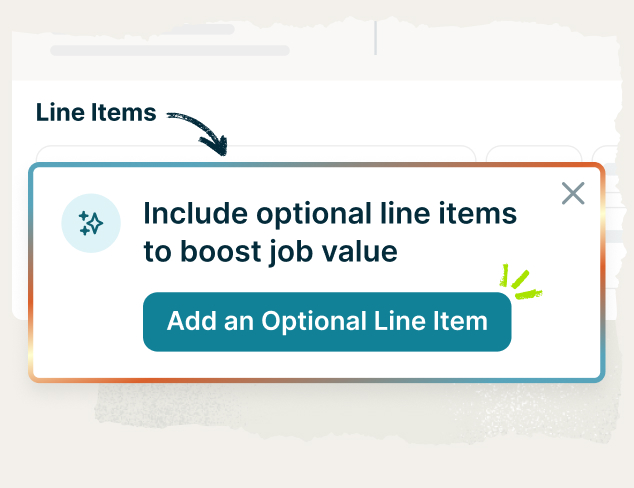
Using quoting software like Jobber, you can include optional line items in your quotes to make it easy for clients to customize their services, helping you to bring in more profit. You can also add pictures of the products and services you offer to make your quote stand out.
By including pictures in our quotes, our customers can easily identify which service we’re talking about as well as know what to expect from us.
It eases their concerns because it shows we’re being totally transparent and forthcoming in our bidding process and makes us stand out from the other 5 bids they got.
7. Specify your terms and conditions
Quote terms and conditions outline the relationship between you and a client before it officially begins. They’re what keep you on the same page about payments, job scope, and timelines.
For example, quote terms and conditions can specify:
- Whether a deposit is due upfront
- Which payment methods you accept
- When a client must pay by
- How to handle costs that go beyond the initial project
- What you do and don’t guarantee or provide a warranty for
- Client responsibilities, like clearing the work area
- If the quote expires and when
You can either include them in the notes section of your quote, or as a separate “terms and conditions” paragraph depending on the template you choose.
8. Add the finishing touches
The last thing you need to do before you send a quote to a prospective client is to add any additional details, such as:
- The total due, including taxes and fees
- Any relevant discounts or promotions
- A place for the client to sign or approve your quote
- A thank you note
- Clear next steps, like whether they need to approve the quote or schedule the service
Once that’s done, your quote is ready to send.
How to send a quote to a potential client
When it comes to sending a quote to a client, you have a few different methods to choose from. You can provide quotes to clients:
- Via letter mail
- In-person
- Via email or text message
1. Letter mail quotes
Because mailed quotes are slow compared to the other options and easy to lose and misaddress, it’s best to only use this method when necessary. Like for clients who don’t use email or have a smartphone.
Otherwise, you risk losing the client to a competitor with a quicker response time.
2. In-person quotes
In-person quotes work well when you’re creating a quote on the job site. For example, if you’re at a client’s house to estimate a drywall repair and you feel confident you have an accurate idea of the labor and material costs it will require.
Or, if you use quoting software like Jobber to input job details as you go, like the square footage, job photos, and the markup you need to make a profit.
If you don’t have this information, or you need to confirm material or labor costs before providing a quote, it’s better to send one via email or text within 24-28 hours of visiting the job site. That way, you’ll be able to provide an accurate number to the potential customer.
3. Email and text message quotes
Most of your prospective clients will be open to receiving their quotes via email or text. They’re convenient, quick, and easy to respond to or approve. Plus, they’re harder to lose than paper quotes.
Text messages are ideal for simple quotes or clients who need a quick response time, whereas email can be better for a more detailed job estimate or when you need to send an attachment.
But either is a good choice if you:
- Want to keep a paper trail of your quotes
- Know your client prefers to communicate via email or text
- Use quoting software like Jobber to generate, send, and follow up on quotes
Best practices for writing job quotes
Quotes are the perfect opportunity to showcase your professionalism, impress potential clients, and book more jobs. But only if they’re done well. When you write a service quote, make sure to:
1. Keep it simple
By nature, quotes include a lot of important information. Keep them as concise and clear as possible no matter the job size so clients can easily review and approve them.
If they’re too detailed or overly complicated, a potential customer may feel overwhelmed and choose to put off the work or reach out to a competitor.
2. Always provide next steps
If you don’t tell a client what to do after they receive your quote, it’ll be hard for them to do it. However you send your quote, be clear about the next steps so the client can follow through.
For example:
- Do they need to approve the work with a digital or physical signature?
- Is a deposit required before any work can begin?
- Should they call your office to book an appointment?
When you send quotes through Jobber, your customer can visit client hub, their self-serve customer portal, to approve quotes, pay a deposit, or provide a signature.
3. Send follow-ups
If a client doesn’t immediately approve your quote, it doesn’t mean they aren’t interested in hiring you. They could have just forgotten to respond or needed an extra few days to confirm their budget.
Sending a professional quote follow-up if you don’t hear back from a client is an effective way to win more jobs. Or, automate the quoting process with Jobber to send potential clients a reminder email if they don’t respond within a specified period, like 3 days.
You should follow up on a quote.
Using Jobber makes this super easy because they do automated follow-ups, and you can set that up however you want, as many as you want.
4. Use software
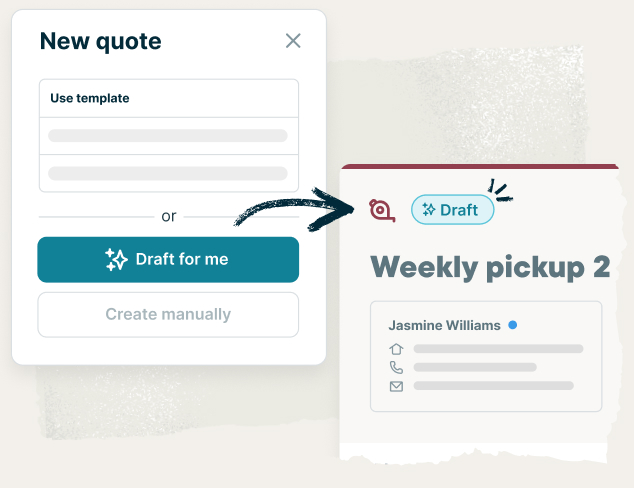
Manually creating quotes for every job takes a lot of time and leaves room for human errors, like misspelling a client’s name or incorrectly adding up your total.
Using quoting software frees you up to focus on more important tasks and prevents you from making embarrassing mistakes. Plus, it starts your client relationships off right by demonstrating your professionalism, showcasing transparency, and fostering trust.
Stand out from the competition and turn more leads into customers by writing accurate, detailed quotes that are easy to approve.
Get more winning quote secrets from our network of service pros: