



Skip to content

Your Guide to HVAC Buisness Profit Margins: 10 Ways to Grow Your Bottom Line

Profile picture of Seth Richtsmeier, freelancer writer for Jobber Academy
Seth Richtsmeier
Dec 3, 2025 16 min read
Start Trial

Key takeaways:

If you run an HVAC business, you need to keep a close eye on your profit margins. Otherwise, rising labor and material costs can eat into your earnings and zap your profits.

In this guide, we’ll help you understand the kind of HVAC business profit margins you can reasonably expect to earn. Plus, learn how to make more revenue per job and how to trim costs to increase your profitability.

What’s a good HVAC profit margin?

Profit margins for HVAC companies usually depend on unique factors like location, service specialization, and operational efficiency. In general, the average profit margin for an HVAC company ranges between 10-20%. Energy.gov states that a 12% net profit margin is typical for successful HVAC companies.

As a service provider, the more aggressive you are with your profit margins, the more profitable your business will be.

Aiming for a 50% gross profit margin is a common rule in the trades. This means if a job costs you $1 in labor and materials, you should charge at least $2 for it.

Tracking and calculating your HVAC profit margin regularly is one way to stay on top of your business, ensuring that your profitability is exactly where you want it to be.

How much profit does an HVAC business make?

On average, small to mid-sized HVAC businesses can generate annual revenues of anywhere between $50,000 to $500,000 or more.

For most HVAC service businesses, profitability depends on:

  • How effectively you manage your overhead expenses and pricing strategies
  • Whether you provide ongoing maintenance contracts
  • If you’re willing to sell energy-efficient products at a premium
  • How well you deliver on top-rated customer service 

These factors directly influence your HVAC profit potential.

What’s the average HVAC profit margin?

The national industry average for HVAC net profit margin is 12%. But that percentage can vary drastically depending on the company, the region, and the target market.

Rather than looking at other HVAC businesses, focus on finding a profit margin that makes sense for your business’s goals.

Figure out how much annual profit you need to:

  • Pay competitive wages
  • Buy and maintain quality equipment
  • Market your services
  • And operate your business the way you want to

How you bid your projects, the man hours you put in, the management time—you figure out what it’s going to cost at the starting point. Multiply it by at least two, and you’ll be ahead of where you were yesterday.

How to calculate your HVAC profit margins

Calculating your HVAC profit margin is key to understanding the financial health of your business. 

  • First, determine your total revenue (the money you’ve earned from services and sales). 
  • Next, subtract your total expenses. This includes labor, materials, overhead, and any other operating costs. The result is your gross profit
  • To calculate the profit margin, divide your gross profit by the total revenue, then multiply by 100 to get a percentage. 

For example, if your business earns $500,000 in revenue and your expenses total $450,000, your gross profit is $50,000. Dividing $50,000 by $500,000 gives you 0.10, or a 10% profit margin.

Pro tip: Tracking profit margins helps you identify areas for improvement or cost reduction. With instant access to business data using a tool like Jobber AI, making informed decisions is easier. Consistently calculating margins also ensures that your business remains financially sustainable.

10 practical ways to improve your HVAC profit margin

Improving your profitability starts with knowing what you want to achieve and then making incremental adjustments to your pricing and operations. Put together, these small changes can make a huge difference for your bottom line.

1. Set a profit margin goal

Figure out what profit margin will help you sustain and grow your company. Running an HVAC business is costly, so start by setting a modest goal to avoid making drastic changes to your operations.

Making big changes too quickly can backfire, like slashing expenses across the board or doubling your prices. Cuts can hurt your service quality or drive good techs away. Price jumps can scare customers off.

A good goal to start with is to try to improve your gross margin by 5–10%. For example, if your current gross profit margin is 18%, you might set a goal of 25%.

There is no industry-standard profit margin for HVAC companies. A healthy profit margin for your HVAC business depends on many factors, including:

  • Your growth goals. Are you happy as a solopreneur? Or do you have plans to grow into a large team with multiple offices? Your profit margin goal should reflect how much you want to invest in more skilled technicians, new equipment, and marketing.
  • Your service area. If the cost of living and average HVAC salary are higher in your area, you’ll have higher labor costs. Average HVAC service prices in your area will also affect the prices you set and the revenue you can make.
  • Whether you offer residential HVAC, commercial, or both. While commercial jobs are worth more and can bring lots of revenue, they require more expensive equipment, longer labor hours, and sometimes more technicians.

Use this free calculator to find your profit margin on a job.

2. Choose the right pricing model

Your pricing model impacts how profitable every job can be. There are two that most HVAC businesses lean on:

Flat rate pricing

Flat rate pricing means you set one fixed price for the job, regardless of how long it takes. Most owners build this fee around:

  • The typical labor time for that service
  • Material costs (capacitors, duct materials, filters, refrigerant, etc.)
  • Overhead baked into the number
  • Profit

Flat rates work great when your team is efficient—the faster you go, the more profit you make. It also helps customers feel at ease. They know the price when you walk in the door, so there are no awkward conversations about hourly rates or overtime.

On the other hand, some customers want to see where their money goes. And a single number (like $600) might look too big if they’re price-shopping against a competitor who charges $60/hour.

Still, for many HVAC teams, flat rate is the clearest path to steady margins.

Best for:

  • Common repairs like refrigerant leaks and thermostat malfunctions, which are straightforward and predictable
  • Routine maintenance and inspections that follow a standard operating procedure
  • HVAC system installations and replacements that include the cost of a brand-new HVAC system

Pros:

  • Easy for customers to understand and budget for
  • Techs can complete more calls per day without earning less per job
  • Reduces price anxiety and bill disputes because there’s no meter running on labor time
  • Supports consistent margins on routine, repeatable work

Cons:

  • Requires accurate job costing (labor, parts, overhead) up front
  • Risk of losing money on jobs that take much longer than estimated
  • Can appear more expensive than competitors who advertise low hourly rates
  • Requires a process and training so every tech uses the price book correctly

Time and materials pricing

The time and materials (T&M) method is exactly what it sounds like. You charge for the hours worked, add your material costs with markup, then tack on the overhead and your profit target. It’s usually calculated:

Total cost = hourly labor rate + (cost of materials x markup) + overhead + profit

Pricing this way protects labor on unpredictable jobs, and it shows customers exactly what they’re paying for.

T&M doesn’t push your team to be efficient, though. The longer a job takes, the more money it will cost the homeowner. That can eat away at your profitability, especially during your busy season when every extra hour spent on one job means you might miss another.

Best for:

  • Complex or unusual repairs, since charging by the hour ensures you’re compensated fairly for the extra time and specialized skills.
  • Custom installs, as pricing by the hour helps you profit on labor that’s difficult to predict ahead of time.
  • Emergency calls, which take time away from planned work and can happen after hours

Pros:

  • Simple to calculate and explain
  • Flexible for complex or unpredictable jobs where scope may change
  • Reduces risk of losing money on time‑intensive or unusual jobs
  • Useful for commercial or project work where scopes are negotiated and documented in detail

Cons:

  • Unpredictable final price can create sticker shock and erode trust
  • Techs have less incentive to be efficient, which can reduce margins
  • Harder to sell at higher hourly rates
  • More billing admin work, as detailed time tracking and material logging are required

3. Reduce business expenses where you can

It’s expensive to run an HVAC company. In fact, that’s why so many HVAC business owners struggle to maintain high profit margins. Labor, material, and overhead costs can eat into your revenue fast if you don’t manage those expenses carefully.

Here’s what you can do to trim down operating expenses and bring your profit margins up:

  • Check which of your HVAC marketing strategies are earning you customers—and cut back on the rest
  • Negotiate with your suppliers for better deals on parts you purchase
  • Calculate the HVAC parts markup you need to turn a higher profit on parts replacements and repairs
  • Improve your HVAC dispatching so your techs spend less time on the road and use less fuel
  • Find more affordable options for phone bills, business insurance, and HVAC software subscriptions. Cut or renegotiate tools and services that don’t demonstrably improve profit
  • Calculate your labor costs more accurately by tracking employee time with digital timesheets
  • Automate office paperwork, payment collection, and customer communications so you can free up time for you and your team to do more profitable work

4. Raise your service prices

Increasing your prices can help you profit more from your HVAC services. You might feel nervous about losing customers—but if you keep your pricing competitive and prove your services are worth the money, you’ll keep your best customers and make more revenue per job.

Here’s what you should do before increasing your HVAC service pricing:

  • Know what your competitors are charging. Phone your top competitors to get a quote on their HVAC repairs, installation, and maintenance services. This will help you understand the HVAC market in your area and charge competitive prices.
  • Charge a premium for special services. Test the waters by increasing or adding fees to your priority service and same-day service. Premiums can offset the time and money that last-minute calls take to schedule and prepare for.
  • Review your pricing annually. Adjust your prices to keep up with the rate of inflation every year. Annual price increases should be in your HVAC business plan.
  • Talk to your customers. Communicate price increases to customers so no one is surprised when their HVAC maintenance bills go up. Explain that price increases are necessary for you to keep delivering the high-quality work that customers can’t get elsewhere.

To figure out how high you should raise your prices, add all your costs and desired profit margin into a service price calculator. This can help you set prices that meet your goals for operating profit margins on every type of job.

Use our free service price calculator to set the right prices and help your HVAC business profit.

5. Sell more HVAC maintenance contracts

Take home more profit consistently by selling more HVAC service contracts. Routine HVAC maintenance brings you recurring revenue—that’s guaranteed income on a monthly, quarterly, or annual basis that can improve your gross profit margin.

Here’s how to improve your profit margins with HVAC maintenance contracts:

  • Add a sales pitch for HVAC maintenance to your installation checklist so you remember to offer it to every customer.
  • Communicate the long-term value that HVAC maintenance contracts provide, like reducing utility bills and saving money on preventing costly repairs.
  • Set up recurring billing so you get paid automatically for maintenance on a regular basis.

Want to get paid faster? When you set up automatic payments in Jobber, you’ll get paid without lifting a finger or having to chase down customers. 

6. Create flexible quotes

Increase your chances of getting HVAC installation estimates approved by giving customers multiple furnace or air conditioner options.

Creating itemized quotes with product options lets customers choose the equipment that best fits their needs and budget.

Here’s an example of a quote, made in Jobber, that offers three furnace options for an installation:

HVAC quote with optional line items and images to help with closing the deal
Example of an itemized quote built with Jobber

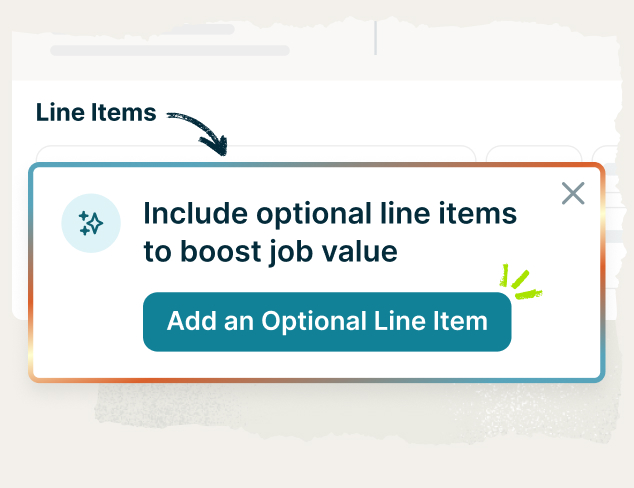
You can also add optional line items to sell a maintenance package that’ll keep the customer’s new HVAC system healthy.

READ MORE: How to make good, better, best pricing work for your business

7. Collect customer tips

Build tip collection into your payment process so customers can easily reward you (or your technicians) for hard work. Tips don’t just boost your bottom line—they motivate you and your team to deliver great service that attracts lifelong customers.

To make your tip collection process seamless and stress-free for your customers and team, accept debit and credit card payments through an HVAC-friendly payment processor like Jobber.

Adding a customer tip to an invoice in Jobber
An example of a tip option on a Jobber invoice.

With Jobber Payments, you can give your clients the option of adding a tip from their phone or computer (without having to ask for one in person). Customers can add 10%, 15%, 20%, or a custom tip amount when paying invoices online through Jobber’s client hub.

8. Earn trust and referrals from your customers

Look to your existing customers as a source for more repeat business and new business that can grow your profit margins. Happy customers are your best advocates.

Use these tips to increase revenue from existing customers:

  • Show customers you appreciate their business with a personalized thank you note after every HVAC service call and installation.
  • Send a feedback survey after every job to check in with customer satisfaction.
  • Keep in touch and reconnect with one-off customers, even if they aren’t actively hiring you for work. (For instance, send marketing emails with home maintenance tips to help customers improve their home air quality.)
  • Start a customer referral program that incentivizes customers to recommend your business to friends and family.

Promote your referral program to customers with a professional email campaign that’s ready to send in seconds flat.

Sending referral emails with Jobber Referrals.
An example of a customizable email template for a referral campaign.

Then, reward your customers for bringing in new business by offering a dollar or percentage-based credit toward their next service for every successful referral. When a customer makes a referral through their unique link, Jobber automatically tracks it.

Then, the next time they use your service, their referral credit will automatically be applied to their invoice.

9. Increase team efficiency

Poor time management, messy dispatching, and other inefficiencies can hurt profitability for even the most skilled HVAC teams.

When your field and office staff work together, you can complete more jobs in less time, grow revenue, and get closer to your profit margin goals.

Use these tips to work more efficiently in the field and from the office:

10. Track key performance indicators (KPIs)

KPIs are the metrics that help show you what’s running profitably and what’s leaking cash.

That’s why most successful HVAC shops are tracking the following:

  • Revenue per job and per tech: Check it weekly and monthly. Revenue per job and per tech will tip you off when something drifts, like missed maintenance plan renewals or a slip in add-on sales. Catching changes early gives you room to tighten things up before your profit margin takes a hit.
  • Close rates: The number of estimates you present versus the number that turn into booked jobs tells you how well your communication lands with customers. A dip might mean your pricing needs clarity or the competition is eating your lunch. Fixing that bottleneck usually lifts both revenue and confidence across the team.
  • First-time-fix rate (FTFR): This is the percentage of jobs successfully completed on the first visit, without needing a follow-up. Tracking your FTFR helps you see whether techs have the right training or enough diagnostic time upfront. When this number goes up, labor costs go down.
  • Gross profit per tech: Per-job numbers are helpful, but per-tech gross profit reveals the real story. One tech might excel at maintenance plans, and another might struggle with longer repair times. Monthly tech-level profitability helps you match the right people to the right work to boost your margin.
  • Margins across services: Your maintenance services might be steady but low margin, while installs might be highly profitable. When you track gross and net margin by service (install, maintenance, etc.), you spot which parts of the business deserve a stronger focus or more marketing spend.

When you keep KPIs front and center for your business, you’re making steady adjustments that eventually show up as a higher HVAC profit margin.

What can hurt HVAC business profit margins?

Even a busy month can feel thin if something’s hurting your numbers. Here are some potential issues that could be the reason your profits are down, and what to do about them.

Underpricing your work

What happens: Low rates shrink profits and make your expertise look cheap.

How to fix it: Build prices around real overhead and margin targets. Refresh your price book a few times a year.

Overloaded overhead

What happens: Too many admin hours or marketing dollars eat margin.

How to fix it: Automate repetitive tasks and renegotiate vendor costs.

Job costing that misses details

What happens: Untracked labor overruns and sloppy cost of goods sold (COGS) quietly erase profit.

How to fix it: Track labor and materials on every job. Separate install vs. service costs to spot hidden losses.

Callbacks that multiply

What happens: Every extra return trip uses more labor and fuel.

How to fix it: Strengthen diagnostics, set first-time-fix goals, and retrain where patterns show up.

Slow invoicing and collections

What happens: Paper profit doesn’t mean much when cash shows up two weeks late.

How to fix it: Invoice right after the job and hold firm on payment terms.

Missing after-hours or overtime charges

What happens: Forgetting to bill premium time turns emergency work into labor that only breaks even.

How to fix it: Build overtime rates into your quoting templates. Train techs to flag billable hours.

High turnover or lack of training

What happens: New or unprepared techs lead to more callbacks and slow down your schedule.

How to fix it: Invest in training and onboarding. Create a work environment where techs want to stay.

Inefficient scheduling and dispatching

What happens: Long drive times burn hours you’ll never bill.

How to fix it: Use routing apps and group jobs by area to keep trucks moving efficiently.

Take the next step to higher profitability

You don’t have to fix everything at once. So, start by picking two or three tactics from above that hit closest to home. Then commit to checking in every month to see if your profits are increasing.

Over time, small adjustments will stack up, protecting and growing your profit margins. Try more tactics as you go along.

And if you want to go even deeper on this topic, you can learn profit-boosting strategies for your business on the Masters of Home Service Podcast.

Originally published on February 16, 2023. Last updated on December 3, 2024.