80 Electrician Interview Questions (With Example Answers and Evaluation Tips)

Key takeaways:
Finding the right electrician for your team starts with asking effective interview questions that uncover technical skills, safety awareness, workplace attitude, and overall fit.
- Ask a balance of general, technical, behavioral, and role-specific questions. This helps you evaluate an applicant’s certifications, troubleshooting skills, adherence to safety protocols, and ability to work with customers and team members.
- Use scenario-based questions to assess problem-solving, safety, and customer service abilities. Candidates should show how they address challenges, deal with difficult situations, and maintain professionalism.
- Tailor questions for specific electrician roles (apprentice, master, maintenance, industrial, underground, or engineer) to pinpoint relevant experience and knowledge for the types of work your business does.
- Look for answers that reveal self-awareness, humility, and a willingness to learn. Strong candidates demonstrate a commitment to high standards, ongoing training, and a desire to grow within your company.
- Evaluate responses based on technical ability, safety mindset, problem-solving approach, and cultural fit. The right hire will communicate well, handle challenges confidently, and add value to both your team and your customers.
For more tips on hiring, managing your team, and running a successful trades business, sign up for the Jobber Newsletter. Subscribe here.
Asking the right electrician interview questions is key to finding a new electrician who has the right skills, experience, and attitude to make a positive impact on your team.
It’s also the best way to expand your team with qualified contractors, take on more work, and run a successful electrical business.
This guide is a comprehensive set of electrician job interview questions. It’s designed to help hiring managers and business owners assess technical skills, safety knowledge, problem-solving, and fit.
We’ll walk you through the most effective electrician interview questions. This will help you find competent, dependable employees who will stay at your company long-term.
Here are the different types of electrician interview questions you should ask:
General interview questions for electricians
Start your interview with these general questions. They’ll give you a feel for the electrical candidate, their experience, and what skills they’ll bring to your team.
1. Why are you interested in the position?
Start with this interview question to understand how much the electrician candidate knows about your business and the position you’re hiring for. Look for answers that show they have researched your company and want to work for you specifically.
Example Answer: “I’m interested in this position because I believe I have the skills to excel at your company. I know your company is a leader in this type of work, and I think I would be a great fit on your team. I believe I am qualified to live up to your reputation in this position and grow within your company.”
2. Why did you choose to become an electrician?
This question tells you the type of person your electrician candidate is, and what kind of employee they could be. Look for passion, family history, technical interest, or other indicators that being an electrician is important to them.
Example Answer #1: “My dad was an electrician, and his dad was an electrician, and his dad was an electrician. I’ve spent my whole life watching my father and grandfather solve electrical problems around the house, and I fell in love with it at an early age. I even got to help them out from time to time! It’s always something I’ve wanted to do in my career.”
Example Answer #2: “I took a few shop classes in high school and I always had a knack for electrical. It was fun and it never felt like work. Coming out of high school it was natural to pursue a career as an electrician, and I haven’t looked back. I want to continue to learn more and it still doesn’t feel like work.”
3. What are your biggest strengths and weaknesses?
You need to understand what it’ll be like working with this candidate, both good and bad. This can be challenging to answer because candidates don’t want to look bad in an interview.
But self-awareness is important, so look for honesty about where they thrive and where there’s room to improve.
Example Answer: “Some of my biggest strengths are that I’m good at solving problems, especially when it comes to fixing electrical issues, and I’m careful and make sure my work is up to code. Sometimes that means I’m taking longer on tasks because I want everything to be perfect. I’m working on being faster without losing quality.”
4. Do you have any additional electrician certifications or licenses?
You need to know how qualified your candidate is before even considering adding them to the team. There are also legal and insurance implications depending on the required electrician licenses and certifications in your state and service area.
Example Answer: “I have my journeyman electrician license and certifications in installing solar panels and working with high-voltage systems. I’m always looking to earn more certifications so that I can do different types of work.”
5. What is the most important skill an electrician should have?
You want to know what your candidate values in their work and how they operate on a daily basis. Their answer should highlight key areas of their job like safety awareness or technical knowledge.
Example Answer: “The most important skill an electrician should have is good safety practice. Being an electrician can be dangerous, so it’s important to know how to avoid accidents and keep everyone safe. This includes proper use of tools and electrical equipment and following safety protocols on the job.”
6. What kind of electrical jobs do you work on in your current position?
Understanding an electrician candidate’s experience is helpful to identify their strengths and areas where they may not have much experience. You’ll want to hear a summary of their current job, specific tasks they perform, and equipment and materials they use.
Example Answer: “At my current job I mostly deal with house wiring, setting up electrical systems for businesses, and fixing problems in industrial settings. Recently I’ve done more work with making old systems more energy efficient.”
7. What’s the biggest electrical challenge you encountered in your last role?
Electricians are known to be expert problem solvers, so you should put that reputation to the test. You want to see how they’ve dealt with challenges and the solutions they provided to complete a job.
You should consider a few things in the answer, from evaluating the challenge, to executing the solution, maintaining electrical standards, and dealing with customers if necessary.
Example Answer: “The biggest challenge I faced was upgrading the electrical system in an old building. We had to be very careful not to harm the original structure while making sure the new system was up to code. We worked as a team to find creative solutions and completed the project successfully.”
8. What types of electrical systems have you worked with in the past?
Experience questions that dive deeper into specific electrical systems are a great way to hone in on your ideal candidates.
If a candidate isn’t familiar with systems you service, they are likely not a fit for your company. If they are, you can explore the topic further to understand what they’ve worked on before.
Example Answer: “I have worked with many different types of electrical systems. This includes wiring for homes, commercial buildings, and industrial sites. I also have experience with renewable energy systems like solar panels and low-voltage systems.”
9. Where do you see yourself in five years?
You’re looking for a candidate with a drive to grow and succeed, so it’s important to know how they see their career path and how they plan to achieve their goals. You also want to know how they fit into your company long term.
Look for answers that focus on taking on leadership roles, getting more certifications, and participating in training programs to expand their skillset.
Example Answer: “I see myself as a senior electrician with more responsibilities and helping to train new electricians. I also want to learn more specialties, like renewable energy, to continue growing in my career.”
10. Why should we hire you?
If the interview is the sales pitch, this question is where your electrician candidate can close the deal. A strong candidate should be able to give you direct reasons why they deserve the opportunity to work with you, including how they’ll benefit your business now and in the future.
Example Answer: “You should hire me because I solve problems quickly and my attention to detail makes me a valuable team member. I have the skills and experience to do the job well and I’m committed to safety and quality in my work.”
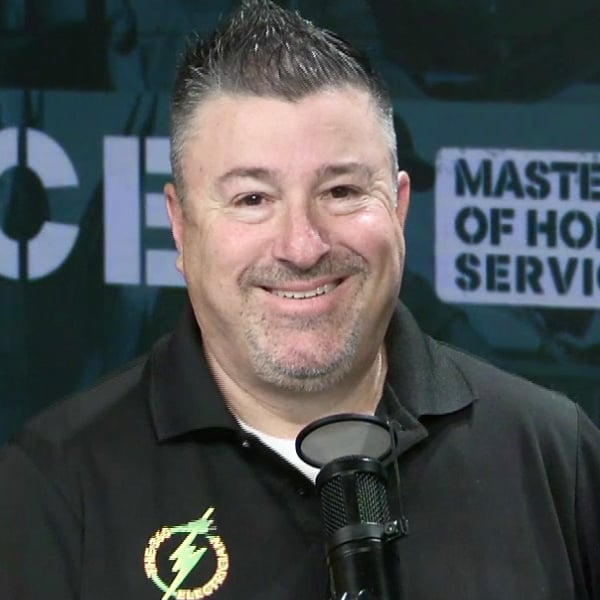
My hiring process is where the training starts.
I’m going to make people sweat, and it’s a very uncomfortable situation, but that’s your first training.
Technical questions for electricians
Technical questions let you know if the candidate can do the electrical work you need them to do. By getting into the specifics of the job and understanding the capabilities of your electrician candidate, you can properly evaluate whether they can help your business.
Technical questions to ask an electrician in an interview should also test a candidate’s knowledge of the National Electric Code and the safe installation of electrical wiring. This is another tangible way to evaluate their qualifications.
Learn more about your electrical applicant’s skills and knowledge with these technical interview questions for electricians:
11. What is the difference between a breaker and a fuse?
You want to make sure you cover foundational knowledge in your interview. If a candidate doesn’t understand basic electrical equipment, how can you expect them to understand more complex topics?
Example Answer: “A breaker is a switch that shuts down if there is too much current. A fuse has a hot metal strip that melts if there is too much current. A breaker can be turned back on while a melted fuse needs to be replaced.”
12. How would you go about troubleshooting an existing electrical system?
This question is a combination of a candidate’s ability to identify and solve problems, and pay attention to detail. Troubleshooting an existing electrical system requires patience and focus, which is not everyone’s strong suit.
You’re looking to see if your candidate understands the necessary steps to diagnose a problem and find a solution, no matter how long it takes.
Example Answer: “I would start by collecting details about the problem. What is happening? When did it start? From there I would check the panel, test the circuits, and evaluate all the components and wiring one step at a time until I can find the source of the problem.”
13. What types of wiring might be used for a residential electrical job?
You want to make sure all applicants understand the equipment standards for the type of electrical work you’re doing. This is another basic question that highlights knowledge of the NEC.
Your candidate should provide an answer that aligns with the standards set in the electrical code.
Example Answer: “The most common wiring used in homes is non-metallic sheathed cable (NM), also known as Romex. This wiring is the best for indoor electrical components like outlets, lighting and fixtures. You would also use underground feeder (UF) wire for outdoor electrical, and THHN or THWN for basements and garages.”
14. What are the most common defects of PLC?
As systems become more automated and PLCs (Programmable Logic Controllers) are more widely used, you need to know if your electrician candidate is keeping their finger on the pulse of the industry.
More importantly, you need to be confident every electrician on your team understands common problems and how to address them.
Example Answer: “The majority of issues with PLC are associated with module failure of the input/output system. However, other common defects include damaged power supply, frequency interference, network and communication problems.”
15. What are the differences between wiring a high-voltage and low-voltage system?
This question showcases your candidates versatility across common electrical systems and allows them to share their technical knowledge.
A candidate should be able to clearly explain different safety requirements, materials, and installation methods for high- and low-voltage systems.
Example Answer: “High-voltage systems are for safely delivering power, while low-voltage systems are for more reliable signals. High-voltage wiring needs more protection and insulation because of the increased safety risks. Low-voltage wiring is smaller and requires less insulation.”
16. Tell me about the most complicated electrical problem you have faced and how you solved it.
Challenging problem-solving questions are a great way to understand how your candidate thinks under pressure and gets to the core of a difficult problem.
You want your candidate to walk you through a solid step-by-step process to diagnosing and fixing the issue, as well as a continued attention to safe work habits.
Example Answer: “One of the most complicated problems I’ve faced was a machine that would shut down without any noticeable reason. I checked the connection to the breakers, the wiring, and machine controls, and everything looked set up properly. I traced the circuit down into the junction box where I found a loose connection that would cut the power when the machine vibrated. I tightened the connection and was able to restore consistent power to the machine.”
17. Have you used electrical contractor software in the past?
This question lets you know if your candidate can adapt to the electrician tools and technology you use to run your business.
Any experience with an electrical contractor software for estimating, quoting, scheduling, tracking and collecting invoices, and other business activities is valuable.
Example Answer: “Yes, I’ve used electrical contractor software at a previous job to keep track of my schedule and to send invoices to clients. I enter the job details, client information, and price and can quickly reference all the work I’m doing and progress of any job. I am also comfortable with learning to use new tools or add different job functions to my workflow.”
18. What tools, equipment, or machines do you use on the job site?
You’ll want to know the standard tools and equipment your candidate is familiar with in order to gauge their electrical skills.
An experienced electrician should be well-versed in basic hand tools, electrical testing equipment, power tools and other specialty tools depending on the work they do.
Example Answer: “I use pliers, cutters and screw drivers at nearly every job. I test electrical systems with multimeters and voltage testers. For heavy-duty work I use power tools like drills, knockouts, and saws. I also carry a thermal imaging camera to uncover overloaded circuits or hot connections.”
19. What do you know about the National Electrical Code?
This is one of the most critical questions in an electrician interview. You want to be confident that anyone joining your team has a deep understanding of the National Electric Code.
A candidate’s answer should include important themes from the code like safety and installation standards, and specific examples of how they reference and use the code in their work.
Example Answer: “The National Electric Code is the gold standard for safety and installation. It covers how equipment should be installed to prevent accidents and guides how I work with elements like conductor sizes, overcurrent protection, and ground. I used the NEC to make sure my work is up to industry standards, safe, and consistent.”
20. Tell me about any energy-efficient upgrades you’ve recommended for a customer.
Modern solutions and customer service go hand in hand, and you want your electrician candidate to demonstrate experience with both.
The answer should show they understand the latest energy-efficiency standards and can help customers save money and feel confident in their work.
Example Answer: “A customer’s kitchen lights were old, running hot, and using a lot of power. I recommended we replace the old pot lights with updated LEDs that use less energy and last much longer. The upgraded solution looked and worked better, and the energy usage went down almost immediately.”
Behavioral interview questions for electricians
Behavioral or scenario-based questions can give you a better insight into how your candidate will respond in certain situations. Here are some scenario-based interview questions you should ask:
21. What would you do if you noticed another electrician doing something unsafe on the job?
This question accomplishes two things. First, does your electrician candidate know proper safety protocols? And second, are they willing to speak out when they see these protocols not being followed?
It is a tough position to be in to address these concerns to your coworkers or bosses. A strong answer should include examples of how the candidate has dealt with safety issues in the past.
A red flag would be if the candidate appears less inclined to report unsafe practices on the job.
Example Answer: “I would speak to the electrician in private and tell them what I think is dangerous, and suggest a safer way to complete the task. I would later discuss with a supervisor if my colleague continued to work in a way that isn’t safe.”
22. How do you deal with an unhappy customer?
Customer service is one of the most important aspects of your business. Knowing how to deal with an unhappy customer could be the difference between losing a client and building a long-term relationship.
Look for answers that display characteristics of listening, patience, and humility. Everyone makes mistakes and unhappy customers really just want to be heard.
Be cautious of a candidate that doesn’t feel like they are ever in the wrong. This can come off as combative and damage the relationship with an unhappy customer.
Example Answer: “When dealing with an unhappy customer, I apologize for the inconvenience and listen to all of their concerns. I would explain how I can fix the problem and make sure they are comfortable with the solution.”
23. How do you stay safe on dangerous job sites?
Personal safety is a topic your candidate should be confident in discussing, especially when working at dangerous job sites.
Make sure your candidate understands personal safety equipment, safety processes on any job site, and emergency response procedures.
A candidate that doesn’t treat safety with the same attention to detail as their technical electrical work might be cause for concern.
Example Answer: “I always wear proper safety equipment like gloves, goggles, and insulated boots. I follow the safety rules, use the right tools, and make sure to turn off the power before starting any work. I also participate in regular safety training and encourage others to do the same.”
24. Explain how you would handle the following emergency service call. (Then describe a service call you’ve answered in the past, and allow the candidate to respond.)
This is a more interactive way to learn how your electrician candidate deals with situations in the real world. Your candidate should include details about administrative tasks and processes, safety protocols, and execution in their example.
In addition to technical problem-solving, you also want your candidate to highlight their customer service. In an emergency situation, emotions are running high and you want an employee that can calm a situation.
A lack of emergency experience would be less valuable to your business than someone who has dealt with a real-world emergency situation.
Example Answer: “I once responded to a call where a family had lost power in part of their house. After checking the breaker box, I found a loose connection in one of the circuit breakers. I tightened the connection, restored power, and double-checked all the breakers to make sure everything was secure. The family was worried about it happening again, but I assured them I would check in after a few days to make sure everything was working as expected.”
25. How do you make sure all electrical systems and equipment are working properly?
Paying attention to the working condition of electrical systems and equipment is likely to save you time and money over the long term. A candidate familiar with the process for system and equipment maintenance will fit well into your business.
You want to see that they incorporate equipment checkups into their regular workflow with balance and efficiency.
If a candidate cares only about new jobs ahead and doesn’t take the time to inspect, update, and repair existing electrical equipment and systems, they could cause a large amount of technical debt and make your business fall behind.
Example Answer: “I perform regular inspections and tests to make sure all electrical systems and equipment are working properly. I also frequently check on maintenance schedules on equipment I’m using or working on and make any necessary updates or repairs to keep everything working as expected.”
26. What do you do if you have incomplete instructions on the job?
This question lets you know if you can trust the candidate to explore and uncover the right details to accomplish any job—especially if the instructions are incomplete.
Their answer should demonstrate they are willing to ask the right questions to understand the full scope of a job.
Example Answer: “With incomplete instructions, I start by clarifying with my supervisor and/or client to try and get all the details. If I can’t get in touch or get all the information I need, I take the time to come up with a plan and recommendations for the job. Once I have the details, I can share my suggestions and proceed.”
27. Have you ever made a mistake on the job? How did you handle the situation?
Everyone makes mistakes, but what’s more important is how your candidate responded to their mistake and what they learned from it. If they don’t have an example of a past mistake, they might be too good to be true.
This is another opportunity for a candidate to express humility and self-awareness. If they have an unproductive arrogance, they might do more harm than good when mistakes inevitably happen.
Example Answer: “I accidentally wired a circuit incorrectly, and it caused the breaker to trip. I turned off the power and troubleshooted until I found the issue. I fixed the problem and then informed my supervisor of the error and the steps I took to fix it.”
28. How would you handle a customer who disagrees with the best way to fix an electrical issue?
Talking to customers is a delicate task, and you need to know your candidate can handle your clients with care when representing your business. As with other customer service questions, you want listening to be at the forefront of the answer.
Look for a candidate who pulls out all the stops to walk a customer through their recommendations. Your ideal hire needs to be patient with clients and confident in their solution.
Example Answer: “If a customer disagrees with my recommendation, I would hear out their concerns before explaining the reasons for my suggested solution. In some cases, I’ll draw a quick diagram of the solution to help them better understand my plan.”
29. How do you go about identifying the cause of an electrical problem?
Your candidate’s ability to establish “what’s wrong” is important to keep your business moving. Their answer should highlight their process for talking to clients, evaluating and troubleshooting a job, and fixing it as soon as possible.
If your candidate can’t explain their diagnostic technique, they likely don’t have the experience needed to succeed and solve customer problems.
Example Answer: “To find the cause of an electrical problem, I would ask the customer about any problems they may have noticed. I would follow up with an inspection to see if I could uncover the root of the problem. Once identified, I would fix the issue and test the system to ensure it’s resolved.”
30. Tell me about a time when you went above and beyond for a customer.
You want to ask this question to see how your candidate engages with clients and represents your business. Customer service is the name of the game, and keeping clients happy is important for growth.
Your candidate should provide examples of going above and beyond for a customer, which shows a commitment to doing the job to the best of their ability.
Example Answer: “I once had a customer whose power went out just before the holidays. I quickly diagnosed and fixed the problem. The customer was very grateful and they were able to proceed with all of their planned events.”
Role-specific questions for electricians
Depending on what type of electrician you’re hiring, you’ll want to ask the right role-related interview questions to cover specific skill sets and experience levels.
While these questions include many of the themes from the general and behavioral interview questions, they are more specific to the role and experience level of the electrician candidate.
Electrical apprenticeship interview questions
Offering an electrician apprenticeship is a great way to attract aspiring electricians who are eager to learn about your small business. Here are some questions to ask when interviewing an electrician apprentice:
31. Why do you want to become an electrician?
This is a great starter question to help you understand more about your candidate, where their interest in becoming an electrician comes from, and if they’re getting into the trade for the right reasons.
You want to hear an interest in hands-on work (even if it’s hard), problem-solving, and the desire for a long and exciting career.
Example Answer: “I want to become an electrician because I love solving difficult problems with my hands. I enjoy helping people and building things and believe I could have a long, successful career.”
32. Have you ever worked in the electrical industry before?
In order to evaluate an apprentice candidate, you have to know where they’re starting from. You might not expect much experience from an apprentice, but that doesn’t mean they don’t have any exposure to the electrician trade.
Look for any and all experience working with electrical tools and equipment, or with professional electricians on the job.
Example Answer: “I’ve assisted licensed electricians with some basic labor like pulling wire and organizing materials.”
33. Tell me about a time you had to overcome a challenge in your last position.
If the apprentice candidate has previous experience, this helps you learn more about how they deal with pressure, work through problems, and communicate.
Most of their previous experience will be new, so their answer should tell you a lot about their attitude and drive to learn through challenges.
Example Answer: “I previously worked on a big project that fell behind schedule. I took on extra tasks to help get us caught back up. I tracked the progress of my tasks and communicated with my team so we knew when we would be back on schedule.”
34. What is your three-year plan?
Asking an entry-level electrician to think into the future will give you a sense of their commitment to the trade and any goals they have for themselves.
Strong answers will include a desire to grow, get licenses and other certifications, and take on leadership roles in your company.
Example Answer: “I’d like to work my way through an apprenticeship and collect enough hours to get my journeyman license. After that I’d like to work closely with a master electrician to continue to develop my skills and I’d be interested in supervising an apprentice as well.”
35. Have you received any electrical training yet? If so, tell me about it.
This will establish a baseline for your candidate’s technical skills. Whether they’ve taken a pre-apprenticeship program or have learned about electrical work in other ways, a good benchmark will help you understand where they fit in your team and how much you’ll have to train them up.
Example Answer: “I’ve used a lot of hand tools, practiced stripping wire, and tested circuits. I also took an electrical safety course to learn more about how circuits, breakers, and grounding work. I’m just getting started but I understand the basics and look forward to more hands-on experience.”
36. What would you consider to be the most important safety precaution for an electrician?
There are two benefits to this question—does your candidate understand the importance of safety? And what specific safety fundamentals do they apply in their electrical work?
Your candidate’s answer should include general knowledge and attention to safety as well as specific examples to watch for.
Example Answer: “I start every job with a general safety check, which includes shutting the power off to all electrical systems I’m working on. I test the equipment myself to make sure there is no power and make sure I communicate that with my team and customers.”
37. Do you prefer to work alone or as part of a team?
This isn’t a trick question and it helps you establish where a candidate fits into your team.
Apprentices assist on a lot of tasks, so it is often more productive if they can work well with others. If they prefer working alone, it may indicate a focused mindset that can get through individual tasks more efficiently.
Example Answer: “I don’t mind working alone and focusing on a specific task, but I am happy to work with a team and learn from my co-workers. Whether I’m working alone or with others, I’ll still ask questions and help others when needed in order to do the job properly.”
38. What types of electrical problems have you worked on in the past?
This is another way to learn more about a candidate’s tangible technical experience. Knowing the electrical problems they’ve worked on will help you evaluate their comfort level with different types of work and hands-on tasks.
Example Answer: “I’ve fixed simple problems like loose outlets and faulty light switches. I’ve also worked with a licensed electrician on more complex issues and watched as they diagnosed the problem, tested the circuits, and repaired the system step-by-step.”
Master electrician interview questions
Master electricians can bring a ton of knowledge and experience to your team. If you’re hiring a licensed master electrician to join your electrical business, here are some questions you should ask:
39. How long have you been a licensed electrician for? Tell me about your experience.
Understanding a master electrician’s experience level will help you evaluate how well-rounded they are. Their answer should include mention of specific types of electrical work like residential, commercial, and industrial.
Example Answer: “I’ve been a licensed electrician for 10 years and have worked primarily in residential and commercial environments. I’ve also done some light industrial work. I’ve worked on a variety of electrical equipment, doing jobs like electrical panel replacements and upgrading more complex system upgrades. More recently I’ve been supervising crews on job sites.”
40. When did you get your master electrician’s license?
This question lets you know how long your candidate has been a master electrician. It helps you validate their qualifications and provides more insight to their regular activities.
Their answer should include when they got their license and how long they’ve been working professionally. Specific examples of their previous experience are helpful as well.
Example Answer: “I got my master electrician license 3 years ago after completing my hours and passing the exam. Since then I’ve been supervising a number of installation projects, reviewing plans, and making sure all work is up to code and safety standards.”
41. How do you approach an electrical apprentice if you notice they’re making frequent mistakes?
Supervision of apprentices is a core part of a master electrician’s job, so you want to get a good sense of how they teach and support less experienced team members.
This answer should include encouragement and patience, while stressing the importance of following electrical code and safety standards.
Example Answer: “If I notice an apprentice is struggling with the work and making mistakes, I will talk to them privately and show them where they went wrong. I’ll take them through all the steps and make sure they understand how to complete the task correctly and safely.”
42. How do you stay up to date on the latest trends and changes in the electrical industry?
With frequent changes in technology, materials, and code, you want to ask this question to make sure your a master electrician candidate stays up to date on the latest industry standards.
Your candidate should highlight their attention to regulatory updates like safety and code training, as well as have some personal resources to share. Another good answer involves learning from their peers.
Example Answer: “I attend training courses to stay up to date on code changes and safety protocols. I also read industry publications and talk to my fellow electricians to learn more about new tools and installation methods.”
43. How do you troubleshoot a blackout?
This is another combination question that lets you evaluate skill and attitude.
When facing a blackout, you want your master electrician candidate to have a technical approach for diagnosing and fixing a major blackout. You also want them to express how they deal with larger problems with composure.
Example Answer: “I start at the source and work through all the components to try and identify the cause. That means working from the main panel, looking for any damages, loose connections, and tripped breakers. Once I can diagnose the problem, I make the fix and then test each component step-by-step to make sure the solution will last and that everything is stable.”
44. How do you apply the National Electrical Code on the job?
Following the National Electric Code is important for all employees, but you want to ask this to make sure your master electrician candidate would enforce best practices. You’ll want your candidate to understand their role as a leader and the need to be vocal about NEC standards.
Example Answer: “I am reviewing all plans against the NEC to make sure we have a compliant foundation for electric work. I check to make sure every material and piece of equipment is up to code before the work even begins. If the work doesn’t match the plans, we go back to the drawing board and re-do the job as needed.”
45. How do you prevent electrical accidents at work?
Following safety protocols protects your employees, customers, and your business. Your master electrician should be monitoring all safety practices on a job site and making corrections where necessary.
Your candidate should also speak to the importance of teaching others about specific safety methods and speaking up when processes aren’t being followed.
Example Answer: “I prevent accidents by ensuring everyone understands the foundational safety practices on every job site, including PPE and a clean working environment. I am constantly communicating proper safety methods throughout the course of a project and reviewing completed tasks to make sure they are done correctly.”
46. What do you do if there’s a discrepancy between the electrical plans and the layout of a building?
This is another opportunity for a master electrician candidate to show they are effective communicators and managers of a job site.
In the case of a discrepancy in the electrical plans, you want your candidate to take ownership and walk you through the steps to working with engineers and project managers to sort out any confusion.
Example Answer: “If I spot any discrepancies, I immediately review the plans and compare them to the layout. From there, I clarify the correct plans with the project manager and engineer before returning to work. I document everything and make the necessary updates to the plans to make sure we don’t miss anything.”
Underground electrician interview questions
If you’re hiring an underground electrician to work on telecommunication systems and mines, consider asking the following questions:
47. Tell me about a time where you had to open switches or attach grounding devices to remove electrical hazards from fallen lines or to facilitate repairs.
This is a very specific question for underground electricians that puts your candidate’s technical skills to the test immediately.
In addition to a clear method for problem-solving, you also want the answer to include a heightened attention to safety habits and lockout procedures.
Example Answer: “I was called to a site where a section of cable was downed after a support failure. It was my job to ensure the switches were de-energized and attach grounding clamps so repairs could be made safely. Once the damage was fixed, we tested all equipment before restoring the power.”
48. What would your first 30, 60, and 90 days on the job look like as an electrician underground?
Onboarding is an important aspect for a new hire and you want to know your candidate has a plan to prepare themselves for a successful future with your company.
Their answer should focus on learning the ins and outs of the job site, understanding the systems they’ll be working with, and contributing to a safe working environment.
Example Answer: “In the first 30 days I would learn the layout of the job site, the equipment we use, and any specific safety protocols to be aware of. In 60 days, I’d expect to be comfortable with daily inspections and other basic repairs. By 90 days, I’d be well immersed with the team and taking care of more complex jobs without the need for supervision.”
49. How would you identify a defective circuit breaker, fuse, voltage regulator, or transformer using wiring diagrams and electrical testing devices?
This is another specific technical question to evaluate your candidate’s skills. They should be able to walk you through their troubleshooting process with confidence and a deep understanding of underground electrical equipment.
Example Answer: “First, I review the diagram to understand the circuit. Next, I test each component with a multimeter or clamp meter. From there, I should be able to compare those readings with the diagram and figure out where the breaker, fuse, regulator or transformer is faulty.”
50. What training or experience makes you qualified for this underground electrician job?
Asking a candidate why they are qualified for a position is a clever way to get them to dive into their experience and share examples of their technical expertise.
You want to hear real-world scenarios that showcase their knowledge of underground electrical systems and industrial work.
Example Answer: “I have worked extensively in industrial settings with similar equipment and scale of underground electrical systems. I have also completed underground safety training and other training programs in proper grounding and working in hazardous areas.”
51. How do you inspect and test power lines to locate and identify problems?
Underground power lines are difficult to access, so you want to make sure your candidate has a logical process for locating and identifying issues.
Their answer should include a solid, step-by-step approach that combines visual checks, diagrams and tasting tools to uncover the source of a problem.
Example Answer: “I start my inspection at any point I can reach the line. I look for obvious signs of damage before moving on to testing the wire. I follow the wiring diagram to test one section at a time. By working through each section, I can narrow down where the fault exists and confirm whether it’s a damaged cable, bad connection, or failing equipment.”
52. What methods have you found most effective to install or repair conduits, cables, wires, and related equipment like transformers, circuit breakers, or switches?
You should ask this question to get a unique look into your candidate’s experience. While there are standard ways to perform electrical work, there are specific techniques with underground electrical work a candidate might employ to accomplish tasks.
Despite their unique approach, you’ll still want to hear that your candidate follows proper safety protocols and electrical code.
Example Answer: “Planning and support are key to underground electrical work. I make sure all conduits and cables are secure and all connections are tightly sealed. I also use strict lockout procedures for breaker and switch repairs, and testing everything thoroughly before turning it back on.”
Industrial electrician interview questions
Industrial electricians are responsible for installing, repairing, and maintaining electrical systems within an industrial setting. To find a qualified industrial electrician, ask these questions:
53. What experience do you have as an industrial electrician?
You’ll want to ask this to understand your candidate’s electrical background and evaluate if they will fit into your company.
There are a number of different industrial work environments that your candidate may have experience in, like automotive, manufacturing, and food processing.
You can look for an answer that’s directly related to your line of work, but consider versatility and a range of experience, too.
Example Answer: “I handled repairs and equipment upgrades in a manufacturing plant. This included work on conveyors and automated systems to keep operations running smoothly. I’m comfortable working under pressure and would adapt quickly to your industrial equipment.”
54. What are the most common electrical systems you’ve worked on as an industrial electrician?
This is a more direct way to learn if a candidate has experience with the systems and equipment you service.
There are specific components and systems you’ll be looking to hear in their answer, but a willingness to learn new systems should also be a welcomed response.
Example Answer: “I’ve worked on a number of systems that include sensors, relays, and control wiring. All of this contributes to keeping equipment running on reliable electrical systems. I am interested in learning more in order to keep all types of production equipment in working condition.”
55. Describe a time when you had to troubleshoot an issue with a large piece of equipment.
Industrial electricians work with critical equipment and emergency breakdowns. This question gives your candidate the opportunity to give you an example of how they handle pressure situations and work through larger problems.
Look for your candidate to have a clear step-by-step process for troubleshooting and a calm demeanor.
Example Answer: “After a large conveyor system shut down during production, I checked the control panel and tested all the other components—safety switches, fuses, motor. I discovered a failed switch and replaced it immediately. Afterward, I ran a circuit test and got the machine back online quickly.”
56. What safety precautions do you take when working on a job site?
Industrial facilities pose a number of threats, so you want to ask this to see if your candidate has a heightened attention to safety.
An industrial electrician candidate needs to have strict safety habits and is never willing to compromise for the sake of speed or reducing a heavy workload.
You want your candidate to express their commitment to following safety protocol in all situations.
Example Answer: “I don’t start any job without proper protective equipment and my area needs to be clear and organized before I get to work. I perform multiple checks to make sure equipment is not active when I’m preparing to work on it and I communicate my process with operators and other trades so we are all on the same page.”
57. Describe your process for inspecting and testing electrical systems before and after an installation.
In addition to determining your candidate’s ability to effectively inspect and test electrical systems, you want to understand their process for documenting and verifying their work.
You want to hear your candidate cover all the bases in their answer to assure their installations are done safely and accurately.
Example Answer: “I review all diagrams, materials and inspect existing equipment before I install anything. Once the installation is complete, I go through continuity, grounding, and voltage tests to make sure I’ve done the work properly. I power up the system and perform another round of safety checks before calling the job finished.”
58. How do you stay organized when working on several wiring projects and installations at once?
Industrial electricians are frequently dealing with multiple tasks at any given time, so you want to ask this to make sure they have time management skills.
Your candidate’s answer should demonstrate a methodical approach to juggling their workload, which includes identifying the most critical tasks and keeping track of important details.
Example Answer: “I keep my tasks organized by working with supervisors to determine priorities. Once I have a clear plan, I keep detailed notes and bring each project to a safe resolution before moving on to the next job.”
59. How do you avoid accidents during electrical installations?
This is another route to take to understand your candidate’s attention to safety and following protocol. A good answer will include an understanding of the risks involved with industrial electrical work and a trained safety mindset.
Example Answer: “I avoid accidents by sticking to safety protocol. This includes taking my time and following the proper procedures in my work. I constantly check for hazards like damaged equipment or loose machinery. I also communicate what I’m working on with others in the area so they can be aware of the hazards as well.”
60. Tell me about how you use diagrams or schematics to solve a complicated problem.
Industrial electrical systems are challenging and complex. You want a candidate that can read and understand diagrams and project plans quickly and confidently.
Example Answer: “I take a reasonable amount of time to review diagrams before I start the work. As part of that review, I’m looking at each step of the work and tracing the circuit to make sure I understand how the work is expected to be done. I test each part of the diagram to ensure I’ve done everything correctly. The diagram keeps me organized and removes any guess work.”
Maintenance electrician interview questions
Maintenance electricians are responsible for keeping equipment running, preventing breakdowns, and fixing electrical issues quickly and safely. To find a qualified maintenance electrician, ask these questions:
61. Tell me about your experience performing preventative maintenance on electrical equipment.
This is a starting point to validate your candidate’s experience in electrical maintenance and their work ethic in preventative maintenance.
Their answer should highlight how they can proactively identify equipment in need of maintenance and provide quick service to avoid any downtime.
Example Answer: “I’m always checking equipment for loose connections or worn out parts. It’s part of my daily activities. I also frequently check all maintenance schedules and have a process in place to provide regular service as equipment comes due for a fix or upgrade. I catch a lot of problems before they begin and keep everything running smoothly.”
62. How do you approach troubleshooting when a machine or system suddenly stops working?
A primary part of a maintenance electrician’s job is dealing with emergency equipment failures, so you’ll want to ask this to see how they manage urgent issues.
You want your candidate to walk you through their diagnosis and problem-solving process to be able to rectify failures quickly. Process is one thing, but your candidate should also stress composure in their approach to emergency situations.
Example Answer: “If a machine stops working unexpectedly, I can’t panic. I speak to the operator to see what went wrong and proceed to go through standard equipment checks like power, switches, fuses, and sensors. After that I check the circuits and review the wiring diagram to try and locate the problem. If I follow this process, I can usually find the issue and fix it quickly.”
63. Describe a time you diagnosed a difficult electrical problem. What steps did you take?
A maintenance electrician is expected to be the first line of defence when something goes wrong, so diagnosing problems efficiently is a skillset you can learn more about from this question.
The answer should reveal how your candidate deals with pressure and how they can analyze a critical situation to find a solution.
Example Answer: “When a product motor continued to overheat and shut off, I started by checking the main components like the airflow and vents. The problem continued so I moved onto the wiring and overload settings, where I discovered a problem with the bearings that was causing the motor to overwork and shut down. Replacing the bearings solved the problem and the motor worked as expected. By starting with the usual suspects and moving through the components, I was able to find and fix the problem quickly.”
64. What types of electrical systems or machinery have you worked on in past roles?
When it comes to electrical maintenance work, you want to ask this question to learn if your candidate has experience with the systems and equipment you service.
Their answer should help you understand more about their technical experience and skills, including specific electrical systems and components they’ve worked on in the past.
Example Answer: “I’ve worked on control panels, conveyors, lighting systems, and motors mostly. The primary goal of my work has been to keep production equipment running and electrical systems in reliable shape.”
65. How do you prioritize multiple maintenance requests during a busy shift?
There are usually multiple maintenance tasks a day, so it’s important to know how your candidate handles a busy schedule. Their answer should highlight their time management, prioritization, and communication skills.
Example Answer: “The priority is safety and then the impact on production. I take care of any major safety concerns first and move on to other tasks as needed. I work closely with supervisors to understand what needs attention first and track the tasks throughout the day so that nothing falls through the cracks.”
66. What safety procedures do you follow when working around energized equipment or moving machinery?
It’s important that maintenance electricians work safely to protect themselves, but they also have to worry about the people around them when equipment is working properly.
Your candidate should express an understanding of the risks of a job site and examples of following safety protocols in their work.
Example Answer: “I am always in my personal protective equipment when doing maintenance work. I follow strict lockout and tagout processes to make sure equipment stays off while I’m working on it. I also let supervisors and other employees know what work is being done and how they can stay safe in the area.”
67. How do you handle a situation where production wants equipment running, but you believe it’s unsafe?
While a maintenance electrician is often the first line of defence for faulty equipment, they can also be the last line of defense if equipment is unsafe to use.
You want your candidate to be confident in their standards and be willing to stand up for themselves when making a decision that might affect production.
Example Answer: “It’s my job to explain what the problem with the equipment is and why it is unsafe for operation. No matter the impact on production, I have to relay the dangers of faulty equipment to supervisors and keep everyone on site as safe as possible. If there is a safer alternative, I will try to provide options to reduce the impact of broken machinery.”
68. What tools or testing equipment do you rely on most when diagnosing electrical issues?
The right tools will get a maintenance electrician to the problem and solution much faster.
This might seem like a simple question, but you should ask it to make sure your candidate has go-to tools and testing equipment. It’s another way to evaluate their technical ability and experience.
Example Answer: “I troubleshoot most issues with my multimeter, clamp meter, and basic hand tools. For more challenging work, I can turn to continuity testers, wiring diagrams, or thermal cameras to diagnose problems quickly and safely.”
Electrical engineer interview questions
A good electrical engineer will keep your electrical systems optimized to improve performance and reduce outages. If you’re hiring an electrical engineer for your company, ask these questions:
69. Why did you choose to pursue a career in electrical engineering?
This is a great starter question you should ask to learn more about your candidate’s drive and what motivates them as an electrician. This is where your candidate should let their personality and passion shine through.
Example Answer: “I chose electrical engineering because I love solving problems and designing intricate systems. I’ve always been interested in electrical systems and circuits and I get excited at the idea of making equipment safer and more efficient. I truly feel the sky is the limit and I want to keep learning and improving.”
70. What hard or soft skills make you a good electrical engineer?
This question helps you get a glimpse of your candidate’s mix of technical ability and other skills like communication and organization—all critical to success as an electrical engineer. Look for the answer to highlight areas like problem-solving and familiarity with electrical code.
Example Answer: “For hard skills, I have a deep understanding of electrical codes and I’m especially good at diagnosing system problems. On the soft skills side, I communicate very well with my colleagues and supervisors and do my best to keep everyone informed and working toward the same goal.”
71. Describe a challenge you’ve faced as an electrical engineer and how you overcame it.
An electrical engineer is constantly facing complex problems and unexpected issues. In a deadline-oriented business, you want to make sure your candidate can handle high-pressure situations efficiently and effectively.
Process is crucial in the answer to this question, as you want to make sure your candidate prioritizes the best solution over rushing to get the job done.
Example Answer: “When any critical equipment shuts down unexpectedly, I review the design and check each section one by one to uncover the issue. Once I locate the source of the problem, I fix the components, take the equipment through detailed testing, and update the entire team on the results. Once this process is complete we can be confident the machine is ready to work again.”
72. How do you prioritize tasks when working on more than one project?
You’ll want to ask this question to understand how an electrical engineer candidate manages their time while keeping others informed. The answer should focus on safety protocol, communication with project managers, and keeping work on schedule.
Example Answer: “I work with supervisors and project managers to plan out competing priorities. This depends on safety, deadlines, and overall impact to the project. Once we’ve made a decision on our approach, I organize the work into manageable tasks and communicate my process and timeline expectations with the rest of the team.”
73. What do you know about IEC Codes?
While we’ve focused primarily on NEC, this question is good to test your candidate’s knowledge of the international electric codes and how they factor into their work.
Knowledge of IEC codes and examples of practical application are a way for your candidate to set themself apart from the pack.
Example Answer: “I understand that IEC Codes are the international standard for electrical equipment, safety and installation practices. I apply the requirements in my work to make sure equipment meets a global safety standard.”
74. What’s the difference between an alternator and a generator?
This foundational electrical knowledge is the best way to validate a candidate’s technical skills and make sure they know the differences in basic electrical components.
Example Answer: “An alternator produces AC power while a generator can produce either AC or DC power. An alternator is usually more stable and commonly found in vehicles and modern systems.”
75. What do the different electrical wiring colors mean?
Another basic electrical question is good to make sure your candidate understands standard wiring and safety practices. If an electrical engineer candidate doesn’t know the answer to this question, that might be the end of your interview.
Example Answer: “Colors help identify the function of each wire. White is neutral, black or red is for live circuits, and green is the grounding wire. A bare copper wire can also substitute as the grounding conductor. Following these color codes will keep you safe and avoid any costly mistakes.”
Compensation and next-steps questions
You’re getting to the end of your interview and it’s time to start talking about next steps like electrician salary and potential start dates. Here are a few questions you can ask:
76. What are your salary expectations for this role?
Have your electrician salary range in mind before you start the interview process so you’re able to address any wage-related questions your candidates may have. Look for willingness to discuss salary and realistic expectations.
77. Can you provide a list of references?
References help validate a lot of the answers from your interview. It also gives you a better understanding of what it’s like to work with your candidate and what to expect if you choose to hire them.
Look for references from people in leadership positions, as they provide a lot of added credibility.
78. When would you be available to start?
It’s good to know when your new hire can join your team, so coordinate a start date to more effectively plan your upcoming job schedule. Look for flexibility in their schedule and an eagerness to get started sooner than later.
79. Do you have a valid driver’s license?
A driver’s license is crucial for your candidate to be able to get to job sites and operate company vehicles. Make sure to ask for a valid driver’s license to avoid any headaches.
80. Do you have any questions for me?
Questions from your electrician candidate are important for both parties. It shows how engaged the candidate is in the interview, and helps them learn more about your business and whether it’s a good fit for them.
Look for questions that would help the candidate be successful if you hired them. Examples could include:
- “Can you tell me more about the team at your company?”
- “What are your customers like?”
- “Are there opportunities for professional development?”
How to evaluate electrician interview answers
As you go through all the electrician interview questions, listen for these key themes from your candidates’ answers to properly evaluate their qualifications and potential:
- Technical ability: Candidates should express a deep understanding of the National Electric Code, attention to safety protocols including personal protective equipment (PPE), and a standard process for troubleshooting electrical systems.
- Safety protocols: Candidates should prioritize safety in all electrical scenarios, which includes attention to detail over speed, reporting necessary violations, and following emergency response practices when necessary.
- Problem-solving: Candidates should showcase their ability to solve problems through step-by-step thinking and display a willingness to ask questions and get clarification when needed.
- Culture fit: Candidates should be able to communicate effectively with customers and other team members, provide exceptional customer service, and prove they can be a reliable employee.
It really comes down to, what are my values? What do I stand for? I can’t hire somebody who has friction with my values.

Manage your growing team with Jobber
Creating electrician job descriptions and interviewing candidates to grow your team of electricians isn’t easy. But scheduling work and managing your team can be.
Electrician software like Jobber makes it easy to create a new job and assign it to the closest team member in just a few clicks, then track hours on the job and invoice customers—all in the same place.
Originally published in August 2022. Last updated on March 25, 2026.
Frequently Asked Questions
-
The basic questions you want to ask during an electrician interview should focus on a candidate’s qualifications. Ask about career aspirations, strengths and weaknesses, technical skills, previous experience, licenses and certifications they have, and what they can bring to your team. Questions may include:
• Why did you choose to become an electrician?
• What electrical systems have you worked with in the past?
• What is the most important skill an electrician should have?
• Why should we hire you?
This lets you get a good foundation for a person’s passion, their skills, other work they’ve done, and additional qualifications. -
An electrician should have strong attention to detail. Electrical systems are complex and require a keen eye for installing, maintenance, and troubleshooting.
An electrician should also have exceptional customer service and professionalism. Whether you’re working on residential or commercial properties, you are frequently working with customers who need answers to their problems. Building trust and confidence is essential to be successful. -
In an electrical apprenticeship interview, you should ask questions that help you learn more about the candidate’s level of experience and understanding of the industry. These questions may include:
• Have you ever worked in the electrical industry before?
• Have you received any electrical training yet? If so, tell me about it.
• What would you consider to be the most important safety precaution for an electrician?
• What types of electrical problems have you worked on in the past?
An electrical apprentice is expected to be newer to the trade, but that doesn’t mean they are coming in completely cold. Your electrician apprenticeship interview questions should help you learn more about their skill level and what they could bring to your business as an entry-level team member.