
Key takeaways:
Discover the key steps to accurately and profitably price tree removal jobs for your business.
- Start with a thorough site assessment. Visit the property to gather details about tree location, size, species, condition, access, and equipment needs—these factors directly impact your costs and final price.
- Break down and estimate all job phases. Calculate labor hours for every phase (including travel, setup, and cleanup), factor in disposal fees, and check previous projects to ensure your estimates are realistic.
- Adjust pricing for complexity and risk. Higher-risk jobs—such as those near power lines or with diseased trees—should have increased margins to reflect additional labor, skill, and insurance requirements.
- Include overhead and set your profit margin. Add costs like office expenses, fuel, marketing, and equipment maintenance to your estimate, then apply a markup that protects your ideal profit margin.
- Choose the right pricing model for the job. Options include flat rate, time and materials, per-tree, unit-based, tiered, premium, or market-based pricing—select the one that keeps you competitive and supports sustainable profitability.
Want more tips on growing a profitable tree service business? Sign up for the Jobber Newsletter.
Accurately pricing your tree removal services helps you stay competitive in your local market and win profitable work that helps your business grow.
In this article, you’ll learn how to calculate tree removal costs, make adjustments for specific job conditions, choose the right pricing strategy for your business, and build estimates that support healthy profit.
How to calculate tree removal pricing
Every tree removal project is different, but your estimating process should stay the same. Follow these steps to capture every cost and price your jobs for profit:
1. Assess the tree on site
Every estimate starts with a full site visit. Unless you’ve worked on the property before, a photo doesn’t provide enough information to help you price the job accurately.
When you’re on site, collect information like:
- Tree location (or location of multiple trees, if applicable)
- Tree height and diameter at breast height (DBH)
- Tree species
- Structural condition (e.g., dead, leaning, storm-damaged, decayed)
- Number of stems or complex branching
- Rigging requirements
- Proximity to structures, power lines, fences, or roads
- Site access restrictions
- Tree trimming equipment needs (e.g., crane, lift)
- Drop zone space
- Tree removal permitting requirements
Larger trees, damaged or diseased trees, and trees in tight spaces will increase your costs, so document everything. Photos help justify your price if the client questions it later—and you don’t have to remember every site detail.
By the end of the site assessment, you should know everything you need to estimate the job, including the scope of work and which employees and equipment are required.
2. Estimate labor hours
Next, estimate the number of labor hours needed to complete the scope of work you identified in the site assessment. To capture your crew’s time accurately, divide the job into phases and assign realistic hours to each. This could include:
- Travel from your office to the job site
- Equipment setup and teardown
- Production (e.g., cutting, rigging, lowering, tree stump removal)
- Transporting the tree to the dump
- Travel from the dump back to the office
Say the job will take three crew members and four hours from start to finish. That’s a total of 12 labor hours. Then multiply your labor hours by your standard hourly labor rate to get the job’s total labor cost.
As a starting point, check your recorded hours for past jobs. If a similar job also took 12 labor hours, this one likely will, too.
3. Factor in disposal and dump fees
Disposal costs vary depending on region and tree size. You’ll likely pay less for small trees, while a larger tree could cost significantly more. Check with your local dump, eco station, or disposal facility to understand their fee structure in advance.
If wood can be sold, repurposed for furniture, or processed for firewood, you can subtract the estimated resale value—but only if you know for certain you’ll get that cost back. Not every job will lead to resale income.
4. Adjust for risk and complexity
Some tree removal jobs are riskier than others. This means they require more time and expertise to complete. Increase your pricing when jobs involve:
- Power lines
- Heavy rigging
- Confined spaces
- Storm damage
- Diseased or structurally unstable trees
- Traffic control
Your pricing should reflect liability exposure, insurance costs, and the skill level required. The higher the risk for your tree removal company, the higher your margins should be.
5. Factor in overhead and profit margin
After calculating all the tree removal costs directly associated with a specific job, add overhead and profit. Overhead includes the everyday costs of running your business, like:
- Office staff
- Office rental
- Small business insurance
- Fuel
- Equipment maintenance and repairs
- Marketing
- Tree care software
- Administrative expenses
Then apply your markup percentage to allow for your target profit margin. Many tree service businesses aim for a profit margin of 20% or higher.
6. Create your estimate
Once you’ve set your pricing structure, the next step is building a clear, professional tree care estimate that shows exactly what’s included. A detailed estimate helps justify your price and makes it easier to win larger, higher-margin jobs.
Your estimate should include information like:
- Scope of work
- Tree height and location
- Equipment to be used
- Cleanup details
- Total price
- Payment terms
- Timeline or scheduling window
- Proof of insurance (if required)
Jobber helps you create estimates faster with customizable templates that you can pre-load with your most common tree care services and pricing. This saves time in the field and keeps your estimates consistent across your team.
We get more jobs because we get [customers] their quotes a lot sooner.
They don’t have time to decide and sit around and wait for other companies to come by. They just want to get it done.

You can add optional line items for additional services like stump grinding, log splitting, debris hauling upgrades, crane work, or emergency tree removal rates. These options give property owners flexibility while increasing your average job value.
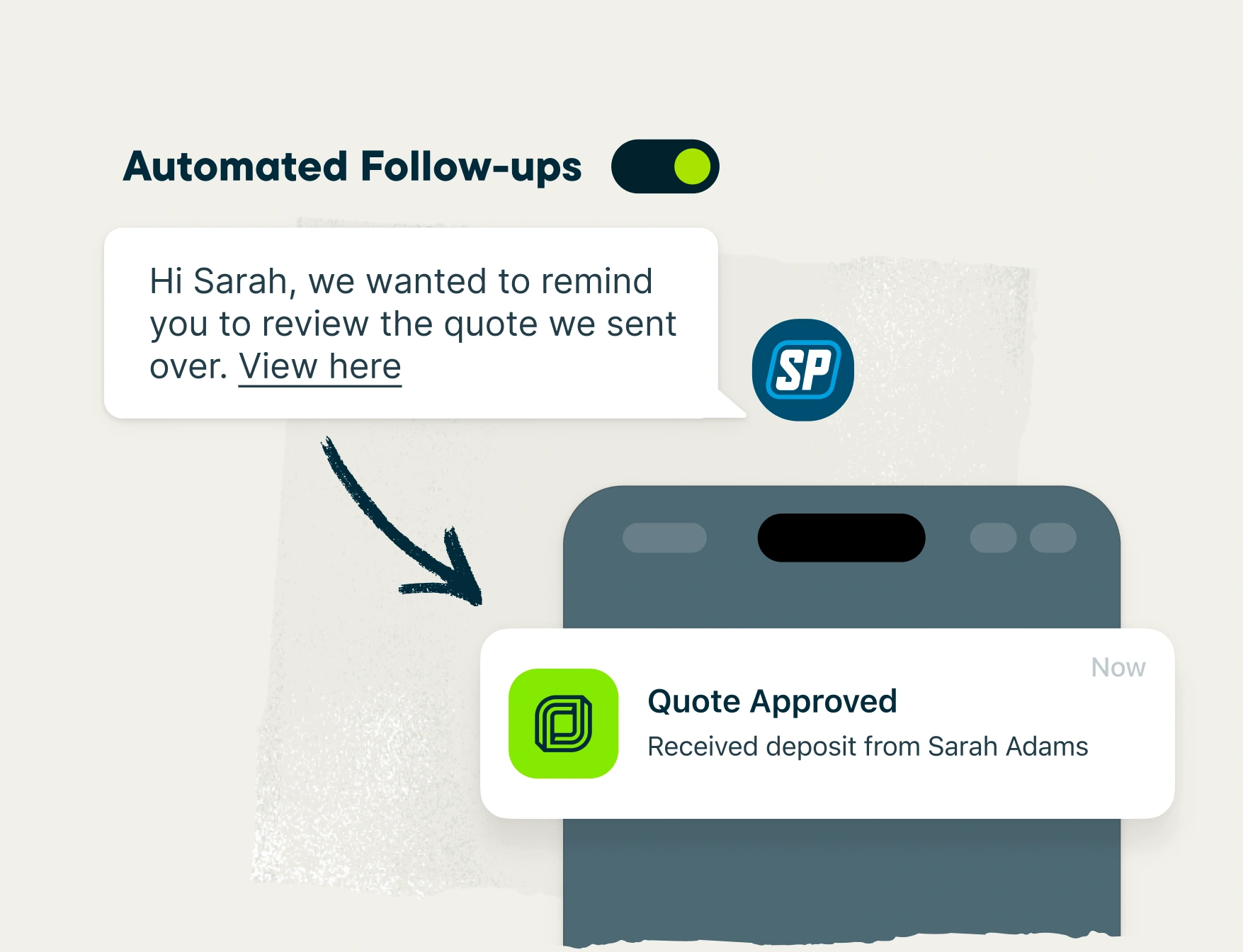
Jobber also sends automated follow-ups to clients who haven’t responded to your estimate. You’ll spend less time chasing approvals and more time turning quotes into booked jobs.
What factors impact tree removal pricing?
Tree removal pricing varies from job to job because no two sites are the same. Risk level, access, equipment needs, and cleanup requirements all affect your final price.
Below are the primary factors that influence how you calculate and adjust your professional tree removal service rates:
- Tree height and diameter: Larger trees require more time, more crew members, heavier equipment, and greater risk management.
- Tree type: Dense hardwoods take longer to cut and process than lighter softwoods. For example, you’ll most likely cut down a pine tree faster than an oak tree.
- Tree health: Dead, diseased, storm-damaged, or structurally compromised trees increase safety risk and may require specialized rigging.
- Tree condition: Fallen tree removal may be easier than cutting down a standing tree, depending on whether it damaged anything on the way down.
- Location on the property: Trees near homes, fences, pools, or power lines require controlled dismantling rather than straight felling.
- Site access: Limited access for trucks, chippers, or cranes increases labor time and may require manual hauling.
- Rigging and technical complexity: Tight drop zones or confined urban spaces increase setup time and crew skill requirements.
- Equipment needs: Using cranes or lifts can significantly raise job costs.
- Disposal: Dump fees, fuel costs, and travel time directly affect the overall cost of a job.
- Stump removal: Stump grinding or full root removal adds extra labor hours and disposal volume. You’ll also need to bring additional equipment to the job site.
- Permit requirements: Some municipalities require permits for tree removal that add administrative time and fees.
- Emergency or rush scheduling: You can typically charge more for immediate or after-hours work, especially if it’s storm-related.
- Local competition: Market saturation and competitor pricing influence how aggressively you can price while maintaining a healthy profit margin.
Tree service pricing strategies
Choosing the right pricing model determines how many estimates you close and how profitable your business is. Many tree service companies use a mix of strategies depending on job type.
These are the most common pricing models used for tree removal work:
Flat rate
Flat-rate pricing sets one total price for the entire removal based on your calculated costs and desired profit margin. You can use flat-rate pricing for straightforward jobs to simplify your quoting.
This is a common tree removal pricing model because clients want a fixed price. It also makes jobs more profitable when your crew is more efficient.
Time and materials
Time and materials pricing bills the client based on your labor hours, equipment use, and disposal costs. It’s a good pricing option for you when there are lots of variables that could increase job costs and cut into your profit margins.
This pricing model reduces your risk on unpredictable jobs, like storm damage or hazardous removals. However, it’s not always ideal for some clients because they don’t know the final cost ahead of time.
Per-tree pricing
Per-tree pricing assigns price ranges based on tree size categories (e.g., small, medium, large, extra-large). This approach works well for quick quoting and marketing materials, but it should be backed by cost calculations to ensure every job is profitable.
Unit pricing
Unit-based pricing is based on the tree removal cost per foot of height or per inch of diameter at breast height (DBH). This creates a structured system that fits any tree size, making it easier to estimate most jobs.
That said, you’ll still need to adjust the final cost for factors like site access and equipment needs.
Tiered pricing
Tiered pricing offers multiple service levels. This gives clients options while increasing your average invoice value and adding upsell opportunities.
For example, basic removal could include only tree cutting, while the standard removal package adds debris removal. Full-service removal would include hauling, stump grinding, and site cleanup.
Premium pricing
Premium pricing applies higher margins to high-risk or emergency jobs. This strategy reflects the extra liability, insurance exposure, education, and experience required to do the job safely.
Make sure to use premium pricing for these situations, even if the work itself isn’t difficult.
Market-based pricing
Market-based pricing considers competitor rates and local demand when setting your final number. This model helps you stay competitive, but your overhead and other costs should always determine the minimum price of a job.
This is a good option when you’re first starting a tree service business. But once you understand your costs, it’s best to switch to another pricing model.
How much does tree removal cost?
Residential tree removal costs roughly $200–$2,000 per tree, with an average of $750. Prices vary depending on tree size, condition, access, and required services and equipment.
Your own prices should be specific to your tree service company and the job you’re estimating. As a starting point, here’s a breakdown of typical price ranges for common tree removal services:
| Tree Removal Service | Low-End Cost | High-End Cost |
|---|---|---|
| Small tree removal (<30 ft) | $150 | $450 |
| Medium tree removal (30–60 ft) | $450 | $1,200 |
| Large tree removal (60–80 ft) | $800 | $1,500 |
| Extra-large tree removal (80+ ft) | $1,000 | $2,000+ |
| Fallen tree removal | $75 | $500 |
| Diseased tree removal | $400 | $900 |
| Removal of multiple trees | $500 per acre | $6,000 per acre |
| Cleanup & debris hauling | $70 | $95 |
| Tree removal permit fee | $60 | $150 |
| Stump removal/grinding | $100 | $150 |
| Wood chipper rental | $150 | $250 |
These are broad estimates for typical tree removal jobs. More complex jobs needing specialized equipment or expertise should be priced much higher.
My client isn’t the guy that’s looking for the cheapest price.
If somebody opens the door and is like, “I hope you’re cheap,” I’m not the tree service for you.
Cost of tree removal by location
Below are examples of how tree removal costs vary by location (Angi, 2025). This can show you how your pricing compares with other markets in the U.S.
- California: $650–$1,300
- Colorado: $350–$650
- Florida: $750–$1,500
- Illinois: $535–$730
- Maine: $515–$700
- New York: $750–$1,100
- North Carolina: $600–$900
- Texas: $300–$850
- Washington: $550–$800
- Washington, DC: $250–$700
The average cost of tree removal is higher in urban areas with higher living costs or strict permitting requirements. Common tree species and typical site conditions can also affect costs, as some native woods in certain areas take longer to cut.
Costs also vary when the customer is located in a rural or remote area. This extends travel time and fuel costs, which increases the price of a tree removal job.
Keep your tree removal business profitable
Accurate tree removal pricing lets you cover costs and manage risks while maintaining your ideal profit margin. Use these pricing strategies to win more jobs and grow your business.
Want to learn more about building a profitable tree removal business? Watch this episode of the Jobber podcast Masters of Home Service with Doni Jones of Don’s Tree Service:
Frequently Asked Questions
-
Most residential tree removal jobs cost between $200 and $2,000 per tree, with the average being around $750. Prices vary depending on tree size, location, and complexity, with larger or more difficult jobs pushing costs higher.
-
Start by estimating labor hours for cutting, rigging, lowering, and cleanup. Add equipment costs, disposal fees, permits, and any risk premiums for challenging conditions.
Finally, include overhead and your target profit margin to arrive at a complete job price. This approach covers all direct and indirect costs while protecting your margins and keeping jobs profitable. -
Commercial jobs often involve multiple trees, larger crews, and stricter safety requirements. Pricing should start with a detailed assessment of each tree that will be removed, as well as the property itself.
To price tree removal for a commercial property, factor in labor, equipment, disposal, permits, risk adjustments, and overhead, then apply your profit margin.
You can impress commercial clients and improve your chances of winning the bid by creating a detailed, professional-looking estimate using tree removal quoting software like Jobber.