 27 Minutes
$20K Job from One Referral Partnership (Zero Cost)
With Phil Risher


-
Phil (00:00):
We sent out 47 of these emails. One responded and said, ‘Matter of fact, I have a project right now that I need an estimate on. When can you come out and do it?’ And that was a $20,000 job.
Adam (00:09):
Oh, wow.
Phil (00:09):
Yeah.
Adam (00:10):
So it works.
(00:12):
Welcome to Jobbers Masters of Home Service, a podcast for home service pros, by home service pros. If you’re like me, then you’ve been frustrated since you started your business at the lack of collaboration and partnerships that you have with other local businesses. We have a great guest today that is really good at this. Phil Risher is the owner and founder of Phlash Consulting, and he does this for his own business, and he helps his clients do for their business. So Phil, welcome to the show.
Phil (00:42):
Yeah, thanks for having me. I’m excited to talk about this.
Adam (00:44):
Yeah, me too. Welcome back. So you help your clients get more leads, nurture those leads, all things marketing. Tell our listeners what you do.
Phil (00:51):
Yeah. Well, I started at a home service business, so I was working at a $3 million home service business, and funny enough, they had 36 Google reviews, and they were doing $3 million in revenue. And the way that they built this company to $3 million was all through these B2B partnerships that we’re going to talk about today. I helped them go from a hundred referral partners to 150 referral partners, and we’re going to talk about the strategies of all that stuff today.
Adam (01:12):
We’re going to put the cookies on the bottom shelf for everyone to really grasp. I think after this episode, our listeners are going to have a plan for how to go out and get these partnerships and start developing them, and they’re going to also feel just empowered. They’re going to have a plan, and they’re going to feel ready to do it. What would you say slows people down the most? What’s the biggest, just the struggle area for most people like me?
Phil (01:34):
Well, there’s really three buckets that this game plan would fall into. First, if you’re starting your business, I see in the Jobber Facebook group, the Jobber Community all the time. It’s like, Hey, I’m just starting out. How do I get leads coming in? Do I go to Google? Do I go to Meta and all this stuff? That’s the first person is like, this strategy is literally free. All you have to do is get out of your shell and go and build these partnerships. We’re going to talk about how to do that. The other thing is, if you don’t have any ad budget and you need to come up with a game plan to get more leads, that will help you. And if you just want to add another 1 million, 3 million revenue to your business, this is a great way to do that. I think the biggest hiccup is you have to get out there and build these relationships, and we’re going to talk about that. But that’s the biggest thing, is it could be a little nerve-wracking. What do I say to them? Are they going to want to like me, want to work with me?
Adam (02:14):
I’m glad you said what you said, because I think a lot of people, if they’re like me, envision business-to-business partnerships being something that you do when you’re a bigger company. But you’re saying it’s actually the opposite. It’s a great way to start your business.
Phil (02:28):
If I was going to start a home service business today, this is exactly what I would do. Literally, this game plan that I’m going to roll out today.
Adam (02:34):
Wow. Okay. Let’s get into it. So, what do you think is the first step for someone to get started?
Phil (02:38):
Alright, so the first thing is you want to find a complimentary service. So if you’re a gutter cleaning company, you find a roofing contractor or a landscaping company or an arborist, someone that doesn’t do the direct service that you do, but is out at someone’s home doing similar things, that they can recommend you and refer you back and forth. Does that make sense?
Adam (02:55):
Yeah, totally. Do you think it’s also viable to find a company that may offer your services as a secondary service? They don’t really want to, but they kind of feel like they have to, or else they’ll lose the business altogether.
Phil (03:06):
Exactly. So you need to figure out what your pitch is on this. So there’s a good book called StoryBrand, and he talks about you’re not the hero, the customer is the hero. So you need to figure out what your angle is going to be about why you should work together. And one of those angles is, Hey, in the heat of the summer when you’re slam packed with X, Y, Z, big ticket item, and you don’t want to be stuck doing this secondary item, we can backfill for you and sub it out and make sure that your customers still get taken care of so they don’t call your competitor and start working with them for everything. That’s one way. The other way is like, Hey, you can make some extra bucks. Your technicians can make some extra money. You can stay sticky with your customers. You have to think about the value proposition for them. You’re not the hero, you’re the guide. They’re the hero.
Adam (03:43):
Because one thing to be like, I need more business. Can you give me some more leads here, man? But instead, you’re like, Hey, how could I help you? I had a conversation with a power washing company not too long ago, and they’re kind of what I mentioned. They do some gutter cleaning, but it’s not what they want to do all the time, but they’re concerned if they farm it out or refer someone else. They don’t want to refer to another power washing company. Right?
Phil (04:05):
Exactly.
Adam (04:06):
But we’re not a threat. We don’t do any power washing, so it’s a good complementary match. We’re not going to take any of their business, and we alleviate them and it helps them fill their schedule up if we recommend power washing to them.
Phil (04:17):
Exactly. And so once you kind of figure out that pitch, how are you going to be the complementary service? Then you actually have to find these people, and that’s the part that always tricks people. They’re like, okay, I could see I work with the roofing, whatever. So there’s two ways that you can do this. The first one is you can literally go to Google and type in ‘power washing companies near me.’
(04:36):
Go to the mat pack, search for other businesses and dial for dollars, call them, and say, Do you do gutter cleaning? No, I don’t. Okay, great. And then now you have your spreadsheet. One really important thing about this, you don’t want to sell on that call. Well, you should do this. You just want to know, Hey, this company doesn’t do it. So I can reach out to them and work with them. That’s the first thing. The second way, and this is the way that we do it for our clients, and we recommend, is we go on Fiverr, F-I-V-E-R-R, and we find someone to build a B2B list. So there’s people that are list builders out there, and you can say, I want all the HVAC contractors in Dallas, Texas, and I want the business owner and the business owner’s email, and these are people overseas, and they’re going to build a list of a hundred, 200 of these people and give them to you. So now you’re armed with a list of these referral partners, and you can go through and scrub them. Or if you do the calls, you have a list of people that don’t do the service.
Adam (05:27):
Interesting. I like that. So let’s talk about the call for a minute. What do you say if you don’t sell ’em? What do you say?
Phil (05:35):
Give us the script. Yeah, so you pick up the phone. I did this a bunch. I’m trying to build these referral partners. So I would say, Hey, I was at a duct cleaning company and we were calling HVAC contractors. So I would just call ’em up and say, Hey, do you all do air duct cleaning? And they would say no, or they would say yes. Oh, okay. Do you do an in-house or do you work with another company? Oh, we actually work with another company. I can refer them to you. Okay, cool. Probably not the best fit for us because I’m not going to come in and compete with them, but if they say no, we don’t. Oh, have y’all ever thought about doing it? Who would I speak to about maybe working together on that? Don’t sell, though, but just see if they give you a contact. The CSR is not going to be the decision maker. They’re just going to give you the information. So that’s literally the script. Don’t make it too difficult.
Adam (06:13):
Okay. And do you find that the CSR, who’s, let’s be real, the gatekeeper in a situation like this, if they perceive it not to be worth their time, are there any kind of keywords that you either want to hit or avoid when you’re doing the pitch?
Phil (06:26):
Yeah, when you ask them, imagine their customer is going to call in and say, Hey, do y’all do duct cleaning? And they’re going to say yes or no. It’s a normal customer question that they would get. So that’s the end-all, be-all that you want to stop at
(06:38):
If you want to take it. Another part to it is, well, have you ever thought about working with a company? Because maybe there’s a sales manager or someone that I could speak to, who would that be?
Adam (06:46):
Gotcha. That’s good.
Phil (06:47):
But sometimes it’s uncovered like, no, leave us alone. No soliciting. Okay, cool. Whatever. It’s all good. Now, with the email side, so you get all these emails, what do you do with them? So this is the three-part email framework that we use that I recommend, it crushes it, and I’ll give you a story of how this actually happened, but what you do is you take all those emails, you put them into a cold email sequence. The first email you send out is subject line partnership, and then in the body of the email, you say, Hey, Adam came across your website looking for a good gutter cleaning company to work with. Wanted to see if maybe we’re open to talk about how we could work together. Worth a call. That’s it. That’s it. A lot of people get too into the weeds, trying to sell all their stuff. They’re the hero, dah, dah, dah, dah. It’s just like you’re just trying to create the opportunity to have a conversation.
Adam (07:29):
Wow, okay.
Phil (07:30):
The second email that you send out is subject line, looking for a good gutter cleaning company in the body. Same exact thing. Hey, Adam, came across your website, blah, blah, blah. Then the third email is subject line. Are you the right person in the subject? I’ve been reaching out to you. I’m looking to partner with you guys. Who should I reach out to? Talk about that? Now, here’s a story. So we had a company, they built a Jobber client, actually. They built custom closets and wardrobes, and what we did was we built a list of all the interior designers in their area, and we did this exact cold email outreach. The first email, one of the interior designers responded. We sent out like 47 of these emails. One responded and said, Matter of fact, I have a project right now that I need an estimate on. When can you come out and do it? Oh, wow. And that was a $20,000 job.
Adam (08:12):
Oh, wow.
Phil (08:13):
Yeah.
Adam (08:13):
So it works. It works. Who would’ve thought? Wow. Okay. So your assumption is that one of those three emails will get a response.
Phil (08:21):
That’s right. And you don’t want to stop just at the email side of things. Now you actually have to set up a meeting with them and talk about what this partnership looks like and how this all sounds, and we can talk about what that looks like.
Adam (08:30):
Well, let’s get into it. So let’s say someone responds and says, yeah, I’m not really sure exactly, but yeah, I’m interested, and you meet with them in person, or would you ever entertain a phone call at that point? If they,
Phil (08:41):
Yeah. So here’s what you do. You say, Hey, let’s hop on a call and talk about what this looks like. So we do gutter cleaning. We get people that ask about roofs all the time. So want to see, maybe we could pass referrals back and forth, and what that looks like. So you kind of talk about it, but here’s the bread and butter. Here’s the secret sauce.
Adam (08:55):
Okay.
Phil (08:56):
You say, we do lunch and learns, or breakfast and education. When do you usually have your tech meetings? It’s on Tuesday mornings when you have everyone in a room together and do education, you go there, you drop off donuts, and you educate their technician base on everything that you do, maybe five or 10 minutes worth. But this is how you really leverage this, because another business owner, they’re not going to care about an extra 50 bucks referral commission. They might care about the stickiness, whatever, but here’s the secret. Their technicians, if they make an extra $50 on every job that they do, they’re going to be so happy about this partnership.
Adam (09:30):
Back. Phil, you’re blowing some minds right now. That’s great. So you do a lunch and learn, you meet with all the technicians of that company because, like you said, the owner, he’s like 50 bucks, whatever. Right? Exactly. And so I’m guessing that’s the fee or whatever that you would, yeah, whatever you decide. Okay, so that’s $50 is fine. Then you go meet with the technicians and say, if you recommend us when you’re talking to the client and they do business with us, then we’ll give you 50 bucks.
Phil (09:55):
That’s right. And this is exactly why. Interesting. This is why I would start my business like this, because instead of praying to the Google Gods, spending money on Thumbtack, Angi, all this stuff, trying to pay $50 for leads.
(10:05):
You can now get warm leads coming to your business, that only when you close them, you pay $50 out. That’s the secret. I love that. Yes, that’s super strong. Here’s how you do it. Okay, so what you do on your website you create a separate page slash consulting.com/referral.
Adam (10:23):
Okay.
Phil (10:23):
On that page, you put a form, okay? And if you can’t figure this out, create a Google form for referrals. Then you take that form or that URL, you go to qr-code-generator.com, and you create a QR code. Then you go to Canva.com and you create a little postcard or business card. You put the QR code on there. Got me?
Adam (10:45):
Got it.
Phil (10:46):
Then when you go to these breakfast, you get these guys jazzed up about making extra 50 bucks, and now you give them these business cards, you pass out like 10 of them to every single person, and they have it in their truck, and you say, listen, all you have to do at the end of the job is scan this QR code, fill out this form. If a customer turns into a customer for me, I’ll give you $50.
Adam (11:05):
Wow, that’s awesome.
Phil (11:08):
Yes.
Adam (11:08):
And so generally, the technicians that you’re speaking to are usually pretty excited about it, I assume
Phil (11:13):
A thousand percent. They are so excited because they’re going to do five jobs today, and they’re going to make $50 on every single job.
Adam (11:19):
Wow. Now, how do you track it? You just have someone to do it manually?
Phil (11:23):
Yeah. So there’s two parts to this. So there is a manual way, which we did. We had 150 referral partners, $3 million business. It was manual. So let’s say you have a Google form, you can have your Google form, go into a Google Sheet, and then you can have something that happens, and then you can keep track of this stuff. What we did was we didn’t just give them 50 bucks for every single customer. We said, once you get to 10 customers or $500 or whatever those numbers look like, we’ll give you a gift card or something like
Adam (11:51):
That. Okay. It’s a little bit easier, otherwise so many transactions.
Phil (11:53):
Exactly. That’s one way. The other way is now with Venmo, PayPal, all that kind of stuff, you can easily kind of set this up and pay it out manually. There are tools out there. One is called Clicky, and Clicky allows you to build out this kind of affiliate referral program with your business pretty much all automatically.
Adam (12:10):
We use Clicky. We haven’t had much success with it, not because Clicky is bad, because we just haven’t gotten off the ground yet, but Clicky makes it automatic. It’s pretty cool. It’s expensive. So I think the manual way is probably the way to go for most people to get their feet wet with it.
Phil (12:23):
So think about this. You’re going to start a business. You’re probably saying, well, do I go on Google? Do I go to Meta? Everyone’s telling you different things, and you’re saying, well, I have $500 I’m willing to spend on this thing. Take that $500 and just get 50 referral partners that are going to give you 50 bucks each.
Adam (12:38):
Yes
Phil (12:38):
And then you only pay when you get customers, and you don’t have to spend any money. So with this Jobber Grant, I made a video, they’re giving away $10,000. Take the $10,000. Let’s say you give a hundred dollars for every single referral. That’s a hundred customers. If your average ticket is a thousand dollars, a hundred customers, a thousand dollars, you just made a hundred thousand dollars. That’s a million-dollar business if you just do that,
Adam (13:00):
This is great. Okay, so what’s the next step? We have to make sure that we’re giving people leads, too. It’s got to be two both ways, right?
Phil (13:09):
Yeah. So what my recommendation would be is the companies that really participate in this, they have a lot of technicians. They should be your bread and butter. Give them a referral partner as well. But there’s also two sides to this, which is like, yes, their technicians are getting paid as well, and they’re happy with that. But yeah, I would say, because some people are not going to participate, and this kind of leads me to the next section, which is, okay, you’ve been on a job site, you met a pressure washing guy, and he’s like, yeah, I’m going to refer you every single time, Adam, I got you, man. Big promises. Get it all by stuff, and then you never hear from him again, right? This happens all the time.
Adam (13:39):
Yeah.
Phil (13:40):
So what you need to do. This is the cherry on top. You take every single person’s phone number and email address, and you put them into a nurture campaign. That nurture campaign is a monthly newsletter or text message that now you’re staying top of mind with these people 24/7.
Adam (13:55):
Just a referral list, not your customers.
Phil (13:57):
No, no. Just a referral list.
Adam (13:58):
Yeah.
Phil (13:59):
And what you can do is, let’s say it’s March, we did this March Madness. It’s double the referrals. If you give us, it’s not 50 bucks, it’s a hundred bucks. We texted this out to all the people, emailed it out to all of our referral partners. It went crazy. Really? Yeah. Because now people are like, you’re staying top of mind with them. It’s not just a one-and-done transactional. Hey, I’ll refer you, buddy. It’s like, this is your referral team. This is your sales team. Without having a sales team,
Adam (14:22):
Phil, you’ve been reading my mail. I mean, these are all the problems I’ve been facing the last six months. I’ve been trying to get my referral program, if you will, up and running, and I didn’t do a lunch and learn. I didn’t give any business cards out. I didn’t do any. I didn’t of this stuff. That’s why I’m failing. I didn’t do this sooner. This podcast would’ve done it sooner. So let me ask you a question. Do you have to give the client a discount for going with the referral?
Phil (14:48):
Okay, great question here. What you don’t want to do is give a discount, because what’s going to happen is you’re going to show up on their job site to do the work in your logoed stuff.
Adam (14:59):
Yes.
Phil (14:59):
They’re going to call your CSR and say, How much does it cost to get my gutters cleaned again? And then they’re going to say, whatever. Right? 800 bucks, whatever. And then they’re going to say, well, why am I paying 950 bucks? And then they’re going to get really upset with the company that referred them. They feel like they got taken advantage of.
Adam (15:16):
Okay, so then let me ask you this. This might be a hard question. I want to press you a little bit. John is meeting with an HVAC client. He’s an HVAC guy. At the end, he says, Hey, you should call Charlottesville Gutter Pros to do your gutters…
Phil (15:32):
Yeah. No, that’s not the pitch.
Adam (15:33):
Let’s hear the pitch.
Phil (15:35):
Okay. No, the pitch is this. Hey, so I’m at your house. I’m looking at your gutters here. Have you ever had them cleaned recently? No, I haven’t. Okay. We work with this sister company, Charlottesville Gutter Pros, and they do all of our gutter cleaning for our clients. Do you want me to have them give you a call and give you an estimate on this? That’s all. That’s it. That’s it. Because then they go to their car, they scan the QR code, and they submit this person as a referral to you. Then you call them and say, Hey, Adam sent you over and said that you need to get your gutters cleaned.
Adam (16:02):
Phil, you’re blowing my mind. So you’re not saying, Hey, go call them. No. You’re being proactive. That’s a passive approach.
Phil (16:09):
Yeah. You’re turning the technicians into salespeople for your company.
Adam (16:13):
So all they really need is the verbal, yeah, sure. Have ’em call me.
Phil (16:16):
Exactly. And then they go put their information in. Yeah. Now they make money on every single job that they’re at, and they can make money while they sleep because this person might turn into a customer two weeks later, and now they make an extra 50 bucks.
Adam (16:28):
Phil, this is a great conversation. I’m going to pause for a minute to talk about why we like Jobber so much. So let’s imagine that a technician just gave a referral to a client. We have to look good. We have to look professional. How does Jobber help their users look professional and top-class?
Phil (16:45):
Yeah. Well, when you show up to someone’s house and you’re fumbling around with papers everywhere, and you have an estimate over here, oh, your form was over here. It just looks like you’re not organized. So Jobber puts everything online, and literally you can have an iPad and it’s all structured, and it gives the confidence that, wow, this company’s really organized, and they get their stuff.
Adam (17:01):
Yeah. Yeah. There’s nothing better than just having good software, and people just feel like, okay, this company has their act together. There’s no shenanigans. It’s clean, it’s concise, it’s easy. It’s really easy for their client to use. If you’re not using Jobber, then you need to be using Jobber today. It makes your whole business look more professional and just better than everyone else. And so you can go to Jobber.com/podcastdeal, get an exclusive discount, and start using Jobber today.
(17:27):
Phil, this is really, really good. I’ve got a lot to chew on, but let’s talk about BNI groups, like local business networking groups, or those play into this at all?
Phil (17:36):
So a more passive way to do this, let’s say you’re not going to be the one to beat down people’s doors, do this whole email thing is if you go and be a guest at BNI networking groups, Business Networking International, I was actually in a group and is a really great way to network with other business professionals in your area that already passed referrals. What I did was I was pretty strategic about it. I would go and be a guest at a bunch of different ones and see who the best referral partners was, and I would set up one-to-ones with all these different people, and then I would say, Hey, maybe we could refer each other back and forth, put them in my newsletter thing, and then I did end up joining a group. But you need to be selective about the group that you work with. But what I would hesitate is don’t just go to a happy hour and try to pitch this whole thing, BNI is more passing referrals back and forth, and try to go to where people are going to be that are actually going to be open to it.
Adam (18:24):
What else should we avoid? Don’t just be the guy who just asks. Ask for referrals at BNI groups. Anything else that our listeners should avoid?
Phil (18:31):
At the end of the day, it’s all about giving the recipe, selling the cooking. You’re not the hero in this. You’re the guide, and you need to make sure that you put those people first. As I mentioned with the technicians, it’s like, Hey, guys, I have a great way that you can win and I can win. We can create win-win situations, and your company can win because now you have sticky customers. So you want to think about how can you make it a win-win all around, not a take, take, take, take.
(18:53):
Because people can easily read through that, and they’re going to be like, I don’t want to work with this guy. This is not how I do business.
Adam (18:58):
Phil, what if the guy says, I don’t really want to do a lunch and learn. Why don’t you just like you and me do this? Yeah. What would you say to that? Is that just a kiss of death, or is there opportunity there still?
Phil (19:10):
Yeah, so what we found is that the best way to actually implement this in your business, if you care about the extra 50 bucks and you’re like, I can refer you a bunch of stuff, cool. That’s all fine. What we found is the best way to do that is through your technicians, and maybe it’s 50 bucks, maybe it’s 25 for you and 25 for the company. However, you want to slice that up is fine. What I found is that I’m the expert on gutter cleaning, and if I can come in and educate the customers, that’s great. Now, here’s another one. What we did with the company that I worked at, that slash consulting.com/referral page, we actually didn’t just have a form on there. We had a frequently asked questions. We had an educational PowerPoint that their technicians could actually learn from. We had customer reviews that they could pull up and sell with the stuff, and then we had to submit a referral button. So it was almost like a referral hub.
Adam (19:52):
Yeah. Landing page.
Phil (19:53):
Landing page that these technicians could go to and learn about the service, and educate themselves through the process.
Adam (19:57):
I love that. Yeah, I love that. One thing I think I’ve learned from all this, and I’m not the expert, so I want to run this by you, is I think some people are resistant to the transactional nature of it. Oh, man, I refer you anyway, man. I don’t want any money. I don’t don’t want you to dilute our relationship by this. What would you say to them?
Phil (20:16):
Yeah. Okay. The transactional relationship piece. Are you willing to give Mark Zuckerberg all your money? Are you willing to give Angi all your money? Are you willing to give Thumbtack all your money? Why not give it to your neighbor down the street or your other local home service business guy who’s in this with you in the trenches and make your community better? That’s a transactional piece. Are you going to go to the Google gods and pray that they give you leads, and you’re going to give ’em all this money? This is your local community. You’re building up the local stuff that you are about.
Adam (20:41):
Yeah. And I guess, have you ever had someone say, well, just give it to the company. We’ll have a pizza party, the money or something like that? Doesn’t have to be. You can be creative.
Phil (20:51):
Yeah. Pizza party is fine. The best way for my business to get referrals is through the technicians, because the technicians definitely buy in and they get it, but if you want love pizza parties and all this stuff, it’s totally fine. All I’m doing is building relationships in the community, and if it’s not the right fit for you, it’s fine. But what I can tell you is if you don’t do gutter cleaning, they’re going to call your competitor who’s doing gutter cleaning. So I’m just trying to help you stay top of mind and sticky with your customers.
Adam (21:15):
Earlier, you talked about how you stay in touch with these companies that you’re partnering with, monthly newsletters, those kinds of things. Let’s get really nitty gritty on that. What do those say? What kind of content do you put in there? Yeah. Are they always emails?
Phil (21:29):
No. As you can do text or emails, what we do is we set up these content calendars in January, February, March, April, May. We have a theme for what we’re talking about, and this plays perfectly into whatever you’re going to send out for us. We’re duck cleaning, we’re targeting HVAC contractors. So, in spring, we’re saying in the subject line, make $50 on every single spring tuneup for the technicians.
(21:50):
So now when they go into the email, it’s like, Hey, don’t just stop with the spring tuneup. Make 50 bucks on every single spring tune-up by referring us. Here’s some common things to look for when you’re out on the job.
(21:59):
We’re educating them in this newsletter, so that way when they go out on the job, it’s sticky and they know what to look for, and then we say, oh, by the way, here’s your referral link again in case you missed it. You’re in their inbox. Click this and send the referrals.
Adam (22:11):
Just be clear, the referral link is the same for everybody. And you get the technician’s email at the lunch and learn?
Phl (22:17):
Correct.
Adam (22:18):
Okay, cool. And so every month you’re doing different topics. You’re giving them ideas to look for, you’re staying on top of mind. Any other pieces of content?
Phil (22:26):
Yeah. One piece to that. So you might get the technician’s email to lunch and learn. Most of them are not going to have a card or give ’em to you, whatever. So when they actually submit a referral, just have one of your drop-downs on your form, their email address.
Adam (22:37):
Of course.
Phil (22:37):
Just add them in there. So yeah, you don’t have to try to get all their emails, but yes, in your email, you want to make sure that’s educational. The other side to this is text. So I mentioned with the March Madness thing, it’s like, Hey, March Madness is not 50, it’s a hundred bucks. Be sure to send us your referrals. Click here. You’re staying top of mind with whatever your content calendar theme talks about.
Adam (22:56):
Do you ever highlight a technician who gets a lot of referrals or anything like that?
Phil (23:01):
Loosely. Because again, when it comes back to the competition piece, and are you giving me referrals, you’re giving these guys referrals. You don’t want them to feel like, oh, this guy’s just, it’s a racket. He’s not giving anyone referrals. It’s all working. They’re all working against me, kind of thing. And you don’t want them to think you’re promoting some other business that’s a competitor of theirs, God forbid. So what you could do is say, like, Hey, most of the HVAC contractors with their spring tuneups are converting 50% of their spring tuneups into actual referrals for us. So that’s a good benchmark for you.
Adam (23:30):
Yeah, because the emails going out to many different businesses. Exactly. Many different technicians that work for many different businesses.
Phil (23:36):
Exactly.
Adam (23:36):
And blurring those lines might be a little messy.
Phil (23:38):
Exactly. You got to keep it clean and make sure that you’re above board and creating those win-win opportunities for everyone. It could get a little messy.
Adam (23:45):
Yeah. Okay. That makes sense. Anything else I can go in these email campaigns to nurture long-term? Anything else?
Phil (23:52):
Customer testimonials, frequently asked questions, educational pieces, video, GIFs. I mean, if your company’s creating social media content, share that in there. It’s going to arm these people with stuff. You just won an award. Now, when they’re out on the job site and they’re saying, Hey, have you had your gutters cleaned recently? No, I haven’t. Oh, well, this company that we work with, they actually just got over 1,000 5-star Google reviews. They’re great. You should come out and do your stuff.
Adam (24:16):
And if the technician at the end of the day doesn’t feel like the company is good enough to refer, they’re going to keep their mouth shut. So you have to constantly remind them how good you are. So they have confidence.
Phil (24:27):
Exactly.
Adam (24:28):
Phil, this is great. I’m going to boil it down to three actual items here. Number one is you need to have a list. You need to find companies in your area that offer complimentary services, that you’re not competing against each other, where they can be the hero and you’re the guide. You want to see if it’s a win-win for both of you. Yep.
Phil (24:47):
Go on Google, find that list. You can go to a website, get a list built for you, but the complimentary service is huge.
Adam (24:52):
Yeah. Awesome. Number two is you need to have a lunch and learn. You need to go see the technicians at their shop. You need to have pizza, donuts, whatever the case may be. And you need to talk to them and empower them, and make them excited about the opportunity to make extra money at each job site.
Phil (25:08):
Yeah. The complimentary techs. They are your salespeople out in the field. That’s exactly right. And
Adam (25:13):
Number three, a referral hub or at least a form, something that the technicians can go to easily, quickly fill out the form, and get the lead to you to call the client. Phil, before we close, this is hard. Running a business is hard. Why do you do it?
Phil (25:31):
Yeah. My first ever ride-along was, actually, I’ll take your child to Workday. My dad was a pest control technician my entire life. He’s now a service manager at a pest control technician. And when I started working in the trades, it was just like my people talking with my dad, working with my dad, and it just feels so natural to me to want to help and help these companies grow because I was in their shoes. And so for me, it’s very easy creating win-win opportunities for my team, for the companies, for the businesses, and solving people’s problems.
Adam (26:01):
Yeah. That’s awesome.
(26:03):
If you’ve really enjoyed this conversation with Phil, then you need to go to Jobber.com/events and sign up for a free webinar on Masters of Home Service Live. You’re going to ask him questions, do a full QA, and really dig deep into specific things you’re working with. So go do it right now.
(26:17):
Well, Phil, this is great. Thank you so much for being here. You’re having a huge impact on your clients and your team, your best base to work. You’re doing a great job, so you’re questioning it. Great job. Thanks for being here. How do people find out more about you?
Phil (26:30):
Yeah. If you have a home service business and you’re like, I don’t really know what to do, you can go to Phlash Consulting, P-H-L-A-S-H consulting.com and click discuss your business, set up a meeting, talk with one of our team members, and worst case, you get some strategies to grow your business. Best case, we work together and help you grow.
Adam (26:45):
Bingo. Well, thanks for being here. Appreciate it.
Phil (26:47):
Yeah, man. Thank you.
Adam (26:48):
And thank you for listening. I hope you heard something today that will help you build business-to-business partnerships to get more leads and grow your business. I’m your host, Adam Sylvester. You can find [email protected]. Remember, your team and your clients, and your family deserve your very best. So go give it to ’em.
About the speakers

Adam Sylvester
CHARLOTTESVILLE GUTTER PROS AND CHARLOTTESVILLE LAWN CARE
Website: adamsylvester.com
Adam started Charlottesville Lawn Care in 2013 and Charlottesville Gutter Pros in the fall of 2020, in Charlottesville, VA. He likes to say, “I do gutters and grass! When it rains the grass grows and the gutters leak!” He got into owning his own business because he saw it as a huge opportunity to generate great income while living a life that suited him. He believes that small companies can make a serious impact on their communities and on every individual they touch, and he wanted to build a company that could make a big difference. His sweet spot talent is sales and marketing with a strong passion for building a place his team wants to work. Adam values his employees and loves leading people. While operations and efficiency is not something that comes naturally to him, he is constantly working to improve himself and his business in these areas.
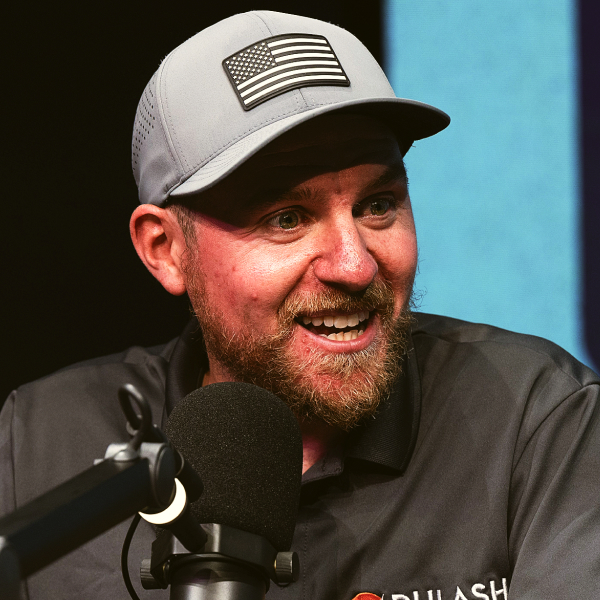
Phil Risher
Phlash Consulting
LinkedIn: Phil Risher
YouTube: @phlashconsulting
Website: phlashconsulting.com
Phil Risher founded Phlash Consulting in the Washington, D.C. Metro Area in 2019. He’s a local marketing expert, who specializes in helping businesses scale. His company helps local service businesses boost sales and fill their schedules using the unique “Phlash Customer Journey” framework to create a professional marketing system. This approach has helped clients grow their revenue by over 20% annually. Before founding Phlash Consulting, Phil was a director of business development at a major air duct cleaning company. He was tired of working with generic marketing firms that didn’t understand his industry, so he decided to start his own. Phil’s company combines digital marketing and business development strategies, and works directly with staff and business owners to help them grow. He builds strong partnerships with his clients, and most have stayed with him for over two years.



SIGN UP FOR PODCAST UPDATES
Get email updates on new episodes and podcast news.
You don’t want to miss out!
Interested in being a guest on the show?
Are you a home service professional eager to share your insights and experiences? Apply to be a guest on the Masters of Home Service Podcast, and join a community of experts committed to helping others level up through knowledge.
Other Podcasts We Love