 28 Minutes
What Skipping Time Tracking Is Really Costing You
Forrest Derr and Jerry Jackson


-
Adam (00:22):
Welcome to Masters of Home Service, the best podcast for home service pros like us. I’m your host, Adam Sylvester, and I want you to crush it in business. If you send crews out to clients’ homes every day, then you are probably wondering do they even make money? Are you just hoping that they go out and make profits and build a business? Or are you just kind of hoping and praying that this works out? Or maybe you pay your people per day and not per hour. Either way, you have to be tracking this stuff to make sure that you don’t have profit leaks, inefficiencies in your business. If you’re not tracking time and making sure that your crews aren’t just driving around all day instead of actually making money, then this episode is for you. Because my two guests today are really good at this. They know how to make sure that a crew actually makes money instead of just drive around. I mean, sometimes people have crews drive around literally half the day and that’s not making you money. So today’s guests are Jerry and Forrest. They work together and we’re going to talk about how to track time so that make sure that your employees are actually making money and that you’re not just wasting lots and lots of drive time on the road. So Jerry, welcome to the show. Glad you’re here. Why don’t you tell our audience who you are?
Jerry (01:33):
Jerry Jackson, Mobile, Alabama, and I own Professional Systems, which is a holding company for multiple subsidiaries. We have a roofing, electrical, plumbing, heating, and air and and industrial division.
Adam (01:44):
Great. Cool. Awesome. Forrest.
Forrest (01:46)
My name’s Forrest Derr. I’m also from South Alabama, and I have a consulting company where I’m a fractional chief operating officer for multiple industries.
Adam (01:55):
Cool. You guys know this really well. You guys know gross profit. You guys know time tracking, making sure you’re actually making money. What was the biggest pain point for you guys that might be also the same pain point as our listeners before you discovered how important this was? What were you doing then instead?
Jerry (02:11):
Pen and paper. I believe that’s where everybody starts. Pen and paper spreadsheets. It was very, very chaotic. Time tracking, and then we got ready to do payroll. It was pretty rough. We were scrambling, and it puts a lot of pressure on your employees as well, your administration, as they’re getting ready to produce payroll. It’d be very hectic. So now, of course, we’re using Jobber now and you can track in and out. You can clock in and out using Jobber and that time is allocated to jobs so you can see where your time’s going.
Adam (02:43):
And what your labor rate was.
Jerry (02:45):
You can see that and then you can see how much unbillable time you have. Tracking that is very important for us.
Adam (02:50):
I think a lot of listeners, it’s a hope and a prayer that we send these. Of course, they’re making money, they’re out doing that, and you realize, wow, they spent three and a half hours driving around only four and a half hours in client’s homes. That’s not good. Our prices aren’t fit for that, right?
Forrest (03:05):
Yeah. That unbillable time is a huge metric that most businesses that I come across and work with aren’t even, it’s not even on the radar. Radar. They’re not even thinking about it. Of course, you got to get out of pen and paper to where you can track that because pen and paper’s not going to show you the true picture. But once you track and have in Jobber set up a shop time as well as a travel time and have them actually punch in and out on that section, now you have data that you can have actionable steps. You can actually have a scorecard metric that says all of plumbing has to be under 10% unbillable. Now it’s a number you can watch and you can report on either too low or too high. It’s either too low or too high.
Adam (03:42):
Probably one of the best indicators if your business is efficient and actually making money is that there’s cash in your bank account. If there’s not, and you’re always struggling, this is probably your problem. It’s probably gross profit efficiency. So what does that scorecard look like, and how can our listeners do one for themselves?
Forrest (03:57):
Yeah. There’s really two scorecard numbers that I like to use in the service industry industry. One is SPH, which is sales per hour, and then the other is the unbillable time. So if you look at both the unbillable time and the SPH, that’ll give you a really good indicator of whether your team is being efficient and most people think when I say SPH to a service engine, you’re like, well, these guys aren’t selling well, but they’re producing sales per hour. They may not be actually revenue selling it. They’re revenue per hour. So what is the number that makes sense for the industry? It’s going to be different for different trades, but if you can set a target and say you want to have $150 SPH for plumbing, well, you can track that now within Jobber, run a report and look at not only is this team doing well, but is this individual doing well?
Adam (04:40):
The productivity report.
Forrest (04:41):
Yeah
Jerry (04:42):
You don’t know if you’re doing well until you start tracking these things. That’s right. Just because you have money in your banking account and you could potentially have more in there and you could have higher profit margins if you’re not tracking this, you don’t know what you’re doing, what you’re producing day to day, and guys, a lot of times will say they do, but if you’re not using a software, if you’re not using a system, there’s no way you can accurately track these things.
Adam (05:02):
Jerry, what was it like for you in the early days? Take us back to when you weren’t tracking this stuff. Paint the picture for us a little bit.
Jerry (05:07):
Very, very humble beginnings. I remember one year in particular, I worked every Saturday for the entire year. I worked six days a week for the entire year, and it was rough. It was some very, very humble beginnings. Things were tough. We didn’t have any software. One time we were writing checks for everything. We didn’t have payroll system set up. We had no way to track anything. We were using spreadsheets, and a lot of the stuff was in my mind every day, and I couldn’t get it out. There was some challenges there, so I encourage guys that are currently in business, if you don’t have these softwares and these things set up in this technology, you’ve got to implement technology or you’re not going to be able to keep up. You’re never going to grow. You’re never going to really take things to the next level, and if you’re on the sidelines, I know there’s probably a lot of guys on the sidelines that’s looking at getting into business and they’re going to listen to these podcasts to learn from these, and I encourage you to implement these on day one. If I’d had this implemented on day one, there’s no telling where we would be at in business at this point and nine years later.
Adam (06:00):
So how are you more efficient now? What are some things you guys did to make your business more efficient?
Jerry (06:06):
Jobber, everything goes in Jobber. Even the larger commercial jobs where you have to submit pay apps, even if it’s not sent, is still tracked and it still stays in Jobber. Everything goes in Jobber notes, so no more pen and paper for nothing. When you’re going out to look at a job, instead of taking a pen and paper to write all your notes in what actually you’re going to do, put all your notes in the request, all your pictures, all your notes. That’s the way to track everything and stay in this software every day. Every day we have people looking at this, and that’s the best way to keep track of it, get out of your head. That way you can free your brain space up to focus on much bigger things rather than trying to keep up with how many clients you have, who owes you money, where you need to be at the next day. You have software and technology to keep up with these things for you. Get away from writing checks. That’s another big deal. Get away from…no more check writing. You don’t have to write checks anymore. You have things that can…there’s so many different options that can do that for you.
Adam (07:06):
Yeah. Forrest I think people have a light bulb moment when you realize, okay, if I want my labor to be 18% of revenue or whatever, 15, 20%, then okay, well then, okay, so if someone gets paid $20 an hour, multiply that by five, that’s a hundred dollars an hour for that one person. There’s two people on site you need to be making $200 per hour. Oh my gosh, we’re not charging that much.
Forrest (07:31):
Yep. Yeah. It is a light bulb moment when you actually see the data and understand what is happening in your business. You can tell yourself a lot of stories at night when you go to sleep, but the data really paints the picture.
Adam (07:44):
And I think some people even make the mistake that they actually, they might come in, they don’t know the numbers, but let’s say they come in at $70 an hour and it feels like it was a good day, and they actually give people a bonus like, Hey guys, you did a great job today. Here’s a $50 handshake and no, the bonus should come at $125 an hour. And so I think that our perspective so often is just way off base, and we really don’t have any idea what we’re doing from a profitability standpoint. We’re just kind of pricing things based on what our competitors are pricing. Our guys are pretty fast. They care, they’re not going slow. And then, once you start to dig into this, as Jerry has done, you realize, ‘Wow, I have a lot to improve on.’
Forrest (08:24):
One, it’s also you got to be careful on efficiency too because you can be too efficient, and that doesn’t sound like it’s logical, but I worked with a landscaping company and we wanted to stay within a certain SBH. I didn’t want somebody to do an SBH at $80 an hour because they weren’t doing all the stuff that needed to be done in the yard. So you can actually have too much efficiency to where then you’re not taking care of the client as good. Setting those tangible targets and those ranges of acceptability is really key, but you’ve got to have the data to be able to know what the numbers are.
Adam (08:57):
I define efficiency as doing the job as good as you can or as high quality as you have to as fast as you can.
Forrest (09:03):
Absolutely.
Adam (09:04):
Yeah. Okay, so let’s talk about reducing errors and confusion because it’s not okay to just say, Hey guys, go faster, be more productive and be more efficient. Yeah. To use a really gross term, what have you guys done to make sure your people know how aware of this you are and just bake into the this is how we do it here kind of mentality.
Forrest (09:25):
Yeah, it’s a culture, so you’ve got to define that culture and those core values and make sure everybody understands that it’s not just good enough. They’ve got to do an excellent job, but know that you’re tracking the time. So one of the things that they have to do is they have to report their time and they have to report their efficiency, and it’s better to have somebody report their own efficiency than it is to take the numbers for them and give them to ’em.
Adam (09:48):
I like that.
Forrest (09:49):
To have some ownership that that’s good. So instead of having an admin actually pull that data, make them report that data, make them put it up on the dry-erase board so that everybody can see, and then you can start building some competition in the team.
Adam (10:00):
I like that. That’s a good hack. I know in my weekly meetings there’s a lot of things that I read out loud. Maybe I should have them read out loud, at least some of it. That’s a good idea. I like that.
Forrest (10:11):
Having them take ownership, especially we have a weekly meeting and having the leadership team read their own scorecard metrics to say if it’s on track or off track, that is much more powerful than just having an administrative assistant read over it or just looking at scorecard. There’s power in having to read that because now you own it.
Adam (10:31):
Yeah. Jerry, walk me through this. Let’s put the cookies on the bottom shelf and actually talk about the really specific stuff here. Your technicians, they clock in and out of Jobber for the day, but they also clock in and out for the job they’re on. Is that correct? They use the timer.
Jerry (10:46):
That’s right. They use the timer that’s in Jobber.
Adam (10:48):
For each job?
Jerry (10:49):
For each job. So we pull payroll from Jobber every week, and then their time is also allocated per job. And then we also have a job that we created in Jobber for unbillable time. It’s labeled as just ‘shop’, and then there’s time allocated to there. That way we can start tracking these hours and seeing where we’re at.
Adam (11:07):
So it’s one thing to have the data, it’s another thing to have the information, and so once you get all these numbers and all these time sheets, and it’s a lot, what do you actually do with it? Instead of just being like, you know what I’m getting at? A lot of people just say, Okay, I’ve got it, but you don’t really pay attention to it weekly. What do you do with it?
Jerry (11:23):
Every week we report on these items and we talk about ’em in our leadership meetings and these topics are discussed and then each division can see how all the other divisions are doing. And when you have that, Forrest was saying when you have that, you don’t want to be the one that looks bad in the meeting because you got all your other peers that are at the round table looking at all this stuff and they all see all the same data from each division. You don’t want to be the one that’s in last every week.
Adam (11:47):
Yeah, it reminds me of that story of that guy who goes in the factory and why is this factory so inefficient? And guy’s like, man, boss, we’re doing the best. He goes, How many did you do yesterday? Three. And he writes the three on the floor and the night shift crew comes in, What’s the three mean? Well, that’s how many things they produce last night, and then they do four, and then they scratch out and do four, and the next night, in the morning shift comes in, what’s this number four? They did four, we’re going to do five, and then they just keep ratcheting at 4, 5, 6. It becomes the best-producing factory in that whole division because they were just a little friendly competition is all it took. You don’t want to be last.
Jerry (12:19):
That’s right. And it’s a healthy competition. It’s nothing that nobody’s looked down upon. It’s a healthy competition. It creates something there.
Forrest (12:25):
It gamifies it.
Jerry (12:25):
It drives, it’s healthy. It’s nothing. That’s not a bad thing.
Adam (12:29):
I’m going to pause our conversation because I know we’re talking about efficiency, and it’s great to talk about Jobber. How has Jobber actually helped you improve your efficiency. When you start with Jobber, how did that transform your business from a time tracking perspective?
Jerry (12:39):
The time tracking in Jobber has been a game-changer for us. It helps our admins to be able to pull that time each week. It’s not so much of a headache before. This is how it rolled out. So time stopped on Wednesday. Payroll has to be in by three o’clock. It seemed like it was almost an all-day thing for one person to get everybody’s time, and then if somebody was out that day or you didn’t have time for one person, you had to kind of guesstimate, and then the next week you were trying to figure some things out. So we actually, we changed our payroll of how we were doing it. So now it runs Monday through Sunday, then it goes in on Wednesday, and then they’re paid by Thursday. And by doing that has taken a lot of pressure off of our admins and they’re more efficient and they can spend time doing other things as well instead of tracking down hours. And you have a software that can do it for you.
Adam (13:24):
Yeah, Jobber does all that.
Jerry (13:25):
Totally does all of it for you.
Adam (13:26):
Yeah, and Jobber also has an efficiency report that you can see how efficient your crews are. So if you have been listening to this conversation and you’re like, oh, I got a lot to work on. My efficiency is terrible. I don’t even know what my efficiency numbers are. I’ve got profit leaks all over the place. Jobber can help you find those leaks and start tracking it and start changing it. So go to Jobber.com/podcastdeal, get the exclusive discount and start running a more profitable business today.
(13:54)
Do you remember what your efficiency was before you started making these changes, and do you have a comparison? I’m curious of what it was before and what it is now. Did it go up?
Jerry (14:05):
Like I say before was just absolute chaos and now we actually actually have a properly run organization now, and that’s the best way, the simplest way I can explain that. We’ve come a long ways in implementing technology and implementing these things.
Adam (14:21):
I remember when we use a software called Bonus Up, it’s great for high volume service companies like mine. Technicians can earn a bonus if they hit these certain productivity levels like 150 an hour or 185 an hour, $200 an hour, and you guys probably heard this phrase, whatever you measure gets improved. And so we’ve been focusing on this one metric for a year and a half now, guys, I want your productivity to be one 50 or more. And it was like in the one twenties before we started, and now it’s over one 50 because we just kept looking at it, kept looking. We have a 60-day rolling average, and they’re always in front of them. Whatever you measure, whatever you track gets improved.
Forrest (15:02):
You can’t manage what you don’t measure.
Adam (15:04):
That’s right. That’s right. And so in this conversation is the main thing that you want our listeners to track is hourly productivity, SPH, sales per hour?
Forrest (15:14):
And unbillable.
Adam (15:14)
and unbillable.
Forrest (15:14)
I think it’s both of those components.
Adam (15:18):
Let’s talk about the unbillable for a second. So how does that play in all this?
Forrest (15:21):
Yeah, because you’ve got to be able to watch what that unbillable is. Jerry, the business is a perfect example. We had issues where the crews were getting to the office, and then they were going to the gas station.
Adam (15:33):
Yes
Forrest (15:33):
Well why were they going to the gas station? Well they were going to get ice. They were going to get drinks, they were going to get snacks. And so what Jerry and his wisdom did is he brought the gas station to the shop, so they have an ice machine, they’ve got filtered water, they’ve got bottled water that they can take, they even have snacks and it costs less money for him to do all that and provide all that to get those guys out on time than it does for them to go and have unbillable time at the gas station even as a gas tank at the office.
Jerry (16:02):
That was a great project of mine. I really enjoyed taking that on. If you think about it, you go to the gas station, how many rich folks you see in the gas station, you don’t see any. I mean, think about it, how many wealthy folks you see hanging out in the gas station? There’s none. I’m not saying I’m not going to go to Bucky’s on the way to the beach and spend $50 on a bunch of junk, but day to day you can’t do it. I had to talk with these guys. We had a weekly meeting and I said, guys, you’ve got to stay out of a gas station.
Adam (16:27):
They’re wasting their money.
Jerry (16:30):
It’s a huge markup. And I looked at the time and the guy leaves the shop at seven, he’s not getting a job to eight 30 and the next thing we’re going to work on is, okay, how do we bring the supply house to the shop? That’s going to be a pretty big undertaking. That’s something we’re currently working on now. We’re building out our shop to be able to do that.
Adam (16:46):
This is so true. The trips to the supplier are killer. Killer. And one time my supplier said, well, we can deliver it to you. This was a couple of years ago. I was like, really? I didn’t know you guys delivered. I said, oh yeah. I was like, how much is it? And I’m doing the math really fast thinking it’s going to be, he goes, oh, it’s $50. Are you sure you want us to do it? And I almost laughed. I was like, yeah. $50 that’s a steal. Do you know how much time it takes for my guys to drive all up there and get this stuff? That was a steal. And so there’s so much to save. Let’s talk about this some more. There is so much to be said about driving to the supplier.
Jerry (17:24):
Not only that, the drive time there to the supplier and also the time…
Adam (17:29):
Standing around at the supplier
Jerry (17:29):
So we use Verizon to track vehicles and see time where they’re at and we geofence the supply houses. We can start seeing how long the day at the supply house, and sometimes it can be an hour to hour and a half for them hanging out the supply house. So we’re looking at bringing the supply house to us and then every day I’m talking to these guys and beating this into them of like, you have to call these suppliers at their cutoff time every day to get your material delivered either to the shop or to the job. Another thing that we’ve implemented and started working on is we started buying equipment that we need. What I like even more than just buying it on the equipment is I look at the time that it takes. That saves us from going to an equipment distributor to pick up something that’s needed. Like rental equipment.
(18:11)
So you’re going to have at least half a day built into going to pick it up and drop it off, not only the time that it takes for you to drive there. So that’s another thing we’ve implemented is buying equipment and saving time and efficiencies on that as well because time is something you’ll never get back. So you have to focus on where you can save time to become more efficient.
Forrest (18:29):
And guess where you’ll see that? In unbillable time.
Jerry (18:32):
In unbillable time.
Forrest (18:33):
That’s why it’s so important to track that. It shows you the picture going, holy crap, we got 25% unbillable time. What is going on
Adam (18:40):
Forrest, you’ve been doing this for a while, and so you’ve seen a lot of different PNLs, a lot of different data sets. Do you have a guideline, like an objective, for just on average? What should billable time be if this number is too high? What’s the range would you say?
Forrest (18:56):
Really try to keep it under 10% and it can be different for different industries. There’s some weird industries. I have a landscaping company I work with and the lawn health division, we had it under 20% versus 10% for everybody else, 10% for everybody else. But the lawn health, you got to prep, mix the chemicals, you got to put it in your truck, you got to clean your truck tank out when you get back. So it does depend, but 10 percent’s been a good number that I’ve been able to find across the industries that if you can keep ’em under 10%, your productivity is huge.
Jerry (19:27):
And one thing to always remember is time is much more valuable than money. If you’re looking at a scenario where it’s either time or money, spend the money and save the time.
Forrest (19:37):
Well, we were talking about this morning over coffee that I did a post just recently on LinkedIn, and it was about getting a giant clock at the shop. And so another company I was working with, we were having trouble getting people out on time, getting people out on time. And so we bought this giant digital clock, one foot high letters, bright red and it was beat the clock. You got to be out by seven 10, you get there at seven, you got to be out by seven 10 and you’re out by seven 11. That’s a problem. Seven 12, that’s a problem. And I actually learned it from a guy about CrossFit. One of the reasons CrossFit is successful or you’re successful in CrossFit is because you got a clock you got to beat.
(20:14)
If you don’t have a time constraint that’s visual, that you’re watching, it’s hard to maintain that efficiency.
Adam (20:20):
There’s a gym in my local town that they close the doors at class time and they lock ’em.
(20:27)
So if you’re late, you miss class completely. The stakes are high. So I love the big clock idea. I think a lot of our listeners are actually struggling with this. Let’s talk about this for a minute because there is a lot of time wasted in the morning for most people listening. What are some strategies, let’s say our listeners, they can’t justify bringing gas in. Maybe they’re not going to do per se, but what are some other things they can do to save either on the gas station time or just the milling around in the morning time being really slow, prepping the materials, and any tips on that?
Jerry (20:59):
Set the standard now early in, the sooner you set the standard and say, we’re going to arrive at the shop at 6:40 and we’re going to be gone by seven, you set that standard early on. It’s harder to do it later than it is to do it now, more so in the beginning. Another thing that I do day to day to save time is I wear the same thing every day. I have multiple polos, I have multiple of the same pants and I wear the same shoes, the same thing every single day. I eat the same thing for breakfast every morning. So it’s extremely easy for me to get up in the mornings. I don’t have to think about much. I can get what I need and get out the door quick to save time.
Adam (21:36):
And the same principle could be used for work, too. If you can create some sort of template in the morning, Hey guys, first thing you do is you’re going to clock in. Second thing is make sure you’re totally dressed. Third thing is get in the van and get going. I think that one of the things that we have done for our business is there’s two different ways of skinning this cat. One is, Hey, we have to be out by a certain time, or we have to be at the job site by a certain time. And then you move that job site time up by 30 minutes. And the way you know is that they either clock in the job site or they take a photo of themselves. For us personally, we use CompanyCam. We just snap a photo as soon as we get there.
(22:11)
So I always know the photo of the yard sign in the yard with the house in the background is when they got there within a minute. And if they’re getting there way later than you want, then you need to start changing things. I like what you said, Jerry, start now telling these guys, Hey, we are making some changes. It might feel a little annoying. Oh, Adam’s being mean to us now. He won’t let us go to the gas station anymore and now he’s bringing this gas to us. There’s this big clock in here now and now we have to get the job on. But guys, we have to run a profitable organization. This isn’t middle school. We are all adults. Sure. And let’s be real. I let you guys do things. I shouldn’t have been letting you guys do all this time and you guys are adults, but we have to be adults in this situation. We’re making changes and can you guys help me with this? Let’s make this happen together.
Forrest (22:57):
Yeah, let’s make it easier. One of the companies I work with, we were having trouble with how much time they were taking to get ice, had ice had trouble with how long they were taking to get ice socializing and everything. So what do we end up doing? We got one of the admins in the office to fill all the ice coolers and I’m talking like 30, so it’s not like one, but 30 ice coolers, 30 different people.
Adam (23:19):
It’s traffic, crews
Forrest (23:19):
Traffic in and out. So we had somebody in the evening, south Alabama, we have to have ice. It’s just on the job sites. It’s hot down there. It’s ridiculous. So have somebody fill those ice containers before the day before and then you have a pickup truck with all the ice containers lined up. You drop your old one off, you pick a new one up, and it’s like a system. So even little things like that, it doesn’t sound like a big effort. It’s ice. How much time is that going to take? It takes time when you’ve got 30 or 40 crews in there trying to get ice. So you got to take a step back and look at your business critically to try to figure out where are those little gaps and a little minute change in structure can add thousands and thousands of dollars for the bottom load.
Adam (24:04):
Yeah, totally.
Jerry (24:05)
There’s a saying, if you count, your pennies of dollars will come. If you count your minutes, the hours will come.
Adam (24:10):
That’s good. I like that
Jerry (24:11):
That’s true. You’ve got to track this stuff and keep up with it.
Adam (24:13):
And I think you need to have some small wins. Hey guys, if we’re out of the shop by seven 15 every day this week, pizza party.
Jerry (24:19):
Celebrate those wins. Like I tell the guys too, if we’re doing well and our sales per hour is high and the company’s making money, we’re doing well, we’re going to give back to you guys. That’s where those bonuses and raises, and that’s where we take the leadership team to a football game every year. It’s those kinds of things that we do to give back to the guys, to reward them and appreciate them for being a key player and doing well.
Adam (24:42):
Yeah, that’s great.
Forrest (24:43)
And we’ve been talking about the field, but there’s also the back office that is really important on the timekeeping. So just talking about checking time on paper. Well, there’s a lot of problems with that one inaccuracy. How much time does it take to calculate then also the mistakes and what that costs? So before we started using Jobber, it was all on paper. So then we shifted to Jobber. Well guess what happened? The time for payroll reduced.
(25:11)
So the amount of time that the admins had to work on payroll was reduced significantly. The aggravation, the stress of getting a paycheck wrong. So now it’s not that something was transposed, it was you didn’t punch in right. That’s on you.
Adam (25:25):
Your fault, not mine
Forrest (25:25):
You have ownership of that rather than the office. So we’ve been able to deploy the office manager to do more high level things that are worth more money by letting Jobber automate the payroll.
Adam (25:37):
Yeah, that’s awesome. And Jobber has a great integration with Gusto, which we use for payroll, and it’s pretty seamless. So I think there’s three specific takeaways that I think our listeners can actually do right now to get going. So number one, revenue per hour. You have to have a scorecard and revenue per hour is the first metric on there. You have to know how much you’re actually making per technician in the field, and then you also have to track number two is unbillable hours all the time wasted at the shop on the road at the end of the day all these times, or you’re not making any money, and you got to keep that hopefully under 10%. Number two is you have to know how much to charge per hour. It’s really a pricing thing. You have to make sure that you’re actually charging enough to send one of your best guys out in the field all day.
(26:21)
You might be undercharging, and the only way to know is actually do the math and start charging per hour the right way and then track it. You track it, they will follow and they will start lifting that and raising that number up over time. And number three is have your people read their own metrics. I love this one actually. Instead of just getting up there and reading all these metrics yourself as the owner, have them read their metrics out loud and it just gets in their brain. It’s a whole different mentality. It creates ownership of that number that they’re tracking. I love that. Have your people read their own metrics. Final question for you guys. I’m curious. You guys run these big businesses and you have a lot going on. What’s the biggest challenge that you guys are facing right now?
Jerry (26:59):
Well, speaking of unbillable time, that is one of the challenges that we’re currently working through and working on increasing that efficiency.
Adam (27:04):
Cool Forrest?
Forrest (27:06)
Same thing. I got to reduce my own unbillable time. As a consultant, I’ve got to look at that and figure out where am I spending my time and what are the things that I can delegate to somebody else to get that higher dollar volume.
Adam (27:18):
Totally.
Forrest (27:19):
Yeah.
Adam (27:19):
Well, thanks for being here guys. How do people find out more about you, Jerry?
Jerry (27:22):
You can find us at our website prosystems.org.
Adam (27:24):
Cool. Thanks for being here, Forrest.
Forrest (27:26):
You can find me at Derr Consulting, deerconsulting.com.
Adam (27:29):
Awesome. Well, thanks again for being here. I think our audience is better for it. You guys are crushing it in business. Keep it up.
Forrest (27:35):
Thanks. Appreciate it.
Adam (27:37):
And thank you for listening. I hope that you heard something today that will help you make more money and be more efficient in your business. Start tracking those hours. I’m your host, Adam Sylvester. You can find me at adamsylvester.com. Remember, your team and your clients and your family deserve your very best. So go give it to ’em.
About the speakers

Adam Sylvester
CHARLOTTESVILLE GUTTER PROS AND CHARLOTTESVILLE LAWN CARE
Website: adamsylvester.com
Adam started Charlottesville Lawn Care in 2013 and Charlottesville Gutter Pros in the fall of 2020, in Charlottesville, VA. He likes to say, “I do gutters and grass! When it rains the grass grows and the gutters leak!” He got into owning his own business because he saw it as a huge opportunity to generate great income while living a life that suited him. He believes that small companies can make a serious impact on their communities and on every individual they touch, and he wanted to build a company that could make a big difference. His sweet spot talent is sales and marketing with a strong passion for building a place his team wants to work. Adam values his employees and loves leading people. While operations and efficiency is not something that comes naturally to him, he is constantly working to improve himself and his business in these areas.
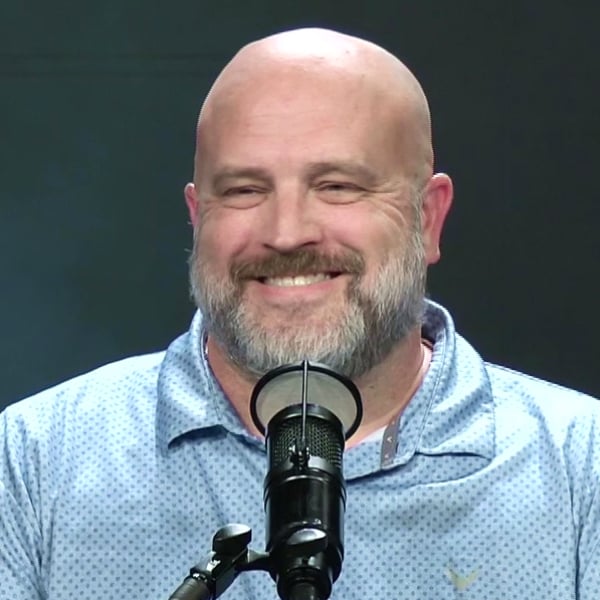
Forrest Derr
DERR Consulting
LinkedIn: Forrest K. Derr
Forrest is a Fractional COO who helps service-based businesses get organized and ready to scale. With executive experience across telecom, SaaS, construction, retail, and home services, he brings clarity and structure to companies that are growing fast but feeling chaotic. Through his firm, Derr Consulting, he partners with founders to streamline operations, align teams, and build accountability systems that support sustainable growth. He uses platforms like Ninety and EOS tools to create focus, simplify processes, and embed operational discipline. Forrest is known for asking the right questions, challenging assumptions, and helping leaders zoom out to see the full picture. Whether supporting a single company or multiple ventures, he delivers proven systems and real-world insights that create traction and momentum.

Jerry Jackson
Professional Systems
Website: prosystems.org
Jerry Jackson is the CEO and founder of Professional Systems, a home service company specializing in electrical, roofing, HVAC, and plumbing solutions. Since founding the business in 2016, Jerry has transformed what began as a simple decision to make more money into a mission-driven journey focused on growth, impact, and service. Jerry leads a talented, tight-knit team known for delivering reliable solutions and exceptional workmanship. For Jerry, building a business goes beyond the numbers, it’s about empowering his team, creating opportunities, and making a lasting difference in the community he serves.



SIGN UP FOR PODCAST UPDATES
Get email updates on new episodes and podcast news.
You don’t want to miss out!
Interested in being a guest on the show?
Are you a home service professional eager to share your insights and experiences? Apply to be a guest on the Masters of Home Service Podcast, and join a community of experts committed to helping others level up through knowledge.
Other Podcasts We Love