



Key takeaways:
Improving fleet management can significantly boost efficiency, cut costs, and keep your vehicles in top condition for home service businesses.
- Track vehicles and analyze data. Use real-time GPS tracking and regularly review key fleet data—like fuel usage, driver behavior, and maintenance costs—to streamline dispatch, save money, and keep teams accountable.
- Keep insurance and vehicle usage up to date. Routinely update your commercial insurance and rotate vehicle assignments to reduce wear, ensure coverage accuracy, and maximize the life of each vehicle.
- Implement smart schedules and policies. Set clear driver checklists, rotate vehicle usage equitably, and create fleet policies to improve safety, reduce risk, and simplify daily fleet operations.
- Optimize routes and conduct preventative maintenance. Use route optimization tools to save time and fuel, and maintain a regular maintenance schedule to prevent costly breakdowns and extend vehicle lifespans.
- Leverage fleet management software. Automate scheduling, maintenance reminders, and reporting with dedicated software to simplify fleet oversight and free up admin time for growing your business.
Get more expert tips and industry insights to help your business thrive—sign up for the Jobber Newsletter. Sign up here.
If you’re struggling to manage multiple vehicles, or your fuel costs are getting out of hand, it might be time to learn how to improve your fleet management system before it impacts your bottom line.
Effectively managing your fleet operations saves you time and money. Use these tips to streamline fleet management to improve route efficiency, reduce fuel costs, and respond faster to last-minute requests or changes.
12 small business fleet management tips:
What is fleet management?
Fleet management is the process of overseeing a company’s commercial vehicles to ensure they operate safely, efficiently, and cost-effectively. It involves tasks such as :
- Monitoring GPS tracking
- Planning and optimizing routes
- Managing fuel consumption
- Ensuring driver safety
- Managing your vehicles’ health
For example, a plumbing company may use fleet management to track vehicles so they can dispatch the closest employee when an emergency repair call comes in.
A lawn care company may use fleet management to find the quickest, most fuel-efficient routes for the day, so crews spend less time driving and more time on the job.
When done effectively, fleet management reduces overhead costs and operating expenses, meets regulatory compliance requirements, and optimizes fleet efficiency.
1. Track your vehicles
When you know where your vehicles and crews are, you can:
- Let customers know when a team is on the way
- Easily calculate time spent at a job site
- Respond to accidents or breakdowns if they happen
- Dispatch the closest team members to last-minute or emergency jobs
- Optimize routes and cut down on unnecessary travel time
- Meet them on the road with a forgotten tool or extra supplies
That way, you can oversee your fleet at all times, make changes to your crews, schedules, and jobs as needed, and remove any guesswork.
Pro Tip: Set up real-time GPS tracking so you always know where your crews are and can adjust schedules on the fly.
2. Analyze vehicle data
Analyzing fleet management data allows you to identify opportunities to improve efficiency and productivity.
For example, planning routes to make more room in your schedule, addressing poor driving behaviors before an accident happens, and monitoring costs to ensure they don’t eat into profit.
For best results, you should be tracking, collecting, and analyzing fleet data such as:
- Vehicle locations and real-time GPS tracking
- Fuel consumption and efficiency
- Driver behavior (speeding, idling, etc.)
- Route performance
- When jobs are finished
- How much time is spent on job sites
- Vehicle repair costs
- Vehicle-related costs, like insurance, licensing, overhead, leases, purchases, and inspections
- Who is using a work vehicle and when
- Regulatory compliance requirements like driver’s licenses and vehicle safety certifications
This information will help you see where you can make changes to improve your fleet efficiency and productivity.
Gathering and collecting fleet data can be time-consuming and complicated without the right tools. Depending on what you want to track, you may need fleet management software, GPS tracking devices, and reporting tools to automate the process and provide insights, like fuel reports and usage overviews.
Pro Tip: Review one key data point each week—like fuel use or idle time—to spot quick wins in efficiency.
3. Update your insurance
When you use commercial vehicles in your service business, you need to make sure that you have the right amount of coverage for your fleet. You also want to ensure that you are not overpaying for vehicles no longer in use or drivers who are no longer your employees.
You’ll need to update your insurance whenever you:
- Add or remove a vehicle from your fleet
- Change a vehicle’s usage, like from personal to commercial use
- Make changes that could impact your coverage, like expanding to new service areas
- Hire or let go of fleet drivers
- Are impacted by regulatory updates
You’ll also want to review your insurance coverage and costs after filing a claim or reporting an incident to see how it will affect your premium.
Pro Tip: Add a recurring quarterly reminder to review coverage so no fleet changes slip through the cracks.
4. Buy the right vehicles
Before you add any vehicles to your fleet, make sure you’re purchasing or leasing the right one by considering:
- Fuel efficiency
- Towing capacity
- The affordability and availability of parts
- Whether it’s easy to replace
- What you need it for
Pro Tip: Create a simple checklist of must-have specs to guide every vehicle acquisition decision. For example, a landscaper may want a truck with a large cab with easy access to tools and the ability to haul a trailer for additional equipment. That way, when you head to the dealership, you know exactly what to look for.
5. Rotate vehicle usage
If you have a fleet of vehicles, make sure your staff uses them equally to minimize wear and tear and extend the lifespan of each one.
By rotating vehicles so that they are all driven equally, you spread mileage and maintenance across your entire fleet, preventing any single vehicle from being overused. This is a great system if your employees all want to drive the newest truck, even though your older pickups still have life in them.
It can also help to identify small repairs before they become major problems, as vehicle rotation means your team will be using each vehicle in different conditions.
For example, you may not notice a vehicle with an overheating engine on a short trip or that your tires need to be replaced on bare roads. When you use your vehicles equally, it’ll be easier to spot when they need repairs or maintenance.
Pro Tip: Assign vehicle rotation days or weeks so mileage and wear stay evenly distributed.
6. Make a driver checklist
Standard operating procedures (SOPs) keep your team on the same page when it comes to processes and fleet management best practices.
Having one for your drivers helps to prioritize safety and provides guidance when they aren’t sure what to do. For example, a driver checklist should cover:
- Pre-trip inspection instructions, like checking tires, mileage, and noting the fuel level
- Confirming the route and job address
- Securing all tools and equipment
- Reporting vehicle issues or damage
- Following safety protocols and traffic laws, like wearing a seatbelt and adhering to speed limits
- Post-trip vehicle inspections, like checking for damage and noting relevant information such as updated mileage numbers and fuel
Instead of just providing crews with a booklet covering your procedures, train them on the processes they should follow. For example, when you bring on a new hire who’ll be driving one of your vehicles, take time to communicate your expectations to them by giving them a driver training session before handing over the keys.
It’s one of the most effective ways to reduce accidents, prevent costly repairs, and feel confident that you and your drivers are on the same page when you send them out on the road.
Pro Tip: Have drivers complete a quick pre- and post-trip checklist to prevent missed issues and unsafe trips.
7. Adopt route optimization
Route optimization helps your team spend less time driving and more time getting work done. By planning the most efficient routes based on job locations and crew assignments, you’ll reduce fuel costs, vehicle wear, and time spent behind the wheel, so you can fit more jobs into the day.
With a field service app like Jobber, you can optimize routes for a single team member or your entire crew with just a few clicks. The schedule updates instantly, showing a map of each route so dispatchers and field staff stay aligned. You can also set dynamic start and end points—like your shop or warehouse—and let Jobber calculate the most efficient path.
If multiple visits are scheduled in the same area, Jobber automatically clusters them together to prevent backtracking. Need to make changes? Just drag and drop to update the route, and the crew gets notified in real-time.
Smarter routing doesn’t just save you time—it helps you deliver more reliable service and keep customers happy to increase profit and grow your business efficiently.
Pro Tip: Review tomorrow’s routes the night before to eliminate backtracking and reduce fuel waste.
8. Conduct preventative maintenance
If you wait until a vehicle breaks down to repair it, you could end up losing money through missed appointments. You can else end up with unexpected operational costs like repairs or replacements, and even increased insurance premiums due to increased risks or claims.
Preventive maintenance, like oil changes, brake checks, tire rotations, and fluid inspections, helps to identify small repairs before they become major issues. Not only will this save you money, but it will also extend the life of your fleet, keeping them on the road for longer.
Note: Some states require annual vehicle inspections, while in others they’re only necessary when you first register a vehicle or it changes ownership. Remember to check your state’s laws surrounding vehicle inspections and maintenance to stay up to date and catch potential problems early.
Pro Tip: Build a recurring fleet maintenance schedule so every vehicle gets serviced before issues arise.
9. Create policies
Like driver checklists, policies give employees guidelines about how to handle specific situations. But instead of focusing on step-by-step instructions for everyday tasks, they’re best used for outlining:
- What work vehicles can and can’t be used for
- What to do in the event of a motor vehicle accident
- What to do if a vehicle breaks down
- How to report damage
- Driver safety expectations and consequences for not following them
- Where to get fuel from and how to purchase it
- Requirements for keeping vehicles clean
- Guidelines for who is allowed to drive company vehicles
- Whose responsibility it is to maintain the vehicle
- Licensing rules and regulations
These policies protect your business by reducing liability and communicating important information to your team. Review them with staff members and update them regularly to keep them relevant and accurate.
Pro Tip: Keep your policies in a shared digital folder so every driver can reference them anytime.
10. Keep records
An effective fleet management strategy means keeping records of important information, like:
- Vehicle purchase or lease agreements
- Maintenance and repair work
- Driver details, like licenses, certifications, and training
- Fuel usage
- Insurance policies and claims
- Accident reports and incident logs
- Warranty information
- Driver complaints or tickets
If a vehicle is involved in an accident, maintenance records and repair history can demonstrate it was properly maintained, potentially helping with an insurance claim or supporting a legal defense.
Pro Tip: Store all vehicle and driver documents in one cloud folder to simplify audits, claims, and tax time.
11. Make a schedule
Attempting to manage your fleet by letting employees check out vehicles as needed is a challenge. Instead, make a comprehensive schedule that includes:
- Which vehicles are assigned to which jobs
- Who the authorized drivers are
- The expected start and end times of each job
- Breaks, rest periods, and driving time limits as legally required
A long-term schedule can also note scheduled maintenance, inspection reminders, lease and insurance renewals, and other fleet management tasks.
Pro Tip: Use service management software for easy fleet scheduling.
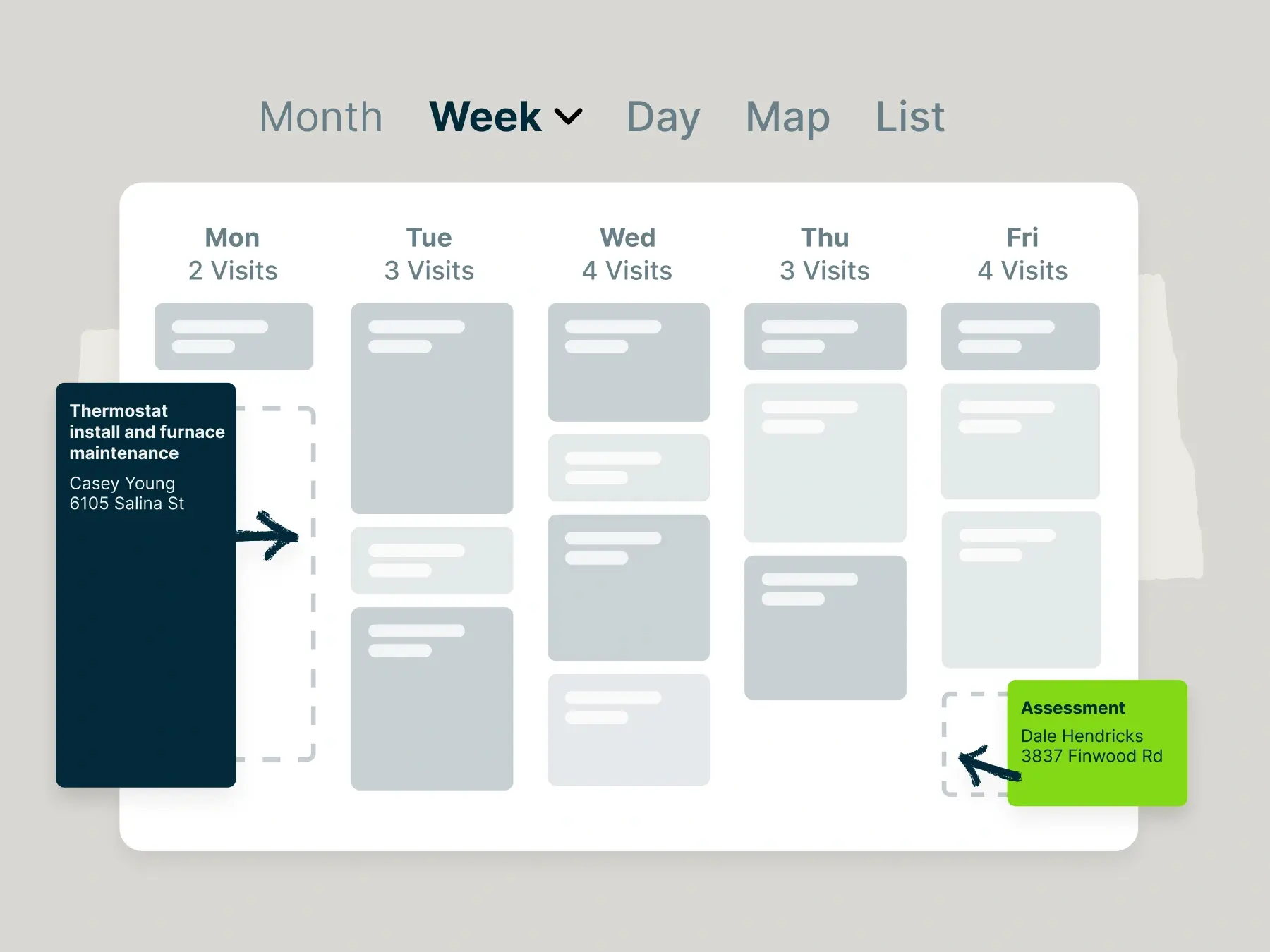
Scheduling software like Jobber gives you the tools you need to oversee fleet management schedules so you can have more control with less admin work. You can use it to create events and reminders, drag and drop rescheduled appointments, assign team members to different jobs, and optimize routes with automated maps.
READ MORE: How to schedule employees effectively
12. Use fleet management software
You already know that effective and efficient fleet management means juggling a lot of moving parts, from driver behavior and vehicle locations to scheduling maintenance and monitoring fuel usage.
Trying to oversee one of these tasks alone can be a struggle, but put them all together, and it’s nearly impossible while you’re taking on all the other tasks of running a business.
Fleet management software is the best way to take this work off your plate while still tracking, analyzing, and filing the data you need to keep your fleet on the road and running smoothly.
Pro Tip: Start by automating one task—like route planning or maintenance reminders—to free up immediate admin time.
Here are some popular fleet management platforms to consider.
Force Fleet Tracking
Force Fleet Tracking is the best fleet management solution for independent contractors and small service businesses that need simple GPS hardware to track vehicles and monitor fleet safety.
Force Fleet Tracking’s mobile fleet management system helps you keep your employees accountable and provides a record of when you’ve completed jobs.
Like FleetSharp, Force Fleet Tracking integrates with Jobber to create a complete fleet management system to track your drivers and vehicles.
FleetSharp
FleetSharp is the best field service fleet management software for businesses that only require GPS tracking and real-time monitoring.
Powered by Google Maps, FleetSharp’s GPS mapping allows you to see each vehicle’s current location, along with the direction and speed it is traveling.
Plus, FleetSharp integrates with Jobber to give you instant GPS insights into the speed, direction, and fuel level of every vehicle in your fleet.
Fleetio
Fleetio is a great fleet management option for large vehicle fleets with detailed reporting requirements.
Fleetio lets you quickly import all of your vehicles’ information through VIN Decoding, reducing manual data entry and leaving more time for you to grow your business.
Geotab
Geotab works best for large fleets that need compliance tracking, advanced telematics, and AI-driven data insights.
Geotab helps you stay on schedule with features such as automated maintenance reminders, engine fault code notifications, and performance gap identification.
Learning how to improve fleet management doesn’t have to be complicated—small, consistent changes can dramatically boost efficiency, cut costs, and keep your vehicles on the road longer.
By using smart processes, clear policies, and tools that automate fleet tasks, you can run smoother operations and deliver more reliable service every day.
Originally published in February 2025. Last updated on December 8, 2025.
Frequently Asked Questions
-
Effective fleet management improves overall operational efficiency by reducing fleet costs, fuel management issues, and unnecessary vehicle downtime.
With the right fleet management solution and asset management strategy, you can:
• Enhance vehicle performance
• Streamline vehicle acquisition decisions
• Extend the life of each fleet vehicle
Better driver management and predictive maintenance also lead to safer and more reliable fleet operations.
-
Fleet managers can boost productivity and improve fleet performance by:
• Optimizing maintenance schedules
• Monitoring vehicle performance
• Using software to track fleet operations in real time
• Reviewing fleet size to meet operational needs
Plus, automating fuel management and fleet maintenance tasks helps reduce delays and improves overall workflow efficiency. -
Preventive maintenance keeps vehicles in top condition, reducing unexpected breakdowns, lowering maintenance costs, and extending the lifespan of fleet vehicles.
A well-structured maintenance schedule ensures maintenance needs are addressed before they become costly problems, improving both vehicle performance and safety.
This proactive approach enhances fleet performance and supports more efficient fleet management overall.