



Key takeaways:
Creating a comprehensive landscaping business plan sets the stage for growth, organization, and lasting success in the industry.
- Define your business and services. Clearly outline your target customers, service offerings, business structure, and the unique value that sets you apart in your local market.
- Analyze your local market and competition. Understand seasonal demand, customer expectations, and competitor strengths and weaknesses to position your business effectively and fill service gaps.
- Choose the right services and develop a pricing strategy. Focus on services that match your skills and resources, then price them to cover costs, ensure profitability, and support long-term growth.
- Create a marketing and sales plan. Leverage local advertising, referrals, Google Business Profiles, and clear follow-up processes to consistently attract and convert new clients.
- Plan for finances and growth. List startup and ongoing expenses, set realistic revenue and profit projections, and regularly review your financials to sustain healthy growth and adapt to market changes.
Stay ahead with more tips and tools for your landscaping business by signing up for the Jobber Newsletter. Subscribe here.
A landscaping business plan is a roadmap that outlines what services you offer, who you serve, how you price your work, and how your business will grow over time.
Without a solid plan, it’s easy to underprice jobs, struggle with cash flow, or stay busy without actually moving your landscaping service business forward.
This guide breaks down the most important sections of a landscaping business plan and shows you how to create one to set your business up for success.
What is a landscaping business plan?
A landscaping business plan is a formal document that clearly defines:
- What your business does
- Who you serve (your ideal customers)
- What services you offer
- How you price and sell your services
- How work gets done day to day
- How much money you need to operate
- How much revenue you expect to make
If you’re a new business and want to secure funding from a bank or other investors, you may need to have this document before you apply.
In the sections below, we break down each business plan section and offer easy examples you can follow to create your own.
Executive summary
The executive summary is a high-level overview of your landscaping business. It should clearly explain what your business is, who it’s for, and where you’re headed.
Executive summary content might include:
- A quick recap of why you started your business
- A brief description of your vision or mission statement
- Your overall business goals
- A unique selling point or competitive advantage
Think of the executive summary section like your “elevator pitch.” It sets the tone for the rest of your plan without being too wordy or detailed, and it gives the reader a quick overview of the potential impact of your business.
Executive summary example
Greener Way Landscaping was founded in 2022 after the company’s owner, Tyler Thompson, identified a local demand for reliable, professional landscaping services. Many of Tyler’s neighbors were frustrated when their requests for quotes and landscape work were met with silence, frustrating delays, and high prices.
Today, Greener Way’s mission is to provide dependable, high-quality landscaping with clear communication and straightforward pricing.
Greener Way’s goal is to grow a profitable, sustainable business by expanding recurring services and building long-term customer relationships in the areas in and around Raleigh, North Carolina. The company’s competitive advantage is a reliability-first service model focused on consistent scheduling, clear expectations, and attentive communication.
Company overview
The company overview defines how your landscaping business is structured and how it operates. Here, you can describe things like:
- Business structure (sole proprietor, LLC, partnership): How your business is legally organized, which affects taxes, liability, and how you manage finances
- Location and service territory: Where your business is based and the specific cities, neighborhoods, or regions you serve
- Business assets: The equipment, vehicles, tools, and technology you own or lease to deliver landscaping services, such as mowers, trailers, trucks, and scheduling software
Defining these details early gives you a clear picture of your business model and provides a foundation for future growth decisions.
Company overview example
Greener Way Landscaping is a locally owned residential landscaping company in Raleigh, North Carolina, operating as an LLC. The business provides routine lawn care and landscape services to nearby neighborhoods within a defined service area.
Greener Way Landscaping uses professional-grade equipment, a service vehicle and trailer, and scheduling and invoicing software to operate efficiently and deliver reliable, consistent service to its customers.
Market analysis
Market analysis helps you understand where demand exists and how to build a profitable landscaping business in your area. In this section of your business plan, focus on:
- Local demand for landscaping and lawn services
- Seasonal patterns that affect scheduling, staffing, and revenue
- Customer expectations, such as reliability, pricing, and service quality
- Trends that influence landscaping businesses, including labor and service demands
- Your ideal customer profile, including property type, budget range, and service needs
Most landscaping businesses see strong demand in spring and summer, with slower periods in the off-season. Understanding these cycles helps you plan pricing, staffing, and cash flow more realistically.
Your market analysis should show how your services support consistent revenue year-round—even if that means branching out to offset a predictable dip in business.
Market analysis example
Greener Way Landscaping serves residential customers who value reliable, professional landscaping work. The company’s ideal customer profile includes:
- Homeowners in nearby neighborhoods within the established service territory
- Household income of $60,000 or more
- Ages 25–65, primarily working professionals and families
- Average-sized residential lawns, suitable for weekly or bi-weekly maintenance
This customer base supports recurring service plans, predictable scheduling, and consistent revenue throughout the peak landscaping season.
Competitor analysis
Competitor analysis helps you understand who you’re up against and how you can stand out with local clients. In this section, you’ll want to list:
- Types of competitors in your area (solo operators, established crews, franchises)
- Services they offer with price ranges
- Strengths and weaknesses (from your perspective)
- Gaps or opportunities you can fill, or areas where your business shines
Pro Tip: You don’t have to always be the cheapest landscaper to win reliable work. Many customers value reliability, communication, and professionalism just as much as price.
Identifying areas where competitors fall short helps you position your business more effectively.
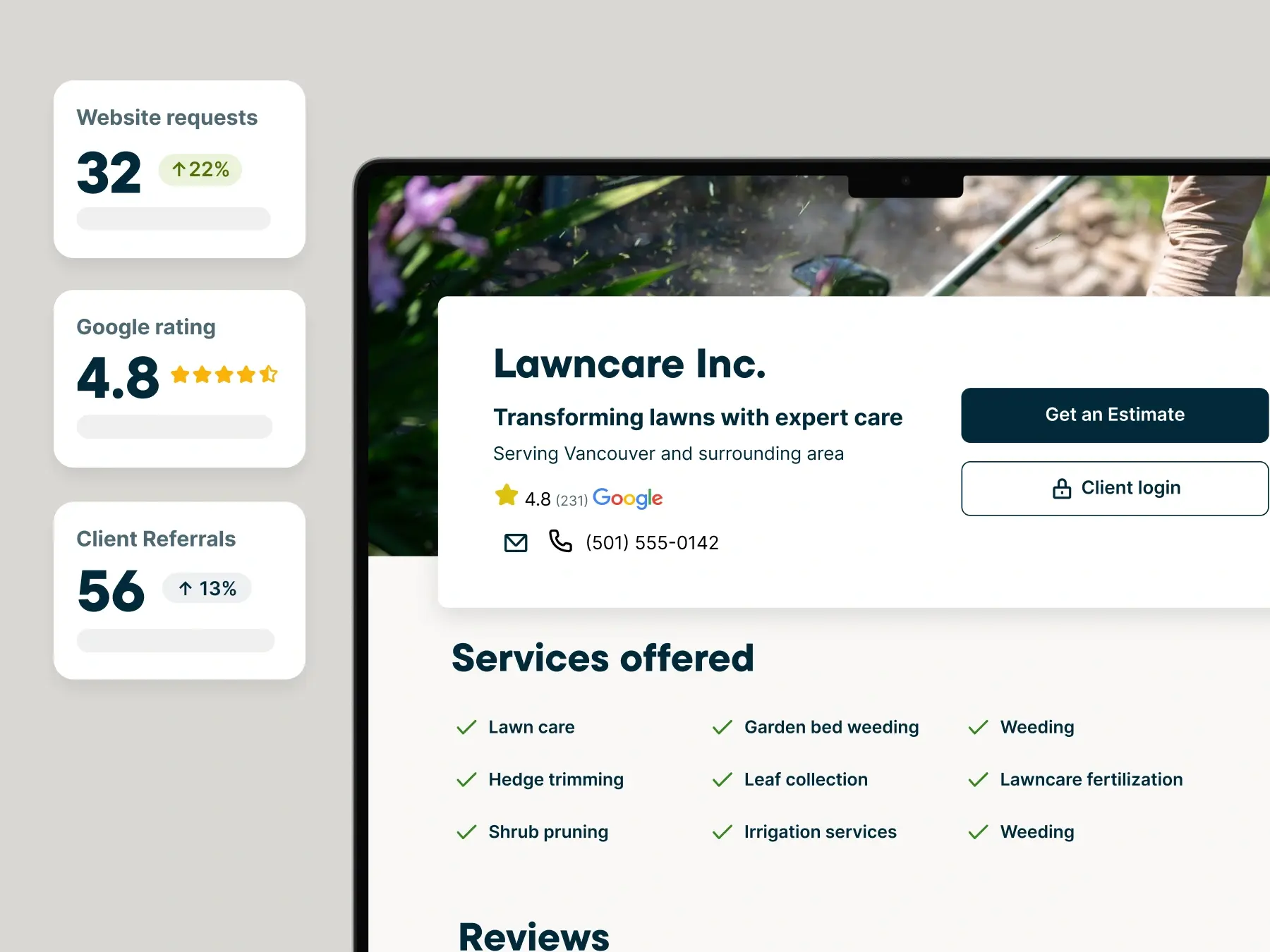
We have over a hundred and thirty-six five-star reviews on our Google page. We’re the most reviewed landscaping company in my county. So I promote that.
Competitor analysis example
- EverGreen Turf is a regional provider that offers lawn maintenance, landscaping, and seasonal services under one contract. While convenient, the company operates on a high-volume model and is less flexible with scheduling and special requests.
- Riverbend Lawn and Landscape is a long-standing local business with a strong presence in the area. Online reviews frequently mention inconsistent results, such as uneven mulch beds or rushed cleanup jobs.
- BrightLeaf Outdoor Co. focuses on eco-conscious landscaping services and lawn treatments. The company delivers excellent results but maintains a limited schedule and higher pricing, which makes it difficult for some customers to book. This company also caters more to large commercial landscape needs.
Services and offerings
This section defines the scope of your landscaping business and sets clear boundaries around the work you take on. Rather than trying to do everything, focus on services that match your skills, equipment, and goals.
When choosing your services, consider:
- The landscaping equipment and assets you already own or can rent
- The types of projects competitors specialize in and where gaps exist
- The outdoor upgrades your ideal customers request most often
- Seasonal demand for design, installation, and cleanup work
- Opportunities to bundle services into higher-value packages
Your landscaping business plan could include services such as:
- Landscape maintenance (beyond basic mowing)
- Planting, bed creation, and garden installation
- Mulching, edging, and border work around hardscapes
- Seasonal cleanups and property refreshes
- Sod installation and lawn renovation projects
- Shrub and small tree installation or removal
- Landscape enhancements and one-time upgrade projects
As your business grows, you can expand into more complex or higher-margin landscaping work (like design or landscape lighting) without overextending your team.
Services example
Greener Way Landscaping provides the following residential landscaping services:
• Landscape maintenance and property upkeep
• Mulching and bed maintenance
• Planting and garden installation
• Edging and border detailing
• Shrub trimming and pruning
• Seasonal cleanups (spring and fall)
• Sod installation and lawn renovation
• Landscape enhancement projects
Services are offered as recurring maintenance plans or one-time projects, depending on client needs. Seasonal services are added throughout the year to support steady demand and flexible scheduling.
Pricing strategy
After setting your services, the next step is pricing them in a way that supports profitability and growth. Landscaping pricing should cover the true cost of running your business while leaving room for profit.
When setting your prices, factor in:
- Your pricing model, such as flat-rate pricing, hourly rates, or recurring service contracts
- Labor costs, including employee wages, payroll taxes, and your own time
- Fuel, equipment, and maintenance expenses
- Overhead costs, like insurance, software, and marketing
- Seasonal pricing adjustments for peak and off-season work
- Minimum job pricing to ensure small projects remain profitable
Underpricing can help you win early jobs, but it often leads to burnout and cash flow issues. A better pricing strategy reflects the real cost of doing business and positions your landscaping company growth over the course of many years.
Pricing strategy example
Greener Way Landscaping uses flat-rate pricing for most services, with project rates based on estimated labor, equipment use, and materials. Standard labor is priced at $60 per hour, built into each project estimate.
Recurring services are offered on weekly or bi-weekly contracts, starting at $180 per month, depending on property size and scope. Materials such as mulch, plants, and soil are billed at market rate with a 15% markup, and a $125 minimum job price is applied to all one-time projects.
This pricing model supports consistent margins while providing customers with clear, upfront pricing.
Marketing and sales strategy
Your marketing and sales strategy explains how customers find you and how you turn inquiries into booked work. Here, you should cover:
- How you position your business locally
- Advertising methods you want to use (including car decals or business flyers)
- Whether you’ll have a customer referral program
- Lead sources you plan to use (referrals, Google Business Profile, local ads)
- How you follow up on estimates and inquiries
For many landscaping businesses, consistent follow-up and clear communication make a big difference in closing jobs. Systems that support fast quoting, scheduling, and customer communication can help you convert more leads without adding extra admin work.
Marketing plan example
Greener Way Landscaping currently uses the following marketing channels:
- Word of mouth, including customer reviews and referrals
- Google Business Profile, to capture local search traffic
- Local search ads, focused on nearby service areas
- Branded vehicle decals, which promote the business while crews are on-site
In the coming year, Greener Way Landscaping plans to add:
- Neighborhood mailers targeting homeowners in new and recently renovated communities. These mailers will promote planting, sod installation, and seasonal cleanup services.
Estimated cost: $850–$1,200 for design, printing, and distribution by neighborhood - Email marketing to stay connected with existing customers, share seasonal service reminders, and promote recurring maintenance packages.
Estimated cost: Email platform subscription + 1–2 hours per week of admin time
Greener Way Landscaping does not have a dedicated sales team. All inquiries are handled directly by the owner, with a strong focus on fast follow-up, clear estimates, and simple booking processes.
Financial plan
The financial plan explains how your landscaping business makes money and what it costs to keep it running. This section helps you understand whether your pricing, services, and workload actually support your goals.
Start by outlining your startup costs, which could include:
- Equipment and tools
- Insurance and licenses
- Marketing and branding
- Software for scheduling, quoting, and invoicing
Next, list your ongoing monthly expenses, such as:
- Labor and payroll
- Fuel and vehicle maintenance
- Equipment repairs and replacement
- Subscriptions, insurance, and overhead
Tracking expenses closely and planning for seasonal dips helps you avoid surprises and stay in control of your finances.
During a spring rush, it’s important to accumulate the extra revenue to offset the off-season.
So you have that time period where you’re getting way more demand than you will the rest of the year. So it’s important to save up. You don’t want to be spending that left and right. You need to conserve that money.
Revenue and profit projections
Close out your financial planning section by setting revenue and profit projections. Your realistic projections should include:
- Expected first-year revenue
- Monthly or seasonal income patterns
- The balance between recurring maintenance and one-time projects
- Target profit margins
The goal of a revenue section is to understand your business well enough to adjust pricing, services, or workload. This can help you tackle small financial issues before they turn into bigger problems that put your company at risk.
Financial plan example
Greener Way Landscaping plans to operate with a lean cost structure focused on residential landscaping projects and recurring services.
- Startup costs: Equipment, insurance, initial marketing, and scheduling/invoicing software
- Monthly expenses: Labor, fuel, vehicle maintenance, equipment repairs, insurance, and software subscriptions
- Year-one revenue goal: ~$140,000
- Primary revenue sources: Recurring maintenance contracts, plus seasonal and one-time landscaping projects
- Target profit margin: 15–20% net
Expenses and revenue are reviewed quarterly to adjust pricing, staffing, and service offerings as the business grows.
Turn your lawn care business plan into action
A landscaping business plan helps you step back from the daily grind and focus on how your business operates and grows. It gives you a clear view of your services, pricing, target customers, and operations so that you can make better long-term decisions.
With a solid plan in place, you’ll attract the right clients, manage your workload more efficiently, and grow into a profitable landscaping business.
Frequently Asked Questions
-
Most landscaping businesses can take one to two years to stabilize, which includes a few seasonal cycles. Building a base of recurring customers and fine-tuning your prices often marks a crucial shift from survival mode to thriving company.
-
Startup costs vary widely. A basic solo operation may start with a few thousand dollars for equipment and insurance, while larger setups with trucks and crews require significantly more upfront investment in terms of liquid cash.
-
Capital always depends on the services you offer and how quickly you plan to grow. Many owners start to lean and reinvest profits as they see demand increase. Plan for at least $1,760–3,065 (USD) in estimated startup costs if you want to start lean.
-
Common challenges include underpricing, seasonal cash flow swings, inconsistent scheduling, and trying to do too much, too quickly. Clear planning and strong systems can reduce these risks so that you can focus on providing high-quality services at a competitive price.