Best Handyman Franchise Opportunities: A Guide for First-Time Business Owners

Key takeaways:
If you’re considering a handyman franchise as a first-time business owner, this guide helps you compare the best opportunities and choose the right path for your goals.
- Franchising offers a head start with proven systems. Joining a franchise lets you operate under a reputable brand, leveraging their processes, training, and ongoing support for a smoother launch.
- Top handyman franchises vary in investment, fees, and benefits. Leading brands like Mr. Handyman, Ace Handyman Services, Handyman Connection, and TruBlue offer different startup costs, royalty structures, and unique brand strengths tailored to your business style and target market.
- Franchises provide support, but require ongoing commitment and fees. Benefits include easier marketing, reduced decision-making stress, and robust training. However, you’ll have less control over brand direction and will pay regular royalties and fees.
- Carefully assess your preferences and resources before choosing. Evaluate your available capital, desire for hands-on work, exclusivity of territory, and level of independence to ensure your selected franchise fits your needs and long-term goals.
- Understand all startup and ongoing expenses upfront. Plan for franchise fees, equipment and vehicle purchases, insurance, marketing, and continuous royalty payments to ensure sustainable profitability.
Stay informed with actionable business tips and industry updates—sign up for the Jobber Newsletter.
If you want to start a handyman business without building everything from scratch, franchising is your best bet. Instead of designing a new brand, systems, and processes from the ground up, franchising lets you buy into a proven business model and potential customer base.
This guide covers what a handyman franchise is, how it compares to going solo, and what to expect in terms of startup costs, fees, and ongoing support.
What is a handyman franchise?
A handyman franchise is a business you own and operate under another established brand name or parent company. A franchise model lets you follow a proven business plan created by the franchisor. In many cases, the lead company is an established regional or national brand with a solid professional network.
In addition to the basics, most handyman franchises provide:
- Regional or national brand recognition
- Training and onboarding for new owner-operators
- Some level of marketing support to advertise your new venture
- Established systems and processes for administration
- Ongoing guidance as your local franchise business grows
Franchising is a practical way to learn how to run a service business while having built-in guidance at every stage of sales, revenue, and growth.
Why are franchises a good idea for first-time business owners?
Franchises can work well for first-time business owners because they come with built-in systems, training, and ongoing professional guidance.
Instead of making every decision yourself, you follow an established playbook for building momentum. That means you’ll have less decision fatigue over big questions like pricing, operations, daily tasks, and backend management.
Additionally, top-down support from an existing franchise network helps new owners avoid costly mistakes while learning to run a local service business.
Top handyman franchises compared
Below is a high-level comparison of a few well-known handyman franchise opportunities. This list is intentionally limited to keep the focus on the different types of business structures available, rather than overwhelming you with options.
| Franchise Company | Estimated Startup Cost | Royalty Fee | Best For | Key Benefit |
|---|---|---|---|---|
| Mr. Handyman (Neighborly Company) | $143,150 – $179,600 USD (includes $65,000 fee) | Ongoing royalty, 7% of gross revenues | Owners seeking a reputable, nationally recognized brand name | Established systems and marketing, backed by Neighborly |
| Ace Handyman Services | $131,497 – $223,597 USD (includes $70-100,000 fee) | 6% of gross revenues, plus 2% national fee | Owners who value retail brand backing | Connection to a trusted household name |
| Handyman Connection | $110,722 to $231,114 USD | 6% of gross sales, payable monthly | Hands-on operators who want an expanded list of skills and services | Longstanding franchise model |
| TruBlue (HomeService Ally) | $70,050 – $96,400 USD | Ongoing royalty, 6% of gross revenues | Entrepreneurs who want to serve seniors and busy families | Purpose-driven model, multiple revenue streams possible |
Keep in mind: Exact costs and fees vary by territory. You can confirm your exact financial responsibility in each franchise’s disclosure documents.
Mr. Handyman
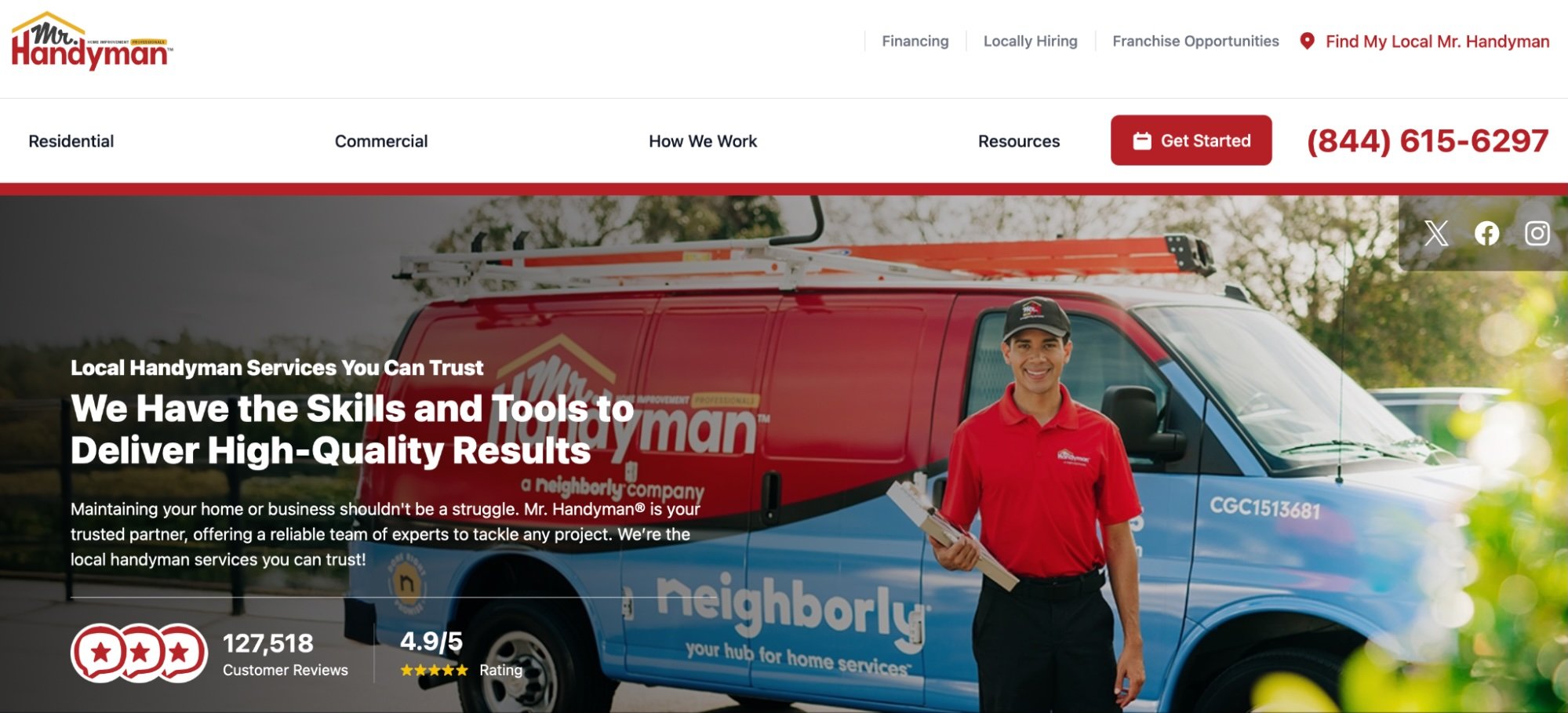
Mr. Handyman is one of the most recognizable names in the handyman industry. Local franchise branches serve both residential and commercial customers across multiple markets and price points. The main company has over 120,000 positive reviews and an average 4.9/5 star customer service rating—showcasing a knack for meeting thousands of customers where they are with the right offers.
Costs and fees
- $143,150 – $179,600 USD (includes $65,000 franchise fee)
- Ongoing royalty fees include 7% of gross revenues
What makes Mr. Handyman unique
- Strong national brand recognition
- Structured training and onboarding programs
- Marketing support to help generate leads
This franchise is a good fit for owners who want a proven system backed by the Neighborly name. Strong customer reviews also show high levels of trust and repeat business, which can mean a steadier flow of predictable work.
Ace Handyman Services
Ace Handyman Services operates as part of the broader Ace brand. Many customers already trust Ace for home improvement needs and visit Ace retail stores for their hardware, home repair and maintenance, or lawn care needs.
Costs and fees
- $131,497 – $223,597 USD (includes a $70,000-100,000 franchise fee)
- 6% of gross revenues over time, plus 2% national fee
What makes Ace Handyman Services unique
- Association with a well-known retail brand and home store
- Emphasis on customer trust and local service
- Structured support for operations and marketing
- Clear service standards and quality expectations
- Support for hiring and managing local technicians
Ace is a franchise option that may suit owners who want the stability of a recognizable brand combined with support for both operations and local loyalty.
Handyman Connection
Handyman Connection is a long-running franchise focused on connecting customers with reliable home repair services. This company also supports franchise owners who want to offer a wider range of services, including kitchen cabinet repair, carpentry, exterior deck work, and home upgrades.
Costs and fees
- $110,722 to $231,114 USD
- 6% of gross sales, payable monthly
What makes Handyman Connection unique
- Longstanding franchise experience
- Emphasis on franchisee support and training
- Systems designed to help manage jobs and customer relationships
- Options for new franchisees and multi-unit operators
- Wide range of testimonials and owner stories to showcase success
Handyman Connection appeals to owners who want to be actively involved in daily operations—and who want to know that the formula has clearly worked for others. Franchise support helps guide training, systems, and business growth as the company scales locally.
TruBlue Home Service
TruBlue Home Service Ally is a handyman franchise focused on ongoing residential services and safety upgrades. The brand emphasizes preventative maintenance, home checkups, and modification services that support aging homeowners or seniors and busy households.
Costs and fees
- Approximately $77,000 to $220,000+
- Ongoing royalty and brand fees (varies by agreement, but around 6% of gross revenue)
What makes TruBlue Home Service unique
- Focus on recurring maintenance plans
- Services tailored to seniors, busy homeowners, and families
- Home-based model with lower overhead than storefront franchises
- Emphasis on preventative maintenance and safety modifications
- Systems designed to support predictable, repeat revenue
TruBlue may appeal to owners who want a service business built around recurring work and long-term customer relationships, with structured support to help manage operations and grow consistently over time.
Pros and cons of owning a handyman franchise
Before committing to a franchise, it’s important to weigh the perks against the trade-offs of operating under someone else’s system.
Pros
- Faster startup using a proven business model: With a franchise, you’re not guessing your way through pricing, services, or operational questions. The franchisor provides a tested method so you can get up and running fast.
- Brand recognition can make marketing easier: National or regional advertising, pre-built websites, and franchise marketing materials can attract customers faster than starting from scratch.
- Training and support reduce the learning curve: Most franchises offer onboarding, technical training, and regular coaching to help new owners learn the ropes. This includes scheduling, hiring, customer service, and day-to-day management or leadership skills.
- Established processes for scheduling, invoicing, and customer management: Many franchises provide standardized systems like Jobber for quoting jobs, managing appointments, and handling payments. A reliable CRM keeps operations consistent and organized.
Cons
- Franchise fees and ongoing royalties: In addition to startup costs, you’ll pay regular fees to your franchise company. Unfortunately, this means reduced take-home profit, especially when business is slow.
- Less flexibility compared to independent ownership: You may have limited control over which services you offer, how you market your local branch, or how you grow your business. Check the fine print of any contract for specifics prior to signing.
- Rules around branding, pricing, and operations: Franchisors often set strict guidelines you must follow, which can limit experimentation or customization at the local level.
The right choice depends on your budget, risk tolerance, and preferences. Before you decide, know whether you prefer following a proven system or if you want the freedom and flexibility of building something that’s unique to you.
READ MORE: How to start a handyman business
How to choose the right handyman franchise
Handyman franchises vary widely in cost, expectations, and support. Take time to ask the right questions and compare how each option fits your budget, skills, and long-term goals.
- How much capital do you have to invest? Review the initial investment, royalties, and required fees to make sure they align with your budget and income targets.
- Are you able to hit the ground running, or would you prefer a trusted partner? Look for structured onboarding, technical training, and ongoing coaching to help you run the business day to day.
- Will your business be the primary franchise in your region? Understand things like territory protection. Find out where you’re allowed to operate and whether your territory is exclusive or shared.
- How much hands-on work do you want to do? Some franchises expect owners to work in the field, while others are designed for managing teams and operations.
- Do any franchises come recommended? Are there any red flags or negative experiences? Talking to current franchise owners can give you a clearer picture of support quality, workload, and real-world profitability.
Pro Tip: Reviewing the franchise disclosure document (FDD) and asking detailed questions upfront can help you set realistic expectations and avoid surprises later.
What to expect with startup costs, fees, and other investments
While costs vary by franchise, most handyman franchises include similar expense categories. You can expect these to include:
- Initial franchise fee: Paid directly to the head company before any other steps.
- Tools, equipment, and vehicle expenses: Invested on your own, using your own liquid cash assets or investments like loans.
- Insurance and licensing: Support for securing plans may vary based on which company you choose, but always ask how your business is covered.
- Marketing and launch costs: Some promotional materials are usually provided, but extra printing or digital costs can fall on the franchise owner.
- Ongoing royalties and advertising fees: Over time, you’ll owe a portion of incoming revenue to the head company.
Planning for both startup and monthly expenses helps you set realistic expectations for profitability.
Finding the right business model for your goals
A handyman franchise can be a good fit if you want built-in support, reliable systems, and a clear launchpad. For many first-time business owners, that structure helps reduce some initial risk and stress—even if it comes with a price.
On the other hand, running an independent handyman business offers more flexibility and control. No matter which path you choose, having predictable systems for scheduling, communication, and invoicing is key to running a successful handyman business that customers trust for years to come.
Frequently Asked Questions
-
Most franchisors offer initial onboarding, hands-on training, and ongoing education. You can also expect operational guidance, marketing support, and access to proven processes (like payroll and scheduling) designed to help you run your business efficiently.
-
Profit timelines vary based on location, demand, and owner involvement. Many franchise owners experience a ramp-up period during the first several months as they build a customer base and fine-tune operations.