
Key takeaways:
If you’re interested in a rewarding, hands-on trade, becoming a locksmith offers steady demand and room for growth. Here’s everything you need to know to start your journey.
- Understand the locksmith trade. Locksmiths often work with residential, commercial, automotive, and electronic locks, and can earn an average annual wage of $52,130 USD. They offer services like installations, emergency lockouts, rekeying, and security consulting.
- Know the training path and costs. You typically need a high school diploma or GED, hands-on apprenticeship or formal training (which may cost a few hundred to several thousand dollars), and essential locksmithing tools.
- Meet licensing and certification requirements. Licensing is required in many states and may include training hours, background checks, and exams. Optional certifications can help you stand out in the field.
- Choose your career direction. After training, you can join an existing locksmith company, pursue your own business, or seek advanced certification for specialized work like automotive locksmithing.
- Set up your business for success. Register your business, get the right tools and insurance, organize your business finances, promote your services online and locally, and encourage customer reviews to grow your reputation.
Stay up to date with tips for starting and running a successful locksmith business. Sign up for the Jobber Newsletter.
Interested in becoming a locksmith but don’t know where to start? You’re not alone. Many people are drawn to the locksmith trade for its hands-on work and the chance to help others.
Like any skilled job, locksmithing takes time and training to get started. This guide will walk you through the basics, so you can begin pursuing a rewarding locksmith career.
What is a locksmith?
A locksmith is a tradesperson who works with locks, keys, and security systems. This could include:
- Residential locksmith work
- Commercial locksmith services
- Automotive locksmithing
- Electronic access systems
Locksmiths don’t just help when you’re locked out of your house or car. They also install and repair locks, make keys, set up security hardware, and keep homes and businesses secure.
Locksmithing is a licensed trade in some states, while others have fewer rules. Either way, it’s a hands-on job that requires mechanical skill, attention to detail, and trust from customers.
What does a locksmith do?
A locksmith can provide a range of access services for residential and commercial customers, like:
- Lock installation, repair, and rekeying
- Security consultations for multi-family buildings
- Keyless entry and electronic access
- Key cutting and copying
- Emergency access in case of lockouts
If you become a car locksmith, you’ll provide these services for vehicles like cars, trucks, and trailers. In addition to the services above, you may also need to replace key fobs and ignitions. You’ll need to become a certified automotive locksmith if you want to specialize in automotive locks.
How much does a locksmith make?
The mean annual wage for a locksmith is $52,130 USD, according to the Bureau of Labor Statistics. Depending on experience, location, and specialization, locksmiths typically earn between $31,620 and $76,460 per year, or $15.20–$36.76 per hour.
A locksmith’s salary can vary depending on the industry and specialization. These are the annual mean wages for several different industries:
- Federal, state, and local government: $64,620 ($31.07/hour)
- Colleges, universities, and professional schools: $61,490 ($29.56/hour)
- Elementary and secondary schools: $54,990 ($26.44/hour)
- Investigation and security services: $48,110 ($23.13/hour)
Wages can also vary by location. Below are some of the highest-paying states for locksmiths:
- Washington, DC: $71,120 ($34.19/hour)
- Rhode Island: $66,660 ($32.05/hour)
- California: $62,620 ($30.11/hour)
- Massachusetts: $61,490 ($29.56/hour)
- Delaware: $60,960 ($29.31/hour)
- New York: $58,360 ($28.06/hour)
- Maryland: $57,550 ($27.67/hour)
READ MORE: How much do locksmiths make?
How much does it cost to become a locksmith?
Locksmith training programs can cost anywhere from a few hundred dollars to several thousand, depending on the locksmith school and the program length. Locksmithing tools will also cost at least $1,000.
The cost to become a locksmith will also vary depending on where you live. You may have to pay certain fees if your state requires you to have a locksmith license or take a specific locksmith training course.
Education and training for locksmiths
You don’t need a college degree to become a locksmith. Most people enter the trade with a high school diploma or GED. This ensures you have the basic math and language skills needed to provide a professional service.
Some locksmiths take a formal training program through a trade school, community college, or an online locksmith course. These programs teach the basics of locks, keys, key cutting, security systems, and common tools.
Another option is to work as an apprentice under an experienced locksmith to learn the trade and get hands-on experience. Apprenticeship programs can last anywhere from several months to a couple of years.
With experience, you may even choose to pursue advanced certifications, like Certified Master Locksmith or Certified Master Safe Tech to further boost your credentials as an experienced locksmith.
How long does it take to become a locksmith?
It takes up to two years to become a locksmith, depending on how you train. A classroom or online locksmith training program can take 1–6 months, while an apprenticeship takes up to two years.
If a locksmith license is required in your area, it could take several more months to fulfill all of the licensing requirements.
Locksmith licensing and certification
Licensing rules for locksmiths depend on where you live. These states require a government-issued license to work as a locksmith:
- Alabama
- California
- Connecticut
- Illinois
- Louisiana
- Maryland
- Nevada
- New Jersey
- North Carolina
- Oklahoma
- Oregon
- Texas
- Virginia
To get your locksmith license, you may need to pass a background check, complete a certain number of training hours, pay a licensing fee, and show proof of insurance or bonding.
Added requirements vary by state. These are just a few examples:
- Alabama requires a locksmith certification course, continuing education, and a background check every two years.
- Louisiana requires you to pass an exam, pay a registration fee, and maintain your registration. An added certification is needed to provide certain services.
- New Jersey requires you to pass a licensing exam.
- Nevada requires three years of locksmith experience or a two-year apprenticeship.
Check to see if you’re required to obtain a locksmith license in your city or county. For example, even though the state of Florida doesn’t require a license, some counties in Florida do.
You can also choose to get locksmith certification from groups like the Associated Locksmiths of America (ALOA). This certification is optional, but it can help you stand out from competitors as a Certified Registered Locksmith or Certified Professional Locksmith.
Finding a job as a locksmith
Once you’ve completed your training and met any local licensing requirements, the next step is finding work. There are a few ways to get started, depending on your experience and goals:
- Start with an apprenticeship at a local locksmith company. These roles let you work under a licensed locksmith while gaining hands-on experience. Some states require an apprenticeship before you can get a full license. An apprenticeship could also turn into a long-term locksmith job.
- Search for locksmith roles on recruitment sites like Indeed or ZipRecruiter. You can also call or visit local locksmith shops directly. Some may be open to hiring entry-level workers or apprentices.
- Join a trade association to connect with employers and other locksmiths. For example, ALOA offers job boards, locksmith training resources, and networking opportunities to help aspiring locksmiths grow their careers.
- Start a business once you’ve gained enough experience. This takes more work, but it gives you more control over your schedule and income—and a guaranteed position at your company.
Starting a locksmith business
Starting your own locksmith business takes more than just technical skills and a locksmith’s license (if that’s needed in your state). You also need to set up the business itself.
Here’s a step-by-step overview to help you start a service business in the competitive locksmithing industry:
1. Register your business
Before you can legally run your locksmith business, you’ll need to register it. The steps may vary by location, but the process usually looks something like this:
- Pick a business name that reflects your services, is easy to remember, and isn’t already being used by another business. (You’ll also want to create a service business brand.)
- Choose a business structure, whether that’s a sole proprietorship, a limited liability company (LLC), or a corporation. Sole proprietorships are common for small businesses, but many locksmiths set up an LLC to reduce their personal liability.
- Register the business with your state’s business registration office. If you’re forming an LLC or corporation, you’ll need to submit formation documents and pay a filing fee.
- Get a business license through your local government office. You might need more than one business license if you operate in different counties or cities.
- Apply for an Employer Identification Number (EIN) from the IRS at irs.gov. You’ll need it to open a business bank account, file taxes, and hire employees.
READ MORE: What’s the best service business to start?
2. Buy locksmithing tools
To provide quality locksmithing services, you’ll need the right tools for the job. This will include:
- Lock picks and tension wrenches in a range of sizes
- Pick guns (either electric or manual)
- Key programmers and decoders for keying cards and fobs
- Key-cutting and key-duplicating machines
- Tweezers with magnetic tips
- Flashlights and scopes in a range of sizes
- A work truck or van to transport your equipment
Start with a set of basic locksmith tools that will help you provide the necessary services. You can always buy higher-end tools later on as you start making money from locksmithing jobs.
READ MORE: How to make money with a pickup truck
3. Get business insurance
Business insurance protects you from unexpected costs like property damage or accidents. Some states require locksmiths to have insurance before they can get licensed. Most locksmiths start with:
- General liability insurance to cover accidental damage to a customer’s property or injuries during a job
- Commercial auto insurance if you drive a work van or use your personal vehicle for jobs
- Equipment insurance to protect your gear if it’s stolen, damaged, or lost
- Workers’ compensation insurance to protect employees in case of injury on the job
When you’re shopping around for an insurance provider, look for companies that offer small business coverage. You can contact providers directly or use a broker to compare quotes.
4. Set up a business bank account
A business bank account keeps your work income and expenses separate from your personal money. This makes bookkeeping, taxes, and legal protection much easier.
Look for a bank that offers small business accounts with low fees, online banking, and easy access. Some locksmiths prefer local banks or credit unions for personal service, while others go with national banks.
Deposit all your payments into this account and use it to pay for tools, fuel, insurance, and other expenses. Avoid using it for personal spending to keep your accounting clean.
5. Build an online presence
Your customers are searching for locksmithing services online. Make it easy for them to find you with a simple website that includes:
- A list of the locksmith services you offer (residential, commercial, automotive, emergency locksmith, etc.)
- Your service area and hours of operation
- Your contact details
- Locksmith service pricing, if you want to include it
You can build a great-looking website fast using a Jobber website. Just provide details about your locksmith business, and we’ll create a website that stands out from the competition.
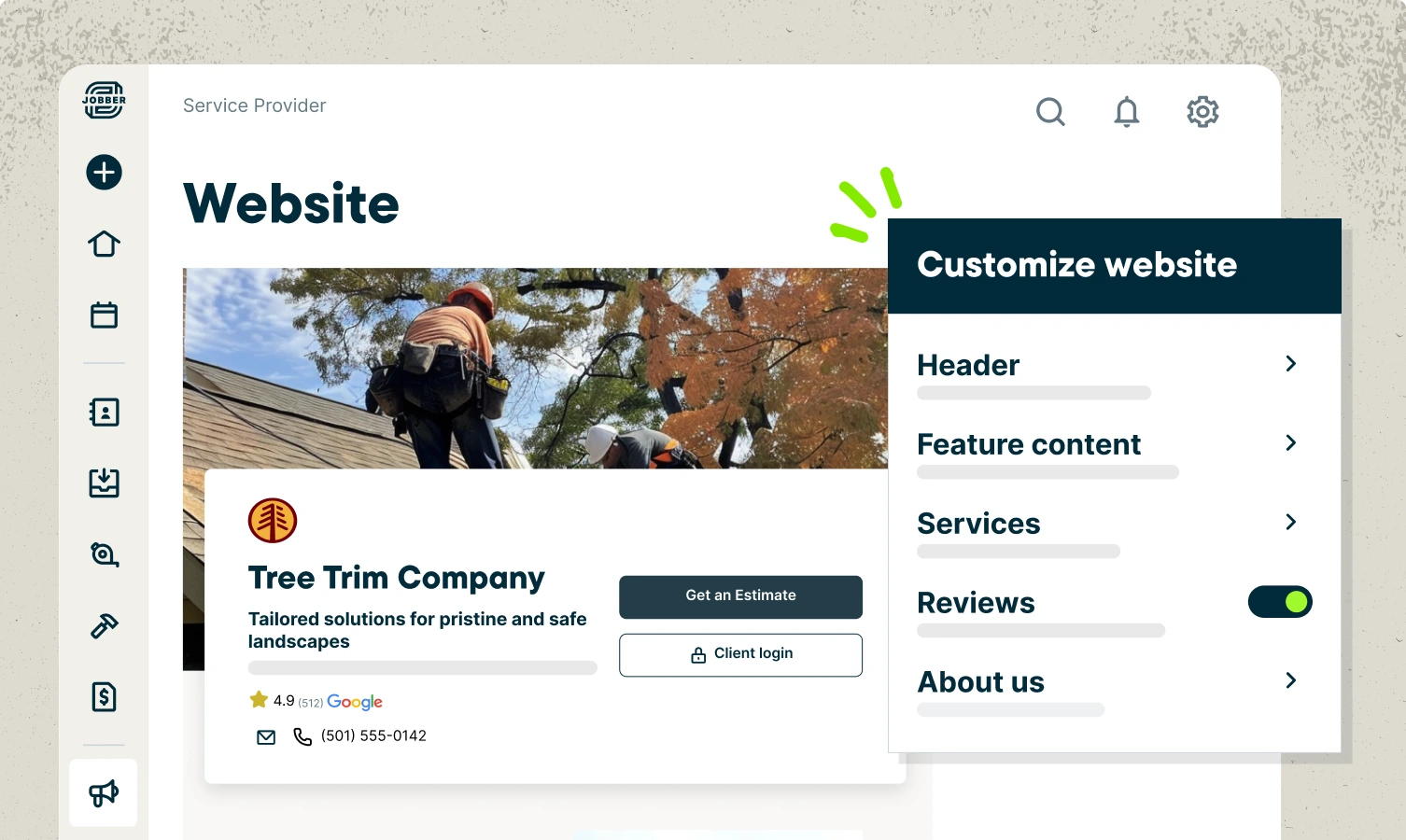
Be sure to create a Google Business Profile for your business, as well as profiles on lead generation sites like Yelp, Angi, Thumbtack, and HomeAdvisor.
Once these profiles are in place, ask customers to leave reviews if they’re happy with your services. This helps you win even more new work.
Google reviews can be automatically displayed on your Jobber website—something many local locksmith businesses use to grow their reputation.
6. Advertise locally
To get more customers, start promoting your locksmith services in your area with ideas like:
- Running ads on Google and Facebook
- Posting about your services in community groups on Facebook and Nextdoor
- Putting up flyers and signs on local bulletin boards
- Wrapping your work vehicle with your name, logo, and contact details
- Asking for reviews and referrals after every job
- Offering a customer loyalty program to encourage repeat business
Whether you choose to work for an existing company or start your own locksmith business, locksmithing is an industry with steady demand and room to grow, making it a reliable and rewarding career.