
Key takeaways:
Well-structured pest control contracts can turn one-off jobs into steady, long-term work while protecting your business and giving clients peace of mind. Here’s how to craft and win pest control contracts.
- Include key details in every contract. Ensure your agreement covers business and customer contact info, property address, service schedule, scope of services, pesticides used, terms and conditions, payment terms, and a signature line.
- Use contracts to clearly set expectations. Outline what’s included in your service, how often visits will occur, emergency procedures, service guarantees, and customer responsibilities before and after treatments.
- Leverage digital tools to streamline agreements. Software like Jobber and DocuSign make creating, editing, signing, and organizing service agreements faster and easier. It also saves you time and eliminates paperwork headaches.
- Get more contracts through smart marketing and follow-ups. Follow up on quotes, send targeted email campaigns, incentivize long-term agreements, promote contracts online, and ask for reviews and referrals to bring in more contract customers.
For more tips to build a stronger pest control business, sign up for the Jobber Newsletter. Join here.
Originally published in April 2023. Last updated on July 31, 2025.
A well-written pest control contract can turn one-time jobs into long-term customer relationships. It protects your business, sets clear expectations, and gives clients the confidence to move forward.
This guide shows you how to create a professional service agreement that covers all the right details. You’ll get a full breakdown of what to include, along with tips for getting the job scheduled and paid without delays.
What to include on your pest control contracts:
What is a pest control contract?
A pest control contract (also called a pest control service agreement) is an agreement between your business and a customer that describes the ongoing pest control services you’re offering.
Pest control contracts are for customers who need routine pest treatments or who want a technician on-call whenever their pests come back.
Like other pest control businesses, you can use a contract to:
- Protect your business from customer disputes
- Set expectations for your customer
- Secure recurring revenue with regular services
This agreement tells your customers what to expect when they sign on to receive routine maintenance services from your field technicians.
Disclaimer: This content is for informational purposes only and should not be considered legal advice. Always consult with your legal expert and financial advisor to make the right choice for your business.
What should you include in a pest control contract?
Your pest control contract should tell your customers what they can expect throughout the term of your service agreement.
Here are the portions to include in every pest control contract:
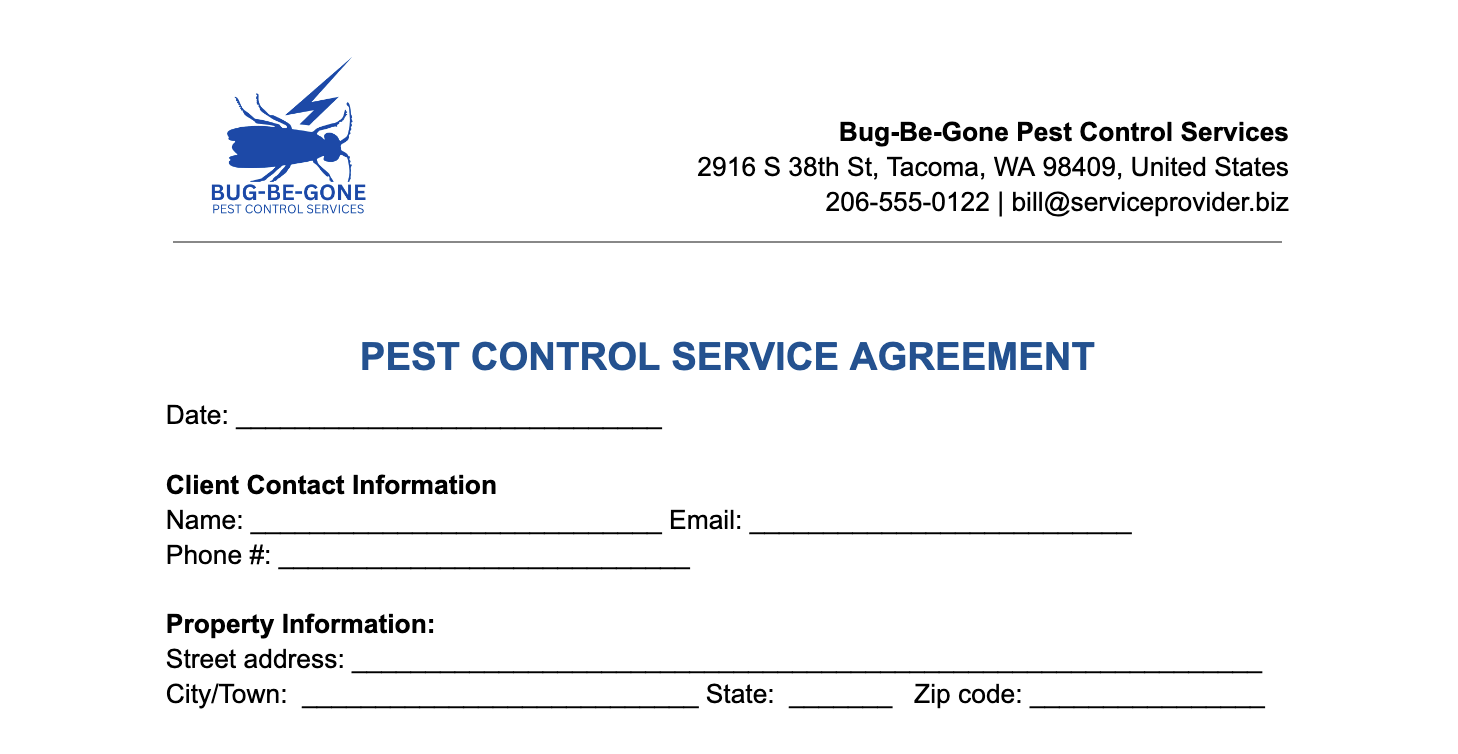
1. Business information
Include your pest control business information on the contract so your client knows how to get in touch. Your business details should include:
- Your pest control company name
- Contact person
- Email address
- Telephone number
2. Customer information
Include your customer’s contact details so they’re easy to find when you need to contact them about the service. You’ll also need them in case there’s a conflict to resolve with your customer.
Customer information should include:
- Customer name
- Email address
- Phone number
- Mailing address
For commercial properties, you’ll also want to include:
- Company name
- Business address
- Contact person name, email, and phone number
3. Property address
Provide the complete address for the service location, including:
- Street number
- Street name
- City/Town
- State
- Zip or postal code
Pro Tip: Create a pest control service agreement template to avoid the time-consuming process of creating one from scratch every time. Make sure to leave blank lines that you can fill out with your customer’s contact information and property address.
4. Service schedule
If you have commercial clients that need regular inspections and treatments, include your service schedule. This doesn’t have to include specific dates—just describe how frequent your visits will be.
To give you some examples, your visits could be:
- Every 30 days
- 30 days after the first appointment, then every 60 days after that
- Once every three months
Include the date of the first visit if that’s been scheduled already, and a date for the end of the contract.
You also need to include your terms for emergency service calls. Explain how your customer should book these emergency treatments, and whether you’ll come for free (which most companies do under service agreements).
5. Scope of services
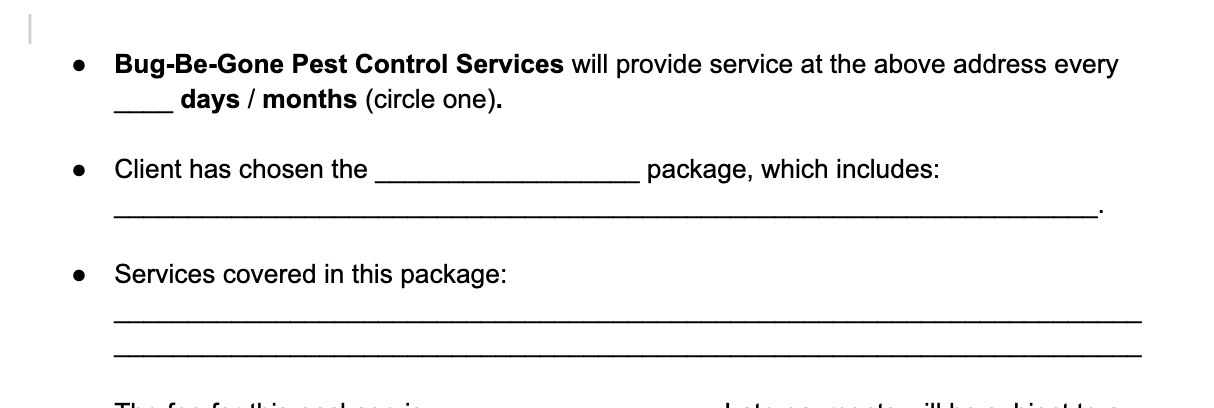
Describe the pest treatment services you’re agreeing to provide. If you’re treating multiple pests, list them all.
Each of your recurring visits will include an inspection of the customer’s property. So, list the areas of the house or yard that you’ll inspect.
If you sell multiple tiers of pest control packages, include a line that lets you specify which package your customer has selected.
6. Pesticides and regulations
Include a detailed list of the pesticides you plan to use for the customer’s specific pest treatment.
State that you’re following pesticide regulations from your regional government authority (like the EPA). This tells your customers you’re using safe and compliant products.
Some clients might have specific health concerns or preferences around pesticides. Listing your pesticides in the service agreement gives customers the chance to bring up concerns before you start your service.
Listing your pesticides might also protect you from legal liability. Consult a legal expert to be sure you’re doing it right or to ensure that your business is protected.
7. Terms and conditions
Clarify any additional details about your service guarantees, your insurance policy, payments, and cancellation policy. You might also include instructions for the customer to prepare for their treatments.
Be sure to answer the following questions:
- What type of business insurance coverage do you have? (Include all required insurance such as workers’ compensation, liability insurance, etc.)
- What is your cancellation policy? How much notice do you require before terminating the pest control contract? Will you charge any termination fees?
- Are there any service blackout dates? (like Christmas day or New Year’s day)
- Do you have any service guarantees? (e.g., a full or partial refund if the customer isn’t satisfied with your service)
- What should the customer do to prepare for your pest treatment? (e.g., clear out kitchen cupboards, pull furniture away from the wall)
You should also include the length of time that the homeowner should stay out of the house (e.g. 4 hours) after your service is complete, based on the type of spray you’re using.
These are the four cancellation policy must-haves: timeframe, penalty, contact information, and signature.
Basically, this means you’ve got to set up a certain timeframe that you deem acceptable for a client to cancel.

8. Invoice schedule and payment terms
An invoice schedule tells your customers how and when they should pay. Payment terms are a set of guidelines that reduce the chances of unpaid invoices or late payments.
Here’s what the invoice schedule and payment terms on your contract should include:
- Payment due dates
- Penalties or fees for late payments
- What payment methods you accept (cash, check, online card payments, or mobile credit card payments in person)
- How and when you’ll send invoices
9. Signature line
Leave a space at the end for both you and your customer to sign off on the contract, along with the date the contract was signed.
When you draft your agreement with a service like DocuSign, the document will already have a signature line that customers can sign online.
How to make a digital pest control contract
When it’s time to create your contract, you have two options:
- Start with a prebuilt contract template from a trusted legal document provider like LawDepot or DocuSign, and have it reviewed by a legal expert.
- Draft your own contract and go over it line by line with your lawyer or advisor.
No matter which route you choose, legal guidance is essential. A legal expert helps ensure that your pest control contracts are fair, accurate, and protective of your business.
If you’re using software like Jobber, creating and managing digital contracts gets even easier with integrated tools like DocuSign.
Here’s how that process works:
- Create your estimate in Jobber. Add your services, costs, and margins in just a few clicks.
- Connect Jobber with DocuSign. Set up automatic service agreement creation using DocuSign’s Service Contract template.
- Fill in the details. Once your quote is approved or converted into a job, a digital agreement appears with editable fields for that specific customer.
- Drag and drop client info. Easily pull in details like the customer’s address and service pricing from your Jobber account.
The final agreement stays linked in your Jobber dashboard, so you can quickly review, edit, and send it for signature digitally.
Benefits of pest control service contracts
Pest control service contracts can bring your business consistent revenue. They bring your customers the comfort of safe, pest-free properties—and an on-call service provider when pests come back.
With pest control contracts, you’ll also:
- Help your pest control technicians catch hints of infestation before they grow into bigger problems
- Reduce emergency calls to your crews, helping you schedule and allocate resources better
- Use recurring interactions with customers to upsell additional services
Not all customers are good candidates for pest control contracts. Some pest problems, like infrequent mouse sightings, can be solved in a one-off service call. Provide a standard estimate to these customers instead.
To avoid pushing your services to those who don’t need or want them, sell pest control service agreements to customers who:
- Have a persistent pest issue that they don’t have the expertise to solve
- Have extremely destructive pests (like termites) that cause serious damage
- Are too busy to deal with their pest problem
READ MORE: 7 ways you should be marketing your pest control business
How to get more pest control contracts
Once your service agreement is ready, the next step is booking more customers to sign it. That means combining strong marketing with smart follow-up.
Bank on these reliable options for bringing in more pest control contracts:
- Follow up on quotes automatically: Use Jobber to send automatic reminders to clients who haven’t approved their quotes yet. A timely nudge can often close the deal—no extra effort required.
- Send email campaigns that drive bookings: With Jobber Campaigns and email tools, you can stay top-of-mind by sending seasonal pest tips, promotions, and reminders for recurring service. Every message is branded and links back to your booking page.
- Incentivize longer-term contracts: Offer a discount, free inspection, or priority scheduling to encourage clients to sign ongoing service agreements.
- Highlight your contracts on your website: Add a page that outlines your pest control packages, pricing, and contract benefits. Include a contact form or “Book Now” button to capture interest right away.
- Ask for reviews and referrals: Satisfied clients can help bring in new ones. Use Jobber to request reviews or send a thank-you email with a referral discount. Word of mouth often leads to long-term business.
With the right approach and tools, you can attract more leads, close more deals, and turn occasional jobs into lasting contracts.
Contracts to help you grow
Service agreements create predictable schedules, streamline your business operations, and lead to more reliable profit and income.
The result? You spend less time chasing paperwork and more time building a profitable, sustainable business.
Plus, when you use Jobber’s pest control software for your service agreement contract scheduling, dispatching, and payments, you’ll have more time to grow your business.
Want to hear about that process from a real pest control business owner? Here’s how Brandon Jones, owner of JP Pest Control Services, works faster and smarter with Jobber as his pest control software.