
Key takeaways:
Raising your service prices is sometimes necessary for business growth and sustainability, and a well-crafted price increase letter is key to maintaining positive customer relationships during the process.
- Communicate changes clearly and professionally. A price increase letter should specify which services are affected, the effective date, new pricing, reasons for the increase, and your contact information, helping customers understand and trust your decision.
- Use price increase letters to build transparency and trust. Informing customers ahead of time minimizes surprises, builds credibility, and opens the door for questions and feedback, which can strengthen long-term relationships.
- Personalize your approach and provide options. Consider segmenting customers, tailoring messages to their history and needs, and offering different pricing tiers for those concerned about increased costs.
- Follow best practices for sending notices. Notify employees first, give customers ample notice (ideally 1–3 months), keep messages concise, explain the rationale, and be open to questions or discussions.
- Leverage technology for efficiency. Use email marketing tools like Jobber to automate and personalize communications, reducing errors and ensuring all customers receive the correct information.
Stay ahead in your field service business with more practical tips—sign up for the Jobber Newsletter at https://www.getjobber.com/blueprint/#newsletter-signup.
Raising prices is a common practice for many businesses since it’s the most effective way to stay on top of costs, counter inflation, and support profit.
If you’re considering it, you aren’t alone—65% of home service pros raised their prices last year.
A price increase letter is the most professional way to notify clients about upcoming changes. It helps maintain strong relationships, protect profit margins, and set clear expectations.
Use these tips and templates to set higher prices professionally while keeping your customer base happy.
What is a price increase letter?
A price increase letter is a message you send to customers to let them know you plan to raise your service pricing. To ensure your message is as clear and effective as possible, it should include:
- Information about which service costs are increasing.
- When the price change will take effect.
- The new prices.
- The reason for the increase.
- Your contact information.
Why are price increase letters important?
Price increase letters benefit both you and your customers. By using them, you can:
- Build transparency and trust by being open and upfront.
- Give customers time to adjust to the fee increase before it takes effect.
- Provide alternative options for budget-conscious customers.
- Explain the reason behind the new pricing.
- Prevent misunderstandings and confusion by outlining important details.
- Encourage feedback from your customers.
- Explain the value of your services so customers will pay the higher price.
Providing price increase letters to your customers helps maintain transparency and trust. It also gives them time to consider alternative options that may better suit their budgets, like a lower-tiered package or a different service.
Price increase letter templates
If you’re ready to increase prices, customize these price increase notice templates to communicate the change to your customers.
1. Short sample letter to inform customers of a price increase
For a short sample letter that provides the most basic and necessary details, you can use this price increase letter template:
Subject line: Important pricing update from [Business Name]
Dear [Customer Name],
Thank you for being a valued customer of [Business Name]!
Starting [Effective Date], the price for [Service] will change from [Current Price] to [New Price].
We appreciate your support and look forward to continuing to serve you.
If you have any questions, please feel free to reach out at [Email/Phone Number].
Thanks!
[Your Name]
[Business Name]
2. General price increase letter template
Use this price increase letter sample for general price increase letters where you want to offer more explanation without mentioning a specific reason:
Subject line: [Company Name] price increase notice
Hi [Customer Name],
As you know, [Company Name] is committed to providing high-quality, professional [industry] services to our customers.
We’ve been growing a lot in the last year, and because we want to keep offering you great services, we will be increasing our prices by [percentage] starting on [month, day, year]. This will ensure that we can continue to focus on quality by working with the best suppliers and materials to get the job done right, every time.
This means that as of [Effective Date], your invoice for [Services] will increase from [Current Price] to [New Price].
We appreciate your support and are happy to have you as a loyal customer! If you have any questions or concerns, please don’t hesitate to get in touch.
Sincerely,
[Company Name]
[Phone Number]
[Website]
[Email Address]
3. Price increase letter for service packages and high demand
If you’re raising prices to offer new service packages or because you’re in high demand, you can use this price increase letter example to send a price increase notice to customers:
Subject line: Service price increase notice
Hi [Customer Name],
This letter is to let you know that as of [Effective Date], we will be increasing our prices by [Percentage] due to [Demand/Service Package Changes].
This means your invoice for [Services] will increase from [Currante Rate] to [New Rate].
[Company Name] is committed to providing you with high-quality, timely, and professional [industry] services, and this price increase will help us to maintain these values as we grow and move forward.
This price increase will not affect any jobs that are currently in progress or for quotes that are approved before [month, day, year].
If you have any questions or concerns, please reach out via [Email Address], [Phone Number], or [Website].
Thank you for your understanding!
Sincerely,
[Company Name]
4. Price increase letter for increased material, labor, or supply costs
When raising prices because of higher material, labor, or supply costs, you can use this price increase announcement example to draft a message to customers:
Subject line: Price increase announcement
Hi [Customer Name],
On [Effective Date], we’ll be increasing our prices by [Percentage], which will help us keep up with rising business costs such as [Materials/Supplies/Labor].
Currently, we provide you with the following services:
[Service 1]
[Service 2]
[Service 3]
Your invoice will increase from [current price] to [new price].
We’re dedicated to providing you with high-quality [industry] services and look forward to working with you in the future.
If you have any questions, we’re happy to help. Get in touch by calling us at [Phone Number], sending an email to [Email Address], or visiting our website: [URL].
Sincerely,
[Company Name]
5. Price increase letter due to inflation
If your business is raising prices due to increased inflation, you can use this price increase notice template to let customers know:
Subject line: Updated pricing effective [Date]
Dear [Customer Name],
This email is to let you know that we’re updating our prices due to ongoing inflation that has impacted our operating expenses. Effective [Date], the price for [Service] will increase from [Current Price] to [New Price].
This price change reflects the increased cost of doing business while allowing us to deliver the same high-quality services you expect. We appreciate your understanding and support.
If you have any questions about this change, please feel free to contact us at [Email/Phone Number].
Sincerely,
[Your Name]
[Company Name]
6. Cleaning service price increase letter
If you run a cleaning business and need to update your service pricing, you can use this template to draft an email to customers:
Subject line: Changes to your cleaning service rates
Dear [Customer Name],
Thank you for trusting [Business Name] with your cleaning needs. To maintain the high level of service you deserve, we will be updating our pricing. The rate for your regular cleaning visits will go from [Current Rate] to [New Rate] effective [Date].
This ensures we can continue to use top-quality cleaning products and retain trained professionals who make your space shine.
We value your business and would be happy to answer any questions you have via [Email Address] or [Phone Number].
Warm regards, [Your Name]
[Business Name]
7. Lawn care/landscaping price increase letter
Lawn care and landscaping businesses that need to raise prices can use this price increase letter template to inform clients in advance:
Subject line: Update to your [lawn care/landscaping] services
Hello [Customer Name],
We’re reaching out to let you know that effective [Date], the price for [Service] will change from [Old Price] to [New Price]. This adjustment ensures we can cover the costs associated with keeping your property in great shape.
If you have any questions, please feel free to reach out to us at [Email Address] or [Phone Number].
Thank you for trusting us with your business!
Sincerely, [Your Name]
[Business Name]
8. HVAC price increase letter
HVAC service providers can use this price increase notice template to let customers know about upcoming price changes:
Subject line: Important HVAC service pricing update
Dear [Customer Name],
This email is to let you know that effective [Date], our prices for [Service] will be increasing from [Current Price] to [New Price]. This change reflects increased costs associated with parts and labor.
Our team is committed to providing reliable, efficient service to keep your systems running at peak performance. We appreciate your understanding and are happy to answer any questions you have at [Email Address] or [Phone Number].
Sincerely,
[Your Name]
[Business Name]
9. General contractor price increase letter
General contractors can use this example to draft a polite price increase announcement to send to customers:
Subject line: Notice of updated service rates
Hi [Customer Name],
At [Business Name], we strive to deliver exceptional [Renovation/Construction] services. To continue meeting those standards, we’ll be adjusting our rates effective [Date]. The price for [Service] will increase from [Old Price] to [New Price].
We appreciate your business and are committed to providing the same high-quality services as always.
If you have any questions, please reach out to us at [Email Address] or [Phone Number].
Sincerely,
[Business Name]
How to send a price increase letter
You can send price increase letters by mail, text message, or email.
- Mail: If you have only a few customers, sending letters or text messages can work. But letter mail is easy to lose, misaddress, or damage, and it’s hard to track.
- Text message: Text messages are a quick and easy option, but only if you know your client is OK with receiving texts from you.
- Email: If you decide to manually send emails, you’ll need to draft a message for each customer to explain how much their services will cost going forward. You’ll need to customize every message with their email address, name, and service before sending it manually.
You can also use email marketing software like Jobber to create campaigns and send emails to specific groups in batches. For example, customers who get weekly house cleaning services or those who book an annual spring cleaning.
Then you don’t have to worry about customizing emails for each customer or sending them out one by one.
Best practices for price increase letters
When you’re writing and sending price increase letters, follow these best practices to keep them professional and ensure they’re effective:
1. Tell your employees first
Before you tell customers about a price change, communicate it to your staff first. When all of your staff members are on the same page, it ensures consistency in quotes and invoices, as well as responses to customer inquiries.
Let office staff, employees, and contractors know about the upcoming pricing changes before notifying customers. This ensures information is consistent and helps you avoid any issues down the road.
2. Test price increases before you roll them out
If you’re worried about customer backlash, don’t raise prices for your entire customer base at once. Instead, start with a specific zip code, service, or customer group.
That way, you can use bookings, cancellation rates, customer feedback, and quote acceptance rates to determine whether or not you need to make adjustments. If you don’t get any negative feedback, you can move forward with the change. But if you do, consider changing your price increase messaging, lowering the amount, or increasing value.
3. Give customers plenty of notice
If you have recurring customers on weekly, monthly, or seasonal contracts who will be affected by a price increase, notify them well in advance. Aim for 1–3 months’ notice before raising prices.
Providing plenty of adequate notice helps customers feel respected and prepared. You’ll also avoid angry phone calls after surprise bills.
4. Review profitability and win rates
Price increases should be based on real numbers. Before choosing an amount to increase rates by, review your profitability and win rates to see whether a price change makes sense.
For example, if you’re winning nearly every job, it could be a sign that your prices are too low. And if your profit margins are shrinking even though your sales are steady, it may mean rising costs are eating into your profit.
Using real data helps you make informed decisions so you can raise prices strategically instead of guessing.
5. Be clear and concise
Make sure your letter is direct and to the point. Clearly state the new pricing and when it will take effect. Then, explain the increase and how customers can get in touch with any questions or concerns.
Burying your price increase in a lengthy email will only confuse or frustrate your customers.
6. Audit and prune services
A price increase is a good time to review your services to see which ones are turning the most and least profit. Some jobs take more time, money, or materials than they’re worth, while others bring in a lot of money for less work.
Instead of raising prices evenly across all your services, find out your lowest-margin services and either raise your rates or stop offering them altogether. This frees up time for higher-profit services and ensures your team focuses on services that support long-term growth.
7. Add a personal touch
Adding a customer’s personal details to your price increase letters lets them know you value their business. Try to include:
- Their name.
- The services you provide to them.
- How long they’ve been a customer.
8. Explain the price increase
No one wants to pay higher bills, so including a reason for the increase (like inflation, the cost of materials, or labor market changes) will help customers understand and accept it.
Be as communicative as possible. Give them as much detail as you can.
Our costs are going up. Check out this chart, steel’s on the rise. We’ve got two more months at the same price point.

9. Be understanding and open to questions
Give customers a chance to ask questions and clarify information about the price increase by providing contact details in your price increase letter.
If a customer can’t work with the price increase, let them know you understand and move on. You might even be able to recommend another service provider at their price point.
Some of your customers just simply can’t afford the higher cost. Not everyone has an ever-increasing budget.

10. Offer different pricing options
If a customer can’t afford your new pricing, losing them isn’t your only option. Offer different pricing structures to fit a variety of budgets.
For example, try good, better, best pricing so customers can go up or down a tier as needed. The most affordable packages can include standard services, while the highest tiers can offer premium features like extended warranties.
This captures more profit from premium customers who are less price-sensitive while keeping a lower-priced entry point for budget-conscious clients. Currently, only 16% of businesses use tiered pricing consistently, making this an effective way to set your business apart.
If the customer still needs more wiggle room, ask them for a referral to increase their value and make up the difference in pricing.
Be honest and tell ’em, ‘I can’t meet you where you’re at, and I don’t want to price you out. Is there anything you can do to help me?’
Try to spin up some sort of lead generation out of that segment of customers. So bring me a lead, get 10% off your next order, and now we’re back to being on the same footing.
11. Send a follow-up
Emails can be overlooked or wind up in the customer’s junk folder. Send a reminder before the price increase takes effect, giving your customers multiple opportunities to get the message. It also helps to prevent disputes later on.
12. Enhance your perceived value
Any time you increase prices, you have an opportunity to show your value as a service provider. This helps make the price hike easier for customers to digest and makes them feel like they’re getting something in return.
For example, if you have a cleaning business, you could start offering a service guarantee, use eco-friendly cleaning products, or provide a personalized checklist after each visit.
13: Keep price increases reasonable
Moderate price increases are easier for customers to accept than major price hikes. For example, to combat inflation, it’s recommended you raise prices no more than 3–10%.
Customers are also dealing with rising costs, so keeping your rates affordable will help prevent you from losing clients.
14. Use email marketing software
Manually customizing and sending price increase letters leaves them open to human error. It doesn’t take much to accidentally send one to the wrong email address or forget to change the customer’s name.
Plus, you’ll need to segment customers into groups so you can send different emails to each one. This can be complicated and time-consuming.
To save time and send professional emails, use email marketing software like Jobber to send price increase letters to customers. This will ensure they’re effective, efficient, and accurate.
When to increase prices
When and why you raise your prices is directly influenced by your business, services, industry, and pricing strategy. Common reasons to increase prices include:
1. Your costs increase
If your overhead costs or operating expenses go up, you may need to raise prices to stay afloat. Things like inflation, market prices, supply chain issues, and labor costs can impact how much money you have to pay your bills.
Adjusting your rates to cover rising operational costs keeps profit and growth steady, so you can continue to run a successful business.
2. You want a higher profit margin
Your profit margin is the money you have left after all expenses have been paid. It prevents you from having to cover costs out of pocket and ensures you can invest in growing your business.
Even if your costs don’t go up, you may want to set a higher profit margin. For example, maybe you:
- Didn’t set high enough margins when you were starting out.
- Have new growth goals you want to reach.
- Want to increase markup.
Whatever the reason, increasing your profit margin means upping your pricing.

Pro Tip: Although profit margins vary by industry and services, a good number to aim for is 30%.
3. You want to grow your business
If you have specific growth goals in mind, like hiring more employees, expanding to a new service area, or offering new services, increasing prices can help get you there faster.
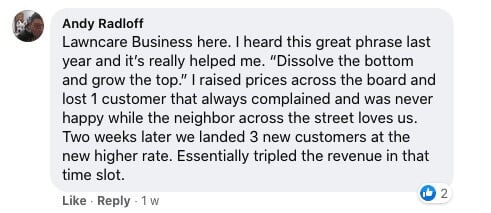
If you don’t increase prices, or you don’t increase them enough, your growth will be slow and may be eaten up by rising costs or unexpected expenses.
Instead of a 2% increase, rip the bandaid off and raise 10%.
4. You need to filter customers
When your prices are too low, you attract customers who value savings over quality workmanship.
Raising prices can help you reach new customers who are more focused on the services you offer instead of how much you charge for them.
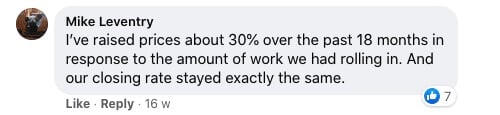
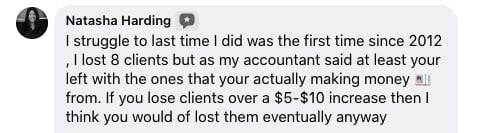
While you may risk losing a few clients, it can also make room for new ones.
READ MORE: What to say when customers think your prices are too high
5. You want to stay competitive
If your competitors are charging higher prices for the same services, you may want to increase your prices to align with market standards.
After all, you don’t necessarily want to come off as a discount option because it can hurt your brand perception and make customers question your quality. It can also make it harder to raise prices, cover expenses, and attract a loyal customer base that’s focused on quality over pricing.
Using price increase letters to support profit
Price increase letters are more than just a way to raise rates. They’re a tool you can use to protect profit margins, communicate value, and maintain strong customer relationships.
By clearly explaining the reasons behind price changes, offering options, and giving notice, you make it easier for them understand—and accept—the update. This keeps your business profitable and customers happy.
Frequently Asked Questions
-
It’s good practice to give as much advance notice as possible for price increases. For smaller, low-cost services, 2–4 weeks can be sufficient. But for large or ongoing contracts, 30–60 days’ notice is better.
-
The most professional way to announce a price increase for your service business is to send a price increase notice via email. This notice should include:
• Which service prices are changing.
• The effective date.
• The new price.
• A brief explanation for the change.
• Contact information for questions. -
If you send a price increase letter but don’t hear back from the customer, you can send a polite reminder a few days before the effective date.
Keep the tone light and friendly, and ask the customer to confirm the changes in pricing if they have an upcoming appointment. -
It’s normal for clients to be unhappy with price increases. If you experience pushback, follow these steps:
1. Listen to and acknowledge their concerns.
2. Reiterate the value you offer, like timeliness, extra services, or affordability.
3. See if you can offer a solution, like a different pricing package or less frequent services.
4. Be firm about pricing, but accept if they aren’t willing or able to continue the service.
Originally published in March 2021. Last updated on February 12, 2026.