How to Handle Price Objections When Customers Say Your Price Is Too High

Key takeaways:
Handling price objections effectively can help you win more jobs and build better client relationships, even when customers say your price is too high.
- Understand the reasons for objections. Customers may object to your price because of budget constraints, lack of understanding about your service’s value, or because they’re unfamiliar with industry-standard pricing. Addressing these concerns directly is key.
- Break down and communicate your value. Providing itemized quotes, sharing testimonials, and clearly describing what makes your service stand out helps customers see exactly what they’re paying for and why it’s worth the investment.
- Offer flexible and tiered pricing options. Good, better, best packages and payment plans give clients choices that fit their budgets, while providing reassurance through warranties and guarantees can help close the deal.
- Engage in open dialogue and use effective scripts. Listen to customer concerns, ask clarifying questions about their budget or comparisons, and be transparent about your pricing. Use ready-made scripts and email templates to guide these conversations professionally.
- Know when to negotiate or walk away. Assess whether it’s worthwhile to adjust your scope or price. But don’t hesitate to politely decline jobs that consistently undercut your minimum pricing or devalue your expertise.
Stay ahead of price objections and grow your service business. Sign up for the Jobber Newsletter for more actionable tips and resources. Sign up here.
You put in the work to set your prices, completed an on-site assessment, and created a fair quote that reflects the true value of your services. And despite expecting an approval to move the job forward, your customer has a pricing objection.
It happens to just about every service provider, from cleaners and landscapers to plumbers and roofers. It doesn’t mean the customer won’t book the job. They may need more information or a different option for their budget before committing.
Use the strategies, scripts, templates, and sales tips in this guide to learn when to stand firm, negotiate, or walk away.
Why customers say your price is too high
Most potential clients use the same common objections. When a customer says your price is too high, it’s usually because:
- They have budget constraints. If a customer doesn’t have the budget to cover the full cost of a service, they may expect to negotiate a rate based on what they can afford.
- They aren’t committed. Some customers send quote requests to multiple service providers at a time, seeing who can offer the best price for a potential project. Others may just be looking for ballpark numbers to determine whether they actually want to invest in the work or not.
- They don’t see the value compared to the cost. Some clients may be considering doing the work themselves. They might think it’s simple, or they may not believe the cost of hiring you is worth the value of the service.
- They’re too polite to say “no.” If you’re approaching people who haven’t reached out to you first, they may not be interested in your sales pitch at all, but feel too uncomfortable to say “no” outright. Pricing is a common sales objection, no matter how expensive or affordable the service is.
- They aren’t convinced your service is worth investing in. If you haven’t educated potential customers enough about the value of your services, they may not see the point in paying. For example, they may not realize that having their deck stained will increase its lifespan, or an annual furnace tune-up could prevent a midwinter breakdown.
- They don’t understand the price point. Customers unfamiliar with your industry or services may not know what typical costs are, causing sticker shock. Using itemized quotes breaks down costs, helping them to see everything that makes up the total.
9 strategies for overcoming price objections
The approach you take to overcome a price objection depends on the prospective client and the reason for their pushback. Use these strategies when a customer says your price is too high, and you may be able to turn their objection into a booked job.
1. Break down the costs
A big number at the bottom of the quote can be hard for customers to digest. It’s a lot easier to accept a grand total when the costs are broken down into line items.
An itemized quote outlines each product or service and its individual cost. It also shows customers exactly how the grand total was calculated. This makes it easier for them to understand the value of each line item and consider where or how they could cut costs.
For example, they may not have realized the premium flooring they selected was so expensive, significantly increasing the price of the job. They may be willing to look at flooring options that better fit their budget.
Jobber’s quoting feature lets you create professional, itemized quotes with separate line items, images, and optional add-ons—so customers see exactly what they’re paying for instead of a single intimidating number. Here’s what that looks like:
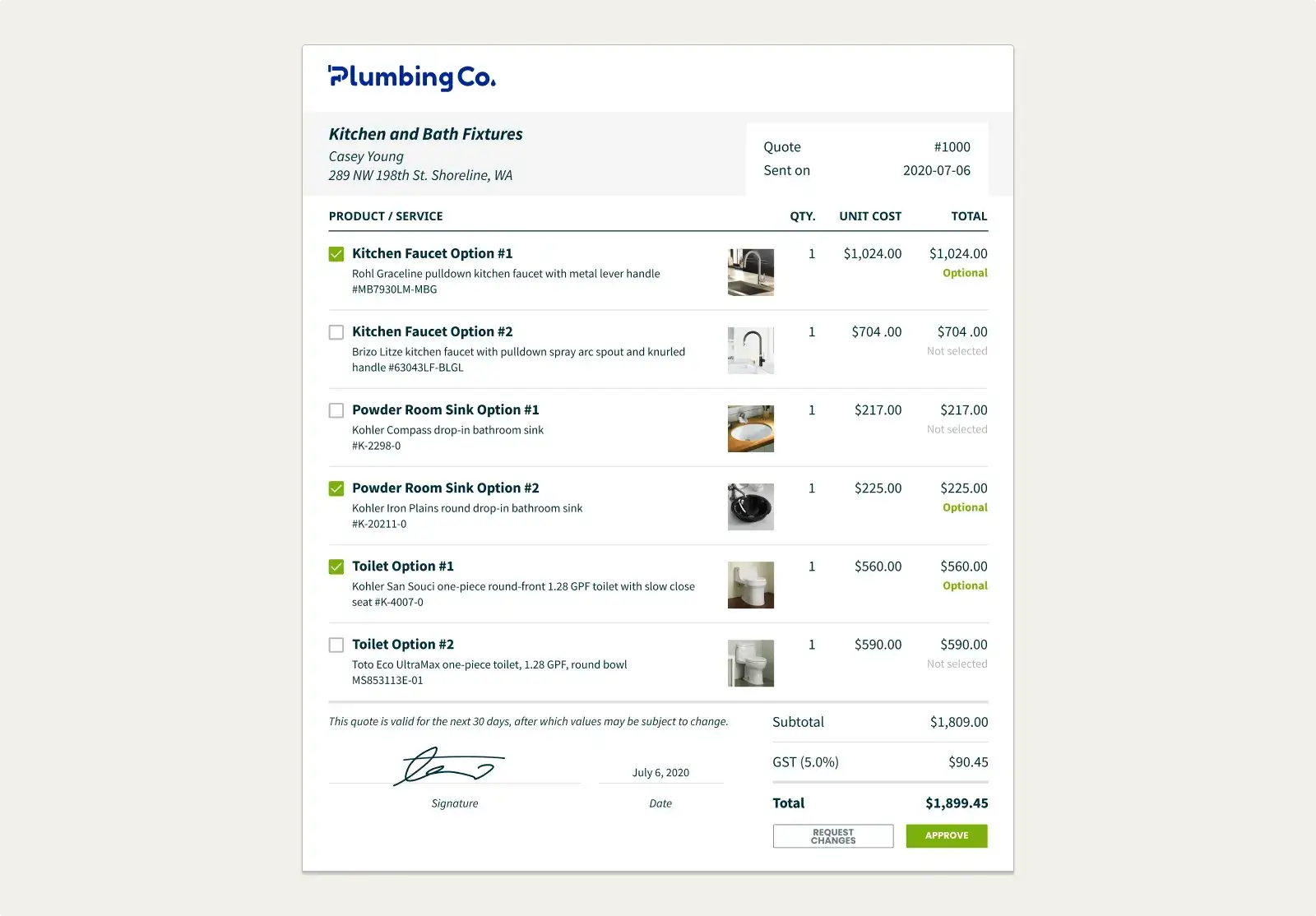
Customers can also review and approve your quotes online in Jobber’s client hub, removing awkward in-person negotiation.
2. Underscore your value
Customers who don’t understand the value you bring to the table are more likely to be surprised by your prices. Showing them the benefits your service can offer helps to show them you’re worth hiring.
Here are some easy ways to demonstrate your worth:
- Collect testimonials and case studies from happy customers.
- Take before-and-after images of your work.
- Ask for reviews and include them on your website and in marketing materials.
When you come across a client who’s hesitant to move forward because of pricing, use your reviews, testimonials, and photos to show them what they can expect. Sometimes, you can convince them to approve the work by proving that other customers are happy with your work.
When your value propositions are clearly communicated and understood, price is never an issue.

Pro Tip: To ensure you ask every satisfied customer for a review, set up automatic review collection in Jobber. Jobber automatically sends a text to the customer at the same time you send your invoice.
3. Offer multiple pricing options
Packages and pricing tiers let clients choose the option that works best for their budget, preventing them from trying to negotiate a lower price based on a single number.
With Jobber, you can create good, better, best quote packages that let customers choose the option that fits their budget. This puts them in control and reduces the feeling that they’re being “sold to.”
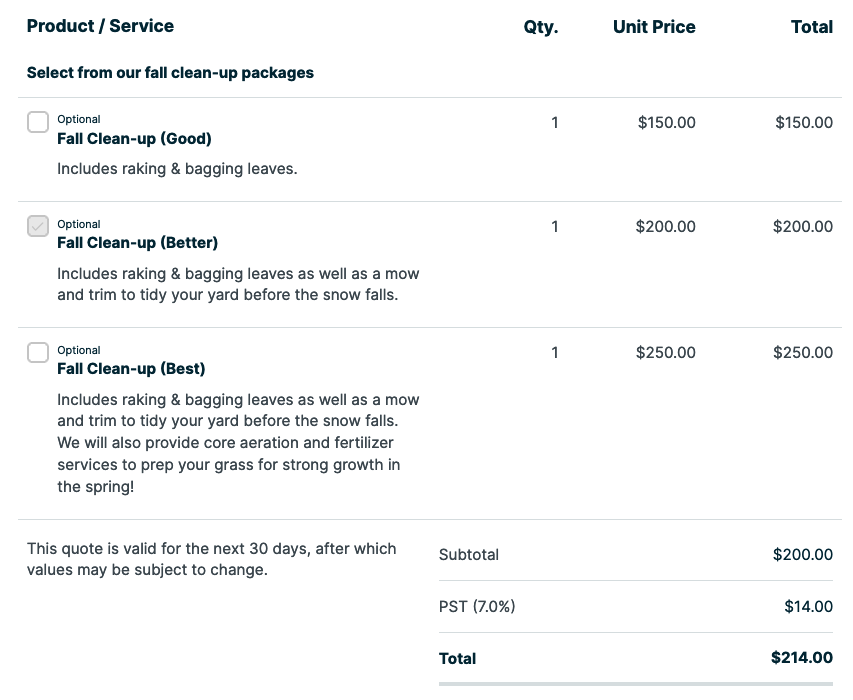
4. Offer flexible pricing options
Don’t make assumptions about what a client can or can’t afford. Instead, offer flexible payment options to help customers with tight budgets get the services they need without breaking the bank.
Jobber’s consumer financing feature lets you offer payment plans directly from your quote. The customer pays in installments, but you get paid in full upfront—no cash flow risk on your end.
If financing isn’t an option, you can always expand how you accept payments to make it easier for clients to pay you.
For example, if you only take payments via cash or check, some customers will find it hard to commit to the cost of a job because they don’t use those payment methods. If you accept credit cards, clients may have more wiggle room in their budgets.
5. Take advantage of warranties and guarantees
Handling price objections isn’t just about convincing the client you’ll do a good job. It also helps to let them know that if the work doesn’t go as planned, you’ll do what you can to make it right.
Warranties and guarantees reassure potential customers, providing them with peace of mind after the job’s over.
For example, if you’re quoting a client on a fence installation, a client might be concerned about whether it’ll hold up long-term. Offering a five-year warranty that covers warped boards and loose posts can be all it takes to win them over.
The same goes for guarantees. If you’re a lawn care provider and a client isn’t sure whether your weed removal services are going to work, let them know you have a customer satisfaction guarantee. That way, they feel like they’ll be taken care of if the treatment doesn’t take.
6. Pay attention to client concerns
When you get a customer objection, pay attention to the reason behind it. Is it because they don’t have the budget? Or is it because they aren’t educated enough about your service?
Whatever it is, use their objection to inform how you move forward. It could be as simple as offering a different package or having a pricing discussion to educate them about your services.
Listening to their concerns and addressing them specifically helps to build trust and positions you as an expert, strengthening your relationship and giving them the confidence to approve your quote.
If a customer doesn’t completely like you or trust you or feel good about you, it doesn’t matter what you’re selling.
It’s just not going to get past that point. And usually in a lot of cases, they’ll shut the sale down by saying it’s too expensive.

7. Find out what the client’s budget is
If the client says your price tag is too high, ask them what’s within their budget. While they may not want to give you an exact number, a ballpark will help to evaluate whether you can accommodate their needs.
For example, if you install countertops and a client objects to your quote, understanding their budget can help you find alternatives in their price range. Like suggesting they go with laminate instead of quartz or granite.
It’s also an opportunity for you to weed out bad clients. If they have an unreasonably small budget or they keep trying to nickel-and-dime you, it may be best to move on.
8. Be prepared for pricing conversations
Price negotiations are common in service industries. Knowing how to respond to a customer complaining about prices ensures you’re prepared for any questions or concerns.
Use these steps to guide the sales conversation and keep it on track:
- Listen to the customer. Don’t interrupt or interject. Let the client explain what’s preventing them from moving forward so you can find out what their roadblocks are and how to overcome them.
- Take a minute to consider their price concerns. Think about what their complaint is and how you could resolve it. For example, can you offer a different pricing package? Or if you bundled more services together, could you give them a better rate?
- Summarize their concern and repeat it back. This ensures you understand the client’s issue, keeping you on the same page. It also encourages the customer to reflect on their concern and what’s really preventing them from signing a contract with you.
- Ask follow-up questions. Find out everything you need to know about the situation before making a decision, like what their ballpark budget is and when they want the work finished.
- Make the call. At this point, you should have enough information to decide how to proceed. For example, can you work with their budget? Is it worth mentioning your warranty? Are there more affordable material options you could mention?
9. Know when to let go
Negotiating with a client isn’t always worth it. Sometimes, it makes more sense to walk away than to continue the conversation. But knowing where to draw the line can be difficult.
It can be worth negotiating when:
- The customer’s genuinely interested in hiring you but has a real budget constraint.
- The job could lead to recurring work like maintenance contracts or seasonal bookings.
- You can reduce the scope of work without compromising quality or your reputation.
- The new client was referred to you by an existing customer.
It may be best to fire the client if:
- Their budget is more than 30% below your minimum viable price.
- They are disrespectful about your trade, services, or pricing.
- They want you to match an unlicensed or uninsured competitor’s price.
- You’ve offered alternatives, but they still want a price discount or special deal.
The bottom line is don’t be afraid to walk away. Don’t cut your margins for a customer.

Price objection scripts: What to say when a customer says you’re too expensive
When a customer objects to your price, it’s easy for the conversation to get derailed. Use these scripts to prepare for common price objections so you aren’t caught off guard.
Scripts for when you aren’t adjusting the price
Not all sales objections are a good reason for a price adjustment. Sometimes, the customer just needs more information about what you offer and the value you provide.
If you aren’t ready to lower the price, and you don’t have other packages or options to offer, use the following responses to help bring the customer around.
1. Ask if they’ve ever paid for this service before
Use this script to confirm whether the customer understands what these services typically cost.
“Have you ever had this kind of work done before? I want to make sure we’re on the same page about what’s involved.”
If they haven’t, it’s an opportunity for you to walk them through your pricing without it feeling like a hard sell. If you have a quote ready, review it with them line by line so they can see what makes up the total.
2. Ask what it will cost if they don’t get this service
If the customer is on the fence about booking the job at all, this script helps them weigh the benefits while considering the downsides of not booking.
“I understand price is a concern, but what happens if you hold off on doing this now? Sometimes, waiting can end up costing you more in the long run.”
This encourages the customer to focus on the big picture instead of the number in front of them. If it costs them time, money, or personal happiness not to do the work, the financial cost becomes easier to accept.
3. Ask what they’re comparing your prices to
Depending on your customer’s experience with the service, their understanding of “high” or “expensive” will vary. Ask this question to get them to reconsider their stance.
“Can I ask what you’re basing that pricing on? Is it another quote you received, or more of a general sense of what you were expecting to pay for this work?”
Their response will show you if they think you’re expensive compared to the competition, or if you’re expensive compared to what it would cost to do the job on their own. Then you can decide whether you want to work with their budget or walk away.
4. Explain your value
If you haven’t been crystal clear about your value initially, this is an ideal script to use. It allows you to explain why you price the way you do, so they understand exactly what they’ll be getting.
“Let me walk you through exactly what’s included in the total and why we price the way we do.”
Go over each cost, including materials, labor, and taxes or fees. Don’t forget to mention key value indicators—for example, whether you’re licensed, insured, or have a satisfaction guarantee.
5. Tell them the price matches the quality of your work
If the customer is pushing for a lower price without a specific reason, tell them that your work is worth the cost. You can say:
“I understand this may not be the lowest price you’ve seen, but our pricing reflects the experience and quality of work we bring to every job.”
Then, highlight the things that make you stand out compared to the competition. For example, higher-quality materials, more experienced technicians, a robust warranty, specialized services, or glowing customer testimonials.
6. Reference a similar customer
Show your customer that you understand their hesitation because you’ve experienced the same situation with another customer before. Try saying:
“I had a customer in a similar situation recently, with the same concern about pricing. Once the job was done, they said it was absolutely worth it. Here’s a [picture of the finished work/review they left].”
Seeing real evidence of happy customers and finished jobs can be all it takes to overcome customer concerns about pricing.
Scripts for when you have wiggle room
If you have flexibility in your pricing, the goal isn’t to offer an immediate discount. It’s to understand what the customer actually needs before making any adjustments.
Use these scripts when you may be able to adjust your quote, depending on the customer’s objection.
1. Find out whether it’s a budget or cash flow issue
A budget issue means the customer has a limit on how much they spend in total. A cash flow issue means they don’t have the funds immediately, or all at once. To find out which it is, you can ask:
“I want to make sure I find the right solution for you. Is the issue the total price, or when payment is due?”
If it’s a budgetary concern, you can offer a different package or a simplified service. If it’s a cash flow objection, you could offer customer financing or schedule the service for a different date.
2. Figure out how much they want to spend
If a customer has a price objection, but hasn’t told you how much their budget is, use this script to get a number.
“What’s your budget for this project? Even a ballpark number will help me understand what we’re working with.”
If their number is within your range, you can negotiate or adjust the scope to match their budget. But if it’s unreasonably low, you may want to walk away.
Scripts for when the customer isn’t a fit
Sometimes, the only option when a customer objects to your price is to part ways. Use a price objection handling script like the ones below when the customer isn’t a good fit or the job isn’t worth pursuing.
1. When their budget is too low
If a customer’s budget is less than what you can work with, it’s best to communicate that upfront so you can both move on. Use this script to fire a customer politely and respectfully.
“I appreciate you reaching out to [business name]. Based on what you’re looking to spend, I don’t think we’re the right fit for this job. I wouldn’t be able to deliver the quality of work you deserve at that price point. If anything changes, please feel free to get in touch.”
This helps you set a firm price while keeping the door open if their budget changes down the road.
2. When the customer isn’t committed
Some price objections happen because a customer isn’t ready to commit to a project—often due to the cost. If a potential client is hesitant to commit, and you can’t wait around for them to make a decision, use this script to let them go.
“It sounds like you’re still weighing your options, which is completely understandable. Your quote is valid for [X] days. If you’d like to move forward, give us a call at [phone number] before then, and we’ll book you in.”
That way, you won’t be stuck in limbo waiting for them to make a decision.
3. When the customer has been disrespectful
If a customer objects to your pricing by disrespecting your services or trade, it’s a good reason to end the relationship. Use this script to let them know.
“I understand pricing is important to you, but I don’t think we’re the right fit for this job.”
There’s no need to provide reasons or to go into detail. Keep your message simple, straightforward, and clear.
Price objection email templates
If you’re communicating with a customer about a price objection via email, you can use these scenario-based scripts to customize your response.
1. When you want to stay firm on your price
Price objections don’t always have to result in discounts or reduced scope. Use this template when you want to hold your price but keep the conversation open.
Hi [customer name],
Thanks for getting back to me. I understand pricing is an important factor in your decision, and I want to make sure you feel confident about the service we provide.
Our quote reflects the cost of quality materials, experienced labor, and the high standard we hold ourselves to on every job. We’re also [insured/licensed] and offer a [warranty/satisfaction guarantee], so you can feel good about the work from start to finish.
If you have any questions about what’s included or you’d like to walk through the quote together, please let us know. Otherwise, the quote is valid until [date].
Looking forward to hearing from you!
[Your name]
[Business name]
2. When you want to offer a reduced scope or tiered pricing
If you have some wiggle room in the form of good, better, best pricing, it can be a great way to give the customer options. Use this price objection email template when you have some flexibility and want to offer the customer a cheaper option rather than a straight discount.
Hi [customer name],
Thanks for your feedback on the quote. We want to find an option that works for you, so we’ve put together a few alternatives based on your budget.
- Basic [service] for [$0]: [brief description of what the simplest and most affordable service includes]
- Standard [service] for [$0]: [brief description of what your mid-range package includes]
- Premium [service] for [$0]: [brief description of your full package and what it includes]
Each option gives you [core benefit], with the main difference being [scope/materials/timeline]. I’d be happy to discuss these options in more detail if you’d like.
Let me know which option works best for you, and we can get you booked in.
Thanks!
[Business name]
3. When you need to part ways professionally
If you can’t meet the customer’s budget, or they’ve been rude about your pricing, use this email template to part ways politely and professionally.
Hi [customer name],
Thanks for considering [business name] for your project. After reviewing your budget and what’s involved, I don’t think we’re the right fit for the job. I wouldn’t feel comfortable taking on the work without being able to deliver the quality of work you deserve.
I wish you all the best with your project.
Thanks,
[Your name]
[Company name]
4. When you want to leave the door open
If you sent a quote but didn’t hear back after a price objection, a follow-up email is an effective way to nudge the customer. Use this template to leave the door open after a sales objection without being pushy.
Hi [client name],
I wanted to follow up on the quote I sent over for [project description]. I know price was a concern, and I wanted to check in to see if you had any questions.
The quote is valid until [date], so there’s still time if you’d like to get this on the calendar.
Either way, thanks for considering us. We’d love the chance to work with you!
[Your name]
[Business name]
You can send professional quotes directly from Jobber with automated follow-up reminders, so you don’t have to manually chase customers who need time to decide. If a customer hasn’t approved their quote after a set period of time, Jobber automatically follows up for you.
How to prevent price objections before they happen
Overcoming price objections is one thing, but preventing them from happening in the first place is even better.
Here’s how to keep customers from saying your prices are too high:
- Carefully consider your service pricing and understanding your industry, services, value, and competitors when setting prices.
- Collect reviews, testimonials, and before-and-after pictures to demonstrate the value you bring to your clients.
- Offer different pricing options and packages to serve more clients.
- Understand client needs upfront so you can create an accurate and relevant estimate.
- Use software like Jobber to provide clear, detailed quotes that identify each product and service, as well as its cost.
By staying ahead of price objections before they become a problem, you and your sales professionals will have a better chance at winning more jobs and growing your business.
Originally published in July 2021. Last updated on May 28, 2026.
Common questions about handling price objections
-
Your response depends on whether you want to stand firm on pricing, offer a discount, or walk away from the client. For example:
• If you don’t want to change your price, walk them through each line item of your quote. For example: “The total includes charges for [each service and its price], materials, labor, and taxes.”
• If you have wiggle room, offer them a lower-priced package or a small discount. For example: “We could reduce the scope to [a smaller area/less extensive service/different package] if that works better for you.”
• If you don’t want to work with them, let them know you don’t think you’re a fit for their budget or the job. For example: “Based on your budget, I don’t think we’re the right fit for this job.” -
These are the most effective strategies for overcoming price objections:
1. Break down costs in a detailed, itemized quote.
2. Highlight the value you offer with reviews, testimonials, and photos.
3. Have different pricing options, like tiers and packages.
4. Offer financing options to customers with tight budgets or limited cash flow.
5. Use warranties and guarantees to give customers peace of mind.
6. Pay attention to why customers are objecting to your price to address their concerns.
7. Figure out what their budget actually is by asking for a ballpark.
8. Be prepared to have conversations about pricing.
9. Know when it’s best to walk away. -
If you need to raise prices with an existing customer, be direct and give them as much notice as possible. Use a price increase letter to explain what’s driving the increase, when it will take effect, and how to reach out if they have any questions or concerns.
-
You should only lower prices if the objection is budget-based and you have room to reduce the scope of the work. Don’t reduce the price just to win a job. Otherwise, you risk eating into profit, which won’t help your business grow.