
Key takeaways:
Managing roofing projects effectively is essential for keeping jobs on schedule, maintaining quality, and protecting your bottom line.
- Implement a structured project management system. Use repeatable steps and digital tools to plan, track, and execute tasks like scheduling, material procurement, and client communication for smooth execution.
- Master key project stages for success. Focus on thorough planning and estimating, clear crew and subcontractor scheduling, early materials ordering, tight on-site coordination, and robust quality control at close-out.
- Apply best practices to avoid costly delays. Build proactive timelines with weather contingencies, assign clear roles, conduct regular check-ins, and standardize daily documentation to prevent misunderstandings and keep projects on track.
- Leverage technology for easier management. Use scheduling software, shared calendars, and automated notifications to help your team stay informed and collaborative from bidding to final inspection.
- Protect profits and boost client satisfaction. Good project management not only prevents budget overruns but also leads to happier customers and the ability to take on more work without burnout.
Stay ahead in roofing with more expert tips and practical strategies—sign up for the Jobber Newsletter for updates. Sign up here.
Last-minute change orders. Missing materials. The weather won’t cooperate.
Every roofing project brings surprises that can eat up your time and cut into your profits.
Whether you’ve been running a roofing business for years or are still building your process, one big challenge remains: how do you manage your roofing projects so nothing falls through the cracks and you stay profitable?
This guide breaks down the stages, best practices, and tools that make managing roofing jobs smoother, from the first bid all the way to job close-out.
What is project management?
Project management is how you plan, organize, and steer tasks, resources, and timelines to hit project goals.
In simpler terms, project management is how your team maps out:
- Who does what
- When it happens
- And which resources and materials are needed to get everything finished on time and on budget
For roofing contractors, project management means keeping jobs on schedule and making sure that work meets quality standards, even when the weather turns bad or materials don’t show up on time.
And since roofing projects can take days or weeks, it helps to use systems, processes, and job management software instead of relying on memory or texting team members as problems come about.
The best way to manage roofing projects is to put repeatable steps and tools in place so you’re not making decisions on the fly. That means having a system for everything:
- Tracking timelines
- Scheduling labor
- Getting proposals and deposits approved
- Ordering and inventorying materials
- Updating clients when things change
- Collecting payment
Without systems in place for each of these, work can get off track, and costs can creep up. Project management’s value is making every job run smoothly.
Why project management matters in roofing
Net profit margins for roofing companies are usually between 20-40%—there’s not a lot of room for error if you want to be profitable. A missed deadline or going over budget can drain your profits, which is why roofing project management matters.
When you have a defined way to manage your roofing project, you can:
- Spot potential problems early. Instead of reacting after a storm or a delivery delay disrupts your schedule, a roofing project manager can adjust plans ahead of time to keep things moving. This kind of control protects your cash flow and helps you avoid costly surprises.
- Organize your roofing jobs from start to finish. When communication flows smoothly between you, your crew, vendors, and clients, everyone knows what to expect. That means fewer misunderstandings, happier customers, and faster payment.
- Take on more work without burnout. Standardized workflows and capacity planning balance workloads and keep schedules realistic so the team stays safe and productive.
The core stages of roofing project management
The core stages you need to master to organize a roofing job from bid to completion are:
- Planning and estimating
- Scheduling crews and subcontractors
- Materials procurement
- On-site coordination
- Quality control and close-out
Planning and estimating
Planning and estimating are the foundation of any roofing project. Before you start, define the job scope. That means outlining exactly what work will be done, what’s included, and what’s not. Avoiding scope creep—where extra tasks sneak in without adjusting the price—keeps your project on track.
Jobber’s EagleView integration lets you order detailed, high-resolution roof reports and automatically sync measurements—like roof area, pitch, and dimensions—directly into your Jobber client profiles.
When you create roofing estimates, offering tiered options for materials and services can help clients see choices like basic, mid-range, and premium roofing materials.
It gives them flexibility and opens the door to upselling without pushing. For example, you might propose a standard shingle and a longer-lasting architectural shingle, letting the client decide.
Read More: How to Accurately Bid a Roofing Job for Profit
Scheduling crews and subcontractors
The next big piece of the puzzle is scheduling your crews and subcontractors. This stage is the heartbeat of organizing your roofing jobs.
To keep projects on track, map out your job timelines. Factor in vendor lead times (like how long it takes to get shingles or gutters) and when your crew is available. Plan around seasonal weather patterns, especially in places prone to rain or snow that could delay your work.
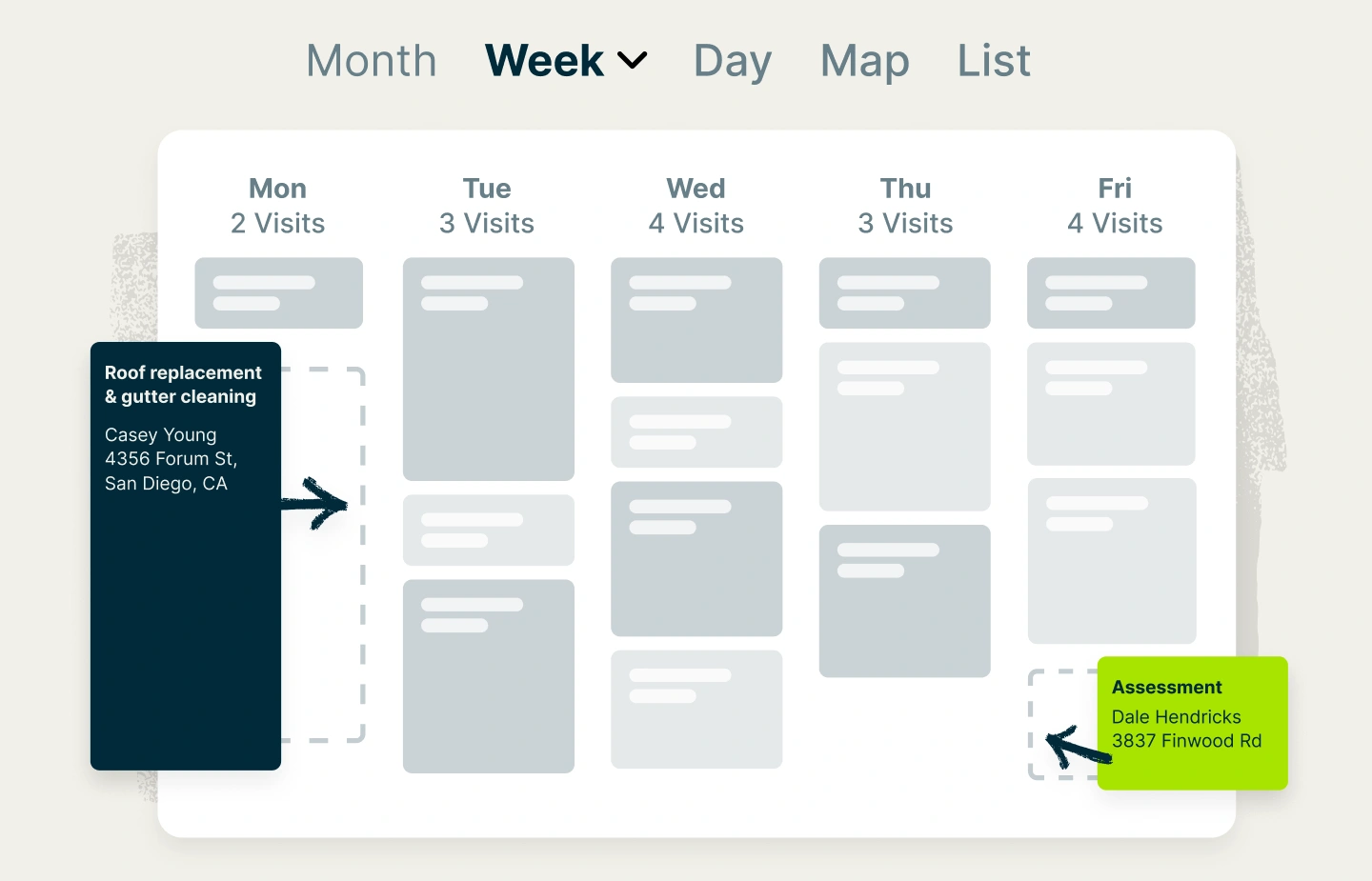
Can everyone on your team access a shared schedule? Whether it’s a digital calendar or project management app, having real-time updates keeps your crew, subs, and office on the same page.
Have backup labor contacts ready. Weather and injuries can throw a wrench into your plan. Having reliable subcontractors to call on means you won’t lose time or money scrambling to fill gaps.
Roofing project managers can use Jobber’s scheduling software to keep every job on track—from tear-offs to inspections—without the chaos. With a customizable calendar, smart routing, and real-time team notifications, Jobber makes it easier to assign crews, avoid overlap, and keep projects moving.
Materials procurement
Securing materials early helps you avoid price hikes and last-minute delays that will throw off your timeline and budget. Supplies like shingles, flashing, and gutters can fluctuate in price, so locking in orders ahead of time can protect your profit margin.
Keep a close eye on vendor backorders and lead times. Staying informed means you can adjust your schedule before a material shortage leads to downtime. Staying in touch with suppliers will help you catch issues early and find alternatives if needed.
Bulk order the materials that you use regularly. This can stabilize your spend over time, reducing the number of smaller, more expensive orders. The fewer times you need to reorder, the fewer interruptions there’ll be to your work.
On-site coordination
On-site coordination is where your project really takes shape. It starts by assigning a site lead—which might be yourself—to make decisions and keep the job moving. This person also ensures everyone on the job site follows safety rules to avoid accidents and costly delays.
Here are a few ways that job management software can help site leads with day to day operations:
- Job details give your team everything they need to work efficiently, from instructions to checklists and photos, right on their mobile phones.
- Job tracking keeps project managers updated on project progress remotely, so they can manage multiple crews at once.
- Time tracking and location timers keep accurate track of who worked when, so payroll is stress free.
READ MORE: Best app for employee time tracking
We’re able to turn over [detailed scopes of work] to our crew so they can do that job seamlessly without constantly having to call us asking, ‘Hey, what are we doing on this job? What’s next?’
Everything’s laid out right there in a quote. It’s been a huge improvement for us.
Quality control and close-out
Quality control is where you separate a quick patch-up from a job that stands the test of time. Every project deserves a detailed inspection to confirm it meets industry standards and local codes, and that it can stand up to wind, rain, and sun. You’re checking for anything that could turn into a costly problem down the road, whether it’s loose shingles, weak flashing, missed fasteners, or poor sealant work.
Good documentation makes this process cleaner and smarter. Before-and-after photos are proof points you can share with clients when it’s time for a final walk-through.
This is the time to take clients through what’s been done, explain any warranties, and get the sign-off that closes the deal.
Before we started using Jobber, we were very disorganized in maintaining customer records. Probably kept us from growing as we should have been at that time.
Best practices for keeping roofing projects on track
Proven habits help roofers avoid the pitfalls that slow things down. Miss one detail and suddenly you’re facing unexpected delays and unhappy clients.
Here are the roofing project management best practices that help keep your jobs moving while keeping profits healthy:
- Build project timelines with weather contingencies and buffer days. A surprise storm or heatwave can throw off even the best-laid plan.
- Assign clear roles and responsibilities up front, making sure everyone knows their specific tasks for each day
- Conduct daily or weekly crew check-ins to identify any issues early, before they turn into delays
- Keep clients informed with milestone updates, progress photos, and quick notes to reduce any chance of misunderstandings
- Standardize your documentation with digital forms for safety checks, change orders, and progress updates to make life easier for your crew and office staff
- Track all equipment and materials regularly to prevent missing tools or parts, and unnecessary project stalls
- Use a shared project calendar so all employees can see real-time scheduling updates and job statuses
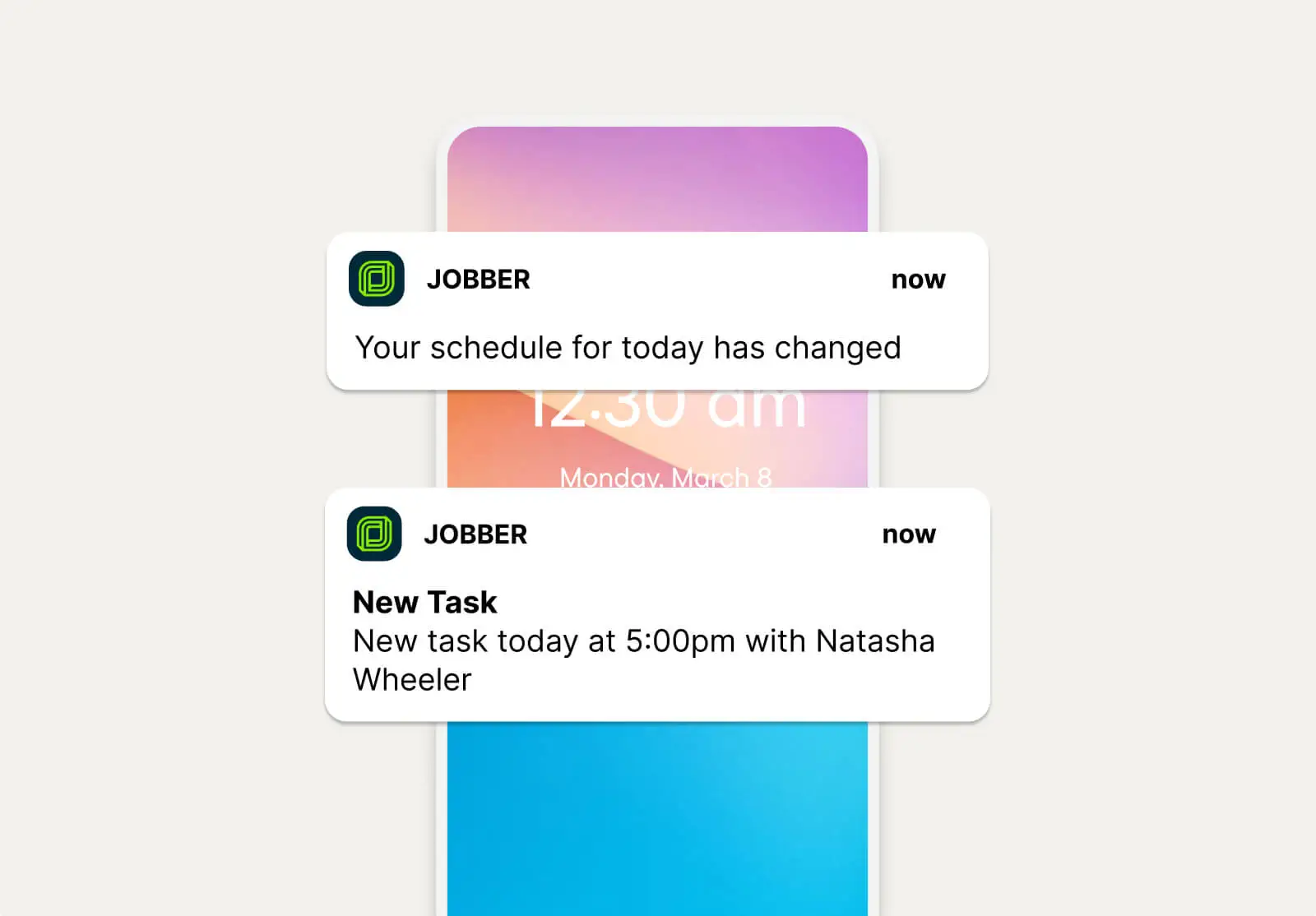
- Automate notifications, so shifts and supply delays reach the whole team instantly
- Encourage your supervisors to flag risks and repair needs in real time using mobile apps
- Review lessons learned after every job to refine your processes. Then train your team on smarter workflow habits.
READ MORE: How to run the office of a roofing company
Run smoother roofing jobs with Jobber
Whether you’re just starting out or you’ve been on top of roofs for years, sharpening your project management skills will help you run smoother jobs and happier crews.
And the right roofing software can help. Count on Jobber to make it easy to communicate with the team, track job milestones, and manage every project detail.