
Key takeaways:
Starting a tree service business requires careful planning, industry knowledge, and a focus on safety and professionalism to ensure long-term success.
- Get certified and plan strategically. Education in arboriculture sets you apart, while a strong business plan outlines services, pricing, and marketing to guide your growth.
- Organize your business and protect yourself. Select a memorable business name and logo, choose the right legal structure (with LLCs offering liability protection), and obtain required licenses and insurance for both compliance and peace of mind.
- Invest wisely in equipment and safety systems. Purchase essential tree care equipment and set up OSHA-compliant safety systems, including proper training, safety protocols, and fall protection to keep your crew and customers safe.
- Build a strong foundation for profit and growth. Price your services to cover all costs plus profit, implement robust accounting practices, and leverage tree service software to manage scheduling, quoting, invoicing, and payments efficiently.
- Market your services and expand your team. Use a blend of website development, local marketing, referrals, and community engagement to book your first customers, then hire skilled employees as your business grows.
For more tips and expert advice on running a successful tree service business, sign up for the Jobber Newsletter. Sign up here.
Starting a tree service business offers the freedom to be your own boss, build a hard-working team of employees, and achieve your personal business goals.
But being a trained arborist is only the first step. You’ll also need a strategic business plan and the right tools and equipment to start a successful tree service business.
Whether you’re just starting the research process or know you’re ready to jump in, use this as a roadmap for growing your tree business from the ground up.
Learn how to start a tree trimming business:
-
Become a certified arborist
-
Select an official business name and logo
-
Create your tree service business plan
-
Get business financing
-
Decide your business structure
-
Obtain required licenses and insurance
-
Register your business name and tax information
-
Set up safety systems
-
Price your services for profit
-
Set up your small business accounting
-
Invest in tree removal equipment
-
Book your first customers
-
Hire your first employees and grow your business
1. Become a certified arborist
Becoming a qualified arborist is helpful for two reasons: you’ll have industry-leading instruction on how to do the job well, and it will set you apart from the competition.
Arborist training can also help you stay safe in work environments that are sometimes dangerous or risky. To become an ISA-certified arborist, visit the International Society of Arboriculture (ISAs) website and apply for eligibility.
I truly believe the best method is through education and training.
When I send my guys out to do a job, I don’t send them out ill-equipped. I send them out with knowledge about what they need to do, why they need to do it, and how they need to get it done.
Do I need a specific tree service license to start my business?
No, you don’t need a tree services license to become an arborist, but experience and training always help. Getting an official arborist certification works if you’re ready to build a stronger reputation as a provider, and it helps you develop crucial skills you’ll use on the job.
2. Select an official business name and logo
Your tree service company name is a prospective customer’s first impression of your business. Make sure to pick a memorable name that describes your services and sounds or looks different from local competitors.
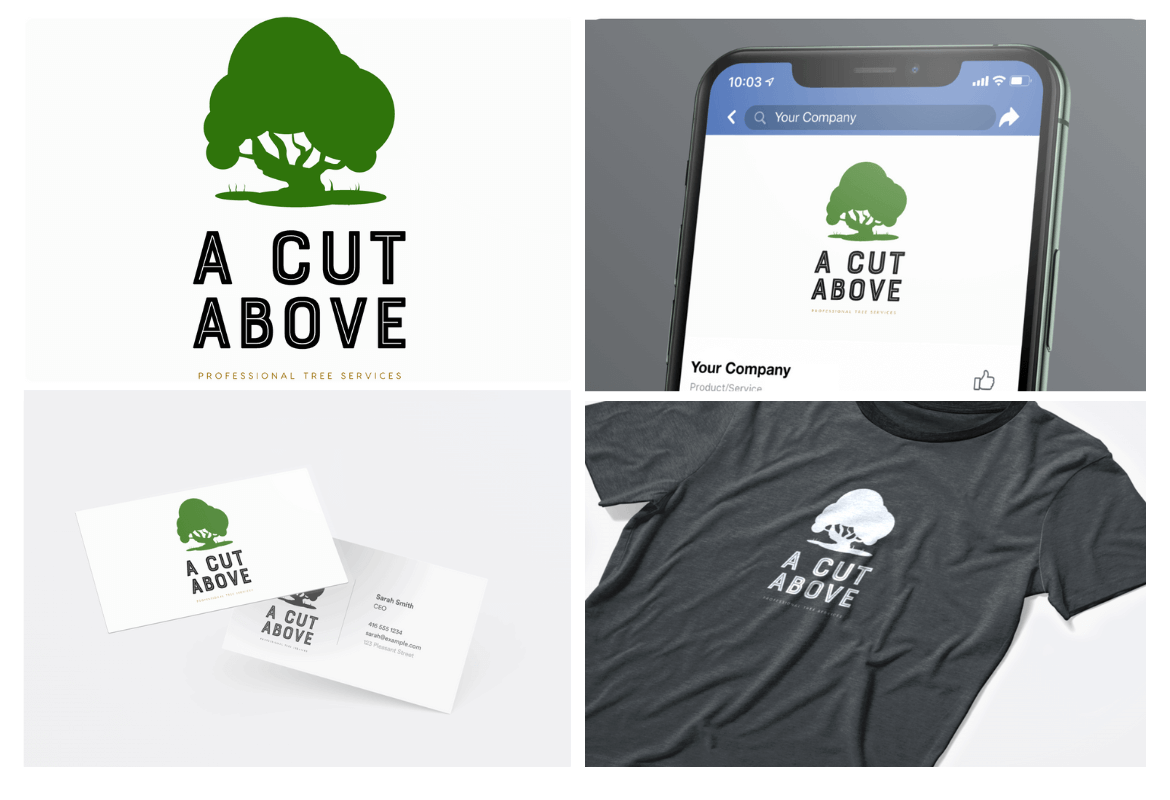
Then, design a logo to match your business name. Depending on your design experience, you can easily create one yourself or outsource the branding work to a designer.
Next, apply your business name and logo to your business assets, including:
- Business cards
- Employee uniforms
- Company vehicles
- Business website
- Social media accounts
- Invoices and estimates
Use the same logo, colors, and business name on everything to help customers easily recognize your business. Here’s an example of what your tree service business branding could look like:
3. Create your tree service business plan
A business plan is the roadmap for what you plan to accomplish over time. A well-written plan will also help attract investors if you need financing to get started.
Your tree service business plan should include:
- A cover page with your business name, logo, and contact information
- A quick overview of your business, including how much money you need to start
- An overview of the structure of your business (or how you plan to operate)
- Your tree services list, pricing strategy, and high-level details on profit or revenue
- A market analysis identifying who your potential customers are in your service area, what tree services they need, and how much they’re willing to pay
- A competitive analysis that describes what makes your business different from competing arborist businesses in your target market
- Your marketing strategy to attract potential clients to your tree care business
- A financial plan that details the money coming into and going out of your business for the first year (including a budget, sales forecast, and labor costs)
Pro tip: Start with a simple one-page version of your business plan and expand it over time. Getting your ideas down clearly is more important than having a perfect or lengthy business plan from day one.
4. Get business financing
If you don’t have money already set aside, you’ll need business financing to buy insurance, purchase tools and equipment, and advertise your tree care services. Consider options like:
- Business loans: Apply for a small business loan or line of credit from your bank, or through an online lender like Fundera or OnDeck.
- Government funding: Get a small business grant, loan, or find an investor through the Small Business Administration’s funding programs (if you’re in the United States). You’ll also want to check with your local government to see what federal or state-level business grants are available to you.
- Credit card: Apply for a business credit card with a low interest rate to help with cash flow while you’re just starting out.
- Small business grants: Some programs offer funding to recognize excellence in small home services businesses. For instance, Jobber Grants offer $150,000 in startup costs to qualified applicants.
Apply for Jobber Grants
Jobber awards $10k grants to qualifying business owners for exceptional work on their teams and in their communities. Stay updated on application timelines, or sign up to get more information.
How much money does it take to start a tree care business?
When starting from scratch, you can expect to spend $10,000–$50,000+ to start your tree service business. The costs break down like this:
- Business license and registration, varies by state ($400–$1,200)
- Tree care business software ($49+/month)
- Business insurance ($750/year for small companies)
- Tree care tools and safety equipment ($6,000+)
- Business cards, branded uniform, and website ($1,000–$3,000)
If you need to purchase a bucket truck or work vehicle, budget another $30,000+ or more.
5. Decide your business structure
Before registering your tree service business, you’ll need to decide how it will be legally structured. This choice affects how you’re taxed, what paperwork you’ll file, and how much personal liability protection you have if something goes wrong on a job.
In the U.S., most tree service businesses choose from the following options:
- Sole proprietorship: This type of business is simple to set up if you’re running a single person crew, but offers no personal liability protection.
- Partnership: This business type is similar to a sole proprietorship, but business ownership is shared between two or more owners.
- Limited liability company (LLC): A popular choice for tree service businesses, this type of business helps separate personal and business liability while remaining relatively easy to manage.
Because tree work involves heavy equipment, property risk, and physical labor, many owners choose an LLC for additional legal and financial protection.
Pro tip: For guidance based on your own state or financial situation, check with your state’s business office or a qualified accountant who has experience with service businesses.
6. Obtain required licenses and insurance
Most tree service businesses must secure licenses and insurance before they can legally operate or take on certain jobs. Here’s what that process looks like:
Licenses
Contact your local municipality or state licensing board to confirm which licenses are required in your area. Requirements can differ significantly, even between nearby cities.
Depending on where you operate, you may need:
- A state or municipal business license
- An arborist license, contractor’s license, or specialty trade license
- Local permits to operate specific equipment or perform tree removal
Insurance
Working at heights and operating tree service equipment can be dangerous. To protect you and your clients against accidents, invest in tree service business insurance. Your coverage should include:
- General liability insurance to cover an injury on the job or damage to your client’s property
- Workers’ compensation insurance to cover employee injuries on the job
- Commercial auto insurance to cover collision or damage claims to your company vehicle
- Commercial property insurance to cover any damage to your property or tree care equipment
- Professional liability insurance to cover claims and lawsuits over professional mistakes
- Business income insurance to keep your tree care company up and running after an incident or unexpected loss of work
You might find you need added types of coverage for different purposes. Work with your insurance provider to build a policy that’s right for your tree service business.
7. Register your business name and tax information
To legally operate your business, you’ll first need to register it with the necessary municipal, state, and federal authorities. Here’s how:
- Register your business name: If you operate under a name different from your legal entity, you may need to file a DBA (“doing business as”) with your county clerk or state business office. You can also run a trademark search through the USPTO database to ensure your tree service business name isn’t already in use.
- Register with state and local agencies: Form your LLC, corporation, or sole proprietorship through your state’s Corporation Commission or clerk’s office. This officially establishes your business in your state or municipality.
- Apply for an EIN: Get an employer identification number (EIN) from the IRS. You’ll need it to file taxes, hire employees, and open a business bank account.
If you’re outside the U.S. (for example, in Canada, the UK, or Australia), the registration process may differ slightly. However, the same general steps apply.
8. Set up safety systems to stay OSHA compliant
Tree service work comes with higher-than-average risk, from heavy equipment to working high in the air. Setting up basic safety systems early can protect your crew, your customers, and your business.
In the U.S., tree service businesses are expected to follow OSHA safety standards, even if you’re a small operation or working solo.
In practice, this means identifying job-site hazards and training workers on safe equipment use. The simple habits below can go a long way toward reducing injuries, staying compliant, and running a more professional operation. Here’s what you need to know:
Standard safety protocols
Every tree service business should establish basic safety procedures that address common job-site risks, including:
- Pre-job hazard assessments (such as damage after a storm)
- Required PPE like helmets, eye and hearing protection, gloves, and cut-proof gear
- Equipment inspection and maintenance
- Clear drop zones and ground-crew communication tools
- Emergency response procedures
Clear, written protocols help reduce injuries and support compliance if inspectors review your business. Within Jobber’s mobile app, you can quickly submit site inspection forms to log concerns and alert your crew to specific safety recommendations.
Training programs
OSHA requires that workers be trained to safely perform their jobs. For tree service crews, this typically includes:
- Chainsaw and equipment operation
- Climbing and aerial lift safety
- Hazard recognition and safe work practices
As a business owner, always document any training session, and refresh content regularly. This is especially true for high-risk work where conditions could change more often.
Fall protection systems
Falls are one of the leading causes of serious injuries in tree or arborist work. Tree service businesses should use proper climbing and fall protection systems, including:
- Helmets and protective gear
- Inspected climbing harnesses for every worker
- Adequate rope, free from damage or tears
- Secure anchor points
- OSHA-compliant aerial lifts (as required)
Fall protection equipment keeps crews safe, reduces serious injuries, and helps your business meet OSHA safety expectations in residential neighborhoods and commercial properties.
Job briefings
Job briefings help crews identify site-specific hazards before work begins. A quick on-site discussion should cover the scope of work, potential safety risks, crew roles, and emergency procedures in case of accidents.
Pro tip: Use the Jobber mobile app build and check custom safety checklists and site inspection reports right from any job site. Add custom checkboxes and photo uploads to more accurately review safety requirements in the field and keep your crew safe.
9. Price your tree services for profit
Start by listing the tree care services you plan to offer. Your list might include:
- Tree trimming (residential or commercial properties)
- Tree removal
- Tree inspection
- Tree and shrubbery pruning
- Deadwooding
- Stump grinding
The next step is setting prices that actually cover your costs and leave room for profit. A straightforward way to price tree services is to work backward from your costs using this simple formula:
(Labor costs + materials + overhead) × profit margin = job price
This approach ensures every job pays for itself and contributes to your long-term business goals. For example, let’s say you’re pricing a residential tree trimming job:
- Labor: 2 workers × 4 hours × $30/hour = $240
- Materials and equipment wear: $40
- Overhead (insurance, fuel, admin, vehicle costs): $70
In this example, your total job cost is $350. If you want a 25% profit margin, your job price would be $350 × 1.25 = $437.50, which you might round up to $440.
Build your long-term pricing strategy
Once you have your service list and a general idea what each job is worth, create your tree service pricing strategy. This should take into account what your competition is charging and how much you need to earn per job in order to be profitable.
You can use an automated service pricing calculator to add up labor costs, material costs, overhead expenses, and profit margin. Don’t forget to factor in expenses like gas, labor, and insurance premiums to get a more accurate profit result.
10. Set up your small business accounting
A big part of running your new business is maintaining accurate financial records, especially when you book and send invoices for jobs. You can invest in accounting software like QuickBooks Online to easily track expenses, run payroll, and view income at a glance.
Using small business accounting software also simplifies your tax information and helps you keep detailed and accurate financial records—preventing lots of stress later on.
READ MORE: Small business tax deductions to save money when filing
It’s also best practice to open a business bank account so that you can easily separate business and personal expenses.
11. Invest in tree removal equipment
The equipment needed to start a tree removal business will depend entirely on the services you plan to offer.
Here’s a list of common tree service equipment you’ll likely need to purchase:
- Chain saw: Used for felling and trimming trees
- Pole saw: Reaches and trims distant branches
- Ladders (of various heights): Provides access to higher parts of the tree
- Stump grinder: Efficiently removes tree stumps after cutting
- Climbing ropes: Ensures secure climbing and movement
- Helmets: Prevents head injuries from falling debris and branches
- Eye guards: Shields eyes from wood chips and dust
- Climbing boots: Offers stability and traction while climbing
- Ear protectors: Protects ears from loud machinery sounds
- Saddle: Supports the climber while suspended in trees
- Wedges: Helps direct tree falls during cutting
Tree removal equipment can get expensive, and you may not need to invest in everything up front. Book your first few jobs, see what tools you’ll need, and then purchase the right equipment based on each job description.
You’ll also need tree service management software to run your business smoothly. With Jobber, you can:
- Create and send professional quotes right from the job site.
- Schedule and dispatch your crew in seconds flat.
- Use the mobile app to easily submit job forms, complete tree climbing checklists, and send accurate risk assessments while on the go.
- Centralize communication to send, receive, and store client texts in one place.
- Optimize your daily route to improve efficiency and fit more jobs in the day.
- Access job details and photos on-site to complete the job exactly as planned.
- Instantly generate a professional invoice that’s ready to send to customers with one click.
- Get paid online, in person, or automatically.
12. Book your first customers
To get your business noticed and attract new customers, you’ll need to invest time and money into tree service marketing. There are many tactics you can try to spread the word about your new services and get your first customers, like:
- Build an arborist website that’s easy to navigate and lets customers request new work online.
- Claim your free Google Business Profile, and add the tree services you offer, your service area, and your hours of operation.
- Create your Facebook Business page, share content regularly, and include before-and-after photos of every tree service you perform.
- Set up a referral program and get more reviews from satisfied customers.
- Print and distribute tree service flyers, postcards, or door hangers in neighborhoods where you want to work.
- Ask customers to leave behind lawn signs with your business information once a job is done.
- Advertise your business on Google with Local Services ads to reach new customers in your service area.
- Join your local business association and attend community events to connect with potential customers and network with other business owners.
I had to really learn and ask, ‘Who is our client?’
I had to learn that my client isn’t the guy that’s looking for the cheapest price. If somebody opens the door and only wants cheap, maybe you’re not the tree service for them.

13. Hire your first employees and grow your business
When you’re ready to add new tree service, expand your service area, and take on more work, it could be time to hire your first employee.
Follow these steps to hire a skilled arborist to join your business:
- Decide if you want to hire a subcontractor or employee, and set a pay rate.
- Write an arborist job description to describe the responsibilities, qualifications, and traits the ideal candidate should have.
- Post your job description on online job boards like Indeed or LinkedIn, and clarify how potential candidates can apply.
- Book interviews and ask the right interview questions to find the right match.
- Extend an offer to the top candidate and prepare for their first day, including onboarding and training.
Pro tip: Join the Tree Care Industry Association to help build safety and training programs, establish policies that help employees perform better, and evaluate your business against industry standards.
Launch your arborist business
Starting a tree service may be a great career opportunity for you, especially if you love working outdoors and dedicating your time to serious projects. Using the steps above, get ready to launch your business and build a career you love.
Originally published April 2020. Last updated on February 25, 2026.
Frequently Asked Questions
Still have questions about how to start a tree removal business? Check out the FAQs below.
-
Starting a tree cutting business typically costs between $10,000 and $50,000, depending on equipment needs and insurance. If you need work vehicles or heavy-duty machinery, you can expect to invest a higher amount.
-
According to the U.S. Bureau of Labor Statistics, the annual salary for a full-time arborist can range from $30,650 to $72,370, or $31.33–$24.90 per hour. Keep in mind that professionals with more training or experience often earn a higher base salary.
-
According to Jobber’s Blue Collar Report, tree care businesses earn $553,405 per year on average. Over 60% make more than $1 million each year.
Revenue and profits depend entirely on the size of your operation, how well you manage costs, and the amount of demand in your market.
For example, if you schedule five jobs that pay $500 every week, you’ll earn $125,000 a year. If you can keep costs down and price smartly, you’ll run a profitable business.
WATCH AND LEARN: Inside the growth of a $1M/year tree care business -
At a very basic level, your tree service equipment list should include chainsaws, ladders, safety gear, climbing equipment, and a truck to haul away debris. More specific jobs might require additional tools, like stump grinders and wood chippers.
-
Licensing requirements vary by location, but most states require a contractor’s license and active business insurance policy to operate legally. To make sure you’re following the appropriate steps, search in Google for “tree cutting license in [state].”
Alternatively, search “[Your state] business licenses” to learn more about the process in your specific locality. -
While formal education isn’t required, training in arboriculture, safety certifications, and experience with landscaping equipment are highly recommended.
-
The main risks include physical injury, equipment damage, and liability for property damage or improper tree removal. You can reduce these risks by pursuing further education and making sure all new employees are up to date on appropriate safety standards.
-
Common mistakes include underestimating startup costs, failing to secure proper insurance coverage, and not marketing the business effectively. If you need expertise in any of these areas, consider outsourcing a few administrative or marketing services.
-
Of course! Tree care service business owners can make a substantial income. Earning potential often increases as the business grows and gains more clients. Careful planning and a strong work ethic can help you achieve your profit goals.