Roof Inspection Report Template
Inspecting roofs is a routine part of the job for any roofer, whether you’re checking for storm damage, wear and tear, or early signs of bigger issues. A roof inspection report helps you summarize all details about a roof’s condition and share it with the client.
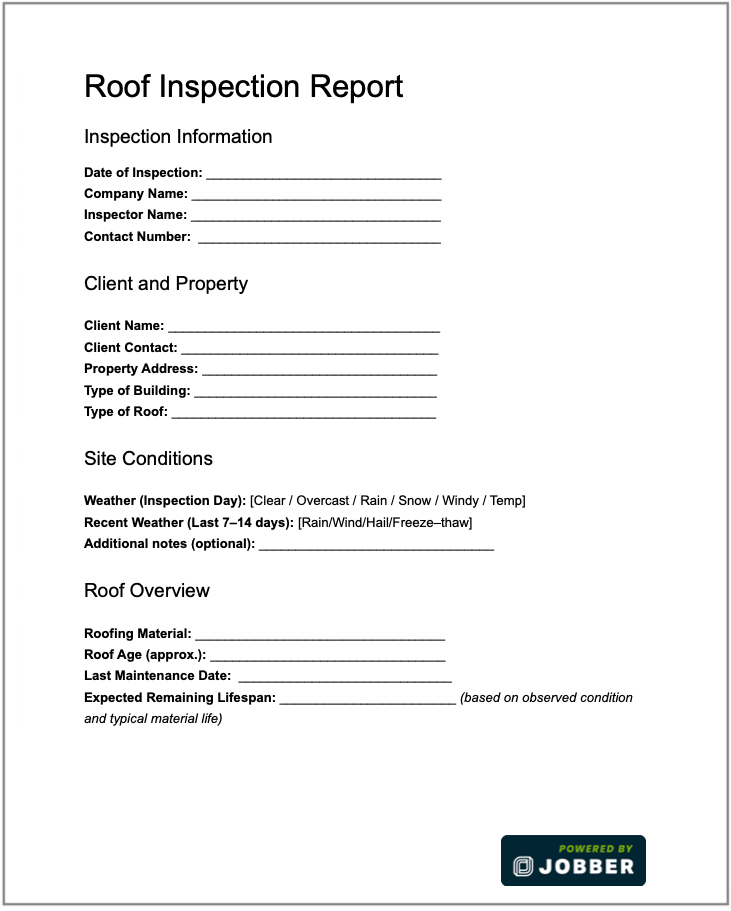
With our printable roof inspection form template, it’s easy to create an inspection report that captures details about the roof’s condition and helps the client plan for repairs and maintenance.
Download Now
HELLO By clicking “Register now” I agree to Jobber’s Terms of Service and Privacy Policy. I understand that Jobber may contact my business by email using the information I have provided. Message & data rates may vary. For help, reply HELP. To Opt-out, reply STOP.
How to use this roof inspection report template
Follow these steps to complete your roof inspection form template checklist and fill out your inspection report:
- Write down the client’s name and address.
- Inspect every part of the roof, both interior and exterior.
- Take detailed notes of any damage or debris, including photos.
- Recommend any required roof maintenance or repairs.
- Sign and date the report when it’s complete.
Once you’ve completed your roof inspection, send the property owner a detailed report so they can plan for roof maintenance and repairs
What this roof inspection report template includes
Use our template to create a roof report that includes:
- Homeowner signature
- Date of inspection
- Roofing business name
- Client’s name, address, and contact details
- Weather conditions on inspection day
- Roof age and expected remaining lifespan
- Type of building and type of roof
- Roofing material (e.g., asphalt shingle, metal, tile)
- Any physical roof damage (e.g., cracks, corrosion, leaks)
- Gutter and drainage conditions
- Eaves, soffits, and fascia conditions
- Roof penetrations, chimney, and casing conditions
- Interior and exterior wall conditions
- Comments and photos for any notable conditions
- Maintenance recommendations
- The inspector’s name, contact details, and signature
How to use Jobber for roofing inspections
If you want to customize our roofing inspection report template or use digital copies instead of print, consider using Jobber’s job forms and checklists.
With a roofing app like Jobber, you can build custom report forms with dropdowns, checkboxes, and long-answer fields where you can note all the details of your roof inspection.
Digital roof inspection reports give your team the reports they need at all times. Templates also help you standardize reports, keep them clean and legible, and ensure you can easily share them with clients.
Fill out your digital report in Jobber and email it to the customer with their roofing invoice for the inspection. You can also send it to the customer with your roofing proposal for the repairs.
You can also save the roof inspection checklist to the customer’s file in your roofing CRM.
Frequently Asked Questions
-
A roof inspection form describes the condition of a roof and lists the findings from a professional inspection. This identifies any problems, allows for maintenance and repairs, and estimates the roof’s remaining lifetime.
-
A roof inspection report describes the condition of a roof and lists any repairs that are needed. A template helps you create this report quickly and accurately without forgetting any details.
There are several types of people who might need a roof inspection report:
• Homeowners who don’t know their roof condition and need to plan for maintenance, repairs, or a new roof installation
• Insurance companies that are processing a homeowner’s claim and need more information about the roof’s condition
• Roofing contractors who are preparing to perform roof maintenance and repairs
• Real estate agents who need to assess the full condition of a residential or commercial building before it’s sold to a new owner -
A roof inspection report can look different depending on the business and whether it’s a residential or commercial inspection. That said, most roof inspection reports usually have several things in common:
• Background details (inspection date, client details, roof inspector details)
• Building type, roof type, roof age, and roofing materials
• List of all areas of the roof and a detailed description of conditions
• Photos showing specific conditions or damage
• Inspector comments and recommendations
• Homeowner and inspector signatures
-
A roof inspection report template is one of the best roofing tools in your toolbox. This report template will help you:
• Position your roofing company as a professional operation with defined processes
• Ensure your entire team can quickly and efficiently create detailed inspection reports
• Clearly communicate the condition of a roof and avoid any confusion or uncertainty
• Give clients a record of their inspection with clear next steps outlined
• Maintain records of past inspections to help guide future roof repairs
Download our free roofing report template above and use it after your next inspection. You can also start using digital forms right away with Jobber’s job forms and checklists. -
Report templates are very similar for residential and commercial roof inspections. The biggest difference is that commercial roofs are larger than residential ones, so you might need a longer form.
Some areas of a roof, like chimneys and skylights, might apply to residential roofs but not commercial roofs. Or, depending on your area, commercial buildings might have a flat metal roof surface while residential roofs are sloped with shingles.
Even so, you can most likely use the same report template for all of your inspections. Just mark some form fields “N/A” or non-applicable if they don’t apply to the type of roof you’re inspecting.
-
Follow these best practices when you’re filling out a roofing report template:
• Use simple language that your client can understand. If you’re using terms the client might not understand (like flashing or fascia), include photos so the client can see what you’re talking about.
• Present solutions, not just problems. While you should show the client any issues you’ve identified, make sure to address how and when each issue should be resolved.
• Be clear about timing. Tell the client honestly whether a repair needs to happen today or if it can wait a few months or years.
• Provide an estimate for you to carry out the recommended repairs. Keep your roofing estimate separate from the inspection report. That way you’re providing information without any pressure.
• Include your business branding, like your name, logo, and colors. This helps the client remember your business later when they’re ready to make repairs, or if a friend asks them to recommend a roofing contractor.
-
The average roof should be inspected at least once every two years, but this can vary depending on local weather conditions. Inspections may need to be more frequent in areas with extreme weather.
The best time to inspect a roof is in the spring or fall. Inspections should also be conducted right after a severe storm or other major weather event, particularly if the property was damaged.
-
Depending on where your business operates and your state’s building code, you might be required to include certain information in your roof inspection report. This can include:
• Your business name
• The inspector’s name, job title, and contact details
• The client’s name and contact details
• The property’s address and roof construction details
• Photos showing all slopes of the roof
• Photos showing all damage, hazards, and other issues
• A clear and detailed description of all damage
The inspection results are especially important if the homeowner needs to file a claim with their insurance company. The insurance provider will want as much information as possible before they can process a claim.