 30 Minutes
The Daily Formula Behind $70K Weeks
With Doni Jones


-
Doni (00:00)
Even if you knock on the door and say, you know, we’re working across the street. Just notice there’s a few limbs hanging over your roof. Definitely don’t want to be intrusive, but is it all right if I just go ahead and give you…
Adam (00:09)
Doni, you crossed the line here. You’re knocking on doors. How dare you be proactive and be a salesperson? I can’t believe you asked. No, you’re exactly right. That’s what salespeople do.
(00:25)
Welcome to Masters of Home Service, the best podcast for home service pros like us. I’m your host, Adam Sylvester, and I want you to crush it in business.
(00:35)
Sales is easy until someone else does it for you. Then it gets real, real fast. You might be pretty good at sales or just good enough to keep the sales coming. But as soon as you hire a salesperson, all bets are off, everything’s different. And you’ve discovered the dark underbelly of small business, which is having a sales force. Questions are swirling around like, are they saying what I want them to say? And they didn’t close that deal. If I’d been there, would I have closed that sale? And how do I train these people?
(01:02)
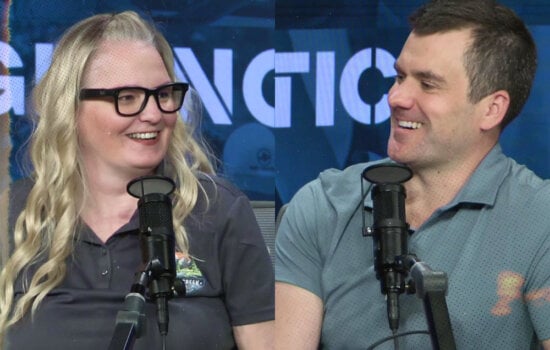
What kind of metrics should I care about? We’re gonna cover all of those things today because we have a great set of guests in studio today. We have Doni and Megan from Don’s Tree Service in Atlanta. Welcome to the show, both you guys.
Megan (01:11)
Good morning, good to be here.
Doni (01:13)
Thank you.
Adam (01:20)
So we’re going to talk about sales from the perspective of having a sales force, managing salespeople. You guys have a really cool rule 25, 25, 10, we’ll get to that. But first, let’s get into it in terms of who you guys are and everything. Doni, why don’t you start us off?
Doni (01:33)
Doni with Don’s Tree Service, CEO of Don’s Tree Service. We are your premier tree care company in Atlanta. We’ve been in business 25 years. I’m a wife, mom, and entrepreneur that loves the tree care industry and loves helping people solve their tree care problems.
Adam (01:44)
Great, and Megan, you’re Doni’s daughter. So go ahead and introduce yourself.
Megan (01:49)
My name is Megan. I am also with Don’s Tree Service. This is my lovely mom right here. And I graduated high school last year and just went straight into the workforce, and it has been such a blessing.
Adam (02:02)
I’m really glad you guys are both here. Our listeners need a plan for how to manage salespeople, right? And Megan, you’re actually the sales manager at your company. So you’re, I’m glad you’re here. What is the biggest mistake that you think you can make when you’re trying to manage a salesperson or a group of salespeople in a home service business?
Megan (02:22)
I think one of the biggest mistakes is just assuming everybody knows everything. And this was actually a big part of learning from my mom because she’s been doing it for 25 years. So she just knows, boom, boom, boom, get in there, you say this. Like when they say that, you say this. And there’s so much nuance to sales that if you’re not used to that, you’re like, how does she do it? Like she’s a wizard.
Adam (02:47)
It feels like magic.
Megan (02:47)
Yes, it very much does. especially with her, because she’s so relationship-based instead of purely transactional, like, hey, here’s the tree, here’s the price, give me the money. She really works on developing a relationship. You watch, and you’re like, what? How did you get that sale? A lot of what we’ve been working on is just, okay, what is actually the process of making that sale? What creates that relationship and what things do you do, not just the words that you say, but the actual principles behind it of why it works.
Adam (03:20)
That’s right. Because Doni, you know, could just chalk up and say, well, I’m just good at this. I can’t teach my charisma. But there are objective things that salespeople can do to be successful.
Doni (03:32)
Absolutely. And we actually just went through a training because we sometimes bring outside trainers in, and the feedback we kept getting was, she’s good at that. And, I’ve learned this, but this one thing she does, I don’t know if I could do that. We basically had to break down. It’s not doing it the way I do it. It’s using the principles to tell the story so that you can get the client engaged, you know and, and we want people to be authentic. We want them to be themselves, but there is a sales process.
(0:4:07)
And so we talked a lot about that. Like, what is the process to building the sales and building relationship and building rapport and so helping them understand it’s not trying to be like me. It’s trying to use the principles that we’ve talked to be the best person that they can be in front of the client.
Adam (04:17)
You guys use this formula called 25, 25, 10. Why don’t we start with that? That’s one of the main pillars you guys use to train your salespeople. What is that?
Megan (04:28)
So that is 25 calls, 25 texts, and then 10 estimates. I start with the 25.
Adam (04:39)
Every day?
Megan (0:4:40)
Yeah, every day. Yeah, except for Sunday
(04:52)
But the 25, 25, 10 is you do your 25 calls, 25 texts, and then your 10 estimates. And that consistency of doing that every single day. You do your calls, those follow-up calls, and those outreach calls, those cold calls, and you do those cold texts or follow-up texts, that fills up your schedule for those 10 estimates. Those 10 estimates allow you to have follow-up calls to have people to reach out to. So it’s very much a circle, you know?
Doni (05:18)
And we also try to make it very clear with our sales team, and for anybody else watching this, you don’t stop at 25 if you look at your calendar and see that you still don’t have estimates on the schedule. If you’re looking at your schedule, and of course, there are leads that come in, you know, organically, and that fills up the schedule. But there are other days that the schedule might be a little soft. Well, it’s an estimator’s or a salesperson’s job to make sure that when they look at their calendar, they have a certain amount of estimates every single day. So if you’ve made your 25 calls, but you look at your schedule the next day and you’re like, I only got five estimates. Well, then you might need to make a hundred calls. You might need to make a hunt. Well, actually, funny enough, with Jobber, we have a little hack now where you can get a hundred texts done. Like in 10 minutes.
Megan (06:05)
More like 15, but yeah.
Adam (06:08)
She got you there. If someone’s listening and has never really done sales. They have no concept of the 25, 25. But to me, I know that’s actually a lot. If you’re going to 10 different. So 10 estimates means that you’re going to 10 different homes. Yes. To bid 10 different trees. That alone could take most of the day, I would imagine. They can. And then 25 phone calls. Yeah. And then 25 text messages. That’s a full day. Yeah, it is. You’re not holding your sales table to a low, low standard. You’re holding them to a high standard.
Doni (06:36)
Yes, very much so.
Megan (06:37)
And something I grew up just like ingrained in me and my sister, was like, more you do, the more you can do. And she can attest, because I watched her do this pretty much my whole life. All that churn, all the work that you do, is going to show up six months from now or three months from now. But it’s not going to be in that immediate moment. That’s probably one of the hardest parts of sales is you’re doing these calls, you’re doing the texts, and you’re doing the estimates, and you’re like…I’m not seeing results. But if you keep doing those, if you keep working on, okay, I’m doing this call, but maybe there’s something I can say to actually make this call better, make it more effective, make it more engaging for the client, you start to get better and better. Six months from now, you’re like, where did all these estimates come from?
Doni (07:33)
And we really lean into that. Sometimes you have to trick your brain into going, Hey, this isn’t the boring work. This is the necessary work. This is why I get a chance to have a schedule where I’m all over the city. I get to meet great people. I get to make a great living because I do this quote-unquote boring work. And then work becomes not so boring. And then we have evenings where we kind of get the sales team together and we’ll call them call-a-thons where we all just get in the office, order some pizza or…you know, get some burgers. Yeah. They like the burgers or the brisket. But anyway, we’ll do that and just kind of start playing games, you know, and put the names on the board and see who gets the most leads that day or who closes the most jobs. Cause a lot of times when you’re doing your calls, if you’re following up with people that you’ve already done estimates with, you can actually close jobs that way. Actually, you’re supposed to be closing jobs that way. That counts as one of your calls.
Adam (08:18)
I love how simple the 25, 25, 10 rule is, especially for a new salesperson. What’s my job? I’ll tell you what your job is. 25, 10. You do that every day, every day. Yeah. If you don’t, I’ll be unhappy. Which one do you want? It’s just so simple. It’s not convoluted. It’s not like, it’s not based on things that out of their control. It’s based on things that are in their control. You can make 25 calls. The estimates one is might slightly be out of their control. 25 and 25 are definitely in their control. Are you finding that it’s just so simple for your team?
Doni (08:52)
It is simple. The discipline of doing it is not easy. The actual activity is easy, but just making sure everybody’s on the same page. But when they see how the numbers affect the company, it actually inspires them to do it. And that’s exciting to see them really buy into what we’re trying to do.
Adam (09:11)
I mean, hitting your numbers can take an average salesperson, turn them into a great salesperson. And they can outwork a great salesperson any day. I can out dial you, I can out text you, and I can out estimate you all day long. And so I can make up for my mediocrity by just outworking you.
Doni (09:29)
Yeah. You had mentioned that it might be a challenge to do the 10 estimates. I think as estimators, we sometimes overcomplicate the obvious. So if I’m out in my little car and I’m doing an estimate, well, guess what? There’s a neighbor on the right, a neighbor on the left. That counts as an estimate. There’s a neighbor across the street that might have a few limbs that need to be trimmed away from the house. Even if you knock on the door and say, Hey, you know, we’re working across the street. Just notice there’s a few limbs hanging over your roof. I definitely don’t want to be intrusive, but is it all right if I just go ahead and give you that?
Adam (09:59)
Doni, you crossed the line here. You’re knocking on doors. How dare you be proactive and be a salesperson? I can’t believe you asked that. You’re exactly right, that’s what salespeople do. They go get more work.
Megan (10:14)
Like our job is talking to people. Like if you’re at a restaurant, if you’re at a coffee shop, if you’re at Quick Trip, you can get, I’ve gotten several estimates where I’m just getting a morning coffee, somebody sees us and sees me in my shirt. They’re like, hold on, I need an estimate. I’m like, okay, get them in the system right then and there. like, yeah, cool, I can come tomorrow if you need. And it’s also that wow factor. And Jobber has actually been huge for us with that because we can get things in so quickly. Set people up and they’re like, yeah. One thing less I gotta think about.
Adam (10:51)
Megan, that’s a great segue because I think the person at the coffee shop who stopped you and said, I need tree service, probably wouldn’t have done that if you weren’t approachable. Frowning, if you just had this bad energy to you. But because you’re bubbly and you have a good vibe and good presence, you have good personality, and you walk around and people just feel like you’re approachable, that matters. And so how do you make sure that your salespeople conduct themselves with energy, with vibrance? With positivity. How do you make sure that continues in a culture where it matters so much in sales?
Megan (11:23)
We went to a training, and we came back, and there was this one thing that they talked about at the training that we were like, we need to do this immediately. And it was a gratitude circle. So our entire company gets together at 7:30. We all get together, say one thing that we’re grateful for. So, like the team leads or later in the week, we do like one person on the crew, one person from sales, one person from leadership, and then either my mom or my dad says something that they’re grateful for.
And it’s this, it creates such a sense of gratitude and fulfillment in what we’re doing. Like, hey, what we’re doing isn’t just cutting down trees. We’re giving peace of mind to people. We’re helping people feel safe at their home. Also, hearing the guys say, we’re so grateful for the salespeople for allowing us to have jobs every single day, be able to get up and feel like we’re serving people every single day. So there’s that.
And then in the sales meeting that we do, we actually like read reviews where we hear directly from our clients, Hey, like you guys came out same day, I had a tree on my house. Y’all were able to get it done quickly, safely. It was awesome watching the crane, you know, sorry. Just that daily, okay, what I’m doing matters. As a salesperson, you get rejected.
(12:51)
That’s like most of your job, you know, just day in, day out. No, I don’t want to do it right now. No, like let me think about it.
(13:02)
Especially if you’re door-knocking, seeing that what you do matters is so huge.
Doni (13:07)
You know, if you have one of those days that might be a little rough or something happened at home, you have to have the discipline to get yourself out of that because your customer doesn’t know that your boyfriend or girlfriend just broke up with you. They don’t know that your water heater, and they don’t care. They don’t care. So the discipline of putting good stuff in your brain. So we talk about that. Is that good for your brain? So in the morning, we also watch a short clip of something positive, inspirational, motivational.
You know, from somebody on YouTube or, you know, we’ll have some good word, or we’re going back to the reviews from the customers. That’s a great motivator also, but really starting the day, putting something good in your brai, and being grateful for what you’re blessed to do. Like, we literally get the opportunity to make our living from something that grows out of the ground. We give it a price. If somebody likes that price, they give us money, you know, we get to serve and make a difference in our own way.
Adam (14:02)
Doni, talk to us more about mindset and not just your mindset, but from a managing salespeople perspective, how do you make sure that your salespeople, really your entire team of salespeople, have healthy mindsets? How do you do that?
Doni (14:16)
We have six core values and two of are kind of combined, but it’s love, respect, integrity, teamwork, discipline, consistency, and gratitude. So when you lean on those core values and people know that they’re expected to show up with a great attitude, that makes a difference. And so when it comes to mindset, I just have been a firm believer that regardless of what happens to you, you have to be willing to do the work. Like for me, in my own personal example, I grew up in a home where there was a lot of abuse.
There was some very inappropriate things that happened. And so I saw that as a kid and I said, okay, I can either let this story define me or I can let this story inspire me. Because of the way I grew up, I knew I didn’t want to fit my kids to grow up in an abusive household. Career-wise, even though my dad was in the tree care industry, he had this thing where, you know, he wanted to do better, but he didn’t want to be too big because, you know, then the government’s gonna come after you or you’re gonna have tax issues or whatever.
I said, well, does that story serve me? Ya know, how does that affect my mindset? And so I made a decision that, hey, I wanna grow. I wanna get bigger and see what happens. See if I can handle what happens at that level. Cause I’m not happy with seeing it at this level. So I think going back to mindset goes back to what you put in your mind and what story you tell. What story are you telling yourself? If your girlfriend broke up with you.
Is that necessarily a bad thing, or does that open up opportunities for you to meet somebody that will love and appreciate you? So that’s something that I’m very passionate about. And then sharing that with our team. Ya know, hey, I understand that you’re having a tough day, but you get the opportunity to serve. You get the opportunity to make a difference in your own life. And that’s power. You have the power to make your day a great day if you want to. So we talk about choosing for it to be a good day.
I can’t tell you how many times we just are driving and we’ll call each other and be like, I love my life. And just finding joy in the little things. It doesn’t have to be the big thing, like a big paycheck or a new truck. It could be, I woke up this morning. I get to work with great people. I’m healthy. Granted, I could lose a little weight, but I’m healthy. know what I mean? All those things are things that kind of help shift your mindset and determine what your day is gonna be like. The other thing is, what do you focus on? Do you focus on the problem or do you focus on the solution? And too many people in life right now are focusing on the problem. We live in an incredible country that has had some challenges, but at the same time, we’ve had some wins. And so if you focus on the wins, you focus on how we can do better, how we can bring goodness into the world. I think that helps to create a good mindset.
Megan (16:59)
One of the easiest ways to change what you’re focusing on is you change the question in your head. If you’re always thinking in your head, what do I want? Which is always coming from a place of lack. You only want the things that you don’t have, right? Or like, where’s the threat? What can’t I do right now? What haven’t I done? If you are always thinking that, you’re only gonna be focused on what you don’t have and the negative. Whereas if you change it to, okay, what am I grateful for? What am I grateful for?
What can I do? What am I capable of? Just that simple switch of like, okay, I might not know how to do it, but okay, what do I need to learn to do it? What do I need to learn? What do I need to learn? Who do I need to talk to? Very different question than no one, like, I don’t know how to do this. I don’t know how to do this. I can’t do this. You know?
Doni (17:47)
We just had that happen in our sales meeting. We upped our levels of what our expectations were, and we literally had a couple of our salespeople like, How are we gonna do that? That’s a good question. Let’s show you how we’re going to do that. Not, we can’t do that, but how are we gonna do that?
And I was like, hey, that’s a good question. Let’s figure out how we’re gonna do that. We’re gonna be consistent on our 25, 25, 10. We’re gonna show up with a great attitude. We’re gonna know that if there’s a bad day that kind of happens, we can’t transmit that energy to our clients. So by doing the daily things, the 25, 25, 10, and having a positive attitude or a positive mindset, like what you mentioned, we’ll accomplish our goals, you know?
Megan (18:32)
And we support each other, too. Community is so, so important. If you’re just doing it alone, it can be really difficult. And even if you are a startup business and it’s just you right now, you still have family, you still have friends. And if you don’t have direct family or friends that are in line with your goals, you have YouTube. Those people that have the life that you want, those can be your closest friends. Listen to them, listen to the things that they’re doing on a daily basis that support you, you know? I cannot tell you how many times I’ve called my mom and just been like, It’s a rough day today. And she’s like, I know, like, tell me about it. She lets me feel it. And then she’s like, okay, how could it make this serve you? Or like, that’s a good excuse. Still got a job to do.
Doni (19:17)
And one of my mentors used to say, Feel the feeling and do it anyway. Like, okay, I’m having a feeling right now, but I still have to be there for my team. I still have to be there for my clients. I still have to be there for myself. And once again, whatever story I’m telling myself that makes this a sad situation, can I change the story to make it a good situation?
Adam (19:38)
All right, this is a great conversation. I wanna pause for just a minute to talk about Jobber and why Jobber is so important to your business, especially in sales. So Doni, how does Jobber specifically help you with your salespeople?
Doni (19:51)
Well, Jobber has been a game-changer for us because it puts everything in order. But the other thing is, we can track productivity and actually see what results are coming from our efforts. When we started using Jobber, we could actually see results from the email campaigns. So we’ve got email campaigns that we have sent out. And then on the report, you open up and realize, oh, $100,000 came from that campaign. $70,000 came from that campaign, you know, $250,000 came from that campaign. And being able to see that in black and white has been amazing. It is just really great how Jobber has helped us to do better and see that sometimes when we’re doing things that seem redundant, it actually affects the bottom line in a positive way. And that even though the email campaigns are automated and in everything, we still have to go through the process of putting them together. Jobber has just been great with that, you know, being able to see those results in real time.
Megan (20:47)
And the salesperson’s performance sheet—I love that thing. Because if it’s measured, it can be improved. So if we’re actually seeing, okay, this person has been doing their numbers very consistently, sometimes going above and beyond. We see that report after three months, holy cow, like they’re at the top of the leaderboard. And as a salesperson, that, at least for me, fires me up. Like, okay. I’m a little bit competitive.
Adam (21:16)
It’s got conversion rate on there, number of sold, number of quotes approved, all that stuff’s on there.
Megan (21:20)
Yeah, and I love that you guys have it broken down so well so that you can see how everything’s related to each other. So it’s been great, and seeing the percentages and actually seeing how much people really estimated, how much we each sold, how much was actually converted. It’s so refreshing rather than just guessing.
Adam (21:43)
If you’re not using Jobber, you need to be, especially if you’re doing sales. And if you’re in business, you’re doing sales. Go to jobber.com/podcastdeal, get an exclusive discount, and start using all these features, sales reports, and marketing campaigns today.
(22:02)
Doni, I want you to take us into how you cultivate like a true team, team environment among your salespeople. How do you make sure that they all thrive and help make sure that they’re all working together, even though they’re kind of…Salespeople are like lone wolves, right? But you still have to work on a team. How do you facilitate a really healthy culture with your team so they are effective and compelled to go make more business?
Doni (22:19)
One of the biggest things we do, which she mentioned, is we celebrate each other and we celebrate our differences. We joke about like half of our team is ADD and the other half is Autistic. You know, and that may not necessarily be the truth, but the traits are there, you know? Definitely, definitely there. So we celebrate our uniqueness, you know? Like, I don’t want Jeremy to be like Megan and I don’t want Megan to be like Yori. And so one of the things that we focus on right now is somebody that is comfortable in their own skin. Like when you meet them
Do they like themselves? And it’s hard for a salesperson that doesn’t like themselves to come off as engaging and authentic. The other thing is authenticity. You know, we want people to believe in themselves, but also understand that it’s not about saying the right words. It’s not about having some slick technique. It’s actually about finding out what’s gonna build the relationship with this client. So I’m really big on people that care about other people. And I find that out generally in the interviewing process. Like, while I’m interviewing somebody, I’ll ask, What are your hobbies? What are your relationships with your family? What’s important to you? And almost every person that I can think of right now, and you can correct me if I’m wrong, on our team, when we asked them what was important to them, almost every one of said family. That it’s important for them to spend time with family. That they do this because of their friends and their family.
And when you have people like that, they understand what’s important, you know? And the other thing is some people, people that are goal-oriented. If people come in and they just want to make money, it generally doesn’t work out with our company. But if you want to make money for a reason, or you want a job that you love for a reason, that generally translates well into our company. And then once we find out that reason, we actually talk about it and celebrate it. Like, my gosh, you want to buy a farm?
Oh goodness, you wanna buy a house. You wanna start a foundation where we can take the wood that we have and make something out of it. We have another one of our team members that also wants to, I wanna buy a farm, but who also wants to buy a farm himself. And he’s really into sustainability. Knowing that about each other helps us work together as a team.
Adam (24:36)
So do you find out what drives each person and then shares that with the team?
Doni (24:41)
Yes, absolutely. That’s exactly what we do.
Adam (24:44)
What do you guys do when there’s some negative talk? We’re not getting enough leads, or our prices are too high. We can’t sell anything at these prices. How do you address those kinds of issues?
Doni (24:54)
The biggest thing is how does that story serve you? How is that helping the situation? And then we try to turn it around. But I know you’ve seen that and dealt with that. What would you? She’s mispositivity.
Megan (25:05)
When we have problems, which we’re in the tree service, like trucks break down, things break down, like, something doesn’t work, and we’re a little bit behind, emergencies come in, so it’s always something. We’re focused on, okay, what’s actually important? All these other things, that’s just life. It’s gonna happen. It gets rid of a lot of the negative talk. And if there is, it’s like, I don’t know, like, I don’t know.
Doni (25:28)
Just to be transparent, because we’ve once again gone back to authenticity. We don’t really get a lot of that. It’s just not tolerated in our company. Like the whole gossip thing, we literally had a meeting, because we thought there was getting ready to be gossip because there was like an energy around the winter, going into the winter or whatever. And we had somebody that hadn’t been through the winter with us before. And so they’re like, oh, It’s like, yeah, we don’t do that.
(26:08)
Generally speaking in our industry, it gets a little slower in the winter. We have been blessed in 25 years, we have never laid anybody off in the winter. And the reason is because of our sales team. And so as a sales team, we feel like we’re failures if there’s no jobs on the schedule. Now there are weeks, then it’s a little tight and we’re like, okay, y’all, we’re scheduling jobs for tomorrow.
But guess what? They get out and they do it. So that kind of just focusing on the activity kind of nips that in the butt because you can’t come into the room and be like, there’s, know, this person has, this company has more sales or this company has this and a third because one that’s not, tolerated. And then if there is something you’re complaining about, you already know our culture is okay. Well, what are you going to do?
Adam (26:46)
I like the culture of mutual respect that sounds like you guys haven’t said explicitly, but I hear it in your talking. The technicians, the field workers really appreciate the salespeople for what they do. But it’s mutual. The salespeople really appreciate the guys doing the work because they’re producing, you know, it’s both. And so it’s really important for both parties to appreciate the other one for obvious reasons. In a company where there’s sales production, they need to be respected evenly. And not just like disregard one or the other.
Megan (27:17)
Because you think about it, you can’t be a salesperson with nothing to sell. And you can’t be like somebody in the field with nothing to do. So we also do site visits where we actually go see the guys. And then we sell to the neighbors and possibly upsell. Like if there was a dead branch that we aren’t doing at that moment, sometimes when we’re there, people are like, Actually, I mean, if you guys are here, yeah, go ahead and get it done. I used to do gymnastics when I was younger. And one of the things that they taught us is they just removed the word can’t out of our vocabulary. Like, I can’t do the splits. There’s like, you’ll learn, you’ll get it, but you’re not allowed to say, I can’t do it. And that’s just such a powerful reframe. Cause once somebody tells you that’s not an option, you’re like, well shoot, better guess I got a better.
Adam (28:08)
Figure it out. There’s a lot of actual things here. I’m to boil it down to three things I think really matter for our listeners. And number one is the 25, 25, 10 rule. 25 calls, 25 texts, 10 estimates every day. You got to hustle is such a simple formula for success. Number two is to be branded and be approachable. You want to wear your uniform.
Represent your logo well. And when you’re at the coffee shop or the baseball game, you want to carry yourself in a positive manner. You want people to think, I can talk to them. But you want to smile. You want to carry yourself in a positive way. And number three is a gratitude circle. I love this. Every morning, start off the day with what are you thankful for. Read five-star reviews that you got the day before. Train your mind to be grateful. Doni, how do people find out more about you?
Doni (28:53)
Well, our website is www.donstree.com. If you’d like to hit us up on Instagram, I’m @thetreelady and then for the tree services at Don’s Tree Service ATL.
Adam (29:05)
Awesome. Well, thanks for being here. Really appreciate it. You guys are crushing in Atlanta. You guys are crushing tree service, crushing business, and it’s great to have a family business on the show. So thanks for being here. I really appreciate it. And thank you for listening. I hope that you heard something today that will help you today start managing your salespeople better. And maybe if you’re the only salesperson, manage yourself better. I’m your host, Adam Sylvester. You can find me at adamsylvester.com. Your team and your clients, and your family deserve your very best. So go give it to them.
About the speakers
Adam Sylvester
CHARLOTTESVILLE GUTTER PROS AND CHARLOTTESVILLE LAWN CARE
Website: adamsylvester.com
Adam started Charlottesville Lawn Care in 2013 and Charlottesville Gutter Pros in the fall of 2020, in Charlottesville, VA. He likes to say, “I do gutters and grass! When it rains the grass grows and the gutters leak!” He got into owning his own business because he saw it as a huge opportunity to generate great income while living a life that suited him. He believes that small companies can make a serious impact on their communities and on every individual they touch, and he wanted to build a company that could make a big difference. His sweet spot talent is sales and marketing with a strong passion for building a place his team wants to work. Adam values his employees and loves leading people. While operations and efficiency is not something that comes naturally to him, he is constantly working to improve himself and his business in these areas.
Doni Jones
Don’s Tree Service
Doni Jones is the founder of Don’s Tree Service, a premier tree care company serving residential and commercial clients in the Atlanta area since 2000. Her team specializes in tree removal, trimming, stump grinding, storm cleanup, and arborist consulting—with a focus on safety, quality, and community trust.
Doni started the business to fill a gap in honest, high-integrity tree care, and has since built a legacy rooted in service and excellence. With a passion for team culture, digital marketing, and personal branding, she continues to grow the business while empowering others to feel proud of their homes and properties.
Instagram (Business): @donstreeserviceatlanta
Instagram (Personal): @thetreelady
TikTok: @donstreeservice
LinkedIn: linkedin.com/in/doni-jones-b1060056
SIGN UP FOR PODCAST UPDATES
Get email updates on new episodes and podcast news.
You don’t want to miss out!
Interested in being a guest on the show?
Are you a home service professional eager to share your insights and experiences? Apply to be a guest on the Masters of Home Service Podcast, and join a community of experts committed to helping others level up through knowledge.
Other Podcasts We Love