 22 Minutes
Stop Using Org Charts. Use This to Grow Faster.
With Forrest Derr and Jerry Jackson


-
Adam (00:21)
Welcome to Masters of Home Service, the best podcast for home service pros like us. I’m your host, Adam Sylvester, and I want you to crush it in business. We’re talking today about working smarter and organizational health, organizational structure, accountability, those kinds of things that make you a great leader. ‘Cause here’s the thing, everything I just described is a leadership problem, and you’re the leader. It’s a you problem, but we can fix it. We’re going to fix it today.
So Jerry, Forrest, welcome to the show. I’m going have you guys introduce yourselves, but Forrest, you are a COO, fractional CFO, consultant, and you help businesses grow. Jerry is actually one of your clients, and he’s crushing it in businesses too down in Alabama. So you guys introduce yourselves. Forrest, you go first.
Forrest (00:59)
Yeah, thanks for having me. Great to be here. My name is Forrest Derr. I own a company called Derr Consulting and I’ve decided to build out a fractional business where I work with clients in various industries, helping them get their business structured and ready for the next level. Glad to be here.
Adam (01:12)
Yeah, Jerry?
Jerry (01:14)
My name Jerry Jackson from Mobile, Alabama. I’ve been in the construction industry for most of my life. Really enjoyed it, it’s been a great journey. We have a company called Professional Systems, which is a holding company for other subsidiaries. We have a roofing and construction division, electrical plumbing, heating and air, and also an industrial division.
Adam (01:31)
Awesome. Well, glad you guys are both here. Let’s get into it. So organizational health, leadership, accountability, these are the things we’re talking about today. What would you guys say is the biggest miss that leaders listening to this are doing on a day-to-day basis that they’re just not getting right? What do you think is the main thing?
Forrest (01:47)
I’d say they’re focusing on titles and not focusing on what people are supposed to be doing in the business. That’s the thing I keep seeing over and over is that companies will have what I would call an organizational chart, but not an accountability chart. An accountability chart is a very different animal than an organizational chart, it really focuses on what those roles and responsibilities are.
Adam (02:07)
Well, let’s dig into that then. What’s the difference there?
Forrest (02:09)
Yeah, an organizational chart is all about hierarchy. It’s all about titles, it’s all about status in the company. Whereas an accountability chart is really focused on what people are accountable to and what they are accountable for. It’s a guide, it’s a framework for the entire organization to know who is responsible for what in that organization. Who is responsible for accounts payable? Well, it might be the finance manager or it might be the accounts payable clerk. If you just go off titles, you won’t necessarily know who does what.
Adam (02:37)
So do we need to have both?
Forrest (02:40)
The accountability chart replaces the organization. So you don’t need two, that would just be confusing.
Adam (02:46)
Jerry, are you using ability charts in your businesses?
Jerry (02:48)
An accountability chart has really changed my life, you know. ‘Cause as a business owner, most CEOs think that they have to do and be a part of everything, and you don’t. When you start building out that structure and start putting things together, you’re not having guys in the field calling you questions. It’s limited my phone calls tremendously. I used to get a hundred phone calls, a hundred text messages, and around a hundred emails every day. Now I probably get around 20 phone calls a day.
Forrest (03:11)
A lot of those calls are from customers now.
Jerry (03:12)
Still getting some from customers. I’m still working on having the customers call the office instead of saying, “Hey, I want Jerry to do this.” Hey, you need to call a professional to do this ‘cause you’re gonna get better service.
Adam (03:22)
They still have your number stored in their phone.
Jerry (03:24)
I keep passing off the office phone number, call this number. You will get better served this way.
Adam (03:28)
So, accountability charts are ways to make sure that people know what their job is, right? What their actual role is, so that there’s no more blame game, “That’s your job. No, it’s mine. It’s your job. No, it’s your job.” None of that. That goes away mostly, right? When you have a proper accountability chart in place. What does this actually look like in real life?
Forrest (03:45)
Visually it looks like an account of an organizational chart. System-wise, the image of it looks the same, but it’s the details that are the key point. And that is to go in and actually show somebody in over finance, and not necessarily the finance manager, they’re responsible, they’re accountable for finance. Underneath finance, they may have a person that’s responsible for AP, another person responsible for AR, another person responsible for financial reporting and you list out those five to seven responsibilities.
That’s where the magic happens. When you can get to that granular of a detail, now the organization, everybody in the organization knows who’s responsible for what, and it helps people know whether they’re winning or losing. I think one of the big things in an accountability chart that people don’t understand is when you implement that, you can build out scorecard metrics so that each person can know whether they had a good week or a bad week last week. An organizational chart is very opaque. It’s very unclear whether you’ve had a good week or not.
Adam (04:43)
Jerry, maybe you can give us an example here in a minute. I feel like accountability charts are operational charts, just with way more detail. So it might say something like, he’s a technician, he’s responsible for getting two five-star reviews a week, $10,000 a week in production, and maybe five upsells. That kind of thing?
Forrest (05:03)
Yeah, exactly. So that way, you can know whether they’re doing their job or not and whether they know they’re doing their job or not. So it does get to that granular of a detail, and you can’t put a hundred things out there. That’s another area where I see people that will embrace EOS and build an accountability chart, you know, they’ll have somebody that has 25 things they’re responsible for. That’s are too many. They’re never going to win. Right? So what are the five to seven major components that take up 80% of the results that they can drive?
So there’s that 80-20 rule. It’s the 20% of sales people produce 80% of sales. We’ve probably heard that. It’s: what are the 20% of things that you do that produce 80% of the results? That’s what you want on that accountability chart.
Adam (05:47)
Jerry, give us an example in your business of what one of your workers, project manager or construction, whatever, what’s it look like for them?
Jerry (05:56)
We rolled this out recently and had a company-wide meeting. We had apprentices all the way up to, you know, myself, the visionary, the CEO. We put it up on the screen, let these guys know who each person needs to contact when there’s an issue, and who each person needs to go to. ‘Cause at one time the CEO, myself, and the COO had just everything coming towards us. You know, every problem we knew about.
And now it’s got to the point where guys are, they’re able to make decisions. They know they can make decisions that are in this accountability chart, and it enables them to be able to do those things. And that’s, that’s helped tremendously. They know they can solve problems, they know what they’re responsible for. And then each person knows who they’re supposed to go to. The apprentice goes to the technician, the technician goes to the project manager, project manager goes to the division manager. We have a division manager for every division. That person goes to the COO, and then you know, up to the CEO.
Adam (06:52)
It’s a beautiful thing when you don’t have everyone in your company as a direct report. When that shift happens, instead of having like, well, everyone’s direct to me. And now you have like, well, that person’s direct to him, and he’s direct to me. You have a layer there. It’s also beautiful when people say, yeah, there was a problem yesterday, but you never heard about it because I solved it.
Jerry (07:08)
It’s the best feeling in the world. When you hear about it week or so later. I was like, what happened with this particular issue over here? They’re like, “Oh, it’s already resolved. We’ve got it taken care of.”
Forrest (07:17)
And I think that can be understated. You know, one of the things I’ve read about with Disney World is they’ve empowered their team members to make decisions that will impact the guest experience. When you can get your whole company making decisions and empowered to make decisions, like he said, it’s a game changer.
Adam (07:34)
Let’s talk about that in terms of people have to have enough authority to delegate. Let’s talk about delegation authority for a second. How do you guys go about using organizational or accountability charts to give people this empowerment to delegate these tasks, and not just tasks, big projects and big problems sometimes. How do you guys go about that?
Jerry (07:53)
Best thing I could say is when a problem comes up, you can be there with the guys to guide them through this before you answer it. Let them think about it. A lot of times if you enable the guys, the right people, and give them some time to think about how they’re going to resolve it, a lot of the times they’ll resolve it and you won’t even have to get involved anyway.
Adam (08:13)
Yeah, two or three times of that. The third time, they’ll come to you with a solution already. He’s gonna ask me anyways what I think the solution is.
Jerry (08:20)
And then instead of dealing with, you know, $20 problems, you’re dealing with, you know, a hundred-thousand-dollar problems. You’re not dealing with the smaller day-to-day issues.
Forrest (08:28)
You absolutely have to empower the team to make decisions. You have to give them parameters. I had a finance guy that used to work for me. He wouldn’t make decisions. He’s a finance manager, so I was incredibly frustrated with him. And I finally sat down with him I said, “Here’s the deal, if it’s a $500 mistake, meaning if the wrong decision is gonna cost the company $500, I would rather you make the decision and make the mistake a nd then we’ll talk about it. I’m not gonna fire you. You’ll learn from it and you won’t do it again. If it’s a $50,000 mistake, let’s talk about it.” Help them understand the parameters of that decision-making process and how they can then be empowered to make decisions.
Jerry (09:04)
The more and more of this happens day-to-day, the better these guys are going to get at making these decisions and choices to proceed forward.
Adam (09:11)
The reps, yeah. There is a transition period where I’ve never been empowered to make these decisions. And I don’t like making decisions like you’re a CFO guy. And so there is a transition where we have to understand these are people, they’re human beings, and they’ve been conditioned to live and behave in this organization a certain way. And just because we get up there and say, okay, now we have an accountability chart and things are different now, things have to become different in their minds.
Forrest (09:37)
Yeah, and it’s also time for the managers to also make that transition because you’ve got managers who have been in a position where they’re constantly making every decision. So Jerry’s COO that we’re working with, coaching him into the position, I gave him a little toy, Barrel of Monkeys. Yeah, barrel of monkeys, right? So there’s a book called The Five-Minute Monkey Manager, right? I don’t know if you’ve read it before, but I gave him that barrel and it’s funny because when I meet with him on a weekly basis, he’s like, “I gave out two monkeys last week.”
So somebody will come into his office or come to his job site or whatever and say, “Hey, I can’t solve this problem.” You hand that visual representation of that little plastic monkey and say, “This is your monkey. I’m going to give you some guidance on how to make the decision, but this is your decision. You’re not leaving this monkey in my office. You’re out with it.”
Having those visual cues, as far as like you talking about from a transition standpoint to get people to start making decisions, then they’re at a point where they’re like, “I don’t want to get a monkey from my boss. I better not go into his office. I solved that problem.”
Jerry (10:39)
So now when you walk around the office, you’ll see monkeys hanging on, hanging on the computer monitors. They’ll be clipped on the computer monitors. And I walked there and say, “Hey, you know, this monkey has been here for a minute. You haven’t resolved it yet.” And then the leadership team, you know, we have our weekly meetings, the leadership team. they’re talking about monkeys, how many monkeys they have and what they are. Puts a little bit of a competition there of who’s got the most monkeys and, “Hey, I got a monkey resolved this week.”
It helps build that culture and that morale. Gets the other divisions talking and the other divisions getting involved with each other and talking through problems and issues. It brings in some unity. That’s what we really work on in the business is culture and unity.
Adam (11:14)
Guys, this is great content. I think our listeners are really going to be better for it. I do want to pause for a minute to talk about how Jobber can help with this accountability chart, make your organization healthier and better. How has Jobber helped you keep everyone aligned?
Jerry (11:27)
We can go into any of our job or accounts at any time and see exactly where we’re at on jobs that we’re currently doing and jobs that we’ve already closed out to see our profit margins. There’s been a lot in the industry that has changed for material pricing. There’s just been so many different changes. And I hear guys say, “Oh, you know, I’m making 30% margins.” I was like, well, how do you know that? What softwares are you using? And a lot of the guys in this industry don’t have an answer for that. If you’re not tracking that you need to start today.
You can’t just take a scratch pad and put some numbers on paper and see where your profit margin is at. You need a system where you can go in and you can put these numbers in, have your guys clocking in, just being accounted for on the jobs and you can see exactly where you’re at. You can make those changes along the way if you need to, but if we’re not tracking that daily, you can’t make any changes.
Adam (12:11)
And Jobber makes it easy to track that kind of stuff. I like Jobber because it helps with simple things like instructions, photos, descriptions of the job, and line items. It’s all right there for our team. And so they don’t need to call their manager or call me. It’s all right there. I’m just going to read what they see. If they call me, I’m just going to read what they have already in front of them. They don’t need to call me anymore, which is really fantastic.
If you have chaos in your business, your people don’t know what to do every day. They’re constantly calling you, “Hey, what do we do here? What are we doing?” All this kind of stuff. It doesn’t have to be that way. You can get Jobber and make it so much simpler for you and for your people and reduce the chaos in your business. Go to jobber.com/podcastdeal. Get an exclusive discount and start running a better, more efficient, more enjoyable business today.
(12:57)
Have you guys gone through that journey on your own with the clients and your own business where you’re like, this guy’s in the wrong seat. What do you guys do in those situations? How do you know if someone’s in the right seat or not?
Jerry (13:06)
I try to move folks around if possible. If it’s not possible, you know, we’ve had to bring a guy in for division manager seat and had to move one guy to a different seat. If they have talent, you need to be looking at what talents they have. Just because they don’t have the talent for that particular seat or they’re not the best fit. You can still move those guys around in the organization to where they’re a better fit.
Forrest (13:28)
If somebody is a culture fit, but maybe they’ve topped out and you’ve promoted them into a position where they just cannot handle that level of responsibility, you may have to demote them. You may have to move into another seat, but if they’re culture fit and you can have a large enough organization, find them another seat. But at some point sometimes you just have to let people go and it’s difficult.
Adam (13:48)
Let’s rewind the hands of time a little bit with this person you’re talking about, imaginary person. We hired him, let’s pretend he is a good culture fit. How do you make sure, hey, these are your accountabilities, this is what we expect from you, and if you do these things, you’re a winner and you’re thriving. If you don’t, then we’ll have a serious conversation. What does that look like functionally? Like, who has those papers printed, and who writes those out, and how do you handle that very situation?
Forrest (14:14)
I encourage my clients to use a software called Ninety, and it lays out the accountability chart, lays out the roles and responsibilities. Part of the process is that you have a quarterly conversation with every team member, regardless of how long they’ve been there. In that quarterly conversation, you evaluate the core values. Are they a core value fit? And then the most important component, which gets to what you’re talking about is the GWC. Do they get it? Do they want it? And do they have the capacity to do it? Again, GWC. Do they get the job? Do they understand it? Do they want the job? Because that’s important too. And do they have the capacity to do it? Those three questions really get it to where it’s not an emotional decision.
I’ve had experiences where I had a guy, very talented, a core value fit. He got the job. He’s smart, and he could do this job in his sleep. He didn’t want the job. And so had to go through the process to say, okay, this guy’s a core value fit. What do I do with him? Well, look at the accountability chart. We’re talking about the accountability chart and there was a future position that we were gonna add in the next 12 months that he had the skill set to do. We had it on the accountability chart because it was in the next 12 months, but nobody was sitting in that seat. Slide him over into that seat, hire somebody else to do the work that he didn’t want to do. Now we’ve got a happy person, a productive team member, a core value fit, culture, and skills as well. And then we’ve hired a newer person right out of college to grow into the company.
Adam (15:40)
That would have been so much harder and way convoluted without the visual of the accountability chart.
Forrest (15:45)
That’s correct. The visual, the accountability chart, helps you make decisions.
Adam (15:50)
Jerry, did you ever use this Ninety software that he mentioned for yours?
Jerry (15:55)
We use it every week. We stay in this Ninety software, you know, across the board.
Forrest (16:00)
You can even say you’re getting ready to use it for your house.
Jerry (16:03)
We’re using it on our personal lives as well. It’s going to keep me and my wife on the same page with things that are going on in our personal lives. You can do budgeting, getting together once a week to figure out a schedule. And, um, I told Forrest, you know, we’re about to have a baby at the end of this month. I told Forrest, you know, we’re going to put an EOS poster in the nursery. We’re going to roll this out, and I’m going to roll this out to my kids. I’m going to bring them up into this industry and roll this stuff out. If I had implemented this years ago, I was going to tell him where I would be at in business and in my personal life.
Adam (16:34)
Isn’t it amazing when you learn a principle in business that transforms your business? Isn’t it amazing how often it transforms your life? Like, holy cow, this totally applies to my life. Good, effective communication. And it should be mentioned in case it’s not obvious to our listeners that every single accountability for every single person in organization is to achieve the goal.
Forrest (16:55)
That’s right. Correct. That’s the North Star.
Adam (16:57)
If it’s not achieving the goal, then it shouldn’t be on the list, right? Because everything is about the goal.
Forrest (17:04)
100%. But your people have to know what the goal is. And that’s where it goes into accountability chart. They understand their roles and responsibilities, but they got to understand what that North Star is. Where is the company going? I had a client that I worked with, it was a growing company. They went from two employees to 22 employees in 12 months, hockey stick growth. And we worked out through the software and built out what’s called the VTO, the vision traction organizer. What is the five-year plan? What is the one-year plan, three-year plan, et cetera.
I had a meeting with the entire company explaining to them what we were doing and what the plan was. And all this stuff was in the owner’s head. All of it was in the owner’s head, right? And we sit down with this team of 22 people and they all kind of looked at us after we shared what was going on. And I said, do you have any questions? And everybody’s like, “No.” I’m like, all right, come on. Are you sure? Are you sure? We just laid out where the profitability, sales, how many buildings we’re gonna have, how many employees we’re gonna have, everything. One of the people sheepishly raised his hand and said, “I’m relieved.” And I said, you’re relieved? And he said, “I know where we’re going.” What kind of impact would there be on an organization if everybody in the company knows where you’re going? That’s the power of that accountability structure and having a plan and having it documented.
Adam (18:24)
I’ve heard about this, what is it called? The capability canvas. That’s what that is.
Forrest (18:27)
Yeah, so the capability canvas, it sounds really profound. It’s a spreadsheet, okay? But what that spreadsheet does is it helps you go through the process to figure out what are the outcomes you’re looking for, for this role, okay? You gotta not look at the person, because if you look at the person, you’re gonna pollute the role. So what are the outcomes you’re looking for, and when you build that out and understand what the output is, the outcome, then you can start backing into and saying, okay, what does this person need to do on a weekly basis to reach that outcome? Once you have that, then you can say, okay, how do we need to build scorecard metrics for this person? The accountability chart is structured on roles and responsibilities, but you gotta know what the outcome is for that role. Not just the business, but for that role.
Adam (19:16)
So it’s like a working backwards sort of exercise where you build your business on positions, not people.
Forrest (19:23)
Correct. Yeah, you gotta build it based off positions. If you build seats for the people that you have, that is one of the biggest mistakes. I’ve done it before, so I can say it.
Adam (19:32)
We all have. People come and go.
Forrest (19:34)
You make a seat for Sally, but Sally is absolutely not the right fit for the organization. And it takes six or seven months before you figure it out.
Adam (19:42)
Yeah, exactly. There’s three things I want to really focus on for takeaways for our listeners. Number one is you need to build an accountability chart. You need to have roles, responsibilities. They answer the question, what does winning look like for me in this company? You have to answer that question clearly and early on in the process.
Number two is you have to empower your people to make decisions. You can’t have all these people direct to you always coming, “Hey! What should I do? What should I do? What should I do?” No, no, this is your decision. Go make it. If you mess up, we’ll clean up later. But you have to empower your people or else you’ll just get totally burned out.
And number three is GWC. Do your people get it? Do they want it? Are they capable of doing this? You should go do this for every single person or organization. Do they hit all these things? If they don’t, you might need to move them to a different position or get them off the bus altogether. Start today.
(20:32)
What makes you guys tick? What makes you guys wake up in the morning and do this thing of small business ownership?
Jerry (20:36)
I was made for this. I knew this at a young age that this, this is what I wanted to do. And this is what I was going to be doing. I wanted to have multiple businesses. I wanted to have a lot of folks working for me. And um, it was really God’s will for my life for me to be doing this.
Adam (20:50)
Yeah, that’s great.
Forrest (20:51)
So I don’t see myself as an entrepreneur. Some people argue with me about that. But what I thrive on is helping business leaders, business owners grow their business, get unshackled from their business. You know, we talked about Jerry with less phone calls. How do I get an owner where their phone stops ringing? That’s where I see success and that’s what gets me up in the morning.
Adam (21:10)
That’s great. Well guys, you guys are crushing it. Keep serving your clients. Jerry, keep serving your people, your family. Good luck with the baby. And I’m glad you’re here. How do people find out more about you, Jerry?
Jerry (21:20)
You can find us at our website prosystems.org.
Forrest (21:23)
Yeah, you can reach me at derrconsulting.com. LinkedIn is where I post most of my content, but Derr Consulting is another place to do it.
Adam (21:29)
Great, well thanks for being here, guys. That was really great. Thanks for coming in.
And thank you for listening. I hope that you heard something today that will make your business operate better with accountabilities, and go make it happen today. I’m your host, Adam Sylvester. You can find me at adamsylvester.com. Your team, your clients, and your family deserve your very best. So go give it to them.
About the speakers

Adam Sylvester
CHARLOTTESVILLE GUTTER PROS AND CHARLOTTESVILLE LAWN CARE
Website: adamsylvester.com
Adam started Charlottesville Lawn Care in 2013 and Charlottesville Gutter Pros in the fall of 2020, in Charlottesville, VA. He likes to say, “I do gutters and grass! When it rains the grass grows and the gutters leak!” He got into owning his own business because he saw it as a huge opportunity to generate great income while living a life that suited him. He believes that small companies can make a serious impact on their communities and on every individual they touch, and he wanted to build a company that could make a big difference. His sweet spot talent is sales and marketing with a strong passion for building a place his team wants to work. Adam values his employees and loves leading people. While operations and efficiency is not something that comes naturally to him, he is constantly working to improve himself and his business in these areas.
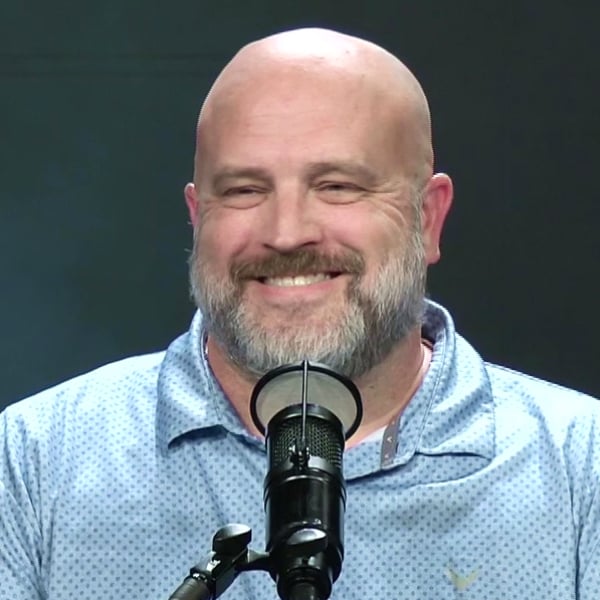
Forrest Derr
Derr Consulting
LinkedIn: Forrest K. Derr
Forrest is a Fractional COO who helps service-based businesses get organized and ready to scale. With executive experience across telecom, SaaS, construction, retail, and home services, he brings clarity and structure to companies that are growing fast but feeling chaotic. Through his firm, Derr Consulting, he partners with founders to streamline operations, align teams, and build accountability systems that support sustainable growth. He uses platforms like Ninety and EOS tools to create focus, simplify processes, and embed operational discipline. Forrest is known for asking the right questions, challenging assumptions, and helping leaders zoom out to see the full picture. Whether supporting a single company or multiple ventures, he delivers proven systems and real-world insights that create traction and momentum.

Jerry Jackson
Professional Systems
Website: prosystems.org
Jerry Jackson is the CEO and founder of Professional Systems, a home service company specializing in electrical, roofing, HVAC, and plumbing solutions. Since founding the business in 2016, Jerry has transformed what began as a simple decision to make more money into a mission-driven journey focused on growth, impact, and service. Jerry leads a talented, tight-knit team known for delivering reliable solutions and exceptional workmanship. For Jerry, building a business goes beyond the numbers, it’s about empowering his team, creating opportunities, and making a lasting difference in the community he serves.

SIGN UP FOR PODCAST UPDATES
Get email updates on new episodes and podcast news.
You don’t want to miss out!
Interested in being a guest on the show?
Are you a home service professional eager to share your insights and experiences? Apply to be a guest on the Masters of Home Service Podcast, and join a community of experts committed to helping others level up through knowledge.
Other Podcasts We Love