 29 Minutes
From Police Officer to Multi-Million-Dollar Business Owner
With Kevin Cook


-
Adam (00:22):
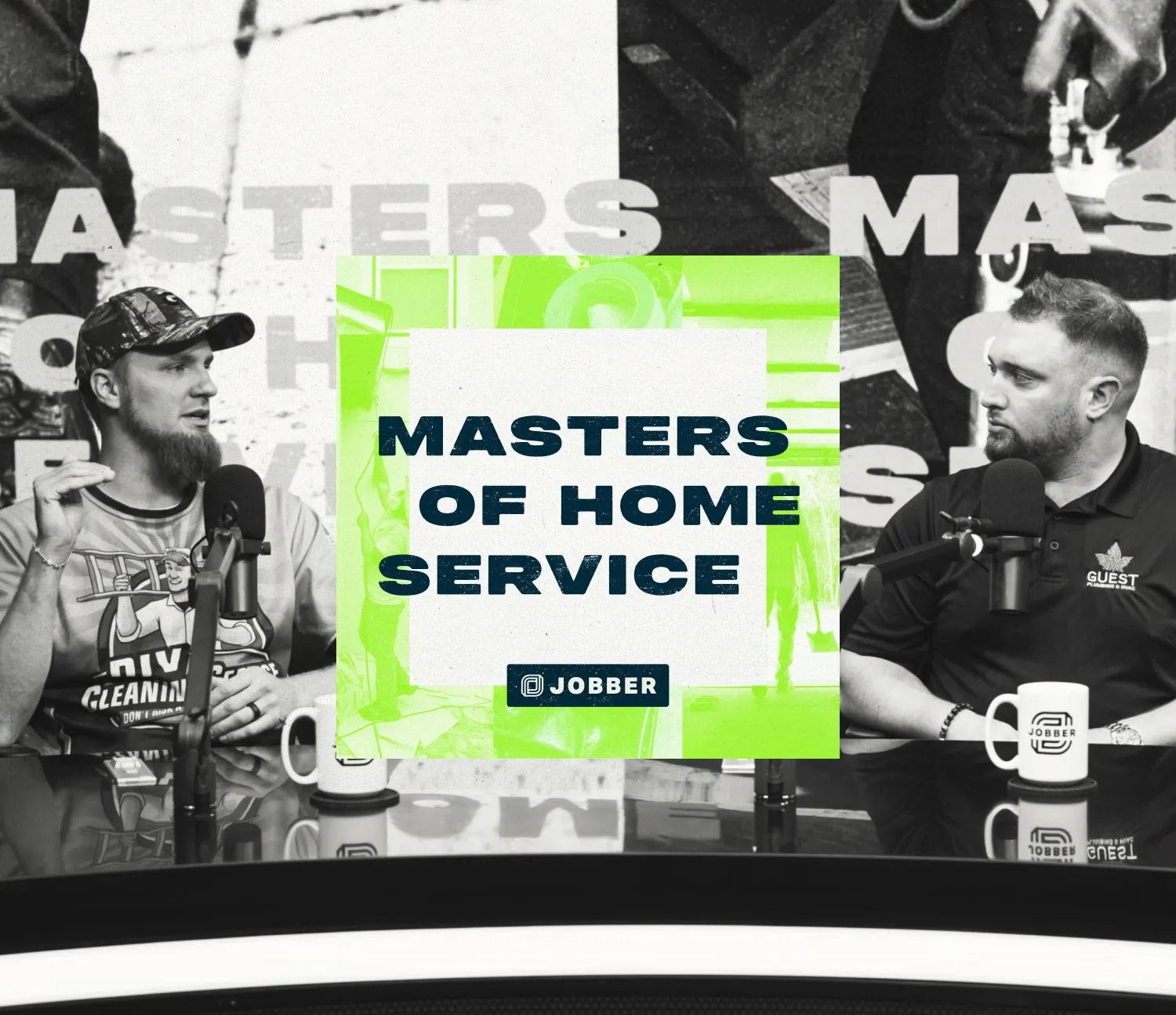
Yeah. Welcome to Masters of Home Service, the best podcast for home service pros like us. I’m your host, Adam Sylvester, and I want you to crush it in business. From broke police officer to multimillion-dollar business owner to business coach. Kevin Cook has had quite the journey. He’s my guest today, and we’re going to hear all about how he made the jump from being a police officer to starting his own business and all the stuff that he’s done in between with some lessons sprinkled along the way. So, Kevin, welcome to the show. Thanks for being here.
Kevin (00:53):
Hey, thanks for having me, man. I appreciate that.
Adam (00:55):
Yeah. Tell us what you’re up to these days.
Kevin (00:57):
Now that I’m a business coach, strategically a sales coach and trainer for all service contractors, I help service contractors now. Contractors now transform from estimate givers to deal closers, increase their close rates and their revenue by having a consistent sales process.
Adam (01:14):
Awesome. Cool. Okay. Take us back to when you’re 21 years old, you’re a police officer. It was pretty wild, huh?
Kevin (01:21):
It was. Being a young man, and I say all the time that the streets raised me in a way that I was a police officer, real young, taking grown men to jail. It was hard because I loved the job. It was a fantastic job, best job I ever had, but it didn’t pay much. I started my career at $31,000, which translates after taxes about $400 a week, maybe 425 a week to work, 12-hour shifts, rotating. Right. A lot of pressure for sure. Had kids, and that put a lot of pressure on me as a man, as a young man for sure.
Adam (01:57):
Yeah. I can’t imagine the stress not making very much money and just the things you have to deal with and confront every day as a police officer. Did for 10 years, raising kids, late nights, 12-hour shifts, just like how did you manage all that?
Kevin (02:09):
Well, let me give you a picture of that. I worked 12-hour rotating shifts, and it rotated from week to week, and one week out of the month, it rotated in the middle of the week. So you would work Monday through Wednesday, and then you take a one-day break, and then you work Friday through Sunday and it flip flopped from days and nights. And so I started my landscape company along the way. And so what I would do is I would work night shift to get off at five 30 in the morning, and then I’d come home, change clothes and eat something, and by 6:30 I’d be having my trailer pulling behind my truck, going to cut grass. I would cut seven to 10 yards depending on how much they were, I mean, how big they were until 12 noon. I’d come home, shower, eat something, and go to bed, and my goal was to sleep for four hours, and then I put my uniform, get up, put my uniform on, go right back to work. I did that for 10 years.
Adam (02:58):
Oh my gosh.
Kevin (02:59):
Yeah.
Adam (03:00):
So you started your landscape business right around the same time you started as a police officer?
Kevin (03:04):
Lemme correct myself. I did the rotating shifts for 10 years. I started my landscape company five years in.
Adam (03:09):
Gotcha. Okay. So you did that routhaving kids for sure, and that was one of the main reasonsine for five years.
Kevin (03:12):
Five years.
Adam (03:13):
Wow.
Kevin (03:13):
No breaks.
Adam (03:14):
Wow. And you had kids at the time?
Kevin (03:17):
Yep. I started to have kids for sure, and that was one of the main driving forces why I started my landscape company. It was pretty hard, a lot of pressure.
Adam (03:26):
And you need more money too, it sounds,
Kevin (03:29):
Like a lot more money. For sure.
Adam (03:30):
Now, in the early days of landscaping, was it an immediate increase in income or did it take a couple of years to get rolling and actually make money?
Kevin (03:38):
It was a hard start because when I started my landscape company, I was broke. My house was going into the foreclosure process.
Adam (03:47):
Oh, wow.
Kevin (03:48):
And mind you, my mortgage payment at that time was $600 to let you know how broke I was. Right. Made some bad decisions. My credit was flipped upside down from buying the cars and the toys, and everything like that on credit. And so when I started my landscape company, it provided a lot of breathing room immediately because an extra two or $300 a week was everything to me.
Adam (04:12):
Wow. You didn’t have to make tons of money just a little bit more helped.
Kevin (04:16):
No, no. And it was hard just to start it. To start with, cutting $25 a lawn, just cranking it out as much as I could. I was happy to get 200 bucks in cash in my pocket, going to work so I could get something to eat.
Adam (04:27):
Yeah, yeah, yeah. I love how you didn’t stop cold turkey. I like how you did. It was hard. It sounds like it was a hard five years, but I think some people get this idea, I’m going to go into business, I’m just going to stop what I’m doing. But to some degree, the police officer world, even though it wasn’t really producing much money, it still helped you run. It still stabilized you while you were starting your landscaping business.
Kevin (04:50):
A hundred percent. And I want to be clear, the first year I started cutting grass, my landscaping business made $75,000. It may not sound like a lot to some people, but I was making 30 at work, so I was 26 years old making a hundred grand now. My life in consideration what everybody thinks is bawling, going out of control, six figures coming from being broke was everything to me. So my life essentially blew up and I was extremely happy about that. And if I didn’t have my job, then I would be stressed out going from job to job.
Adam (05:28):
Now five years. Curious, why didn’t you quit police officer after three years of your landscape or two years? Why five years? Was there a specific point when you decided, okay, now’s the time to just retire?
Kevin (05:40):
I wasn’t paying attention for a while. Life was good.
Adam (05:45):
You just got used to it.
Kevin (05:46):
It hadn’t dawned on me that I needed to do anything. Right. I was making my money here, I was getting promoted and work was good, and I was making money over here, and so when I started, the first year was 75,000, but at year number five, before I resigned, the company was making 600,000. So everything was fine. I went into work that night after working all day and the night before, I was laying sod that day, so I was deadbeat tired.
Adam (06:12):
Sod’s tough. Yeah,
Kevin (06:13):
I was deadbeat tired, and I was real tired that night, and I pulled over a car on a truck, F-150 on a cold night. It’s kind of foggy. As soon as I pulled over the car, a man got out of the car and started screaming, running at me. I was so scared. I drew my weapon. Mind you, at that time in our country, that was the time where people were murdering cops, innocently a lot. Those numbers were really high, so real, paranoid, scared, and right before I was about to pull the trigger, he broke down to his knees and got on his face.
Adam (06:51):
Oh, wow.
Kevin (06:51):
Right. I went home that night and was like, I’m a father. I have kids. I got to go. I got to go.
Adam (07:03):
You had plan B all set up.
Kevin (07:05):
I had it the whole time.
Adam (07:05):
Yeah.
Kevin (07:07):
I loved it so much. I never considered it. And then when I went home and looked at my babies, I was like, I could cut grass all day and night, not have that kind of situation. So I resigned.
Adam (07:19):
Well, I appreciate the 10 years you put in. You weren’t in my jurisdiction or anything, but I still appreciate that. Okay. So that’s era number one. You stop being a cop and now you’re a full-time, full-fledged business owner, and it sounds like you’re sleeping more.
Kevin (07:34):
Oh yeah. Oh, for sure.
Adam (07:35):
Maybe sleeping better.
Kevin (07:36):
Yeah, for sure.
Adam (07:36):
You decompress, it sounds like, from being a cop for 10 years.
Kevin (07:39):
I did. I did. When I first started, I was in survival mode. When I got out of the police department, I was still in survival mode. Very insensitive closing deals and doing business was really, it seems still hard because you’re not sensitive to people’s emotions and their feelings. You think it’s just cut and dry. You want it, here it is, let’s buy it.
Adam (07:59):
Yes or no.
Kevin (07:59):
Yes or no. And it’s not like that, especially when you’re cranking out a little bit higher ticket deals. So you get in this feeling to where you feel stuck and you feel like you suck because you’re focusing on losing so much. When you’re focusing on losing so much, you’re in survival mode mentality.
Adam (08:19):
The mindset’s all wrong,
Kevin (08:20):
Your mindset’s wrong. All contractors, and we all should, as business owners, be thinking about losing or getting a no as data that you can take back home, study, see where you misstep so you can go back and crush it and win.
Adam (08:36):
Yeah. I am curious, at any point, did you ever do any counseling?
Kevin (08:42):
I didn’t.
Adam (08:43):
Do you think it would’ve been helpful?
Kevin (08:45):
A hundred percent. But the mentality as a hard charger, as a man, working hard, being proud, providing for his family.
Adam (08:54):
Yeah.
Kevin (08:55):
He ain’t got time for that. Who’s going to counseling? So the Kevin Cook today would look back and say, you need to go sit down, man, and go talk to somebody. Work it all out, because you got so much in your head.
Adam (09:06):
Yeah. Yeah. So how did you change your mindset in terms, so now you’re selling bigger jobs, sod, installs, whatever you’re doing. How did you make that switch from being scared, insensitive to effective?
Kevin (09:19):
I think there, that’s a great question. There was three things that was really important that stood out to me that anybody can do, any contractor can do, and it doesn’t take any money to do it. The first thing I did was get out of the survival thinking and stop talking to people around me so much. When you’re in a survival mode, you got survival mode friends, right? You’re broke. They’re broke. And so we’re dreamers. And so when God gives you a dream and you share it with somebody who else is in survival modes, real quick that they can, they pull you,
Adam (09:57):
Back down.
Kevin (09:58):
They pull that back down.
Adam (09:59):
Yeah.
Kevin (09:59):
The second thing is look for the next mountain top. I was always looking for the next mountain top, and what I mean by the next mountain top is the next big job, the next big skill, charging more. The challenge, the next big mountaintop. And the last thing for sure was I was able to protect my mind and my heart from just outside information. Because when you’re on the grind, and you’re trying to get from one place to the next, and you go from being scared to write checks to the daycare, you hope it doesn’t bounce before the light bill bounces because they’re more lenient. It’s a lot of pressure. And so you want to protect your mind and your heart by telling somebody else your next move. You just want to, it’s hard enough to make a next move. You don’t want to share it with the whole community.
Adam (10:46):
Well, it’s so hard to sell anything when you’re broke. You smell bad. People can tell your tone is different, and people just know. And so it’s really hard to get over that hump and just get through that season of life, especially when things are, checks are bouncing, and yeah, it’s really hard. So did that just take time?
Kevin (11:10):
It does. It takes time, and it takes some time by yourself to really realize that during a struggling time like that, you really got to live in your own imagination. You can’t live in the reality because the reality is you just wrote a check that you know hope that they go to the bank tomorrow to cash it instead. Instead of today. Because if it goes today, then there’s a possibility it can bounce. And if it bounces, then the kids got, you’re thinking about all these terrible survival mode things. And so when you walk into somebody’s house, how do you have confidence there? You got to live in your imagination and say that I’m the guy and I don’t want to be here no more. You can trust in me.
Adam (11:53):
Self-talk, encouraging yourself. Hey, it doesn’t have to be this way. Kevin, this is great. I’m going to pause for a minute to talk about the Jobber Community. You do not have to do this on your own. You don’t have to be a solo entrepreneur living in a silo all by yourself, in your own town with no support, no help. Nobody who understands the struggle. You don’t have to do it that way. You can join the Jobber Community. There’s like 20,000 people in there. You don’t have to be a Jobber user. You can just go in there and talk to other business owners, people who are winning, people who are losing, people who would encourage you. You can encourage somebody else. It’s a great community and it’s easy to get involved. Go to jobber.com/community and join today.
(12:32)
I feel like when you’re in that situation and you’re broke, it feels like everyone else is broke too. Your clients, I couldn’t afford this $20,000 install. There’s no way they can. And we start to project our own circumstances. If it’s raining where I am, it’s raining everywhere. And that’s just not true. I mean, a lot of people do have money, and they can afford it. That’s why you’re there. But it’s such a hard mental thing to get over when you just think I’m broke. Everybody else is broke. There’s no way they’re going to buy this.
Kevin (12:59):
It is, and you have to really get out of that because when you’re coming from a place where I was making $31,000, $400 a week, you think anybody who has a newer model car is rich, and it’s not true. So when, it doesn’t have to be a gargantuous job, I was scared to deliver a $3,000 side. I mean a $3,000 mulch quote thinking that it’s like two months of pay. There’s no way they can afford that. And people are saying no to you just because you smell like it. You feel like that. So any advice, anybody listening? I would say just live in your imagination and you focus on the customer because the world is not the situation that you’re in.
Adam (13:41):
Yeah. So how did you then scale your business up a little bit? So now you’re not a police officer anymore, you’re becoming better at sales. You’re getting over the insensitive part of you at the hardened part from 10 years being up in the police force, and you’re just starting to make some progress. It sounds like some momentum. How did you keep the momentum going and build a business?
Kevin (14:02):
Confidence. You really got to focus on yourself. Not all the outside stuff anymore. What he’s doing, how far his business is going, how wherever you focus on. And I had joy myself in giving my family the cool stuff. I got excited to go to the restaurant and look at the left side of the menu and not the right side of the menu where the prices are.
Adam (14:22):
Right.
Kevin (14:23):
When my baby girl said she wanted a steak in the potato, I’m like, Yeah, go ahead. So it was the win. So I got addicted to that and just growing a business so I can live the life that I wanted. And so I really just worked hard. It just going step by step and just getting rid of fear. Because once you trust yourself and you actually look backwards, not where you want to be, you’ve done a lot of hard stuff.
Adam (14:50):
It’s so easy to forget. It’s so easy to forget all the hikes you did in the past and just feel like, I can’t really do this mountain. Well, you did all those other mountains, you got over all those, do you journal?
Kevin (15:01):
I journal all the time, and I want to put something out there and say this. I live by this, but I don’t say it a lot, but I’ll say it.
Adam (15:10):
Let’s hear it. Come on.
Kevin (15:11):
For anybody listening is you should hurry up, work hard, hurry up and fail. Crash and burn. Because you learn a hundred times more failing than you ever do winning. And so all those Ls, all losses you keep taking, those are throwing logs in the fire man. If you’re studying them, if you just suck and it’s going to be like this, you’re not studying them. That helped me tremendously.
Adam (15:44):
Wow. Yeah. We have to fail forward when we fail. We have to learn from it. We have to adjust, and we have to keep our heads up high. In your case, what else are you going to do? You’re just going to go back to being a cob. You’re not going to do that. This is it. Right. You’ve basically burned your bridges. And a lot of business owners listening have done that. This is it, man. That’s it. And we got to double down. We got to commit. We got to learn. We got to learn fast. We got to be a sponge. Whether it’s a failure or success, we got to learn.
Kevin (16:12):
I think we’ve all went home and got up under the covers and say, I hope this doesn’t happen again. But when you finally come out the house, it’s the same. And so you got to go back and fix it and do your thing.
Adam (16:23):
So, you continue building the business at this point, do you have any partners or anything? Is it just you and employees?
Kevin (16:29):
I don’t. So the first business I built, I built the landscape company, and that was a seven figure company. I sold that. And then I started a 18 wheeler trucking company.
Adam (16:39):
Trucking company.
Kevin (16:41):
To initially service my landscape company. But then when I sold it, I was like, I got to grow this thing. I got to make some money.
Adam (16:47):
Oh, interesting. So as a landscaper, you’re seeing how you’re just constantly using transportation trucks. You’re like, I should be doing the truck.
Kevin (16:54):
I should be doing it.
Adam (16:55):
So you go get trucks to just bake right into the cake of your current business, but then you sell the foundation. So now you just have a trucking company.
Kevin (17:05):
So I got to do something.
Adam (17:06):
Okay. Okay. Interesting.
Kevin (17:08):
So I had it. We grew that to 15, 18 wheelers and doing a lot of business.
Adam (17:14):
Geez.
Kevin (17:15):
That was extremely hard for sure. And then that was going good for five years. And then the industry changed.
Adam (17:23):
What changed?
Kevin (17:24):
Trucking during COVID time was really good. It was really lucrative. And then the economy recalibrated, and it snapped back real hard. And so equipment was really expensive at that time, and you were buying it, you could afford it, and then the market went the other way. And so all that expensive equipment you had, you couldn’t work every day and afford to have it. So I had to fire, sell everything.
Adam (17:52):
A 15 trucks. Is that pretty big? Is that pretty small in the world of trucking? I don’t really know much about trucking. Is that a big fleet?
Kevin (18:00):
In my world? It was huge.
Adam (18:02):
Right? Yeah. It seems pretty big to me.
Kevin (18:04):
I mean, in my world, it was huge. In the grand scheme of things, it’s medium. It’s medium for sure. I mean, the status quos would have three or less.
Adam (18:13):
Oh, wow. Okay. So 15 trucks, but then you sold ’em all because you just didn’t want to be in the business anymore. Things were starting to go the wrong direction.
Kevin (18:22):
Yeah, we we’re going bad.
Adam (18:23):
Okay. Okay. And how’d that go? What’d you learn from that?
Kevin (18:27):
I failed, crashed, and burned bad on that one. Lost everything. Fast. Fast. Very humbling for sure. And went back to square number one is when I started at $31,000 about to have my house foreclosed, I went right back to that square.
Adam (18:50):
Wow, okay.
Kevin (18:51):
And so that’s why I’m so passionate about standing up and doing it again, and remembering where you came from and who you are. Because I had to go right back to that thought process. Everything was on fire, but I had to go back to my imagination and come back.
Adam (19:06):
It sounds like you are very naturally gifted in sales. If you’re able to build landscaping up in a relatively short amount of time. All those jobs sell all of them, but then you turn around and do the exact same thing with trucking. I mean, you’re selling enough to keep 15 trucks busy all the time. So what shaped you in that? How did you learn a better sales process and what you teach now, what went into all that?
Kevin (19:35):
My roots helped me, of course, being a police officer and living in my imagination to say that if I’m asking somebody, if we are as contractors asking somebody to spend their hard earned dollars with us, the worst they can do is say no. And if you live and feel like that, and I understood that in every deal, think the worst you can do is say no. If that’s the worst, then I could go my hardest because there’s no consequence of some guy running out of the car thinking that he’s going to kill you.
Adam (20:01):
If you’ve done that, you can do anything.
Kevin (20:02):
You can do anything. You can do anything. So that doesn’t make it a hundred percent times easier, but you realize that people can just tell you no.
Adam (20:13):
Perspective is big.
Kevin (20:14):
It is.
Adam (20:15):
Yeah. Having the right perspective. So the worst they can say is no. The best they can say is yes.
Kevin (20:20):
A hundred percent.
Adam (20:21):
And you have a big job and you’re off to the races. I feel like that’s more in your imagination. That’s fueling your imagination is the upside.
Kevin (20:28):
For sure. I don’t even think about the now.
Adam (20:32):
If you focus on it, you’ll get to know.
Kevin (20:34):
Yeah, that doesn’t, no, doesn’t have anything to do. Doesn’t have anything to do with what I’m trying to do. I’m going assuming that they’re going to say yes because they called. They need something, they want something, they voice that. And I know I can do it, so I’m your guy.
Adam (20:49):
Yeah. When you say, I’m your guy, what do you mean by that? Tell us more about that. What’s that mentality?
Kevin (20:55):
As contractors, it doesn’t matter what industry you’re in, whether you’re HVAC, roofer, remodeler, whatever, it doesn’t matter. We go in to situations thinking that there’s another guy, you can do it, and we’re sensitive about that. I can do it the best or whatever. And you smell, just like when you’re broke, you sell broke, you smell insecure, and you speak insecurely. I don’t even consider that you don’t want it because I’m here. You called me, you called me. I know I can do it. I can do it the best because I’ve worked on it. I’ve worked on my craft, I worked on my skill, and I can deliver it to you the best. So just having the extreme confidence that you can deliver.
Adam (21:37):
Tell me more about the landscaping business before you sold it. What was it like? Just give me more insights on how you built that business up to what it was when you sold it.
Kevin (21:48):
The landscape business was doing great. We were really busy. We had 25 employees. We were doing really good. The sale came at a surprise. And so what it actually felt like internally was things were always going haywire. You had guys running over here, guys coming in late, guys showing up not wanting to work. And it is that constant battle. But it was doing good. It was in the upper trajectory. And then somebody came in and was like, Hey, I want to buy it. And I was like, okay. I guess we could do that.
Adam (22:19):
Just out of left field.
Kevin (22:20):
Out of left field. One day. I wasn’t trying to sell it, it’s just somebody came one day and took it.
Adam (22:26):
And you sold it?
Kevin (22:27):
Yep.
Adam (22:28):
Did you want to? Maybe not?
Kevin (22:31):
I wasn’t even considering it.
Adam (22:32):
Yeah.
Kevin (22:33):
And then I had to think about that one, but how often do you get an opportunity to sell a business?
Adam (22:38):
Yeah, that’s true. So you were doing a lot of one-off jobs, sod install. What were you doing exactly?
Kevin (22:45):
My maintenance division was big. That was big. I did sod installation on a regular basis every day, and I did new construction.
Adam (22:52):
What would that be like? Patios?
Kevin (22:53):
No new construction. Grading. Grading raw yards, turning ’em into the regular lawn, and you’re putting trees in the bushes, everything.
Adam (23:01):
Gotcha. Okay. Like landscaping for new houses, that kind of thing. Gotcha. Okay. So you sold it unexpectedly, and now what? I guess you had the trucking company to fall back on.
Kevin (23:10):
Had the trucking company and grew that. That’s a company that I didn’t like. For anybody listening, just because it makes money doesn’t mean you need to be doing it.
Adam (23:18):
That’s so true. Yeah. Yeah.
Kevin (23:19):
Because when it gets hard, if you don’t like it, you’re not going to do great.
Adam (23:22):
Any tips? You’ve done this twice now. Any tips for selling a business, getting out of a business, just like what you’ve learned that worked, didn’t work.
Kevin (23:32):
If I had to do it all over again, I’d have kept my landscape coming.
Adam (23:34):
Okay.
Kevin (23:35):
I’d still been doing that. Wouldn’t have had a trucking company. I would’ve still been doing that.
Adam (23:40):
Okay. So getting into the trucking company ended up you think wasn’t a good decision?
Kevin (23:45):
No.
Adam (23:46):
Just to service. You wish you had just kept doing what you were doing for transportation and not bought the trucks.
Kevin (23:52):
So for anybody that’s listening, that’s thinking about multiple things. You can only be good at so many things. And when you split your mind into different things,
Adam (24:01):
Chase two rabbits, you guys chase either.
Kevin (24:02):
You can only put 50% in both. And so when you put a hundred percent into one thing, you can blow that baby up to the moon if that’s your goal. But if you’re chasing the rabbit, which is the money, all that stuff comes when you concentrate on one thing extensively.
Adam (24:16):
We get distracted by shiny things a lot.
Kevin (24:19):
Fast.
Adam (24:19):
Easily fast. Yeah. I deal with this a lot. Like, oh, that industry looks cool. That must be easy to make money over there.
Kevin (24:25):
Nah.
Adam (24:26):
And their grass is always greener. I think that our listeners just need to focus on their one business.
Kevin (24:32):
After only three. None of it’s easy. They all have their challenges. At some point, it might hit at a hundred thousand, it might hit at 500,000, it may hit at a million, but at some point it’s going to get hard. And if you love it, you’ll stick with it. If you don’t, you’ll start to fall apart at the wheels.
Adam (24:51):
Yeah. I have two businesses. I know what it’s like. I’m fully aware of where my focus is and where it’s not. I get it. They can’t both be equal.
Kevin (25:01):
No.
Adam (25:02):
One’s got to take forefront. One’s got to be secondary. But yeah, I get it. Focus is extremely powerful. Often, I’ll tell people, oh yeah, I want to get into this industry. I want to get into that industry. Dude, just focus, man, focus on what you’re doing now.
Kevin (25:13):
On one thing. And for anybody who’s trying to grow, who’s trying to come up from nothing and grow to their dream, learn how to endure because it is a journey, man. If it’s hard for you right now, at some point it’ll be harder. So it’s not the hardest time. So endure meaning eat good, sleep good.
Adam (25:33):
Take care of yourself.
Kevin (25:34):
Take care of yourself. No fear, just keep going. And the second thing is, protect your mind, your dreams, and your heart man, because everybody’s not going to see it like you see it, and they’re not supposed to. It belongs to you. Don’t share that with everybody on your next move. Just make the moves, man, without fear.
Adam (25:52):
Some people listening may need new friends. They may need a new circle of influence that has a positive impact on them.
Kevin (26:00):
Not only that, but I forgot to say one thing, and this is very important, that don’t take big risks with money all the time. The bigger risk and the more rewarding risk is take risk with your courage to do the next thing. Money can’t buy that. Money can’t buy standing in the house, never selling a job for 10, $20,000, and staying toe to toe with somebody and be confident when you’ve never done it. That pays you over and over and over again, than buying a piece of equipment to do a job.
Adam (26:34):
Right. Kevin, that was great. Thanks for sharing all that. It was a really good story and very inspiring. I’ve got three things that I think our listeners will really benefit from that they can take away and take action on right now. Number one is you just have to develop mental toughness. You got to remind yourself that this is a tough journey, and it’s not the absence of fear, it’s the courage to overcome that fear. You just got to keep climbing that mountain and be tough. Number two is a journal. It’s a really, really good exercise to write some things down each night before you go to bed. What do you think? How do you feel? What did you learn today? What was hard? What was a win? What was a loss? And then you can go back in time and remind yourself what it was like a year ago, two years ago, three years ago. Oh yeah, I have come a long way. Oh yeah, I remember when that was a problem and it’s not a problem anymore. Those kind of things can really encourage you in those moments. I love journaling, and I think you should too. Number three is, the worst they can say is no. That’s the worst they can say. And so use that as a way to look at their logs on a fire, building this fire, making the fire bigger and bigger and bigger. The worst they can say is no. And the best they can say is yes.
(27:39)
Tell us one more thing about how you went from fire selling all the trucking stuff to becoming a coach. What was that like?
Kevin (27:46):
It was a hard transition, but you had to go deep into yourself and think about what you just really love to do. And I really love to help people, and you got to figure out what do you like to help people do? I like to help people sell.
Adam (27:58):
Sell.
Kevin (27:58):
And I like to help people sell because I get happy when people make their money and chase their dreams. I know what it feels like. So I started my coaching business a few years ago, two and a half years ago, on the way back, man. It’s been a good journey back for sure.
Adam (28:11):
Good, good. Awesome. Well, thanks for being here. How do people find out more about you?
Kevin (28:15):
You can find me on all social media platforms at @kevincook_official.
Adam (28:20):
Awesome. Cool. Well, thanks for being here. Great job. Keep it the hustle. We’ll talk soon.
Kevin (28:25):
Talk soon. Thank you.
Adam (28:26):
On the next episode, we’re diving into how women are reshaping what leadership looks like in home service. From empathy and communication to attention and detail, and culture. You’ll hear how these strengths aren’t just changing teams, but raising the bar for the entire industry. Follow or subscribe today so you don’t miss out. And thank you for listening. I hope that you heard something today that will inspire you and help you get better at sales, get mentally tough, and keep pressing on. I’m Adam Sylvester, your host. You can find me at adamsylvester.com. You can interact with me there and tell me what you like about the podcast. Your family, your team, and your clients deserve your very best. So go give it to ’em.
About the speakers
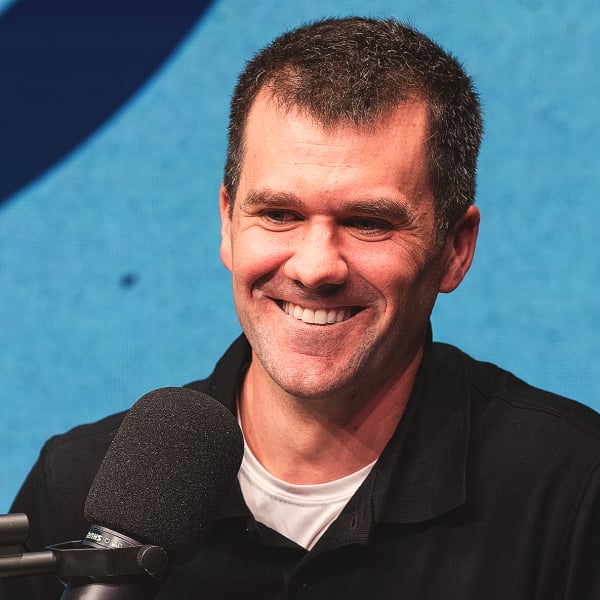
Adam Sylvester
CHARLOTTESVILLE GUTTER PROS AND CHARLOTTESVILLE LAWN CARE
Website: adamsylvester.com
Adam started Charlottesville Lawn Care in 2013 and Charlottesville Gutter Pros in the fall of 2020, in Charlottesville, VA. He likes to say, “I do gutters and grass! When it rains the grass grows and the gutters leak!” He got into owning his own business because he saw it as a huge opportunity to generate great income while living a life that suited him. He believes that small companies can make a serious impact on their communities and on every individual they touch, and he wanted to build a company that could make a big difference. His sweet spot talent is sales and marketing with a strong passion for building a place his team wants to work. Adam values his employees and loves leading people. While operations and efficiency is not something that comes naturally to him, he is constantly working to improve himself and his business in these areas.
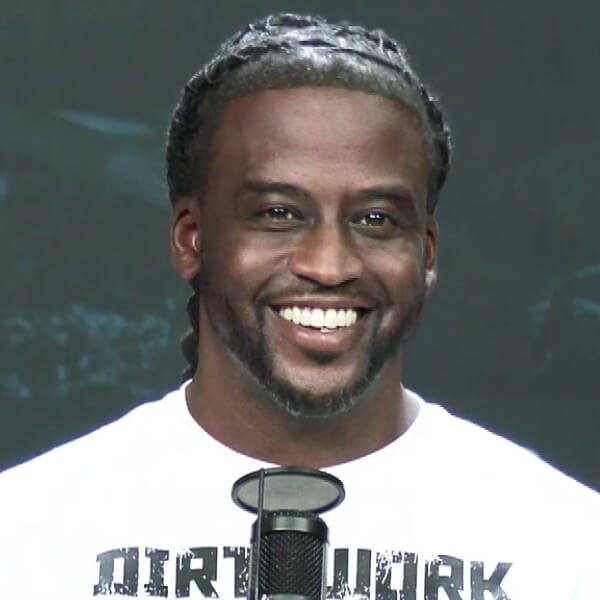
Kevin Cook
The Dirty Work Sales System
Website: thedirtywork.io
Instagram: @kevincook_official
TikTok: @kevincook_official
YouTube: @DirtyWorkSales
Facebook: Kevin Cook
Kevin Cook is the founder of The Dirty Work Sales System, a contractor-focused sales and leadership framework built on decades of real, grind-tested experience. A former 10-year police officer who went on to build two 7-figure trades companies in landscaping and 18-wheeler trucking, Kevin now coaches contractors across the country on sales, leadership, and closing deals with confidence on the spot.
His approach blends discipline, identity, and modern communication to help service business owners build companies they’re proud to run. Kevin is also the creator and host of the From the Dirt podcast, where real builders share real stories about growth, grit, and becoming the man your family can count on.
SIGN UP FOR the masters of home service newsletter
Get monthly updates with news, tips, and advice on how to run a 5-star business. You don’t want to miss out!
Interested in being a guest on the show?
Are you a home service professional eager to share your insights and experiences? Apply to be a guest on the Masters of Home Service Podcast, and join a community of experts committed to helping others level up through knowledge.
Other Podcasts We Love