




Key takeaways:
Here’s how to confidently set your snow removal prices for 2025 and maximize your profits, no matter your region or business size.
- Choose the best pricing model for your area and customers. Options include per event, per inch, per visit, hourly, and seasonal contracts. The right fit depends on average snowfall, local demand, and your business goals.
- Calculate all your costs before setting a price. Use the formula: (Labor cost + overhead + materials) x (1 + profit margin %). Factor in labor (based on hourly rates and job length), materials like salt or sand, and your ongoing business overhead.
- Adjust for local market rates and property specifics. Consider your local competition, the size and type of property, accessibility, response time, and any special services when quoting jobs.
- Establish a minimum price and stick to it. Make sure your lowest rate covers all your expenses plus a reasonable profit so you’re never undercharging for your work.
- Communicate value and pricing clearly to customers. Justify your rates by explaining what goes into each job, and address concerns with flexible options like per-push or seasonal contracts.
Want more expert advice on pricing, quoting, and growing your service business? Sign up for the Jobber Newsletter.
Originally published in September 2023. Last updated on September 10th, 2025.
On average, snow plow businesses charge between $50 and $203 for each visit. However, these rates can increase as high as $500 depending on the services you provide, the size of the lot, and the amount of accumulated snowfall.
Pricing your services doesn’t have to be a guessing game. To cover your expenses and turn a profit, use this snow removal pricing formula:
Total cost = (Labor cost + overhead + materials) x (1 + profit margin %)
In this article, we’ll help you learn how much to charge for snow removal, so you can turn those snowy days into cold, hard cash.
Snow removal pricing formula tips and tricks:
-
Pick the right pricing model
-
Determine your labor costs
-
Determine your material costs
-
Calculate your overhead rate
-
Set your minimum snow removal price
-
Consider elements that may affect your snow removal rate
-
Add your profit margin
-
How much to charge for residential snow removal
-
How much to charge for commercial snow removal
-
How to bid snow removal contracts
-
How to communicate your pricing with customers
1. Pick the right pricing model
If you’re just starting your snow removal business, start off strong by choosing the best pricing model to attract customers and make a profit.
Your pricing model will determine the snow removal pricing formula you use and how and when you charge your customers.
It’s all about finding the balance between what works best for your customers and what keeps your business profitable. However, you should also consider how much snowfall your region typically sees, as some pricing models are based on the frequency or quantity of snowfall.
There are many different pricing models to choose from. The most common snow removal pricing models are:
Per event
A snow event is a snowstorm or considerable snow accumulation within a set time period, like 24 hours. This pricing model is most suitable for locations that don’t typically see consistent snowfall.
The average cost of snow removal per storm or snow event ranges from $30 to $100.
Per inch
If you offer services in a region that regularly sees heavy snowfalls and large accumulations of snow, price jobs per inch of snow to increase your profits.
You’ll want to set a flat fee for the initial four to six inches of snow. If the snow event exceeds six inches, charge a fixed amount for every extra inch or switch to charging an hourly rate.
The average cost to plow four to six inches of snow is $60–$100. You can add $3–$10 for every additional inch of snow.
Per push/visit
For this snow removal pricing model, customers pay a set fee every time you come to clear their snow. If you choose to charge per push or per visit, you’ll need to account for all of your overhead and material costs to make sure your pricing is profitable.
The average cost for snow removal services per visit is $30–$70.
Use a per push or per visit pricing model for one-off jobs.
Hourly
Charging per hour is one of the easiest ways to price out jobs.
Simply multiply your hourly rate by the number of hours required to complete the job. Then add on your overhead costs, cost of materials, and markup to stay profitable.
The average cost for shoveling or snow blowing per hour is $25–$75.
Pro-Tip: Snow blowing and snow plowing are usually offered at the same rate. Plowing is usually faster, but snow blowing is better for sidewalks, so it’s a good idea to offer both services if possible.
Seasonal contracts
For seasonal contracts, customers pay a one-time flat fee for a set time period specified in the snow removal contract. It’s a popular pricing model for regions that experience heavy snowfall during the winter season.
The average cost for seasonal snow removal contracts ranges between $200 and $600.
Pro-Tip: To keep your seasonal contracts profitable, check the average number of snow events for your region and competitor pricing to make sure you’re not over- or under-charging.
Don’t stop at just one season, though.
Multi-season contracts—locking clients in for two or three years at a time—can change the game for your business. Instead of scrambling each fall to rebook half of your client list, you’ve got folks already signed on for the next year and beyond.
It also steadies out your snow removal prices. Customers get peace of mind knowing what they’ll pay next winter, and you get protection against competitors who undercut you with bargain deals.
READ MORE: Pricing strategies for service businesses
2. Determine your labor costs
Regardless of whether you charge hourly, per-inch, per-visit, per-event, or seasonally, the first step in pricing is to figure out how much you’ll charge your client for labor.
Use the square footage of the plowing area to estimate how long the job will take you and your crew.
Then use this snow removal pricing formula to calculate the total labor cost for a job:
Labor cost = Hourly rate x # of workers x # of hours
For example, if plowing a large commercial parking lot takes 2 hours and two contractors who earn $25 per hour, your formula will look like this:
$25 per hour x 2 workers x 2 hours = $100 (total labor cost)
3. Determine your material costs
While most professional snow removal services don’t require materials, you can offer additional services that may require materials such as salt, sand, or specialized chemicals. These materials should be factored into your pricing.
To determine the cost of your materials for your snow removal pricing:
- Identify the materials needed
- Know how much the materials cost per pound
- Estimate the quantities of the material needed
Here’s what your formula will look like:
Material costs = Cost of the material x amount used for the job
For example, let’s say the material is rock salt and it costs $0.20 per pound. Based on the amount of snow and the size of a driveway, you have determined that it will take 50 pounds of salt for the job. Your calculation would look like this:
$0.20 x 50 pounds = $10
You can add this total with your labor costs to end up with your direct costs for the job.
4. Calculate your overhead rate
Your overhead costs are the operating expenses required to run your company, including:
- Snow removal equipment, such as salters, plows, and snow blowers
- Snow removal insurance
- Gas and vehicle maintenance
- Employee wages
- Snow removal advertising costs
- Snow removal business software
To calculate your overhead rate, start by adding up all your overhead costs for a given month. Then divide your monthly overhead amount by your total sales for the same month. Multiply it by 100 to get a percentage.
Here’s what that formula looks like:
(Total monthly overhead costs ÷ total monthly sales) x 100
For example, if your total overhead costs for the month are $2,000 and your total sales amount is $10,000, here’s how you determine your overhead rate:
($2,000 ÷ $10,000) x 100 = 20% overhead rate
When calculating your snow removal pricing, you would multiply your overhead rate percentage by the direct cost of labor and materials for a specific job:
Overhead cost = (Labor + materials) x overhead percentage
5. Set your minimum snow removal price
Early on, one of the biggest hurdles is figuring out how low is too low. Don’t undercut yourself just to win jobs. You won’t turn a profit, and you’ll struggle to raise your rates later on.
That’s why you need to establish a minimum price—the absolute lowest you’ll charge for snow removal. It should cover labor, material, and overhead costs, plus a margin.
The number you land on is your floor, so you don’t go below it. If your math says $45 is the minimum for a driveway job, for example, then $45 is your starting point.
6. Consider elements that may affect your snow removal rate
Don’t forget to take into consideration all the different factors that can impact the job. Taking key elements into account will help you set snow removal prices that are both profitable for you and fair for your customers.
You can charge more for your snow plowing services depending on:
- Type of service. Will you be hauling snow off the property, pushing snow with a plow, or blowing snow with a snow blower?
- Typical snowfall patterns for your region. Is your service area prone to heavy snowfall?
- Competitor pricing. What do other snow removal companies in your region charge for the same service? What pricing model do they use?
- Type of property. Are you pricing a residential or commercial property?
- Size of property. How big is the property, and how long will it take you to complete the snow removal job?
- Accessibility. Is the area accessible with a plow? Is it steep, curvy, or hard to navigate? Will you have to hand shovel?
- Equipment required. Does it require more equipment, like a snow blower, to complete the service?
- Response time. How soon after a snow event do you want to guarantee service? Will you offer emergency services?
- Additional services that may be required. Does your client require any additional services that will take more time and materials (e.g., salting or de-icing)?
Local market rates and adjustments
What you can charge for snow removal in Baltimore will look different from what a provider will offer in Boise. Local factors drive your rates more than any industry average ever will. Cost of living, average snowfall, competition, and even what your town pays its municipal crews all shape how you can set your numbers.
If you’re operating in a pricey metro area, your labor costs and insurance alone might be double what a rural operator pays. That trickles down into your pricing, and customers generally understand why. On the other hand, in a smaller town where everyone knows the going rate, charging more than everybody else could make you look out of touch.
For reference, here are the cities that have the highest price ranges:
| City | Price range |
|---|---|
| Philadelphia, PA | $70-$250 |
| Chicago, IL | $60-$225 |
| Livingston, NJ | $100-$200 |
| New York, NY | $60-$200 |
| Nashville, TN | $25-$200 |
Source: Lawn Love
And on the flip side, here are the cities that have the lowest price ranges:
| City | Price range |
|---|---|
| Boise, ID | $30-$80 |
| Toledo, OH | $60-$80 |
| Omaha, NE | $50-$100 |
| Raleigh, NC | $80-$100 |
| Minneapolis, MN | $45-$130 |
Snowfall patterns matter too, naturally. Take Buffalo versus St. Louis. One gets buried, and the other sees just a handful of storms a year. Homeowners in Buffalo expect to pay for a service that’s practically on call all winter, while folks in the south would probably say “no” to the same number.
Competition is another piece. If three other businesses have a presence in your target neighborhood, your rates can’t be twice theirs without a good reason. But don’t automatically race to the bottom either. Sometimes it’s smarter to differentiate with reliability, bundled services, or faster response times.
7. Add your profit margin
Your profit margin is your net sales revenue minus labor, material, and overhead costs. The higher the margin, the more money your business retains.
Here’s how it should factor into your snow removal pricing:
Total price for the job = (Labor cost + overhead + materials) x (1 + profit margin %)
Let’s say your overhead, labor, and material costs add up to $1,400, and your ideal profit margin is 30%. That means the cost of your job should make up 70% of the total price.
To calculate your total price, use this snow removal pricing formula:
Total price = Cost ÷ (1-profit margin)
So, the total price you should charge to achieve a 30% profit margin will be:
Total price = $1,400 ÷ (1-0.30) = $1,400 ÷ 0.70 = $2,000
You’ll need to charge $2,000 to reach a 30% profit margin. That means you’ll charge a markup of $600 on top of your cost of $1,400.
FREE TOOL: Calculate your profit margin in seconds with our free profit margin calculator
Now that you have a better idea of how to price snow removal services, let’s dive deeper into how much you should charge for specific services.
How much to charge for residential snow removal
Whether you are working with homeowners’ associations (HOA) or with property owners directly, you should know how much to charge for residential snow removal.
Here are the average prices contractors use for residential snow management services.
| Service | Price range |
|---|---|
| Snow plowing | $30-$100 per hour |
| Snow shoveling | $30-$80 per hour |
| Snow blowing | $30-$80 per hour |
| Salt application | $20-$45 per hour |
Driveway snow removal
It’s best to charge driveway jobs by the visit. You can expect to charge between $30 and $100+ per visit.
These factors may affect how much to charge for driveway snow removal:
- Condition of the driveway
- Length
- Slope
- Material (concrete, asphalt, dirt, or gravel)
Snow removal companies may also be asked to clear walkways and sidewalks during the same visit. For accurate pricing, take the square foot measurements of these additional areas into consideration when quoting your services.
Sidewalk snow removal
Some homeowners will request sidewalk or walkway snow removal in addition to their driveway, which you need to account for in your pricing formula.
For these areas, you’ll likely need to use a snow blower or a shovel. You can charge the same amount as other services—between $25 and $75 an hour.
If your hourly rate is $40 and the sidewalk takes you 15 minutes to clear, you can charge an extra $10 in labor costs for the add-on service.
Roof snow removal
Clearing snow from roofs is much more dangerous than ground work and requires specialized equipment.
For roofs, you can charge between $200 and $2,000, depending on how much snow has accumulated, the equipment required, and the size and slope of the roof.
How much to charge for commercial snow removal
Commercial snow removal pricing uses the same formula as residential pricing, but the approach is slightly different. Commercial lot sizes are much larger and require heavier equipment and more supplies. They also typically demand a quicker response time and more frequent service compared to residential properties.
To price commercial snow removal, use this formula:
Total commercial cost = (Labor cost + overhead + materials) x (1 + profit margin %)
Keep in mind other factors that you’ll want to include in your commercial snow removal pricing, such as:
- The number of labor hours required (when more manpower is needed, multiply your hourly rate by the number of technicians required)
- Extra equipment or materials needed, like salt or sand
- Duration of time commercial snow plowing will take to complete
- Square footage of the plowing area
How to bid snow removal contracts
Property managers and businesses looking for snow removal services will sometimes invite companies to bid on the contract.
This process requires your business to submit a formal quote or proposal outlining how you will fulfill the contract requirements and to compete with other similar businesses.
There are typically three steps in bidding for snow removal contracts:
- Conduct a walkthrough to see the size and layout of the property
- Create and submit your quote to the customer
- Await the decision after the customer’s assessment of all bids
READ MORE: How to bid snow removal jobs and win more work
Using quote software such as Jobber makes it easy to create and send professional quotes, complete with your company branding.
Jobber helps you set the right price for every contract with quote markups. Simply view the estimated margins on your quotes, and quickly modify your pricing in response.
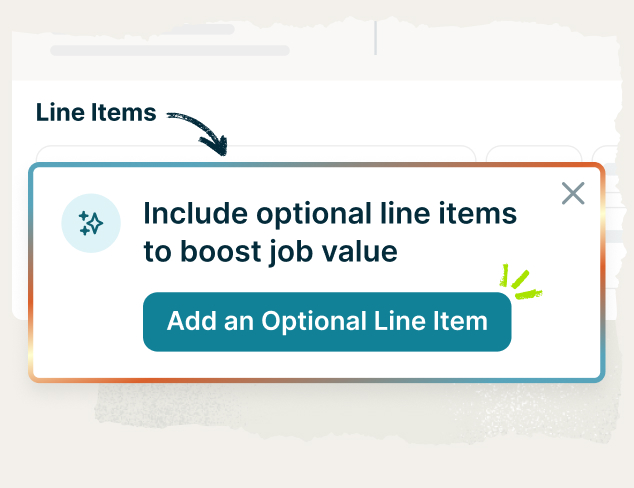
Plus, you can even upsell services such as shoveling and salting by adding them as optional line items directly in the quote. Your customer can select these services as they please and watch the total tally up before they approve the final quote.
Pro-Tip: It’s not uncommon for large commercial customers to want a multi-year contract. Be sure to add this as an option in your quotes.
How to communicate your pricing with customers
You can run the cleanest routes in town and have the best plow, but if you can’t talk about money with confidence, you’ll always be on the defensive. Customers will ask, “Why is this so much?” or “Can I get a discount?” And how you handle those moments can make or break the deal.
Frame your snow removal pricing as a reflection of value, rather than a number you pulled out of thin air. And explaining where the money goes (your team and equipment) justifies your rate and builds trust. Most people just don’t know what goes into clearing snow until you spell it out.
When it comes to objections, the best move is to stay calm and steady. If someone pushes for a discount, offer options instead. You could do a seasonal contract that saves the customer money long-term, or you could set a per-push rate if they’d rather pay only when it snows.
READ MORE: What to do when customers say your price is too high
Finally, make sure that both you and your customer agree to your terms and conditions, which you can add directly to your quote. Your terms and conditions should answer any lingering questions, including:
- Will each snow event require multiple visits? Or just one at the end of the event?
- What constitutes a snow event? (# of inches)
- What are your timeline guarantees? (24–48 hrs)
- Are there any limits to the number of snow events included under the contract?
- What duration of the snow season is covered under the contract?
- What is the cost for additional plowing services if needed?
It’s important to find the sweet spot when pricing for your customers. Pricing too low can make growing your business impossible. Pricing too high can make it harder to attract new customers to your services.
Using a snow removal pricing formula gives you a reliable way of getting your pricing right every time.
Ready to make your next snow removal season the best one yet? Jobber’s snow removal software can help you plan efficient routes, manage invoicing, and get paid faster.
Frequently Asked Questions
-
The size of the area being cleared affects pricing because clearing larger spaces requires more time, effort, and resources.
Whether it’s a long driveway, a large parking lot, or extensive walkways, more snow needs to be moved, which increases labor, fuel, and equipment costs. This is why square footage should be a crucial part of your snow removal pricing formula. -
For shoveling snow out of a driveway, you can typically charge between $25 to $75 per visit, depending on factors like driveway size, snow depth, and location.
Smaller driveways with light snow may be on the lower end, while larger or more challenging jobs will mean higher prices. -
The best pricing model for your snow removal business depends on your market and business needs.
A per-inch model is great if snowfall amounts in your area vary, while per-push is ideal for areas with frequent snow events. A seasonal contract offers steady income. -
Snow removal companies don’t typically charge per square foot, with the exception of heated driveways where rates are usually between $10–$50 per square foot.
Most companies choose to charge hourly as it better reflects the cost of labor. -
For sidewalk snow removal, you can generally charge between $30 to $70 per visit.
The exact rate depends on factors such as the length and width of the sidewalk and the depth of snow. -
The per-season cost method means a customer pays one flat fee that covers snow removal for the entire winter, no matter how many times it snows. This pricing method is popular in regions with heavy snowfall because it gives customers predictable costs.
Most seasonal contracts range from $200 to $600, though it depends on driveway size, local snowfall averages, and the services included.