 31 Minutes
How to Train and Grow Your Own Technicians From Scratch
With Rich Camacho and Stephen Jobe


-
Adam (00:26):
Welcome to Masters of Home Service, the best podcast for home service pros like us. I’m your host, Adam Sylvester, and I want you to crush it in business. Are you booked out for months right now? Are your clients approving their quote and then just waiting and waiting and waiting for you to come? Are you having a hard time getting people in the door to do the work for you? Your capacity is just so low. You have all these leads, all these jobs with no one to do them. If you feel like you have a hiring problem, you might, and we’re going to talk about how to hire and get people in the door, but I would argue that you may not have a hiring problem as much as you have a training problem. We’re going to get into that all today, so if you feel like we just don’t have enough texts, we just don’t have enough this or that, today’s a good episode for you. I think at the end of this episode, you’re going to have a much better perspective and you’re going to have a plan for moving forward and getting and growing your business from a number of technician standpoint. We have two great guests today, Stephen and Rich. They’re both really good at hiring people and training them, so they’re a really good resource. Stephen, you are crushing it in plumbing Rich. You own a software company, helps hiring and recruiting. So Stephen, go first. Introduce yourself and tell us who you are and what you do.
Stephen (01:30):
Yeah, I own a company called Jobe and Sons Plumbing out in Tucson, Arizona. We’ve seen pretty decent growth over the last couple of years, just focused on integrity and kind of getting back to the roots of what the trades were.
Adam (01:41):
Great. Awesome. I’m glad you’re here. Thanks for being here. Thanks, Rich.
Rich (01:44):
Hey, thanks so much for having me. I am the CEO and co-founder of BlueRecruit. We’re a direct hire marketplace built for skilled trade workers who are looking to build their careers, and of course the companies, like yours, looking to hire him.
Adam (01:57):
Today we’re talking about working smarter and how to train someone from scratch to become a skilled, awesome technician. I’ve got a couple of funny little quotes here I want to read to you guys and then we’ll talk about him and I’ll get us started here. But number one is I’ve got a new guy and he’s experienced, he’s been doing this for years and now we can take on that commercial job from last week or how about this one? I just hired a guy who knows what he’s doing. He’s experienced and he’s going to make me money immediately or how about this one? I got a guy from my biggest competitor just called and he wants to work for us. All my problems vanished after that one phone call.
(02:32)
Or my favorite. I just talked to a guy who just moved to town. He says he’s a crew leader at his old company. Oh, baby, that’s exactly what I need. A crew leader. He sounded great on the phone. I already offered him the job and he starts tomorrow. I know it seems a little fast, but you got to move fast. We have a winner on the line. I think our listeners have this, “I got a guy syndrome” now. I think there’s another group of people who also have another view of hiring, but it’s more like this. I can’t find good help. Nobody wants to work anymore. If I hire a new guy and they don’t know what they’re doing, then train them, then they’ll leave me. So I’m not going to train. I don’t have time to train people. It’s serious people. We’re handing off a piece of our business to people that we hire. It’s really important that we figure this out and so I think these are the kind of questions and problems that our listeners are facing. And so I want to start with you guys. We’re talking about training people from scratch to become technicians. What are the ineffective ways or ineffective approaches that you’re seeing people are taking with their business of hiring that just aren’t working? What do you guys think?
Stephen (03:33):
One thing that I would say, actually, I guess I’m going to just do two. I think the upcoming generation, all these young guys that are coming into the trades, they really value authenticity and so sometimes as the owner, as the training director, whatever you want to call it, they’ll step in and they’ll go, they just have this unspoken set of expectations and they kind of expect you to operate the last generation, and a lot of times there’s a little bit more of the person that needs to be connected first before you just start rolling them, get to know them a little bit and I would say not just beyond your standard like you and I getting to know each other’s, there’s a depth to the generation coming up, so I think you have to be really keyed in on that. And then also too, the other thing I said is just setting the expectation properly.
(04:20)
A lot of, we have younger guys working for our team and one of the things I’ve noticed is that with those younger guys who are apprentices, the expectation that is set is a huge thing for them, and so if you bring them in, you’re like, Hey, we’re going to teach you how to do X, Y, and Z, and then they get into it and all of a sudden you start sending them to go. If I didn’t tell a guy, Hey, you’re probably going to be digging for five hours, six hours, 10 hours on some of your days, but then I throw him into a hole for 10 hours, it’s not like he’s not going to be able to do it, but because of the authenticity piece, because of the communication piece, he’s going to almost feel undervalued,
Adam (04:52):
Like a bait and switch almost.
Stephen (04:54):
Yeah, why are you bringing me in and you told me I would be a part of this beautiful culture, but then you’re chucking me in a hole. Makes no sense.
Adam (05:00):
Yeah, totally. Expectations are really important.
Stephen (05:02):
Yeah,
Adam (05:02):
Yeah.
Rich (05:03):
I think right now we’re at a super, super interesting time when it comes to the trades as a whole. For far too long we have heard exactly as you mentioned earlier, Adam, young people don’t want to work. I can’t find everybody. What I actually look at right now is that we have to look at as business owners really reexamine how business owners are going about finding and hiring talent and to stop blaming job seekers and young people, but really look at their own systems and say, is what I’m doing working a couple of quick facts. We actually have the most amount of young people joining the skilled trades right now that we’ve ever had since World War II, both in the US and Canada. Information actually just came out that we’ve had an 11.2% increase in individuals joining certification and skilled trade focused community college and post trade schools, that kind of stuff.
(05:56)
Post-school training programs compared to just last spring, we’re up 20% than where we were in 2020. We have an incredible amount of people that have listened to all the information that’s out there, programs like this, and saying, Hey, you know what? The skill trades isn’t a fallback. It’s actually a great avenue. And what we as business owners have to stop doing is blaming these young people that are trying to get into the system and to stop trying to say, Oh, well, you know what? I only want to find and hire journeymen in Tucson. I only want to find Red Seal electricians in Toronto. Guess what? If you find a journeyman, a Red Seal certified individual that’s unemployed, there’s probably a really, really good reason they’re unemployed. They don’t exist, and if you are trying to get that person, your compensation is going to have to be far higher than whatever you think it has to be.
(06:45)
Right now, what I like to look at this conversation as more of a, you’re not doing it by yourself. There’s incredible training programs out there, and it’s really more a matter of connecting with those training programs, bringing them in, and then doing what you’re doing. Stephen is continuing that training, building out those certified apprenticeship programs, and really setting yourself up for five years and not that one project you wanted from last week because that’s not going to save your business, but creating a quality training program is going to build and grow your business 5, 10, 15 years from now.
Stephen (07:17):
One thing I’d add onto that too, you had mentioned these skills that are trained, and I feel like the younger guys who are coming into this, the ones who are worth the time you’re going to spend, they already have a lot of those soft skills built in, at least from what I’ve experienced in Tucson. The younger guys that apply, they show up professional looking. Now they might have a beard, I don’t care, I have a beard, but they show up. Yes, no, sir, they’re holding doors open. They’re saying thank you. They shake the hand. It’s almost like the trades are kind of going back to old values, and so because of that, you almost see there’s already values are inside of these people that are stepping in, and so instead of teaching soft skills, which a lot of the, you almost had to take your older guys that you mentioned and you have to teach them soft skills, sometimes they get a little rough. Instead, we have the soft skills in place. You can kind of tweak ’em a little bit, but we’re teaching hard skills now. You’re really great in front of the customer. I just need to teach you how to just put these things together and do it the right way, and it makes for some incredibly successful young apprentices. We have two guys who are apprentices on our team, and both of them they just pick it up so fast, but they’re really good in front of customers.
(08:30)
And so I dunno, I’m super excited.
Adam (08:33):
That’s great
Stephen (08:33):
For the upcoming generation for it.
Adam (08:34):
I mean, if we’re only fishing in a pond that only has trained 15 year experience people, we’re not going to catch any fish.
(08:42)
But if you realize that you don’t really have a hiring problem, you have a training problem, and what a lot of our listeners, I’ve done this before, like, sure, do we want to have the quick fix, the quick win? Just hire somebody. Sure, we do. We all want that, but that’s not going to happen. We need to change our mindset much longer game and say, we’re going to take somebody who has good bones and good attitude who can learn this? We’re going to train them and we’re going to give ’em everything they need to succeed. But Adam, what if they leave? And then you have to be a good enough business that they want to stay, and that’s not easy, but if it was easy, everybody would do it. And so I’m glad that we’re talking about the elephant in the room, which is like, this is really hard. I mean, hiring people in trades business is really, really hard, but it’s possible. And so when it comes to trying to take someone who just has a good attitude, who wants to learn someone probably on the younger side, how do you get them trained? What do you do? What are some things that you do to make sure that you get them up to where they want to go?
Stephen (09:39):
Exposure therapy. Sometimes it just means getting them acquainted with the whole team, make sure that they’re a good fit. For me, I’ve always seen it as kind of a stair step. So you start ’em off, you let ’em work in a truck, you give them kind of the organizational skills. Are they able to go grab the tools that they’re told to go grab? Are they efficient? Do they move quickly? Can they find the tool? If they can’t find the tool, do they go back and talk to their guy? You know what I’m saying? Are they common sense? Then the next step would be, okay, now I’m going to, in a nicest way possible to say this, but we’re going to put you in a hole and let you dig.
(10:10)
And what a lot of guys want to see when we’re training is what happens. I don’t really care if you’re super efficient when you are digging, I know you’re going to get faster as you do. It’s hard skill. What happens when you hit the point where you just want to stop? You know what I mean?
Adam (10:23):
Yeah.
Stephen (10:23):
What happens when the customer’s standing there and all you want to do is throw the shovel across the yard? So those kinds of things, we’re going to get you to a point where you’re almost breaking and then kind of walk you through, okay, you’re exhausted, stop, take a breath. It’s totally normal, and bringing the human back down to it and saying, we’re not, this isn’t a robotic thing. You’re a human. You can do this. I’ve seen guys go from basically ready to just quit to after a quick conversation and encouragement. Then they’re like, oh, yeah, I could totally do this.
Adam (10:54):
They’re bought in
Stephen (10:54):
And crush it, and I think you had mentioned you have to almost work to retain somebody. That part goes into a retaining because they realize, oh, he’s got my back. He’s not just standing here crossing his arms, letting me dig. You got to be willing to get in hold with someone and figure out what they do.
Rich (11:12):
I think that that training program you mentioned starts well before the hire happens, small business owners, you you’re doing everything. A lot of you all are the tech in the field. You’re doing invoicing, you’re doing social media marketing. You’re already completely overwhelmed, and hiring is not easy. If it was easy, I wouldn’t have a job. My kids wouldn’t have a house, I’d be doing something else. I’d probably be digging a hole in Tucson. I remember my dad as a kid would send me outside the ranch and be like, Hey, go practice. I was like, practice? Yeah, he meant digging. Just practice digging. At the end of the day, I’d always have a job, but I think what business owners, because especially small business owners are so overwhelmed, it’s not completely on y’all to build out these training programs. What I always like to tell business owners when to say, Hey, you know what?
(11:58)
I tried hiring someone right out of the high school CTE program, or I tried hiring someone out of the community college at trade school. They didn’t know the new equipment, they weren’t familiar with how we do things. My immediate response to them is, what’s the last time you went into that classroom and showed them the tools that your company’s using that you invited that teacher to bring the students out to your job site and tour your work and see firsthand? What’s the last time you sat down with that instructor or the professor and not really professor, you know what I’m talking about, but talked about ensuring that what is being taught right now in the classroom is keeping up with industry because it’s on us as an industry to make sure that those instructors, those teachers have the equipment, have the knowledge to make sure they’re keeping up.
(12:44)
A lot of times with Jobber, for example, our students learning about the software that’s out there, because guess what? Day one, you’re going to be expected to utilize these softwares, just like you’re going to be expected to utilize certain tools that these schools might not have access to or not have that exposure to. So that’s what I always recommend is go ahead and make sure that the individuals are going through these educational systems are being trained the way that are going to be most effective for once they get into your job, and guess what? It’s also an awesome recruiting tool. Who do you think that student’s going to think about when it is time to graduate and go get a job about the random commercial they saw or the Instagram reel? No, they’re going to think about the person who came into their classroom, taught them, took time, and now you’ve created loyalty, and you mentioned, oh, well, what if they leave? No. Now you have that loyalty and that person’s able to see how much you care about their development and that long-term potential and growth. Yeah,
Adam (13:38):
That’s good. Rich, this is an area of specialty for you, trade schools and utilizing
Rich (13:42):
Trade school. I like trade schools.
Adam (13:44):
Tell us more. For the listener out there who doesn’t really know what you’re talking about, they might have an idea. Yeah. Heard about trade school. I think some people are really familiar, and I think a lot of people just aren’t really that familiar with trade schools. Why don’t you tell us a little bit more about that and how it can benefit us?
Rich (13:59):
Yeah, so the term trade schools is kind of like Kleenex. It’s actually called facial tissue, but Kleenex is just what we all just call it, right? There’s different kinds of programs that individuals go to. What I think most people are familiar with is the community college system. Pretty much every community in America, up in Canada, has them. Individuals can go, but those are often not focused on trades. Right now, trades make up about 14% of all community college training. Also, their graduation rates aren’t nearly as strong as what’s called for-profit trade schools, your for-profit trade schools, some of those big names people are familiar with is the Lincoln Techs of the world, the UTIs. I will say the trade schools have some of the worst acronyms that are out there, like UTI, incredible, incredible education system (not a great name), but here in Las Vegas, we have ATI, a phenomenal automotive training institution, and those are for-profit institutions.
(14:58)
So just like our businesses, they’re in the business of making money. However, the graduation rates have to be at least 70% and hitting certain thresholds when it comes to employability and salary earning afterwards. And then of course there’s what’s called CTE, Career Technical Education, which primarily is occurring at the high school level. Folks have heard of Skills USA Skills Canada. Skills USA actually just broke 400,000 high school members this year. So we talk about that development of the next generation, like word is out there, coaches are realizing it, students are realizing it. Most importantly, parents are realizing it. Just about three days ago, my daughter, who’s five years old, was asking about college, and she’s like, What’s college? And my eight-year-olds like school, but way more fun. And of course, mom, who went to Florida State, immediately starts laughing, and I don’t like that, but he also said at the same time, which is crazy, eight years old, he’s like, yeah, we might go to college after high school, or we might not. You don’t have to go to college. You can also just go get a job. And I was like, holy cow. My kid’s actually been listening to my sales calls.
(16:04)
So that swing of the pendulum is definitely starting to happen.
Stephen (16:07):
One thing that we’ve seen that’s really interesting at some of the local elementary, even pre-K and up kind of schools up to eighth, is they’re starting to put programs in place for your seventh grade, eighth grade, potentially even through high school, of these programs that begin to integrate common sense classes with trades. And it’s really interesting to watch young kids, I mean, can’t, trying to teach somebody how to wire something mightt be kind of hard, but they give them these problems and instead of setting up like, Hey, here’s a paper and you’re going to write up all your math or whatever, they’ll actually take, Hey, here’s the math equation. Now go solve it in a common-sense way on a bunch of PPC pipes or something crazy stuff like that. And so you’re seeing all these just really interesting creative ways to learn that I think, I mean, I would’ve loved as a kid.
(16:55)
Especially for the trades, a lot of the guys that are in it, it’s not a book-savvy, click the pen and do the whole thing. A lot of them are very common-sensical, and they want to work with their hands. And so you see this really early on. I think that 10 years from now, you’re going to get a wave of ridiculously talented current middle schoolers now.
Rich (17:15):
There’s some incredible programs out there, up outside of Denver, Colorado, at Cherry Creek School District. They actually have created a campus where the other high schools will bust their students into this program, and students are knocking out their trigonometry requirements in the carpentry lab. What an incredible way to get hands-on approach and oh, 3, 4, 5, no, you’re physically building 3, 4, 5 triangles. And what’s really awesome is seeing the outcomes because on average, about a third of the kids that go through their high school programs end up pursuing a skilled trade, either continuing training or starting an apprenticeship program. About a third are choosing the military, and then still a third are saying, Hey, you know what? I liked it for me. I’m going to go do a traditional four-year school. And it’s awesome just that we’re not saying like, Hey, four-year school is bad. I went to a four-year school.
(18:09)
Hey, it worked out for me, but I didn’t even know what other options were out there. And that’s what we want kids to do. And I’m rocking an Iowa skill trade shirt every single year, little Iowa, they actually put on the largest high school hands-on a career event every single year in the country. And this year they had over 8,000 kids bused from every single county in Iowa, brought into the Iowa County Fair, and employers just brought in equipment, brought in day in life of equipment, and kids are right there. They’re able to weld, they’re able to climb up poles. Odie was there for you, plumbers, and it’s just giving that exposure that we definitely never had as kids.
Adam (18:48):
Guys, this is a great conversation on training people. I want to stop for a minute. Talk about how systems matter, specifically software systems, apps can help you facilitate this growth mindset and in hiring and training people. People just don’t want chaos at work. How do systems like Jobber help you do that with your people?
Rich (19:08):
So I might be a little bit biased, but I think software and apps can make your business a little bit more effective and more profitable. There’s the pun, but without a doubt, we’re moving into an age. AI is not going to ever plumb a house. AI is an incredible tool that can make your business more effective, more efficient, but it’s never going to replace you or your workers. And where these systems can play a huge role in assisting is the automation of certain functions. You don’t have to necessarily physically write out an invoice and drop it in snail mail. We have systems like Jobber that can do that for you. And one awesome thing, we talked earlier about getting into trade schools and helping teachers teach is part of that is Hey, obviously, Stephen, you use Jobber. Go into that local trade school, show these kids those tools, because one of the big things that young people have said they don’t want to go into the trades is because they don’t think there’s a lot of technology in trades.
(20:08)
We all know that’s completely nonsensical. Over 70% of young people said the trades look interesting, but I really want to work in tech. Well, automotive technicians, what do you think you’re doing now? It’s basically computers with wheels on them, so many mechatronics, electrical work, plumbers, y’all are a little bit slower, but you’re getting there, and it’s just exposing them. And guess what? They start checking out Jobber other software while they’re in school. What do you think is going to make their onboarding so much smoother, so much easier, and they’re going to be making you money way faster?
Stephen (20:40):
Going back to what he had just mentioned about, first off scheduling, the guys know exactly what their schedules are going to look like. So important, right? Obviously in the plumbing game, it changes pretty quick, but they’re able to see like, Hey, I’ve got this job tomorrow. They can prepare for tools, they can prepare parts. I mean, it puts us 10 steps in front of the game on any job.
(20:59)
Email marketing for us has been massive. Something as simple as just the automation on that part, we have it sent out for invoice reminders, Google reviews, just all of these things, including just marketing emails. So I think from that standpoint, but there’s a lot of companies who do say email marketing. There’s a lot of companies who ask for Google reviews. The way that we curved it is we’ve heard from our customers, they just don’t like when someone goes to ChatGPT and they go write me an email for blah, blah, blah, blah, and it just spits it out, and it looks professional, and they send it. I think that a lot of people value the missed comma. They value the missed exclamation point. And so, for me to be able to walk in there as the owner, I am the face of the company. It’s just the way it is. And so the other day I put a picture of me holding a coffee mug, and people are like, Hey, that’s great. And that one got opened just crazy. We got tons of clicks on it because it’s the person’s built into it. So on that end, Jobber has been, I mean, it’s been probably the greatest investment we’ve made into our business outside the people.
Adam (22:01):
Yeah, well, your people don’t like chaos
(22:04)
And Jobber allows you to not have any chaos. They see their schedule, they know where they’re going. They know more of this like, Hey, drive to that job site and text the owner, where are we going now? And what’s the address? None of that. They know where they’re going ahead of time, and it’s really important. Employees do not like chaos. If your business is full of chaos and you’re texting the guys where to go that morning, and they don’t know where to go, what’s the address, and what are we supposed to be doing here? And that really wears people down. It’s not what you want to do to your people. So you need a chaos eliminator, and that’s what Jobber is. Go to Jobber.com/podcastdeal, get an exclusive discount, eliminate the chaos and start using Jobber today.
Adam (22:42):
I think that one thing that we really have to incentivize this new crop, if you will, this new generation, is that they have to see what is going to come down the line. And so I think having some sort of promotional ladder, some form of levels of advancement, you start as an apprentice. But then, and I think those are questions that young people, I think everybody has those, but young people have those questions like, well, am I just going to dig holes my whole life, or am I going to be like you one day? And they have to have some sort of trajectory. They need to have some sort of, once you become an apprentice and you do all those apprentice things, they need to become a junior apprentice or junior technician or junior plumber, and then you become a full-fledged. There has to be a speedometer where you hit these big numbers along the way, or else there just is no real incentive for them to go through. It’s a pretty arduous training program, electricians, plumbers, HVAC, those three, it takes a while.
(23:31)
It’s a lot of work. And so to sell speak to an 18 or 19-year-old kid on the benefits of this, they need to be able to see the long-term play. That’s a segue for me to ask you guys this. We also don’t want to just give that opportunity just to anybody. We have to make sure that we bring people in the door who are good candidates for our apprenticeship program to start with. And so how do you guys, Stephen, I’ll ask you this. You mentioned authenticity earlier and other things like that. How do you make sure that you’re bringing in someone who you want to work with for the next 20 years?
Stephen (24:01):
I mean, Patrick Lencioni writes a phenomenal book called The Ideal Team Player. That’s a really good place to start.
Adam (24:09):
Yeah, I agree.
Stephen (24:10):
If you don’t know where to start, just start there. I also think going to the authenticity piece it starts with me. So I have to be real with the guys I work with. It means that I have to be willing to share some of the information because the thing is with employees, every employee, I think when you were an employee, when I was an employee, you have this moment where you go, oh, man, that guy’s making so much money up there sitting on his big fat butt, ya know?
(24:37)
But in reality, we all know that’s not the reality of it. And so sometimes when you start integrating somebody, being honest, being real, I wear all my emotions on my sleeve, so I literally can’t hide from my guys at all. They’ll just walk in like, man, you’re stressed. And so I just tell ’em like, Hey, this is what’s going on. And then in those interactions, if I give you a little, are you willing to give a little back? Because then there creates trust. So trust is number one, right? You have to be willing to trust each other. Am I willing to walk away from you inside of a house? Am I thinking about where you’re standing? Where are your boots? What are your hands touching when you’re getting down on a countertop? The things like that, I need to be able to trust you. Secondly, and I would say maybe the most important is integrity. We have a thing that we say in our company is integrity. From the top of your head to the bottom of your toes, and everything in between. I feel like integrity it can take some time to come through because everybody, when you do an interview process, they’re all going to say…
Adam (25:30):
Do you have integrity? Yes, I do.
Stephen (25:31):
Of course. Yeah, yeah, of course. What’s your biggest secret? And nobody’s going to say that. So that one is a little bit of a long-term play, but if I can allow someone to trust me and I can extend trust to them, they’re a little bit more relaxed, and you’ll begin to hear some of those key comments come through. You’ll have an idea or something will happen with the customer, and their reaction to that will give you a clue into their integrity. I’m happy to say that we’ve been lucky enough that all the guys in our team are that way because we set that expectation really high in the beginning, and just watching their follow-through and things like that. So I would say there’s not so much of a set, just like course.
(26:14)
But it’s creating relationships with somebody and then getting down into the nitty-gritty and being like, are you one going to fit? But also two, back to the expectations. Setting the expectation up front is saying, Hey, we’re going to see if this works. So anybody that gets hired, I put ’em on a 90 day probation because I need to make sure that there’s enough time there for any benefits that we provide that those don’t fire until 90 days because the whole team and myself will have time to see if they’re a good fit, and they on the other side will also have time to see if we’re a good fit for them. So that gives us the freedom to be like, Hey, end of your 90 days didn’t really work out. Or hey, end of your 90 days, congratulations. Welcome to the team officially. And then we just swarm ’em and they’re fully integrated.
Adam (26:52):
Are there any red flags in the interview process? No. This guy probably doesn’t have the right character integrity. What are the things that you’re looking for in the interview process, the ride-along process, if you guys do that, what are some of those things that are like, I’m glad you said that, I can’t hire you.
Stephen (27:08):
I would say number one is when they sit down and within the first two minutes, it’s a money, ask how much? Or if they are, if they ask you for your pay scale and then you give it to them, say, Hey, we’re roughly in this area, especially in the first interview, it’s a no-go.
(27:24)
But even if that, and I give the pace go and they go, oh, well, I’d really like to be at this. But there’s a certain positioning, it’s a people read, there’s a way that somebody says it, but if they’re honest, it’s humility. I guess that’s what I’m trying to get to. If somebody approaches it with humility, and let’s say you say, Hey, I’ll pay you, I dunno, $35 an hour, and then I approach it and say, Well, I want $36. Well, that’s an absolutely no-go hire. You’re too aggressive. But if you say $35 and I say, Hey, well, here’s the deal. I got X, Y, and Z going on. Would you be willing to do your $37? Now you’re immediately more comfortable because I’ve been vulnerable with you. So I think if you can approach it with a hand open in humility, I think it goes a lot better.
Adam (28:06):
Yeah, guys, this is a great conversation. I really think it’s going to help people have a better perspective on hiring and training. I think it’s going to give them a plan to make it better. I’m going to break it down to three actionable items here so that people can start doing this stuff like today. The first one is you don’t want to bait and switch your people. You want to be upfront with them about the expectations of the job. Is it a jury job? Are there times where it’s just really hard and kind of crappy? Be honest with them. You don’t want them to ever be surprised, like, Hey, I didn’t know it was going to be this hard. Be honest, be authentic, and tell them what the job is actually like. Job descriptions are really important with that as well. Number two is you want to tap into trade schools.
(28:41)
You want to tap into all those kinds of secondary learning, and you might raise people up out of that or at least hire out of that, and that can be really resourced. And number three is you need to embrace the fact that your training is going to take time. You need to have a non-rushed, non-urgent training program for your people. It might be three months, it might be three years, depending on what your services is, but you need to train people and you need to train them daily. The amount of investment they will feel from that is just create so much loyalty.
Stephen (29:10):
Go read that book, the Ideal Team Player by Patrick Lencioni. We have all of our team members read it and it’s phenomenal.
Adam (29:16):
Ideal Team Player,
Stephen (29:17):
The Ideal Team Player, by Patrick Lencioni
Adam (29:19):
Yeah, that’s great.
Stephen (29:20):
It’s a good read.
Adam (29:20):
What you guys are doing is hard. Owning a business, starting a software company, starting a plumbing company, hiring people out of it, it’s not easy. You’re right, it’s not easy. And what motivates you guys? Why do you do it? Because not everyone does it.
Stephen (29:34):
The people. The people. I get to work with the customers that we meet, and that can kind of sound like a just like 10,000 foot view, but people are so depthy and I think right now, especially with AI and all this stuff that’s coming out, and so instead of we have a thing, we’re never going to have a computer answer the phone just simply because we want the human connection. That’s it. So for me, it’s people. It’s their families, their homes. You go in, and you can really take care of somebody really well.
Rich (30:00):
For me, it’s being able to work with business leaders like y’all and allowing them to take something that’s really, really hard, which is hiring and training, hopefully making it not easy, but easier because again, you’re still having to figure out, is this person the right fit for my company? I can get them there, but I can’t get them inside the building. But really, it’s the ability to help folks like the two of you grow their teams, grow their businesses, and help them and their employees build successful lives. At the end of the day, that’s what we’re all here for, just to be able to provide for the ones we love.
Adam (30:37):
Well, you guys are crushing it. Rich, how do people find out more about you?
Rich (30:40):
Easy. Just go to bluerecruit.com. We’re also on the partner list there on Jobber.com, or of course, hit up any of the socials. Feel free to ask any questions about how to hire better people.
Adam (30:50):
Great.
Stephen (30:51):
Yeah, you can go to jobeandsonsplumbing.com. You can go to Instagram, Facebook, YouTube, TikTok. We’re pretty much everywhere at this point. And then also we started a company called Plumbers Crack Coffee. So you can go to plumberscrackcoffee.com. I start the process and I end the process, but you can go to Instagram and Facebook and the whole thing at Plumbers Crack Coffee. Yeah.
Adam (31:10):
Well, Rich, Stephen, you guys are crushing it. Keep investing in your people. Keep making a difference. We really appreciate you guys being here.
Stephen (31:17):
Thanks for having us.
Adam (31:17):
Yeah, and thank you for listening. I hope that you heard something today that will change your perspective on hiring and training, and start investing in the next generation today. I’m your host, Adam Sylvester. You can find me at adamsylvester.com. Your team and your clients, and your family deserve your very best. So go give it to ’em.
About the speakers

Adam Sylvester
CHARLOTTESVILLE GUTTER PROS AND CHARLOTTESVILLE LAWN CARE
Website: adamsylvester.com
Adam started Charlottesville Lawn Care in 2013 and Charlottesville Gutter Pros in the fall of 2020, in Charlottesville, VA. He likes to say, “I do gutters and grass! When it rains the grass grows and the gutters leak!” He got into owning his own business because he saw it as a huge opportunity to generate great income while living a life that suited him. He believes that small companies can make a serious impact on their communities and on every individual they touch, and he wanted to build a company that could make a big difference. His sweet spot talent is sales and marketing with a strong passion for building a place his team wants to work. Adam values his employees and loves leading people. While operations and efficiency is not something that comes naturally to him, he is constantly working to improve himself and his business in these areas.
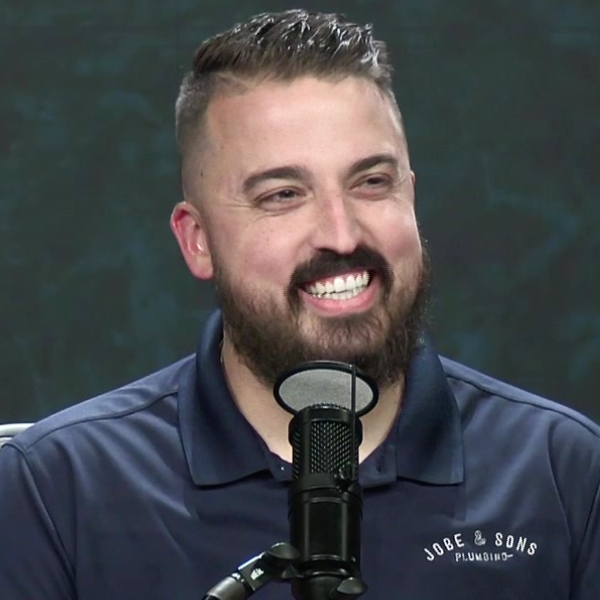
Stephen Jobe
Jobe & Sons Plumbing
Website: jobeandsonsplumbing.com
Stephen Jobe is the founder of Jobe & Sons Plumbing, a trusted plumbing company based in Tucson, AZ, proudly serving the surrounding areas since 2022. Stephen launched the business with a clear vision and purpose: to bring integrity back to the trades, to build a life for his family that reflects his values, and to create opportunities for outrageous generosity—making a lasting difference in the lives of neighbors and clients alike.
A people-first leader, Stephen is passionate about personal growth and team development. He thrives on seeing others succeed, and he’s known for encouraging and championing his crew to lead with excellence and impact in their work. His energy is contagious, especially when it comes to marketing—an area he’s deeply enthusiastic about because, in his words, “people are amazing.”
In addition to plumbing, Stephen also pours his passion into Plumbers Crack Coffee Co., a brand built to fuel the trades—and anyone who appreciates a good cup of coffee—with purpose and heart.
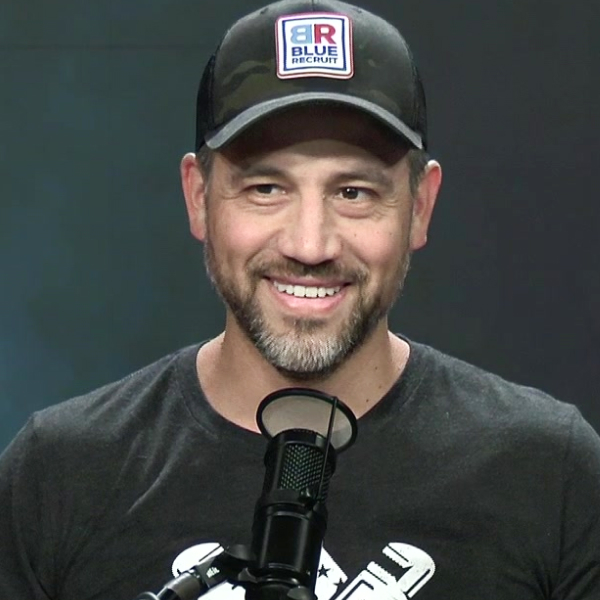
Rich Camacho
BlueRecruit
Website: bluerecruit.us
BlueRecruit is a direct hire software platform built for the skilled trades industry co-founded by Rich Camacho in 2019. BlueRecruit operates across all the US and Canada, and to date has helped nearly 100,000 Job Seekers build their careers with exceptional employers across North America.
BlueRecruit was born when Rich’s father-in-law tried hiring an autobody painter for his garage, but instead of skilled auto painters he received countless resumes for house painters. Rich knew there had to be a better way, which is why BlueRecruit connects talent without resumes or job posts.



SIGN UP FOR PODCAST UPDATES
Get email updates on new episodes and podcast news.
You don’t want to miss out!
Interested in being a guest on the show?
Are you a home service professional eager to share your insights and experiences? Apply to be a guest on the Masters of Home Service Podcast, and join a community of experts committed to helping others level up through knowledge.
Other Podcasts We Love