 30 Minutes
Want to Sell Your Business in 5 Years? Do This Now
With Daniel Dixon and Forrest Derr


-
Adam (00:17)
Welcome to Masters of Home Service, the best podcast for home service pros like us. I’m your host, Adam Slyvester, and I want you to crush it in business. Today, we’re talking about selling your business, and if you’ve been thinking about selling it down the road, then today’s going to be great. We’re going to give you a game plan to make sure that you get as much as you possibly can for your business. Now here’s the thing. If you’re thinking, “Adam, I’m not ever going to sell my business, and so this episode is not for me.” It is, and here’s why. Here’s the secret sauce to business. If you will approach your business like you’re going to sell it, then you will build a thriving, profitable, awesome business. If you have that mentality, “I’m going to make my business sellable even if I never sell it,” then that will get you the results you want. So listen up if you want to sell it or if you don’t ever want to sell it, the mentality of the tactics are the same.
So I have two great guests today, Forrest and Daniel. You guys know this stuff. This is your wheelhouse. So we’re going to give our listeners some really good strategies here. Daniel, you go first, tell us who you are and what you do.
Daniel (01:15)
Yeah, Daniel Dixon. I’m the CEO at SendJim, and I also have a home service business in the garage floor coating space.
Adam (01:22)
Awesome. Great, great, great, great. Forrest?
Forrest (01:24)
Forrest. I’ve got a consulting business called Derr Consulting, and I actually wish you could shoot a commercial for me because that’s exactly my pitch is how do I help entrepreneurs prepare their business to sell, but turn it into a smooth-running business at the time?
Adam (01:38)
Yeah, because that’s the thing that I think a lot of people miss is it’s not as simple as just when you get bored of running your business or you think you’re close to retirement, call your competitor, tell them you want to give them your list, they give you some cash, and you’re done. It’s actually not that simple, and if you want to do it right, it actually takes a lot more planning than that. It takes years of planning to really make sure your business is sellable.
(02:00)
And so what would you guys say is the most common mistake that business owners make in this whole selling process? What do you guys think is the main problem or mistake they make?
Forrest (02:10)
I’d say one of the main mistakes is they create a job rather than creating a business. So many entrepreneurs out there, they have a really well-paying job, but the business can’t function without ’em. So they don’t have processes and procedures and structures built out that allow that business to operate without them. And I’ve seen business owners brag that their business would fail if they weren’t there, and I’m like, but that’s not a business. That’s a job.
Adam (02:33)
That’s right. We’re talking about assets here. We want to build your business as an asset.
Forrest (02:36)
Correct.
Daniel (02:37)
Yeah, that’s actually what would be my top one too. But on top of that, I would say maximizing your profit. A lot of business owners, the mistake they make as they think, “Oh, someone’s going to buy this business ‘cause my brand is really good, or my logo’s really cool, or my website’s amazing.” Businesses aren’t bought and sold because of those things. It’s really based on a few key things, profit being the most important, and really your customer list and how much money they think they can generate from that set of customers.
Adam (03:07)
What are some ways that you can, I mean, boosting profits is a whole different topic, but let’s get into it a little bit. What are some ways that you can make sure that when the time comes to sell, the finish line arrives and your business is cranking out as much profit as it ever has? What are some of those tactics that you would do?
Daniel (03:23)
Really make sure that all the jobs to be done, the critical things that the business doesn’t rely on you, just like Forrest said, to make sure that someone is doing all the critical things and that if you left, it would still be a thriving business. That’s probably the most important thing. The other thing is to make sure there’s metrics in place to really understand that the business is healthy, and to where you can prove to the buyer that this business is going well, right? And then when there’s those key metrics, you have to make sure they’re not declining. So the profit could still be really good, but are we getting a decrease in leads? Is the stuff that would indicate the industry’s changing? Those are things that we really have to monitor and prove, have a sellable story to the buyer that this business has been growing and will continue to grow because of these things that I’m tracking.
Adam (04:10)
Forrest, I think that if you work at a store or you work at anywhere. If you say, “I’m going to sell my job,” you can’t do that. You can’t do that, right? We’re not talking about selling jobs, we’re talking about selling an asset. You can only sell something that you own. On top of that, you can’t sell yourself. So if you are selling your business and you’re the lynch pin and every single thing and the business needs you for everything, then your business is worth very little because you can’t sell yourself. You have to sell the business, and then you exit. And if the company’s not getting you along with the business, then it’s just a shell. It’s an empty shell with no clam inside or whatever the phrase is. So, what are some ways that business owners can take themselves out of the business over time? So that can happen?
Forrest (04:51)
Yeah, it’s really about building accountability. We talked about one of the previous episodes, building the accountability structure so that everybody knows what their roles and responsibilities are. And through that process, as a business owner, especially as you’re scaling, you need to start delegating the things that you’re doing. You need to start giving up the things that are not working on the business, that were working in the business. Building out that accountability structuring and having clearly defined roles and responsibilities, is a great way to get yourself out of that.
Adam (05:17)
What’s the first thing to delegate?
Forrest (05:19)
Email.
Adam (05:20)
Okay, great. That’s a great first step.
Forrest (05:21)
Email and calendar. I mean, that’s one of the first things I recommend to people. Especially if you’re in that founder seat, visionary seat, whatever you want to call it, being able to delegate those, I call ’em $25 an hour tasks. What are the things that you’re doing that are only worth $25 an hour? If you’re doing things that are only worth $25 an hour, they need to go.
Daniel (05:39)
Yeah, I would echo that. I would look at the lowest value task. All the tasks you’re doing, look at the lowest value and start there. A lot of founders or owners are very scared about delegating because it’s an important thing, right? And so if we can identify the least important things or the lowest value-add task to your business, where if they got screwed up, that’s okay, we’ll be okay, we’ll fix it, start there. And then all the way through, probably the most important things would be sales, marketing, strategy. Those would probably be the last things and the most difficult to let go. But to your point, if you say, “Hey, well, I have all the customer relationships, or customers buy from me because they like me, or I don’t want to delegate sales because no one cares about my business as much as I do,” then those are things we have to fix. That doesn’t mean you can’t delegate it. It just means we have work to do to get there.
Forrest (06:31)
So many business owners think that they’re the only one that can do certain functions because it’s their way, and at some point you have to accept as a founder, good enough is okay. They may not make the spreadsheet the way you did it with the extra columns and the filters, but good enough is getting the data to where you can make decisions and make an impact. I know there’s a concept of good enough is not good enough, but at some point in business, good enough has to be good enough.
Adam (06:56)
Yeah. I think selling a business is essentially as simple as a handoff. At the end, you’re handing your business off to somebody else and ask yourself, how smooth would that handoff be if we were to do it today? And if you think it couldn’t happen today, literally it just couldn’t happen, then you have some work to do. You might think, well, it’d be pretty tumultuous, but we could probably make it happen. Then you probably have less work to do and that’s good, but take some inventory on your business. How hands-off are you? Or how hands-on are you to your business that would make that transition really hard? That handoff is really important. It could be a good gauge to where you are in that process.
Forrest (07:32)
A good test is to take some time off. So, one of the businesses I worked in, the owner got COVID and ended up being out for eight weeks unexpectedly. Well, guess what? The business operated fine. He had all the processes and procedures, and structures in place to make that business operate. So I think there’s a lot of business owners that even though they’re in charge of their own PTO, they won’t take PTO or at least extended PTO. Take a month off, see what happens. I mean, you can still answer the phone if you need to, but can that business operate without you? And what are the things that are breaking when you do that? Those are the things you need to fix.
Adam (08:07)
I actually did that. I took a month off for the express. One of the main reasons I did it was to expose the cracks of my business I just simply could not see. Every business owner is plugging holes in the ship that they don’t even know their fingers are in those holes. They don’t even realize it. And you step away for a month, and then water comes spewing out of those holes, and then we can finally see, ah, Adam’s not here to plug that hole.
Forrest (08:29)
500 roof leaks. You got to go away and let the water come in to see.
Adam (08:31)
Yeah, exactly. And so a month is a long time, but you could definitely start with a few days, take some time off. Hey guys, don’t call me, we’ll fix all the problems we get back. I want them to be exposed.
Daniel (08:42)
And in some cases, you might be pleasantly surprised. I’ve left my business before thinking, oh, this is going to be sketchy. But you come back and you’re like, wow, they did a really good job at that. I’m never going to take that back over. Or that they actually do something without your input. That’s better than what you would’ve thought. It can go both ways. It’s very scary no matter what, but it can expose holes, but it can also expose skills that you thought your employees weren’t ready for, but they really are, and you might be in the way of that.
Forrest (09:10)
They’ll fill the vacuum when a vacuum is created, right?
Adam (09:12)
So, would you guys say one of the biggest things in this whole conversation is delegating?
Forrest (09:16)
Absolutely.
Forrest (09:18)
A hundred percent.
Adam (09:18)
Yeah. Do you have any sort of framework for, you said Forrest, first start with email, calendar. And then Daniel, you mentioned a few other steps. Let’s iron that out a little bit more before we move on. Is there any kind of framework, any kind of step-by-step, like delegate this and then that, and any suggestions on that?
Forrest (09:36)
I use a framework called ‘delegate elevate’, and it’s an EOS framework where you basically list all the things that you do during the week, and then you take those things and put ’em in four quadrants. A love-great, like-good, don’t like-good, and don’t like-not-good. So you put everything in that list, and the goal is to get all the things you’re doing in the upper left-hand quadrant in the love-great. Now, that doesn’t come into factor with the money or as far as you might really love and you’re great at sorting your emails, but the value of sorting your emails is not there, right?
Adam (10:12)
We’re laughing. We’ve been there before.
Forrest (10:13)
So once you go through that exercise, do that delegate elevate. I encourage also for people to figure out what their total comp is. Take an exercise and even with your leadership team, figure out what’s their total salary, insurance, taxes, benefit, car allowance, whatever. Figure out what that total comp is because it’s not $25 an hour, it’s probably a lot more. Is it 75 bucks an hour? Is it 200 bucks an hour? Now you can start looking at those things through the lens of, I’m stealing from the company when I’m doing something that’s worth less than what I’m paying myself. It’s a bigger impact discussion when you start looking at it that way.
Adam (10:49)
Daniel, do you think that buyers generally think like, okay, they look at what does the owner do in the business? ‘Cause as soon as they’re out of the business, they’re going to have to replace that person, right?
Daniel (10:59)
Absolutely. And you’ll see if you look at business listings to potentially buy other businesses or even just for curiosity’s sake, you’re going to see a lot of semi-absentee or full absentee, and they’re advertising those things ‘cause the businesses worth so much more, if the owner isn’t involved and people want to buy passive investments. Well, oftentimes those aren’t true when you really look into the details of the business, but that goes to show you that the people listing the businesses and the sellers understand that’s a super valuable thing to have.
Adam (11:30)
Yeah. I would say that when you’re selling your business, you have to consider, okay, another business owner buys my business. Then they will probably become the leader of that business. They’ll be the visionary. They might lead the meetings once a week and give people high fives, but they don’t want to get back in the nitty-gritty of the operations and ordering materials, and making sure the CSR is saying the right things. And so if you’re still doing all that stuff, then they’re going to have to, in theory, replace you, or else they’re going to have to do it themselves, and they don’t want to do it themselves, or they’ll offer you way less for the business.
Daniel (12:01)
There’s some people that vision themselves as when they buy a business, that’s what they want to do, but they’re also buying businesses that are going to be valued much lower. If you think you’re going to get a million dollars, two million, five million for your business—the type of person that has that type of money to invest is not buying a business that they’re having to do that. So it just depends on what you think your business is worth. And for most of us, our take home pay, or what you’d call if you’re going to sell a business, a seller’s discretionary earnings, you’ll see that potentially on a business listing, SDE. When you look at that number, oftentimes, let’s say in our service business world, it’s six figures or more. And you think, “Oh, well, I wouldn’t sell my business for that because I could make that in one year.” Well, that’s how your business is really valued if you’re the one doing the work. So if you think, “Well, I make $200,000 a year, so my business is going to be worth 700,000 or 600 or 500,” the reality is if you’re doing all those things, it’s probably worth 200,000 and becomes unsellable because you don’t want to sell it for that price and they don’t want to buy the jobs you’re doing.
Adam (13:07)
That’s well said.
Daniel (13:08)
So, you’re kind of in a rock and a hard space if you’re in that kind of phase.
Adam (13:13)
Guys, one thing we haven’t talked about is how important having a CRM is when you sell a business. Obviously, we’re big fans of Jobber here, so how can using Jobber increase your sellability with your business?
Forrest (13:25)
Having everything in one place, having all your customer records, all your sales records, all your communications proposals—everything in one place is precisely why you need a software company like Jobber.
Daniel (13:37)
Everything you said, the metrics are there, all the customer data’s there. And I was just assuming kind of in our conversation that everyone had a CRM because it’s so important. But if you don’t start with Jobber, that’d be the number one thing to do, along with having your financials in order. And because we use Jobber, I get comments all the time like, “Oh, are you a franchise or whatnot?” Because the software makes us look so professional, and a lot of people that could go start these types of businesses, they don’t know the software end of it. And so it looks very impressive and looks almost impossible for them to recreate. So Jobber is a huge asset to any business.
Adam (14:14)
A hundred percent. And I love that. I love when people think we’re a franchise. I think that’s a huge compliment. It makes us look super professional, so sleek, so on the ball, it’s awesome. Well, if you’re out there and you feel like you’re going at this whole business thing alone, you’re solo, you just feel like you’re all by yourself, and you’re kind of needing community, and you need to have other people around you, then come and join us. We have a community with Jobber that is perfect for you. Advice, insight, tips, tricks, and you might even find that you can encourage and help somebody else. Go to jobber.com/community. It’s free and join today.
(14:46)
If someone’s listening and they’re like, “Yeah, I want to start making my business more sellable.” We’ve covered delegation, we’ve covered these other things. What else do you think matters in this whole process of getting your business sellable?
Forrest (14:58)
They’ve got to have an operating system on how that business operates. How do they have their meetings? How do they get things accomplished? How do they accomplish projects? They’ve got to have a structure that can run the business and has a complete, normal system of terminology, how they have meetings, et cetera. So having an operating system in the business is a great way to improve that sales price because again, somebody doesn’t want to have to walk in buying a business and have to get it organized. They want it to be organized when they walk in.
Adam (15:29)
Let’s put some meat on those bones. Can you give us an example or some kind of visual so that we can really grasp what you’re saying? Operating system sounds cool. I get that. Give us some more detail on that.
Forrest (15:40)
Yeah, so one of the biggest ways to start the operating system is to have a plan so that everybody understands what the business is doing. In the EOS space. It’s called a VTO. It’s a two-page business plan. It lays out the foundation of here’s what we want to do in 10 years, here’s what we want to do in three years, here’s what we want to do in one year, here’s what we want to do in 90 days. And having that framework established, documented, and everybody referring back to that as your northern star, that’s what building a framework into your business is. There’s no confusion about what the ultimate goal is. Everybody’s marching to the same orders, much like a rowing team. If you have a rowing team and everybody’s clanging oars and banging into each other and they’re going different directions, the company’s not going to move forward at the most efficient rate.
Daniel (16:25)
I totally agree. And then on top of what you’d said about the EOS operating system is having metrics to make sure those things are happening, so that you can measure your team. Having documents organized, it sounds so simple, but do you have a Google Drive or a OneDrive where you can say, here’s all the contracts with vendors or customers, and here’s our terms and conditions. They want that stuff if they’re buying the business, otherwise they might as well just go start on their own. So they want access to those type of things. The other huge thing, which it doesn’t matter what operating system you have or how much your business makes, if you don’t have clean financials, you’re not selling your business.
It doesn’t matter if you tell ’em you made two million last year, well, how are you going to prove that? And no one’s going to buy it on your word. There’s not enough trust in society today to do that, and don’t ever go buy business without seeing clean financials. And when you say clean, what does that mean? Well, I’ve seen when I go to buy businesses financials where it’s like expense categories, it’s like ‘owner’s discretion’. And you’re like, what is that? And they’re like, “Oh, well, that’s how I paid. That’s how I pay my house cleaner, and that’s how I do this. Really, we just run it through the business, but it is income. It is not a real expense. You could cut that if you bought it,” and it’s introducing doubt, right? You’re automatically like, okay, if this guy’s not being truthful or gal’s not being truthful about that, what else is going on? What else? And do I really trust what this thing’s saying? So if you don’t have a bookkeeper, if you don’t have a CPA, if you haven’t been filing your taxes, if you’re not claiming all your income, those are major red flags that you better straighten out for multiple years before you think you’re going to sell your business.
Adam (18:02)
And you can’t just do that at the finish line. You have to start now.
Forrest (18:05)
You have to have history of it.
Adam (18:07)
Right? Exactly.
Forrest (18:08)
You can’t just clean it up at the end, like you said. And I’ll tell you from my experience, it is amazing how many small businesses have no idea what their financials are. They are making decisions off of a spreadsheet, off of gut reactions rather than using financials as a tool. I talk to people all the time and like, “Oh, QuickBooks is for my accountant.” No, QuickBooks is for you to make business decisions. Are you not looking at your P&L every month? Are you not looking at your balance sheet every month? It’s mind-boggling. Some of these businesses, and we’re talking eight, nine, 10 million dollar businesses that they don’t know their numbers. And to your point, when they go to sell, it’s a disaster. They will get picked apart by a competitor or venture capitalist, whoever’s coming in, they’re going to tear their business apart.
Daniel (18:55)
And every time you can’t answer a question. To your point, that’s doubt. And every little bit of doubt you introduce, your business goes down in value. I’m not joking. So it’s like pretty soon you get to a point where they’re like, yeah, we just can’t buy this thing because there’s too much doubt here.
Adam (19:09)
They started shaking their head, I don’t know about this.
Forrest (19:11)
I have a company I worked for, we were working on possibly exiting at the time, and we built out a dashboard to know every single statistic. So we went and looked at what buyers would want to see. We had it on a dashboard, and we were able to call out and show sales per hour or cost of acquisition, lead acquisition costs, our monthly recurring revenue, what’s revenue by product. And I remember being on a call with a venture capitalist group, and they were like, how do you know all these numbers? I’m like, we have these on a TV in our office. We look at this every day. This is our guiding principle. If you have your finances in order, you have KPIs that mean something, not just look cool. There’s KPIs that look good on a dashboard, but they really don’t mean anything. So what are the KPIs that you need to know? And if you’re going to sell your business, you need to be looking at those KPIs now to sell your business in five to 10 years.
Adam (20:00)
Speaking of financials, how does debt influence the sale of a business?
Daniel (20:07)
Yeah, it’s a great question. And one of the things I was going to bring up is when you want to go to sell your business and you start thinking years in advance, you don’t want to be buying new vehicles. You don’t want to be signing new leases, right? Because now you’re obligating the future buyer to be involved into those things, those decisions you made. And so I’m not saying don’t do it to stop growing, but just be really careful, right? Do you need a new personal truck on the business? Does your wife need her vehicle on the business? Those type of things, you’re going to pay tenfold for it by running it through your business or buying things that you don’t need. And the reality of it is the more debt you have, if it’s not generating above and beyond the debt service and increased income, then it’s a bad decision.
When you look at it, if your interest rate, we’re going to get a little technical here, but I’ll try not to go too far. If your interest rate, for example, on that vehicle is 7%, you better be getting better than a 7% return on wherever that money that you’re using is going. So if you loan $50,000 to buy a piece of equipment at 7% interest, that $50,000, instead of you paying for it cash, you better be getting better than 7% on that money or that monthly payment that you’re paying to pay the $50,000. You have to be making money on that. So it’s a math thing to your point. And you need to understand your numbers and your financials to understand, should I be taking debt? And I think a buyer is okay with debt as long as there’s the story behind it and the metrics to say, hey, it’s okay that we have this debt because we’re paying 7%, but we’re growing 30% on that money that we’re saving by not paying for it all upfront.
Forrest (21:52)
The debt-to-equity might be a KPI you want on your dashboard to be looking at.
Adam (21:55)
Debt-to-equity, yeah. If you’re constantly growing your business and you’re constantly reinvesting, reinvesting, then you don’t fully realize the true profit of those decisions until you stop growing. Until you stop reinvesting, and then you have this amazing year, most money you’ve ever made because you’re not spending and you’re not reinvesting anymore, and you want to time it so that time period is when you’re selling it. And we haven’t bought anything in the last year. Record profits, record efficiency because you’ve timed it properly. Does that make sense?
Forrest (22:27)
Yeah, it absolutely makes sense.
Daniel (22:29)
And you have to be able to tell that story too, right? Because some mistakes I see is people, they stop marketing and they stop spending to boost their profit, but then when the sophisticated buyers, like the venture capital, private equity, someone rolling up your types of businesses in your market, they’re going to look at those KPIs and they’re going to say, well, how come your leads dropped? And then they’re starting to introduce doubt. Well, is the market soft? Did your sales person leave? What’s going on in your business? So you just have to be really careful. You want to maximize the profit in a smart way, but be able to tell that story, whatever decisions you’re making.
Adam (23:06)
Yeah, that’s great. Something I want to come back to earlier is the seeds of doubt. Buyers should be able to walk through your shop and ask the guy working over there, “Hey, what’s the direction? What’s the goal of this company? What are you working on?” He should be able to ask that question of four or five different people and get the same answer. I think that’s a really simple way of knowing, if he gets the same answer, asks different people, this is a pretty solid business. But they all say something wildly different, this is an unhealthy business.
(23:36)
To use a fancier term in this whole world of selling is EBITDA, and it’s an acronym for profit basically. Do one of you guys want to tackle that and just explain to our listeners what EBITDA is and how should be trying to raise that number?
Daniel (23:48)
So EBITDA is a fancy term for profit, like you said, and we don’t have to get into exactly what the acronym is, but you can look it up. The key here is that you want to show as high of profit as possible because your business will sell on a multiple most likely of your profit. So, let’s say your profit is $200,000 a year. Your EBITDA multiple or your profit multiple that you sell for might be two times. So your business might be worth 400,000. If you have an EBITDA of a million or a million dollars a year in profit, your multiple might be five times. And so you might get $5 million. And so to say, like, oh, businesses in my industry typically get these EBITDA multiples or these profit multiples. It’s really a sliding scale based on how big your business is. So the more your EBITDA grows, not only is your business worth more, and you’re making more money, which kind of goes back to your point at the beginning, Adam, of even if you’re not going to sell it, you want to grow your EBITDA because it’s good for you. But also, it’s like you’re getting it double whammy, right? Because you’re growing your business, it’s making more money, but it also becomes more valuable because your multiple grows. So instead of getting two times on 200,000, you’re going to get five times on a million. And so EBITDA becomes a very focused part of the acquisition conversation.
Forrest (25:12)
And part of that equation is the top-line sales to get to that profit. So if your team members, to your point earlier, understanding what the goal. Okay, in five years, we want to be at $10 million. If they understand that, then they’re going to be focused on how do they cut the costs? How do they streamline processes? How do they grow the business with less people? How do they automate tasks? And so again, you have to have everybody row in the same direction. And if everybody understands what the goal is, $5 million EBITDA, or whatever it is, then decisions they’re going to be making on the shop floor are going to be directly impacting that.
Adam (25:49)
That’s great. I have one last question for you guys. There’s a lot of chatter out there, at least I see it online, the forms and stuff about recurring revenues, all that matters to buyers these days. Oh, recurring revenues, all that matters. What do you guys think? Is that true or not?
Forrest (26:04)
Depends on the type of recurring revenue.
Adam (26:05)
Okay. What do you mean?
Forrest (26:06)
So I would say, yes, recurring revenue is very important, but how valuable is that recurring revenue? How tight are your contracts? How long are your contracts with clients? That will play a big impact on the valuation of the company.
Daniel (26:19)
Yeah, it is important, and you’re going to get a higher multiple on your EBITDA if it’s recurring revenue. That all goes back to the very simple thing that we talked about early, which is you don’t want to increase doubt. And so when it’s not recurring, there’s doubt that that’s going to happen again next year, right? So if I had a million-dollar contract this year, but it was like a one-time thing, I was going to pressure wash the entire university campus, right? They don’t know that per se. And so it’s scary to them, will that contract happen again or not? But if it’s recurring, there’s less doubt because you’re like, oh, well this is just a subscription, so it’s going to obviously happen again. So that’s why you’re going to get a higher multiple on recurring revenue or recurring profit.
Adam (27:01)
Now listener out there is thinking, “Well, yeah, recurring revenue, I clean Ms. Betty’s gutters every year.” Is that recurring revenue or does it need to be contractual?
Daniel (27:10)
Yeah, that is, I guess technically recurring revenue, but the most valuable recurring revenue is going to be on a subscription base. So your credit card’s already on file, it’s automatically being charged. There’s no such thing as relying on Ms. Betty to call you, and she’s older and she forgets, or there’s a system where we have to reach out to her. So it’s that subscription-based—you have a system, a credit card processor that’s charging it. That is the important thing,
Adam (27:38)
Service agreements, that kind of stuff. Awesome.
I love this conversation. I think there were a lot of good takeaways for our listeners to build your business. So it’s sellable. Here are the top three that I came away with. Number one is you want to make sure that your business is sellable. The handoff is smooth, and you have to be able to build an asset and not just a job. And so you got to delegate responsibility. You have to have people doing things that you don’t do anymore because what are they going to do? Buy you at the end, and you come with them? They’re going to sell the business. And if you are doing everything still, that business is not very sellable.
Number two is that you want to have a plan. You need to have a 90-day plan, a one-year plan, three-year plan, 10 10-year plan, and get your whole team involved. Make sure that they know what the goal is, where are we going? What’s the direction we’re going? What am I supposed to be doing today to impact that number, that goal, the vision—they need to be a part of it. And so if someone comes in as a buyer and asks five different people, “What are you doing here?” And they all say different things, that’s not as good as if they all said, “We’re all going this direction.” And that’s what you really want.
And number three, you need to have honest and correct financial statements. You have QuickBooks going. Starting today? You need to have a bookkeeper, an accountant, making sure they’re correct. What are you going to do, hand off just a box of receipts to the buyer in five years? That doesn’t work. So you need to have correct statements that don’t have these fluffy line items in there that say, that’s just my slush fund. It’s got to be honest. It’s got to be clear and transparent. It’s got to be correct.
Daniel (29:04)
One big question we get oftentimes is selling the business is, what does my income go and how does that affect EBITDA or profit? And so with a lot of the small businesses, what you’re going to see is you’re going to see a thing called SDE on a listing or seller’s discretionary earnings. And that’s typically your wages that the business pays you. Like on payroll, you might make $70,000 a year on your payroll, plus any profit you distribute. So let’s say the business has a $200,000 year profit, plus it pays you 70,000 on payroll. You’ll see your SDE as 270,000. And for businesses like this, you’ll typically get a multiple on those two numbers added together on your SDE.
Adam (29:43)
That’s great. Thanks for clarifying that. How do people find out more about you?
Daniel (29:46)
Yeah, so you can find out more by going to sendjim.com, that’s S-E-N-D-J-I-M.com, and reach out on a chat on our website for us.
Forrest (29:56)
Yeah, you can reach out on derrconsulting.com, D-E-R-R-consulting.com. You can fill out a form and we’d be happy to get in touch with you.
Adam (30:01)
Cool. You guys are great. Thanks for crushing your businesses. Thanks for giving us some insight today. Thanks for being here. Yeah, thanks for
Daniel (30:07)
Yeah, thanks for having us.
Forrest (30:08)
Thank you.
Adam (30:09)
And thank you for listening. I hope that you heard something today that will help you make your business more sellable. Go make it happen. I’m your host, Adam Sylvester. You can find me at adamsylvester.com. Your team and your clients, and your family deserve your very best. So go give it to ’em.
About the speakers

Adam Sylvester
CHARLOTTESVILLE GUTTER PROS AND CHARLOTTESVILLE LAWN CARE
Website: adamsylvester.com
Adam started Charlottesville Lawn Care in 2013 and Charlottesville Gutter Pros in the fall of 2020, in Charlottesville, VA. He likes to say, “I do gutters and grass! When it rains the grass grows and the gutters leak!” He got into owning his own business because he saw it as a huge opportunity to generate great income while living a life that suited him. He believes that small companies can make a serious impact on their communities and on every individual they touch, and he wanted to build a company that could make a big difference. His sweet spot talent is sales and marketing with a strong passion for building a place his team wants to work. Adam values his employees and loves leading people. While operations and efficiency is not something that comes naturally to him, he is constantly working to improve himself and his business in these areas.

Daniel Dixon
SendJIM
Website: https://www.sendjim.com/
LinkedIn: Daniel Dixon
Daniel became the CEO of SendJim in May 2019. Prior to becoming the leader of SendJim, Daniel served as a military officer in the United States Air Force and worked in corporate America as a business consultant for a nationally recognized consulting firm. Since leaving corporate America, Daniel has founded, bought, and sold multiple home service businesses and currently owns two seven figure service businesses and is the leader of SendJim.
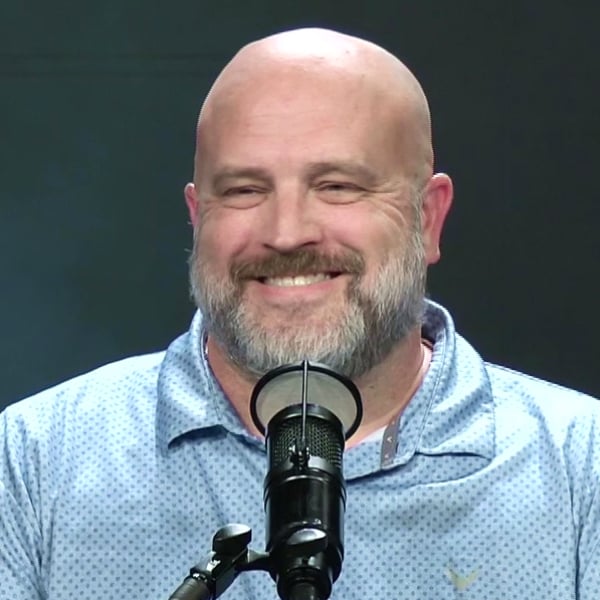
Forrest Derr
Derr Consulting
LinkedIn: Forrest K. Derr
Forrest is a Fractional COO who helps service-based businesses get organized and ready to scale. With executive experience across telecom, SaaS, construction, retail, and home services, he brings clarity and structure to companies that are growing fast but feeling chaotic. Through his firm, Derr Consulting, he partners with founders to streamline operations, align teams, and build accountability systems that support sustainable growth. He uses platforms like Ninety and EOS tools to create focus, simplify processes, and embed operational discipline. Forrest is known for asking the right questions, challenging assumptions, and helping leaders zoom out to see the full picture. Whether supporting a single company or multiple ventures, he delivers proven systems and real-world insights that create traction and momentum.



SIGN UP FOR PODCAST UPDATES
Get email updates on new episodes and podcast news.
You don’t want to miss out!
Interested in being a guest on the show?
Are you a home service professional eager to share your insights and experiences? Apply to be a guest on the Masters of Home Service Podcast, and join a community of experts committed to helping others level up through knowledge.
Other Podcasts We Love