 27 Minutes
A Single Email That Brought in $93k in Sales
With Phil Risher and Stephen Jobe


-
Adam (00:14)
Welcome to Masters of Home Service, the best podcast for home service pros like us. I’m your host, Adam Sylvester, and I want you to crush it in business. If you’re not emailing your clients on a regular basis, you are losing money. It’s just like going to the ATM machine and pulling cash out of the machine. Press the button and get money. So if you’re thinking, Adam, how do I send emails? I want to, I know it’s important, I want to, but how We’re going to answer all those questions today, and when we’re done, you’re going to know exactly what to do and how to do it. It’s going to be great. Phil and Stephen, you guys are crushing it, and you’re doing Stephen you’re a plumber, Phil, you run Phlash Consulting, and you guys do a lot of emailing. You guys were emailing your clients on a regular basis. Phil, you sent out 6 million emails last year or something like that. We’ll get into that. So before we get into that, Stephen, tell us what you do and what you do and all that kind of stuff.
Stephen (01:02):
I’m the owner of Jobe and Sons Plumbing in Tucson, Arizona. Been around for roughly four years, and we’re just going gangbusters over here.
Adam (01:08):
Bingo. Great. Glad you’re here, Phil
Phil (01:10):
Yeah, owner of Phlash Consulting. We work with home service businesses, and we help them do digital marketing, and one of those components is email marketing, and it’s a big driver of revenue for a lot of companies that they miss out on and we’re going to talk a lot about that today.
Adam (01:21):
They’re missing out on it. We’re talking about getting noticed, and people who are not emailing, how much is it costing? People say, “Ah, email. I don’t have time for that.” It’s a big deal.
Phil (01:32):
Absolutely,
Adam (01:33):
It’s a big deal. How important is it? Let’s start by asking how important email marketing is to your business.
Stephen (01:40):
Honestly, it’s something that we’ve worked on a regular basis now. When we first started, it was kind of like, yeah, I would give it a shot and see if it works and we saw a little bit of color come back, but at this point we have structures in place where bare minimum once a month, oftentimes several times a month, just send it out and I think the whole point is that somebody calls you out for a service call. They’ve seen you once, they’re not going to remember a name, just like half the people you meet on the street. You’re not going to remember their name one time, but if you can continue to put that name right in front of them over and over and over again in a non-aggressive way, I think people will remember your name
Phil (02:16):
A lot of business owners, they think of marketing as new customers coming in and it’s constantly trying to get fuel on the fire over and over again and they forget that there’s all these people sitting in your database, prospects and customers that already know like and trust you and you can cross sell them different services and that’s why it’s a honey hole. Literally, we call it a honey hole that most people don’t take advantage of, and they’re just focused on new customer, new customer, new customer.
Adam (02:38):
Yeah. I think that even if someone doesn’t even open the email, it’s very effective. A long time ago, I had a client email me and say, Adam, do you know a good landscaper? And I was like, yeah, me, what are we talking about? And he thought I was just the mowing guy. Okay. That was a messaging problem. That was a marketing problem. That was an email marketing problem because he should have known as soon as he had the thought, I need a landscaper, he should have thought of me, but he didn’t. It’s not his fault, it’s my fault. Email marketing checks so many boxes. And so what’s one of the main things that it accomplishes for your businesses?
Stephen (03:15):
Honestly, is what he was talking about, the honeypot you already have. I think right now we’re sitting at 2000 to 2,500 people that are in our database, and it allows us to just reach back in and, at the very leas,t let them know that we’re still around.
(03:29)
Because I may think about plumbing all the time. I may think about business ownership all the time. They’re not thinking about plumbing all the time. They aren’t. And so if I can keep our company top of mind, even if just to say something as simple as like, Hey, we’re here to help. They’re going to be like, I need help. Literally, we’ve had our customers call and go, Hey, I’m looking for a landscaper, I’m looking for an electrician, I’m looking for a drywall, or whatever. Do you know anybody? Just because we’ve been there to help, and so it creates a community where people are willing to trust us.
Adam (03:57):
Phil, do you think that there’s a difference between automated emails that are going out on a regular basis versus blasting out one email as a one-off? Is there a difference, or are they all kind of the same?
Phil (04:08):
No, there’s definitely a complete difference because the automated ones, you can set them up, and it’s nice to nurture things and that kind of stuff. The one-offs they’re going to be more to the point of what’s actually going on. So what we recommend, a lot of people, they say, I don’t really know what to talk about this month, or what should I say? Or they say the same thing over again, and they forget that they don’t talk about all this other stuff.
(04:26)
So the first thing for us is let’s create a content calendar every single month of what we’re going to talk about January, February, March, April, May. Then, when we build the newsletter for that month, we have something that we’re going to cross-sell. Talk about those things. Now, let’s say that there’s a big storm that happens, or in plumbers Brown Fridays coming up the day after Thanksgiving, and it’s like, Hey, no, we got to send out this specific timely email for these people. The messaging is completely different, and it also has to be timely for that.
Adam (04:56):
An automated email might be targeted towards a certain group of people. I mean, someone comes into your company for the first time as a new lead, they’re going to get different emails in the next 90 days or so to speak as onboarding emails, but then sometimes if you’re slow, you just blast out an email. What should those emails say?
Stephen (05:13):
If it’s a blast out, it’s going to be some sort of a deal, especially when we’re slow, right? We’re going to try to peddle in people, so it’ll be like, Hey, here’s a special deal. Did you know about this? We’re going to provide value. It could be something as simple as what we’ve done in the past is we’ll send out which water heater should you choose, and then people are real short blip and it’s like, which one do you have? And it just creates this conversation, and we start calling people after that. That’s a good idea. Yeah, I like that. Works out.
Phil (05:40):
Yeah, I really like that idea. I would say when you’re sending out an email, there’s two parts to it. The first one is a really good subject line, and we use a tool called Omnisend O-M-N-I-N-S-E-N-D.com, and it is a free subject line tester. You can Google it, and so what you want to do is whatever your subject line is, what you said, it’s like $500 off a new generator or get this free thing when you install this or free inspection on this one, it’s going to give you a good subject line that people are going to open. Now, when you send out that one-off email inside of that body, you don’t want it to be too long, to your point, get to the point of what it is, have a call to action. What we’ve been doing, and it’s been working amazing, is let’s say you send out an email that says $500 off X, y, z or some type of promo, all the people that open that email, we recommend obviously calling these people, but another thing to do is send them a second email and the second email looks like just a general email and it says, in your area is the subject line, and it says, Hey, we’re going to be in your area doing an inspection or a free estimate on this service.
(06:36)
Do you want us to stop by and take care of this for you? All you got to do is reply yes, because you know that they opened it because interested, and then now you’re telling them you’re going to be in their area doing estimates, and it’s a great way to tie that together with the one-off emails.
Stephen (06:47):
One thing I did one time is I didn’t change the pre-written subject line, so it’ll say something like, put your subject here. I literally just left it blank and then sent, just reminding you about our plumbing service and then sent it
Adam (06:59):
On purpose?
Stephen (07:00):
On purpose, and people opened it like crazy. They were like, Oh, it must be a mistake from Jobe and Sons and opened it, and it’s like,Ohh yeah, that actually works, and we got click-throughs
Adam (07:08):
Yeah, those kinds of tricks definitely work. Don’t capitalize the first word of the subject line or make a typo and the subject line. Those kinds of things definitely capture eyeballs. I love the follow-up idea where you only email people who opened it.
Stephen (07:21):
Exactly.
Adam (07:22):
And then of course, obviously, the next step it would be call them if you have the resources to call them and follow up, and you don’t say, I know you open your email. What’s that phone call?
Phil (07:31):
Yeah. Well, so we had an electrical contractor, Southern California, $500 off generators, this exact situation. They were slow. They needed some estimates, so we sent out that email, $500 off generators. Then we sent an email secondary to the opens that said, we’re going to be in your area, and they got three estimates out of it, so potentially $60,000 of jobs just out of that. The call would sound like this. Hey, Adam, not sure if you heard or not, we have a promo going on for $500 off generators. We’re going to be in your area next week. I pulled up some of the people that were going to be around and want to see if I could stop by and give you an estimate on that. You don’t want to be creepy and be like, I saw you open my email. Do you want to be like, Hey, kind of tie the knot together for them without tying the knot fully together?
Adam (08:09):
Yeah, yeah, a hundred percent. I remember way back in the day, I sent an email that it was, I think I’ve told the story before on the podcast, but I’ll share it again, where they’re kind of outdated now, but thank you for opting into our newsletter and that kind of stuff. This was like 2017. I somehow accidentally sent that email to everyone by accident, and I was mortified. I’m a perfectionist, and I just couldn’t believe it, and I got a couple of complaints, and I got one person who was like, yes, hey, this is the mistake. And then the third guy said, This was a mistake, but can you cut my grass tomorrow? And that’s when I realized the power of emailing your customers. If a terrible email mistake like that could generate business, what might a good email do? Email works. It works every time, and I think that you can do it from a logic—you can use MailChimp, Jobber has that, other services. It’s easy to do, right?
Phil (09:01):
That’s right. Yeah. We have a company, they’re a remodeling company, and we started working with them, and they were like, Well, we don’t email our customers. We just do one-time projects. They’re not going to get a kitchen every month. We need to leave them alone. We’re like, no, that’s not the point. You need to cross-sell your services. So what we did was literally the first email we sent out was for a custom office build. They were getting custom cabinetry and other things in office, and we’re going to talk about this in this email. So we sent the email out, and this woman, Ms. Susan, she emails back and she says, Hey, I didn’t go with you for my bathroom remodel, and I should have because the company I selected was terrible, and I’m remodeling my office and I want you to do the job.
Adam (09:39):
Wow.
Phil (09:40):
All because we emailed the past customers and we didn’t just say, oh, no, people don’t care and they don’t want to be resold something,
Adam (09:45):
And that was basically free.
Phil (09:47):
Exactly.
Adam (09:47):
Basically, it was free
Phil (09:48):
To your point that we think our customers don’t want to hear from us and we’re annoying them and oh my gosh, actually send this opt-in or whatever, but at the end of the day, people just want to stay top of mind, add value, don’t be pushy and annoying, but there is value in staying top of mind cross selling services, so that way they know, oh, you actually do this as well.
Adam (10:04):
I’ve told people over the years who have asked me for advice on email marketing and stuff, they’ll say, Adam, how often do you email your clients? And I say, as often as you need or as often as it takes, and they’re like, Oh my gosh, I can’t imagine. And I believe that, and I say that story because a while back we got really slow. It was the first time we were really this slow in my business, and I was no joke. I was emailing our list almost every day, and sure we had unsubscribed, but you know what it was doing? It was keeping us busy, and then as soon as we got busy again, I stopped emailing them. It’s really just an ATM button. You just hit the ATM button when you need cash. When you don’t need cash, you don’t hit it. It’s that simple, and if people don’t like it, they got unsubscribe, and that’s fine too. But I have found that email marketing is really the quickest way to get a fast job.
Stephen (10:51):
Well, I think to the person who’s watching this and they’re afraid of the unsubscribe, that person was probably never going to be someone who you’d get through email anyway. You know what I mean? They’re going to be more contacted by maybe a phone caller. You know what I’m saying?
Adam (11:04):
Yeah.
Stephen (11:04):
They’re already ready and just hit it.
Adam (11:06):
Right. Stephen, do you cross-sell through your emails? Do you use emails to cross-sell for? Okay, how? Give us an example.
Stephen (11:11):
Yeah, I’ll give you some, several scenarios. So for example, we own a coffee company. We also have a YouTube channel and Facebook and Instagram. It’s all integrated. I’ll give you an example in, I think it was this last year in December, I sent out this thing, and I think the tagline was something along the lines of save big dollar sign, dollar sign, dollar sign on X, Y, and Z, whatever it was.
(11:36)
When they get into the email, then there’s a picture of the thing I’m actually talking about, and every single word in that email was embedded. So, regardless of where they click, they get taken to the next location, which was our booking website at the very bottom. Then we start saying like, Okay, hey, you should go check out our YouTube channel. So we leave a link there. Then in the YouTube channel, we have a link to our Facebook and our Google, but it’s all pointing back. We also have a blog that’s called the Clog Blog, so that gets linked in.
(12:03)
So it’s almost like a big giant spider web where you start with one place, but the whole point is to drive everything right back down to the main hub because if I can get you to the website, it’s one click and you’re on the phone with me. Know what I mean? So it just makes sales.
Phil (12:19):
You mentioned one thing about the ATM: the button. As a marketing company, people ask us all the time, How long it’s going to take to see a return on my marketing, and when we tell them tomorrow you can email all of your customers with an offer that you’ve never done before. There’s no way that you’re not going to make money from this, and it’s the quickest way that you can do marketing if you have prospects or customers sitting in your database. For sure.
Adam (12:42):
Yeah, I think between the three of us, we’ve sent out a lot of emails, a lot. What do you guys think are the most effective? We talked about the subject line a little bit, the tester, but do they need lots of photos? Is it a newsletter? Is it need to be long, short from the owner, from the CSR? Let’s talk about the specifics. What should go in the email if we want to promote? If you’re a longer company and the season to start from mowing, we’re going to start a mowing campaign.
Phil (13:10):
What should go with that email? So we sent out 6.1 million emails last year, and we analyzed all those emails and we distilled it down to a seven-part framework, and we implemented that seven-part framework at this 1.5 million HVAC contractor, and they generated $253,000 using this framework. So the first step is a good subject line, so you can use that subject line tester, but usually you want four to six words in your subject line, maybe a couple uppercase, maybe some dollar signs or something that’s going to bring attention to it. Emojis. I’m not a big fan of emojis because it almost looks too salesy to people when they get it in their inbox. They’re like, this doesn’t look too legit.
(13:48)
The second one is when they go to your email, you want to have your logo and then two call to actions, a call now button, and a schedule service or get an estimate button right at the top. What this does is, one, it anchors the email, so as people are scrolling through, they know they can go back and take an action, but also, when they read your subject line, if they’re ready to roll, it hits them right there. The third thing is having some type of an educational piece. This is where you could include GIFs, pictures, blog posts, and the content calendar is so important because, to your point, let’s say it’s a lawn care company, they’re talking about their spring cleanups. Then here it’s like, here are five reasons why you need a spring cleanup, and you’re just educating them through this process.
(14:25)
Now, here’s where it gets fun after this. The fourth one is your customer’s like, okay, I should probably get a spring cleanup. I understand what it is, but they’re asking one question, and that’s the question that you need to answer right there. It’s a frequently asked question, and it’s like, How much does this spring cleanup cost? How often should I get a spring cleanup done? Whatever question that is, you’ve got to answer it in a graphic or something that’s a frequently asked question. Step five is having a direct call to action, you agitate call to, so you don’t want your house to be the, I swear of the community when everyone has brand new mulch and looks beautiful, get a spring cleanup. Step six on that is now they’re saying, okay, I definitely need to get this, but are they going to do a good job? This is where you include a customer testimonial about the spring cleanup. Seven, have those anchors call now schedule service or get an estimate. That’s a framework that we use as a company because it works, and it walks them through this decision tre,e and it gets action on your emails.
Adam (15:18):
And I’ve seen your emails. They’re not the most beautiful emails, but they’re the most effective.
Phil (15:23):
Yes,
Adam (15:23):
And that’s all that matters. Yeah, we want results, not beauty. Exactly.
Phil (15:27):
I mean, we’re a digital marketing company. We can make anything look beautiful and whatever. At the end of the day, this is the thing I don’t care about making it look beautiful. Clicks, opens, impressions. I want revenue and leads, and that’s what it comes down to. So if you have something that’s producing that, then just do that.
Adam (15:42):
Guys, I love talking about email. I think we’re going to pause the conversation for a minute though to talk about how Jobber specifically can help our listeners send emails to their clients. Phil, how can Jobber do that?
Phil (15:53):
A lot of people are asking, well, where do I go? How do I do this? And the problem is trying to connect the dots with, I have these emails over here, this over there, and the thing that I like about Jobber is that they have this campaign section, and you can go in there, create an email, send it to your customers, literally in probably 10 minutes. So they make it super easy to just connect all the dots, send an email out, and then keep moving.
Stephen (16:13):
I used to use that one monkey one, and ever since we started using it, the click rates go up, and it also says integration buttons that I can’t get enough of. And one of the main reasons I love Jobber is that they actually listen to feedback. So we’ve actually given feedback and said, Hey, can you add this? And they actually have added it. Bingo. And so things like that. I can’t call up the monkey and tell him, like, Hey, this is what’s up, but Jobber actually listens to it.
Adam (16:38):
I was a MailChimp junkie for a long time, and I canceled my subscription because Jobber was that good. It’s really, really easy to send an email to your clients in Jobber, so if you aren’t emailing your clients on a regular basis, you’re losing money, and you need to get Jobber. Jobber makes it super, super easy. So go to jobber.com/podcastdeal for an exclusive discount and start emailing your clients today.
(17:01):
Stephen, I think there’s an element to all this that you want to have value in the email and not just a call to action every single day. So, what kind of things do you put in there that are actually somewhat valuable to the client?
Stephen (17:14):
Yeah, I think that’s something a lot of people don’t think about. It’s just maintenance. So in the past, and actually kind of on a regular basis, we’ll pick one item in your house. Let’s call it a water heater, and we’ll just say, Hey, here are the four things that you need to do with your water heater per year, and maybe we send that email out, we’ll just copy and paste and just repeat that email a couple of times. It could be something as simple, Did you know that you’re supposed to drain your water heater once a year? Do you know how to do it? Check out this video back to cross-section, right? You kick ’em back over, or you can at that point, to your point, you add in, schedule your call now, and you say, we actually do that. This is the cost. Go for it. When you start doing that, people don’t just look at it and go, Oh my God, they just want my money. It’s like, no, they actually care and they’re taking care of my stuff.
Adam (17:54):
And subconsciously, they’re thinking, I don’t want to do all that!
Stephen (17:56):
Right?
Phil (17:56):
Yeah, exactly. I would say with value, there’s a part to educating the customer as well. There’s also just a part to sharing things that’s going on in your local community that’s good. Hey, here’s five things to do in this city in the spring. It has nothing to do with anything aside from just something that’s local and makes sense. And I think that this kind of hits at you, don’t want to just be bashing them over the head with offers and promos every single month. You want to really be a pillar of the community and educating them on what’s going on in the community. And yeah, we could help you or not, but at the end of the day, hope we get some value out of this email.
Adam (18:27):
Yeah. Stephen, you sent an email that got like $93,000 of revenue or something like that. Tell us about that.
Stephen (18:33):
So in this email, I wanted really two things to be done. One, we needed cash flow, so we needed to bring it in, but I also wanted to communicate that we’re real people. You can send a picture of me going like that all day long, but it just looks like a caricature. So what I did is I took a picture of me standing in my kids’ room. I’ve got a backwards hat on, total dad vibes. I have a coffee cup with Mickey Mouse on it, and in the email, it was something like, Did you know that we’re real people? And then I just gave a real quick pitch, we would love to serve you. We live in a house just like you live in a house, we use…
Adam (19:08):
Pipes just like you guys.
Stephen (19:09):
Exactly. Just making connection, we’re real. And I think it was a little bit of a timing game as well. It was right in the beginning of December, and for us, that’s cash cow season. They’re all new and they’re all day long. We just sent it out, and partially because of the timing, we’re already busy. Pipes get frozen, things need to be dealt with, but right at the bottom of that email I put, Hey, we’re having a water heater special, and it was discounted off like $200 off the normal price. Not only communicated that we’re real, we’ve communicated that there’s a value there, and then we also gave them the actual price. There’s no need for them to get an estimate. It was a short deal.
Adam (19:45):
Interesting.
Stephen (19:45):
We’re kind of putting it out there. This is the price regardless of what it looks like. Unless there’s something crazy, we’re going to take care of it. And people just called and called and called and called.
Adam (19:53):
I love that people are wondering if you can answer that question before they ask it, and you’re ahead of the game.
Stephen (19:59):
And of course, there’s obviously a risk there. We can get into something way out of line, but that just is our responsibility to say, Hey, this is a little outside of the normal. This is what the price will be, but it’s still going to be discounted off of our normal.
Adam (20:11):
But that risk is what keeps us from doing the thing that works 90% of the time. Don’t disregard everything else just because it won’t work for some people. I love when people are like, Well, I can’t give you an estimate of the phone. You might be unique, but give you an idea. I’m not going to hold you to it. We all know it’s a ballpark, so I love that you put the price at the bottom. That’s really great. Any other unique things about that? You had authenticity, the price, call to action at the bottom?
Stephen (20:34):
Call to action at the bottom.
Adam (20:36):
What is your call to action? Reply to this email, click this button, call now?
Stephen (20:39):
What it looks like is I’ll say something like, If you’re interested, call this number or click on the button below to schedule now. And I’ll usually do it in terms of schedule right into our calendar, because we book online. So the way that it dries for us is they click into our website, and then they click book online, and then an option opens up where it says, Are you an existing customer or a new customer? And then it takes ’em on their own path.
Adam (21:04):
One of my favorite call to actions is, reply ‘YES’
Stephen (21:07):
Yeah, that’s good.
Adam (21:08):
And I make Yes capitalized. And that way, all they have to do is type three letters. Well, they had to click reply and then type Y-E-S, send. Five steps, and I use a button too, but I usually will put that somewhere in the email. Just reply Yes. I’m like, yeah, yeah, I’m ready. I’m interested. And then our CSR takes it from there and gets ’em in, but I’m a fan of giving people—meeting them where they’re at. Some people like to click a button, and some people like to reply.
Stephen (21:33):
Yeah, I think that’s actually something that I’ve been playing with the idea of doing, because I see a lot of business leadership development, these companies that want to help you grow your business, pay me $99 a month, and they do that. They actually will say, Hey, reply yes to this email to get info. And of course I’ve done it because I’m interested, right? Yeah, it works. I’m the guy. It works. And then you get a phone call and stuff. That’s just lead acquisition at its finest. It’s genius.
Adam (21:57):
Well, 93 grand on one email is pretty sweet. It was very helpful. One thing you mentioned timing. Timing does matter. It does. And we can’t predict timing. It’s very important. This is the same thing with yard signs. People put a yard sign out, somebody drives by it. I don’t need gutter cleaning. Two weeks later, it rains really hard. They see the same yard sign, and last night their gutters were overflowing, and now they’re like, I’m so glad the yard sign’s still there. The timing’s different. Everything else is the same. And sometimes you just got to hope that you just have to send out a lot of emails, put out a lot of yards on to make sure that you’re always there at the right time.
Stephen (22:27):
Yeah, I think being available is key, right? For us, we already know that we’re going to be slow between early June to middle of July, so as we come up into that, we increase emails, we start offering a little bit better deals.
Adam (22:42):
You don’t wait until July. You do it in May.
Stephen (22:44):
Well, even in some cases, we do it in April because we want to load in. I think using your timeframe, using your knowledge, using your last year’s history, walk through that, where are your slow seasons, and then actually start marketing at that point often.
Adam (22:56):
And then base your schedule off those slow seasons
Phil (22:59):
There’s a part to segmenting your database too, because let’s say you were to go back through and look at all your estimates that didn’t close, and then in this slow period, you said, Hey, we have 10% off promo going on for this estimate that we already gave you. Now you’re using your actual data to make decisions and also email those customers to then retarget them. You already know that they got an estimate, and this is a whole part of email marketing and using your database to actually help you grow your business.
Adam (23:25):
Yeah, that’s good. I think the last hack that I have on this is the email blast. Say, you’re slow. The call to action or the incentive for the client doesn’t have to be a sale. It can be, We can come tomorrow. It could be price, it could be a sale, but it could be, Hey, we’re giving away for every new job that we get in April, our slow month, we’re going to donate $10 to local charity. It doesn’t have to be a 10% sale. It doesn’t have to be a $500 off a hot water heater. One of my buddies does Zoom estimates. He does an estimate on Zoom, and so they’ll walk around and look at your pipes and look at your electrical, and he will give you a pretty good price over the phone. And so that can be another call to action. Hey, you’re too busy to meet with us at your house. Great. Just schedule a Zoom call. There’s more than one way to skin the cat. I just wanted people to be thinking creatively on what that call to action can be, because some people might value convenience more than price, in this particular scenario.
Stephen (24:18):
We’ve actually done that, where at no cost, we will just send an email out and say, we’ll just be honest about it and say, Hey, we’re a little slow right now, and we would love to give you the chance to have us in your house to do a free inspection. And it’s upfront. It’s like I’m coming in to give you an estimate, but people are, oh, cool, I’ll take that. It’s free. I don’t care. Especially if they’ve already used us.
Adam (24:37):
And the conversion will be, conversion rate will be less, but you still get business. Bingo.
Stephen (24:41):
Yeah.
Adam (24:42):
I’m going to boil it down to three things that our listeners can do today right now to get started, because that’s what we promised at beginning of this show. So number one is you need to email your old clients, people who either have done work with you before or people who got a quote and never approve. You got to email them today, email them right now. Number two is send that second email to people who opened your emai, and if you can call them, but at least send that second email and reinforce that you’ll get a lot more business from that. And number three, be data-driven. Use a software like Jobber to look at trends in your business and pinpoint the slow months. October slow. Great. So in July, start planning your campaign so that you’re not slow in July. And you can even use a calendar, like they’ll say, where each month is a different message and a different email campaign.
Phil (25:32):
And it doesn’t matter if you’re sending emails if no one opens them. So make sure you use a tool like Omnisend. Send O-M-N-I-S-E-N-D.com, and they do subject line testing. I have no affiliation with them. They just do a good job. You could also use ChatGPT and get some good subject lines as well. But make sure you actually test the subject lines. Don’t just go with whatever you think.
Adam (25:49):
Yes, great. Guys, this is great. You guys are crushing it, Stephen, and you’re crushing and plumbing. Phil, you’re crushing and consulting. Keep doing it. Keep rocking it out. How do people find out more about you, Stephen?
Stephen (25:59):
Yeah, yeah. Go to Jobeandsonsplumbing.com. We’re on YouTube, Facebook, TikTok, Instagram at Jobe and Sons Plumbing. I also own a coffee company called Plumbers Crack Coffee. You can go find us at Plumbers Crack Coffee on Instagram. Facebook
Phil (26:11):
For me,Plash Consulting, P-H-L-A-S-H consulting.com. You can click Discuss Your Business. We do free marketing audits where we go through your business, give you the recipe, sell the cooking, and hopefully help you grow your business.
Adam (26:22):
Great. Well, thanks for being here. I really appreciate it.
(26:25)
And thank you for listening. I hope that you heard something today that will help you send your first email, because it’s going to make you money. Go do it today. I’m your host, Adam Sylvester. You can find me at adamsylvester.com. Remember, your team and your clients and your family deserve your very best, so go give it to ’em.
About the speakers

Adam Sylvester
CHARLOTTESVILLE GUTTER PROS AND CHARLOTTESVILLE LAWN CARE
Website: adamsylvester.com
Adam started Charlottesville Lawn Care in 2013 and Charlottesville Gutter Pros in the fall of 2020, in Charlottesville, VA. He likes to say, “I do gutters and grass! When it rains the grass grows and the gutters leak!” He got into owning his own business because he saw it as a huge opportunity to generate great income while living a life that suited him. He believes that small companies can make a serious impact on their communities and on every individual they touch, and he wanted to build a company that could make a big difference. His sweet spot talent is sales and marketing with a strong passion for building a place his team wants to work. Adam values his employees and loves leading people. While operations and efficiency is not something that comes naturally to him, he is constantly working to improve himself and his business in these areas.
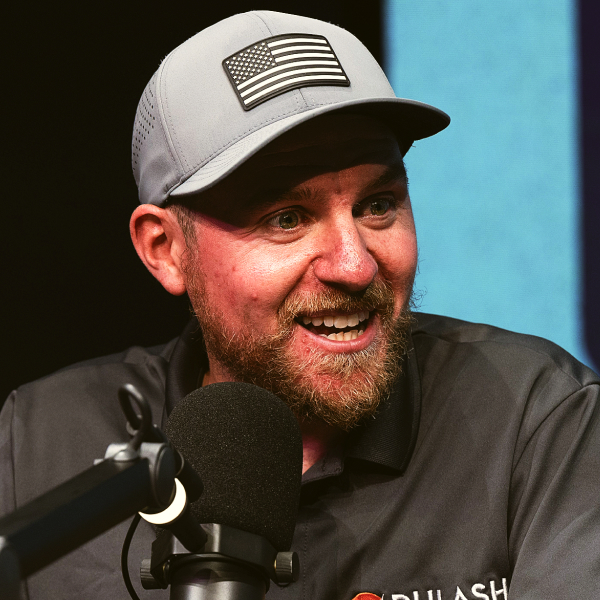
Phil Risher
Phlash Consulting
Website: phlashconsulting.com
Phil Risher, owner of Phlash Consulting, helps local service businesses increase their sales and keep their schedules full through data-driven digital marketing consulting. After helping a 20-year-old $3m service business scale to $5m in 24 months and sell to
private equity, Phil took that blueprint and now helps other home service businesses grow.
Phil’s efforts in technology and small business have been featured on Jobber’s Masters of Home Service, Forbes, CNBC, and Yahoo Finance.
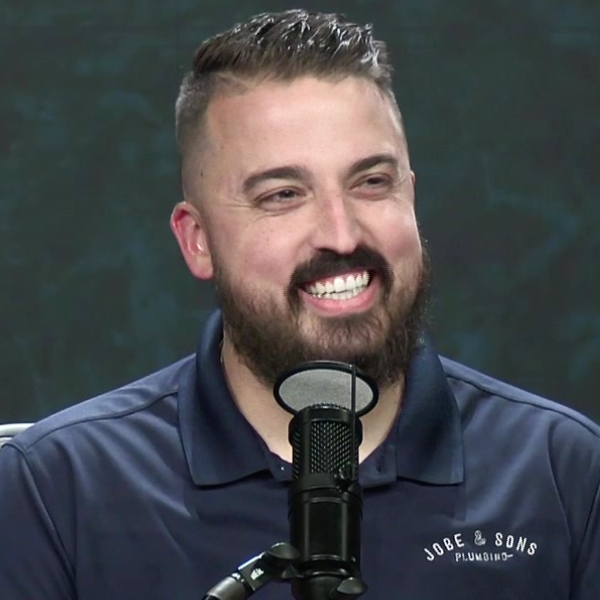
Stephen Jobe
Jobe & Sons Plumbing
Website: jobeandsonsplumbing.com
Instagram: @jobeandsonsplumbingllc
Facebook: facebook.com/jobeandsonsplumbing
Stephen Jobe is the founder of Jobe & Sons Plumbing, a trusted plumbing company based in Tucson, AZ, proudly serving the surrounding areas since 2022. Stephen launched the business with a clear vision and purpose: to bring integrity back to the trades, to build a life for his family that reflects his values, and to create opportunities for outrageous generosity—making a lasting difference in the lives of neighbors and clients alike.
A people-first leader, Stephen is passionate about personal growth and team development. He thrives on seeing others succeed, and he’s known for encouraging and championing his crew to lead with excellence and impact in their work. His energy is contagious, especially when it comes to marketing—an area he’s deeply enthusiastic about because, in his words, “people are amazing.”
In addition to plumbing, Stephen also pours his passion into Plumbers Crack Coffee Co., a brand built to fuel the trades—and anyone who appreciates a good cup of coffee—with purpose and heart.

SIGN UP FOR PODCAST UPDATES
Get email updates on new episodes and podcast news.
You don’t want to miss out!
Interested in being a guest on the show?
Are you a home service professional eager to share your insights and experiences? Apply to be a guest on the Masters of Home Service Podcast, and join a community of experts committed to helping others level up through knowledge.
Other Podcasts We Love