 32 Minutes
2X Your Revenue in 12 Months
With Daniel Dixon


-
Daniel (00:00):
When my business slows down, I can’t afford marketing, right? Yes. But it’s the opposite is true that that’s a death spiral is what I call it, right? Because your business is slowing down so you decrease the one thing that can increase your business, and it’s like, well, what do you think the result of that’s going to be? Right? If your business is going down, the number one thing you need to do is bring in more leads and market.
Adam (00:21):
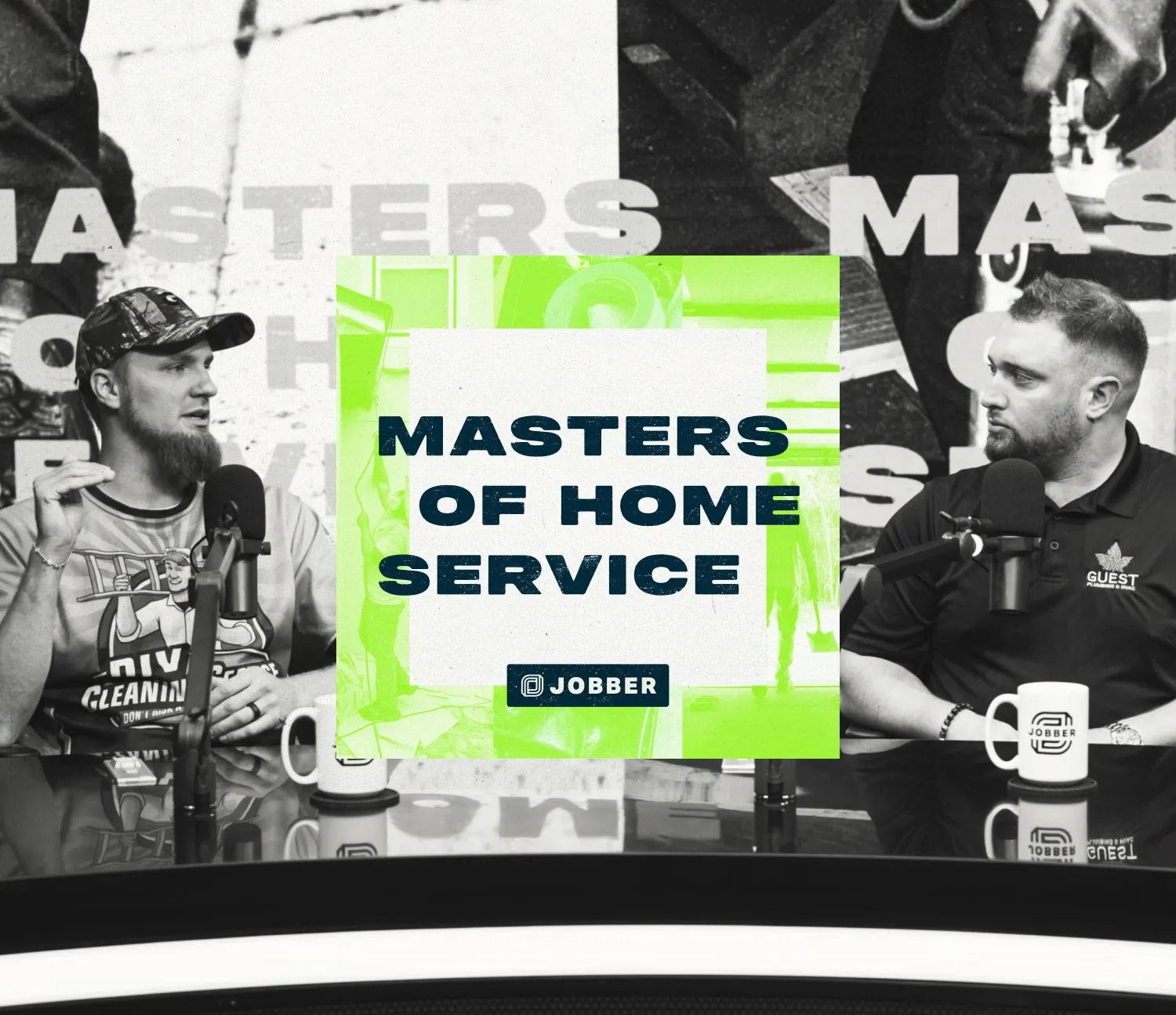
Welcome to Masters of Home Service, the best podcast for home service pros like us. I’m your host, Adam Sylvester, and I want you to crush it in business. Have you ever said something like, ‘Man, if I could just get more leads, then we could double our revenue,’ or ‘Man, if the economy were just better, then I would just explode in growth,’ or ‘Man, if my clients just really understood the value that we bring’? Those are all things that I’ve said, I think we’ve all said at some point in our journey, and those aren’t the real things holding you back from big, explosive growth. And my guess today is Daniel Dixon. He’s the CEO of SendJim, and he’s going to tell us what’s really holding us back from big, explosive growth. The revenue and the profits that we really want, but we’ve never really quite gotten. And so Daniel is going to give us a game plan for really exploding our business and getting the results that we kind of deserve. We worked too hard for mediocre results. So Daniel, I’m glad you’re here. Thanks for being here. You work for SendJim. Why don’t you tell us who you are and what you do?
Daniel (01:20):
Yeah, thanks for having me on. I’m the CEO at SendJim. We’re a marketing automation platform, and we help home service businesses grow. I also own a home service business, so just so you think, well, he doesn’t know how to grow a home service business. He only grows a software business. I also own one of those. I’ve sat in your seat, so I’m excited to be here.
Adam (01:37):
You’ve sat in our seats, and you sit in our seats now. Yes, I see. Sat in your seat. Yeah. You’re a Jobber user.
Daniel (01:42):
I’m a Jobber user, absolutely. Since day one and will be forever.
Adam (01:46):
Yeah, that’s great. So here’s the thing. A lot of our listeners have been grasping and clawing and trying to get this big growth happening, and the increments they’re making are just smaller than they want. We’ve all been there. What is the real thing holding them back from this explosive growth, these big numbers, from your perspective?
Daniel (02:06):
Yeah, absolutely. So I’ve been there too, and recently we’ve had really explosive growth at SendJim and in my home service business, we grew so fast for the first four years and we’re at a bit of a plateau, and I can see it in myself now as we’re about to talk about this, but I think growth is really limited by fear.
(02:26)
What I mean by that it’s fear to hire the next person because they’re expensive, or we’ve hired the technicians, we’ve done that, but have we hired the next big person? And it’s like, oh, that’s a lot of money. Or is it fear to delegate something that you feel is really important? But until you delegate that, it doesn’t free you up to work on the next thing. So if you’re still doing sales that’s so important to your business, are you free to look at the next service that you can offer in your business, or things like that? Is it fear to lease the next space that you need or buy the next vehicle because of the cost? So most of the time when you ask questions, like you said, we’ve all been there. When you really look at the root of it, it’s oftentimes fear-based.
Adam (03:09):
Yeah, I a hundred percent agree with that. And I think that for me personally, there was a time where we’ve had, not hockey stick growth, but we’ve always been growing since my gutter business has always been growing. And we went through a time not too long ago that we got really close to having no work. It got to the point where on a morning, we’re like, what are we doing today? It got that bad, and thankfully, it turned around pretty quick. But on that day, I hired two people. I had been hiring, interviewing these people. We’ve been looking for people for months. And so I had a decision to make. It was like, man, on paper, this is a bad decision. This is not a good time to hire people. But thankfully, because of people around me and the support that I have, I hired those people anyways because I didn’t want the fear of expanding our capacity while our production has reduced. I didn’t want that fear to hold me back from the long-term growth of our business, and I’ve let that fear get me before. And so, from a delegation perspective, what are some of the things that people fear the most, and how can we overcome that?
Daniel (04:08):
Yeah, that’s a good question. And I’m also glad you brought up the fear of keeping people busy. That was one of my personal biggest fears. If I hire this person, I’m scared that I’m not going to have the work to keep them busy. And it wasn’t even a cost thing, it was they’re relying on me, they have a family. How do I make sure I don’t have to lay them off, and can I keep them busy? So I’m glad you brought that one up because it’s probably my biggest fear.
Adam (04:32):
Well, if someone’s out there right now, let’s hang on here for a while. So someone’s out there, and they’re in the same boat that we’re talking about. They’ve got this great hire, but they’re like, I just don’t know if I can keep ’em busy. And they feel the weight of being the employer is on their shoulders. Any way to encourage them or give them some advice on how to tackle that emotion? It’s strong.
Daniel (04:52):
So I think really good employees and really good people, depending on the position, obviously, will find ways to add value to your business. And it might not be in ways that you think right now, they might have a different skill, or they might bring something else to the table that can add value to your business outside of what you’re thinking. So have an open mind there. And I think a really big thing is a mindset shift, as this is an investment in my business and not a cost. And that can go for a lot of things, but when you first start your business, for example, marketing sounds expensive. You and I were talking before the show about how you do marketing on television for your business, and it sounds like a really big cost, but you look at it as an investment because you see the return. And so thinking about it that way is much different. So, if I invest $5 into my business to get a lead, it’s much less scary, but I’m also only going to return maybe 10, but if I invest a hundred thousand dollars on this employee, what if I got back 300,000?
(05:56)
So the bigger the investment, and we all understand these principles, the bigger the return that you can get. And so I would just encourage people to think about it in a different way, to think about it as an investment versus a cost.
Adam (06:10):
The other reason that I felt so compelled to hire those two people is because I had numbers over several years that were indicators that it was going to change very soon. mid-April is always a little bit slow. May is always crazy, and then the whole summer is nuts. What am I going to do? Just make this decision based on the last three weeks or the last five years of data that I have? And so I think knowing your numbers and having historical data makes a huge difference.
Daniel (06:35):
Absolutely. And that’s a perfect example of an investment. So we have the same thing. We’re slow in the wintertime, and we actually, in the first year, didn’t realize this, but we got freaked out just like you did. And the first year, we laid off a couple of people, and it was the worst thing that we did, not only because it was hard to do personally, but it was also in the springtime, and it became super busy. We didn’t have the capacity to do the work that we needed. And so if I know, okay, I’m going to invest in this person today, even though I don’t need ’em today, but I know in two months from now, or if at worst case, three months, I need them. If they’re the right first person for your business, you might spend an extra $5,000 or $10,000 to have them. But then having them in the busy time might make you 30, 40, $50,000. And so that’s why you did that, and just, yeah, you got to shift your mindset about that.
Adam (07:24):
Yeah. I do feel compelled to share this. I think that in this example, we’re talking about hiring, I think there is a difference between hiring someone who already has a job and hiring someone who doesn’t. Yes, there’s less risk and less responsibility if you hire somebody who isn’t currently working. You didn’t pull ’em away from anything else, but if you’re going to recruit somebody from a job they like, then the stakes are a lot higher. So if you’re in this position, it is a little bit more freeing if you’re hiring someone who doesn’t have a job because if you do, God forbid, have to lay them off, then they’re right back where they started and not any worse off, but they did make some money in the meanwhile.
Daniel (07:57):
Absolutely. And then along those situations, do everything you can to test it. And so, what we do in our business, before we hire extra capacity or technicians to do the work, let’s sell the work first. Can we go from being normally booked out a month to six weeks consistently or to two months booked out? And then you’re like, ‘ Okay, I know I need them, right, or I know I can keep them.’ So we do this in other businesses in other ways too, but can we do some kind of test or a short period where we can prove to ourselves that yes, this is needed, or that it will return on its investment?
Adam (08:32):
If you want your car to go faster, then you might need to put more gas in the engine. Let’s talk about marketing for a second. Should marketing ever be reduced? Let’s just start that most basic question. I think sometimes people get scared or their mindset’s so limited that they don’t really open the full throttle on marketing. What do you think about that?
Daniel (08:50):
Yeah, so from an absolute value, so when I talk about absolute value, I’m saying a thousand dollars today should probably never go down. Maybe it’s a thousand dollars a month. We don’t ever go backwards. When I started my home service business, I was investing 20% of my revenue. Oh, that’s high into marketing. And that’s how we grew so fast. And now we’ve been fortunate enough to get big enough, and we get so many referrals and we have commercial partnerships and things like that, to where I can only invest 13, 12%. And so the percentage went down, but I’ve never ever decreased the absolute value. I’ve actually increased it. So maybe we started with $1,500 a month and now maybe it’s 10,000, $20,000 a month in marketing, but the percentage may drop as a percentage of your revenue, but you should always have your foot on the gas, right?
Adam (09:39):
Yeah, back in summer 2022, it was a long time ago, but it was a very monumental time in our company because a lot of things happened, a lot of bad things happened. And I just remember I sent out a video to my team and said, Hey guys, I know there’s been a lot of tough, weird things happening in the last few weeks, but we are not. And it was also, economy was a little, I forget, but the economy wasn’t that strong or something like that. And I said, guys, we are not going to participate in whatever downturn they are forecasting. We’re going to put our pedal to the metal, we’re going to press it to the floor, and we’re going to invest more into marketing. We’re going to invest more in all these infrastructures while everyone else is laying their foot off the gas, we’re going to blow by ’em. And that was a very inspiring message too, but it was true. I was like, we’re going to spend more on marketing. If we want to grow, then we have to grow. We can’t stop.
Daniel (10:25):
Then the natural reaction is to when my business slows down, I can’t afford marketing, right? Yes. But the opposite is true, that’s a death spiral, what I call it, right? Because your business is slowing down, so you decrease the one thing that can increase your business, and it’s like, well, what do you think the result of that’s going to be? If your business is going down, the number one thing you need to do is bring in more leads and market. The other thing you can do is market to your customers, which we can talk about too. But yes, you have to make sure you’re marketing enough.
Adam (10:55):
I think marketing is, yeah, I don’t want our listeners to ever let off their foot off the gas on marketing. Talking about marketing, let’s talk about sales. So one of the ways that you can really leverage your business and start increasing is by having salespeople. Having more than one person—you making sales, right?
Daniel (11:11):
Yeah, absolutely. And really, it’s somebody that can focus on sales. If the business owner, let’s be honest, if you’re doing sales, you’re also doing payroll, and you’re also doing 9 million other things, responding to the fire potentially in the company, and trying to negotiate your next thing with the vendor, and dealing with the crazy customer. And so you’re not really focused on sales. If you have a salesperson that eats and takes home the bread to his family because he has to sell, that’s a different level of focus than sales. And what I found is that after about 18 months of having a salesperson in my business, they do a much better job than I could do today because they’ve perfected the craft and they’re focused on it.
Adam (11:57):
Yeah, totally. I want to talk about it, because marketing is such a big piece of the puzzle here, it’s one of the biggest levers, I would say, in really growing your company. How do you know which strategies work? Which marketing channels are working for your business? Where are most of our clients coming from? Let’s talk about having a strategy around marketing, so it actually is effective going forward.
Daniel (12:17):
Yeah, that’s a really good point because again, when we go back to fear, fear-based thinking, instead of investment-based thinking, people think, What if I try this and it doesn’t work? I just threw $3,000 away. What if I make a bad decision? But the thing is, that you should always have the marketing that works. If you’re an existing business and you have a marketing channel, keep doing it. Market more and more and more until you can’t. That channel breaks, but you should also be testing a new channel at the same time. In my business, I say I have this philosophy that I’ll try any marketing lever one time, and not one time I’m going to send one postcard or run one commercial or do one month in a magazine, but I’m going to try it for three or four months, see how it works, and then I’m going to say, okay, maybe I didn’t get as good return as I wanted, but can I tweak it and let’s try another three months. And maybe the first three months is so bad that we throw it all away, but I don’t look at that as I lost money or I had an unnecessary cost in my business. It was the cost of learning.
(13:23)
And I learned something from that, and I learned, okay, that’s a channel that we shouldn’t pursue, or I learned that, hey, we can pursue that, but we have to do it in a different way. And so do you look at going to college as a waste of money, or do you look at taking a sales and marketing course for our industry? Is that a waste of money, or is it a waste of your time to pay, or a waste of money to buy a coach? None of those things a waste. They’re investments in your business, and we got to learn from those.
Adam (13:54):
A hundred percent. Daniel, this is a great conversation. I’m going to stop for a minute and talk about Jobber. And here’s the thing. You’re a big technology guy. You run SendJim, you use Jobber for your home service business. You’re a big tech guy. I am too. How important is it for our listeners to have a CRM like Jobber to run their business?
Daniel (14:11):
If we didn’t have the technology that we have in our business, I’d probably shut it down. It would be so much work. And I think oftentimes people think about it again as a cost in their business instead of an investment. And looking at it from that state of mind that we talked about, what has to be true. And so if you’re looking at the cheapest plan versus the next plan versus the third or most expensive plan or whatever it is, look at those feature differences. And you say, if I could follow up with quotes on an automatic way, what has to be true for me to pay for that highest plan? It might be a hundred dollars extra a month, I don’t know, but if I could close more jobs, would that be 500 extra dollars? And all of a sudden, that’s an investment, not a cost.
Adam (14:56):
Yeah. Yeah. I think I talked to a lot of people about this when they’re choosing their plan for Jobber, and they’re like The price, you’re focusing on the wrong thing, you’re focusing on the thing of the top, which is the number, the price, focus on everything under the price, all the features that you get. And it might not just be the cheapest plan. You might need to have a bigger tier, a better tier. And here’s the thing, Daniel, and you’ll totally relate to this is now is the time. Don’t wait until you’re big to get a CRM. Don’t wait until you’re bigger for Jobber. Start now. Let it grow with you. That is the best way to do it. You don’t want to open a bank account until you get a million dollars. You open a bank account when you have $10, and then it grows with you. Jobber is the same way.
Daniel (15:36):
Yeah, it’s going to cost you a fortune to try to implement or switch CRMs in the future. Start with the one that is going to make sense to grow with you, like you said, Adam, and invest in other technology too. So, in technology like SendJim that can integrate with Jobber, by having Jobber, you’re going to be able to take advantage of other technologies that add value to your business in other ways, also.
Adam (15:56):
Listen, if you’re not using Jobber and you think, oh, I’ll get that later, or I’m not big enough, that’s not true. You need to start with using Jobber today because it’s going to grow with you and make sure you get the right tier. We just get cheap stuff. Make sure you get the right tiered plan that actually fits the features that you need to run your business effectively. So go to Jobber.com/podcastdeal, get the exclusive discount, and start building your business on Jobber.
(16:22)
I think testing is so key. And I also think different things. This is so obvious. I think people need to hear this. Different things work for different businesses. I had a lot of people tell me, Oh man, because I do TV, a lot of people tell me, Oh, radio’s great. I was like, yeah, I can see that. Lemme try radio.
(16:37)
And I tried radio for six months, and I really gave it the college try. I did not go at it lightly, and it totally flopped. But then I tried, and I thought Valpak was going to be a complete flop, and Valpak gave me one of the best returns on investment I’ve ever had in marketing. I’m not telling listeners that Valpak works and radio doesn’t. What, I’m telling you is what I tested. And I discovered that for my business. My customers responded on Valpak and they didn’t on radio. And so you have to shoot some BBs to find out what you hit and what works, and then once you find it, shoot a cannonball and just blast that thing and pour money into it and just make money come out of the ground.
Daniel (17:15):
Yeah, it’s also really important to know your numbers. We get a lot of businesses that say, Oh, well, that didn’t work for me. I’m like, well, show me the number. How do you know it didn’t work? And they don’t have numbers. It’s just a gut feeling. And so having numbers enables you to be less fearful because you understand, what can I spend to acquire a customer? What does working and not working look like? What do I have to get from number of calls or leads from this to how many of those are going to convert to jobs, to can I break even on this? And so it becomes much less scary if you understand the math behind that. So I think that’s really important. And then I also think we haven’t talked about marketing to your own customers, and there’s so much they can do there.
Adam (17:58):
Yeah, so let’s go into that because I think if you’re stalled out, if you’re trying to grow and you’re just constantly leaving the cave, killing something and dragging it home every day, it does. It takes a lot of leads. It takes a lot of just churning through leads. And if you’re sold out and you’re not remarketing to your existing clients, then that’s what you’re missing. That is the difference. So let’s talk about that.
Daniel (18:21):
Yeah. So, if you go to sell your business, a lot of people are surprised by this, but they’re not buying the cool equipment you have. They’re not buying anything like that. They’re buying your customer list. And why are they buying the customer list? Because that’s the most valuable asset you have as a business. And people have this valuable asset, and they don’t utilize it. It’s like having the best equipment, branding, and leaving it on the sideline, not using it. It’s really crazy. And I think we get that way because when we start businesses, when we found them, the only way to generate revenue is to find the next customer. And that could be true for three, four, or five years. But all of a sudden, there becomes a point in your business where it’s difficult to acquire the next customer at the same rate or a higher rate than you’re losing customers.
(19:12)
So you might acquire 10 customers a week, but your customer list, if you lose 1% because they pass away, they move, they whatever happens, that 1% could be 10 customers or more. And so your business plateaus no matter how much you market and how hard you try to grow. But what you didn’t realize is that you’ve built this really strong customer acquisition muscle and skill set, and then that’s all you’ve done. There’s this other muscle in the body that’s really powerful that you’ve never used. It’s like the people that go to the gym and they only do arms, right? It’s like, well, what about your legs? They’re the most powerful muscle in your body, or that type of thing. And so we have to grow that muscle and understand that we can market to our existing customers. A lot of people don’t understand that once they understand that there’s tons of different ways to do that. There’s the automated follow-up. When you’ve completed a job, are we following up with them at the next interval? That’s important. So, is it every three months I can message this person about the next thing? Is it every year? Are we marketing our other services to them?
(20:12)
So a lot of people they sell one service, but they have a whole bunch of other services that they don’t know exist. Their customer doesn’t know they exist. And if you ask their customer today, if you went to any one of your customers, even your best customer, and you said, Hey, Adam, I know you’re one of my good customers. Can you tell me all the services that I offer? None of your customers can answer that.
(20:30)
But you think they can because it’s on the side of your van. And don’t get mad at them. It’s a you problem, right? And so let’s tell ’em like, Hey, did you also know we do this? Do you also know we do that? And so really, we could be marketing to them throughout the entire year. If they’re going to be in the market for that service, they want to buy it from you because they know you, they like you, and they trust you. So let’s make sure they know we do it. There’s a story I have at my carpet cleaning business. It was like one of the most crazy moments is such an epiphany because we showed up to clean the carpet and there was another carpet cleaner there cleaning their furniture. And when we showed up, we said, Wait, did you schedule the wrong going or what? Yeah, you made a mistake. And she’s like, No, they’re cleaning the furniture. You’re going to clean the carpet. And we’re like, we cleaned furniture too. And she’s like, I had no idea. And then it was just like, ‘Oh my gosh, we never told people we clean furniture.’ That’s crazy.
(21:27)
And we’re in the industry, so we’re like, oh, every carpet cleaner does that.
Adam (21:30):
Yeah, shame on both of you guys. The guy does clean up furniture. And for you, I think that if our listeners have fear and they’re just not sure, I think there’s no better way to overcome that fear than to market to people who’ve already bought from you. And so the first thing you can do is start calling people who’ve literally paid you money. That’s the first segment. And could even if you don’t have time for this, maybe you’re out in the field or something, you could hire someone to do this either overseas or in your town, whatever. If you’re older, your daughter, your son could do this for you, but call through every single person who’s ever bought from you. If you’re a tree service, Hey, it’s been 12 months since we did anything. Has anything come down the ground? And you’ll be amazed what comes from that. So that’s phase one. And then phase two is calling people who haven’t ever paid you money. That’s a gold mine too. And so just those two things there can get you going in a completely different mindset and get you excited again, get you pumped up again. Be like, wow, momentum’s gaining. I’m moving in the right direction again. I’m not stalled out anymore. Marketing to your existing client list is one of the biggest gold mines that no one’s tapping into.
Daniel (22:29):
A hundred percent. And it’s not the sexy thing, right? Because it’s like I’m not acquiring new customers, I’m not growing fast enough, and then they don’t realize that they can actually grow faster and much more efficiently through that. So, Adam, what’s the cost of a customer in your business?
Adam (22:43):
Nighty dollars.
Daniel (22:44):
Nighty dollars. So Adam can pay $90 to get a customer, or for just a few dollars, he can generate another job out of the same customer. And it’s literally that comparison, right? It’s $90 versus a few dollars. And oftentimes, your existing customer is going to be a much easier sale because they already know they can trust you. They’re going to be less price sensitive. They’re going to be things like you don’t have to go out and give another quote. So it becomes astronomically more efficient and profitable to market to your existing customers.
Adam (23:15):
Yeah, I totally agree. Let’s talk about five-star reviews and referrals. And…go ahead.
Daniel (23:21):
One more thing on that before we leave. So all of this, we talked about the time and how you can do it, and it sounds like it’s daunting. All of this can be automated with Jobber and SendJim integration.
(23:31)
So they can do this automatically. We can set this up to where, hey, after the job in three months, we’re going to tell ’em about this service we offer in September. We’re going to tell ’em that we hang Christmas lights and 12 months from the job, we’re going to automatically tell ’em this, and we can go through all the people and say, Hey, tell me all the people in Jobber that I haven’t sold this service to, and we can send them a text message or a postcard. And so all of that can be very simple through technology today, like Jobber and SendJim.
Adam (24:01):
That’s freaking awesome.
Daniel (24:02):
It is awesome.
Adam (24:02):
Someone listening to that who hasn’t been in business very long they might be like, Oh, that’s cool. And they have no idea how powerful that is. That is so powerful. One of my favorite things with SendJim is that you can send postcards to the neighbors of your clients. So you can send one postcard or 50 postcards, you can choose however many, but you’ll mail postcards to the neighbor or to the neighbors of the job that you just did. And so they get a postcard that says, Hey, we just serviced your neighbor next door last week. That’s really powerful. And it’s all automated?
Daniel (24:30):
All automated through Jobber. It’s triggered based on when you complete a job in Jobber or when you schedule a job or invoice. And so that can all be automated. And so it’s one less marketing thing that you have to think about, and you’re getting super targeted with your marketing. The person that’s most likely your good customer is their next-door neighbor. They’re most likely to have a similar income, similar type of home, similar demographic, all that stuff. I don’t have to get into that, but it can be automated to the point of it doesn’t have to be another job or someone has to go do something.
Adam (25:00):
Yeah, yeah. Yeah, a hundred percent. I love that. Thank you for saying that. So let’s encourage our listeners to take the next step. Let’s get them getting five-star reviews and referrals. Do you have any plan for our listeners to go out and get 20 referrals right off the bat or 25 star reviews off the bat?
Daniel (25:17):
Yeah, that’s a good question. So I’m going to share a ninja trick here. I don’t like to share this because I think it’s…
Adam (25:22):
Come on give us the best
Daniel (25:22):
It’s the secret, right? It’s a secret. But especially when you’re starting out or need those first 20 reviews or referrals, what I like to do is go out and say, ‘Hey, Mrs. Smith, if I took $20 off your service today, would you leave me an honest review at the end? Our goal is just to make sure you’re happy. And one of the most important things for us is to have reviews to show other people. Would you do that for us?’ And the answer is like, $20 is going to take me five seconds. Of course. And so you can do that. And the same thing with getting people to post in neighborhoods.
Adam (25:57):
That’s so valuable.
Daniel (25:57):
Can you post in the neighborhood for me? Here’s a picture, even took it for you, and I’ll text it to you. If I took $50 off today, would you do that? Of course. And guess what? Those reviews live forever. And that’s the best marketing dollars ever. If someone said, Hey, Daniel, would you pay $50 for someone to go post on the neighborhood Facebook or the Nextdoor, or leave you a five-star Google review with an image? A hundred percent, yes, I would. Yeah, totally. So that’s something that is really, really powerful.
Adam (26:25):
Have you ever had a client dig up an old email from two years ago and reply to it and say, Hey, I need your services. We’ve had that happen before. And the same thing happens with those Facebook posts or those social media posts. People find these things just out of obscurity, and you’re like, so what did you see? Oh, a post you made three years ago with one of your technicians spotlighting them. It was so sweet. And he has a dog. I have a dog too. So I called you guys. It’s like, cool.
Daniel (26:48):
I searched it, right? I searched on my Nextdoor page, and you guys came up more than anyone else.
Adam (26:52):
Exactly. So, Daniel, the way I view it is if a listener goes out and does everything we’ve outlined, then what they’re going to do is they’re going to start gaining momentum. And when they start getting momentum, they’re going to be more confident, they’re going to feel better, they’re going to start giving, everything is going to be a little bit better, which means that they can start commanding higher prices. They can raise their price because they’re in higher demand, they’re not as desperate anymore, and they figure out the whole business thing, and they’re offering a better service. And so everything’s getting a little bit better as they go, which means they can increase their price, which means they make more money. And it becomes this flywheel of momentum. And so I think that if you do one of these things, great, but the more you do, the more fuel you pour on the fire, which then increases your prices and just keeps coming, right?
Daniel (27:36):
And with that increased price, you can market more. You can be more confident in marketing and testing things because you’re not relying on that dollar to pay your technician. For people that come to me and say, Well, I can’t afford to market, you’re not charging enough. And that’s a whole other probably episode that we could talk about. But absolutely, you have to be marketing, and you have to not be so mentally concerned with the cost. And think about it as an investment. And one of my business mentors told me in this way, and I thought it was really powerful, was ask the question, what would have to be true? And what I mean by that is, okay, well, if I spend $3,000 on this type of advertising, what would have to be true for me to say that was worth it or for me to get my money back? And if I start thinking, framing it that way, I can say, well, I only need to get five jobs from that. Is that possible? Okay, well, what would have to be true for me to get five jobs from that? I need seven phone calls, and I need to do X, Y, and Z, or I need a job of this value. And it can start framing the question in your mind, not just, ‘I don’t know, $3,000 is a lot,’ versus, ‘okay, what has to be true for this to be a good investment?’ And that could even be what has to be true. Could even be, well, I’m going to learn a whole lot about how this marketing works. Is that worth $3,000? It might be in your business? And so think about it that way.
Adam (28:58):
I love that because it reminds me of the story of the kid who’s going to bed and he thinks there’s a monster in the closet, and the monster in the closet is the $3,000, the monsters. It’s just so big in his mind, his imagination slimy. It’s got three horns, it’s got 10 eyes, it’s nasty and awful. And then, when you finally open the door and he sees it’s just a little kitty cat, what you just described is, ‘Hey, it sounds like $3,000 is a lot.’ But once you open the door and you realize, okay, well, it’s seven phone calls, it’s three jobs. It’s average job size it, you actually have a plan, suddenly it’s not this big monster anymore, and it’s attainable, and you don’t have to because your imagination will just run wild. But once you take the imagination out of it and just give it numbers and give it specifics, suddenly it’s like, oh, that’s not so hard.
Daniel (29:42):
And then, if it’s like, ‘ Well, I needed three jobs, but I only got two, ‘ then I only lost a thousand of the three thousand, right? And so it’s like worst case is probably not even as worse as we’re making it in our head, to your point.
Adam (29:55):
And maybe we can make the marketing message better and actually get four jobs next time, improve and tweak and improve, right? Daniel, this is great. I think there’s a lot of actionable steps here. I love talking about this marketing stuff and growing businesses. I think these are the three biggest takeaways for me. Number one is never stop marketing. If you have fear about the economy or leads, you just got to press on, and you have to keep your foot on the gas when it comes to marketing. Never reduce marketing, just keep pressing on. Number two is mine your customer list. There’s gold in that list. People who have bought from you before and never bought, there’s gold in both. Email, text, call them, do whatever it takes to make sure they know what other services you offer and that you’re still in business and that you want to serve them today. And number three is hire a salesperson. We talked about this earlier. You’re busy. If you’re the main salesperson for your business, you’re distracted. You’re doing thousand different things, and you can’t focus on sales. Hire someone who can. And one caveat, if you can’t quite hire a salesperson, maybe you set aside two days a week where all you do is sell. That will make a big difference as well. Daniel, that was great. Thanks for being here. Really appreciate it.
Daniel (31:06):
Yeah, thank you, Adam. I appreciate it too.
Adam (31:08):
If people want to find out more about you and SendJim, then how should they go about doing that?
Daniel (31:11):
Yeah, go to sendjim.com. That’s S-E-N-D-J-I-M.com. Open to chat on our website. We’d love to talk to you about marketing.
Adam (31:21):
Yeah, I’m a big SendJim fan, so I second that. Thanks for being here, Daniel. And thank you for listening. I hope that you heard something you did that will help you grow your business and get the results that you’re looking for. I’m your host, Adam Sylvester. You can find me at adamsylvester.com. Your team and your clients, and your family deserve your very best. So go give it to ’em.
About the speakers

Adam Sylvester
CHARLOTTESVILLE GUTTER PROS AND CHARLOTTESVILLE LAWN CARE
Website: adamsylvester.com
Adam started Charlottesville Lawn Care in 2013 and Charlottesville Gutter Pros in the fall of 2020, in Charlottesville, VA. He likes to say, “I do gutters and grass! When it rains the grass grows and the gutters leak!” He got into owning his own business because he saw it as a huge opportunity to generate great income while living a life that suited him. He believes that small companies can make a serious impact on their communities and on every individual they touch, and he wanted to build a company that could make a big difference. His sweet spot talent is sales and marketing with a strong passion for building a place his team wants to work. Adam values his employees and loves leading people. While operations and efficiency is not something that comes naturally to him, he is constantly working to improve himself and his business in these areas.

Daniel Dixon
SendJIM
Website: https://www.sendjim.com/
LinkedIn: Daniel Dixon
Daniel became the CEO of SendJim in May 2019. Prior to becoming the leader of SendJim, Daniel served as a military officer in the United States Air Force and worked in corporate America as a business consultant for a nationally recognized consulting firm. Since leaving corporate America, Daniel has founded, bought, and sold multiple home service businesses and currently owns two seven figure service businesses and is the leader of SendJim.



SIGN UP FOR PODCAST UPDATES
Get email updates on new episodes and podcast news.
You don’t want to miss out!
Interested in being a guest on the show?
Are you a home service professional eager to share your insights and experiences? Apply to be a guest on the Masters of Home Service Podcast, and join a community of experts committed to helping others level up through knowledge.
Other Podcasts We Love