


Built a $750k Business by Age 18. Here’s How.
With Zech Osburn
-
[00:00:19] Adam
Welcome to Masters of Home Service, the best podcast for home service pros like us. I’m your host, Adam Sylvester, and I want you to crush it in business. My guest today is Zech Osburn, and after wrestling season ended in his senior year in high school, he started his business. He’s been crushing it ever since, and he’s living the American dream. He’s out there making stuff happen. I’m really proud of him and—Zech, welcome to the show.
[00:00:43] Zech
Yeah, yeah. No, I’m very excited. I’ve watched the podcast quite a bit before coming here, and yeah this is awesome.
[00:00:49] Adam
So tell our listeners who you are and what you do—what kind of business you run, that kind of stuff.
[00:00:52] Zech
My name is Zech Osburn, as you know. I run a landscaping and power washing business. I also have a digital marketing business that I run. I started my business right out of high school. And yeah, overall, my whole social media is just kind of to inspire people to start their own business, and being on here I hope I can do that some more.
[00:01:09] Adam
Cool yeah, I’m sure you will. So take us back, because wrestling season ends in your senior year in high school and the dead-end job that you’re working wasn’t paying the bills. You move out and you’re starting a business. What was going through your mind back then?
[00:01:23] Zech
To be completely honest with you, it was more survival for me. So just to clarify a little more: I turned 18 February 21st. Ten days later, it’s February 29th, I’m out of my parents’ house. So I was straight into the adult life, having to pay bills. And I had always been an entrepreneur doing this, that—flipping fidget spinners, flipping cars—and I knew I wanted to start a business. I always knew that. I was seeing a lot of social media posts, and it inspired me. I was like, Oh, this is definitely something I think I can do, and that’s what led me to start it.
[00:01:50] Adam
What kind of disciplines did you have to learn in those early days to become more successful, like, what did you have to learn about yourself?
[00:01:56] Zech
I think I had a little bit of an advantage because I wrestled, and I’m not sure if you guys know much about wrestling, but it is very, very discipline-based. You know, it’s very hard work—you have to push yourself to the limits. So I kind of started a little bit ahead of the game in that regard. The discipline and consistency is the biggest thing in any home service business, in my opinion. So I had to learn that very early. That if I want to succeed, I need to do this, this, this every single day. Every day I gotta wake up and I gotta get it done.
[00:02:26] Adam
There’s other listeners of the podcast right now that are also young—what would you say to them?
[00:02:29] Zech
I would say confidence, like you just said, is a very, very big deal. When I was first starting it, I didn’t have a lot of confidence in it. Not necessarily in the idea, but in myself doing the services, ’cause I was like okay, I don’t really know what I’m doing, I don’t wanna charge these people too much, etc. And it honestly just led to so many hiccups. Me not being confident. You have to be confident. That’s how you’re gonna portray to the customer, you know what you’re doing. So at some point, I had that flip where I was like, okay, if I want to grow and land more jobs, I gotta act like I am that guy. You have a question about the job, I need to be able to answer it.
[00:03:01]
The way I built my confidence in running my business is through research, research, research. I want to be able to answer every question my customers have, and by doing that, I was able to build confidence in my pricing and, you know, just overall. Initially, the confidence was not there as much, but through doing it and being consistent, and being like, “Wow, I’m actually doing this, I’m hitting these figures,” it builds a lot of confidence.
[00:03:24] Adam
And you also have to freaking know the craft, like you can’t just go out there and wing it. So how did you learn how to pressure wash?
[00:03:30] Zech
So I started pressure washing was actually one of the first things I did. I decided to buy a pressure washer. Like you were saying, I was working at this bounce house company saved up like 500 bucks, give or take, and I ordered it on Amazon. Came in, and I just did free work for my family—for my grandma, for friends of friends—and that’s kind of how I built, you know, before-and-after pictures and stuff to build my confidence, to show the customers I know what I’m doing. But it was a lot of research, a lot of videos—YouTube: how does this work? What does PSI mean? What does gallon-per-minute mean? You know, all these small details. I just research, research, research. I did it for free until I knew I could do it, and then I started selling it.
[00:04:06] Adam
Yeah, okay how did you sell it? Did you go door to door? Did you have flyers? What was the first way that you got business?
[00:04:11] Zech
I did not start with any paid advertisement. I was watching one guy on YouTube—I don’t quite remember his name—but he said, you know, post in Facebook groups and Nextdoor. And I made a Nextdoor post—this was senior year, right before wrestling season started, so this is like October—so it was leaf season at this point. I made one post just saying, “Hey everyone, my name is Zech, I’m in high school—Colgan High School—yada yada, this is what I’m offering,” and that one post booked me up all the way until wrestling season started. It was completely free—I had like 48 comments, all these texts. So I got my foot into the door by just posting on social media and just putting myself out there as much as I can. And I would do it consistently—weekly posts, bi-weekly posts, whatever it is—and that’s how I got my first few leads.
[00:05:54] Adam
How did you decide what kind of services you wanted to provide? You said you first started power washing, but do you also do lawn mowing, lawn care—that kind of stuff—too, or what else?
[00:06:01] Zech
Yes sir, yes sir. So when I first started the business, I wasn’t quite sure what my vision was. The idea behind it was, let me just offer all these basic services. You know, if I have a trailer to do lawn mowing, I have a trailer to pick up some junk. I wanted to make as much money as I could originally, so I just kind of offered it all. You know, a lot of my customers—they’re tired of having to call five different people to get pretty simple stuff done. You know, lawn mowing—as much as there are complications—it’s pretty simple. Mulching—pretty simple. Power washing—it’s not necessarily skilled labor. After a few weeks you can learn it pretty well.
[00:06:30]
And I found that the ability to upsell my customers is huge, because you know, a $45 lawn mow—that’s not a big value whatsoever. But I start upselling them: I get that house wash, I get that mulching, I get the, you know, X, Y, and Z—and out of nowhere that customer that was $1,500 a year is what I’m making off them—now they’re $10,000 a year. So instead of needing 1,000 customers, I can just focus on the customers I have. And I know Augusta Lawn Care is very heavy on that, and I definitely agree with that.
[00:06:58] Adam
Interesting—okay, cool. So you’re basically trying to be the one-stop shop for all the entry-level, low-end…
[00:07:04] Zech
Exactly—yeah, exactly.
[00:07:06] Adam
Okay, and how’s that going for you?
[00:07:06] Zech
It’s going very, very well. When people are looking up power washing, they want to see “Z’s Power Washing Services,” ’cause that makes them know you specialize in it—and while that may be true to an extent, I found out very early these people are tired of calling five people. All this stuff is relatively simple—you know, I’m not trying to downplay landscaping and hardscaping when you really get to those softscaping and complicated projects, but the basic stuff—you can train a team to pretty much do all of it.
[00:07:31] Adam
The first year you did what—like $100,000 a year maybe?
[00:07:32] Zech
Yeah, we did—I think it was $112 on the dot. I started—it was about eight months is what it took me to get that, but that was like… ’cause I really went legit April of 2023.
[00:07:44] Adam
After wrestling season, right?
[00:07:45] Zech
Yeah. I started as soon as wrestling season ended—so March was my first month really working. But I didn’t have an LLC, insurance, all that stuff. April came and I was like, okay, I’m making good money now. My first month in Marc, we did $10,000, so I was like, okay, now I have some money—I need to get my P’s and Q’s in order, ’cause I have OCD a lot and I overthink things. So I’m like, I need to have all this lined out ’cause I don’t wanna have anything bad happen.
[00:08:07] Adam
Zech, I’m gonna pause our conversation for a minute just to talk about Jobber. You mentioned trust and building confidence—how did Jobber build confidence with your clients?
[00:08:16] Zech
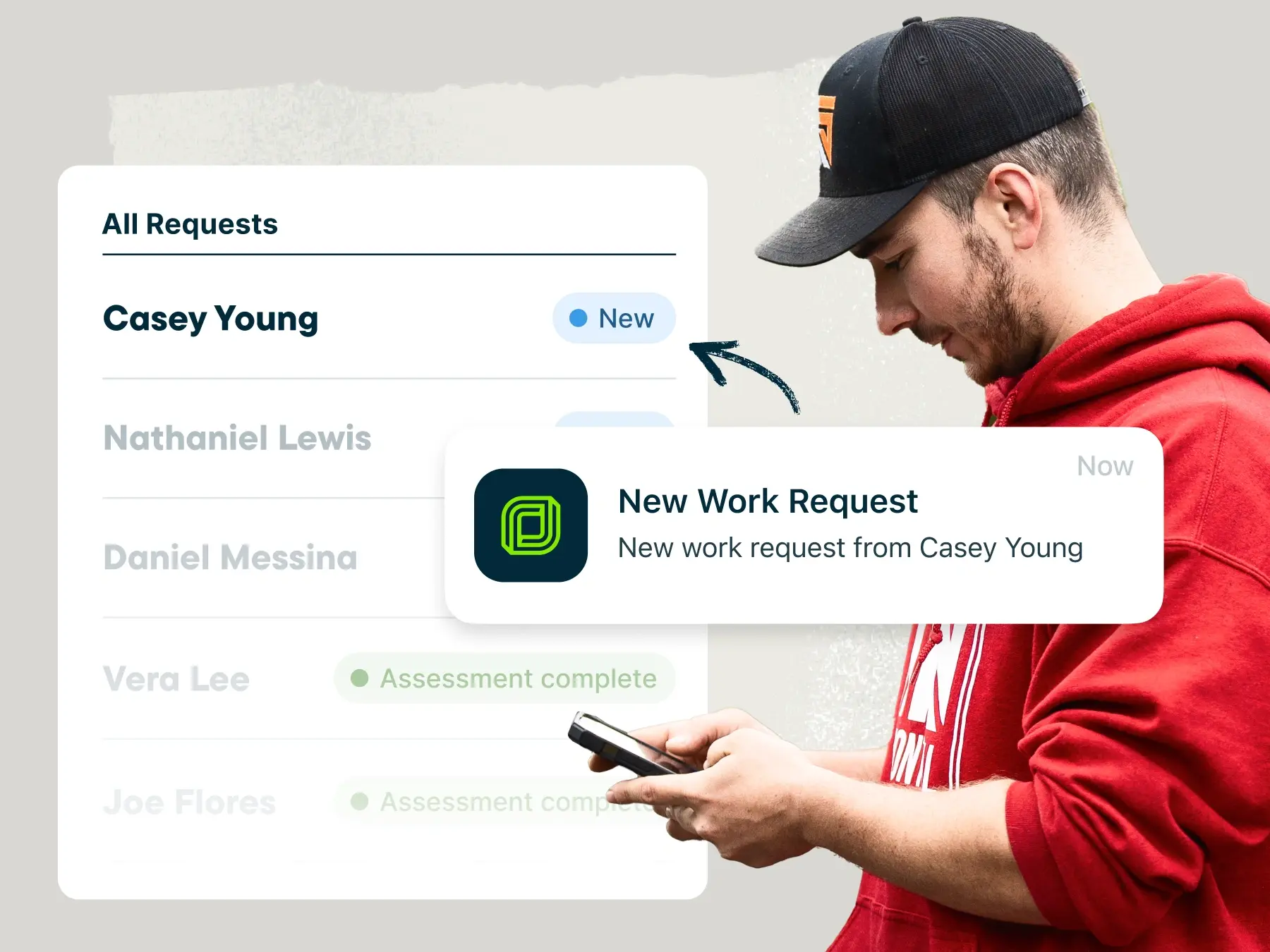
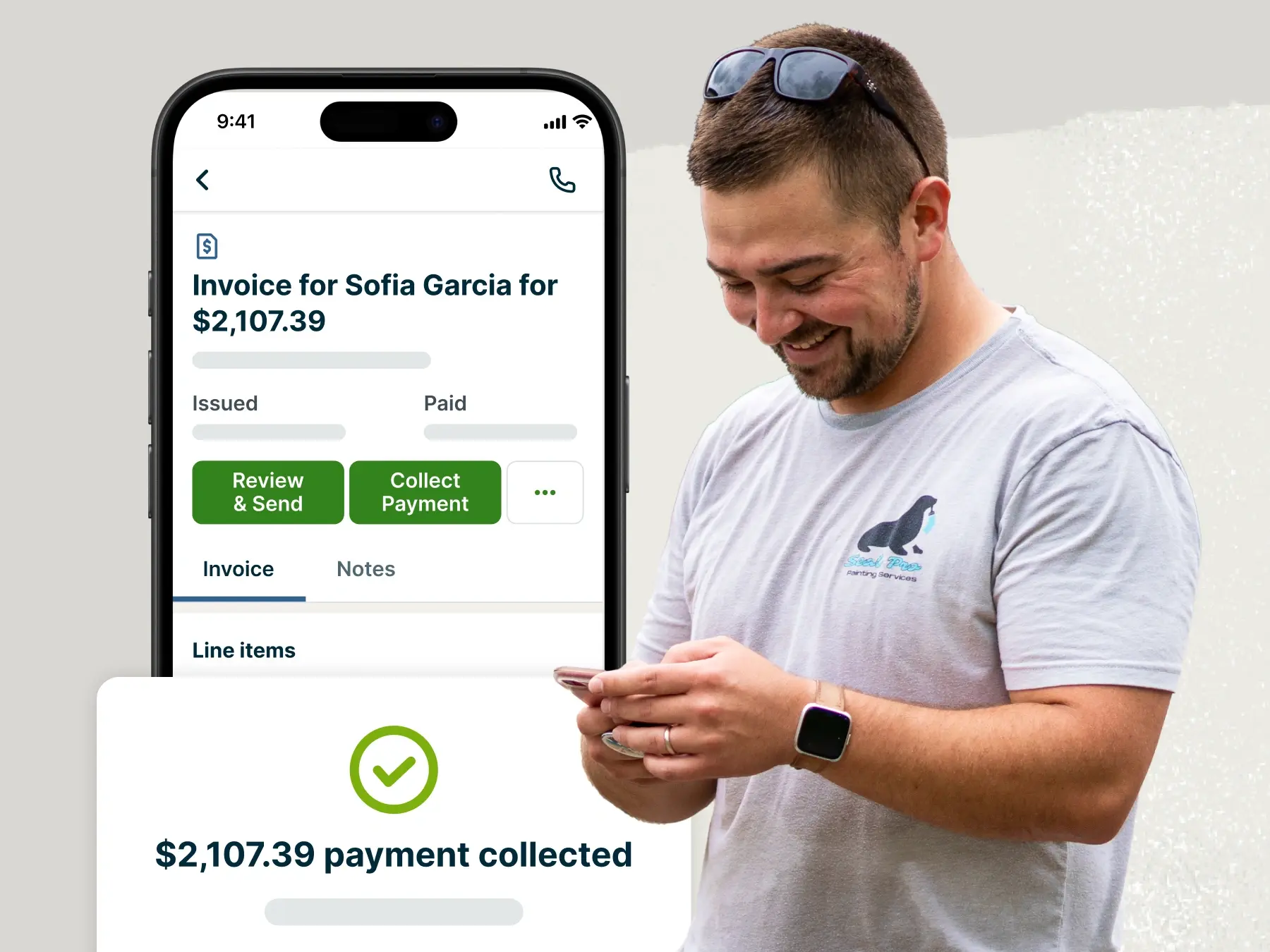
Jobber enabled me to build confidence between me and my customer because of just how professional it is. It’s not just any other CRM system where—oh, here’s an invoice, here’s an estimate. They get automated follow-ups, they get text message reminders—they know when we’re coming, when we’re gonna be there—and it makes it so I don’t have to sit there and do all that. So while it seems like I’m doing a lot—and the customer’s probably like, wow, Zech’s on his… he’s doing this, this, that—in realit, I’m probably sitting down watching TV chilling. Those automated texts aren’t me, those email reminders, that invoice reminder, estimate—not me. All Jobber.
[00:08:46] Adam
Yeah—I love when people call in and they’re surprised that I just pulled up their number instantly and know who—oh yeah, Mr. Jones, you’re 123 Main Street. “How did you know that?” Well, I just looked it up in our system—it’s all, all your histories right here. We were there last week and the week before that, and here’s your invoice. It’s so impressive to have everything in one place.
[00:09:06] Zech
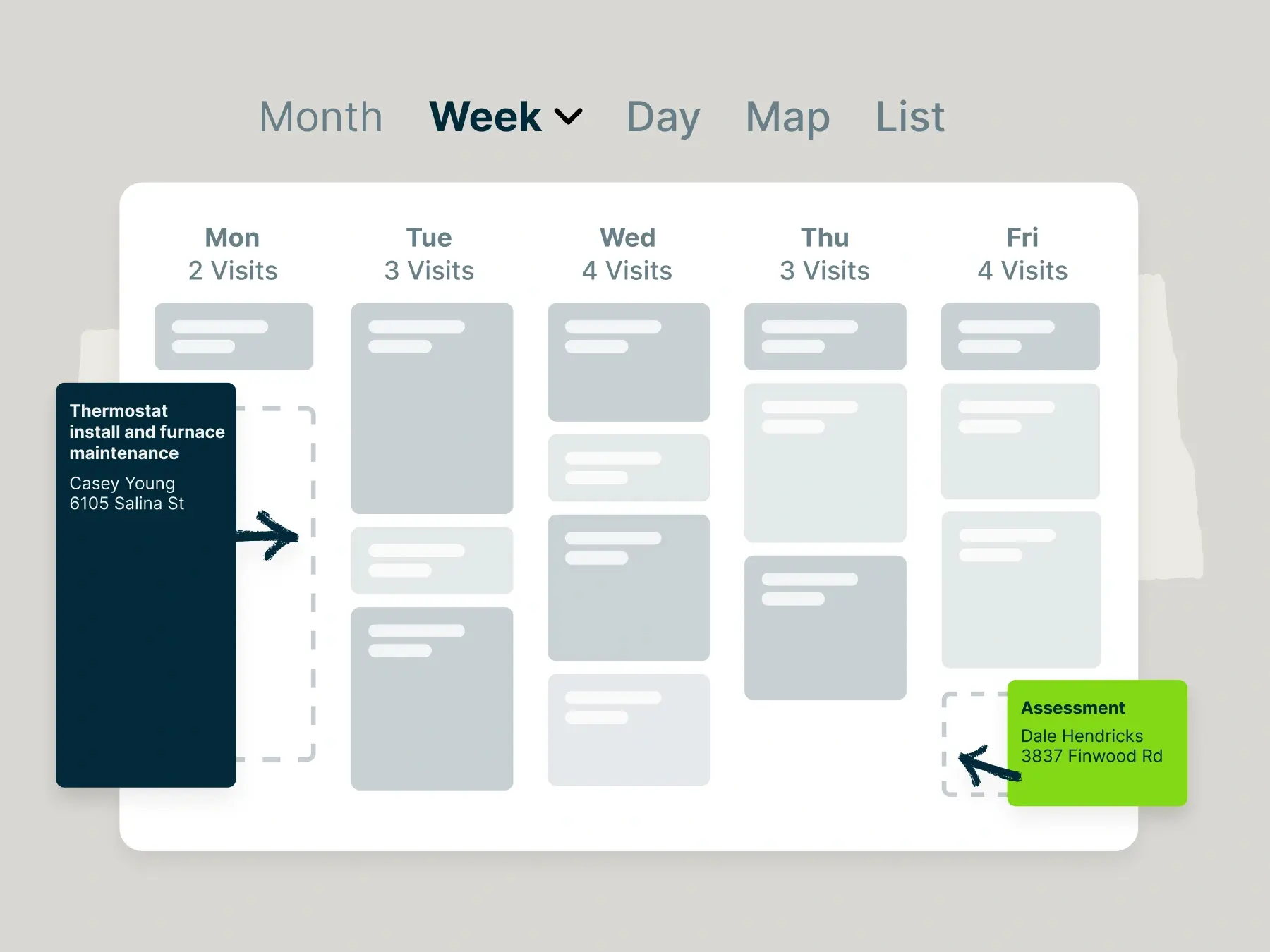
Oh yeah, it really is. And then there are so many small little key features you don’t even think about that can build confidence between you and your customer. For example, I have it on my guys to where when they get to a job site it automatically clocks them in—I have GPS location. So when my customer calls me, “Hey, I don’t think y’all mowed the lawn,” actually—here, look at that GPS—we did. You know we did, right? And that’s it. There are so many small things through Jobber that I’m still learning more and more and more, and I’m really excited for the future of Jobber.
[00:09:32] Adam
It’s really strong. Well, if you are not using Jobber, then you’re making a big mistake. Take advantage of all the features that we talked about today—go to jobber.com/podcastdeal—you’ll get an exclusive discount and start using Jobber today.
[00:10:01] Adam
What kind of adjustments did you make between year one and year two?
[00:10:05] Zech
I think the biggest adjustment was the advertisement. You know, we grew a lot on our services and customer communication—I mean, we grew across the board—but the advertising is what really made the difference. Year two is when I started learning Facebook advertising and Google Ad, and—what is all this, what’s SEO, why is this important? I’ll have a Facebook ad that will only run—it’ll cost me $250, and I’ll get 46 customers from that. So, you know, even if it’s a low-ticket service like aeration—for example, my average ticket’s around like $281. One job pays off the entire campaign, and then I have 45 other customers I can reach out to just like that.
[00:10:20] Adam
Okay, so you’ve had a lot of success on Facebook ads. Did you learn yourself or did you pay someone to help you?
[00:10:22] Zech
I tried so hard, and this is why I tell people to just pay someone to do it because I probably spent like $8,000 until I finally figured out how to do it. I have another business—it’s Biz Boosters—and that’s what we do: Facebook advertising, website design, SEO. So Nathan—he’s the guy that does all the Facebook advertising now. But initially it was very difficult to figure it out, ’cause Facebook ads have so, so much stuff that goes into them. It’s very complex and same with SEO. I tried making my own website at firs, and all this, and it was just not good.
[00:10:56] Adam
Yeah. So then year two goes by, and I’m guessing at this point you hire somebody?
[00:10:59] Zech
Yeah, yeah. Well, so year one—I honestly already had helpers. It was just friends. It wasn’t like actually hiring employees. I would have helpers all the time because right off the bat—March, like I said—we did 10K, and we were doing mulch installs and installs of 8–10 yards, and doing that by yourself is no bueno. So year three is really where we are adding on a lot of employees. Year tw, I was just focusing on growing as much as I can. Tossing every last dollar I made right back into the business. But this year we’re kind of focusing on making it profit and trying to save up a lot of money so that next year we can go really hard on whichever direction I want to go.
[00:11:36] Adam
Have you ever had a cash flow problem? ’Cause a lot of listeners do.
[00:11:39] Zech
I’ve honestly never had a cash flow problem. Just to be honest, we started doing only projects, so we didn’t have any consistent cash flow, like mowing. We were just doing so much work, and the profit is so good on projects in comparison to the mowing, that even if a whole week we didn’t make any money, for whatever reason, I didn’t get any customers—it wasn’t a cash-flow problem. I had enough money to eat easily, pay all the bills, you know what I mean.
[00:12:02] Adam
Were people paying you with a check? Were you collecting right then, or were you waiting, mailing you a check? How were you collecting money?
[00:12:08] Zech
So initially, it was all cash and checks. I didn’t have anything—of course I didn’t have Jobber at the time—so we didn’t accept credit cards or anything like that. But it was always pay on the spot. I didn’t want to leave until I got paid.
[00:12:21] Adam
Good, good—yeah. A lot of people don’t do that—you know, I don’t get it. A lot of people say, “Oh, just send me a check,” and they don’t. They think it’s more important to go on to the next job and get started rather than collect the money. But then at the end of the week, they realize they have like $5,000 outstanding, they don’t have any cash in the bank, “Oh my gosh, I should have collected all those invoices when I had the chance,” and now it’s too late.
[00:12:39] Zech
It doesn’t make much sense to me, but I kind of do get where they’re coming from, because when we’re doing aeration season, for example, my guys are doing like 10 to 13 jobs a day, easily. So if they gotta go knock, that might only be a minute, but a minute all day, and then the man-hours when it’s a three-man crew, it adds up. So I do somewhat understand that. But that’s why Jobber is so great—you know, I just send an invoice—my guys can send the invoice automatically. We get paid. If they don’t pay it, they’re gonna get a fee attached to it after the first week. It puts me in a position where I don’t have to chase payments—you know, I just send it. If you don’t pay it, you’re gonna get interest, I’m gonna make more money, and that’s the end of it.
[00:13:14] Adam
What’s the biggest thing that you’ve learned, Zech, in the last, let’s say last 12 months?
[00:13:18] Zech
Probably the biggest thing I’ve learned is the disconnect between contractors and the customer. That’s one reason why we do so well, you know, with the job we have the automated follow-up text messages, etc., but we are very thorough with our communication. And my customers are like, “My last guy did great work and was amazing, but I had no clue when he was coming, I had no clue what the bill was, he would just send me an invoice.” And in my head, I’m just like, how would you even let him do work for you if you don’t know what he’s gonna charge? People tell me they just send a bill. I’m just like, really?
[00:13:46]
We don’t do that. We set expectations. We tell them the bill on Jobber, we have it dotted out, what’s included, what’s not included, scope of work, everything. Through doing that, it builds a lot of security because now it’s all lined out in a contract, but it also gives the customer a lot more confidence in you. And even if you’re just starting, you’re figuring it out, the customer values that communication so much. Even when I was younger, I probably didn’t do the best work ever at first, of course, but the communication, that’s why I have customers from day one that are still my customers. I do everything for them. So communication is definitely key.
[00:15:00] Adam
You’ve got two businesses going, they’re both growing fast. How do you juggle all those things without burning out? You’re young, you’ve got a lot of energy, but still, it’s a lot of time.
[00:15:05] Zech
The number-one way to avoid burnout, in my opinion, is delegation. Whether that’s delegating this task to this person or delegating this task to this software. That is what’s going to make it so you’re not burned out. If you’re wearing ten hats every single day, at some point, you almost get imposter syndrome, and you kind of lose sight sometimes, and that happened to me. That’s when I was like, okay, I need to stop doing all this on my own. Even though your profits are gonna shrink a little bit—you’re gonna lose a little more in that margin—you’re just gonna have such a better quality of life.
[00:15:34] Adam
You’ve got a team with you now. You’ve hired some people. They’re not just your buddies, they’re actually employees. What did you learn about leading them?
[00:15:40] Zech
I was sitting there thinking it’s gonna be easy, I’m gonna be able to do this. But now that I’m hiring adults who have been in the field, you know, they take pride in their work—they really do. So when they see a 19–20-year-old, it was very difficult for me to build confidence in my guys in me. The way I did that was: I pay them well, I treat them well, and when I’m on the site with them, I work hard with them. By doing all that, they have a respect for me, even though I’m only 20 years old. It’s obviously a little weird for them, “Why am I working for this 20-year-old? This is ridiculous.” But as long as you treat them well and you pay them well, of course, you respect them, they’re gonna respect you.
[00:16:10] Adam
There are entrepreneurs listening whose kids are about to finish high school, or listeners literally in high school. What would you tell them?
[00:16:14] Zech
I would just say: think big. When I was in high school, I was telling people what I wanted to do, and even my parents didn’t agree with it. They thought I needed to go to college. I’ve always been smart, I have good grades, etc., and I was just like, nah, I just don’t want to do that. If you want to start a business, just go after it. Just try it. When I was starting my business, I didn’t have the most support. My parents didn’t agree with it, my family overall didn’t, my friends, etc. I felt a little alone, “holy crap, is this a risk?” So I told everyone I’m doing a gap year, just one year, we’ll see if it works.
[00:16:40]
That mentality, as much as it worked out, is bad. I don’t want to halfway go into it. I don’t want to say, “I’m gonna see if it works out.” No, it’s going to work out. I’m going to make this work out. Believe in yourself because that’s the biggest thing. People don’t understand how powerful your mind can be, and when you are constantly reinforcing good habits and reinforcing good thoughts, good things are going to happen. But if you’re constantly, “Oh man, I don’t know, I feel like the customer’s mad,” you just always gotta think positive.
[00:17:03] Adam
That’s great. I’m gonna boil this conversation down to three action items I think people can do today, right now, to grow their business. Number one. Use Facebook and Nextdoor. Join those Facebook groups and engage in those free marketing channels and platforms; you never know how much business is in there. Number 2. Lean on your personal story. Embrace who you are, don’t hide it. And three. Clear, effective communication. Clients want clear quotes and accurate invoices. Don’t hide the ball.
[00:17:29]
Zech, final question—if you could go back, is there anything you would have done differently since that April after wrestling season?
[00:17:33] Zech
I think the only thing I would have done differently is I would have went twice as hard. Now that I have all this information, if I could go back in time, I would have started immediately. Like I said, I kind of did lack some confidence when I first started it, and I’ve built confidence through running the business, of course. Having that self-belief is so unbelievably powerful. I push this all the time on my social media. You cannot doubt yourself. You can’t have disbelief. You need to 100% be confident in what you’re gonna do, and that’s gonna take you to the highest level of whatever you’re doing.
[00:17:57] Adam
Double down—I love that. Well, Zech, you’re an inspiration. You’re crushing it in business, you’re doing so many good things—you’re the backbone of the economy—and it was a pleasure sharing the studio with you today. Great job, and I’m proud of you.
[00:18:07] Zech
Thank you, I really appreciate it. I’m very happy to be here. This is an awesome experience. Jobber, they’re doing it right. It’s an awesome, awesome experience.
[00:18:17] Adam
Thanks for being here, and thank you for listening. I hope you were inspired today to go double down and crush it and go make your dreams come true. I’m your host, Adam Slyvester. You can find me at adamsylvester.com. Your team and your clients and your family deserve your very best. So go give it to them.
About the speakers
Adam Sylvester
CHARLOTTESVILLE GUTTER PROS AND CHARLOTTESVILLE LAWN CARE
Website: adamsylvester.com
Adam started Charlottesville Lawn Care in 2013 and Charlottesville Gutter Pros in the fall of 2020, in Charlottesville, VA. He likes to say, “I do gutters and grass! When it rains the grass grows and the gutters leak!” He got into owning his own business because he saw it as a huge opportunity to generate great income while living a life that suited him. He believes that small companies can make a serious impact on their communities and on every individual they touch, and he wanted to build a company that could make a big difference. His sweet spot talent is sales and marketing with a strong passion for building a place his team wants to work. Adam values his employees and loves leading people. While operations and efficiency is not something that comes naturally to him, he is constantly working to improve himself and his business in these areas.
Zech Osburn
Z’s Exterior Services
Website: BizBoostersUs.com
Instagram: @ZechsHustle
TikTok: @ZechsHustle
Zech Osburn is the founder of Z’s Exterior Services, based in Manassas, Virginia. After recognizing the potential to build a profitable, scalable business with low startup costs, Zech launched his landscaping and power washing company in Spring 2023, just weeks after finishing high school. With an entrepreneurial spirit and a relentless work ethic, he quickly turned a side hustle into a growing operation that offers mowing, mulching, general landscaping, and exterior cleaning services.
What sets Zech apart is his natural ability to market and brand his business online. Through consistent content, community engagement, and local targeting, he’s used digital marketing to generate leads, build trust, and grow his customer base fast. Whether he’s behind a pressure washer or behind a camera, Zech is on a mission to show what’s possible when young people bet on themselves and back it up with action.
SIGN UP FOR PODCAST UPDATES
Get email updates on new episodes and podcast news.
You don’t want to miss out!
Interested in being a guest on the show?
Are you a home service professional eager to share your insights and experiences? Apply to be a guest on the Masters of Home Service Podcast, and join a community of experts committed to helping others level up through knowledge.
Automate admin work. Save time.
With home service software, you can take on more work without hiring more staff.
Compare plans