


4 Videos to Outshine Your Competitors
With Phil Risher
-
Adam (00:18):
Welcome to Masters of Home Service, the best podcast for home service pros like us. I’m your host, Adam Sylvester, and I want you to crush it in business. Today, we’re talking about getting noticed and how video is so important in the customer journey. Five years ago, if you went to a website and there’s no video, that was okay, but now it’s critical. We expect that, and that means that your customer expects it too. And so if your website doesn’t have that or your social doesn’t have that, then you might be losing business, and that isn’t good. So you’re thinking, “Oh, Adam, I know. I know I need more video, and I’ve been meaning to do that and I’m not really sure how.” It’s okay. We got you covered.
Today. We’re going to talk about how to do video the right way. I have a great guest with me today to discuss this very thing. Phil Risher is the owner of Phlash Consulting. He’s going to tell us what videos to make. He’s going to tell us how to get those videos in front of the eyeballs of your customers and how to avoid content burnout. Phil, thanks for being here!
Phil (01:20):
Yeah, man. Thanks for having me. I’m excited to talk about this topic because it is very important, and a lot of people have their head in the sand and they think social media is just a way to go viral when it’s actually a way to build your customer experience and close more deals and get more revenue.
Adam (01:32):
So true. And today we’re going to talk about how to make video for the customer journey, and so what is the biggest thing that you’re seeing is a hurdle for people? Why is this hard for us?
Phil (01:44):
Yeah. A lot of times people don’t know what to talk about. They don’t want to go on a job site and be the technician, solve the problem and be the social media star, whatever. So I’m going to make it very simple. There are four videos that you need to include in your customer journey, and I’ll give you the scripts as well for those as well.
Adam (02:00):
Great. Yeah, I mean, I think after today I think our listeners will be able to know what to make, how to make it, and they’re going to feel like they got a plan to go forward and make it happen.
Phil (02:09):
Exactly. I’ll give you another framework that we’ll talk about today, which is how to create videos in one hour per month, at least 10 or 15 videos for your business, and what exactly you should be saying based off of your customer’s questions.
Adam (02:20):
And you and I have done that before so I can attest it works. One hour is all you need. So what are the four videos that we need?
Phil (02:26):
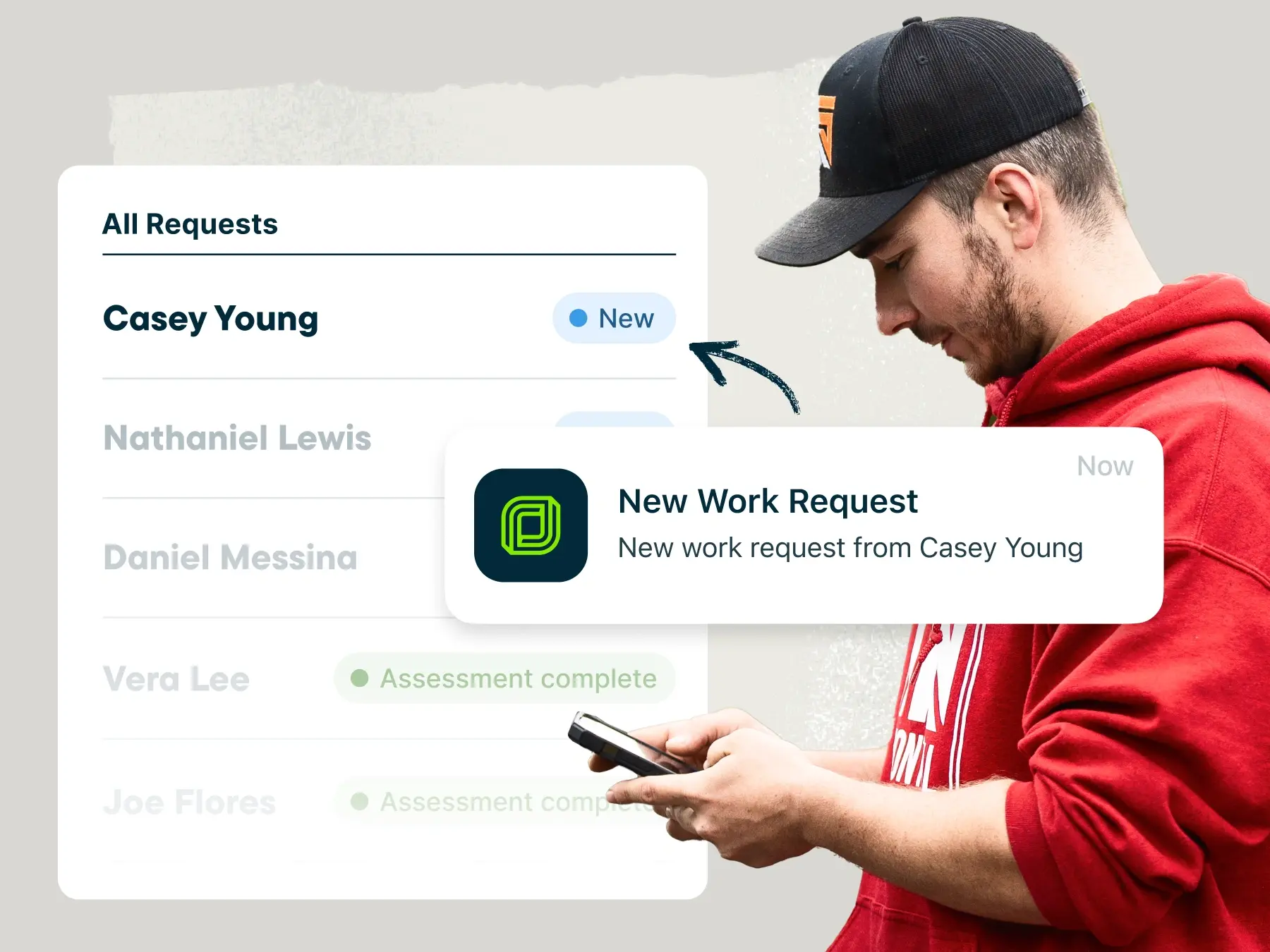
Alright, so the four videos are inside of your customer journey. The first one is after someone fills out a form on your website, you want them to not only get a text message and an email, but a video from you as a business owner. That video is going to say, “Hey, this is Phil with Phlash Consulting. I’m so happy that you reached out to us for your project. Here’s what’s going to happen next. My team’s going to get this information. We’re going to give you a call. Hopefully we can get in contact with you. If we don’t, we’ll shoot you a text message, but I want you to know that my name’s Phil and I’m here to make sure that everything works great for you.” Send that video out, and if you use a CRM like Jobber or something like that, you can set up with a Zap integration so that way once a form comes in, a request is created, then do this.
(03:05):
The next video is when you actually send an estimate. This one is missed by most people because the estimate is one of the missing pieces to answer customer’s questions. So when you create this estimate, you obviously want to have some type of nurture sequence texts and emails, but what you want to do is include a video, and that video is, “Hey Phil here, owner of Phlash, I sent you an estimate for your project. Here are five things that usually come up on this estimate. I just want to break it down for you. We’re super transparent here. We just want to help you solve your problem,” and you want that video to explain those things, build trust, build clarity, and let them know that I’m here for them.
Adam (03:39):
Okay, so let me pause you there for a minute. So the first video is as soon as they submit the form, they get a text message or an email from the owner video. It’s pretty short, I’m guessing 10 or 15 seconds. No more. Just, “I’m so glad you reached out to us. Our team is processing your lead,” or what do you say exactly?
Phil (03:56):
Yeah. “Hey, so glad that you reached out to us. My name’s Phil, born and raised in this town. My kids go to this high school. I want you to know that you reach out to the right place. We do this service, and we’re going to serve you well. If you ever have any issues, contact me directly and I’ll make sure that it’s resolved. Here’s what’s going to happen next. My team’s going to go in, look at the pictures, the information that you provided, we’re going to call you. If we don’t reach you, we’re going to text you and email you and try to get you on the phone.”
Adam (04:19):
That’s great. Okay, cool. Awesome. So then the second video goes out with the quote or with the estimate, and what does that say exactly? It handles the three most common questions?
Phil (04:30):
Yeah. There’s two things that you can do in this video. The first one is the common question that you get on the proposal, deposits, what happens if this doesn’t happen. The ones that you get a lot of. And then the second one is, who’s not a right fit for this service? Because now you’re building a lot of trust by saying like, “Hey, if you are like this, this is probably not the right service for you, but if you are, then this is going to be perfect for you.”
Adam (04:49):
Got it. That’s great. Okay, what’s the third video?
Phil (04:51):
Third video. Again, people miss this one, and it’s at the height of excitement. They just approve their quotes. You’re excited as a business owner, but you need to give that excitement over to them so you have a video that goes, “Hey, Adam, you just signed the proposal. Thank you so much. I’m so excited to work on your project. You made the right decision. Here’s what to expect next. Our team’s going to order the materials. Our customer service representative is going to contact you over here in the next 36 hours.” Tell them what they need to expect next. Let them know they made the right decision and that we’re all in this together, and we’re going to make sure that this gets to the finish line, success.
Adam (05:25):
Okay. Awesome. I love that. What’s the fourth one?
Phil (05:28):
The fourth one is, and these are all triggers if you have a CRM that you can put into your workflow. The last one is an invoice. So invoice goes out, video goes out, video says, “Hey, Phil, here, Phlash Consulting. I want to thank you so much for working with us on this project. I want to make sure that it was a great experience for you. If it was anything short of five stars, obviously reach out to me. I’ll take care of that. One way that we grow our business is through customer referrals. In this email, I’ve included a $50 voucher to give the gift of gutter cleaning to anyone, family, friend, neighbor. All you have to do is forward this email to someone, post this in a Facebook group. That’s how these homegrown local businesses like me grow, and I’d really appreciate that.”
Adam (06:08):
Okay. Nitty gritty on that. How are you getting their information? You give them a form to fill out in that video or, say that again.
Phil (06:15):
Yeah, so after the invoice goes out, your customer, they’re going to get an email from you—normally. In that video, you’re going to thank them for being customer of yours, and in that email, you’re going to create a little graphic on Canva or just say in there, “We give $50 off of you or for a customer,” and you’re going to tell them on the video, “Thank you for working with us. By the way, the way that we grow our businesses is through customer referrals. If you have a friend, family member, or neighbor who also needs a service, forward this email to them, this voucher. Screenshot this, post it on social media. It will help a local business like mine grow, and it’ll also probably help someone out that you know.”
Adam (06:48):
I love that I can hear some of the chatter going on right now, and the chatter might be something like, “Man, that’s a lot of videos, Phil. Or, are you exhausting your clients by just always text?” How do you handle that?
Phil (07:00):
Yeah, great point here. So it sounds a lot, I keep saying, “it’s Phil, Phlash Consulting…” like bro, leave me alone. So what we recommend is have different people on your team do these videos. So when the sales go out, whoever your sales manager is or your customer service manager, have them do the video. When It gets approved, have your office manager, CSR do the video. When the invoice happens, maybe the business owner comes back on, but now you have these pieces inside of the team. It doesn’t always have to be contact Phil, like, I got enough going on. Contact your CSR manager, office manager, whoever that is, your head technician, whatever it is. You might see me out on your job site. I don’t know.
Adam (07:33):
Yeah, that’s smart. I like that a lot. I imagine there’s some people in your shop or your organization that don’t want to be in video, and there’s some people who do. You could probably just pick the ones who really do want to. I imagine it’s even okay if some of these videos have technicians in them.
Phil (07:48):
Absolutely. The thing with technicians, they kind of get the raw end of the deal when it comes to video content because we’re on them to get reviews. We’re on them to upsell service. We’re on them to do a great job and just make the customer happy. Then we want them to be social media stars.
Adam (08:01):
Yeah
Phil (08:01):
And make videos. It’s like, guys, come on.
Adam (08:03):
Relax. I can only do so much.
Phil (08:05):
I’m trying my best to just make sure I get to the job on time, let alone do all this stuff.
Adam (08:09):
Right, right. That makes sense. But maybe on a rainy day or something, you could have a video day where you take some videos. Okay.
Phil (08:15):
Yeah, exactly.
Adam (08:16):
Phil, how do you record all these? It costs a lot of money. Have somebody use an iPhone? How do you do all this?
Phil (08:21):
Yeah, so the scripts that I just gave you, take those scripts, get them as clean as possible, run them through ChatGPT with your business, and get them dialed in as simple as possible. I recommend, do not hire a videographer for this. Use your iPhone on a job site and just make it very organic and natural for your team. If you’re going for a more high-level look, yeah, of course you can hire a videographer and go that route, but don’t overcomplicate this. We literally see these videos can be done in 20 minutes. Just pull up your phone and say the stuff that I just said, and then you have the videos and you just plug ’em into your system.
Adam (08:49):
It’s even okay to make it selfie, right? Have the camera facing you, right?
Phil (08:52):
Yeah, do a selfie. What we found specifically with social media content is that the overproduced stuff, they know that it’s overproduced. They just want the real, raw, organic conversation back and forth.
Adam (09:01):
Totally. 100%. So don’t hire a videographer, do it all on your own. In-house. With an iPhone, and that’s pretty much all you need. Just have a simple script and just do it in 20 minutes. Be done.
Phil (09:13):
Yeah. One thing that we see a lot of people fall into the trap is that it can be a little mundane, and there’s not as excitement like you hear when I say it, I’m pretty excited about it, so excited. Oh, it sounds great. So try to get excited about what you’re talking about. This is your business, and you’re reaching out to your customer. Imagine you’re talking to your customer right now, how you would be. That’s the interaction and engagement that you need to feel.
Adam (09:32):
A tip that I heard from Marcus Sheridan was the key to video is never stop talking. You’re like, “Oh, I can’t do camera. I’m not good on camera.” Never stop talking. Just talk, talk, talk, talk, talk, talk. Just never stop. Never stop. Just talk, talk, talk, talk, talk, and then cut it down. You don’t have to do it in one shot, you can. But if you really feel uncomfortable, but you’re really committed this, cut it up. No one cares.
Phil (09:54):
Yeah, exactly. The other big issue that a lot of people fall into that they talk about on these scripts is, well, I don’t know what my customer problems are, or what is my customer actually saying? Are they saying gutter cleaning or gutter cleaners? They’re trying to figure out the verbiage that their customers are asking, and there’s a way that people can use AI for this very thing, and we usually recommend, if you don’t know what your customers are saying or the problems that they have with your proposals, you’re not doing them or whatever. If you’re using call recording numbers, those call recordings have transcripts. Those transcripts, you can plug those transcripts specifically into ChatGPT and now you have all your hooks, your talking points, all the problems that your customers are saying, and now you can create content off of that.
Adam (10:36):
That’s a great idea. I love that. So we’ve got the four videos, and those are what I would consider like an onboarding—you go from new lead to invoice, right? You would do those four videos before you do anything on a website or anything on social media. Those are the first four that we should do, you think?
Phil (10:55):
Those are the quickest, literally 20 minutes. You can get those on there quickest. We’re going to talk about creating video content for your business, but those four videos you can make them right now, plug them into your customer journey and close more deals quickly.
Adam (11:05):
Yeah, I totally agree that one initial video when someone submits a form is so important. When I started doing that, I couldn’t believe the amount of leads that we retained just because they got an instant text and it had a video attached. It makes a huge difference.
Phil (11:21):
And I guarantee if they reach out to five or 10 businesses, maybe one of them does that. You’re going to stand out instantly as, wow, this company really gets it, and they care about their customer experience through this process.
Adam (11:31):
What other videos should we have on our website, social media, any other ideas? We get this four done. What else?
Phil (11:36):
Yeah, so back to what is your customer actually asking, right? You mentioned Market Sheridan, they ask, you answer. He has a new book, Endless Customers, and it’s all about what is your customer saying and how can you be the subject matter expert and help solve that problem for them? So a very simple way is if you have call recording numbers, tracking numbers, you take the transcripts, you figure out all the issues that these people are having, and you literally tell ChatGPT, turn these into hooks. If you don’t have all this, if you’re doing the sales calls or the service calls and answering the phone, take out your phone, turn on voice memos and click play, record. Now you have all of your stuff right there. Take your transcript, plug it into ChatGPT, get all the same stuff. Now you have exactly what you should be talking about on social media, on your website inside of this customer journey funnel. It’s right there. So there’s no issues.
Adam (12:23):
And so then each video turns into one mini Q&A. Hey, are your gutters overflowing? This is why. This is what we do with that. Are your ducts clogged? Is your HVAC broken? These are the three main reasons your HVAC… and so the videos just become very informative, but they’re short.
Phil (12:39):
Exactly. So I mentioned at the top of how can I take what my customers are saying and do videos in one hour, 10 to 15 minutes? So what you do is you get those transcripts, you get the frequently asked questions, hooks, whatever. And then there’s a three-part framework to creating content. The first part is a hook, which is the first five seconds. You want to say something like, “Here’s why your HVAC will probably go out this summer,” or “Here’s why your gutters might fall off of your roof after a rainstorm.” Whatever that hook is, that’s going to stop people and say, oh my gosh.
The second piece of this, specifically with home service, this is very important—is you want to solve, not sell, solve, not sell. A lot of times as business owners, we get into the sell mentality of, “Well, your gutters are going to fall off. That’s why you need to get your gutters cleaned.” You start going down this whole rabbit hole. You want to solve their problem. Here’s why this may happen to you and things that you need to look for. You’re not the hero in this situation. They are the hero. You’re just the guide explaining why this could happen to them. So solve, not sell. Usually that’s about 30 seconds, 45 seconds.
And then the last piece is agitate, call to action, agitate, call to action. The agitate would sound like this, “If you don’t want your gutters to fall at your house after the next rain,” that’s to agitate. “Then send us a message. We have technicians that are going to be in your area in the next 24 hours. We can have ’em stop by and do a free inspection for you,” whatever that sounds like, “Message, go to our website,” whatever. But that’s the framework. The beauty of it is you get the customer questions real from your phone calls or from the voice memos. You create the content that everyone’s asking already, and now you have content that is going to convert because you know it’s the real issues that they’re having.
Adam (14:15):
Phil, I’m going to pause for a minute and talk about Jobber and how it relates to all this stuff. So earlier you mentioned this four videos right after you get the quote, the lead, and then the quote and the form, and the invoice and all that. How does Jobber help you connect and make those automations happen?
Phil (14:29):
Jobber has Zapier integrations, and what that allows you to do is in those four points. A new request comes in, an estimate is created, estimate is approved, invoice. Each one of those is a Zap, so it allows you to then go and do other things when those actions happen, and Jobber makes that available to the people that use Jobber.
Adam (14:46):
Gotcha. Okay, so Jobber makes it easy to connect other apps and use it and do follow-up and that kind of stuff.
Phil (14:51):
Exactly.
Adam (14:52):
Yeah, a 100%. Listen, if you’re not using Jobber, you need to go to jobber.com/podcastdeal, get an exclusive discount, and start using Jobber to automate and grow your business.
(15:03)
Since I’ve started the video thing about six months ago, we have clients mention the videos. It’s like, oh, these are working, and it makes you feel better about the time you spent doing the videos.
Phil (15:12):
Yeah. Well, I want to take this a step deeper on this because this is very superficial with videos. I want people to think about AI search. AI search is what everyone’s freaking out about. They’re not going to Google, they’re going to ChatGPT, Perplexity, Google AI mode, these large language model LLMs AI, what are they built on? Content. As a business, the number one thing that you can do is feed these platforms with content that you’re the subject matter expert. If you go to these platforms and do a search in your area, gutter cleaning near me, it’s going to give you the results. It might say your business, it might not. Ask it, “How did you get these results?” It’s going to tell you how it got to the results. Then you say, “Why didn’t you show my business?” It’s going to say, “Why didn’t I show your business?” One of the reasons that it’s going to say how they came up with these results, well, it’s going to say reviews, all the normal SEO stuff that you’re going to do, reviews. But one of them it’s going to say is brand and authority, and the way that you build brand and authority is by creating content as a subject matter expert that feeds into these language models, and that’s the piece that people don’t get. They think, “Oh, I’m just going to create this content and get business from it.” Hopefully, great. They might see it, but in two to three years when everything changes to AI search and you’re behind the eight ball, you’re going to get crushed, and there’s a big land grab right now for competitors because you have competitors in your market that have thousands of Google reviews, and you’re like, “How do I do this?” The land grab is, it’s about to switch. Reviews are not, they’re going to be important, but there’s a whole other side that’s going to be important as well.
Adam (16:40):
Interesting. I’ll be darn. Okay. Let’s switch gears a little bit. You and I have talked about using Loom videos to promote your quotes, mostly your quotes and stuff. Let’s talk about Loom and how you integrate it into your client’s businesses.
Phil (16:52):
Yeah, so that video that I mentioned, when you send an estimate over that says, “Hey, here’s the questions,” blah, blah, blah. Every single business should be doing this. Your salespeople should record a Loom video of the proposal that you’re about to send to this customer, especially if it’s over a thousand, $5,000, and explain what’s on that proposal because they’re going to have questions and they’re going to want the walkthrough, and you just built this thing. Take an extra three to five minutes and record this stuff and explain exactly what it is. So what does that sound like? You get Loom, it’s 10 bucks a month, L-O-O-M. Then you open up the proposal that you just built, and you go through and you say, “Hey, Adam just sent you this proposal. I want to send over a quick video explaining all of this stuff. Remember, I was at your house, I talked about these gutters and these gutters, and here’s what I put in this proposal here, right here. This could go up or down, but I think this is a good number,” and you’re walking them through this.
Adam (17:37):
Totally.
Phil (17:38):
People do not do this, and it blows my mind because there’s so much opportunity to use Loom inside of their sales process, and it’s crazy.
Adam (17:44):
Yeah, I did this not too long ago. We went through a dry spell. We needed more business to be frank, and so as the owner, I started doing it. What I would do is I would pull up Google Slides, and I would, on the slide, I would type in, “Hi John,” and that was it. “Hi John.” And then, before when I was filming it, I would start with that full screen. So the thumbnail was, “Hi, John,” right?
Phil (18:11):
With a little GIF.
Adam (18:11):
Yeah, it’s waving, huh? Like this real, oh, like that. So then I would email that to people, and with Loom, you can actually see people if they open it or not. I wasn’t really making much progress with it. I sent 20 Loom videos. I didn’t really get any response, so I texted somebody, they approved their quote 10 minutes later. Exactly. It was like six grand. So I was like, oh, well now I’m a believer of this, and that slide is so important because it’s not generic. They know it’s for them, and it was always less than a minute. “This is your quote that John gave you. Lemme explain it to you real quick. If you want to approve it, click the green button. Thanks. See you, bye.” Yeah, and it works!
Phil (18:45):
So good. With the rehashing process. A lot of times they just call people and they don’t answer, “Hey, just checking in on your estimate.” If you text them a Loom like what you’re saying, and the GIF is going to show up on their phone with their name on it, and you waving like this. That’s pretty compelling.
Adam (19:01):
That’s pretty compelling. I’m also, this kind of gets away from video for a minute, but I’m also just surprised at how many times people have not gotten our quote. We’ve sent automated reminders, we’ve sent ’em emails, we’ve sent some texts, we’ve called, and then people still say, “Oh no, I never got it.” How did you ever get it? What do you mean you didn’t get it? And whether that’s true or not, what they’re saying is, “I haven’t seen it. I haven’t received it.” And so even just texting ’em, but then sending them a Loom video in that same text is even better.
Phil (19:25):
Let me give you the flywheel of content on this because this is the part that people get stuck in, which is the video piece takes a long time and all this. Alright, so the Loom that you just made for this person, imagine if you took the transcript from that Loom and turned it into a blog post and a social media content piece. Same thing with all of your shorts, the reels that you’re creating now you have unlimited content. Same with all of your calls. You have unlimited content, if you open up the scale. You have these transcripts of all this content. I’m telling you down the line, I literally have an AI avatar of myself that’s going on my website that people can ask questions to. Every single business owner wants this for their website and in their sales process, but if you don’t have the contact and transcripts to put into this knowledge base, you’re going to be behind the eight ball.
And that’s why I’ve been pushing social media so hard, but people think of it so much of the superficial stuff of like, because as home service business owners, we’re programmed to think, oh, I make this video, I got 10 leads from it, it’s a success. Yay. But there’s so much more nuance to it now than just creating content to be shown. And you can’t attribute it. Someone might see your video, then go to Google and search your name, and when they search your name, they go to your Google Business Profile. It doesn’t go from the video that they’ve been seeing.
Adam (20:37):
Phil, yeah, stop for a minute here. You’re going too fast. Okay, we’ve got to slow down. This is very intriguing to me, but I want to make sure that I understand it. So let’s talk about the avatar. I think if you talk about the avatar that you’re creating of your own self on your website, that might help us all understand more. How are you doing that exactly? You’re downloading transcripts, we get that you download any transcript and then put it into where? Where are you putting it?
Phil (21:01):
Yeah, so there’s a tool called Delphi—D-E-L-P-H-I.AI—and what you do is you sync up your YouTube channel, LinkedIn, Google Drive folders, whatever other platforms that you want, and you can set it up as an RSS feed, which means that it will constantly feed it more knowledge anytime you post on it. So as business owners, that’s very valuable because that can help your team not reach out to you all the time, ask any question. It can help your customers. It can help you create content ideas. This is where it’s getting to, but the problem is you need the content to feed it.
Adam (21:36):
Yeah. Are you saying that if you make a Loom video, you can always just download the transcript of that video? I’ve never done that before.
Phil (21:42):
Yes.
Adam (21:43):
Okay, interesting.
Phil (21:43):
In my company, I’ll record a Loom video and send it to a prospect that will explain exactly what we did, but it’ll also answer real questions that they probably had. Now I can take that and turn it into a blog post, a LinkedIn post, hooks.
Adam (21:57):
Yeah.
Phil (21:57):
A bunch of different things, and it’s things that are already happening in my business.
Adam (22:00):
Interesting. Something I heard about a year ago, this is kind of old hat I think, but I heard somewhere along down the line that don’t use—only use AI to create internal content, but if you use AI to create a blog post first, then everybody knows it’s AI-generated, it’s not as good. Is that true?
Phil (22:17):
It can be true, but this is why those knowledge bases are so huge. On ChatGPT, you can create these things called My GPTs. My GPTs are GPTs that you own that you can create knowledge base, you can educate these GPTs. So what businesses can do is on their SOPs, they can have GPTs on their business, they can have GPT, so they’re educated on specific things. Then when you feed it a transcript, here’s a perfect example. We have GPT for all of our clients, that GPT is trained on everything about that business. It pulls in all their reviews so it knows all the review information. So now when we create social media content, blog content, it’s unique. It’s their customers asking real questions, plus their reviews, plus any other content that they’ve created. It’s not just rigor mould ChatGPT that everyone else is doing.
Adam (23:02):
Interesting. And so you can do that on ChatGPT, use Delphi, anything else or just those two models?
Phil (23:08):
Chat GPT. You can create what’s called a MyGPT, and that’s separate. Delphi is more if you’re going to build a custom avatar for yourself, and you want this large knowledge base that you can train on a bunch of things.
Adam (23:18):
Yeah, I’m envisioning an avatar, like a cartoonish image of Phil with his hat and his beard, but it’s more than that. It’s a chat. They can ask Phil questions.
Phil (23:27):
Yeah, there’s three parts to it. You can have a chat feature so that way people can communicate back and forth with you. There’s a call feature where people can literally call you and it sounds like me, or there’s a video where you can set up a Zoom or something with me, but it’s my AI avatar person.
Adam (23:40):
Okay, well, that sounds fantastic.
Phil (23:44):
Yeah, but that’s the thing. So when we think about holistically, there is the layer of AI video to this, which is kind of what we’re talking about, this AI thing. There’s platforms like HeyGen—H-E-Y-G-E-N—and Synthesia. These are the two big ones that are AI avatar video. So you can upload a picture of yourself and these knowledge bases and create content via video.
Adam (24:05):
It sounds like this is the future for internal, not training, but support for your internal staff. Instead of having paper SOPs, you just have a ChatGPT for your team.
Phil (24:15):
Right now, what people are doing is they take their SOPs, they train an avatar on the SOPs, and then it’s not just some boring thing that they have to read through. They’re literally watching a video of someone explaining it, an AI avatar of explaining it, for example. But in the next two to three years, video AI, I’m trying to get deep on that because that’s really what it comes down to. It’s not just the fluff stuff.
Adam (24:35):
Yeah, it’s not just about posting videos on website anymore.
Phil (24:39):
No.
Adam (24:40):
Phil, one of the things that I promised at the beginning of the show was that you were going to teach us how to avoid content fatigue. How do you coach your clients of doing this sustainably for a long time?
Phil (24:50):
So there’s two parts to this. The first one is batching your content. So that’s why I said carve out an hour, get your hooks, pull up your phone, record those videos in an hour. Then you have it all there. Then there’s an AI tool called OpusClip where you can upload your video footage and it will cut it for you and put everything together for you.
Adam (25:10):
Subtitles, captions…
Adam (25:12):
Yeah, and even B-roll in the back of it as well. It’s not perfect, but it can get the editing piece for you. That can help streamline the process. The number one thing though would be batching the content, because if you carve it out once a week or once a month, even one hour a month, you could get 10 or 15 videos, two a week. I mean…
Adam (25:28):
That’s enough.
Phil (25:28):
It’s enough, but you really have to get this process dialed in to make sure that you have what you’re going to be talking about. I think that’s a lot of the hurdle people have to get over is, “Okay, I’m ready to do my content, but what the heck do I even say?”
Adam (25:38):
Yeah. I also think that people just even subconsciously compare themselves to the influencers on Instagram that are producing like six videos a day. We’re not influencers. We’re business owners. Two a week is fine.
Phil (25:50):
Yeah, for sure. I would say start small and ramp up. The big piece to this though is that you should be thinking of yourself as a media company, and really what it comes down to is building trust with your customers is about creating content. So ideally, there should be someone in your business. For example, let’s say you have a customer service representative or an assistant or someone. That person could be cutting all the hooks for you, cutting it through Opus, getting it clean and everything, and then all you do as a business owner is hop on for one hour and do the stuff.
Adam (26:18):
Yeah, yeah, yeah.
Phil (26:19):
So it’s not like you have to take on this whole burden, but what I would encourage you is that two is enough, but you should build this into your process and see the value of it over time of building this brand because the best search on Google to be shown is not, gutter cleaning near me. It’s Charlottesville Gutter Pros, and if people really care about branding, there’s a free way to do branding, and that is social media. It’s free. All you have to do is post and build a brand.
Adam (26:44):
Right. Exactly. This makes me think of this mindset several months ago where I really wanted to start educating our clients better. I just felt like there was a misconception about our industry, specifically about the gutter system to get real specific. And so what I did was I realized I just couldn’t really articulate what I wanted to teach the client, because I felt like if I taught the client what we do, we’d get all the business, but I couldn’t really do it in real life. So I actually created an animation. I hired an animation guy on Upwork, actually.
Phil (27:12):
Nice.
Adam (27:13):
To create an animation video. It’s like a cartoon video that shows the three parts, the gutter system, the gutter, the downspout, and the drain, and it shows very clearly. It zooms in, it opens up the ground, so you can see inside the ground, it’s an animation video, and it’s really compelling. I made two so far because I really wanted to educate our clients because I felt like if someone watched this specific video, then we would win. We get all the business because we’re the ones explaining it to them. We’re the ones teaching them how gutter systems actually work. Animation videos can be really effective in communicating a very nuanced thing in your business.
Phil (27:50):
Yeah, I agree. When I was at the home service business, we created a whiteboard animation video because it was duct cleaning, and it’s like, well, what exactly do you do? We created a video for that so you can see exactly what we do here. And it walks you through it, and people loved it because it’s very easy to explain. Even me explaining it via voice, having actual pictures or someone draw it out is much more educational.
Adam (28:09):
Totally. And we have people mention that video. We have people call in and say, “I watched that video about the three parts of the gutter system, and I think my problem’s, number two.” Great! And suddenly you’re off to the races with that client. So there’s a lot of different ways you can use video to educate, to compel, and the AI thing that we’re talking about.
Phil (28:26)
Absolutely. Absolutely.
Adam(28:27)
Phil, this is great. I’m going to break it down to three actual steps that our listeners can do right away, like today—do it right now. Number one is create videos. Start today, batch it once a month, batch it once a week, whatever’s easiest for you. Use your iPhone. Use the selfie mode. Make ’em authentic. Make ’em real. People much prefer that than this overproduced thing. Number two is use Loom to explain your quote, send ’em a text, say, “Hey, did you get this quote? I sent you a video to explain your quote.” It’s about a minute long. It says their name in the video, so they know it’s custom, and you’ll be amazed at the results you get when people see that video. You’re like, oh my gosh. And Loom tracks it so you know that if they opened it or not, it’s great. And number three, AI is the future. All this video content is feeding the AI, and you can use the AI a lot of different ways, but think AI, think how it’s going to be used in the future with all this video content. Phil, you want to touch on that one more time?
Phil (29:15):
Yeah. Go to ChatGPT, search for your service in your area and see if you show up. If you don’t show up, ask ChatGPT, ”Why didn’t you show me? Why did you show these people?” And I can tell you that these language models are being trained on content, and the number one thing you can do for your business is give it more content to know that you’re the brand authority in the space.
Adam (29:34):
Well, awesome, Phil. Thanks for all that really good stuff. I really, really enjoyed that one.
Phil (29:38):
Yeah, for sure.
Adam (29:40):
Business isn’t easy. You’re talking to clients every day. You’re building a business. What drives you everyday?
Phil (29:45):
It’s really just about creating win-win situations. Our team members, helping businesses actually grow and not just give them fluff marketing stuff. Using AI technology, CRM, data, automations. It’s fun when you tie it all together, and you can see this is literally future-proofing your business, and it’s going to help you grow in the next three to five years and be the number one company in your area. It just gets me fired up.
Adam (30:07):
Yeah. Yeah. Well, I’m fired up too. Yeah. Thanks for being here. You’re crushing it and keep crushing it. Great job. How do people find out about Phlash and about you?
Phil (30:14):
If you want to future-proof your business and you’re worried about doing this stuff on your own? Well, you’re in luck because my company actually does this for people. So you can go to phlashconsulting.com—P-H-L-A-S-H consulting dot com—and click “Discuss your business”, hop on a call, share best practices with you, help you grow your business.
Adam (30:29):
Bingo. Well, thanks for being here, Phil. Really appreciate it.
Phil (30:30):
Yeah, man.
Adam (30:32):
And thank you for listening. I hope you heard something today that will help you make more video content today. Take action today. I’m your host, Adam Sylvester. You can find me at adamsylvester.com. Your team and your clients, and your family deserve your very best. So go give it to ’em.
About the speakers
Adam Sylvester
CHARLOTTESVILLE GUTTER PROS AND CHARLOTTESVILLE LAWN CARE
Website: adamsylvester.com
Adam started Charlottesville Lawn Care in 2013 and Charlottesville Gutter Pros in the fall of 2020, in Charlottesville, VA. He likes to say, “I do gutters and grass! When it rains the grass grows and the gutters leak!” He got into owning his own business because he saw it as a huge opportunity to generate great income while living a life that suited him. He believes that small companies can make a serious impact on their communities and on every individual they touch, and he wanted to build a company that could make a big difference. His sweet spot talent is sales and marketing with a strong passion for building a place his team wants to work. Adam values his employees and loves leading people. While operations and efficiency is not something that comes naturally to him, he is constantly working to improve himself and his business in these areas.
Phil RIsher
Phlash Consulting
LinkedIn: Phil Risher
YouTube: @phlashconsulting
Website: phlashconsulting.com
Phil Risher founded Phlash Consulting in the Washington, D.C. Metro Area in 2019. He’s a local marketing expert, who specializes in helping businesses scale. His company helps local service businesses boost sales and fill their schedules using the unique “Phlash Customer Journey” framework to create a professional marketing system. This approach has helped clients grow their revenue by over 20% annually. Before founding Phlash Consulting, Phil was a director of business development at a major air duct cleaning company. He was tired of working with generic marketing firms that didn’t understand his industry, so he decided to start his own. Phil’s company combines digital marketing and business development strategies, and works directly with staff and business owners to help them grow. He builds strong partnerships with his clients, and most have stayed with him for over two years.
SIGN UP FOR PODCAST UPDATES
Get email updates on new episodes and podcast news.
You don’t want to miss out!
Interested in being a guest on the show?
Are you a home service professional eager to share your insights and experiences? Apply to be a guest on the Masters of Home Service Podcast, and join a community of experts committed to helping others level up through knowledge.
Automate admin work. Save time.
With home service software, you can take on more work without hiring more staff.
Compare plans