Cleaning Business Supplies List: Essentials for Residential & Commercial Jobs

Key takeaways:
This article covers the essential cleaning business supplies you’ll need for both residential and commercial jobs, helping you build an effective inventory from day one.
- Start with a basic kit and grow as your business expands. Begin with affordable essentials like all-purpose cleaners, microfiber cloths, mops, vacuums, and protective gear, then add specialized tools over time for higher-value services or commercial contracts.
- Understand the differences between residential and commercial needs. Residential jobs require versatile, surface-safe products, while commercial and janitorial cleaning often call for heavy-duty equipment and stricter sanitation products.
- Choose equipment and supplies based on quality and job type. Invest in professional or commercial-grade tools—like HEPA vacuums, floor scrubbers, and power scrubbers—if your workload and property sizes increase, and always prioritize items that offer the best balance between cost and performance.
- Offer eco-friendly options and use color-coding to maintain high standards. Providing green solutions can win more customers, while color-coded supplies help prevent cross-contamination and keep cleaning efficient and professional.
- Don’t forget business management and marketing tools. Use administrative supplies, business cards, branded materials, and management software like Jobber to run your cleaning business smoothly, book jobs quickly, and keep clients coming back.
For more tips on running your cleaning business, get expert insights delivered straight to your inbox by signing up for the Jobber Newsletter. Sign up here.
When you’re starting your cleaning business, having all the right cleaning supplies for cleaning business operations from day one makes it easier to work efficiently and build a reputation that leads to repeat customers and referrals.
Whether you’re creating a cleaning business starter kit for your first clients or building a complete inventory for a growing company, knowing which tools and products to prioritize can save you time and money.
In this guide, you’ll find a comprehensive house and commercial cleaning supplies list, as well as recommendations for assembling a practical starter kit that can grow alongside your business. Download our pre-made checklist to make your shopping a breeze.
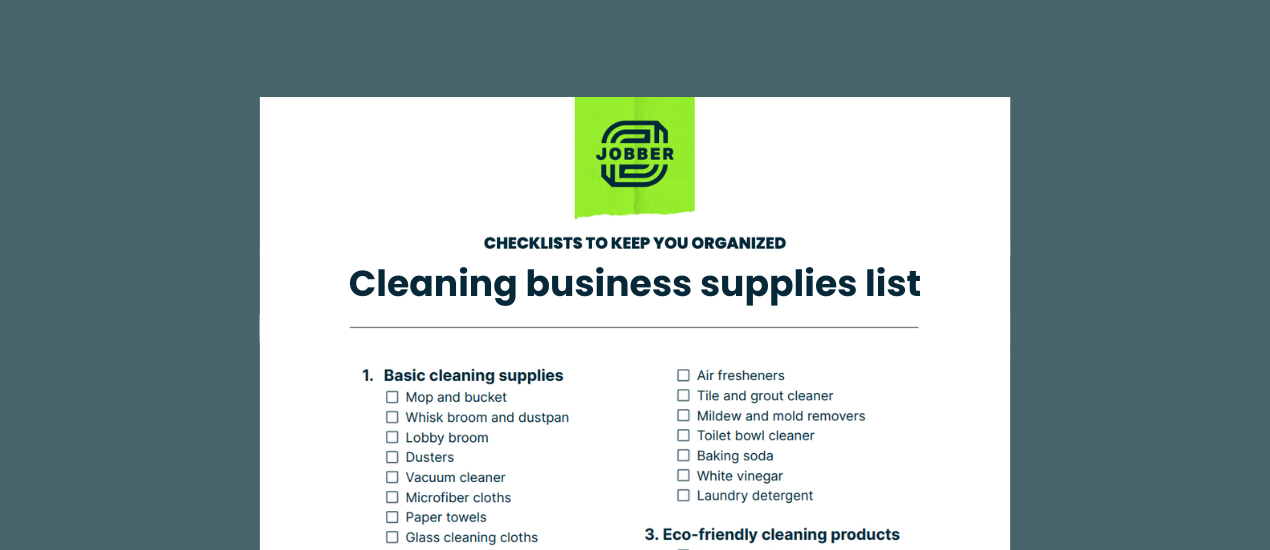
Build a professional cleaning supplies list:
-
What supplies do I need to start?
-
Basic cleaning supplies for all jobs
-
How to choose cleaning equipment by price point
-
Chemical cleaning products
-
Kitchen appliance cleaning products
-
Eco-friendly cleaning products
-
Commercial cleaning supplies list
-
Personal protective equipment
-
Marketing tools and materials
-
Business management software
What supplies do I need to start a cleaning business?
You only need a starter kit to get your cleaning business off the ground. In fact, most new cleaners start with basic tools like:
- All purpose cleaner
- Microfiber cloths
- Bucket, mops, and vacuums
- Gloves and protective gear
These are the core items you’ll use in almost every home. As your services grow, you can add specialized products to your toolkit, like professional window-cleaning tools or eco-friendly house cleaning supplies.
Cleaning business starter kit (under $500)
If you’re starting your cleaning business with a limited budget, focus on versatile supplies that you’ll use on nearly every job. You can assemble a basic cleaning business starter kit for under $500 that includes:
- All-purpose cleaner
- Glass cleaner
- Disinfectant cleaner
- Microfiber cloths
- Scrub brushes and sponges
- Mop and bucket
- Vacuum cleaner
- Broom and dustpan
- Disposable and reusable gloves
- Spray bottles
- Trash bags
- Protective apron or cleaning caddy
With these essentials, you can confidently handle most residential cleaning appointments while keeping startup costs low.
You may also want to separate your needs into two categories:
- Minimum viable kit: A setup sufficient for routine residential cleaning and recurring maintenance services.
- Full professional kit: This kit allows you to offer higher-value services, improve efficiency, and take on larger commercial contracts.
| Minimum viable kit | Full professional kit |
|---|---|
| • Basic cleaning chemicals • Microfiber cloths • Mop and bucket • Vacuum • Gloves and safety gear • Basic brushes and sponges | • Everything in the minimum viable kit • HEPA-filter vacuum • Extension dusters • Professional window-cleaning tools • Floor scrubbers or specialty floor-care equipment • Steam cleaner • Color-coded microfiber system • Commercial-grade disinfectants • Specialty stain removers • Eco-friendly cleaning products • PPE for commercial and post-construction jobs |
To get into the cleaning business, it’s pretty easy and relatively inexpensive. You can spend around $500 to get into the cleaning business.
That will cover equipment like vacuums, mops, and the cleaning solutions that go into your cleaning bag.

Residential vs commercial: what changes?
The supplies needed to start a cleaning business depend on the type of cleaning services you offer. The supplies for residential cleaning and commercial cleaning often overlap. That said, commercial and janitorial jobs often require additional equipment and products.
Residential cleaning focuses on kitchens, bathrooms, bedrooms, and living spaces, so versatility and surface-safe products are most important. A professional house cleaning supplies list would mainly include the basics—a mop, bucket, broom, and all-purpose cleaners.
Commercial cleaning involves larger floor areas, higher traffic levels, stricter sanitation requirements, and more frequent cleaning schedules. As a result, commercial cleaning supplies lists often include heavier-duty janitorial equipment and specialized disinfecting products.
READ MORE: How to start a commercial cleaning business
Basic cleaning supplies for all jobs
From home cleaning to full-scale janitorial work, here are the essential supplies every type of cleaning business needs:
1. Mop and bucket (including wet mops and dry mops)
A reliable mop and bucket help you easily clean everything from tile to hardwood floor. To avoid cross-contamination and get longer life out of your equipment, keep a few separate mop heads for different areas.
Using a bucket on wheels also reduces extra effort and helps you get from room to room more quickly.
2. Whisk broom and dustpan
Choose a portable, sturdy broom and dustpan that can stand up to repeated use. Opt for a snap-on design to keep dust contained while you move around a job site.
3. Lobby broom
A professional-grade lobby broom is great for large spaces (like hallways or lobbies) and won’t absorb odors or stains.
4. Dusters (short, long, or extendable)
Use dusters in a variety of spaces, from nooks and crannies to ceiling fan blades. Choose an extendable duster with a washable microfiber head to eliminate the need for a ladder.
5. Vacuum cleaner (with attachments for hardwood and carpet)
A reliable vacuum is essential for any cleaning job site. Choose a reliable brand (like Shark or Dyson) that comes with multiple attachments for corners, upholstery, and stairs.
Since this could be a big initial investment, register your product with the manufacturer for any future repairs or service requests.
6. Microfiber cloths
Microfiber cloths are a versatile, absorbent option for wiping, drying, and polishing most surfaces. Buy a large pack of different colors for different purposes like glass cleaning, general dusting, or other surfaces.
7. Paper towels
Paper towels are a must-have item in your cleaning caddy. Check out your local big box store like Costco or Sam’s Club to find better pricing on paper supplies in bulk.
8. Glass cleaning cloths
Invest in glass-safe cloths that won’t scratch your client’s mirrors and windows. High-quality, lint-free microfiber glass cloths help eliminate streaks and reduce the need for repeated wiping, making your work faster and more professional.
9. Detail cleaning brushes
Detail cleaning brushes are a good backup item to have for small nooks that need deeper cleaning. Some battery-operated brushes are especially useful for scrubbing grout in tile or caulk in showers.
10. Sponges
Grab a few sizes and shapes of basic sponges, including some with non-scratch backing. Sanitize any sponges that you plan to reuse in more than one area.
11. Scrubbers
Scrubbers come in many types, from bristle brushes to spinning pads. Keep a few styles on hand so you’re ready for any surface or level of grimy buildup.
12. Squeegees and T-bars
Use squeegees and T-bars to clean windows and glass without leaving streaks. Choose a commercial-grade option for smoother results on larger windows.
13. Laundry bag (for old rags)
Invest in a durable canvas bag that can handle cleaning solutions, chemicals, and frequent washes. Choose one that’s leak-resistant to keep your vehicle clean when transporting linens.
14. Shoe covers
Wear disposable, non-slip shoe covers on every job to protect clients’ floors and maintain a professional appearance. Keep a few extra pairs in your cleaning kit so you’re always prepared.
15. Spray bottles
Spray bottles are great for storing all-purpose cleaners and concentrated solutions that you need to dilute with water. Be sure to label any bottles that contain chemicals that shouldn’t be mixed together.
16. Trash bags and garbage liners
Keep a variety of bag sizes on hand so you can easily replace them as you clean. Some clients may prefer their own liners or bags, so check beforehand to see if they have a preference.
17. Bucket or container to carry supplies
Use a storage caddy to keep your supplies organized and easy to carry as you go from your car to the job site, or from room to room. This will save you plenty of trips back and forth, keeping you quick and efficient.
Pro tip: Use color-coding to prevent cross-contamination
Preventing cross-contamination is important in bathrooms, kitchens, break rooms, and other high-touch areas where bacteria and viruses can easily transfer from one surface to another. Color-coding your supplies reduces this risk and maintains professional cleaning standards.
Create a consistent system to ensure any cleaning tools used in high-risk areas never come into contact with food preparation surfaces or other sensitive spaces. For example:
| Color | Use for | Never use for |
|---|---|---|
| Red | Toilets, urinals, bathroom floors | Kitchens, food prep, general dusting |
| Yellow | Sinks, counters, break rooms, general wipe-down | Toilets |
| Blue | Glass, mirrors, low-touch dusting | Bathrooms |
| Green | General rooms, furniture, low-risk surfaces | Bathrooms or kitchens (optional—some teams use green only for “clean” areas) |
Keep these rules of thumb in mind when you’re building your color-coded system:
- Assign one color to each room type during every visit.
- Always switch to a fresh cloth when moving from a bathroom to a kitchen.
- Store dirty microfiber cloths separately from clean supplies.
- Bag used microfiber cloths and mop heads for laundering after each job.
- Label spray bottles by product and surface type (glass cleaner, bathroom cleaner, degreaser, disinfectant, etc.).
- Replace worn or stained microfiber cloths to maintain cleaning performance.
- For cleaning teams, standardize colors across every cleaning caddy so training and procedures remain consistent on every job site.
Equipment quality comparison guide: How to choose cleaning equipment by price point
Not sure when to save money and when to invest in higher-quality tools? Use this cleaning business equipment list to compare basic, professional, and commercial equipment and better understand what you gain at each price point.
Here’s how we define the following levels:
- Basic: Starter tools for most beginners and home cleaners
- Professional: Tools that make daily cleaning faster and easier for growing businesses and teams
- Commercial: Equipment built for high-volume cleaners or janitorial teams
| Tool / Supply | Basic | Professional | Commercial |
|---|---|---|---|
| Mop and bucket | A basic cotton mop and plastic bucket are affordable and easy to replace | Microfiber mop with wringer bucket on wheels for easier cleaning on multiple jobs | Heavy-duty mop system with commercial wringer and wheels built for daily use |
| Vacuum cleaner | Lightweight upright styles are perfect to use in residential spaces | Multi-surface vacuum with HEPA filter and multiple attachments for larger spaces and different floor types | Industrial vacuum with extended cord, large tank, and continuous-run motor |
| Microfiber cloths | Easy to replace as they will deteriorate quickly, so find multipacks at big box supply stores | Upgrade to color-coded, lint-free cloths for different rooms, without shedding fibers | Premium, ultra-dense microfiber that holds up to frequent washing |
| Scrubbers and brushes | Basic sponge or low-cost pad for multipurpose use should be replaced frequently | Ergonomic, no-scratch scrub brush set for different needs across job sites | Commercial-grade power scrubber, steamer, or drill brush kit for deep cleaning |
| Spray bottles | Basic plastic bottle with fixed nozzle | Adjustable, chemical-resistant spray bottles | Heavy-duty sprayers rated for pro-grade disinfectants and solvents |
| Backpack vacuum | Usually not necessary for new cleaners focused on small residential jobs, as a standard upright vacuum is often sufficient | Lightweight backpack vacuum to improve mobility and reduce fatigue | Commercial backpack vacuum with extended runtime, advanced filtration, ergonomic harness system, and durable components |
| HEPA | Standard filtration captures dust and debris | HEPA filtration captures 99.97% of particles as small as 0.3 microns | Sealed HEPA systems designed for healthcare facilities, schools, and sensitive environments |
| Chemical-resistant bottles (Nilfisk/HCP patterns) | Standard spray bottles suitable for mild cleaners and general-purpose solutions | Chemical-resistant bottles with durable triggers and compatibility with disinfectants, degreasers, and specialty chemicals | Bottles built using professional chemical-resistance standards, including Nilfisk/HCP-style designs, for frequent exposure to strong cleaning agents and daily commercial use |
Here are a few things to keep in mind when you’re comparing products and price points:
- Save on items you replace often (cloths, bottles, sponges) or that don’t impact cleaning speed.
- Upgrade to professional gear when you want longer lifespan, better ergonomics, or faster results.
- Splurge on commercial or industrial cleaning equipment if you’re doing daily cleanings, large square footage, or need tools that withstand heavy wear.
Pro Tip: Start with professional supplies for the best balance between cost and performance. As your business grows and takes on bigger jobs, upgrade to save time and reduce long-term replacement costs.
Chemical cleaning products
As a professional cleaner, you’ll need solutions to tackle tough messes, sanitize surfaces, and meet hygiene standards. Degreasers, disinfectants, and glass or bathroom sprays often handle jobs when soap and water won’t cut it.
Because cleaning chemicals can be harmful if they aren’t used properly, always read labels, store products safely, and wear protective gear. Whether you’re working for yourself or with a team, always follow OSHA’s chemical cleaning tips to keep everyone safe.
18. Multipurpose cleaner
Always pack a basic spray that removes surface-level spills, dirt, and grime from most surfaces.
Since many multipurpose cleaners are scented, choose fragrances that are mild and broadly appealing. Be mindful that some clients may have allergies, sensitivities, or preferences for fragrance-free products.
19. Disinfectant spray (or disinfecting wipes)
Use disinfectant spray or wipes to sanitize high-touch areas, such as kitchens, bathrooms, and door handles. These sprays can quickly stop the spread of germs in high-traffic spaces.
20. Glass cleaner
Use a quality glass cleaner to leave windows, mirrors, and other surfaces clear and streak-free. Choose a product that wipes off easily, without leaving a filmy residue.
21. Bathroom cleaner or solution
Choose a bathroom cleaner that removes soap scum and kills germs effectively. Always read labels carefully and avoid mixing products that contain bleach and ammonia.
22. Wood floor cleaner
You can add this solution directly to your wet mopping process in homes or office spaces. When you’re working with hardwood surfaces, always spot test by using a small amount in a hidden area to avoid potential damage or streaking.
23. Carpet cleaner and deodorizers
Use carpet cleaners and deodorizers to lift stains and remove lingering odors, especially in homes with pets. Just make sure the cleaning solution isn’t harmful to children or animals who will be playing on the floor.
24. Air fresheners
Air fresheners help eliminate odors and leave a pleasant scent after cleaning. Always check with clients about allergies or sensitivities before using them throughout a space.
25. Tile and grout cleaner
Tile and grout cleaners break down built-up dirt and residue. A suitable tile and grout cleaner should be pH-balanced and safely formulated to cut through grime without harming grout. Choosing the right formula helps floors and walls look clean and bright again.
26. Mildew and mold removers
Mildew and mold removers eliminate buildup in damp areas, such as bathrooms or basements. Because they can contain strong fragrances, confirm with the client before using them.
27. Toilet cleaner
Toilet cleaners break down grime, stains, and germs in and around the bowl. Apply with a sanitary toilet brush for safe, hands-free cleaning.
28. Furniture polish
Polish restores shine, protects surfaces, and improves the appearance of wood furniture. Before you start, check with clients to see if there are any pieces they want to protect.
29. Baking soda and white vinegar
Use these natural products for an eco-friendly boost. Wipe down sinks, refrigerators, and other surfaces where a client wants to reduce the use of harsh chemicals.
30. Laundry detergent
If you offer laundry services, pick a trusted brand that works for both lights and darks. Check with clients about any skin sensitivities or allergies that will affect your product choice. Double-check whether a special detergent is needed for high-efficiency washing machines.
How much do cleaning supplies cost per job?
Most cleaners spend about $20–$30 on cleaning supplies per month, or roughly $3–$10 per job on chemicals, microfiber cloth replacement, trash bags, and other consumables.
Because chemical cleaners are often concentrated, a single bottle can last multiple jobs. This helps keep your overall cost per house cleaning job predictable and profitable.
Starting a cleaning business is inexpensive and you can easily have clients within hours of launching.
It’s also fantastic for cash flow because you get paid at each cleaning or even in advance of the appointments.

Kitchen appliance cleaning products
The kitchen or office break room often requires a few extra cleaning products to tackle grease, food splatter, and buildup on appliances. Before getting started, ask your client if they have any preferred products or sensitivities, especially when handling dishes or kitchen surfaces.
31. Oven cleaner
Degreases and removes grime from inside an oven (including the grates and glass) faster than scrubbing alone. This product removes loose debris and can prepare the oven for a “self-clean” cycle.
32. Stainless steel cleaners
Some chemical cleaning products leave streaks or prints on stainless steel appliances. A specially targeted appliance or steel cleaner can do this job more effectively.
33. Dishwashing soap
Dishwashing soap helps remove stuck-on food and grease from dishes, sinks, and surfaces. Choose a mild, scent-free formula that’s gentle on hands and safe for most materials.
A few drops of dish soap mixed with warm water also make a great all-purpose cleaner for quick touch-ups.
34. Drain cleaners
Drain cleaners clear buildup and help keep sinks and garbage disposals running smoothly. Choose a gentle, fresh-scented lemon formula for a nice deodorizer.
35. Marble, granite, or quartz cleaner
Some residential clients have specialty countertops like granite or quartz that require specific formulas. Always check with a client if you’re unsure about the specific surface.
Eco-friendly cleaning products
Although mainstream cleaning products are usually effective, many clients prefer to go the environmentally friendly route. This is also a great option for families that want your products to be safe for their children or pets.
Offer eco-friendly cleaning as part of your service packages to stand out and appeal to environmentally conscious clients. Using products made with natural, biodegradable ingredients is better for the planet—and can help you win customers who value green practices.
Look for eco-friendly cleaning products such as:
36. Plant-based multi-surface cleaner
A plant-based product safely cleans most surfaces without leaving residue or fumes. Use this as a preferred option in homes with kids or pets.
37. Ammonia-free glass cleaner
Ammonia-free glass cleaners give windows and mirrors a streak-free shine without the harsh fumes of traditional options. They’re safer for enclosed spaces and a better choice for clients with allergies or asthma.
38. Fragrance-free dish soap
A gentle, biodegradable option is best for handwashing dishes and rinsing off kitchen surfaces.
Fragrance-free formulas are a good choice because they don’t leave behind lingering scents on dishes, cookware, or food-preparation areas. This can be important for clients with allergies, sensitivities, or strong fragrance preferences.
39. Non-toxic oven cleaner
Non-toxic oven cleaners use natural ingredients to dissolve grease and grime while protecting metal finishes and coatings. They’re a great option if you’re concerned about ventilation.
40. Natural degreaser
A natural degreaser breaks down oily residue on kitchen counters and appliances without using standard chemicals. This can be especially helpful for areas that are more prone to grease, like stovetops and microwaves.
41. Natural fabric softener
Natural fabric softeners use plant-based ingredients to keep laundry soft and fresh without synthetic fragrances or dyes. They’re gentler on fabrics and ideal for clients with sensitive skin.
42. Eco-friendly stain remover
Eco-friendly stain removers target spots and spills with biodegradable ingredients that are tough on stains but safe for fabrics, carpets, and the environment.
How to offer eco-friendly cleaning options as add-on services
You can position green cleaning as an upsell to clients who are environmentally conscious, have sensitivities to harsh chemicals, or specifically request non-toxic or pet-safe products.
Green cleaning can also be offered as a premium option for first-time customers or recurring clients who want a more sustainable housekeeping routine. Framing it as a “healthier home” upgrade rather than just a product swap can help increase acceptance and perceived value.
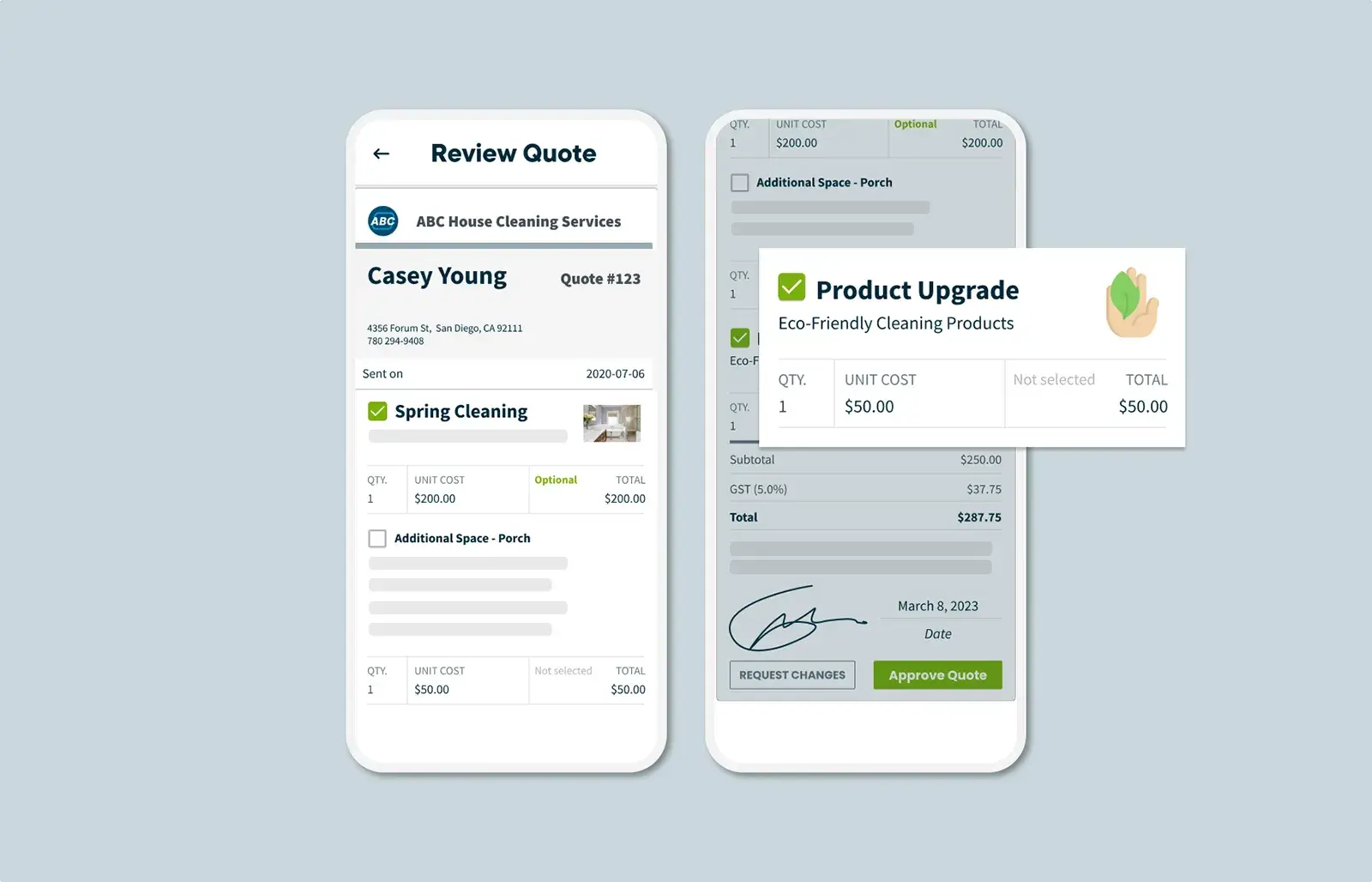
When you build an estimate in Jobber, add these products as optional line items with photos. Customers can click and choose your green cleaning product upgrade when they look at your quote online.
Commercial cleaning supplies list
Running a commercial cleaning business? If so, you’ll want to purchase specialized commercial cleaning supplies tools to clean spaces like offices, clinics, hotels, and event venues.
43. Push brooms
A push broom makes faster work of big messes. In wide-open areas like lobbies or cafeterias, this broom style helps you cover more ground more quickly.
44. Pressure washers
Use pressure washers on your commercial jobs to quickly clean entrances, awnings, sidewalks, decks, and other surfaces that see lots of foot traffic or wear from the elements.
45. Floor scrubber, buffer, and polisher
These machines clean and polish large floor areas efficiently, making them ideal for commercial spaces. Use the right pad or brush for each floor type to avoid possible damage.
46. Carpet cleaning machine or carpet extractor
Clean and sanitize large carpeted areas, walkways, and common areas quickly. Check the machine guidelines to see if you need a special cleaning solution for it to work properly.
47. Steam cleaners for upholstery or flooring
Steam cleaners use hot water and vapor to lift stains and sanitize surfaces without chemicals. For a commercial job, confirm with the client or site manager that it’s safe to provide this service before using steam on delicate fabrics or flooring.
48. Squeegees and T-bars with extension poles
If you offer window cleaning as an add-on service, bring the right tools to reach large glass areas safely and efficiently. For exterior windows, make sure you also have proper safety gear and business insurance before starting the job.
Pro Tip: If you’re working with an office manager who handles cleaning supply purchases, keep in touch to let them know when your janitorial supply is running low.
Office cleaning supplies list
An effective office cleaning setup focuses on high-traffic maintenance, hygiene, and maintaining a professional appearance in shared spaces. A typical office cleaning supplies list includes:
- Trash liners
- Restroom consumables (toilet paper, paper towels, and soap refills)
- Lobby mats
- Color-coded microfiber system for shared desks and common areas
- Disinfectant wipes or sprays
- Glass cleaner for doors and partitions
- Commercial vacuum or backpack vacuum
- Mop and bucket system for hard floors
- Basic set of restroom cleaning chemicals for sinks and toilets
Should you supply the cleaning products?
For the most part, you should supply your own cleaning products. Bringing your own supplies is more convenient for your customers and helps you:
- Look more professional and organized.
- Charge more for your cleanings because customers are paying for added convenience.
- Clean faster and more effectively with products you’re familiar with and trust.
- Know what belongs to you and what should stay in the home or job site (to avoid unnecessary mistakes and mixups).
If a customer insists you use their cleaning products, ask for a list of all their supplies so you can check that they have enough for you to complete the job.
Make a note for that client on your online job portal or cleaning business app so that you can remember in the future, or pass along their preference to your team of cleaners next time.
Here are a few examples of when it might be best to supply your own products vs using a client’s products:
| Category | Cleaner-supplied | Client-supplied |
|---|---|---|
| Core cleaning chemicals (all-purpose, disinfectant, glass cleaner) | Preferred for consistency, safety, and predictable results | Only if required by client |
| Reusable tools (microfiber cloths, mop systems, brushes) | Ensures hygiene standards and prevents cross-contamination | Rarely recommended |
| Equipment (vacuum, caddy, sprayers) | Improves efficiency and professionalism | Not typical |
| High-volume consumables (toilet paper, paper towels, trash liners) | Optional depending on pricing model | Common in office/commercial settings |
Finally, set a clear restock cadence, which is how often supplies are replenished based on job volume and usage. This helps you avoid running out of key products and keeps your workflow consistent across every cleaning appointment.
READ MORE: How to price commercial cleaning jobs
Equipment vs supplies: what’s the difference?
Your cleaning business relies on both equipment and supplies, but they serve very different purposes:
- Equipment refers to durable, long-term assets (capital equipment) like vacuums, mop systems, and tools that are used repeatedly over time. You invest in it once and maintain it over time.
- Supplies, on the other hand, are consumables such as cleaning chemicals, microfiber cloths, and paper products. You continuously consume them on every job and need to replenish them regularly after use.
Personal protective equipment for cleaning jobs
Protective gear keeps you and your team safe, confident, and ready for any job. The right equipment also protects your clients’ spaces from contamination or damage.
Check your protective gear regularly and replace or sanitize it as needed to maintain compliance and professionalism.
49. Disposable latex gloves
Disposable gloves are ideal for handling general cleaning products and quick jobs where frequent changes are needed. They’re also helpful in settings where you won’t want to reuse the gloves when you’re done, like particularly dirty bathrooms.
50. Reusable rubber gloves
Reusable rubber gloves protect your hands from harsh chemicals, hot water, and tough scrubbing. They’re durable enough for long cleaning sessions, and you can safely reuse them.
51. Plastic goggles or face shields
Goggles and face shields keep your eyes protected from splashes, dust, and debris. They’re especially useful when handling strong cleaners or using outdoor equipment where safety risks are higher.
52. Aprons or coveralls
Aprons and coveralls protect your clothing from spills, splashes, and dirt while keeping you looking professional. Choose lightweight, washable materials for quick changes.
53. Non-slip shoes
A good pair of well-fitting shoes reduces the risk of slips and falls on wet surfaces. This is a smart investment for cleaners, since slips, trips and falls lead to hundreds of thousands of minor workplace incidents every year, according to the U.S. Bureau of Labor Statistics.
54. Safety signage
Use wet floor and caution signs to keep everyone safe during and after cleaning. This is especially important in commercial or business spaces where foot traffic is higher.
Depending on your cleaning license requirements, this also helps avoid liability in the case of an accident—which is good news for your cleaning business insurance policy.
55. Basic first aid kit
Keep a well-stocked kit with bandages, antiseptic wipes, and other essentials on hand for minor accidents or chemical splashes.
Pro Tip: Regularly inspect your PPE for wear and tear, and train your team on how to use and store safety gear properly to stay compliant with OSHA standards.
Marketing tools and materials for cleaning businesses
Running a successful cleaning business takes more than mops, vacuums, and gloves. You’ll also need a few important tools to attract clients, keep up with administrative tasks, and stay organized financially.
Get your name out there with branded print and digital assets that build credibility and attract local clients, from cleaning ads to a professional website. Use consistent branding—colors, logo, and fonts—across all materials to build recognition and trust.
56. Flyers, brochures, and postcards
Printed marketing materials and cleaning business flyers are a simple way to promote your services, pricing, and special promos in local neighborhoods. Hand them out or mail them to homeowners to increase your brand visibility.
57. Business website
A cleaning business website helps people learn about your services, check your availability, and contact you whenever they need cleaning.
Keep your service details, pricing, photos, and booking options easy to find and up to date. If you use printed materials like business cards or flyers, include your website URL or handy QR codes that link to your site.
58. Door hangers and direct mail
Promote your services directly in residential neighborhoods or apartment complexes. Direct mail helps you expand your reach within neighborhoods you’re already active in, so that you can efficiently get from one job to the next, saving time and fuel.
Or, use postcards to promote seasonal deals or referral programs. With Jobber and PostcardMania, send direct mail to your client list, or turn neighbors into customers, and you see up to 9x the response rate of email alone.
59. Vehicle decals or wraps
Turn your vehicle into a moving advertisement with a professionally designed vehicle wrap. Add your logo, contact information, and a clear message so potential clients can spot and remember your brand.
Business management software
Running a successful business starts with organization. The right cleaning business software keeps your schedule, clients, and finances in sync, reducing paperwork so that you have more time to focus on growth. Here are few tools to consider at any stage of your business:
60. Scheduling and client management
A platform like Jobber makes booking new jobs and sending invoices simple and hassle-free. By using a central platform, you’ll also have everything you need to communicate with clients and team members more efficiently.
61. Lead generation platforms
Lead generation platforms connect homeowners with cleaning pros in a specific area or neighborhood. As a business owner, you’ll get relevant alerts when there’s a new cleaning job that you can bid on.
For example, Thumbtack connects with Jobber to help you convert leads into paying customers. After Thumbtack matches you with the jobs you want, you can seamlessly manage these customers in Jobber, and track jobs from start to finish.
62. Estimating software
Quoting software like Jobber helps you build accurate, professional quotes by breaking costs into clear line items. You can include supply costs—such as cleaning chemicals, consumables, or equipment use—directly in your estimate so clients see exactly what they’re paying for.
Jobber also lets you add optional as separate line items, allowing customers to select add-ons like laundry service or eco-friendly cleaning supplies when approving their quote online.
63. Cleaning checklists
Cleaning business software with job checklists can help standardize your cleaning process so every property is cleaned to the same professional standard.
You can build a professional house cleaning checklist to guide residential jobs, ensuring tasks like bathrooms, kitchens, and dusting are completed consistently across every visit.
For larger contracts, a commercial cleaning checklist keeps office and janitorial work organized by breaking out each cleaning task into zones such as restrooms, lobbies, and workspaces.
These checklists improve efficiency, reduce missed steps, and make it easier to train staff as your cleaning business grows.
64. Accounting software
Use reliable accounting software like QuickBooks Online to manage expenses, invoices, and payroll while tracking mileage and deductions automatically. QuickBooks also integrates with Jobber to keep your customer, payment, and financial data synced without extra work.
If you want to streamline estimates, scheduling, and job checklists as your cleaning business grows, explore how Jobber supports cleaning professionals.
Jobber truly gives us confidence to make better decisions, and gives me the freedom to sit back and watch my business run.
Together, these tools and supplies help your cleaning business run smoothly behind the scenes so that you can focus on delivering spotless results and amazing service every time.
With the right prep and organization, you’ll work more efficiently, feel confident on every job, and set up your business for long-term growth.
Originally published in December 2023. Last updated on June 19, 2026.
Frequently Asked Questions
-
To start a cleaning business, you only need a basic set of essentials like:
• All-purpose cleaner
• Disinfectant
• Glass cleaner
• Microfiber cloths
• Mop and bucket
• Vacuum
• Gloves
• Basic scrub brushes
This starter kit is enough to handle most residential jobs while keeping startup costs low. -
Most new cleaning businesses can assemble a basic starter kit for roughly $300–$600, depending on whether they already own tools like a vacuum. Costs increase as you add professional-grade or commercial equipment.
-
It’s best practice to use your own supplies because it ensures consistency, faster cleaning, and a more professional service. You can make exceptions if a client specifically requests their own products and confirms they have everything needed.
-
Cleaning supplies are consumable items like chemicals, cloths, and paper products that get used up and replaced regularly. Cleaning equipment refers to durable tools like vacuums, mop systems, and sprayers that you’ll use over and over for every job.
-
Commercial cleaners often need higher-capacity equipment like backpack vacuums, industrial trash liners, and commercial-grade disinfectants for high-traffic areas. They may also require safety tools like wet floor signs and larger-scale restroom maintenance supplies.
-
The best cleaning products for cleaning businesses are typically professional-grade and include:
• Multi-surface cleaners
• Disinfectants
• Degreaser
• Glass cleaners
• Neutral pH floor cleaners
Microfiber systems and properly diluted concentrates also help improve efficiency and consistency across jobs.