
Key takeaways:
Learn how electrician SEO can help you get found by more customers on Google and grow your electrical business.
- Boost your visibility in local search results. Optimizing your website and online profiles with relevant keywords and accurate business info helps your business appear higher in Google, attracting more local customers searching for electrical services.
- Build trust and generate qualified leads. Maintaining up-to-date online listings, collecting positive reviews, and providing detailed service information makes your business more trustworthy and leads to more high-quality leads from people looking for your specific services.
- Implement essential on-page and technical SEO. Structure your website with clear navigation, descriptive images, and optimized meta data, while ensuring your site loads quickly and looks great on any device. These steps help both Google and potential customers understand and value your site.
- Create valuable content to answer customer questions. Add helpful service pages, FAQs, blog posts, and location-specific pages to your site, using natural keywords. Regularly update your content to keep information accurate and useful.
- Strengthen your reputation with reviews and backlinks. Claim your Google Business Profile, collect customer reviews, and build profiles on respected directories. Earning backlinks from authoritative sites and keeping your digital presence consistent will further improve your search rankings.
Stay ahead with practical tips to help your business thrive—sign up for the Jobber Newsletter for more expert advice. Sign up here.
When your ideal customer needs an electrical contractor, they’ll often find one online. To make sure they find your business, you’ll need the help of search engine optimization (SEO) for electricians.
Search engine optimization is the strategy of improving your website and online presence so that you’ll appear at the top of search engine results, build a strong reputation for your business, and win more jobs.
In this guide, we’ll break down how electrician SEO works, why it matters, and a few strategies to help prospective customers find your business in local search results online.
What is electrician SEO?
Search engine optimization (SEO) helps you appear higher in Google’s search results, making it easier for your ideal customers to find your services online.
The higher you are in local search results, the more likely people are to click on your business and/or website for more information.
This process involves a combination of online platforms, technical improvements, and content creation. These SEO efforts tell search engines that your business is trustworthy, relevant, and useful to people searching for electrical services in your area.
Why is SEO for electricians important?
SEO for electricians is a must-have if you want potential customers to find your electrician business online. Here are just a few reasons why:
- Increased visibility: When your ideal customers are searching for an electrician online (e.g., “electrician near me”), many won’t look any further than the first page of search results. To get their attention, your business needs to show up near the top.
- Improved reputation: The more information you can provide online, the more trustworthy your business seems. Provide business listings in multiple directories, allow customers to leave honest reviews, and share details like your hours and location. All of this information helps customers feel positively about your business.
- Low costs: SEO is free if you don’t outsource the work and do everything yourself. All it costs is your time. You can also work with an SEO contractor or agency for a fee, but this is still less expensive than running an online ad campaign.
- Qualified leads: Visitors who come to your electrician website through organic search may be more qualified to buy your services than leads from other types of electrician advertising. You’ll likely see more organic traffic to your website, too.
- Measurable results: It’s hard to measure the success of a flyer campaign or postcard drop—especially if you want to be specific about what worked and what didn’t. SEO makes it easy to see which pages of your website convert visitors into electrical leads, as well as which pages have room to improve.
By building and optimizing your online presence, you can attract qualified visitors to your electrician website, build trust with search engines, and turn that visibility into business growth.
I look at our numbers on a monthly basis. 50 to 60% of the traffic that comes to our website is all from organic SEO.
I’m not worrying about word of mouth and social media because I have solid traffic that’s always coming in.

Local SEO for electricians
Local SEO helps your business become more visible to potential customers in your service area. These customers are searching for local service providers, and you need to be showing up in those search results.
Here are some ways to use local SEO for electricians:
- Create a Google Business Profile and provide accurate details about your local business to help it show up in search results.
- Collect online reviews to improve your search rankings. The better your business rating, the more likely you are to rank higher in search results.
- Share your prices on your website to get found in search engine tools like online estimates, and use AI to check prices. Without your prices, Google will overlook you in favor of another business.
- List your business in local directories like Yelp and Angi to build your digital footprint. These listings tell search engines you’re a real business and help customers find you.
- Build consistent local citations by having your name, address, and phone number (NAP) consistent and updated across the web. If your info is consistent across platforms, Google will trust your business and rank you higher than inconsistent competitors.
- Include local keywords in your content, like “electrician in [YOUR CITY].” You can also target service-specific keywords like “[YOUR CITY] commercial electrician.”
- Create unique pages on your website for each service area where you operate. Include consistent but non-identical information on each page.
- Use specific city or area names in your content that you know ideal customers are searching for online. This tells site visitors that you offer local services in their area.
Investing in SEO can help grow your business in one specific area.
If you’re trying to cover multiple communities, you’re going to be able to get potential customers in all those different areas.

To reach your ideal customers through these methods, you need to know what keywords they’re searching for.
Use tools like SEMrush or Ahrefs to find the words people type into Google when looking for services like yours. Add these words naturally to your service and contact pages. Update your page titles, descriptions, and main content so search engines can better understand your site and show it to more people.
These SEO tools show you the approximate number of people searching for these terms each month, as well as the relative difficulty of ranking for each.
Look for relevant keywords with high volume and low competition (usually below 40 on a scale of 0–100). These are a few examples of relevant keywords to get you started:
- Electrician near me
- Electrician service
- Electrical companies
- Residential electrician
- Commercial electrician
- Local electrician
- Emergency electrician
- Best electrical contractor
- Local electrical company
Experiment with adding the name of your city or area to these keywords. The more specific you get, the lower the keyword volume will be—but the more likely you can rank for and get qualified leads through these terms.
SEO is a long-term play. Having a properly built website with proper keywords and proper locations can help you.
If you want to try to do it yourself, you can. It’s worth every dime if it’s done right.

On-page SEO
On-page SEO means improving your website’s content and structure so it’s easier for search engines (and people) to understand. Try these basic tips for using on-page SEO to improve your search engine rankings:
- Include descriptive data for all images, including your file name, image description, and alt text. Any captions should also describe the image. Remember, Google can’t see your images, so you have to tell search engines what an image contains.
- Use proper header hierarchies. Every page needs just one title (H1) that describes its content (e.g., “Contact,” “About Us”). All other subheaders—your H2s, H3s, and so on—should be arranged in a way that makes logical sense (e.g., “Our Mission,” “Our Team”).
- Describe page content with metadata. The title tag and meta description for your page must be unique, accurate, and include your target keyword. For example, if your target keyword is “electrical installation,” your title tag could be “Electrical Installation & Maintenance | Denver Electrical Inc.” This information is also displayed in search engine results, so make it compelling enough that a potential customer would want to click.
- Use keywords naturally throughout your page content. You want to highlight target keywords without forcing them in wherever you can. This is called keyword stuffing, and search engines will penalize your website for it.
- Make content easier to read by breaking it into short paragraphs. You can also use headers, images, bullet points, and other visual elements to break up content. This helps visitors consume the content, making them more likely to act on it.
Once you’ve worked through the essentials, you can turn your attention to more advanced on-page SEO techniques that strengthen your authority, provide more valuable content to users, and increase your credibility in local search results.
Optimize your website
Your website needs to turn visitors into leads. To achieve that, you can try all of the local, on-page, and technical SEO recommendations we suggested earlier in this article. We also recommend these tactics:
- Add clear, thoughtful calls to action (CTAs) throughout the site that tell visitors what to do next, such as requesting a quote or booking a service.
- Set up accounts on GA4 (formerly Google Analytics) and Google Search Console. These accounts will let you track SEO performance and identify areas to improve.
- Get an SSL certificate for added security. Google sees this as an important ranking factor. (Not sure if you have an SSL certificate? You do if your website URL has “https” at the beginning instead of “http.”)
- Use clear navigation that lets visitors easily move around the website. If they can’t, look at the top menu on your website and see what you can remove to simplify it.
Optimizing your website isn’t a one-and-done task. It’s something you’ll need to keep doing over time, especially as Google continues to update its ranking algorithm.
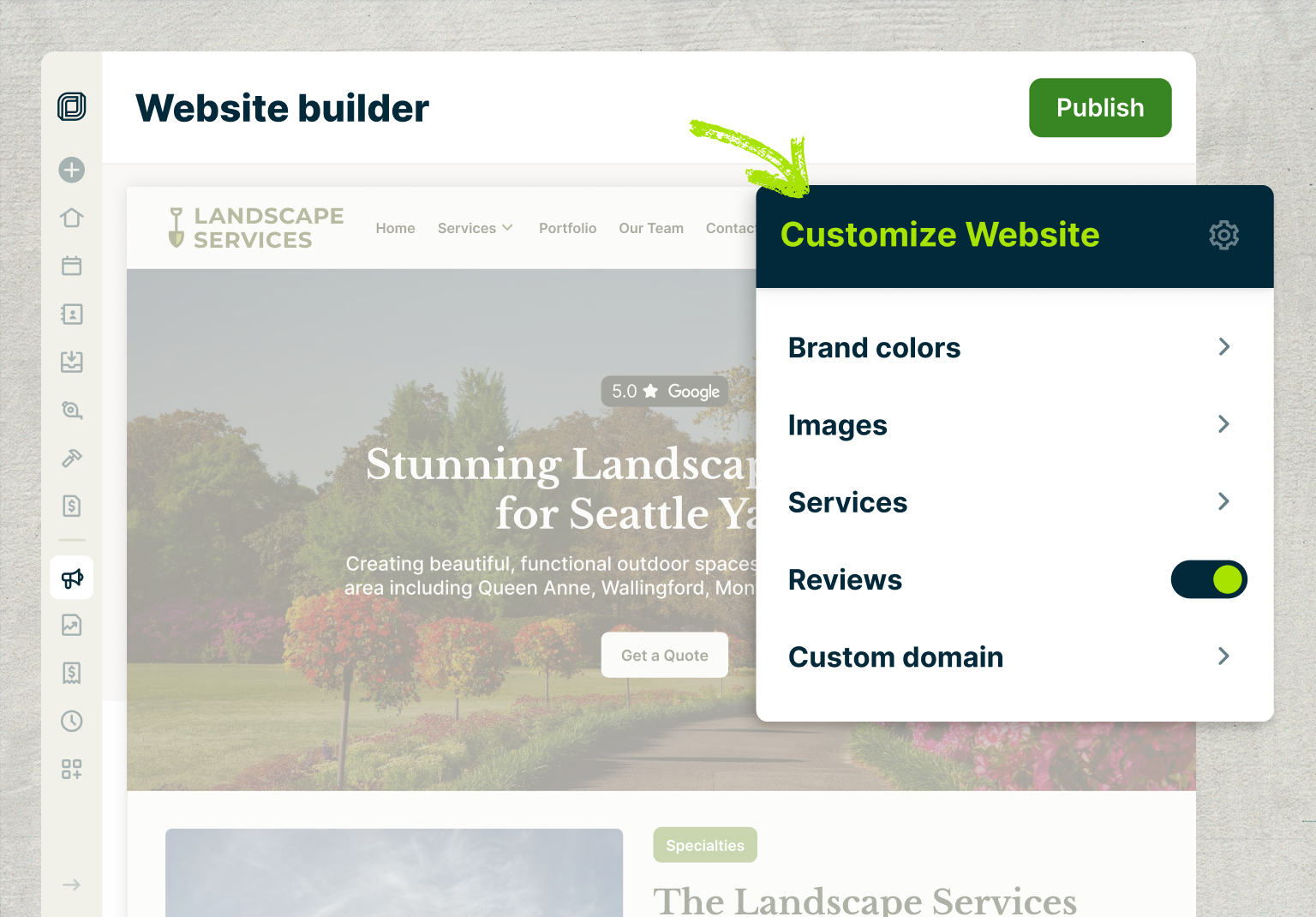
With Jobber websites, you can build a customized website in minutes and use built-in SEO to attract customers in your area. Your website is specifically designed to help you appear higher in local search results—so customers find you first instead of the competition.
Once those customers visit your site, an AI receptionist is available to chat, take requests, and book jobs as needed. You can also monitor your website traffic and lead generation with detailed reporting.
Create website content
Writing helpful, informative content helps answer customer questions and tells them why you’re the right professional for the job. Build website content pages like:
- Service pages: Show off your expertise and explain what you can offer potential clients. Target one keyword with each page, like electrical installation, smart home wiring, or home electrical repair, to boost your chances of ranking.
- FAQs: Answer commonly asked customer questions, like how to prevent electrical fires or safely use extension cords. These FAQs can be used on a dedicated FAQ page or as sections on relevant product pages.
- Blog articles: Write blog articles that answer common electrical questions, like how to fix a blown fuse. This presents you as an expert and attracts visitors to your site.
- Location pages: Share more information about your service area and include contact information to highlight your work in the community and attract local customers.
Whatever type of content marketing you choose to produce, it should be high-quality, published consistently, and updated at least once a year to ensure accuracy.
Each page on your website should also have multiple links to other pages on the site. These are known as internal links, and they help visitors move through your website and learn more about you.
Blogs help customers find your business when they’re looking for a solution to their problem.
Get backlinks from other sites
Backlinks are external links from other websites to your site. This tells Google that your website is a trustworthy authority on electrical topics and should be ranked accordingly in search results.
The more links you have from other authoritative websites, the higher your website will appear in search results. That’s why this is a critical part of your electrician SEO strategy.
Try these backlink-building tips:
- Create profiles on other websites, including third-party review platforms like the Better Business Bureau.
- Set up profiles on directory sites for home service providers, like Angi and HomeAdvisor.
- Write guest blog posts for other websites, such as electrical industry publications or websites for other service businesses.
All of these tactics will help you build your backlink portfolio and present your small business as a trustworthy service provider.
Technical SEO for electricians
Technical SEO is all the backend work that makes your website easier for search engines to read. It’s also one of the harder parts of SEO for a non-expert to manage.
Here’s what you should focus on:
- Make sure the site loads quickly so visitors can reach your content faster. Compress large image files, remove or simplify code for large visual elements, and use a reliable web hosting provider for faster loading.
- Ensure all pages look good on mobile devices. Your ideal customers are using the site on multiple device sizes, so the site needs to work on every screen. It’s best practice to design your site with mobile visitors in mind first, then extend it to larger screen sizes.
- Regularly check for broken links. Non-functioning links tell Google that you aren’t maintaining your site content, so be sure all of your links are working properly. Using clean, simple page URLs can help avoid broken links.
Off-page SEO
As the name suggests, off-page SEO happens on other parts of the Internet—not on your website. It involves everything you do on other websites to help your business appear in search engine results.
Google sees your digital footprint across the web and grants your business greater trust and authority as a result. This includes your Google Business Profile, listings on local business directories like Yelp and Angi, and backlinks to your site from other sites or from AI searches.
Here are some off-page SEO activities that will help you attract more customers:
Claim your Google Business Profile
Claim your Google Business Profile and add important details about your business, like your hours, website URL, contact details, and anything else customers need to know.
Google Business (formerly Google My Business) integrates with every part of Google’s search platform to provide information about your business, from search results to maps.
Create a Google Business Profile for your business as soon as you can. If you have multiple service areas or office locations, you can create profiles for each area as long as you follow Google’s listing guidelines.
Manage your listings regularly to ensure your content is up to date.
Collect customer reviews online
Your Google Business Profile and other online profiles play a role in how customers find and choose your services. Positive reviews and professional responses boost your online credibility and search visibility.
While it might be a lofty goal, a total review rating of 4.5 or higher can significantly increase the leads you generate from your business profile. Almost 16% of all businesses don’t have any ratings on Google, so earning those stars separates you from the crowd.
Request and respond to online reviews from all customers, not just the satisfied or unhappy customers. By actively managing your profile and learning from competitors, you can build trust and stand out in your market.
Follow these tips for collecting and managing your business’s online reviews:
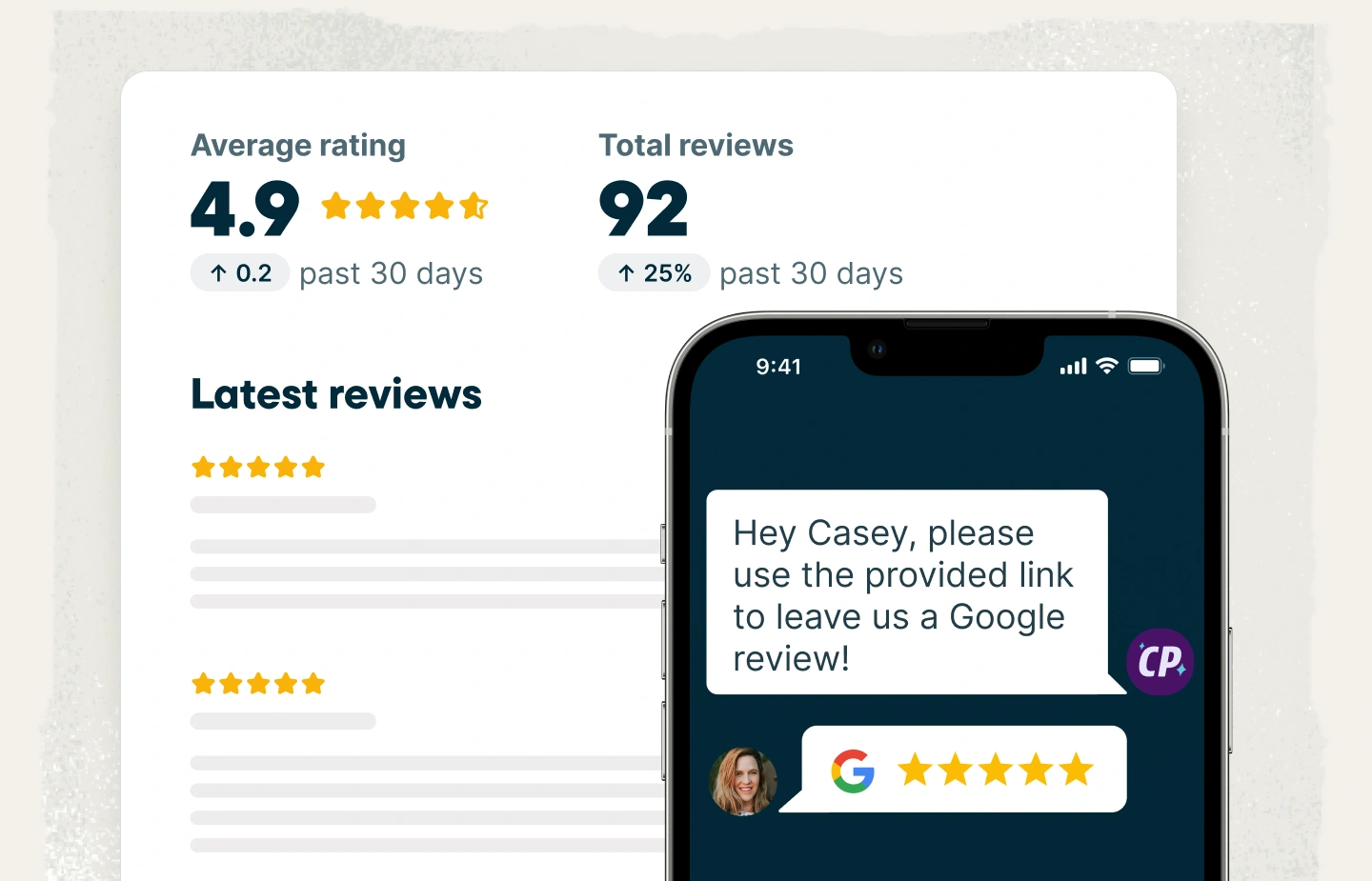
- Ask at the right time. Request a review shortly after completing a job while the customer’s experience is still fresh. With Jobber Reviews, you can send the customer a personalized review request at the same time you send the invoice.
- Make it easy to leave a review. Your customers are doing you a favor by publicly reviewing your services, so it should be easy to do. Share a direct link to your Google review page via text or email, or include the link on all of your invoices.
- Respond to all reviews. Use a polite, professional tone when responding to every review of your business. Potential customers notice your responses just as much as they notice the reviews themselves. Thank your customers for their feedback and address any concerns as honestly as you can.
Another meaningful goal to aim for is more than 50 Google reviews. Only 35% of businesses currently have more than 50 reviews, so reaching beyond that milestone would put you in a competitive position as an electrician.
With Jobber Reviews, you can easily and automatically collect reviews from customers once a job is finished, a visit is complete, or an invoice is paid. In fact, Jobber Reviews users receive 2x as many monthly reviews.
You can also respond to your customers’ reviews through the app to thank them for their feedback and monitor how people feel about your business through an easy-to-use dashboard.
Build online directory profiles
In addition to a Google Business Profile, it’s a good idea to build profiles on business directories like Yelp, Angi, or Thumbtack, using the same information.
The more profiles where you’re listed, the more visible your business is. Be sure to manage them so the information is up to date.
Your customers visit these sites to find electrical contractors, so you should have a detailed profile in place that provides the information they need. The profile should include:
- Your electrical business name
- Your website URL
- The business’s contact details (e.g., phone number, email address)
- A description of your business and the electrical services you offer
Depending on which platforms you sign up for, you might even get quality backlinks to your website that help boost your online reputation even further.
How to get found in AI searches
Your customers are using AI search providers like ChatGPT, Copilot, and Gemini to find product and service recommendations. These AI models create answers to user questions by combining valuable information from reputable and credible websites.
Being included in these responses makes your company more visible—and more likely to be chosen by the customer.
You can be included in AI search results by providing clear and trustworthy answers to user questions. Here are some ways to do that:
- Write helpful content that is easy to understand and answers electrical questions directly.
- Use simple language and structure so AI can understand your headers and content.
- Keep information on your services pages up to date so AI can deliver the most accurate results for pricing, location, contact details, and more.
- Build trust through reviews and backlinks that AI will use to validate you as a dependable source for answers
- Add FAQs to your pages to provide examples of short and straightforward content directly from your site.
Today they’re choosing [contractors] fast and it’s happening in AI.
Your future customers are deciding whether to trust you before they even pick up the phone, before they visit your website.
How to measure SEO traffic
There are a number of ways to measure your SEO traffic and the downstream effects of that traffic—from website visitors and engagement, to lead generation and new customers.
Tracking and understanding your SEO performance is critical to making the right strategic decisions for your business. Use these tools and methods for tracking:
GA4 (formerly Google Analytics)
You can monitor your overall page views and visitors in GA4 (formerly Google Analytics). You can take this data further by looking at specific engagement metrics to understand how users interact with your site.
Engagement metrics to watch include:
- Pageviews: Every time a user visits a page on your website. The same person can go to 10 pages, and that counts as 10 pageviews. This helps you understand how many pages of your site users are experiencing.
- Visitors: The individual user who comes to your website. Users are counted only once, and the number of pages they view does not affect the total. This helps you understand the scale of your audience.
- Bounce rate: The percentage of users who leave your site without taking any action. You want people to click through your pages or on your calls to action, so a high bounce rate is not a good thing. This helps you understand how effective your landing pages are and if your site is engaging.
- Pages per session: The total average number of pages users visit when they come to your site. This helps you understand how easy your site is to navigate and whether users are interested in your content.
- Engagement rate: The percentage of users who are active on your site for more than 10 seconds or who take an action such as clicking a call to action or going to another page. This helps you understand if users are interacting with your site and content.
For example, you’ll be able to see how many users visited your website through Google search results and how many of those users clicked through to another page, or left the site immediately.
You can also compare engagement between search and other referrer channels, like social media, to understand the quality of audience you’re bringing in from SEO.
Google Search Console (GSC)
You can also monitor your search performance through your page ranking, which is most easily tracked in Google Search Console (also known as GSC).
Through GSC, you can see the number of impressions your pages get in search, the number of clicks through to your site, and your pages’ average ranking. This lets you know whether your SEO efforts are helping or hurting your rankings.
- Search impressions: The number of times your page appears on a user’s screen in search results. They don’t have to do anything for you to get an impression; they just have to scroll past it. This helps you understand how visible your pages are in search.
- Search clicks: The number of times people click on your page from search results. This helps you understand if people are choosing your link over other options.
- Average page ranking: The average position your page appears in search. The higher your ranking, the more impressions and clicks you’ll get. This helps you measure where you sit among competitive search results.
Manual tracking
If you want to go a little more manual, just search your target keywords in Google and see where your page ranks. This is the real-world experience for your users and gives you a sense of where you stand next to your local competitors.
The downside is the time and effort it takes to properly document and organize your tracking. You can try SEO tools like SEMrush and Ahrefs that let you connect your website, set up keywords to watch, and provide details about your page performance and ranking against those keywords.
You can also track calls, form submissions, quote requests, and bookings on your website to see whether your newfound traffic is generating leads and new work.
SEO mistakes to avoid
SEO is an effective way to create an online presence, but it could hurt your brand if you aren’t careful. There are several mistakes that could cause Google to remove your site from search results.
Here are some popular examples of SEO mistakes you should avoid at all costs:
- Keyword stuffing: Force-feeding keywords into your content is easily recognizable, and it makes for an uncomfortable reading experience. Google knows you’re trying to game the system and will not improve your ranking.
- Fake reviews: Google can detect if you’ve added fake reviews to improve your business ratings. It will hurt your local search ranking and damage your reputation.
- Buying backlinks: It’s a common practice, but it actually does more harm than good to site authority.
- Thin content: Pages with very little information are not helpful to customers and are unlikely to rank in search results. If you have too many thin pages, Google will penalize your whole site.
Electrician SEO is an ongoing investment, not a one-time effort. Done right, it can drive a steady flow of leads, improve your online reputation, and give your electrical business a competitive edge in a crowded market.
Frequently Asked Questions
-
Electrician SEO can show improvement in as little as 3–6 months. If you’ve executed the changes properly and your digital presence is much stronger than before, you’re likely to see the most significant growth in organic search traffic in 6–12 months.
This gives Google enough time to properly crawl all your updated pages, evaluate your content, and rank you properly against competitors in your area. -
Electrician SEO is absolutely worth it for the success of your local service business. You give yourself a better chance to generate qualified leads and bring in new customers.
SEO addresses users’ needs at the time they’re searching for solutions. If your business is one of the top options, you’ll increase long-term visibility while decreasing your cost per lead. -
A great place to start with your electrical SEO keyword targets is service-based keywords (who you are and what you do) and location-based keywords (where you provide the service).
For example:
• electrician near me
• [city] electrician
• [city] electrical contractor
• emergency electrician
• electrical panel upgrade
• home electrical repair -
Yes. If you provide a service in different cities, you should have a separate page for each city. Google is providing search results based on the most relevant options for users, so a dedicated page for each of your service areas gives you the best chance to rank for keywords like “[city] electrician”.
One important note is that the content of these pages also has to be unique. If you copy and paste text across a large number of pages, Google will penalize you for duplicate content.