Best Electrician Website Designs: 17 Examples and Tips for Electrical Contractors

Key takeaways:
If you want your electrical contracting business to stand out and win more jobs, a great website is essential—these best-in-class examples and pro tips show exactly how it’s done.
- Take inspiration from 17 exceptional electrician website examples. These sites use features like eye-catching photos, clear calls to action, client testimonials, and online booking forms to attract and convert visitors into customers.
- Focus on key website elements that drive results. Essential features include mobile-friendly design, strong branding, clear contact information, detailed service and service area pages, customer reviews, team photos, simple menus, and online booking or quote request forms.
- Choose a site builder that fits your needs and skills. Platforms like Jobber, Wix, Squarespace, WordPress, and GoDaddy offer different options for DIY and professional websites, with Jobber providing dedicated service-business features for effortless lead capture and job scheduling.
- Use templates and checklists for a fast, professional setup. Pre-built electrician website templates save time and make it easy to include important sections like testimonials, project galleries, and service area information without having to start from scratch.
- Optimize for search and credibility from day one. Leverage local SEO, share authentic customer reviews, and showcase certifications and service history to build trust, increase visibility, and grow your business.
For more actionable tips and industry insights, sign up for the Jobber Newsletter today and keep your business growing. Sign up here.
Your website is often the first place potential customers learn about your electrical business. A quality electrical website can help you attract customers, build trust in your business, stand out from competitors, and turn more visitors into booked jobs.
We’ve compiled 17 of the best electrician web design examples to inspire you. We’ll share what they do well and tips on how your website can make your business more money.
Check out these electrician website design examples:
17 best electrician website design examples
Below are 17 of the best electrician website examples to inspire you. Take a look and learn how each one successfully informs customers and wins new work.
1. Ideal Electrical Solutions

Ideal Electrical provides a clear description of the business and an overview of the services they provide. Built with Jobber, this website makes it easy for visitors to figure out whether the company is the right fit for their electrical needs.
What their electrical website design does well:
- Provides a free estimate request button that tells visitors what their next step should be
- Offers a contact form that makes it easy for potential customers to request an estimate
- Has a client login portal so current clients can schedule services, see quotes, and pay invoices online
Like how this website looks? Get your business online in minutes with a simple, professional website. Just provide Jobber with details about your electrical business, and we’ll create a website for you.
Your website automatically comes with features like Google Business Profile integration, a quote request form to convert visitors into leads, and a dashboard for tracking visitors and requests.
If you’re really looking to scale your business, you should look at having a professional website.

2. D’Angelo Electrical Contractor
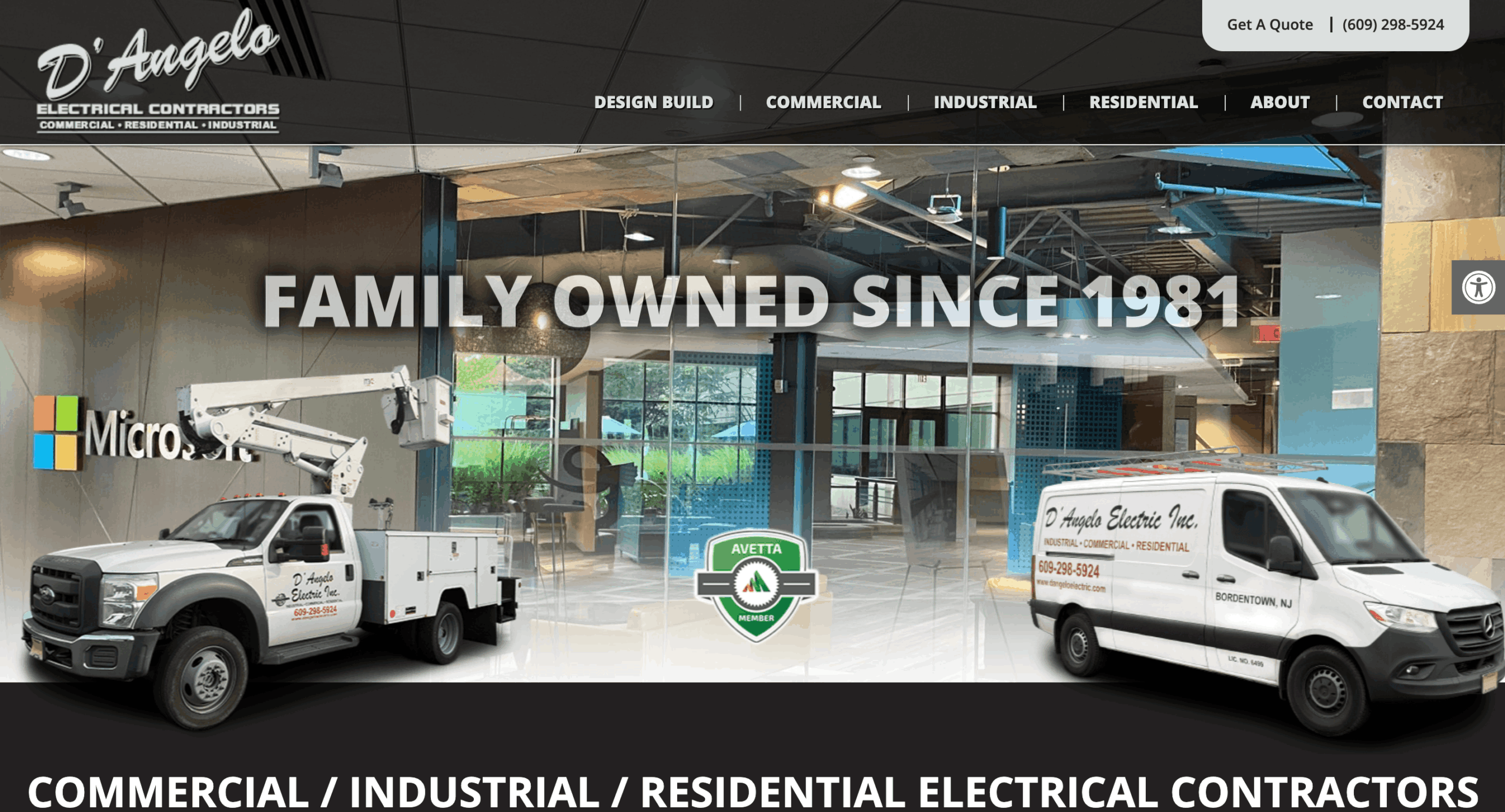
The D’Angelo Electrical website is divided into sections for the different types of customers they serve, such as residential, commercial, and industrial. This makes it easy for visitors to find the content that’s relevant to them.
What their electrical website design does well:
- Has an About page that provides company background, explains core values, and tells visitors why they should choose D’Angelo to provide electrical contracting services
- Clearly lists the company’s phone number and a “get a quote” button at the top of every page
- Includes the company’s New Jersey contractor number in the site footer for trust and transparency
3. 4th Generation Electric
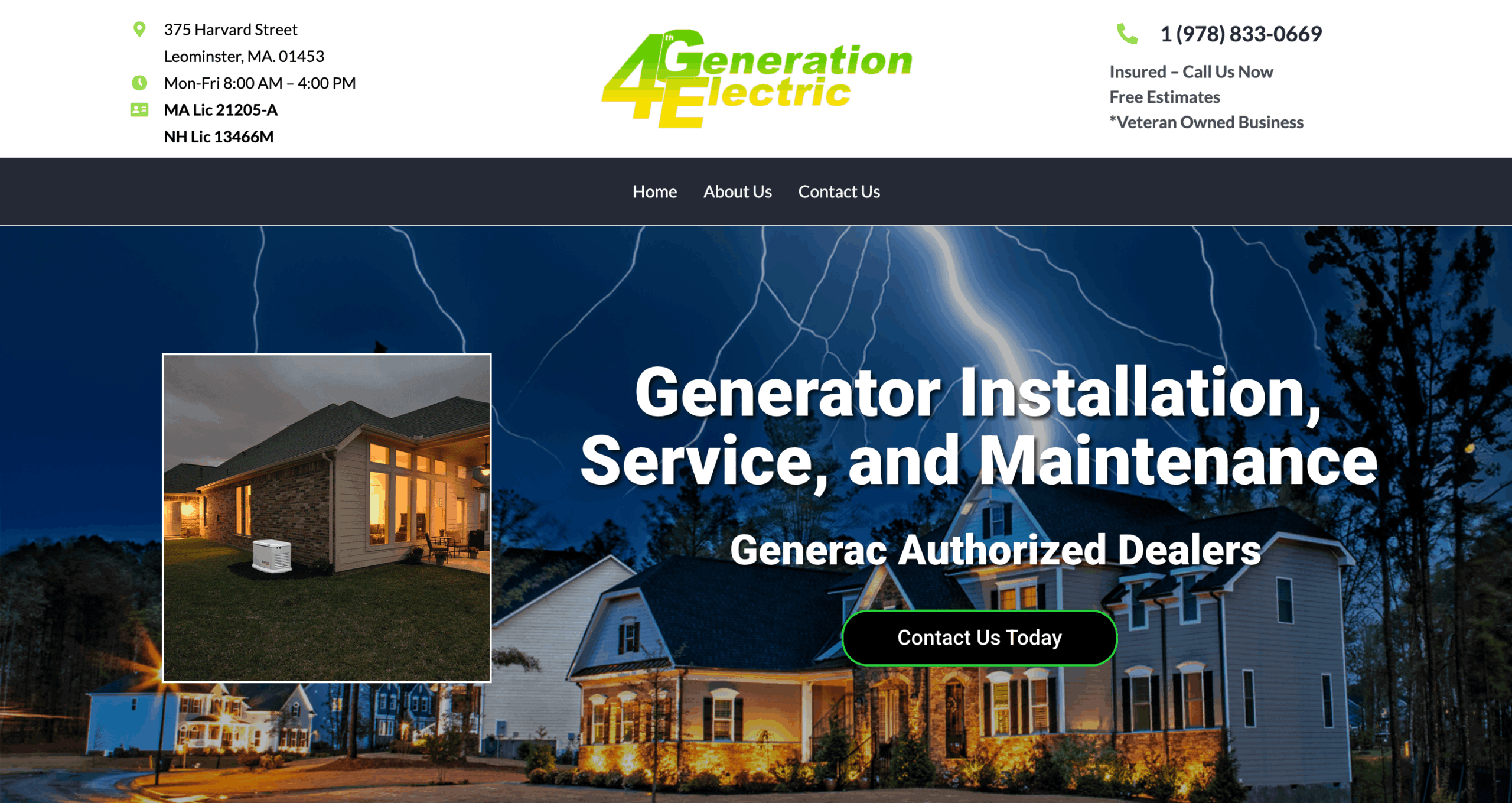
The 4th Generation Electric website has contact information at the top of every page, along with their unique selling propositions (USPs)—they’re insured, veteran-owned, and offer free estimates.
What their electrical website design does well:
- Describes their service area in Massachusetts and New Hampshire, mentioning specific areas so site visitors know whether they can receive services
- Lists all deals that are currently available to customers
- Has a team page with photos of their electricians, so site visitors can learn more about the company’s employees
4. Lycas Electric
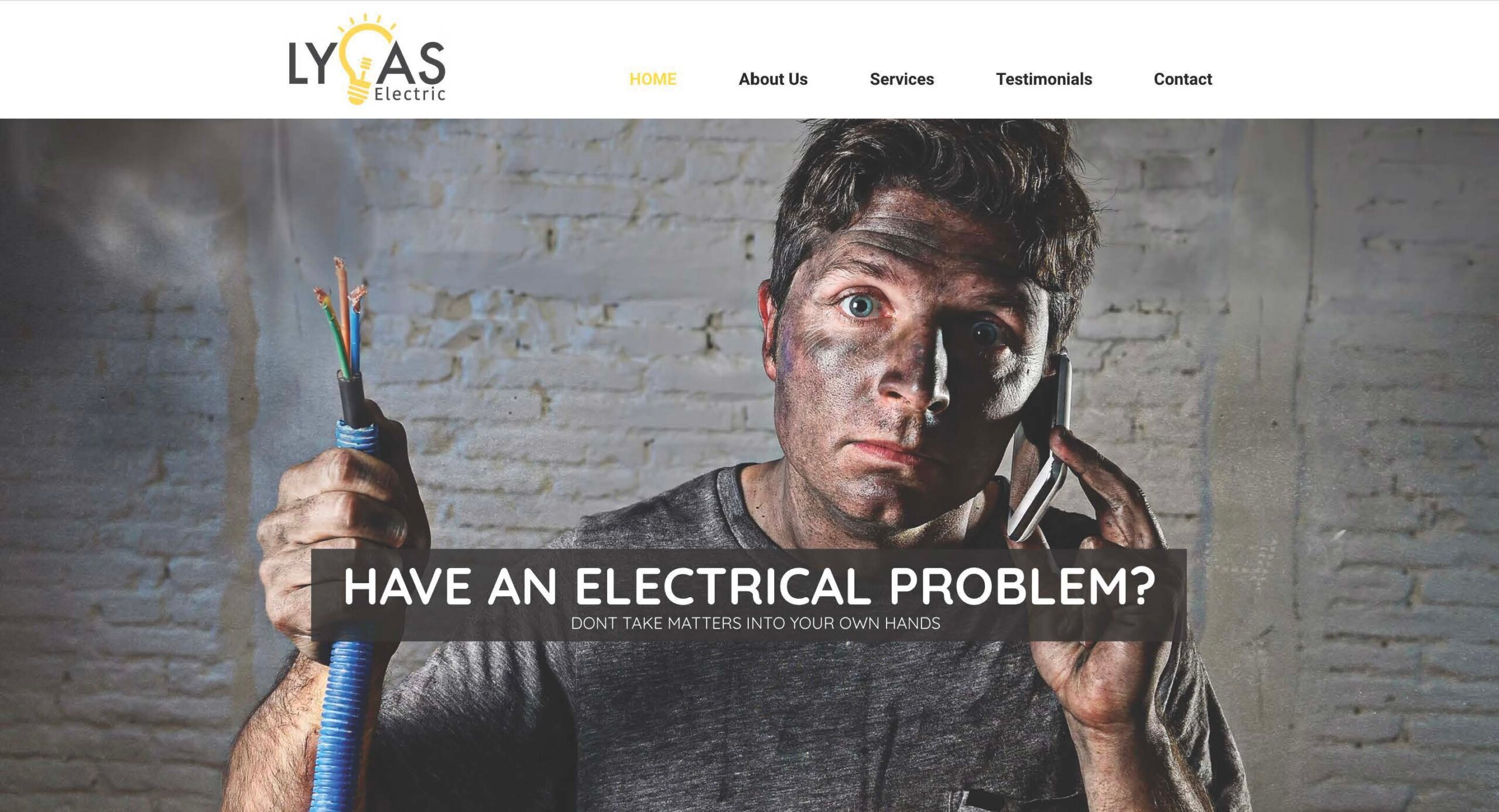
Lycas Electric has a simple one-page website, which makes it easy for customers to learn about and contact the business. It’s a great option if you need an online presence fast.
What their electrical website design does well:
- Uses an eye-catching hero image and text at the top of the home page
- Provides crucial information about the business and services
- Offers a contact form so clients can get in touch and request services
5. The Electrical Works
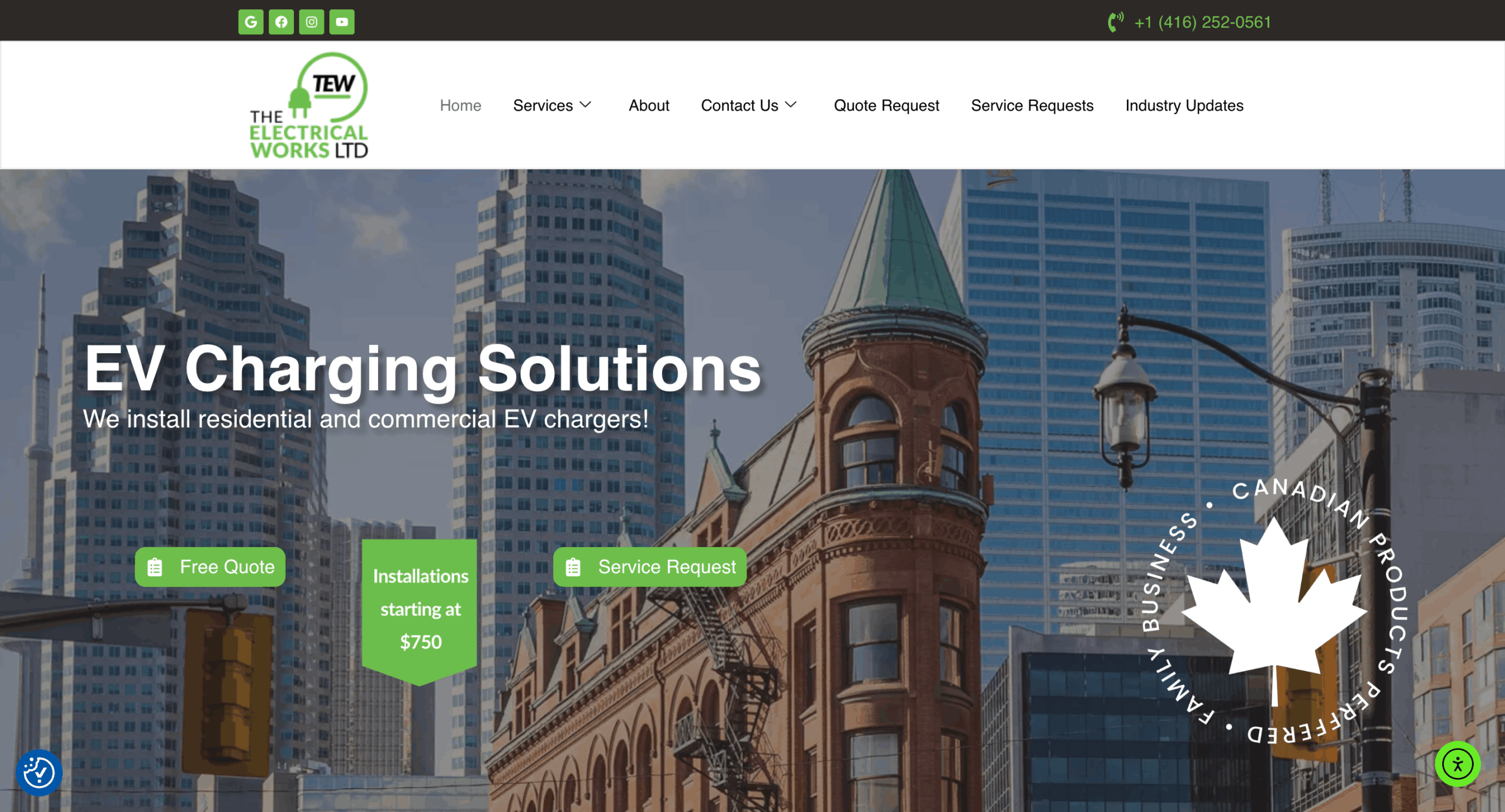
The Electrical Works offers standard electrician services, but their site is focused on EV charger solutions. This specialty service sets their website apart from competitors who don’t offer the same thing.
What their electrical website design does well:
- Shares a list of partners to show their certifications, the electrician software they use, and the organizations they’re part of
- Includes links to external resources that are relevant to customers, like Canada’s zero-emission vehicle incentives program
- Shows a company timeline of events to illustrate its long history, which makes the business look more established and trustworthy
6. Power Electric & Solar USA
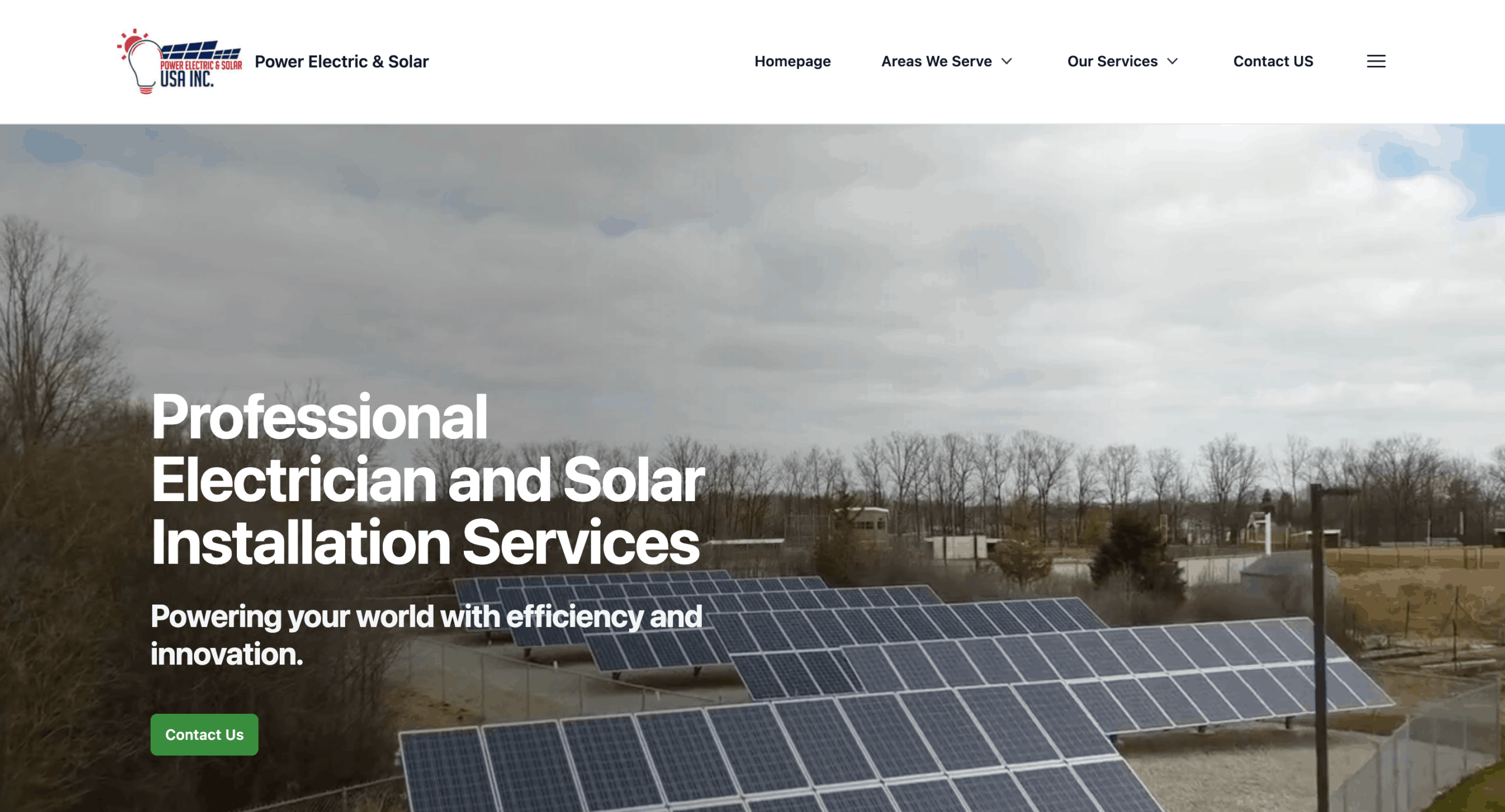
Power Electric’s website has a map showing all of the areas they serve in Florida. They’ve created unique pages for every location, so potential customers can quickly determine whether or not they’ll be able to serve them.
This is great for local SEO, since it improves the odds that the website will appear in a list of local Google search results, like when a customer searches for an electrician in DeLand, Florida.
What their electrical website design does well:
- Has a clear navigation that makes it easy for potential customers to find the information they need
- Provides a unique page for each type of service they offer—and each area they serve—which helps the site appear in search results for those services and locations
- Uses high-quality photos to support text content and make the site look more professional
7. It’s On Electric Company
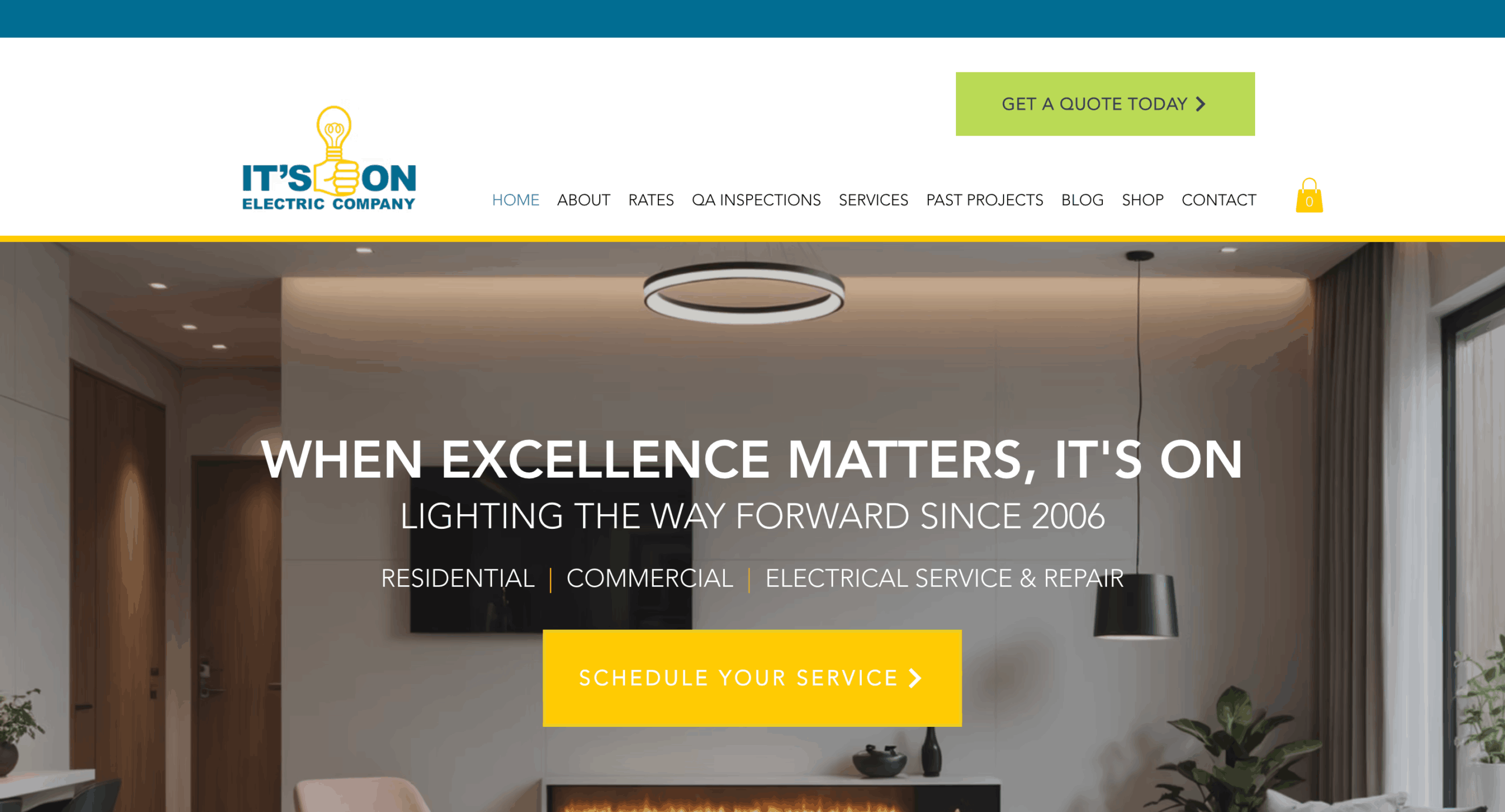
It’s On Electric has a well-built website with lots of useful content, including an online store, detailed descriptions of their services, and a Google map showing where the business is located.
What their electrical website design does well:
- Offers clear CTAs like “get a quote today” and “schedule your service” so visitors know what to do next
- Clearly lists their rates so customers can see they’re competitively priced, even before requesting an estimate
- Has a shop so customers can buy recommended products online, like thermostats, floodlights, and air conditioning accessories
8. Action Electrical
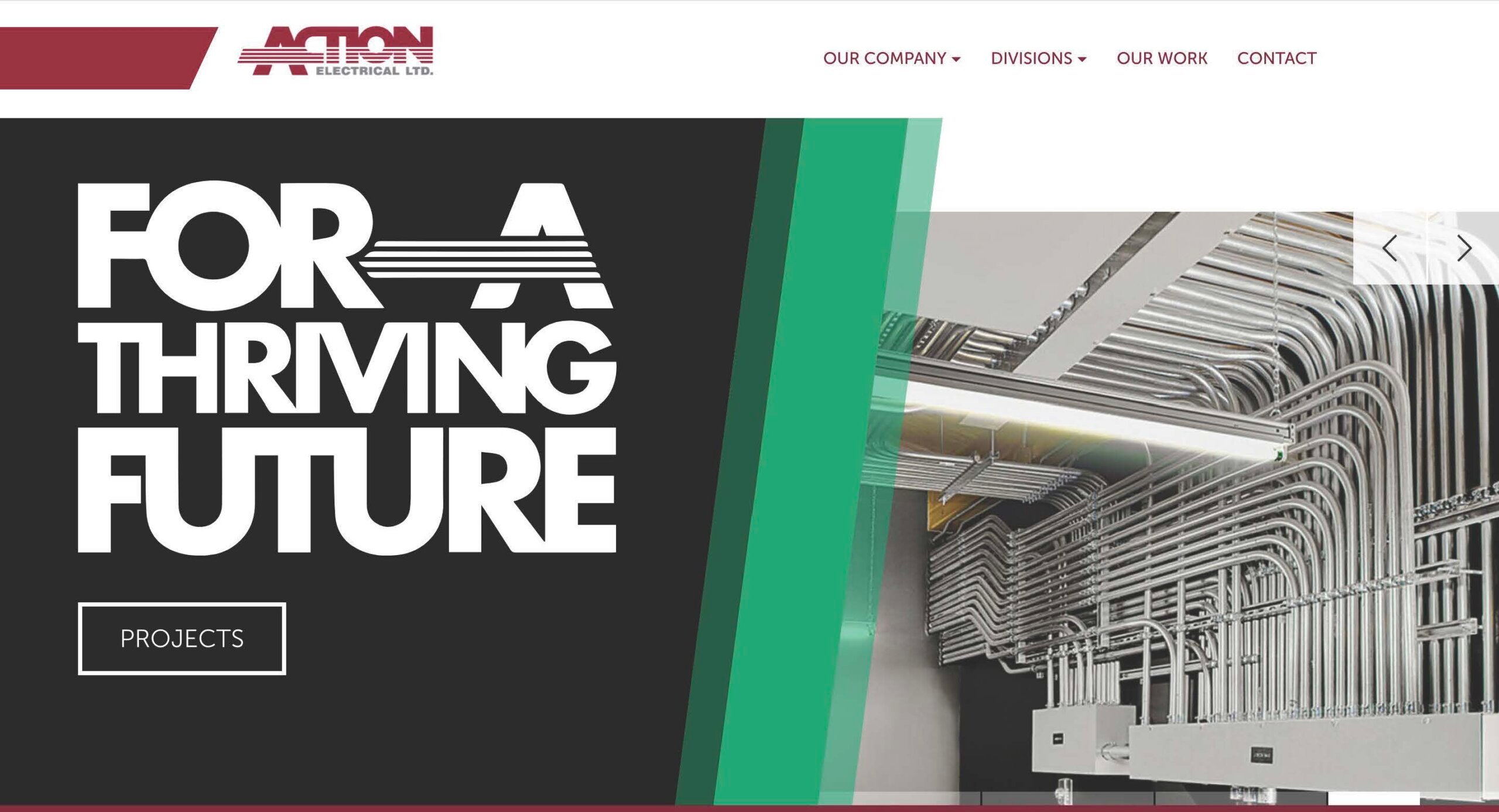
The Action Electrical website has project case studies, which are incredibly useful for potential customers. These pages have high-quality photos of completed work and detailed information about each job.
What their electrical website design does well:
- Has a Careers section listing open positions and reasons to work at the company
- Lists all available specialty equipment, showing the company’s ability to handle different types of work
- Provides a newsletter signup area so customers can join the business’s email marketing list
Use Jobber to create email campaigns and send emails faster. Choose from premade templates that are built for specific goals and customers and can be customized with your branding.

You can choose which clients you want to email, select clients based on job history or type of service, and automatically send specific emails to clients based on the conditions you set.
All of your email campaign data is trackable through a simple dashboard. For every campaign, how many customers opened the email, clicked a link, or converted into a job—and how much money you made.

9. Smiley Electric
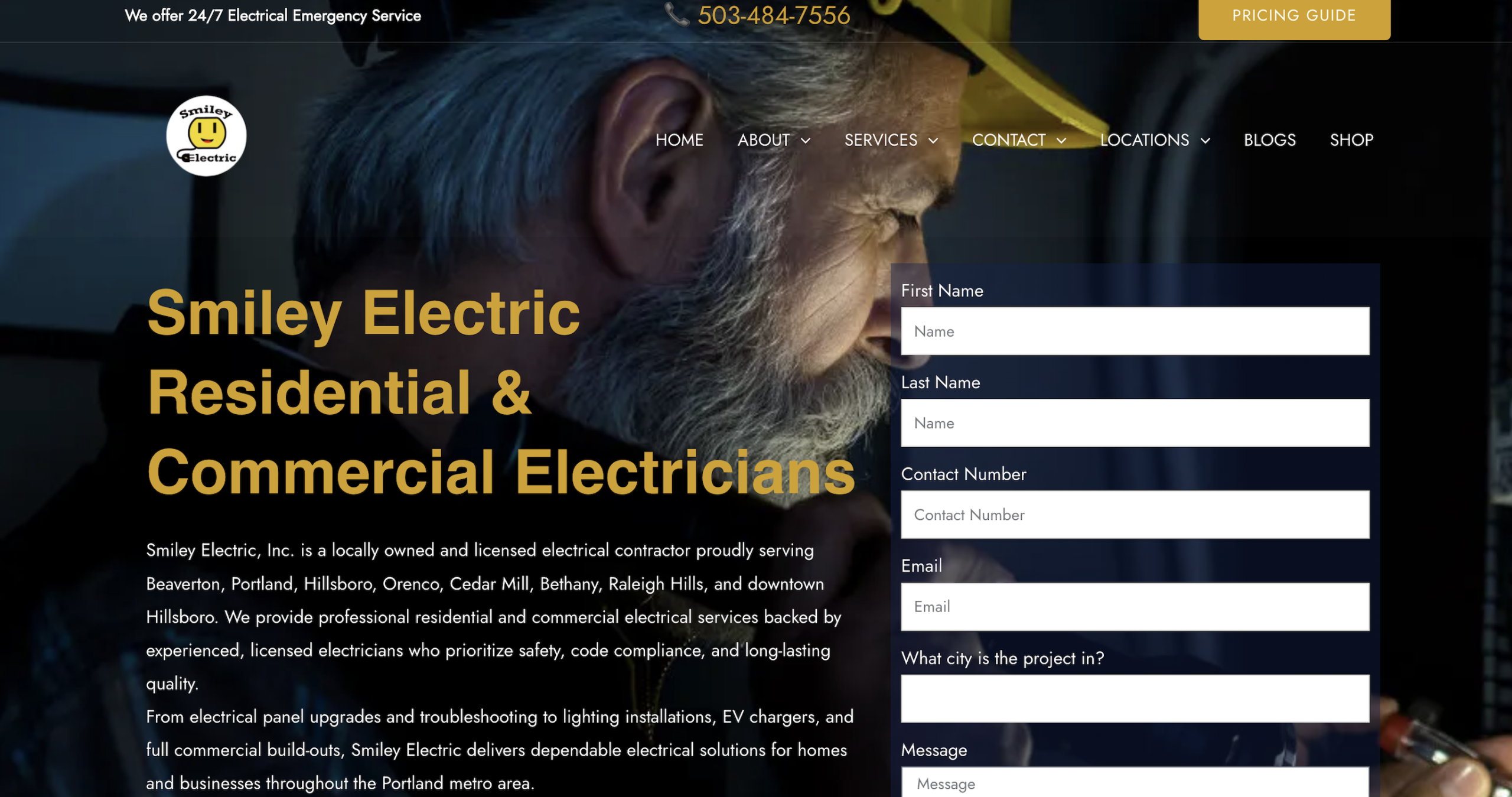
Smiley Electric’s website home page features an eye-catching photo and important details about the company, like the number of customers they’ve served and the number of years in business.
What their electrical website design does well:
- Provides a list of reasons to choose the business over competitors
- Includes clear rates so visitors know how much they can expect to pay for services
- Lists project timelines to set customer expectations for how quickly services will be completed
10. 5 Points Electrical

5 Points Electrical has a clean, simple top menu that makes it easy for customers to find the information they need. This navigation is stuck to the top of the page so it’s always visible.
What their electrical website design does well:
- Clearly communicates the “five points” that set their business apart
- Lists specific email addresses for specific purposes (e.g., billing, bidding, service) so emails are sent to the appropriate person
- Shares examples of their work and the names of large businesses they’ve partnered with to inspire confidence in their brand
11. Cisco Electric
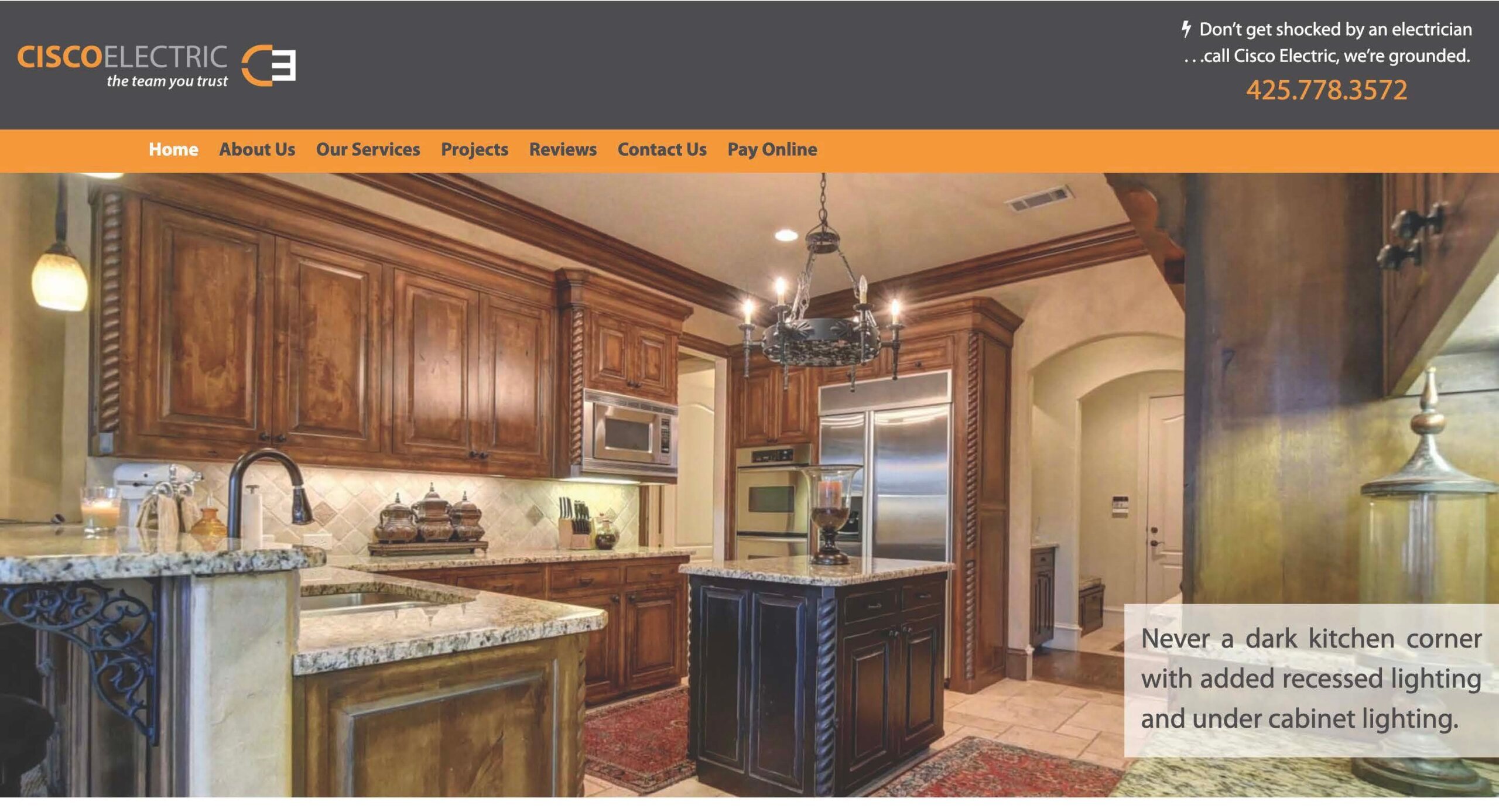
Cisco Electric has a unique testimonials page that pulls in reviews from different platforms. This gives visitors a complete picture of what their customer experience will look like.
What their electrical website design does well:
- Lists specific types of electrical services they provide (e.g., home rewiring, telecom wiring, electric heating, breaker upgrades)
- Photos showing the company’s expertise with different types of electrical projects
- Links to a payment page for easy online payment
12. Willxon Electric
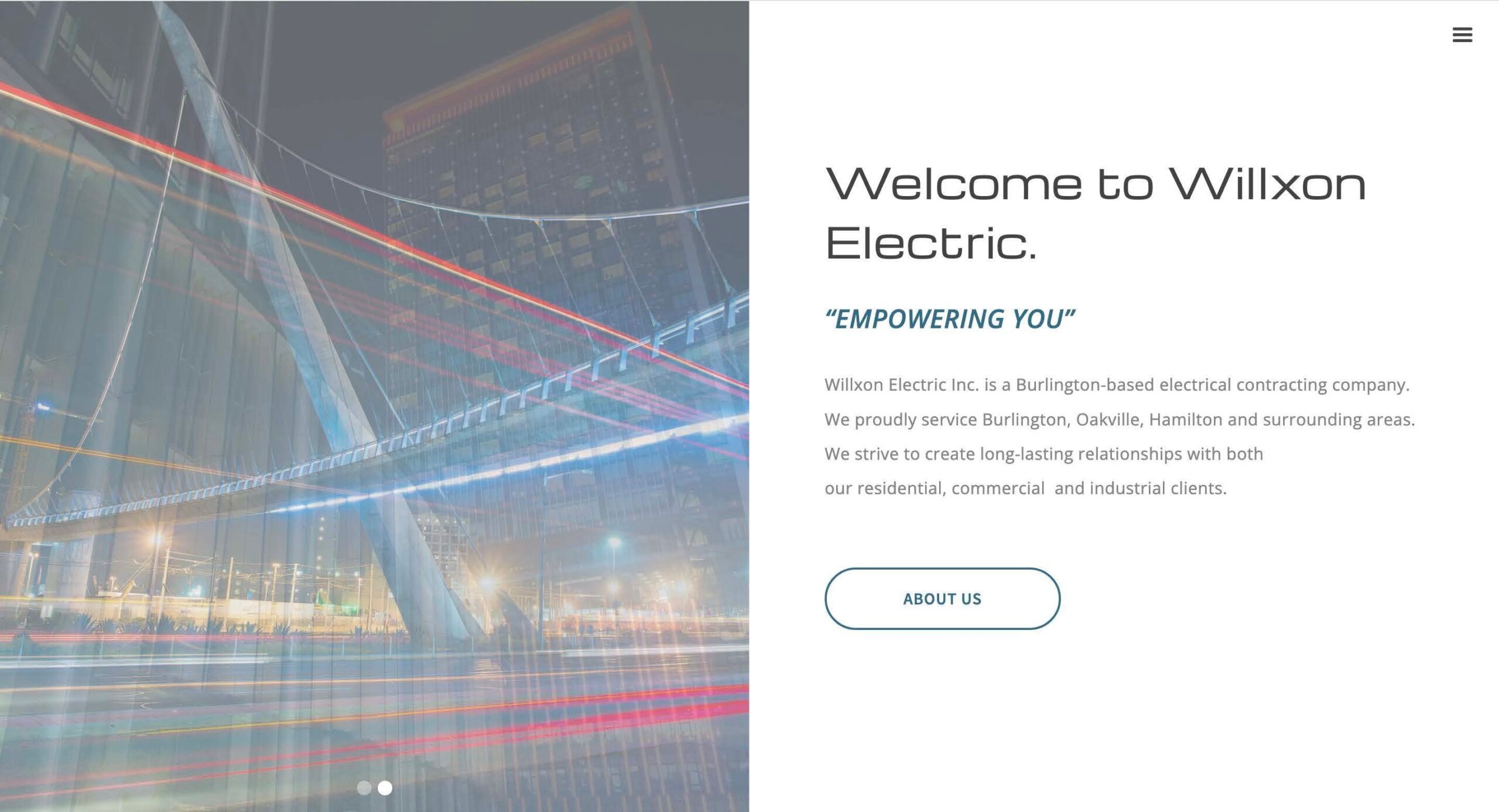
Willxon Electric’s single-page website has a modern and minimalist design that features simple blocks of color for a professional feel. This provides a clean, easy online experience for potential customers.
What their electrical website design does well:
- Provides a list of reasons to work with the company
- Shares information about the residential, commercial, and industrial services they provide
- Includes a list of high-profile clients and partners to inspire trust and confidence
13. Vancity Electric

Like many sites on this list, Vancity Electric’s website uses individual pages for each service. But they stand out by including examples for each type of issue—for example, describing situations that would require a service call.
What their electrical website design does well:
- Displays a professional-looking team photo that introduces employees to customers
- Uses a Nicejob integration to show reviews that were left by recent customers
- Lets you book an appointment directly in their calendar based on their technicians’ availability
14. Smart Electric, Heating & Air
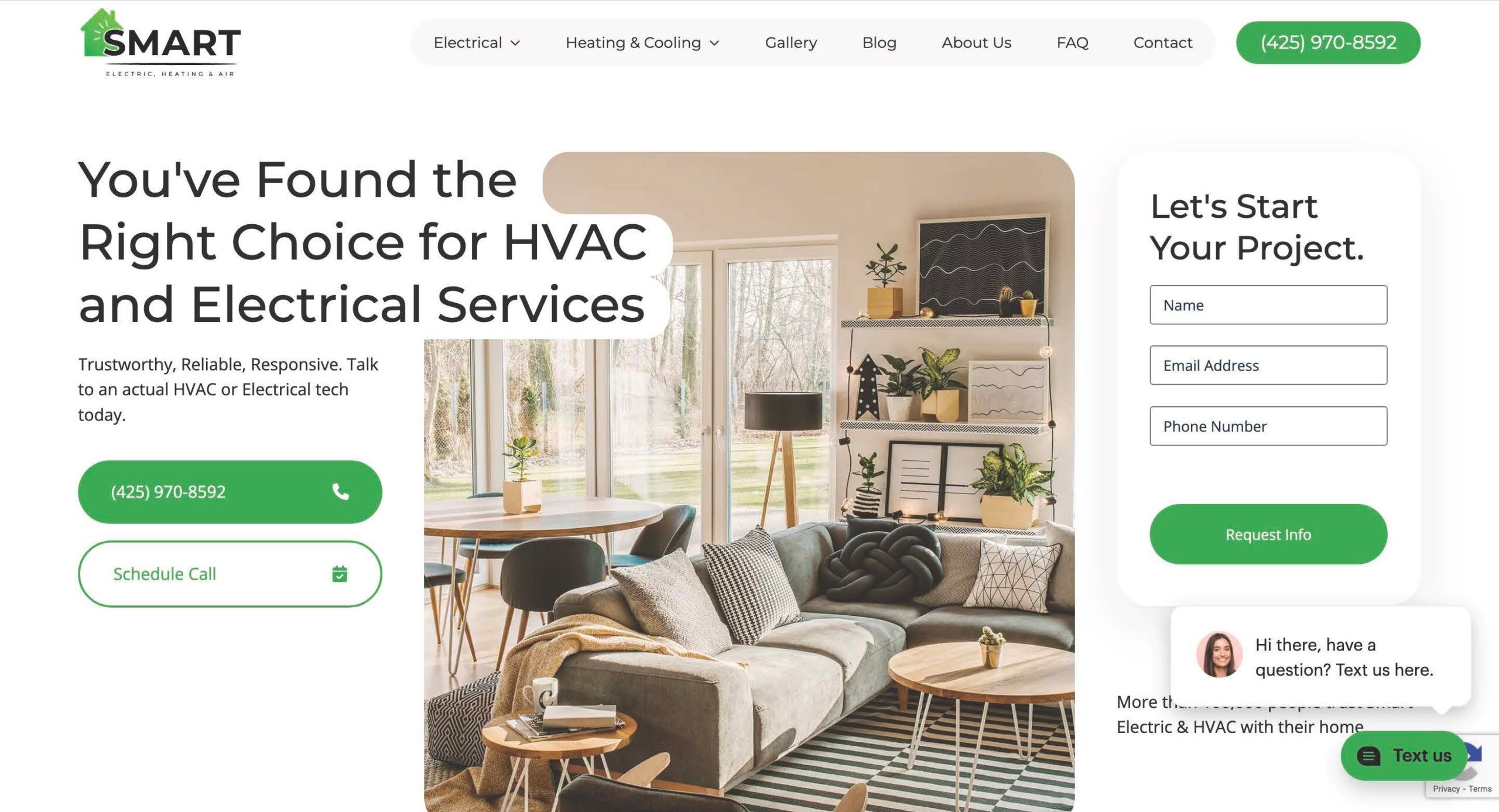
Smart Electric does electrical and HVAC work in the Seattle area. Their site is divided into sections for these services, which helps potential customers find the information they need.
What their electrical website design does well:
- Runs a blog with informative articles for customers, like what to do during a power outage
- Has a Payment Options page so visitors can plan for services while maintaining good personal cash flow
- Provides an FAQ section with answers to common questions about service, maintenance, billing, and other topics
15. Collins Electric
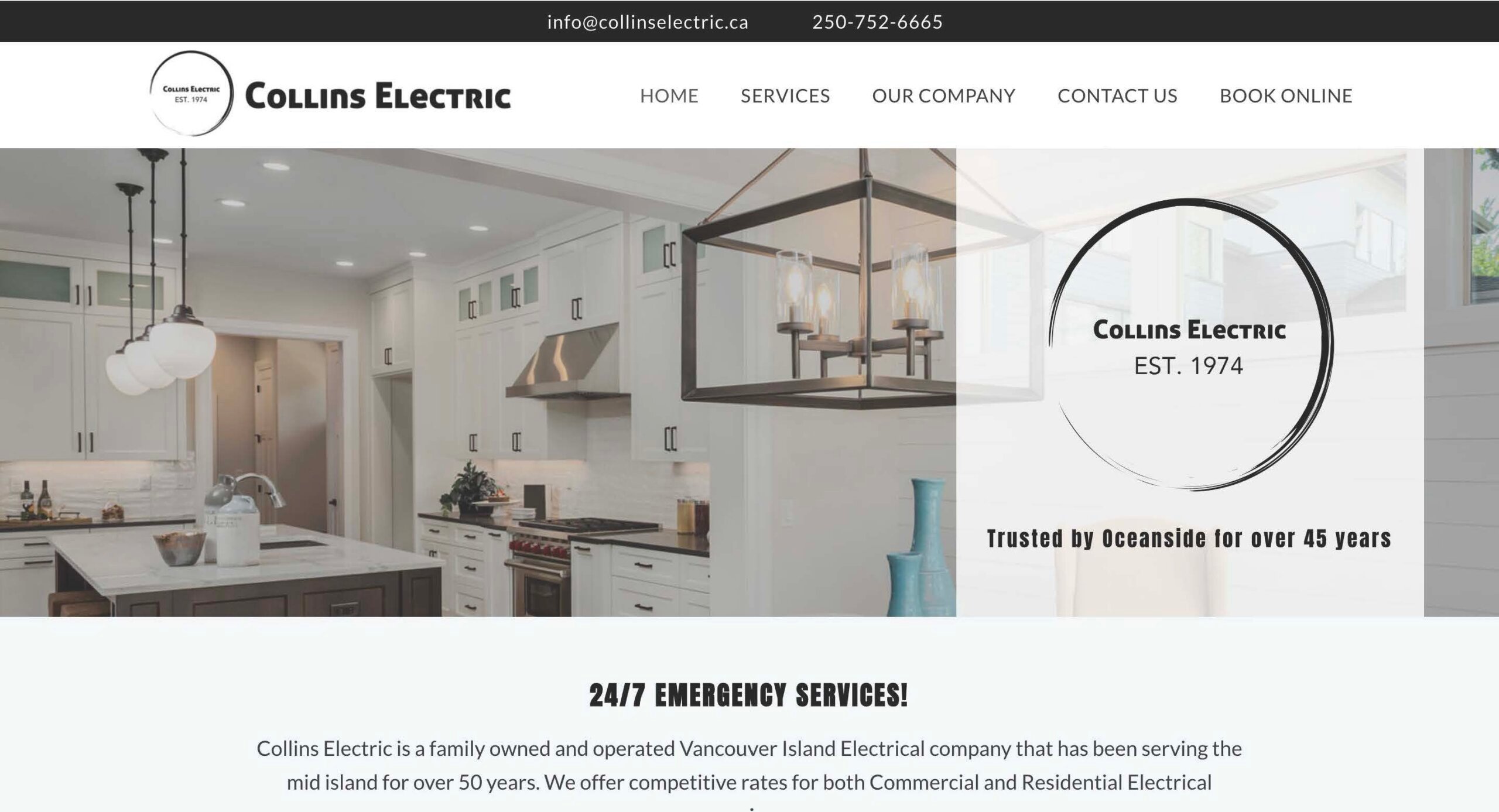
The Collins Electric website offers several ways to contact them and request services, including a phone number, email address, contact form, and online booking form.
What their electrical website design does well:
- States when they were established and how many years they’ve been in business to establish trust
- Describes the services they offer and provides unique pages for each one
- Lists the service areas they operate in, so customers know if the company can help them
16. O.J. Mann Electric Services
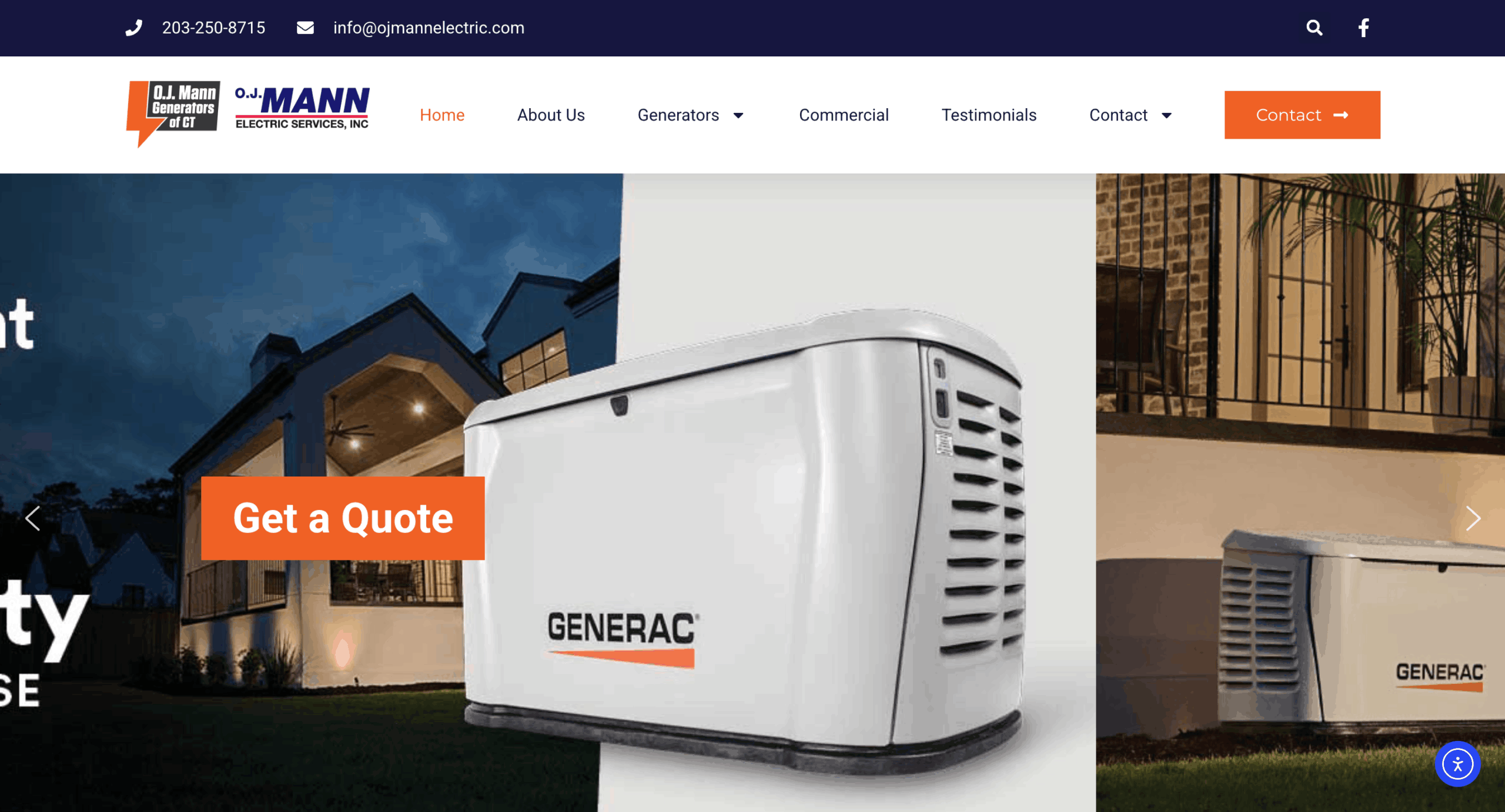
O.J. Mann offers generator and commercial electrical services, so their website content looks a little different from residential sites.
They list the commercial projects they’ve worked on, the specific generators they install—with product pages for each—and financing information to help address any cost objections early on.
What their electrical website design does well:
- Lists their promos front and center in the hero area on the home page
- Includes the company’s contact information at the top of every page
- Arranges testimonials by service area in Connecticut, making it easy to see if another customer in the visitor’s area was happy with O.J. Mann’s services
17. J&D Western Electric
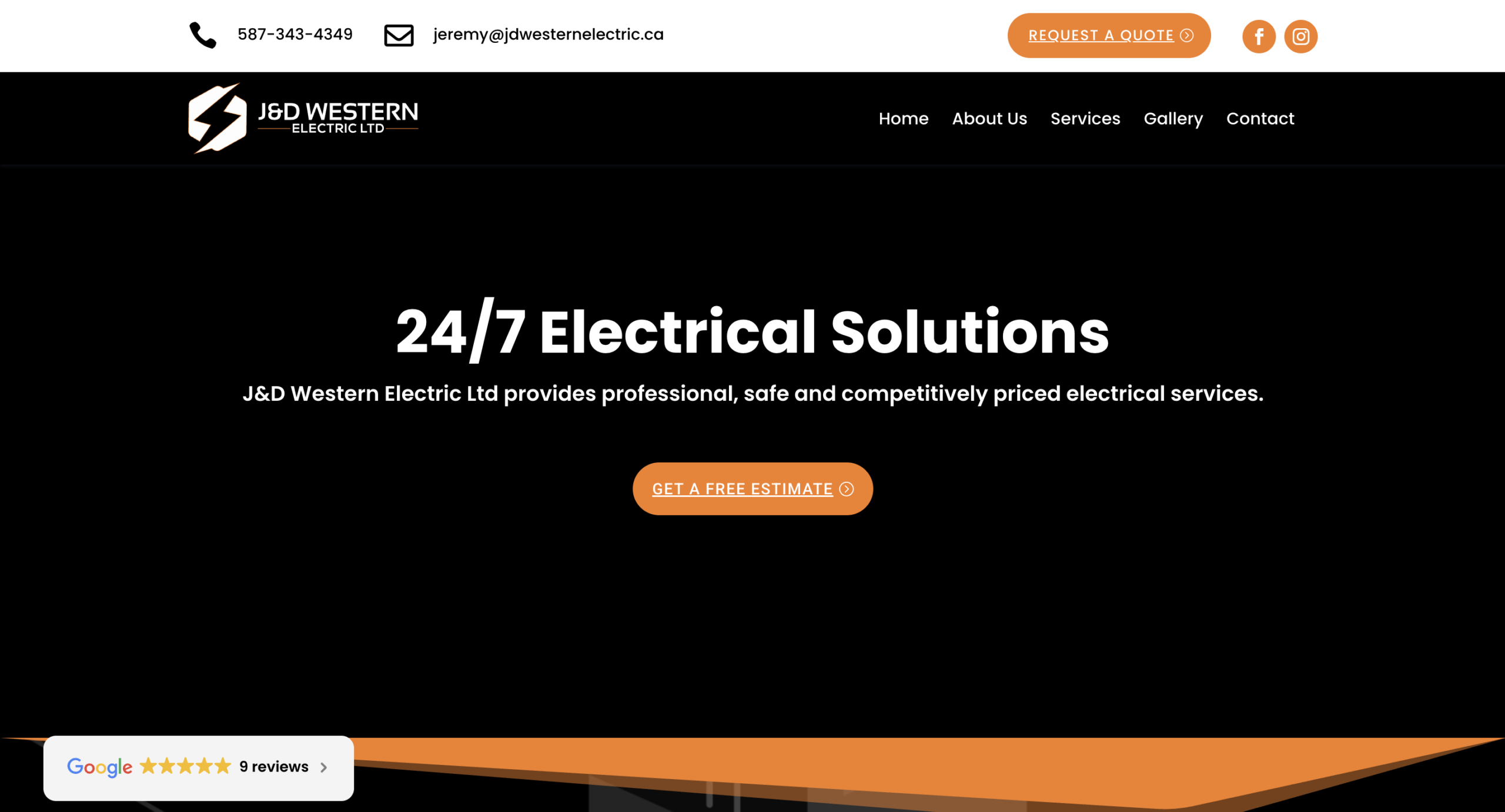
J&D Western includes their contact details, social media profile links, and “request a quote” button on every page. The menu is also stuck to the top of each page, so this information is always visible.
What their electrical website design does well:
- Lists accreditations, awards, and reasons to choose the company
- Uses clear CTAs throughout the site that encourage visitors to request a free quote
- List their accepted methods of payment on the Contact page
What makes a great electrician website design?
The best electrician websites usually include these elements, so make sure your website has them, too:
Mobile-friendly design
There’s a good chance most of your potential customers are visiting your website on their phones. Make sure your site looks great on mobile devices and fits a wide range of screen sizes.
Test this out by adjusting your browser window size on desktop devices, as well as viewing your website on different mobile devices. If any elements look broken or hard to read, you can adjust the design in your website builder.
Strong branding and business identity
Your website should look like it belongs to your company. It needs to include your electrical company name, logo, colors, fonts, and all the other visual pieces that make up your service business brand.
If you use Jobber’s website template, it’s easy to make the site match your brand. You can set your brand colors and fonts, upload images, and customize text to sound like your business. It only takes a few minutes to set up, giving you a professional-looking website fast.
Clear contact details and calls to action
Your customers need a way to contact you. List all possible ways they can get in touch, like your email address, phone number, social media handles, and office address. This information should be visible on every page of the website.
You should also include a clear call to action (CTA) that tells site visitors what you want them to do next—like filling out a contact form, calling a phone number, or requesting a quote. This makes clients much more likely to act, turning potential leads into new business.
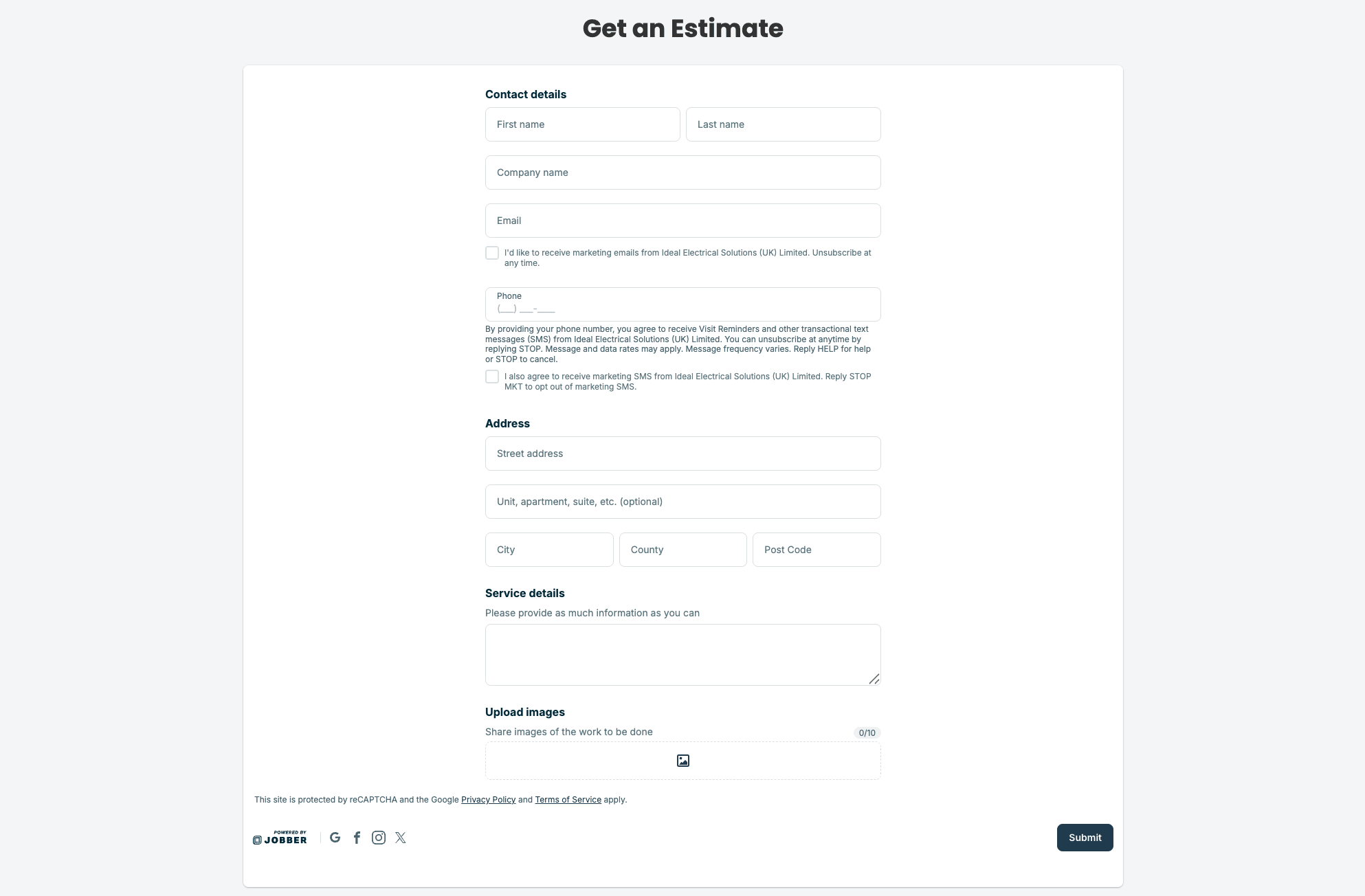
Online booking and quote request forms
An online booking form makes it easy for customers to book your services online. This cuts down on your admin time—and the time you spend looking for new electrical leads.
Can’t book a job without a consultation first? Not to worry. Use Jobber’s quote request form instead and schedule your initial meeting with the customer, based on their availability and the services they need.
Services list
There are many different types of electrical services, and you may not offer all of them. Tell your customers what you can do for them, whether it’s residential, commercial, or industrial. You can also provide information about any sub-services, like electrical repairs or EV station installation.
Service area
Your website visitors also need to know the geographic areas where you provide these services. Display a list of the communities where you work, or use a map to highlight areas where you can provide services.
Pro Tip: Defining your service area can also help with local SEO. This helps your business rank higher in your area’s search engine results—for example, for search terms like “Houston electrician.”
From a Google perspective, when someone searches for “your service near me,” or your service with a geographical target, you want to be shown for that.
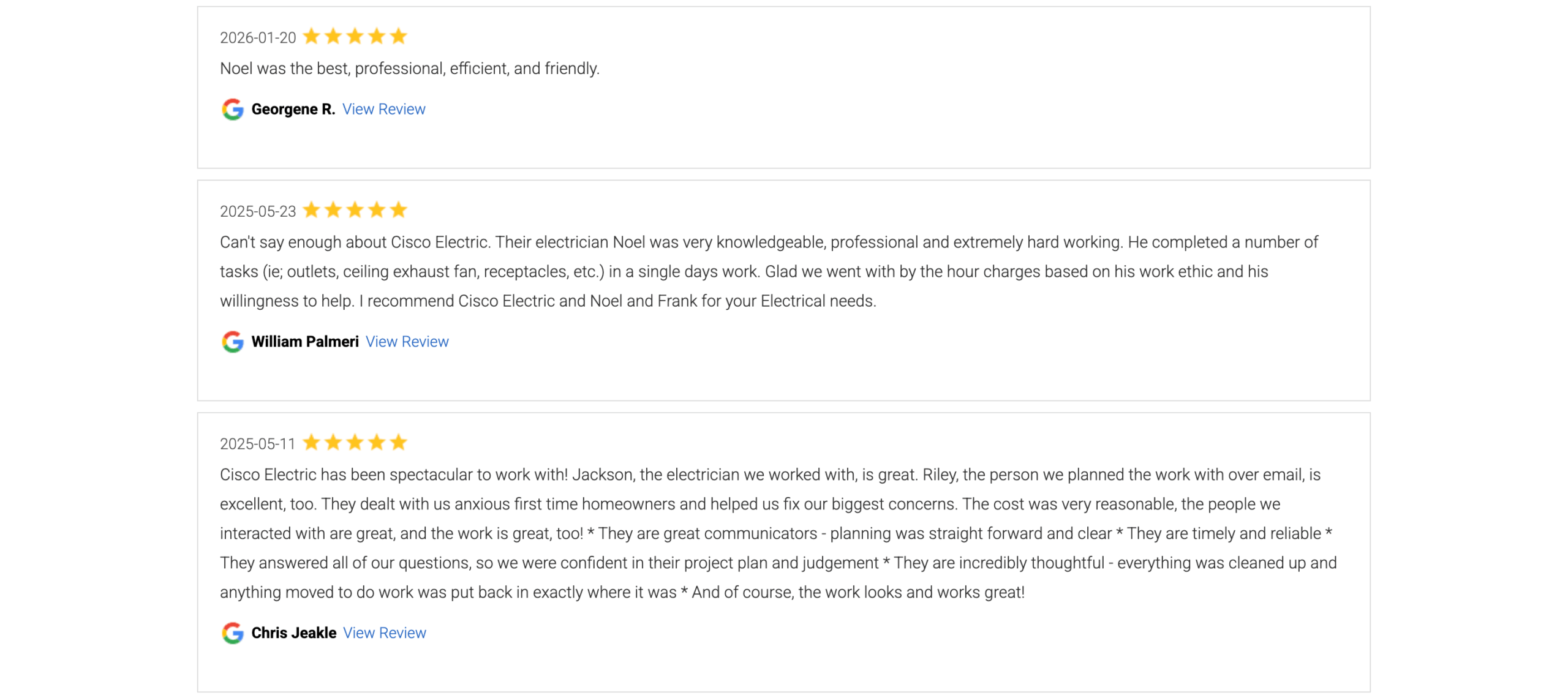
Customer reviews and testimonials
Word of mouth is the number-one way to spread the word about your business. Your website should include reviews and testimonials from satisfied customers.
Here’s one example of the Reviews page on the Cisco Electric website:
Google says that 17% of your ranking is based on how many reviews you have.
When you respond to reviews… it allows Google to index more content from you and shows that you’re engaging with your people.
Make sure you always get a review with automatic review collection in Jobber. That way, you can automatically send review requests to customers after they pay their invoice and build your Google review count without any manual effort.
These reviews can then be displayed on your website to build trust with new visitors.

From your reviews dashboard in Jobber, you can monitor your Google rating, respond to new reviews, and access resources to help you manage your business’s reputation.
Business information and team photos
Customers are more likely to trust your electrical business once they know more about it. Your website should include as much information about the company as possible, like:
- An About page that describes your company history
- Photos of your team with their names and job titles (a quality group photo can be a great idea, too!)
- Any certifications, awards, accreditations, or other distinctions that customers should know about
Simple, easy-to-navigate menu
The menu at the top of your website helps visitors move around to various content pages. This menu should be as simple as possible, with no more than six items representing the major sections of your site. For example, this could include:
- Home
- Services
- About
- Blog
- Contact
If possible, avoid using drop-down menus. These don’t always work well on mobile devices—and remember our earlier tip about mobile-friendly electrician web design.
However, these high-level pages can link to lower-level pages. For instance, the About page could link to related pages like Our Team, Company History, and Careers.
How to build an electrician website
Ready to build a great website from scratch? Whether you’re hiring a web designer or building it yourself, this checklist will come in handy:
- Register a domain. This is the URL where your website lives, like “SeattleElectric.com.” You can buy a domain from a registrar like GoDaddy or with your site builder, depending on who you’re using.
- Pick a website builder. There are lots of electrician website design options to choose from, like WordPress, GoDaddy, Wix, or Jobber. These site builders let you choose from many different website templates and customize your design by adding your own logo, colors, fonts, images, and content.
- Create essential pages. Start with a home page that shares important details about your electrical company. From there, you’ll need a Services page, an About page, and a Contact page so visitors can get in touch with you.
- Use an electrician SEO strategy. Search engine optimization (SEO) helps you attract new customers online. Bring them to your website by adding electrical keywords to your website, creating useful and high-quality content, and building a Google Business profile.
- Track your performance. Google Analytics tells you how many visitors are coming to your website, how they find you, and what actions they take once they’re on the site. This data can help you improve your site to gain even more traffic—and even more work.
READ MORE:How to create a website for your service-based business
If you’re just starting out, you can use a basic platform like Wix or Squarespace, and get a basic website up in under a day or day or two.
If you really want to supercharge your website… I recommend hiring someone to build a website for you. They’re going to know what to do and how to optimize it for getting leads.
Best electrician website builders
As an electrician, you need a website that’s easy to set up, mobile-friendly, and designed to generate leads. But with so many options available, how do you know which electrician website builder is best for you?
We’ve broken down the most popular website builders to help you decide which one is right for your business. Below are some of the best website builders for electricians:
| Platform | Best for | Key features | Starting price |
|---|---|---|---|
| Jobber | Electricians who want a website connected to their business software | • Auto-generated website • Quote request forms • Google Business Profile integration • Job scheduling and invoicing tools | Included in your Jobber plan. Plans start at $29/month |
| Wix | DIY websites with drag-and-drop editing | • Drag-and-drop editor • Electrician templates • App marketplace • SEO tools | Free plan available, then $17/month |
| Squarespace | Design-focused websites made with professional templates | • High-quality templates • Built-in hosting • Marketing and SEO tools | $16–$139/month, depending on the plan |
| WordPress | Custom websites that need more complex features and functionality | • Fully customizable with themes and plugins • Scalable for advanced sites | Free plan available, then $5–$91/month, depending on the plan |
| GoDaddy | Fast, inexpensive websites that don’t need custom features | • Simple builder with quick setup • Built-in hosting • Marketing tools | $9.99–$29.99/month |
Jobber
Jobber’s website builder is the best website builder for electrician businesses. It’s designed for the home service industry, making it the most practical option if you want a website that helps you generate and manage leads.
Unlike general website builders, Jobber’s tool is built directly into its field service management platform. It can automatically generate a website using your business details, helping you get online quickly without building everything from scratch.
Because it connects directly to your operations software, it also includes features that many generic builders don’t offer, such as:
- Quote request forms that automatically capture customer information and service details
- Google Business Profile integration so customers can easily find and contact you
- Website visitor tracking and lead insights to see how people are finding your business
- Built-in connection to scheduling, quoting, and invoicing tools
If you already use Jobber to manage jobs and customers, this makes it easy to turn website leads into scheduled work.
Wix
Wix is a popular website builder for electricians because it’s easy to use and offers a wide range of templates for different industries. It can be a good option if you want design flexibility and don’t mind building your site yourself.
The platform uses a drag-and-drop editor, allowing you to visually design pages without any coding knowledge. Wix also offers hundreds of templates and a free plan so you can test the platform before upgrading.
However, it’s a general-purpose platform. You’ll need to manually set up business-critical features like contact forms, service pages, and lead tracking.
Squarespace
Squarespace is known for its clean, professional templates and strong design tools, making it a good option for a polished, modern-looking website. It also includes built-in hosting, SEO tools, and digital marketing features.
However, Squarespace focuses on branded design rather than trade-specific functionality. That means you’ll need to configure forms, service pages, and lead capture tools yourself.
WordPress
WordPress is the most flexible website platform available. Unlike drag-and-drop builders, it lets you use themes and plugins to customize every part of your website. This makes it a powerful option if you want advanced functionality.
The downside of this flexibility is that WordPress typically requires more technical knowledge. You’ll need to manage hosting, security, plugins, and updates yourself—or pay a web developer or agency to do it for you.
GoDaddy
GoDaddy’s website builder is designed for speed and simplicity. It includes basic templates and built-in marketing tools so you can quickly create an online presence—and at a lower price point than many other platforms.
However, GoDaddy offers less customization and fewer advanced features than other builders. The platform may feel limiting as your business grows and you start needing additional features for your website.
Electrician website templates to get started fast
If you want to launch your site quickly, starting with a pre-built electrician website template is the easiest option. Templates already include common sections like service pages, testimonials, and contact forms. Just replace the text and photos with your own business details.
Below are a few examples of electrical company websites built with popular templates, including options you can use to get started.
Jobber
The Jobber website builder creates a website using the basic information you enter. Instead of you choosing from dozens of templates, Jobber uses a simple layout designed for home service businesses, with service descriptions, quote request forms, customer reviews, and more.
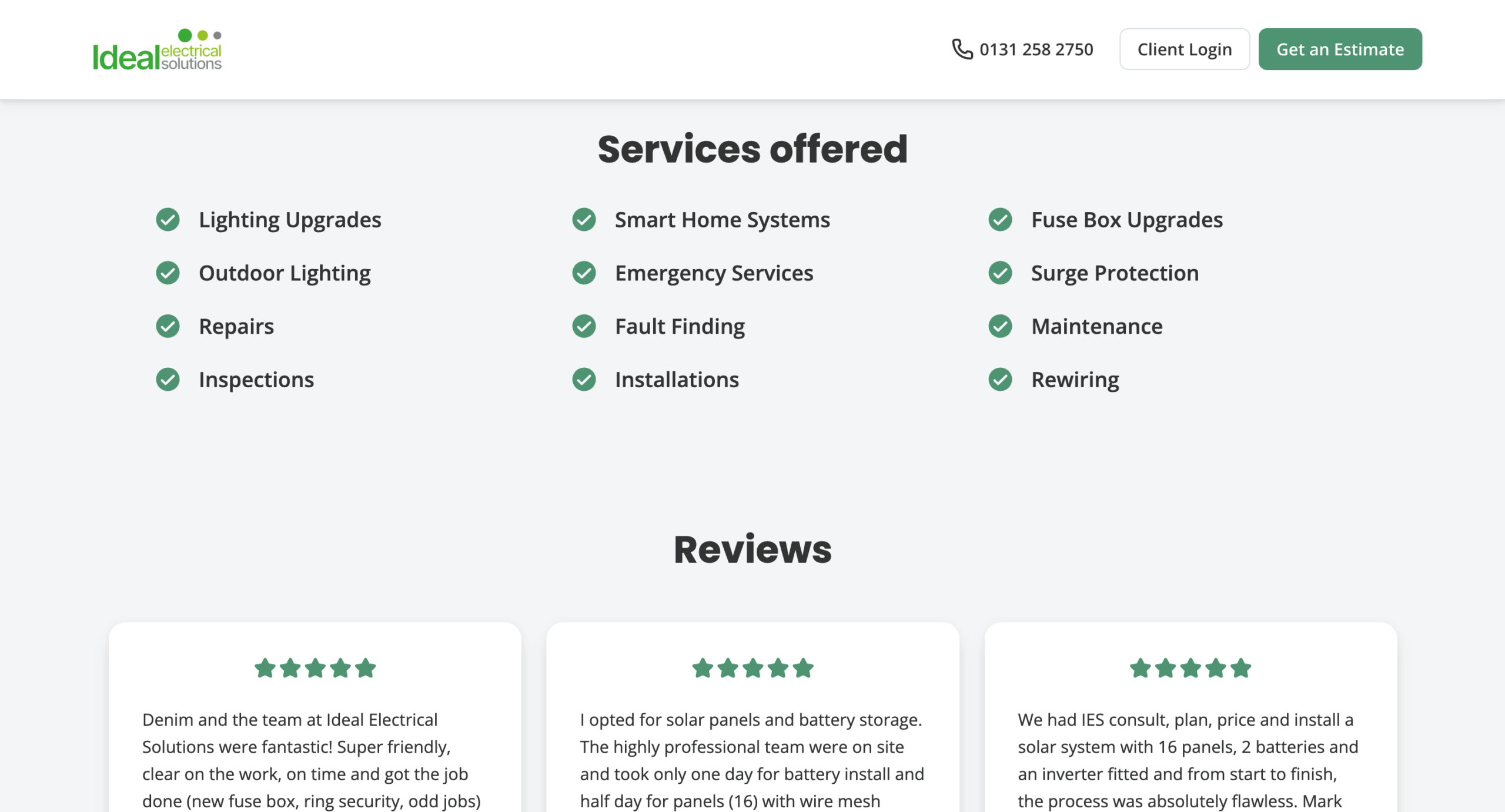
Because it’s connected to Jobber’s field service software, quote requests from the site appear in Jobber. That makes it one of the fastest ways to launch a website that generates and manages leads for your business.
Wix
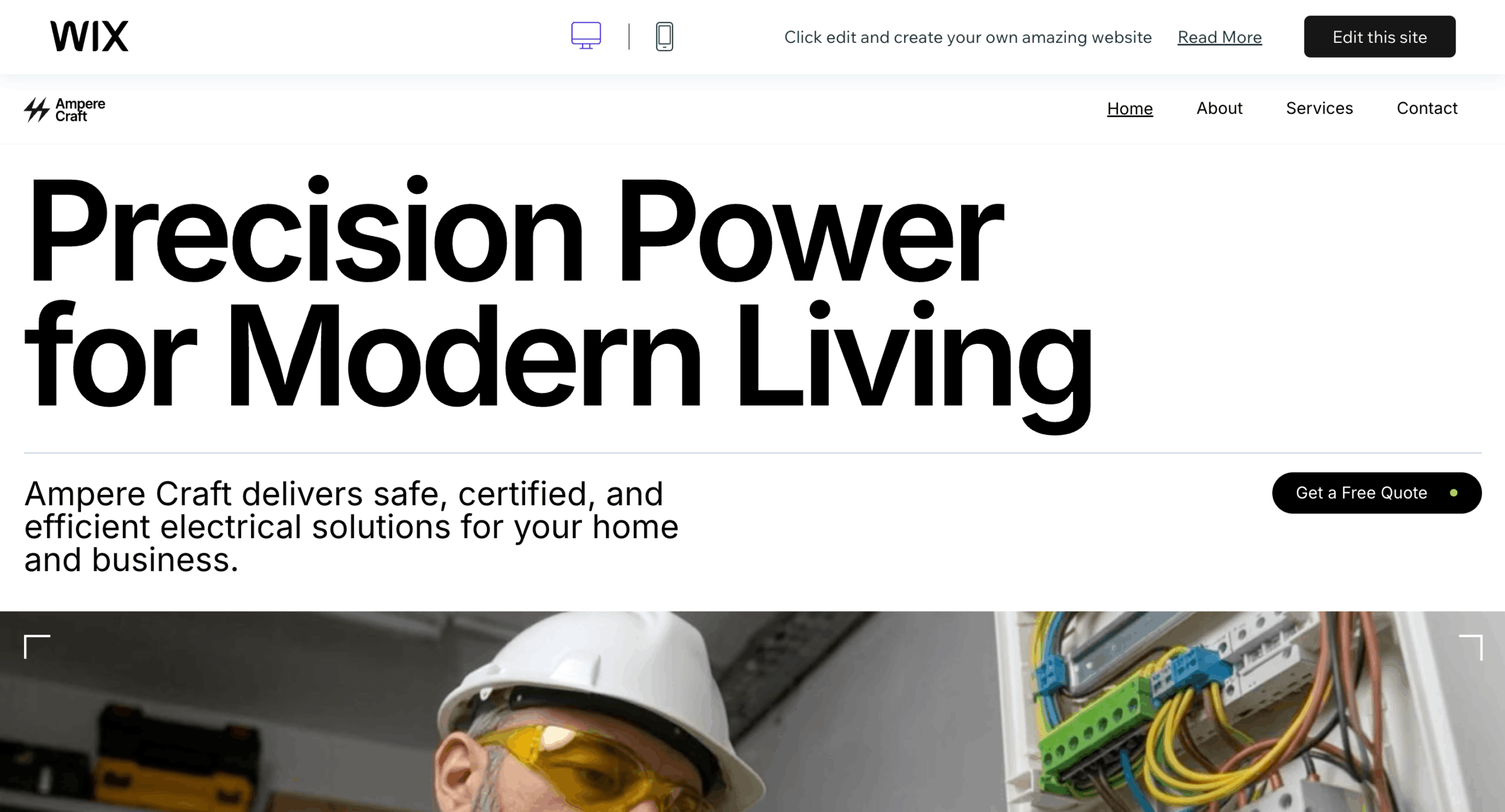
Wix offers multiple templates designed for electricians and contractors. These templates typically include pages for services, testimonials, and project galleries so potential customers can quickly understand what you offer.
For example, the Electrician (Simple) Website template uses a clean, modern layout with sections for service descriptions and testimonials. This helps visitors quickly find the information they need.
Because Wix uses a drag-and-drop editor, you can easily rearrange sections, add photos, and customize the design without needing prior coding experience.
WordPress
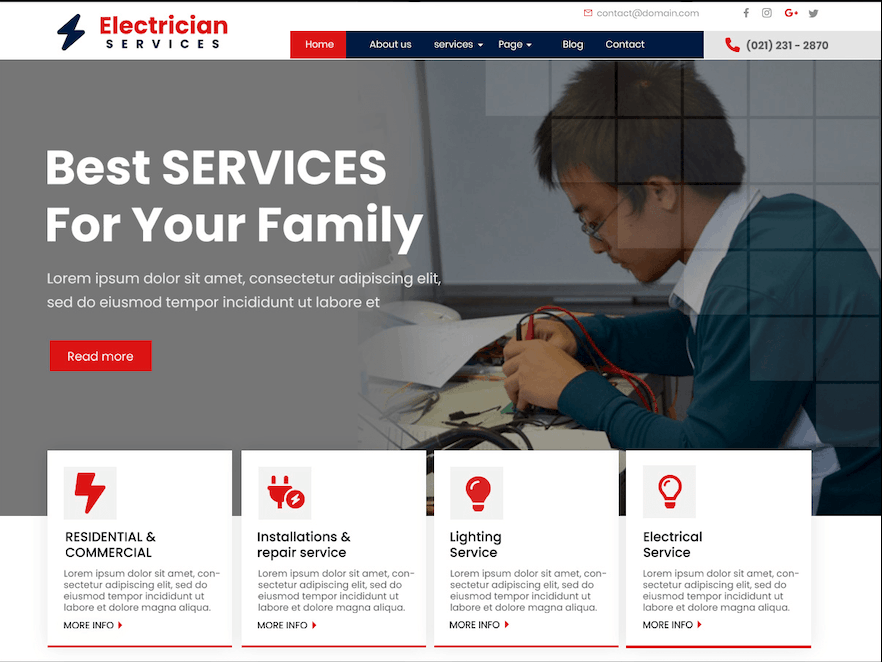
Another option is to use a dedicated WordPress electrician theme. For example, the Perfect Electrician template includes sections to display services and past projects in a professional way.
WordPress templates are highly customizable and can support advanced features like booking systems, service area pages, and SEO plugins. However, they usually require more setup and technical knowledge compared to drag-and-drop builders.
Not every electrician website template is built with service businesses in mind. When choosing a template, make sure it includes:
- Responsive design so your site looks great and works properly on mobile devices
- Sections for services, service areas, testimonials, and project photos
- Booking tools like contact forms or quote request forms, so visitors can easily reach you
- Easy customization so the site’s content and design are specific to your business
Whether you need a website redesign or a brand-new site to launch your electrical business, these tips will help you make the most of your online marketing, attract new customers, and win new work.
You can also take your marketing to the next level with our proven electrician marketing tips, or start scaling your operations by learning how to run a successful electrical business.
Originally published September 2019. Last updated May 22, 2026.
Frequently Asked Questions
-
An electrician website can cost anywhere from $500 to $15,000+, depending on how it’s built:
• A Jobber website is included in the cost of your Jobber plan (starting at $29/month).
• A simple DIY site using a website builder typically costs $800–$2,000.
• A freelancer-built website usually falls between $1,500 and $6,000.
• Larger marketing agencies may charge $4,000 to $15,000+ for a fully custom electrician website.
Most electricians don’t need a complex site. A simple website with service pages, a contact form, and strong local SEO is usually enough to generate leads and build credibility. -
A good electrician website should include these key pages so visitors understand what you do and how to contact you:
• Home: A quick overview of your services and service area with a clear call to action
• Services: Individual pages for services like panel upgrades, rewiring, lighting installation, or emergency electrical work
• About: Information about your company, experience, licenses, and certifications
• Service Areas: The cities or neighborhoods you serve, ideally with a visual map
• Testimonials: Customer feedback that builds trust and tells potential customers what to expect from your business
• Project Gallery: Photos of completed work to show the quality of your work
• Contact: Phone number, contact form, and business hours -
Yes. A website helps potential customers find your business online, verify your credibility, and contact you. 93% of customers search for services online before deciding who to call, so a professional website can help you appear in local search results and generate leads.
Your website also gives you a place to showcase your services and share customer reviews, which helps build trust before a potential customer picks up the phone.
-
It depends on your budget, time, and goals. Here’s how to determine which option is best for you:
• Website builders—like Jobber, Wix, or Squarespace—are best for solo electricians or new businesses that need an affordable, easy-to-use website. You can create the site yourself fairly quickly, even if you don’t have experience with website design for electrician businesses.
• Hiring a web designer is best for bigger, more established businesses. It costs more and takes longer, but it can produce a polished website that effectively turns leads into customers. Designers can also help with SEO, content, and site structure to improve your site’s ranking in Google search results and attract more site visitors.
Some electricians start with a website builder and later upgrade to a professionally designed site as their business grows. -
Jobber is the best website platform for electricians. Unlike general website builders, Jobber’s website builder is built into its field service management platform, so it connects with the tools you use to run your business.
Here are just a few ways that this connection works for your electrical company:
• Work request form: Potential customers can fill in your contact form to request a quote, consultation, or appointment, depending on their needs. They don’t have to call or email, and their requests on your website appear directly in Jobber so you can respond.
• Lead management: It helps turn website visitors into real jobs. For example, electricians can add quote request forms to their website so customers can submit service requests online. Those requests are automatically captured as leads inside Jobber, making it easy to follow up and schedule work.
• Google Business Profile integration: Jobber also integrates with your Google Business Profile, helping customers find your business in local search results and request bookings directly from your listing.
Other platforms like Wix, Squarespace, and WordPress can work well for building a website. But they require more setup and don’t connect directly to your quoting and job management tools.
For many electricians, a platform like Jobber offers the fastest way to launch a website that helps your business grow.