How to Start a Lawn Care Business Legally in 2026: 9 Steps to Success

Key takeaways:
Starting a lawn care business legally and profitably in 2026 involves careful planning, registration, and smart investment. Here’s how you can set up your lawn care company for lasting success:
- Gain hands-on experience and develop practical skills. Practice mowing, trimming, and basic maintenance by working for friends and neighbors at discounted rates before taking on your own clients.
- Create a detailed business plan and register your company. Map out your services, pricing, target customers, and startup expenses. Register your business with the appropriate authorities, choose a legal structure, and secure a business license and any required pesticide certifications.
- Secure proper insurance and set up business finances. Protect your company with liability, auto, and property insurance. Open a dedicated business bank account, track all income and expenses, and follow local tax guidelines to stay compliant.
- Start with essential services and equipment, then expand as you grow. Offer basic mowing and maintenance, invest only in necessary tools, and add more specialized equipment or services as your customer base and revenue increase.
- Market your business locally and online to attract customers. Use flyers, word-of-mouth, branded vehicles, and an online presence to get your first clients. Ask for reviews and referrals, and focus on excellent service to generate steady growth.
For more actionable tips on launching and scaling your lawn care business, sign up for the Jobber Newsletter. Subscribe here.
Starting a lawn care company can be a profitable way to work outdoors and run your own business. But to set yourself up for long-term success, you’ll need to register your business, price your services correctly, and build a reliable client base from day one.
In this guide, we’ll walk you through everything you need to know to become a lawn care business owner. With the right foundation, you can go from a solo operation to a thriving, profitable business.
Here’s how to start a mowing business:
-
Get hands-on experience
-
Write a business plan
-
Register your business
-
Get the right insurance
-
Set up your business banking and accounting
-
Decide what lawn care services to offer
-
Purchase lawn care equipment, tools, and software
-
Price your lawn care services
-
Get your first lawn care customers
-
Hire lawn care employees and grow your business
Is starting a lawn care business right for you?
Not sure if starting a lawn mowing business is the best option for you? Here are a few ways to know that it’s a good fit:
- You already love working outside. If spending your days in the fresh air, tending to green spaces, and getting a little dirty sounds appealing, you’re on the right track.
- You don’t mind physical labor. Lawn care involves mowing, trimming, hauling equipment and natural materials, and sometimes dealing with unpredictable weather. If you’re in good shape and enjoy the effort, this could be a perfect business.
- You have an eye for detail. A well-maintained lawn is all about clean edges, even cuts, and healthy grass. If you take pride in making things look just right and holding yourself to a high standard, clients and customers will appreciate your effort.
- You’re comfortable with customers. Owning a lawn care business means that you’ll be chatting with people often. Keeping your clients happy, fixing problems, and even training your team to do so will be part of the job.
- You’re ready to manage a business. Are you up for handling scheduling, pricing, equipment maintenance, and marketing? If you’re excited about running these aspects of your lawn service venture, you’ve got the green light to move forward.
1. Get hands-on experience
The good news is that you don’t need formal training to start a lawn care business. But you’ll need to learn how to mow lawns, trim, aerate, and do other lawn care work before you get your first customers.
Hands-on experience is the best way to learn. Ask friends, family, and neighbors if you can practice by doing their yard work at a discounted rate. You could also work for another lawn care or landscaping company for one or two years to learn and sharpen your skills.
2. Write a lawn care business plan
Next, take time to map out a lawn care business plan. This acts as your roadmap for how your lawn care business will operate and grow. Your plan should outline the basics:
- What services you’ll offer
- Who your ideal customers are
- How you’ll price your work
- What sets you apart from the competition
- What it will cost to get started
The plan should also cover your startup expenses, equipment needs, and a rough marketing strategy for attracting your first customers.
A clear business plan helps you avoid common mistakes like underpricing jobs or overspending early on. It also makes it easier to stay focused as your business grows.
Additionally, if you plan to apply for financing or a small business loan, lenders will typically require a business plan as part of the application process.
3. Register your business
To legally start your lawn care business, you’ll need to register with your local or state government. Here’s how that process works:
Pick a business structure
The business structure you choose affects how your business gets registered. Here’s a quick guide to choosing the right structure:
- Sole proprietorship: You’re automatically registered as a sole proprietor if you work alone and want complete control of your business.
- Partnership: Choose this structure if you run your business with two or more people who are still legally considered self-employed.
- Limited liability company (LLC): Medium- to high-risk businesses typically choose LLCs. An LLC mostly protects you from personal liability.
Apply for an Employer Identification Number (EIN)
If you have employees or a partner, you need to apply for an employer identification number (EIN). This is a unique ID for your business that’s used for reporting taxes.
Register your lawn care business name
Pick a lawn care business name that reflects the services you offer and your company values. Then, register that name with your regional government.
Name registration looks different depending on where you live:
- United States: You can trademark your business name and register your domain name if no other business in your state is using the same name.
- Canada: If it’s the same as your personal name, you don’t need to register your business name. Otherwise, register the trade name and trademark it to protect your brand.
- United Kingdom: Choose whether you’re a sole trader or business partnership. Then, check your name availability, search for a trademark, and register your company name and business.
- Australia: If your business doesn’t use your personal name, register your business name through the Business Registration Service, ASIC, or a private service provider.
Pro Tip: Type “YOUR CITY NAME + business laws” into Google to find your local regulations.
Get a business license
You need a business license to legally operate your lawn care company. To find out what kind of business license you need, contact your local Chamber of Commerce or the Small Business Administration (SBA).
Business licensing and registration can cost between $75 and $400 USD per year, depending on your region.
Do you need pesticide licensing?
Yes! Many lawn care services naturally use pesticide products in the course of everyday work, whether to prepare for landscaping projects or fix common pest issues for clients.
In all states, you need a license to apply any product registered as a pesticide with the U.S. Environmental Protection Agency (EPA). Some states require you to get certified through a pesticide safety education program.
Check with your local Department of Agriculture to find out if you need a license for a product or service you plan to offer.
4. Get the right insurance
Business insurance protects you and your business in the event of injury, property damage, or other unexpected accidents.
You can expect to pay roughly $350 to $700 per month for a full insurance package, depending on coverage limits, location, and number of vehicles and employees.
Most small lawn care businesses need the following coverage:
General liability insurance
General liability insurance covers property damage or bodily injury caused while you’re working on a customer’s property. For example, if a rock from your mower breaks a window or someone trips over your equipment, you may want extra coverage.
Most lawn care businesses should carry this coverage from the start, and policies typically cost $36–$71 per month, depending on coverage limits and location.
Commercial auto insurance
Commercial auto insurance protects vehicles used for business if they’re involved in an accident, stolen, or otherwise damaged.
If you use a truck, van, or trailer to transport equipment to job sites, this coverage is usually required. Small business policies average around $245 per month, per work vehicle.
Commercial property insurance
Commercial property insurance protects your lawn care equipment, office building, and other business property from damage or theft. This coverage becomes more important as you invest in expensive equipment like commercial mowers or trailers.
Small businesses pay a median of about $67 per month for commercial property insurance.
Workers’ compensation insurance
Workers’ compensation insurance covers medical costs and lost wages if an employee is injured while working. In most states, this coverage becomes legally required once you hire employees.
Costs vary widely but often range from about 1% to 5% of payroll, depending on the type of work and risk level.
You can work with your insurance company to create a business owner’s policy that combines the insurance coverage you need for your small business.
Pro Tip: Always talk to a local, licensed insurance provider to figure out what your policy should include for the lawn care services you offer.
5. Set up your business banking and accounting
Set up a business bank account to keep your personal and professional finances separate. You’ll also need this bank account so you can:
- Have correct financial information for taxes
- Build a credit profile for your business
- Monitor your business’s cash flow
- Make bookkeeping easier
Once you set up your checking account, make a monthly budget for expenses. This should include your paycheck, insurance, overhead, supplies, and marketing. You can always adjust this budget later.
Keep track of your income and expenses throughout the year so you can file your taxes accurately. Be aware of who you’re filing taxes with in your country:
- Internal Revenue Service (U.S.)
- Canada Revenue Agency (Canada)
- Companies House (UK)
- Australian Taxation Office (Australia)
READ MORE: 30 small business tax deductions to save money when filing
6. Decide what lawn care services to offer
Choose what lawn care services you’ll offer so you can buy the right equipment, set your pricing, and market your services.
Start small and offer basic lawn maintenance services like mowing and trimming. That way, you can get your first lawn care customers and start bringing in revenue without spending thousands of dollars on new equipment.
You should offer these essential lawn care services when you’re starting out:
- Mowing and basic lawn maintenance: This should include grass trimming, weeding, and edging for driveways and walkways. All you’ll need is a mower and hedge trimmer to get started with basic lawn maintenance.
- Seasonal services: You can market your lawn care services as special spring cleaning and fall cleaning during those seasons. When there’s snow on the ground, offer snow removal and winter landscaping services to your lawn care customers.
- Fertilization: Offer fertilizer application and weed control to keep your clients’ lawns healthy and green. Because fertilizer doesn’t cost very much, it’s a great service for new residential lawn care businesses to offer.
Once you have a few recurring customers and positive cash flow, start offering more specialized services, including:
- Leaf blowing
- Dethatching or power raking
- Lawn aeration
- Grading
- Mulch installation and garden work
- Sod installation
- Lawn returfing
- Lawn pest control and insect control
- Tree trimming and pruning
- Shrub care
To choose new services to add to your list as your business grows, pay attention to what your clients ask for—and what your competitors are offering.
7. Purchase lawn care equipment, tools, and software
In addition to a truck or trailer to transport your equipment, you’ll need a few basic lawn care tools and supplies to get started:
- Lawn mower
- Edger
- String trimmer
- Leaf blower
- Gardening gloves
- Gas cans
- Lawn bags
When you’re prepared to offer more lawn care and landscaping services, you can invest in more specialized tools, including:
- A leaf blower
- A spreader
- A lawn aerator
- A power rake
- Wheelbarrows
- Pruning shears
- Shovels
What type of lawn mower should you invest in?
The type of lawn mower you purchase should depend on the size of the properties you’re mowing.
Here are the basic types of lawn mower you can choose from:
- A push mower is the best option for new lawn care professionals. They’re cheap, easy to use and maintain, and they work great for smaller yards.
- A walk-behind mower or self-propelled mower can move on its own, cut through thicker grass, and cover more ground in less time. They’re larger and more powerful than push mowers, so they cost quite a bit more than push mowers.
- A riding lawn mower lets you sit and drive with a steering wheel while you mow. These heavy-duty machines are ideal for large-scale jobs. You might also consider a lawn tractor, which usually has more power and can cut widths of up to 48 inches.
How much does lawn care and landscaping equipment cost?
In total, your lawn care and landscaping equipment can cost between $1,570 and $4,540 USD. Here’s what you can expect to spend for new lawn care and landscaping tools:
- Gas-powered push mower (new): $750–$3,000
- Corded electric string trimmer: $50–$150
- Electric edger: $100–$175
- Handheld leaf blower: $50–$200
- Lawn aerator: $200–$300
- Power rake: $100–$300
- Plastic wheelbarrow: $80–$130
- 3-pack of pruning shears: $25–$50
Invest in lawn care business software
Running a successful lawn care business requires more than just equipment. You also need tools that help you stay organized, schedule recurring work, and get paid faster.
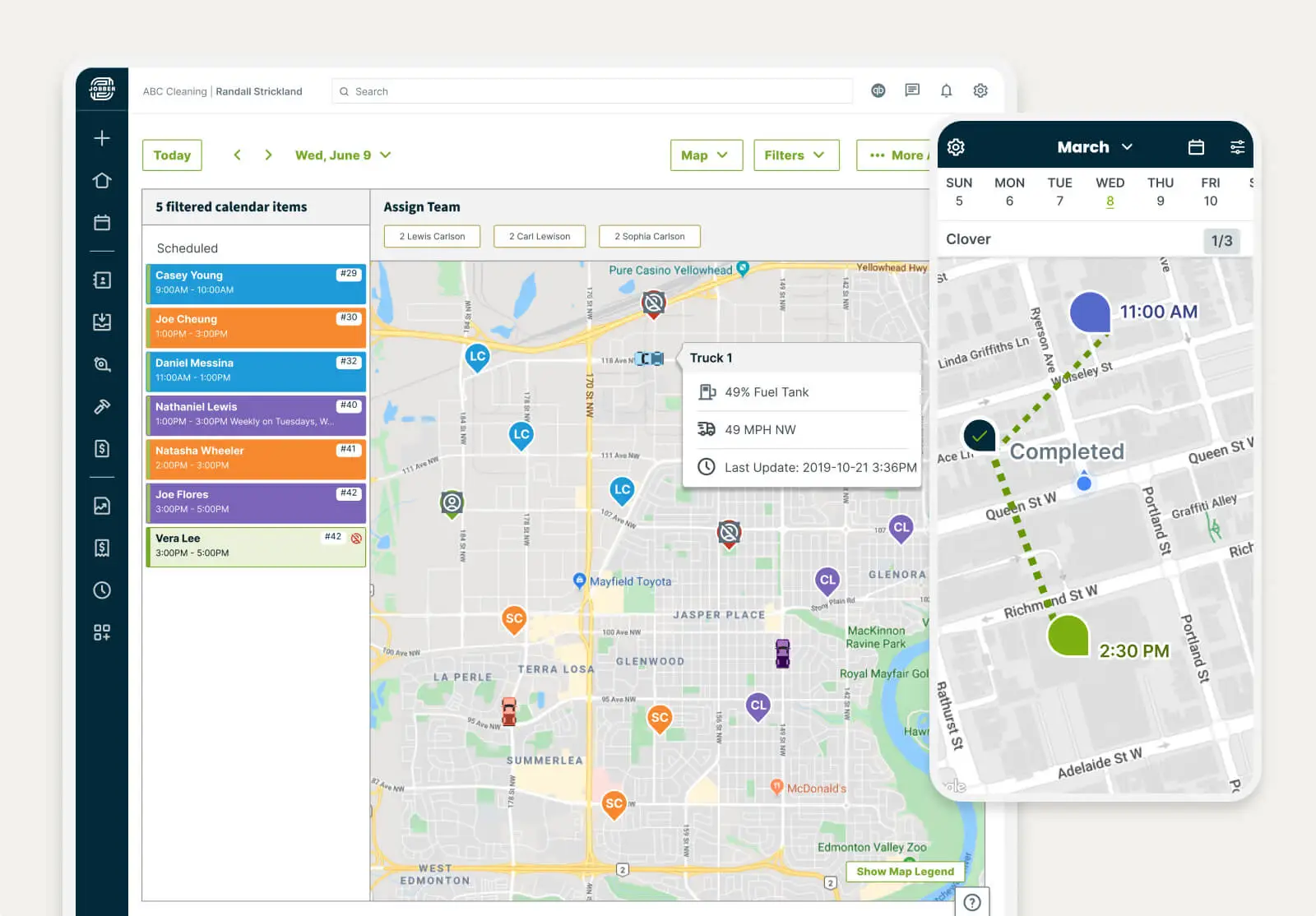
Lawn care business software like Jobber helps you manage your entire operation from quoting to payment. Here’s how Jobber helps your business run smoothly:
- Scheduling and routing: Schedule recurring mowing jobs and automatically generate efficient routes so you can fit more work into each day.
- Bulk rescheduling for bad weather: If rain cancels a day of work, you can reschedule an entire day’s worth of jobs at once instead of updating each appointment manually.
- Professional quoting: Create detailed quotes for lawn care services and include optional line items to upsell services like fertilization, aeration, or seasonal cleanups.
- Invoicing and automatic payments: Send invoices as soon as a job is complete and securely store customer credit cards on file to automatically charge them for recurring services.
- Client communication: Keep customers informed with automated appointment reminders and “on my way” texts so they know when you’re arriving.
- Professional websites: Create a professional website that reflects your brand and makes it easy for potential customers to request quotes and for you to capture valuable lead information.
- Marketing and growth tools: Send review requests, build referral programs, and use email marketing to stay connected with customers and generate more business over time.
With the right software, you can manage scheduling, quoting, invoicing, and customer communication in one place—so you spend less time on paperwork and more time growing your lawn care business.
I really love the route optimization tool. As we all know, lawn care route density is one of the most important things. You want your customers very close so you can minimize the drive time.
By using Jobber’s route optimization, it can plot the most efficient route for your crews.

8. Price your lawn care services
You need to price your lawn care services fairly and profitably to attract paying customers and profit from every job. To set the right lawn care service prices, you should:
- Check lawn care rates in your area.
- Calculate your labor costs.
- Add your overhead, equipment, and material costs.
- Decide on your lawn care profit margins.
Then choose what kind of pricing model you’ll use:
- Hourly rate includes your labor cost per hour, plus overhead. Hourly rates work for large commercial lawn care contracts, packages like spring cleanups, or when you’re unsure how long a job will take (e.g., $55 per worker per hour).
- Flat rate pricing is when you offer one predictable cost for an entire job. This method works well when you know exactly how much time the job will take (e.g., $150 for dethatching).
- Square footage pricing is based on the size of the lawn and works well for mowing, fertilization, and treatments where job time depends on property size (e.g., $0.02–$0.05 per square foot).
- Hybrid pricing combines pricing models. For example, you could use a flat mowing rate with additional charges for larger properties or add-on services. This approach keeps base pricing predictable for customers while giving you more flexibility.
Once you’ve decided on your service prices, make a lawn care pricing chart to estimate lawn care jobs faster and more consistently. The chart should list your service costs per square foot, per hour, or with flat rate pricing.
How much do lawn care businesses make?
On average, lawn care business owners earn around $82,500 per year. Some lawn care business owners start out earning $26,000 per year, while top earners can make over $120,000 annually.
It all depends on your experience, location, and business size. Your total income also varies based on your team size, efficiency, the services you offer, and your profit margins.
READ MORE: The Lawn Squad’s journey to $100,000
9. Get your first lawn care customers
Promoting your lawn care services will help you attract your customers faster. Try these lawn care marketing ideas to grow your client list:
- Create a service business brand that potential customers will recognize. Design a logo with a tool like Looka, then choose the colors and fonts you’ll use in your marketing materials.
- Print and distribute lawn care flyers or door hangers in the neighborhood you serve.
- Post tear-off flyers and business cards in your local grocery store, community centers, or libraries. (Just make sure to get permission first.)
- Create a lawn care website that highlights your services and makes it easy for potential customers to book services online.
- Claim your free Google Business Profile and add the services you offer, the area you serve, and your working hours.
- Set up Facebook and Instagram accounts to build up your online presence and share before-and-after images of lawn care jobs.
- Ask happy customers for reviews and start a customer referral program.
- Wrap your company vehicle to advertise your lawn care business as you travel from job to job.
Maybe getting the first couple of customers in your lawn care business could be challenging, but it grows faster than you think it will.
If you do good work, show up on time, and do what you say you’ll do—the work will come.
10. Hire employees and grow your business
Eventually, you’ll need to hire lawn care technicians to help you take on more jobs—and bigger ones. Having a team will also give you more time to focus on sales, marketing, scheduling, and managing your business.
Here’s how to find and hire lawn care employees:
- Decide whether you want to hire employees or subcontractors.
- Write a lawn care job description that lists your employee’s responsibilities.
- Create a job posting and share it on job search websites.
- Prepare questions to ask a new employee before you hire them.
- Check references and ask for police background checks.
- Prepare to train your employees once they’re hired.
READ MORE: How to run a successful lawn care business
How much to start a lawn care business?
Starting a lawn care business can cost between $1,835 and $3,865 USD if you already have access to basic equipment. However, if you need to purchase a reliable truck or trailer, startup costs can increase significantly—often $30,000 or more, depending on the vehicle you choose.
Here are some of the most common expenses to consider when starting a lawn care business:
- Lawn care equipment ($685–$1,665): Basic equipment includes a lawn mower, string trimmer, leaf blower, and safety gear. Many new lawn care businesses start with homeowner-grade tools and upgrade to commercial equipment as the business grows.
- Business registration and licensing ($75–$400): Registering your lawn care business name and obtaining any required local licenses usually involves modest filing fees that vary by state or municipality.
- Insurance ($600–$1,200+ per year): General liability insurance protects your business if property damage or injuries occur while you’re working. Additional coverage like commercial auto or equipment insurance may increase your annual costs.
- Marketing and advertising ($0–$200): Many lawn care businesses start by promoting their services in neighborhood Facebook groups, community boards, or through word-of-mouth referrals. You might also invest in simple flyers, yard signs, or basic online listings.
- Business tools and software ($400): As your business grows, software can help you schedule jobs, send quotes, and manage customers more efficiently.
- Transportation ($0–$30,000+): If you already own a truck, SUV, or trailer capable of transporting lawn equipment, you may not need to spend much here. Otherwise, purchasing a work vehicle can be one of the largest startup expenses.
Starting small allows you to keep your initial investment low while building a steady client base. As you earn more revenue, you can reinvest in better equipment, marketing, and tools that help your lawn care business grow.
READ MORE: 7 types of grants for starting a lawn care business
How to start a lawn care business with no money
Starting a lawn care business doesn’t always require a large upfront investment. Many successful lawn care providers start by using what they already have and growing gradually. If cash is a factor, try these ideas first:
- Use equipment you already own: If you already have a lawn mower, trimmer, or basic yard tools, you may have everything you need to tackle small neighborhood jobs.
- Borrow or share equipment: If you’re missing a tool, consider borrowing equipment from friends or family while you build your first client base and start earning income.
- Start with simple services: Focus on services that require minimal equipment, like lawn mowing, edging, leaf cleanup, or basic yard maintenance.
- Promote your services for free: Post in neighborhood Facebook groups, local community boards, or apps like Nextdoor to tell nearby homeowners you’re offering lawn care services.
- Ask for referrals from early customers: Word-of-mouth referrals can quickly help you find more work without spending money on advertising.
- Reinvest your early profits: As your profits grow, reinvest profits into better equipment, marketing, and tools that help you take on more jobs.
Starting small allows you to test the market, build experience, and grow your lawn care business without taking on significant financial risk.
There’s three things you can do right now to grow your business.
1. Use Facebook and Nextdoor. Join those Facebook groups and engage in those free marketing channels and platforms; you never know how much business is in there.
2. Lean on your personal story. Embrace who you are, don’t hide it.
3. Use clear, effective communication. Clients want clear quotes and accurate invoices. Don’t hide the ball.

Grow a successful lawn care business now
Starting a lawn care business is worthwhile if you’re ready to put your sweat into it. Once you get this business off the ground, you’ll get to do what you love for a living—on your own schedule.
Looking for more advice? Check out our lawn care business resources for expert tips on launching, maintaining, and growing a successful business.
Originally published in February 2023. Last updated on March 24, 2026.
Frequently Asked Questions
-
Starting a successful lawn care business can cost between $1,835 and $3,865 USD, depending on the equipment you have and the services you provide. If you don’t already have a reliable truck or trailer, it could cost you at least an additional $30,000 to start your lawn care business.
-
Word-of-mouth referrals, local SEO, social media ads, and flyer distribution in targeted neighborhoods can help attract clients. Offering seasonal discounts and partnering with real estate agents or property managers can also boost visibility.
-
You’ll need to register your business, obtain any required licenses or permits, and get liability insurance. It’s also important to set up a business bank account and understand local tax requirements.
-
To start a lawn care business, you’ll need basic equipment like a mower, trimmer, and blower, along with a reliable vehicle to transport your tools. You’ll also need lawn care software for scheduling jobs, sending quotes, and collecting payments as your customer base grows.
-
No, you don’t need an LLC to start a lawn care business. Many owners begin as sole proprietors because it’s simple and inexpensive. However, forming an LLC can provide personal liability protection and help separate your personal and business finances.
-
A lawn mowing business can be highly profitable, with small operators earning $5,000 monthly in revenue and larger businesses making six figures or more annually. How much you can make with a lawn care business depends on your pricing, services, and number of clients.