 31 Minutes
Make $1,000,000/Year Hauling Junk
With Hunter Patrick


-
Adam (00:00):
These two big, strong guys show up. They start hauling the biggest thing in their house away, maybe heaviest, and they throw it in this trailer and the light bulb goes off like, Oh, we could fill that sucker up. Welcome to Masters of Home Service, the best podcast for home service pros like us. I’m your host, Adam Sylvester, and I want you to crush it in business. Junk removal is taking over the world. It’s one of the fastest-growing industries in North America. It’s a $10 billion industry. 6 billion of that is just residential alone. Junk removal employs 67,000 people. My guest today is an expert. His name is Hunter Patrick, and he is going to share with us how to start a junk removal business, how to excel, how to make money, and all that kind of stuff. And so I’m excited about this. So if you’ve been thinking about getting into business or junk removal, this is your episode. Hunter, welcome back. Thanks for being here.
Hunter (00:52):
Absolutely glad to be here.
Adam (00:54):
Tell our listeners who you are and what you do and all that kind of stuff.
Hunter (00:57):
Yeah, so my name’s Hunter Patrick. I own Dumpire Junk Removal, a local junk removal company to Forsyth County, Georgia. I’ve been doing junk removal about three and a half, four years now, and we’ve scaled it up pretty far.
Adam (01:06):
Why junk removal? Why that?
Hunter (01:10):
So honestly, I didn’t really choose junk removal. I didn’t think, Oh, this is a great business model like most people do now because there’s so many companies that have proven it’s a good business model. At the time, I had a buddy that I worked with at my old job and he wanted to make extra money and he used to haul off old Christmas trees after Christmas, and he’d haul ’em off for $20 a piece. And I asked him, I was like, Hey, what if we just hauled off everything? And once we got that idea going, we started posting on Nextdoor, got a job to pick up a couch. It was 80 bucks first job ever. And after that I was like, Okay, this can actually become a business, and here we are.
Adam (01:43):
Yeah. So you stumble into it, it chose you. You didn’t choose, I chose you.
Hunter (01:47):
No. Yeah, exactly. The street. The street life chose me. No, it’s like junk removal chose me.
Adam (01:52):
That’s right. So what do you think it takes to succeed in the junk removal business? What did it take for you?
Hunter (01:59):
For me, honestly, it just took grit. It doesn’t take a lot of knowledge. You don’t have to be super smart. You don’t need a Harvard degree, you don’t need a billion dollars either. Most businesses, some really big, like tech companies or big service businesses need a lot of capital to start. With Junk removal, you need practically nothing. I know people who started without a truck. I know people who started with 50 grand. You can start with nothing or a lot. Doesn’t matter.
Adam (02:22):
Yeah. What would you say set you apart in those early days from other people doing it or just how did you get started in terms of your reputation?
Hunter (02:33):
Honestly, I think just being who I am. I think the way I communicated with customers, like they were friends, they were family members. Doing that, and the way I communicated, the way I showed up on time, the extra care I put into every job, I think really set me apart from the big boys.
Adam (02:48):
So if you start a business and you do a bad job, then you don’t grow.
Hunter (02:52):
Yeah, no, exactly, exactly.
Adam (02:53):
The only way to grow is if you do a really good job. So how did you wow your customers in those early days? How did you get people talking about you? Because I know your word spread pretty fast. What about you spread pretty fast? How did you do that in those early days?
Hunter (03:04):
I think I kind of screwed myself at the beginning because I spent a lot of time doing extra that I didn’t need to do. Like adding, if a customer wanted to add more items, I wouldn’t charge ’em for it.
Adam (03:13):
Oh, gotcha.
Hunter (03:14):
Yeah.
Adam (03:14):
Scope creep. Can you just do this, do that. Okay.
Hunter (03:17):
No, exactly. I think that really set me apart and I think that had people talk about me more. A 20-year-old kid starting a business. Everybody wants to see their son be an entrepreneur or a young guy, be an entrepreneur. And I think me doing that, going out to customers and doing the extra mile, and the way I advertise, the way I talk to my customers, the way I communicated with them, and just really, I think the way that I positioned myself in the business was more of a family-friendly or the local kid. And doing that, I was able to leverage it into a bigger business in the future.
Adam (03:49):
Something you talk a lot about are the three Cs. Commitment, consistency, courage. Why don’t you talk about those for a minute and to our audience?
Hunter (03:57):
Yeah, so I think commitment’s the biggest one. I think you have to be able to commit to the business. A lot of the guys that I coach inside my coaching program, they’re committed. We can immediately tell within 30 seconds of being on the call if this is something that you’re committed to. Because in business, you know, you can’t just do it on the weekends and build a massive business. You can’t just go half in, half out. You have to commit your entire life to it. It’s like some people commit their life to college or schooling or whatever. It’s the same thing in business, right?
Adam (04:22):
Yeah. Commitment is so important. Consistency is important too.
Hunter (04:27):
Absolutely.
Adam (04:27):
And I think that I’ll take consistency over talent most of the time. Would you say the same thing?
Hunter (04:33):
Absolutely. Absolutely. The guy who works is really good at what he does, but he only wants to show up three days isn’t going to do it. They say hard work beats talent if talent doesn’t work hard. So if the guy that’s really, really good at what he does works three days a week, but the guy who’s not so good but works seven days a week, he’s going to perform better than the guy who’s really talented because he’s committed to it and he’s consistent. He shows up every single day, he tries, he advertises and he builds. And that’s honestly all you need to build a business.
Adam (04:58):
Now, why do you need courage to start a junk removal business? Why courage?
Hunter (05:03):
There’s a lot of risks in business. Everything can fall apart. There’s no security. One day you can be super busy the next day you can make no money. And it takes courage to be able to look in the face of failure and go, Okay, I know it may not work, but I’m going to try anyway. The same way of combat, you can either be scared, it’s like fight or flight. You can either fight or you can run. And in business it’s the same thing. Are you going to run? Or you’re going to commit to the business and have the courage to say, you know what? Even though I’m failing right now, I know I’m going to succeed in the future and go with it anyway.
Adam (05:35):
Well, yeah, I mean courage. Most of the time when people start businesses, especially at your age, all your buddies aren’t doing the same thing. All your buddies are off doing something else.
Hunter (05:43):
Exactly.
Adam (05:43):
And so it takes courage to do something very unique and different, and it’s so hard, or at least usually it’s really hard. And so it takes courage to go into it and not just go get a normal job but slash your own way through the jungle instead of taking another path that’s already existed.
Hunter (05:57):
Exactly.
Adam (05:58):
Yeah. Why is junk removal a gold mine? What makes it so lucrative? Tell us more about the industry itself.
Hunter (06:07):
So the thing is, there’s always junk, right? And waste management companies like Red Oak Waste Management, any really big waste management company, they’re not going, they do single out pickups, but they can’t do bulk pickups. They’re focused on residential trash. So you have to fill the gap. A lot of people have couches, furniture, stuff like that they need to get rid of. And if there’s nobody to get rid of it, what do they do? Well, we have junk removal companies that fill that gap. And, let’s say you go pick up a single couch, it could range from 75 bucks to 150 bucks for a couch, it could cost you five to 10 bucks to dump it. The profit margins are massive. And the reason you have to charge that way is one convenience, but two labor and dump fees and everything else. So the profit margins in junk removal are so massive. It’s like that’s why it’s such a gold mine. Okay, let’s say I fill up. I have a 7x14x4 dump trailer. I have a few of them, but let’s say I fill that up, it’s going to cost me $40 to dump, but I can make 12, $1,500 on one load. So you think about the margins on that. There’s so much money to be made from picking up trash that people don’t want in the first place.
Adam (07:08):
It’s only 40 bucks to dump?
Hunter (07:10):
In some places it’s more expensive. So, Pennsylvania, Massachusetts, they have pretty expensive dump fees. In Georgia, it ranges from 30 to $70. So it’s like for a full load, even if I dump for a hundred bucks, but I’m making 1,500, it’s like you pay out your gas, which a hundred, let’s say 50 to a hundred bucks, depending, your margin is so unbelievably massive. And I think that’s why people want to get into it because it’s not like a skilled trade like electrical or HVAC, you don’t need to know what to do. You just need to know how to pick up a couch.
Adam (07:43):
Pick up a couch and throw it in the back.
Hunter (07:45):
And I think that’s where, that’s where the gap is in the industry is the advertising factor. You do have to know how to market and when you don’t know how to market, anybody can pick up a couch, but not everybody knows how to market or build a business. So that’s where you see that gap between business owners.
Adam (08:03):
I want to get to marketing and all that in a minute, but let’s stay on this point of profit and stuff. What really drives profit specifically in the junk removal business? Anything that comes out to you in terms of like you got to get these three things right, like the three pillars, efficiency, marketing, recycling, the stuff that you get.
Hunter (08:21):
Absolutely. We use a lot of resources to offset our expenses, which drives profit. So like recycling metal, let’s say I get a full load of junk, half of it, scrap metal, I’ll pull the scrap metal out, either put it to the side or put it in another trailer, and I can go take that to the recycling center and make 75 bucks. Well, that just offset my dump fee.
Adam (08:39):
That’s fantastic.
Hunter (08:39):
So now I’m a hundred percent in the green. Reselling, we get nice furniture all the time. We’ll take something from a job, nice dresser, put it into the shop, put it on Facebook, sell it for a hundred, 150 bucks. So it’s like you think about how much that brings up your margins. If you spent $200 on gas and dump fees, but you made 250 bucks off of recycling and reselling, you now are pretty much, I know technically you’re not, but if you look at the numbers, it’s like, I didn’t actually lose any money. I’m a hundred percent in the green. That’s why it’s so profitable, and you can do that at scale. If we have two guys out during the day, and let’s say they get good furniture all day, I have them stop by the shop and drop it off. So you could end up with a full room of nice stuff, and you could resell that entire room for a grand. You just made an extra thousand dollars by reselling stuff that you got paid to pick up. So I call it the dump truck method. So you get paid to pick up, you get paid to drop off.
Adam (09:32):
Do you advertise that we recycle and we’re trying to save environment?
Hunter (09:36):
You can absolutely leverage that because people want to hear that things are being recycled. We’re keeping things out of the landfill, which we are. We’re donating stuff to Goodwill that we can’t sell. We’re recycling metal to be melted down and put into different things, and we’re reselling furniture that maybe the homeowner didn’t want or didn’t need, and we’re giving it to a new family.
Adam (09:55):
That’s great.
Hunter (09:56):
So yeah, it’s great. If you say we recycle and donate 50% of what we get. People love to hear that because it’s green, we’re not throwing stuff in a landfill to decompose for a hundred years.
Adam (10:08):
Can one team of two guys fill up a trailer in one day?
Hunter (10:11):
Oh yeah.
Adam (10:12):
Can they do it twice in one day?
Hunter (10:14):
Oh, oh yeah.
Adam (10:15):
Really?
Hunter (10:15):
Oh yeah. Yeah.
Adam (10:17):
How much does one trailer bring in, so to speak? How much are you trying to make per day on one crew?
Hunter (10:22):
Okay, so per crew, it really just depends. So one full trailer, you should be seven to $800 depending on your dump fees, of course, seven to $800 per load. I mean, there’s been times we’ve filled up a trailer 11 times in a day.
Adam (10:35):
Oh my God.
Hunter (10:35):
So our typical goal is we try to make two to $3,000 per crew, and that’s on a pretty average day, four or five jobs or four or five big jobs or eight to 10 small jobs, and that way we can hit that margin.
Adam (10:48):
Do you pay per hour or do you pay per pickup?
Hunter (10:50):
Hour, per hour.
Adam (10:51):
Hour. Okay.
Hunter (10:52):
It’s the most sustainable. If we have, let’s say we have five small jobs in a day and they’re $150 pickups, they’re not going to make as much money as they would if it was like four big loads. So we try to keep the consistency of paying them hourly, but at the same time, it’s like these guys love what they do. I mean, who doesn’t like destroying things for a living? No. Yeah, seriously. You get to break stuff apart, and it’s physical labor, so you’re lifting, and it makes you feel good. Yeah.
Adam (11:21):
Do you work in the bad weather? How does the weather impact you guys?
Hunter (11:25):
Yeah, so the weather doesn’t really do much here. I’m in Georgia, so we don’t really get snow. We might get snow once every few years, and we work in the rain, we work in the cold, we work in the super hot. Obviously, if it’s a health issue, we got to worry about people having heat strokes. We won’t. But the thing with junk removal is they could be out of the truck and back in the truck within 30 minutes. So if it’s super hot, they get back in the AC they’re fine. So we don’t have to worry about people having heat strokes or being overheating or getting too cold because they’re in and out.
Adam (11:57):
So your trucks have AC. Some listeners they don’t have AC in their truck. My guys don’t have AC. Yes they do. It’s hot.
Hunter (12:01):
Yeah, you got to have your guys want to come to work. Obviously, you can roll the windows down, but it’s still hot air.
Adam (12:09):
What about weekends? I imagine a lot of people get rid of junk on the weekends, and they want it picked up now, so it’s not sitting out on the driveway. Do you guys work on weekends?
Hunter (12:17):
Yeah. Saturdays are our busiest days because people are out of work, so they have the time to be home, so they’re like, Oh, I got to clean this mess up. They’re busy. They try to stay busy throughout the weekend, so they call us. And so we go out on Saturday, we work Sundays as well. We only can work so much because the landfill’s closed. So once our trucks are full, they’re full. There’s not much we can do.
Adam (12:36):
Interesting. The landfills aren’t open on the weekends.
Hunter (12:39):
They’re open Saturday until noon, and then Sunday they’re not open. We try and dump everything before noon on Saturday. We might fill up a few trucks, and then we will get to the other ones and fill those up too. So occasionally we do work on Sundays, but if not, I usually have the guys are off or we’ll work in the shop and try and resell some stuff or move the metal to a certain truck, whatever the case may be.
Adam (13:01):
Hunter, I want to pause for a minute. Talk about Jobber, you and I both, big fans of Jobber. What would you say to someone who’s starting out? Is it a good idea to start with Jobber sooner rather than later?
Hunter (13:10):
Yeah, immediately. Yeah. There’s literally no question. You need to start on Jobber immediately. And the reason being is I spent the first two years of my business funneling through text messages. I would miss jobs, I would show up to the job. I didn’t know what I priced it. I’m like trying to remember what I had priced the job. So, there’s so many inconsistencies. You have to go out and get your own website built, and then you have to do all this. You can do all that through Jobber. There’s no point in going out and doing it and spending all the time on text messages. It’s so unorganized. If you get on Jobber, everything’s collectively organized. Let’s say you show up to a job, you forgot what you quoted, you go on Jobber, you click on it, tells you exactly what the line item was. It’s super easy. Everything’s right there in front of you. You can send invoices, you can take payments, the whole nine. So I don’t see why you wouldn’t. Don’t use text messages for scheduling and then Square or something like that to take payments when you can do it all on one.
Adam (13:54):
All in Jobber from day one.
Hunter (13:56):
Correct.
Adam (13:57):
I agree with you 100%. If you’re not using Jobber to run your business and you think, Oh, I’ll just get Jobber when it’s bigger and I have a larger company. That’s stupid, you should do it now and grow with it. Go to jobber.com/podcastdeal and start using Jobber today.
(14:12)
You said that you do a couch like 80 bucks to 150 bucks, but how do you decide that? How does your pricing work out?
Hunter (14:19):
So the way we price is by volume. You can price per weight, but most of the time the industry standard is either by cubic yard or you do per volume. So you could do a quarter trailer, half trailer, three quarter trailer, full trailer, and then obviously a single-item pickup. And that’s all dependent on the size of your load. So let’s say you have a 6×10 utility, obviously the pricing is going to be different than a 7x14x4 dump trailer or like an Isuzu dump truck. Right?
Adam (14:40):
Okay.
Hunter (14:41):
So yeah, let’s say we gauge based on cubic yard. The way you do cubic yard is you do length by width by height of the feet of your trailer, and then you divide that by 20 to figure out your cubic yardage.
Adam (14:52):
Yep. Makes sense.
Hunter (14:53):
And so industry standard for cubic yardage can range in the United States from 40 to $60. So we try and sit around 50, 55 bucks because we’re on the higher end, but that’s usually the industry standard for the United States.
Adam (15:05):
Now, but do you go in all that math with clients or you just tell ’em a price?
Hunter (15:09):
No, no, no. Not with clients, no. But as a business owner, any of my guys, I always tell them that’s how you need to price. With customers, we try and make it pretty simple. So it’s like quarter load, half load, three-quarter load, full load. So let’s say a customer reaches out to me and they’re like, Oh, hey, I need this hauled off. What we do is we look at the picture, we try and estimate how much it’s going to take up. I like to do free in-person estimates. That’s my number one. You have to do free in-person estimates. Right?
Adam (15:33):
Oh, interesting. We’ll come back to that.
Hunter (15:34):
Yeah, that’s fine. So we do that so that we can really gauge how much space we’re going to take up in the trailer. And when we look at it, if we say, Okay, it’s going to be a half load, we charge for a half load, and that’s going to take up half of the trailer.
Adam (15:47):
Hunter. What if the load is way down the basement, three flights of stairs, tiny little doorways. Does that go into the price at all?
Hunter (15:54):
That’s a great point. Yeah, absolutely it does. So I’ll give you an instance. So I had a job where they wanted a hot tub demoed, and so obviously that’s a whole different price we have to demo and stuff like that. And he’s like, Oh yeah, it’s pretty accessible. It’s pretty easy. We walk down the stairs and then there’s this hill, you got to go up and another hill down to this patio where the hot tub is, and it’s sunk into the patio. So when it becomes labor-intensive, we have to charge more. So for that job alone, I charge an extra 300 just because we had such a long way to go. Let’s say an apartment. Apartment complexes, a lot of the time it’s two, three flights of stairs. We charge extra for that, but we usually do it by labor hour. Some people have a flat rate, but we do labor hour. So let’s say there’s two flights of stairs and we know it’s going to take us an extra 20 or 30 minutes to do the job, we’ll charge 75 extra or a hundred extra just because it’s more labor-intensive. A lot of people will throw stuff off balconies, that’s risky. In apartment complexes, people are coming in and out all the time, so we have to be careful with that. But yeah, we absolutely do charge extra for stuff like that. We charge extra for a multitude of things.
Adam (17:01):
And you’re aiming for what, per hour? A hundred dollars an hour? One twenty five?
Hunter (17:04):
A hundred fifty.
Adam (17:05):
One fifty, okay.
Hunter (17:05):
Is our labor hour. Yeah. So that’s for a crew of two guys.
Adam (17:08):
Great. Okay. Is that man hour or is that for the whole crew?
Hunter (17:11):
That’s the whole crew.
Adam (17:12):
Okay, so it’s like $75 per man.
Hunter (17:14):
Yes, correct.
Adam (17:14):
Got it. Okay. Now, if someone calls in and says, I have a couch on the first floor, do you have a flat fee for that? Can you just tell them, Hey, it’s going to be 80 bucks?
Hunter (17:21):
Yeah. Yeah. So we have a single item and pickup. So our single item and pickup right now is a hundred dollars. So if they say, Hey, I have a couch. It’s a three-seater recliner, first floor. Yeah, it’s going to be a hundred bucks. We can come out whenever.
Adam (17:30):
Okay.
Hunter (17:31):
If they say we have some couches and some this and some that. We either get photos from them to do an estimate or we do a free in-person estimate, so that way we can go out and gauge, because some people are very vague.
Adam (17:40):
Sure.
Hunter (17:40):
Some people are like, Oh yeah, we have a few things. I couldn’t tell you how many times I’ve been told, Oh, it’ll fit in the back of a pickup truck.
Adam (17:46):
It’s humongous.
Hunter (17:47):
And you’re like, Oh, it’ll fit in the bed of a pickup. Yeah, that’s fine. We come look at it and it’s a two-garage full stacked, four feet tall, and I’m like, so you can’t really base it off what the customer says. You have to base it off of what you think. So that’s why sometimes if you don’t have enough information, go out and do an in-person estimate.
Adam (18:02):
How often when you go to these estimates, do you end up hauling away more than what they initially planned?
Hunter (18:09):
I’d say probably about 60 to 70% of the time. Yeah.
Adam (18:11):
Oh wow. Hey, can we take that too? Can we take that too?
Hunter (18:13):
Exactly. So what happens is when you show up on a job, customers, now that they’re getting rid of something, they see it leaving. They’re like, Oh, you know what? I could get rid of this too. And so they’re constantly thinking about things they could add because they don’t want to have to do another trip. So all the time it’s like, Hey, we have a couch upstairs. Can you get that too? Oh, we have something in the basement. Can you grab that? Oh, what about this in the corner? Can you add that? And remember how I told you at the beginning, I would just take it? That’s how I really built rapport with people. They’re like, Oh, he’s so awesome. He took all this stuff, and he didn’t charge me extra. But now as I got bigger, I can’t do that anymore because I have a route to run. And I’ve already calculated, Okay, I could do these four jobs before going to the landfill. I can’t mess that up without charging extra.
Adam (18:47):
And people expect to pay more.
Hunter (18:49):
Exactly.
Adam (18:50):
I think people have you show up, these two big strong guys show up, they start hauling the biggest thing in their house away, maybe heaviest. They throw it in this trailer, and they’re like, the light bulb goes off like, Oh, we could fill that sucker up.
Hunter (19:02):
Exactly. Yeah,
Adam (19:03):
These guys are here. Let’s do this now. And then they just fill the whole thing out with all this stuff in their basement that they never had really thought of. I can see how if you just gave them a price over the phone. Well, you can still, do you ever quote over the phone or do you always, always go in person?
Hunter (19:17):
Never over the phone. So if somebody’s on a call with me, never. I do sometimes price based on pictures, but that’s because they’re like, Hey, I have two couches. And then they send a picture of two couches, really easy to gauge. I’ve had times where it’s a pile of construction debris and it’s like, Oh, that doesn’t look bad. This is how I learned my lesson to do free in-person estimates, because I’m like, Oh, that’s not that bad. Yeah, it’ll be like 250 bucks and you show up and it’s like 12 yards long, and you’re like, yeah, that’s not going to work.
Adam (19:42):
Piles are always larger than they look.
Hunter (19:44):
They are.
Adam (19:44):
Always.
Hunter (19:45):
It could be yard debris. And this is how I quote, I tell the guys that I coach to quote, it’s like the yard debris. It may look like a few sticks, but you have to understand this is like they look small. This is probably a pile as tall as you. You always have to go out when you see a pile. If it’s big items and you can gauge it, that’s super easy. But if it’s a pile, you can never ever tell. Pictures never do justice.
Adam (20:09):
I want to get into your mindset for scaling because you were really good at marketing in the beginning. You still are. How do you get leads? How do you get business?
Hunter (20:17):
So that’s an interesting one. Obviously, it changes. What I’ve learned over the past year or so is that every market’s a little different. So I’ve had me in Georgia where Facebook is really, everybody’s on Facebook, and I advertise on Facebook. Some people have advertised in Texas, for instance, on Facebook, and it doesn’t work for them. But Yelp works for them. So I think the biggest way is just testing your market. You need to advertise on every single social media platform, Facebook, Nextdoor, Craigslist, Yelp, build a Google Business Profile, and post pictures on there and send it out to people. Advertise everywhere you can and see where it sticks. Do a 30-day testing phase. Advertise on every single social media platform. I mean, Instagram. You can go on Instagram or TikTok and advertise that way and see which one brings you the most leads, and then continue to do that. Now you figure out, Okay, let’s say Facebook’s getting me 10 leads. Everything else gets me nothing. I’ll focus on Facebook, but I’ll keep trying it out. If the same thing happened 60 days later, now we know, Okay, let’s focus on Facebook, maybe run some paid ads. But I mean, that’s really how I figured it out was like I started, I think I just got lucky. I started on Facebook, started doing really, really good on Facebook and just stuck with it. And I’ve stuck with it ever since.
Adam (21:25):
Didn’t you say one time that you go to the free section on Facebook and then find the ones that haven’t been taken away yet?
Hunter (21:31):
Yes. Yeah. I’ll go on Facebook and I’ll go to Facebook Marketplace. I’ll tell you exactly how to do it. You go on Facebook Marketplace and you type in ‘free’, and what you’re going to see is a bunch of items that people are trying to get rid of for free. Maybe they don’t want to hire a junk removal company.
Adam (21:43):
So they’re trying to avoid us.
Hunter (21:46):
Yeah, exactly. Trying to get rid of it first, see if anybody wants it, want to keep it out of the landfill. So you look down and you see an hour ago, right? You’re not going to message that person because there’s potential they might get leads. You find a week ago, okay, now we’re cooking because we see somebody who has something they want to get rid of. It hasn’t, nobodies picked it up for free. You can kind of step in. And so that’s when you message ’em, Hey, by the way, just in case you can’t get rid of this, or if you can’t find anybody to pick this up for you, I own a junk removal company. I’d be happy to come pick it up for, let’s say a discounted rate. If you look at it and you know what it’s going to cost to come pick it up, you can tell them what it’s going to cost. I try and avoid that because you want them to reach out to you and be like, Oh, yeah, that’s great. Get on the phone with them, go over your prices. Maybe go do a free in-person estimate. Nobody’s going to deny you picking it up if you’re right there in their face and you’re like, Yeah, we can just grab it real quick.
Adam (22:34):
Gotcha.
Hunter (22:35):
Right.
Adam (22:35):
I like that.
Hunter (22:36):
Yeah.
Adam (22:36):
Especially for new guys. That’s a great way to, okay, so social media of all kinds online. What else? Anything else? Especially in the early days to get more leads. Yard signs?
Hunter (22:45):
Yard signs I usually tell people to focus on later, bring in some money first with the company. Because you want to build a good foundation of customers, whether you’re getting reviews on your Google or your Facebook. Honestly, I’m a big fan of guerrilla marketing. I like maybe go to UPS, get some flyers printed. They’re super cheap. They’re like 30 cents a piece for colored flyers. Get a hundred flyers, spend 50 or a hundred bucks, and then go to storage units, go to realtors, go to realtor offices, go to in gas stations. We talked about this a lot. Business cards. What I do is I’d slide it in the slot. You know the screen on the gas station? The little screen where it’s like there’s a little slot. I’d slide a business card in the slot, and that way you can’t click ‘Okay’ or click anything on the screen until you grab my business card. So you can do the same thing with flyers. Go into Publixes, Kroger’s, Walmarts, they always have, some of them have post-it boards for businesses, post a flyer there, but have an incentive. Don’t just have your business information. 20% off if you call now, 20% off for your first service, whatever, give the customer a reason to call you. Because if somebody passes by that, they see the branding’s pretty, and they’re like, Oh, I have a couch in my basement and 20% off, and they’ll come out the same day I’m calling him. So I am a big fan of guerrilla marketing. Anything you can do when you go to a restaurant and eat dinner, talk to the guy next to you, hand him a business card, go to Home Depot. I saw a dude doing this on social media the other day. Go to Home Depot, go up to random people in Home Depot and say, Hey, if you need to get rid of anything from your project, give me a call. It’s like, that’s a really good way to market. So I’m a really big fan of just like guerrilla marketing. Do it for free as long as you can, and then get into paid advertising.
Adam (24:22):
Yeah, I’m a big fan of targeting certain neighborhoods that you love going to.
Hunter (24:26):
Absolutely.
Adam (24:27):
And so we have a neighborhood in Charlottesville that has, they don’t have mailboxes. Nice houses. They don’t have mailboxes. Their mailboxes are over to the side altogether.
Hunter (24:34):
Yeah, yeah, I’ve seen that.
Adam (24:36):
But they had bulletin boards right there. So you imagine hundreds of people are going to get their mail at least once a week, sometimes every day. And they walk by this bulletin board every day, and they see our huge poster that has a promo just for this neighborhood. And as we change it seasonally for every quarter, we change it and we want to be in that neighborhood all the time. And so we’re targeting them specifically. That’s another way. I think that I’m a big fan of yard signs. You got to be careful. They’re expensive.
Hunter (25:02):
They are.
Adam (25:03):
You just got to be careful how much you spend.
Hunter (25:04):
And people take ’em all the time.
Adam (25:06):
And they don’t last long.
Hunter (25:07):
No, they don’t. You have ’em out there for two days. Either a competitor’s going to take ’em, an HOA guy that is just not happy. You put it out there, he’ll snatch it. I mean, I’ve had people call me and be like, Don’t ever put your yard sign. I’m like, I don’t know which one you’re talking about. I just put out 50.
Hunter (25:20):
So what are you talking about? It doesn’t matter. Just don’t put, so I’ve had people snatch ’em. You’ll have people take ’em. You got to be careful, but I’ll give you some game super quick on where to put ’em. Drive-throughs. How many people are going through Chick-fil-A specifically, because Chick-fil-A is always busy. Intersections. Think about how many, people put ’em on the side of the highway. I’m not going to see it at 70 miles an hour, but if it’s at an intersection, I have to find something. Humans try and find something to occupy themselves. So if they’re not busy, they want to find, so maybe scrolling on TikTok at a red light, but if they see something over to the right, they’re like, Oh my God, wait, I see a yard sign. It’s really pretty. Caught your eye, now you read 20% off your first service, Dumpire Junk Removal phone number with a QR code or something. They’ll take a picture of it. So anywhere where you’re going to see a lot of foot traffic, but not just foot traffic, but stopped.
Adam (26:05):
Eyeballs.
Hunter (26:05):
Yes.
Adam (26:06):
I’m a big fan of vehicle wraps. Do you wrap your vehicles?
Hunter (26:09):
So we did, and then we ripped them off. Well, I traded in one truck, and then we have the other truck, and we ripped it off, and we are now wrapping our trailers. And the reason we’re wrapping our trailers instead is because the trailers are one much bigger, but two, it’s like we’ve already replaced a few trucks, and we have to continue wrapping them. Well, the trailers, they’re solid steel. They’ll last 20, 30 years as long as you maintain them. So we’re going to wrap the trailers instead. We also do some trailer rentals. You’ll see we’ll drop ’em off in somebody’s driveway for a day. Now we have a sitting billboard inside of a neighborhood where people are going by. They’re like, Oh, maybe I’ll hire them, or maybe I’ll call them or whatever. So I mean, vehicle wraps are good. We had our trucks before, but I feel like the trailers are much more effective because one, they last longer, and two, they’re just much more effective.
Adam (26:57):
Is there as much real estate on the trailer, though? I know what a dump trailer looks like.
Hunter (27:00):
Yes.
Adam (27:01):
Is there? Okay. You have sides?
Hunter (27:02):
Yes.
Adam (27:03):
Oh, you have sides that are built up on it, like wood sides?
Hunter (27:05):
Yeah, they’re dump trailers, so they’re solid steel, four-foot walls, so they’re pretty big. Yeah.
Adam (27:09):
Nice. That’s a good idea. I like that idea. Okay. Lastly, referrals. Do you get a lot of referrals?
Hunter (27:14):
Yes, all the time. Actually, that’s what carried my business. So I spent a lot of time trying to build friendships with every customer. And what they’ll do is they end up posting you on Facebook, and they’re doing free promo. So you’ll see 50 likes from this old lady, and she’s like, Oh, this guy was so sweet. He did some junk for me. And those referrals, think about how long it’s going to take me to find 50 people that are actually interested in what my business has to say, versus if you had a friend that recommended a business, you’re probably going to go with that business. Right?
Adam (27:43):
A hundred percent. Yeah. That’s powerful.
Hunter (27:45):
Yeah.
Adam (27:46):
Okay, hunter, there’s a young guy out there listening right now, and he wants to start junk removal. What would you tell him?
Hunter (27:53):
I’d say start and just start marketing. You’re never going to know what to do. You’re never going to know exactly what you should be doing, but the only way to figure it out is by starting. I would’ve never gotten to where I’m at if I didn’t start, because I had no idea what I was doing. I didn’t know how to market, I didn’t know how to target nothing, but I just said, You know what? I’m going to make a post that I do junk removal and I got a job. And then from there, it just continued.
Adam (28:15):
You don’t need permission to start, you just do it.
Hunter (28:18):
That’s exactly right. Yep.
Adam (28:20):
Hunter, this is great. I’m going to boil it down to three actual things that you can do right now to grow your business or start your business. Number one is embrace your humble beginnings. Embrace your uniqueness. You can be the local kid. You can be the guy who’s just starting out. You don’t have to know everything. Just be who you are. And people will like that. They don’t need to hire some huge humongous company. Just be who you are and then grow from there. Number two, it’s a really good idea if you can, to work weekends. People are home. Their kids are playing out in the cul-de-sac, they’re cutting the grass. Everyone’s out and about having a good time. Everybody’s happy. And you can get a lot of walkup referrals, walkup business from that. And just generally speaking, it’s just a really good idea to work Saturdays if you can. And number three is test all your social media, Craigslist, Nextdoor, Angi’s, Facebook. So all these different things may or may not work for you, and you just don’t really know if they work for you in your area until you try it. So shoot a lot of BBs. Shoot BBs, BBs. And then once you dial it and figure out what really works, then shoot cannonballs and focus all your efforts on those that actually work. Hunter, how’s that sound? Good?
Hunter (29:21):
Sounds awesome.
Adam (29:22):
Alright. Hey, last question for you. What drives you? What motivates you? Why do you do all this? Being a business owner is hard. Why do you do it?
Hunter (29:30):
I actually touched on that when I was recording, when I got here, and I said, I don’t really have to do all this anymore. I could run my company a little longer, maintain it, but once my mom got sick, it was a reality check for me because it was no longer, Oh, it’s what I want to do. It’s what I want for my life. It’s now what I have to do for everyone in my family because my entire family depends on my mom other than me. And so then now I have to take over the whole family. So it really just became, and it gives you purpose. My taking care of my family is important to me. That’s what gets me up every day. That’s why I want to get up every day because I know my mom depends on me, and I’m not going to not show up. I used to take days off. I used to take two days off, hang out, lay down, watch videos, do nothing. But now I can’t. I get up in the morning and I’m like, I have to do something. And so I think it was a blessing and a curse, but that’s really what gets me out of bed in the morning is my mom.
Adam (30:25):
Your mom’s got a good son. You’re a good man. Keep it up.
Hunter (30:26):
Yep. Appreciate it, man. Thank you very much.
Adam (30:29):
How do people find out more about you?
Hunter (30:30):
Yeah, so you can find me on Instagram @hunterpatrickdumpire. TikTok @hunterpdumpire, and then YouTube at Hunter Patrick Dumpire as well. So you can find me at any of those places.
Adam (30:40):
Cool. Well, thanks for being here. You’re crushing it. You’re hustling, and you should be proud of yourself. Keep it up.
Hunter (30:44):
Thank you very much. Appreciate it.
Adam (30:46):
On the next episode, we’re tackling one of the toughest moments in business. When a customer tells you your price is too high. We’ll unpack what’s really going on in that moment. How to respond with confidence and how to build so much trust and value that price objections practically disappear. Follow or subscribe today so you don’t miss out. Thank you for listening. I hope that you heard something today that will make your business more profitable, more efficient, and just I hope you’re inspired. My name’s Adam Sylvester. You can find me at adamsylvester.com. Your team and your clients and your family deserve your very best. So go give it to ’em.
About the speakers
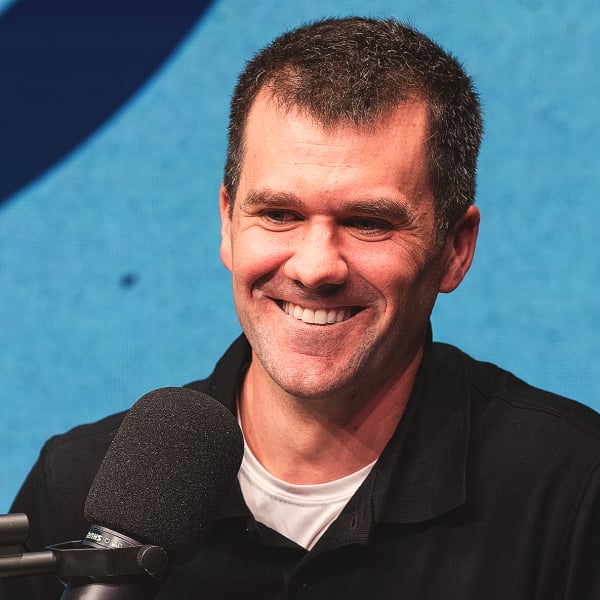
Adam Sylvester
CHARLOTTESVILLE GUTTER PROS AND CHARLOTTESVILLE LAWN CARE
Website: adamsylvester.com
Adam started Charlottesville Lawn Care in 2013 and Charlottesville Gutter Pros in the fall of 2020, in Charlottesville, VA. He likes to say, “I do gutters and grass! When it rains the grass grows and the gutters leak!” He got into owning his own business because he saw it as a huge opportunity to generate great income while living a life that suited him. He believes that small companies can make a serious impact on their communities and on every individual they touch, and he wanted to build a company that could make a big difference. His sweet spot talent is sales and marketing with a strong passion for building a place his team wants to work. Adam values his employees and loves leading people. While operations and efficiency is not something that comes naturally to him, he is constantly working to improve himself and his business in these areas.

Hunter Patrick
Dumpire Junk Removal
Instagram: @hunterpatrickdumpire
YouTube: Hunter Patrick Dumpire
TikTok: @hunterpdumpire
Hunter Patrick is the owner of Dumpire Junk Removal, a fast-growing junk removal and demolition company based in Cumming, Georgia. Since launching in 2021, Hunter has built Dumpire into a trusted local brand by offering transparent pricing and reliable service across home cleanouts, hoarder rehabs, demolition, and debris removal.
After starting with just an idea from a friend and a borrowed trailer, Hunter scaled Dumpire to serve thousands of homeowners and businesses throughout North Georgia. His strong online presence, especially on TikTok, where he’s grown a following of 110,000+, has helped him turn content into a growth engine for his business.
Today, Hunter also teaches aspiring entrepreneurs how to launch and scale junk removal businesses through his mentorship platform, Dumpire Academics.



SIGN UP FOR the masters of home service newsletter
Get monthly updates with news, tips, and advice on how to run a 5-star business. You don’t want to miss out!
Interested in being a guest on the show?
Are you a home service professional eager to share your insights and experiences? Apply to be a guest on the Masters of Home Service Podcast, and join a community of experts committed to helping others level up through knowledge.
Other Podcasts We Love