 24 Minutes
The Hidden Cost of Every New Customer
With Gabe Chrismon


-
Gabe (00:00):
The misconception is spend more to make more, right? That is probably the biggest trap you can get into. And it’s one that I fell victim to at the beginning of running my restoration business. And I was spending 5,000 a month on leads. And I was just like didn’t understand. I was like, I’m going to close my doors in six months, seven months.
Adam (00:19):
If you think that your customer acquisition costs, how much it actually takes to get a customer is just how much a lead costs on Google Ads, then you’re missing out on a pretty big blind spot of how much it actually costs to get a client. We’re going to tighten all that up for you today. And my guest is Gabe Chrismon and he’s going to talk to us about CAC. So Gabe, welcome to the show. Thanks for being here.
Gabe (00:40):
Thanks for having me. This is awesome.
Adam (00:42):
So what is CAC? Let’s start there. What is CAC?
Gabe (00:45):
Cost to acquire your customer. And really what it is, is every dollar you spend to get that customer. And most people, as you mentioned in the intro, think that’s just the lead cost or they think that’s just your time associated with it. When in reality, especially depending on the size of your operation, it starts from lead cost, which is your top of funnel. And then everything from the funnel on down to invoicing that customer, it goes into your CAC. So that includes a litany of things from the lead cost to a lot of other expenses that I’m sure we’ll get into, but that’s high level. What does it cost you to acquire one of your customers inside of your business?
Adam (01:24):
But you’re saying there’s even more to it than that.
Gabe (01:26):
Yeah, you’re missing,
Adam (01:27):
What are we missing? Let’s get into it. What’s the first thing we’re missing?
Gabe (01:30):
So the first thing you’re missing is the operational cost it takes to get that customer. So let’s just start from the lead. So let’s say you spend a hundred bucks to get the lead. Driving out there to do the estimate is… Well, let’s back up even further. Answering the phone. Who’s answering the phone? Or what service are you paying to answer the phone? There’s a cost associated with that. So lead comes in and you call right away because you’re a great business owner and we all know you got to call,
Adam (01:54):
Speed to lead, baby.
Gabe (01:55):
Speed to lead. Let’s close it. So you call right away or you have somebody in your office call right away, or you’re using a tool in Jobber that calls right away. So there’s a cost associated with that. So that’s first and foremost. From there, maybe you have a 30-minute conversation. Maybe she’s a nice old lady and she wants to have a conversation about what.
Adam (02:14):
Ms. Betty’s a talker. She wants to talk.
Gabe (02:16):
Ms. Betty’s talking about stuff that’s maybe not related, but you have a great front office and they’re going to take their time with her and really talk to her. All of that is time associated with that one specific customer. And that ticker is ticking on how much it’s costing you.
Adam (02:29):
And is time not spent with a different customer, which we can get to later.
Gabe (02:33):
Yeah. Correct. Yeah. Not on other leads or fulfilling current jobs. So from there you go, Hey, Ms. Betty, that’s great. I love that you have three Malteses. They’re really cute. When can we come out of your house?” And you finally get out there. So now you’re either sending a estimator, a sales guy, technician, yourself. So you have to account for the time there, the cost associated with that. So whatever you’re paying that person, whatever you’re paying yourself or whatever your time’s worth, the wear and tear on the vehicle, the expenses to the vehicle, so fuel, and then the time associated on site doing the estimate. Hey, Ms. Betty, we’re going to do X, Y, and Z. We’re really great at what we do. Here’s our prices. We’d love for you to hire us. That maybe takes 30 minutes to an hour. She can’t make her mind up. She has to talk to he husband first. That’s fine. That’s her prerogative. Now you got to drive back. You’re going to go back to the office or to another job. So all of that’s then time there, cost associated back, time associated back. That’s just before she’s even gotten to a yes or a no. Then it’s the next day and you have your front office following up on leads. So now they’re calling again and they spend another 30 minutes with Ms. Betty. And finally she says, yes, let’s do it. So we’ve got another 30 minutes associated with trying to convince Ms. Betty. Then you say, hey, you might have to go back out there, do more measurements depending on what your job is.
Adam (03:50):
I have a garage I didn’t tell you about. I want you to look at. There’s another backyard you didn’ see. It’s like, why didn’t you tell me what I was there?
Gabe (03:56):
I got two houses. You look at this one too. So there’s always things like that that happen. So all of that is associated with the cost then. And then you finally get, yes, all right, we’re going to start this day. And now it’s prepping for the job. It’s informing the crews about what’s going on and what the job is. That can be more complex or less complex depending on the industry. And then it’s the drive out there where your crew might be falling asleep in the car or they’re just doing nothing because they have to drive out there. Maybe that’s a long drive, maybe it didn’t account for that. Then it’s servicing the job. So now you have cost to deliver the job. So in lawn care, there’s fuel, there’s maintenance for the equipment, there’s wear and tear on the equipment. There’s consumables for the equipment, weed eater strings or weed wacker, whatever you guys call. So all of that stuff is associated with your cost to acquire that customer too. So some of that is just operational expenses, but some of that definitely ties into your cost to acquire that customer. And it really stops once you start servicing because then once you start servicing, that turns into the operational cost. But everything before that is all what it takes you to acquire that customer. And the big thing is that people don’t realize it’s usually about 4X, four to five X what you think it is because you’re only associating the lead cost with it. So that’s really where it’s important to understand all that goes into your cost to acquire that specific customer because then you can accurately price it and you can make sure that you’re making a profit on that specific job based off of all it took to acquire that customer.
Adam (05:23):
But Gabe, come on. I can’t track all that. What would you say to those people who are just like, That’s a lot. How do I track all that stuff?
Gabe (05:32):
Yeah. I would say that’s your job.
Adam (05:35):
Welcome to the world of business.
Gabe (05:36):
Yeah, you’re a business owner. I mean, you signed up for this. It’s not your technician’s job. It’s not your front office job. It’s your job. So I would say there’s a little personal responsibility there. Yeah, it is hard. It’s not easy. This is why no one does this. It is stressful. But there are so many tools, Jobber being the main one, where all of this is very easily tracked for you as long as you’re just using the tools for what they are. I think there’s a lot of people out there, myself included, that use software tools like a Jobber and we’re using like 10% of what it can actually do. So the first and foremost thing, and this isn’t like a, you don’t have to rush to go do this, but let’s dig into what it costs. Let’s dig into the tools that you are already using inside of Jobber and say, Hey, how can I better track expenses pre-doing the job? How can I better understand what my CAC is? And there’s a lot of tools out there to really, really help streamline that for you. And ultimately what you’re going to do is, because the argument is I don’t have the time, I got to be doing other things. You’re going to find out that you’re going to make more money if you take the time now to really figure out what your CAC is because it’s going to affect your whole business down the road.
Adam (06:38):
I think it’s also just step one is awareness. I think a lot of our listeners are just flying blind and it’s hidden for a reason. It’s a hidden cost. They don’t see it at first and they’re focused on the biggest fires in their business. This is a medium sized fire that they just aren’t seeing yet. And I think that just awareness of knowing, okay, I’m okay with driving all the way out there as long as I know it’s costing me. As long as it’s not just like I’m not just doing it with my eyes crossed and just kind of like… Now here’s the most common thing I see, and this tends to be more larger average ticket companies, but the owner just drives around town doing estimates all day long. And they are making 15, $18 an hour if you really think about all the different costs. And because they’re driving there too far or they’re chasing leads that aren’t good. I think there’s a difference between cost of lead, which is $25 you pay Google. But the CAC, the cost of the entire thing is so much greater than people realize. And it starts, I think drive time is a big thing of it is a big part of it.
Gabe (07:40):
Yeah. Windshield time is huge. And it’s because this is multi-layered, multifaceted. As a business owner, you eventually get to the spot as the owner where maybe you are driving around town just doing estimates. But it took a lot of work to get there. What that means is you got your lead funnel figured out. You got leads coming in and you’re like. And someone answered the phone.
Adam (08:00):
We’re killing it.
Gabe (08:01):
I’ve got 20 estimates today and I’m going to go do all of them. So you think that you’re doing a great job as a business owner, right? And you are. But now the next step is to go, okay, this doesn’t feel profitable. This feels like I’m wasting a lot of time and money because we’re not closing as many. Maybe I’m not qualifying these leads correctly. Maybe I’m not understanding what a true qualified lead for my business is. Maybe I’m not focusing enough on route density. There’s a lot of different things there. So I think these things come in time and layers where at the beginning you go, I just need leads. And I don’t care what it is and I don’t really care about my CAC because I have to make some money even if it means my margins are 10% instead of 20%. And then you get to a point where you’re like, okay, we got our leads funnel figured out. We’ve got all these different sources and they’re coming in. But now our cost to acquire is all over the board.
Adam (08:52):
I also think that people, and you made me think of this, are not squeezing all the juice out of a lead. But if we’re just only selling them what they want initially, we’re severely hurting ourselves.
Gabe (09:05):
Yeah. You make a really good point. And there’s multiple ways to handle that. So when you’re out there, the qualified upsell, qualified downsell is one that no one thinks about.
Adam (09:17):
And what is that?
Gabe (09:18):
So if you go out there and let’s say you’re selling them a new bathroom. And it’s $20,000 and they’re not buying it, they’re not buying it, they’re not buying it. The qualified downsell is to just get them to buy something but at a lesser rate. It’s like, okay, well maybe we phase this out or maybe we don’t put in the gold toilet, maybe we just go with the normal toilet.
Adam (09:38):
Silver one.
Gabe (09:39):
Yeah, maybe we go with the silver toilet. So there’s a qualified downsell there because then what you do is that you take that cost, the lead cost and your cost to go out there and all the other things we’ve talked about to acquire that customer. And you’ve rang it dry for something at a minimum. If it’s a qualified downsell or if it’s an upsell, you’ve decreased your cost to acquire there. So there’s a litany of things you can do onsite as well. The shared lead is what I think is the biggest trap when it comes to a really significant CAC. And what I mean by that is if a homeowner is sending out their lead or their information to eight competitors at the exact same time, now the homeowner has eight businesses calling them right away. If you weren’t one of the ones, maybe you were under a house, maybe you were on the job that happens, and you’re not using the tools provided in Jobber to help prevent that then you’re not going to get the job. You’re going to call, they’re not going to answer because they’ve already got it solved. Or they’re going to say, Hey, I’ve already hired somebody. You’ve been charged that amount for that lead no matter what, right?
Adam (10:42):
Yeah.
Gabe (10:42):
Plus the operational time maybe to go out, maybe you do go out and do an estimate, plus the time spent calling them, plus the time spent not with other customers. If you stack that up and you say, “All right, in these traditional marketplaces, I close 25% of the leads that come in. ” And it’s not because you have a bad sales process. It’s because maybe most of those weren’t qualified leads or you didn’t get to them quick enough or they weren’t even needing a service that you provide. But you’re getting charged for that no matter what. You take the ones that you do go out for estimates on and you take drive time and operational cost and fuel costs, wear and tear to the vehicles. What that really looks like, that $100 lead really turns into 500, 600, $700 when you finally do acquire one of those customers from one of those sources. When you take into account all those additional costs there and all of the bad ad spend and bad leads that you’re getting. So it’s really, really important to pay attention to those sources where you’re getting leads from, especially if they’re the competitive or multi-source leads and they’re going to multiple companies.
Adam (11:42):
So Oply integrates with Jobber, right?
Gabe (11:44):
Yeah, absolutely. So it’s right in the app marketplace. There’s no cost to integrate. There’s no subscription and there are no lead fees. I would be a hypocrite sitting up here talking about CAC if we charge for leads. The way we work is if a homeowner purposely selects you once you integrate to hire you for your services, you are only charged anything ever if you win the job. And all the details are in the app marketplace and you can reach out. My email is directly in the app marketplace description, but it does help significantly with your CAC because there is not a lead there. There’s not a lead fee there, which means there’s no bad ad spend when you integrate with Oply.
Adam (12:19):
Well, I like that. That sounds great. Yeah.
Gabe (12:20):
Yeah. Win-win.
Adam (12:21):
With Jobber, you can actually track your lead sources and track whether or not a lead source is profitable or unprofitable. You need to use Jobber. It’ll help you protect your CAC. So go to jobber.com/podcastdeal. Start your free trial, get your discount today and start become a Jobber user now. It’s time. Stop waiting. Join Jobber today.
(12:44)
Is there anything about CAC that people have misconceptions about? Everyone knows what lead cost is. It’s like, Holy cow, how much did I pay this month in leads? And so I just think that even that’s a good starting point. Just go do the work and track every single freaking lead and make sure that you’re squeezing juice out of it.
Gabe (13:05):
The misconception is spend more to make more. That is probably the biggest trap you can get into. And it’s one that I fell victim to at the beginning of running my restoration business. I was like, Well, if I spend $5,000 with Google a month, 5,000 I didn’t have. We had $60,000 in the bank when we opened as working capital and I was spending 5,000 a month on leads. And I was just like, didn’t understand. I was like, I’m going to close my doors in six months, seven months. So I think that’s the misconception, which is like I’m just going to, if you build it, they will come. I’m just going to throw money at this and I’ll get leads and I’ll close them. When it comes to the marketing dollars that you’re going to spend there, you have to be careful where you’re putting that money because where do their incentives lie? So if you look at a Google, I don’t mind mentioning Google, they’re Google. I mentioned them, they’re not going to die. So if you look at how Google makes money, they make money per click off of you and all your competitors. They don’t necessarily care if it closes and they don’t really care if you get the work or not. And this is why I love, this is a little off topic I think, but I love social media as a tool for business owners. It’s a great lead tool. It’s a great brand recognition tool. But more importantly, the product and the platform is aligned with your incentives. If you have content that is good and people watch it, the algorithm rewards that and shows it to more people because they want more people to stay on,
Adam (14:27):
Their platform as well.
Gabe (14:29):
Yeah. Right. So it’s like that is a model where if you’re going to sink money into it, it makes sense because it’s mutually beneficial. But in other businesses where you’re just getting charged for a lead no matter what, if it hits your inbox, you’re getting charged. That’s a model that doesn’t have really a good foundation for you for a long period of time.
Adam (14:46):
Any tips for our listeners on how to track, just get started on tracking some of this stuff?
Gabe (14:51):
Yeah. The biggest one, like you said, is call comes in, you have to know how they found you. If you don’t close it, that knowledge is so powerful. And it always shocks me how many people don’t do it because they either get busy or they don’t have systems set in place to figure that out. But if you know every person who called in and then whether or not they turn into a customer or not, where they heard you from, where they found you. Was it a Google ad? Was it another marketplace? Was it word of mouth?
Adam (15:21):
Yard sign.
Gabe (15:22):
Yard sign, right? TV. Yeah. You have to understand that and every customer has to have a lead source attack to it. And Jobber is very easy to do that. So you can track which funnels are working where. And ultimately what that knowledge allows you to do is make informed decisions that are data backed instead of just throwing money at where your gut says to throw it. If I know I’ve got four or five lead sources and one of them is word of mouth or yard sign, for a easier example, and one of them is Google, then I know my true cost to acquire is X versus Y, and this month I have $5,000 I want to put towards something. It’s way less stressful to make that decision as a business owner than it is to just guess at the end of the day. So tracking it is the first thing you can do to understand your CAC. You can’t understand it otherwise if you don’t track from the very beginning where the source came from.
Adam (16:13):
Every month, well, almost every month, I will go and pull up all the leads that came from Google Ads and I will go see how every single one went. Some of them are duds always. Some of them closed. Big job, little job. I’ll check that out. And then the ones that didn’t close, maybe there was still a waiting response in Jobber pending. I’ll go see, have we followed up? Are there notes? Oh, we’re waiting till we close on the how. And I look. And that takes about an hour. It’s annoying. I don’t like that. But if I’m going to spend money on Google Ads, I don’t have a choice because it could just stop working and I could just spend into the Blivian and not even realize that it’s not working every month I have to. Gabe, another thing I’ve learned over the years is marketing to me feels more like a force. So instead of saying, Well, yard signs work and Google Ads work and my wraps work and this doesn’t work and that doesn’t work, what I’ve really found is my marketing works. So in some ways I like to look at, Okay, so if I spent 50 grand in one quarter on marketing, did we have a 5X return? Yes or no? And then I’ll say, Well, I guess my marketing is working. Because it’s really hard to know if one thing is working over another in terms of lead attribution and all that. So if I look at it more like an ocean where it’s forcing water to the beach and leads are coming. But if it’s working, then I attribute to the force of marketing. Does that make sense?
Gabe (17:36):
Yeah, that does. And I think that is a function of you run a really good business. I don’t know your business, but it sounds like you run a really, really tight business. And that might not be the case for everybody at the beginning. So I think that’s a result of a lot of years of hard work.
Adam (17:55):
A lot of testing.
Gabe (17:56):
And purposeful testing and looking at the data, right? Because you’ve made decisions on where to put that money based off of the previous years of saying this did work. I had a lot of customers telling me yard signs, that’s where I found you. Okay. All right, cool. We’re going to put more yard signs out. Or I saw your billboard. And those years of testing individuals and then understanding what your CAC was for that spend has allowed you to kind of create this marketing machine, if you will. But I think at the beginning, it’s really hard to do that. And you don’t have to, you don’t have to boil the ocean. Maybe start with two lead sources. It’s easy to track. Run some Google Ads or some Meta ads or whatever and put yard signs out. And then you know, okay, hey, how’d you find us? Well, I saw your yard sign or my neighbor. And then you got, all right, I’ve got three or four lead sources. Can easily track all these. I can determine what my cost to acquire the customer is down the road. And then you can expand from there and create this marketing machine that you’ve created. And the other side of that is at the beginning, especially for young companies, I always stayed away from things that were not easily attributable to that lead source. And what I mean by that is like a billboard. Billboards work if you have a brand or if you’ve been around for a little bit. But they’re expensive. Yeah. Or you have the money to put into other things in marketing. So in your example, I’m driving down the road and I see a billboard for Bob’s Plumbing. I’m like, okay, Bob’s Plumbing. I’m not going to really remember Bob’s Plumbing when I have a plumbing issue in three months. But if I see Bob’s Plumbing and I see his Meta ads and then I Google him and when I need a plumber and I see Bob’s Plumbing, I’m like, I see Bob everywhere. That’s just sales. That’s seven or eight touch points for now you’re top of mind. That’s like a dream scenario for businesses, but it takes time to get there. So at the beginning, I stay away from those marketing spend and the advertising areas where I can’t accurately track fairly easy.
Adam (19:45):
More direct response is what you’ saying. Yeah. Okay. I’ve tried a lot of things that haven’t worked for marketing. A lot of things. Same. A lot of us have. That’s fine. Testing, shoot BBs, then shoot cannonballs. As Dave Ramsey says, I’m a fan of trying things within a controlled environment, not spend too much money, make sure it’s wise and all that kind of stuff. If our listeners are out there saying, okay, well, I do want to grow, get some more leads, but I don’t want to spend so much on CAC or I want to just be at least aware of CAC, what’s the first thing they should do to make sure that they’re not overspending or have these blind spots?
Gabe (20:20):
Yeah. I mean, we kind of mentioned it earlier, but I do want to bring it back up because I think it is the most important. Is every single customer should have a source tag. Where do they come from?
Adam (20:33):
Jobber does that. Yeah, you can do that in Jobber. Yeah.
Gabe (20:34):
Yeah. Do it right in Jobber. Every single customer should have that. And it’s not a futile effort to call a customer back and be like, Hey, I’m sorry. Where’d you hear us from?
Adam (20:44):
That’s a good point.
Gabe (20:45):
So that is worth your time. It’s going to present such a easy option for you when you truly understand where those customers are coming from the best as you can. You’re going to go, Oh, okay. Well, now I do want to grow. I have some money. I’m going to put it into this because it’s clearly working better than anything else. So I do think it’s that simple and I’m not trying to oversimplify this because nothing in what we do is simple as home service business owners. But I do think your first step is to go look at your customer list and understand where everyone is coming from and where they’re seeing you. And then you can put your marketing dollars to the best use.
Adam (21:21):
Yeah. To wrap that up for our Jobber users listening, if you’ll be just a hawk, okay, just a total hawk on this, train your CSRs, make sure you do it yourself. Whoever’s answering the phone, be super diligent and disciplined on making sure that you mark a new customer where they came from. It’s called lead attribution, fancy word, but track that person. Google, flyer, yard sign, vehicle wrap, whatever it is. Make sure you’re doing it every single time. You will thank yourself later.
Gabe (21:47):
100%.
Adam (21:48):
When you pull that report and it’s accurate. You’re like, Holy cow, we got eight leads. We got eight clients just from that one source this month. That’s awesome.
Gabe (21:55):
Set a reminder in your calendar. At the end of the day, go in and look at all the new customers and all the new leads you had that day and make sure all of them have a tag. And if you have a customer service rep, ask them why some of them don’t, right? Yeah. So do the work upfront. It’s going to save you so much money and bad marketing that we’ve all done and experienced before because we were making decisions not based off of data or the truth. We were kind of just going with our gut. And at the beginning, you got to do that until the data’s there. When the data’s there, there’s no excuse not to know where a customer came from. That’s the first thing you can do here.
Adam (22:29):
Our gut is often wrong, at least for me. My gut’s often wrong. Yeah. All right. Lightning round. I’m going to ask you a bunch of questions. Just answer them the best you can, the first thing you think of. You ready?
Gabe (22:39):
Yeah.
Adam (22:39):
All right. What is CAC?
Gabe (22:41):
Your cost to acquire your customer.
Adam (22:43):
Why does CAC matter?
Gabe (22:44):
Because it’s a direct correlation to how much money you’re actually making in your business.
Adam (22:48):
Give me an overrated marketing channel.
Gabe (22:51):
Competitive lead channels. So where the homeowner has eight to 10 different companies calling them at the same time.
Adam (22:57):
When a new lead comes in, what’s a quick way you can decide if it’s worth your time or not? If it’s a good lead.
Gabe (23:03):
Are you the decision maker? Can you pay me? I don’t want a neighbor calling me. I don’t want a family member calling me. And are you going to be the one writing the check? Because that’s why we’re here.
Adam (23:12):
Gabe, that was awesome. Thanks for being here. How do people find out more about you and Oply and all that?
Gabe (23:16):
Yeah. So to find out more about Oply, if you’re a Jobber user, you can go to the App Marketplace and find Oply right in there. It costs nothing to subscribe. We don’t charge for leads. It’s a way to get some more business and you can easily track your CAC there too.
Adam (23:30):
Cool. Thanks for being here. That was really helpful. Appreciate it. If you’re still the best technician in your company, you might be holding your business back. Next week we talk about how to step out of the field and build a team that you can grow without you. And thank you for listening. I hope that you learned what CAC is, how it can benefit your company, and how to track your leads. If there’s one thing, make sure when a new client calls, you track their lead source in Jobber. It’s amazing. You’ll thank yourself later, I promise you. I’m your host, Adam Sylvester. You can find me at adamsylvester.com. Your team and your clients reserve your very, very best. So go give it to them.
About the speakers

Adam Sylvester
CHARLOTTESVILLE GUTTER PROS AND CHARLOTTESVILLE LAWN CARE
Website: adamsylvester.com
Adam started Charlottesville Lawn Care in 2013 and Charlottesville Gutter Pros in the fall of 2020, in Charlottesville, VA. He likes to say, “I do gutters and grass! When it rains the grass grows and the gutters leak!” He got into owning his own business because he saw it as a huge opportunity to generate great income while living a life that suited him. He believes that small companies can make a serious impact on their communities and on every individual they touch, and he wanted to build a company that could make a big difference. His sweet spot talent is sales and marketing with a strong passion for building a place his team wants to work. Adam values his employees and loves leading people. While operations and efficiency is not something that comes naturally to him, he is constantly working to improve himself and his business in these areas.
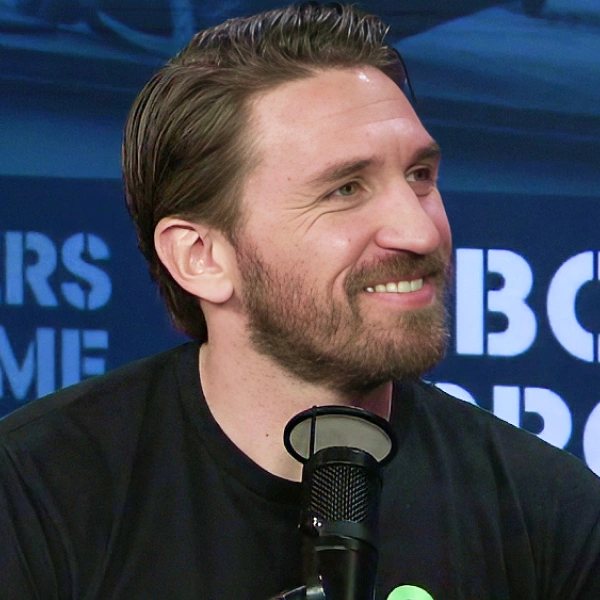
Gabe Chrismon
Oply
Website: oply.app
YouTube: @Oply_App
Instagram: @oply_app
Gabe Chrismon is the Co-founder of Oply, an AI-powered platform built to help homeowners manage their homes and connect with trusted service professionals. A West Point graduate and U.S. Army veteran, Gabe brings the same operational discipline he learned in the military to the world of entrepreneurship. Before starting Oply, Gabe ran a restoration business where he learned the hard way what it actually costs to acquire a customer and what pricing decisions can make or break a company. He’s based in Nashville, was recently named to Nashville’s 40 Under 40, and is passionate about helping home service pros build smarter, more profitable businesses.



SIGN UP FOR the masters of home service newsletter
Get monthly updates with news, tips, and advice on how to run a 5-star business. You don’t want to miss out!
Interested in being a guest on the show?
Are you a home service professional eager to share your insights and experiences? Apply to be a guest on the Masters of Home Service Podcast, and join a community of experts committed to helping others level up through knowledge.
Other Podcasts We Love