 19 Minutes
How to Squeeze More Profit From Every Route
With Kyle MacDonald and Beau Batcheller


-
Kyle (00:00):
You take something like the On My Way alert, you also add a link so that that customer can see where the vehicle is and see the vehicle coming to them.
Adam (00:10):
Can you do that?
Kyle (00:10):
Yes, because customer expectations have shifted. We’re at home waiting for something, whether it’s a Domino’s Pizza, an Amazon delivery.
Adam (00:17):
This is true. Yes.
Kyle (00:18):
What is the expectation? We want everything real time and we expect to track it.
Adam (00:25):
If your crews are driving around all day in their trucks in between client visits and all that, then you are not a service company, you’re a transport company and you’re losing money. Today we’re doing a talk to you about how to be profitable on the road. My guests today are Kyle MacDonald and Beau Batcheller. Guys, welcome to the show. Thanks for being here.
Beau (00:46):
Appreciate you having us.
Kyle (00:47):
Yeah, excited to be here. Thanks, Adam.
Adam (00:48):
Kyle, how much is windshield time costing our listeners?
Kyle (00:53):
Windshield time I think can feel like an afterthought. In between jobs, do I really care? Do I need to focus on that? But the reality is you need to know what’s happening in between jobs. And in order to know what’s happening in between jobs, you need to be tracking it somehow.
Beau (01:10):
When I first found out that problem, my guys were driving 30% of the day in an eight-hour day. That is so much time, labor, gas, and overhead spent on absolutely no income. And it took a while to find it. There’s a lot of business owners out there that if you’re not tracking your vehicles or watching those time figures, you have zero idea how big your problem is and you are bleeding dollars.
Adam (01:33):
But it seems like it’s such a prevalent blind spot for so many people. Why do you think that is, Kyle? Why are people so blind to this? It just seems like they just can’t get it.
Kyle (01:42):
Yeah. Well, I think it’s like Beau just said there, you’re focused on so many things and it can be difficult to get into those details. And you might not even think about this till the end of the year and it’s coming up to tax time or you’re looking at your numbers and you’re trying to figure out why did this stuff cost so much and how does that compare to the revenue and the different aspects of the business that you’re measuring? And I think like Beau, if you were actually running the numbers and looking at everything from fuel and maintenance to the trip distance and everything else, you’ll know that longer trips over a long period of time can bleed into your efficiency as an operation.
Beau (02:21):
100%. I mean, now we’re spending overtime. Now we’re replacing tires sooner. My gas bill is higher for all the same amount of income.
Kyle (02:29):
Yeah, for sure. And I think when we look at our customer base in aggregate, an average trip is usually around 10 miles, give or take. And average speed is about 30 miles per hour over all of these trips. And keep in mind, these are hundreds and hundreds of millions of miles that have been traveled, but that comes down to 20 minutes at least for a trip within the city. You’re going to the job, you’re coming back, and you start to add all this up, you tie in your labor rate and everything else. And it’s like you said, hours and hours can go by. And so maybe for some businesses, that extra drive time makes sense because they’ve figured it out or in order to capture a specific service area, it’s justified. But I think for a lot of businesses that are in growth mode in particular, you really have to be careful about your service radius and the areas that you’re servicing. And if you’re not tracking that, you can start to bleed into that inefficiency.
Adam (03:26):
There’s also nuance to this. It depends on if you’re sending one person two techs, three techs. Oh, that’s a really big job. Well, yeah, but is it a really big job that you’re going to finish in one day or is it going to bleed over two weeks? Because every day you’re driving out there for two weeks. And so a lot of people don’t realize that recurring revenue is so good. And pest control, lawn care, some house cleaning, window cleaning, these low average ticket, high volume. High volume only works if it’s high volume. But if you’re driving all over town, you’re not achieving high enough vault. You’re achieving medium volume and that doesn’t cut it. The only way that you’re going to achieve high volume success is if you’re freak about windshield time and you’re freak about efficiency. And the only way that you can be efficient is by knowing how much time you’re driving around town and how much gas you’re spending, all these costs we talked about. So someone who’s listening like, oh my gosh, they’re so right. What do they need to do?
Kyle (04:23):
Yeah. I mean, it seems really basic, but we hear from businesses who end up starting with fleet tracking about what they used to do before. And it just didn’t work. Some people try air tags or they’re asking their techs for share your pin in the field and it just turns into a mess. It’s a big cognitive load. It’s possible. It doesn’t make sense.
Adam (04:44):
It doesn’t make any sense.
Kyle (04:44):
It doesn’t make sense. But once you start tracking the vehicles efficiently, you’re going to know the GPS location in real time at all time. And that’s just the beginning. So there’s some great tools and features in this kind of technology zone of GPS tracking, including geofences. So geofences is basically putting a virtual boundary around a zone. So what we hear from a lot of business owners is there’s kind of a handful of those that you want to set up and that’s going to help drive some efficiency. First and foremost, put a geofence around your office, your zone of primary location for your vehicle so you’ll know when your vehicles are coming and going automatically with alerts. Then broader, you might say, and this might sound silly to some people, and Beau, I don’t know if you’ve ever experienced this, but you might say, You know what? I’m going to actually put a geofence around my state. And say, What are you talking about? I don’t service out of state. Yeah, but your guys may go for a joyride. They might take a vehicle somewhere where it’s not supposed to be. And we’ve heard tons of anecdotes about things like that, but if you don’t know, you don’t know. So set that up. And then more specifically when we’re talking about windshield time and efficiency and making the most of your time, define as an owner and with your team what area you want to service. And with geofences, you can be really specific. You can create specific zones around areas, neighborhoods, things like that. And then use that as a control mechanism so that you don’t have to manage it yourself. The technology actually manages it for you.
Beau (06:09):
It’s one of the biggest things I harp on in my company. Let’s take a 30-minute drive time from lawn to lawn. I got three guys in the truck. Let’s say they all make $20 an hour. That’s $60. Let’s throw another 20 on it in overhead. There’s $80. But from them to get there and get back, that’s an hour of the day, that’s an eighth of my day. Let’s say that lawn’s 50 bucks. Great. I’ve paid that client $30 to go mow that property. Every year we say yes to more clients. Everyone wants more clients, that’s first. Where you really start getting profitable or running a real business, in my opinion, is when you say no. When you look at that 15, 13 minute drive and say, Hey man, that is outside my area. I don’t have enough. If you could get a couple neighbors together, I would gladly take on your property. But saying no is the most important thing. You’re becoming more profitable, you’re controlling your cost, and you have way less wear and tear on your vehicles.
Adam (06:59):
Yeah. You guys are both using fleet tracking stuff. And I used to. And actually one time we were doing a ride along working interview for somebody and it went sideways and he got all bent out of shape so we didn’t hire him. And he started throwing mud at one of my technicians and said, Well, your guy, he just went and sat at Kroger for an hour and a half. You don’t even know about it. You bum. You don’t even know what your guys are doing. I said, Really? So I went back and looked at the GPS tracking and he didn’t do that. The guy was just totally lying about the whole thing. And so it totally bailed him out of a weird situation with me. What were you doing sitting on Kroger? I wasn’t doing that. And it eliminated all of that by just simply knowing the facts.
Beau (07:40):
Yep. A huge thing for us is we’ll do a service, we’ll do a lawn in 14 minutes or a spray lawn in 14 minutes or less sometimes, and the home cameras don’t pick us up. So a client says, Hey, I never saw you. You weren’t here. I didn’t get the notification. And we’re not dishonest people. We’re not trying to lie or cheat or steal anybody. And we were there. We did do the service. I have pictures of it. But the thing that always shuts that down quickly or brings that client, the conviction that we were there is that GPS location and say, Hey, we were exactly here for 13 minutes. Here’s when he got here, timestamped, here’s when he left, timestamped. Here’s when my truck was running, stopped, and started. And it shows them that. And that always brings that client reassurance when we all know for a fact he was there at the property. Whether he did a good job, that’s up to the photos, right? But at least I know he was there doing his job.
Adam (08:27):
This is a great conversation, guys. Let’s pause for a minute. Talk about Jobber. How is Jobber helping you specifically with efficiency, profitability, all these things that we’re talking about?
Beau (08:36):
I get a map for all my eight crews of where they’re going. I usually filter down. I select the certain crews I’m focusing on for a certain amount of time. And then I get to route from certain properties so I can flip the script or flip the route from any direction. So I am always ending my route based on where tomorrow is. So that way, if we don’t get to something, I can always pick it up. I haven’t seen another software that does that as quick as Jobber does.
Kyle (08:58):
Force Fleet integrates right into the Jobber software. And the two key areas that really matter are the actual scheduling map interface. And so when we’re integrated together, the vehicles that are being tracked by Force Fleet are going to show up right on that map inside of Jobber. So when that on my way message is sent out to your customers for the job, then they’ll be able to track that vehicle as it’s coming to their location. So yeah, it’s Uber or Amazon Prime for your business.
Adam (09:26):
Yeah, that’s pretty sweet. If you’re not using Jobber, you need to, whether it’s for tracking your vehicles or whether it’s for sending out quotes, taking payments, invoicing, requests, lead tracking, all that stuff, you need to use Jobber today. Organize your business and take your business to the next level. Go to jobber.com/podcastdeal. Get the exclusive discount and start today.
(09:47)
What do you guys think about the use of it in terms of go-backs? And oh, well the guys left a wrench at the shop, so they had to drive all the way back to the shop to get it and then go back. I feel like this is the kind of thing that you can’t unsee once you see it. Once you see how efficient all these things are, driving too far, go-backs, forgotten tool, all these things, you start to realize, wow, we could be so much more efficient than we are.
Beau (10:14):
Before you track vehicles, you have no idea what your crew doing. You have no way to confirm that. You have no idea what route they’re taking, if they’re driving the back roads versus the highway. These things confirm it and they create training opportunities based on it. I mean, I think UPS and those big guys, they’re looking at left-hand turns. They’re really cost analyzing those small, small details. And by tracking the vehicle and where they took, where they went to got lunch at that time, it changes your business. So for us, the driving back and forth to get material every day, wasting time. We now load material all before that, so we stop the driving around. It even takes a step further when all of our salespeople are managers. We track them as well. We track their routes. We have predetermined days we are coming to certain areas to even do sales quotes. Because you’ll take a sales guy, once he gets busy and has five appointments a day, he’s driving around all day and got nothing done. We have to route that area. We have to stack three sales appointments up. It’s a lower cost and it’s more time for him to actually do his job.
Adam (11:08):
But I’m curious if you use fleet tracking software for a dispatch. If someone calls in and says, I want my lawn mow today or tomorrow maybe, do you use it for dispatching and knowing where everybody is right now in this moment?
Beau (11:21):
Yes. There’s a ton of real-time scenarios that we deal with on a weekly basis where a client needs this, somebody needs this, a crew needs this. And it’s who is closest? Who’s available? Who is in the actual right asset or vehicle to go pick up this material or take it there? Who is outfitted for this? And I’m looking at that dashboard all day, every day, figuring out who is where and who can get this job done. Because we want to be of service. We want to be the guy or the company that can get those things done. And if I don’t know where anyone’s at, or if I have to make 15 phone calls to figure it out, we’ve wasted 45 minutes. And that’s if I got everybody on the phone, which never happens.
Kyle (11:58):
Yeah, I can back that up. On a recent survey we did with our customers, that was the number one top-reported benefit of using GPS tracking was better dispatching because it gives you that information you need when you need it. It gives you this ability to react faster than your competitors if they don’t have this technology as well too. And I think the dispatching benefit also can extend beyond just the business owner perspective and the daily operations. It actually extends into customer service. And this is where the technology gets really interesting when you start to combine fleet tracking systems with systems like Jobber has, you take something like the On My Way alert, which is an appointment reminder that’s sent to the customer, which is great. You get a text, you say, Hey, this job’s coming up. It’s a reminder for the customer. But if you take that to the next level, you also add a link so that that customer can see where the vehicle is and see the vehicle coming to them.
Beau (12:54):
Can you do that?
Kyle (12:54):
Yes. Because customer expectations have shifted. We’re at home waiting for something, whether it’s a Domino’s Pizza, an Amazon delivery.
Beau (13:02):
This is true. Yes.
Kyle (13:03):
What is the expectation? We want everything real time and we expect to track it. And so,
Adam (13:08):
Uber’s coming and you can see it making turns on your way.
Kyle (13:11):
Exactly. So why shouldn’t the service business be able to offer that? They should be able to offer that. And the GPS tracking and telematics technology makes that possible. And then not only is your business running more efficiently, the customers are getting a better, more modern experience that they feel more comfortable with. How cool is it to see exactly which vehicle is coming to your house and seeing where it is? Especially if maybe you’re working from home, you’ve got a busy day. Those kind of things really, I think, elevate the customer experience. So dispatching and reacting to an incoming job is one aspect of it, but also just knowing that all of your jobs are getting a better service delivery.
Adam (13:50):
So forgive my elementary question here, but I can see how having it for dispatching is convenient. Is it saving us money? Is it optimizing our efficiency in ways I can’t think of right now? Can you guys give me an example of how it’s actually saving money?
Beau (14:05):
Yeah. As soon as I get into work, it’s usually one of the first and last things I’m always checking is routing. And often the guys will immediately turn the wrong way. And I’m watching that truck leave the shop.
Adam (14:17):
And you’re just getting so fired up. Your blood is boiling.
Beau (14:20):
That job is out east and I see them going west. And I call him immediately and go, Where are you going? Oh, I just thought. I was like, turn around. Go the right way. Stop wasting 10 minutes. Stop wasting five minutes. If your favorite gas station is that way, you should have went before work. But you can catch those mistakes very quickly. The other thing is my guys, maybe they have a heavy load, maybe they have a bad lighter on their trailer. They don’t take the highway. How much time am I paying a crew of three or four because they won’t take the road?
Adam (14:46):
Gosh, Kyle, he’s fierce. Beau’s not joking around.
Beau (14:49):
I am turning around about it. Yeah. I will call them and go, You got to turn around. Come back. You forgot this. It happens way more than I’d like to admit.
Kyle (14:57):
Well, I think Beau is exactly where most business owners are going. About 68% of our fleet tracking customers are getting this technology for the very first time. And if you think about it, this isn’t brand new technology. It’s been around for many years, but small businesses have been slow to adopt it. But you hear these stories and if other business owners get to talk to guys like you guys, you start to realize that, hey, the time is yesterday. You need to make this investment. You need to get this onto your vehicles. It’s going to make your life easier and it’s going to help you be a smarter business owner.
Adam (15:32):
So talking about route optimization and all that, I want to close with this question. What is a common. Is it a report at the end of the week? What do I get in front of me that tells me how much time we spend on the road? Just give me an example of how you guys get that information.
Beau (15:50):
Yeah. So I have a monthly driving report based on drivers. So I see who’s speeding, who’s not, who’s a good driver, who’s not. I watch route replays for the previous day. So I see who makes mistakes and then I get to talk with them about that. I also have reports based on mileage. So every 5,000 miles, this tells me, Hey, check the vehicle, check the oil, make sure this. So I get to have an eye on my maintenance because if not, watching 18 vehicles would take all day. And never once are all of those vehicles in the same place where I could actually do that. And then,
Adam (16:24):
Piecemealing. So true. Yeah.
Beau (16:25):
Piecemealing it together, then you’re not really paying attention to it. You’re going to forget something, you’re going to forget a vehicle. So the only way to do it is digitally by tracking it. And then I get these reports on X basis to make sure my company’s running.
Adam (16:37):
Alright guys, this is great. I’m just going to ask you some rapid fire questions. Just give me your first response, your first thought that comes to mind. Beau, what is the max drive time that our listeners should give in terms of route density?
Beau (16:48):
15 minutes. If you’re going lawn to lawn, property to property, 15 minutes. If you’re starting a brand new job, anything more than 30 minutes, you need to be charging for it. That’s an hour of your day there and back. You have to charge if you’re going above that.
Adam (17:00):
Kyle, what is operational boundaries and how can they help set up your geofences?
Kyle (17:06):
So you need to pick your key locations, where your vehicles are parked, start to put a boundary around your service area. And then also you want to put a bigger boundary around the areas where you don’t want your team to go ever.
Adam (17:18):
Beau, what’s the biggest indicator that your dispatcher is just routing based on what the client wants?
Kyle (17:24):
You look at your production, you look at the amount you got done. Let’s say there’s 20 lawns on it and they only did 10 that day and you wonder why. Well, then you come to find out, you look at the route, you look at the GPS tracking, and it was just a zigzag across town.
Adam (17:36):
Kyle, what’s the best benefit out of fleet tracking?
Kyle (17:40):
Peace of mind for the business owner. You’ll sleep better at night, you’re going to get more time back, and you’re going to wake up knowing that you’ve got more data to run your business better.
Adam (17:49):
That’s great. Guys, thanks for being here. How do people find out more about you, Beau?
Beau (17:52):
You can find more about us on Facebook, Instagram, TikTok, Five Stones Landscape, also online or in Oklahoma City, Five Stones Landscape.
Kyle (17:59):
You can check us out in the Jobber marketplace or at forcefleet.com.
Adam (18:03):
Awesome. Guys, thanks for being here. You’re doing a great job in your marketplace. Keep it up. Keep rocking it out.
Beau (18:07):
Appreciate you.
Adam (18:08):
Most service business websites lose customers before the phone ever rings. Next week, Phil Risher joins us to show how the online landscape is changing and how that can help turn more visitors into booked jobs. And thank you for listening. I hope that you heard something today that’ll help you better understand route density, drive time, and all the ways that you’re losing money on the road. I’m your host, Adam Sylvester. You can find me at adamsylvester.com. Your team, your clients, and your family deserve your very best. So go give it to them.
About the speakers
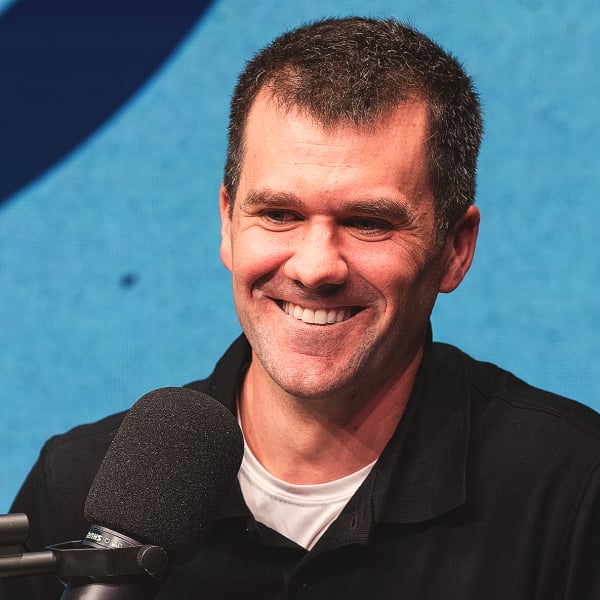
Adam Sylvester
CHARLOTTESVILLE GUTTER PROS AND CHARLOTTESVILLE LAWN CARE
Website: adamsylvester.com
Adam started Charlottesville Lawn Care in 2013 and Charlottesville Gutter Pros in the fall of 2020, in Charlottesville, VA. He likes to say, “I do gutters and grass! When it rains the grass grows and the gutters leak!” He got into owning his own business because he saw it as a huge opportunity to generate great income while living a life that suited him. He believes that small companies can make a serious impact on their communities and on every individual they touch, and he wanted to build a company that could make a big difference. His sweet spot talent is sales and marketing with a strong passion for building a place his team wants to work. Adam values his employees and loves leading people. While operations and efficiency is not something that comes naturally to him, he is constantly working to improve himself and his business in these areas.

Kyle MacDonald
Force Fleet Tracking
Website: forcefleet.com
Kyle MacDonald is the Chief Growth Officer at Force Fleet Tracking and one of the original team members who helped build it from the ground up. With more than a decade of experience connecting small businesses and home service pros to vehicle tracking technology, Kyle is one of the industry’s most hands-on voices at the intersection of fleet telematics and field operations. He knows that for a home service pro, those trucks and vans aren’t just overhead. They’re the engine of the whole operation.

Beau Batcheller
Five Stones Landscape
Website: fivestoneslandscape.com
Facebook: Five Stones Landscaping
TikTok: @b3.au
Beau Batcheller brings an entrepreneurial spirit and innovative marketing approach to every project. Since starting his first landscaping business in 2017, he quickly expanded it into a multi-crew operation with diversified services and a strong community presence. Today, Beau leads Five Stones with a commitment to creativity, professionalism, and delivering exceptional results for every client.
SIGN UP FOR the masters of home service newsletter
Get monthly updates with news, tips, and advice on how to run a 5-star business. You don’t want to miss out!
Interested in being a guest on the show?
Are you a home service professional eager to share your insights and experiences? Apply to be a guest on the Masters of Home Service Podcast, and join a community of experts committed to helping others level up through knowledge.
Other Podcasts We Love