 25 Minutes
This Company Built a Multi-Million Dollar Brand in Pink
With Brandon Downer


-
Brandon (00:00):
What I’ve learned in this business, especially in franchising, is no one cares about the business more than the owner cares about the business. And so I want the person that cares about the business the most to be in control of the phone and to be in control of how the customer gets communicated to.
Adam (00:16):
If your work truck is boring and bland and super normal, then you’re not going to stand out, especially if you have 15 different services you have listed on there and the phone number and email, all these things. You’re just going to blend in with the rest of the crowd. You want to stand out. And my guest today is Brandon Downer. He is the founder of Pink’s Window Cleaning and it’s a very successful brand and it’s visually very, very strong. He has a lot of pointers for us to help help you build your brand. So Brandon, welcome to the show. Thanks for being here.
Brandon (00:46):
Thanks for having me on. It’s great to be here.
Adam (00:48):
Take me back to those early days when you were thinking about what did you want to look like and feel like? What were some of those things that really mattered to you?
Brandon (00:55):
Yeah. So early on, we knew in our hearts that we wanted to do something different in the service business. And so the ethos of Pinks is, “Hey, we look different and we’re going to try to be different and give the customer an exceptional experience from the look to the service to everything. So that’s how we went about it.
Adam (01:12):
So for you, what came first, the chicken or the egg? Was it the customer service you wanted to be different or was it the look?
Brandon (01:17):
When we started Pink’s, it was 2020. COVID, unemployment was 15%+. Carter and I were walking around my neighborhood one day. Carter’s my co-founder, by the way. I’m going to be referencing him a lot. I love him to death. He’s my brother. But Carter and I were walking around my neighborhood and we noticed all these service trucks all over the neighborhood. And I had a plumbing issue at my house. He told me he’d be there at 9:00 AM, showed up at 3:00 PM. So my whole day was shot.
Brandon (01:42):
His apprentice fell asleep on my porch. When I told family and friends that story that a plumber showed up six hours late, that the apprentice fell asleep on my front porch and yada yada, it seemed every single person I told that story to had a nightmare blue collar experience.
Adam (01:59):
That’s right.
Brandon (01:59):
Yeah. Whether it was someone showing up way too late or something went missing in the house or,
Adam (02:04):
It took four days to get the quote.
Brandon (02:06):
Yeah. Or they quoted me at a thousand. The invoice came in, it was 1,500. Things of that nature. Everyone had that. And so Carter and I put our heads together and we’re like, why is this broken? Why can’t people just stick to their word and do what they say they’re going to do and show up on time? So Pink started before the brand, it was, we’re going to be about these things. We’re going to show up on time, do what we say we’re going to do. We’re going to own our work and just do good work for the customer.
Adam (02:27):
Excellent.
Brandon (02:29):
And then that’s when the brand came after that.
Adam (02:32):
Seth Godin has this thing where he says, what is a brand? A brand is what people say about you when you’re not around.
Brandon (02:38):
Love it.
Adam (02:38):
What do people say about Pinks?
Brandon (02:40):
People say it’s different. You know when you have a bottle of wine in your cellar and it’s been sitting there for a year or six months? I’m not a wine guy, but you kind of got to give it a quarter twist just to kind of rotate the fluids and make it. We wanted to give the service business a quarter twist. That was our thought process. And so people say it’s different. People say hopefully that we’re reliable guys. We’re trustworthy. We’re in your home. We’re around your home. We’re in your master bedroom. We want to be trustworthy. And so that’s the hope. And that’s what we’ve heard is that folks would say Pinks guys, they’re trustworthy. I want them in my home. I want them in my business, an intimate space, and I trust these guys.
Adam (03:20):
Talk to me more about the branding elements, the visual parts, the colors, all that.
Brandon (03:23):
So when we first started, we didn’t know what we were going to name Pinks. We did all this market research and every business in town was location-based names. ATX window cleaners, 512, that’s our area code. 512 cleaners. What else? Capital City Cleaners. Austin’s Capital Texas. So it was all location-based. And after about five of those, I couldn’t remember what logo was what in my mind. I couldn’t remember whose name was whose, whose phone number was whose. And then you got on their social media, if they had social media. You go on their website if they had a website and it was clunky. There was no flow. What we did was we designed the brand to kind of give it an old school feel. 50s, 60s, Milkman meets the body shop kind of feel. Because I feel like back in that day, people knew the people working in and around their homes. They knew their plumber, they knew their electrician, they knew the milkman that dropped off milk. And that was our goal is we just kind of want to bring those good old days back. And so we started designing this Pinks thing. We didn’t know what it was going to be called. And then Carter one day was talking to his mother-in-law and she said, What if you just name it a color? People remember colors. And then it also gets people asking the question, Why that color? And then she’s like, What if you name it Pinks? It’s five letters, one syllable. Easy to say. Pink’s Window Services. It was kind of that simple. We didn’t think too much after that because we didn’t know Pinks was going to do what it did and all that. So we’re like, yep, Pinks Window Services.
Adam (04:59):
So your desire to not name it after based on geography wasn’t so much because you wanted a franchise.
Brandon (05:05):
No. That wasn’t in the picture yet.
Adam (05:07):
It was just keep it simple.
Brandon (05:08):
We just needed some money. We just needed some money in Austin.
Adam (05:10):
You’re bored.
Brandon (05:11):
Yeah, we needed something to do. Yeah, we had no idea we were going to do franchising and grow like we have grown. We just wanted something that we were proud of and that we were proud to say, I’m a Pinks window cleaner. I’m dang proud of it.
Adam (05:24):
Now, one of the things that I think really matters to you and to business in general is just this idea there has to be alignment. If you had this really flashy van, nice uniforms, beautiful website, go on and on, and then the service just is kind of crummy. And it doesn’t live up to the expectation that the client had like, well, Pinks has a beautiful brand, but the guy who showed up had a messy truck inside. His shirt was untucked in and all these things. So how do you make sure that alignment stays in tune?
Brandon (05:50):
Well, it takes a lot of accountability. It takes a lot of good systems because the bigger you get, the harder it is to control those little things. Anytime I showed up to a job, my shirt was always tucked in. My shoes were always tied. I had socks that didn’t show my ankles whenever I was walking down the street. And so we were so keen on the details. And today, the way we dial it in is we still practice that ourselves. We never ask our employees, our franchisees, our employees of our franchise locations to do things that we’re not doing ourselves. And so Carter and I nowadays kind of view ourselves as the keeper of the culture. We wear this uniform every single day, which is nice because you don’t have to decide what you’re going to wear for the day. I got 10 of these shirts just in the closet. If the guys at the top of the organization are doing it, it helps trickle down to the rest. But early on, I mean, we would enforce it. We’d give guys strikes and say, Hey, if your uniform’s not dialed in, then this isn’t the place for you. But then as we grew and as our brand grew, it’s helped us attract talent. It’s helped us attract people that want to wear a uniform and I want to have their name right here and then the pink’s name here. And so it’s almost self-selecting. By the way, these uniforms aren’t the most comfortable thing. It’s thick, it’s hot. I’m in Austin, Texas. It gets to a hundred and something degrees outside and it’s humid.
Adam (07:14):
It looks good though.
Brandon (07:15):
And it looks great.
Adam (07:16):
Now is the mustache a requirement for,
Brandon (07:18):
To have a mustache and some sort of mullet going on. Yeah.
Adam (07:22):
Yeah. Clients can always tell when the person at their house is having a good time, if they’re happy or if they’re mad, if they’re getting along or not. That’s all a brand. Branding is not just a logo.
Brandon (07:32):
That’s right.
Adam (07:33):
It’s all together. And so when pink shows up, they’re having fun out there.
Brandon (07:38):
That’s right. Yeah, I mean that’s the goal. And when Carter and I started it, we were all about having fun on the job. And when we started our business, we said the second this stops being fun, we might want to fold it up and be done with it. Not that every day is flowers and rainbows and all that, but we want to have fun and we want fun to be the ethos of our company. And we want our people to also feel that way. And so a lot of times we pay for our guys’ lunches every day so that they can break bread together and have that fun and be in the community and then go to the next spot and clean it. And it’s also good marketing too. But we want our guys to just enjoy it. Like I said, not every day’s flowers and rainbows. Sometimes it’s 105 outside and you got,
Adam (08:22):
Things just go wrong.
Brandon (08:24):
Or six hours more of window cleaning to do. And you’re like, dang, dude, this is brutal. But it’s a part of it. It still is work.
Adam (08:32):
I’m curious what you think about this, Brandon. And I’ve even though about this myself, a logo. So let’s look at a logo for a second. At the end of the day, does it really matter that much? What do you think?
Brandon (08:42):
I think a logo matters a lot. People know when things are thoughtful and they can see it. And if it’s not thoughtful or if it’s ChatGPT-generated or whatever it is, nothing against ChatGPT, but if it’s AI-generated, then people notice and then people kind of have an eye for it. There’s a reason that certain logos stick out. There’s a reason. And it’s all just about thouhtfulness. So that little star, that little sparkly thing above that.
Adam (09:09):
That’s intentional.
Brandon (09:11):
It’s very intentional. Just like the phone number being on my hat. Everyone can see it. This is our real phone number. Try it if you want. Hopefully we answer. We’ll answer the phone.
Adam (09:20):
But the phone number doesn’t go on the van, does it?
Brandon (09:22):
It does go on the van.
Adam (09:23):
Oh, it does?
Brandon (09:23):
It does go on the van, but it’s subtle.
Adam (09:26):
Okay.
Brandon (09:27):
It’s only there if you’re looking for it. We very much see the phone number as part of the whole logo. We kind of though back to a ’90s service business, and I feel like the phone number was just always on the shirt or on the hat.
Adam (09:38):
Oh, totally.
Brandon (09:39):
Yeah. And just kind of like this funny touch. And so we added it in and it’s a part of it. And when we first started a franchise, it’s funny. A lot of folks were like, The logo needs to be Pinks Window Services city name. And we’re like, Hmm. And then we’re like, No, we need to keep it the phone number. And you have to fight like you know what, to get the right area code. Because 512 is the Austin OG area code.
Adam (10:07):
Old Austin. People know.
Brandon (10:09):
We have 737 now. It’s a little outside of Austin. People know that you’re like, You’re a fraud if you don’t have the right area code.
Adam (10:14):
That’s right.
Brandon (10:15):
And so we’re so intentional about getting that right area code when we launch new locations. What is that awesome code?
Adam (10:22):
The OG.
Brandon (10:23):
The OG, and that’s what we’re going to do. And that’s not that we can’t serve outside of that area code, but that we want to be OG. We want it to feel like Pink’s was started in whatever location that it is at.
Adam (10:35):
Alright, Brandon, this is great. Let’s take a minute to talk about why we love Jobber so much. We’re talking about branding a lot. How has Jobber helped you build your brand?
Brandon (10:43):
Jobber makes it simple for the customer. It’s not complicated for them. They know exactly where their quotes are all through the Jobber Client Hub. And it’s so simple. You can save a card on file. You can see your upcoming appointments. What cleanings do I have coming up? I can see my quotes, my past quotes, all that. All stored in one place. And the best part is you don’t need a username and password because who wants to have a username and password to log into a window cleaning thing? No one wants that. Everyone wants to just click it from their email and it goes straight in. So simple for us and so simple for our teams.
Adam (11:17):
I love that too.
Brandon (11:18):
And our customers love it.
Adam (11:19):
If you’re not using Jobber, then you need to get more professional and start using it today. It’ll build your brand in ways you never dreamed. Go to jobber.com/podcastdeal. Get the exclusive discount and start using Jobber today.
(11:31)
What does training look like? Do you go to people’s houses? Do you have your mom’s house that you just clean every single day, training? Tell me, what does training actually look like very fundamentally?
Brandon (11:43):
Yeah. Well, one, onboarded on and they have an online training they go through.
Adam (11:47):
Okay. That you built.
Brandon (11:48):
Yeah, Carter, myself and our team, we all built it together. It’s videos, it’s text, it’s here’s all the steps to window cleaning. Here’s all of our equipment that we use. Here’s what to look out for when you window clean. Here’s how to power wash, here’s the equipment. We have a modularized kind of video of here’s what the van looks like and here’s where stuff goes. And the cool thing is that training, it doesn’t leave you. It actually lives in your pocket on your phone on an app. So if you forget something, no worries.
Adam (12:17):
No excuses either.
Brandon (12:18):
You can always come back to it. And then we have this AI thing where you can ask the SqueeGBT is what we call it. You can ask SqueeGBT a question and then it answers based on our training, our materials, our brand.
Adam (12:31):
Pumped into it.
Brandon (12:33):
Yeah. And so it’s super fascinating. Technology’s helped a lot with training, but like I said, the training never leaves you. And so I think it’s okay to launch someone and then it’s okay if they don’t know every single answer because every single answer is accessible in their pocket if they prompt correctly or if they look in the correct spot.
Adam (12:50):
Okay. So a lot of the training you just described I think was primarily,
Brandon (12:53):
That’s online.
Adam (12:55):
How to clean windows. How do you teach them, this is how we do it here?
Brandon (12:59):
Yeah. We have online training for that too, but that is something that has to be lived. Whenever a new person comes in, they’re with a more senior tech that can walk them through, Hey, here’s how we greet the customer. Here’s where we park the van. And again, all this is on online training, but online training can only get you so far.
Adam (13:15):
That’s right.
Brandon (13:15):
There’s a level of like, you got to live it, man. You got to get out there.
Adam (13:18):
Get your hands dirty.
Brandon (13:19):
And just freaking do it. Yeah. And so we do that with a senior lead kind of mentoring a young tech. Yeah. And that’s how it goes. They flow through. It probably takes six to eight weeks for that technician to be fully up to speed where they have the ability to become a lead, which means more pay and yada yada.
Adam (13:38):
Brandon, a copy of a copy of a copy of a copy of a copy eventually stops working. How do you avoid that effect? And this is a question every person listening right now understands. Well, I taught Jimmy and then Jimmy taught Johnny and then Johnny taught Timmy and Timmy’s not doing it right.
Brandon (13:53):
No, the process is all jacked up.
Adam (13:54):
So how does Pinks master that? Because I think you’ve done a pretty good job of it.
Brandon (13:58):
Yeah. So one, we’ll do a quarterly in-service day across the locations where we kind of just reteach everything.
Adam (14:05):
What do you mean that you bring everyone or just,
Brandon (14:07):
All techs and leads.
Adam (14:09):
Franchises.
Brandon (14:10):
All field guys. And then our location, a lot of our locations do this as well, but they come to my house or to Carter’s house or to another house where we’re just going to give them a free clean and we just want to use their lot. And we do an in-service day. And a lot of times we’ll ask them the question, Hey, show me how you do it.
Adam (14:27):
Oh yeah, totally.
Brandon (14:28):
Don’t even think about it. Just do it. I’m the customer. Knock on the door and let’s get going. And from there, that’s when we get to coach and correct and course correct if needed.
Adam (14:38):
I’ve said this a lot to my team over the years, which is clients have one expectation, one level of standard, one standard. And then typically it’s pretty low. They walk out like, Yeah, the windows look clean. And you’re thinking, No, they’re not. Look at that little smudge. We tend to have a much higher standard than our clients. And I told the guys all the time, we have to have such a higher standard than them.
Brandon (14:58):
That’s right.
Adam (14:59):
So how do you balance the clients finding things, but you guys have a much higher standard, I’m sure, than most of your clients have.
Brandon (15:04):
Oh yeah. Well, it comes back to the GM walks. A lot of times our GMs will come back to job sites and drop off a gift bag. Pink’s branded bag, a hat, a koozie, sticker,
Adam (15:15):
Hat, koozie, sticker.
Brandon (15:17):
A pen. And we’re always trying to give our customers,
Adam (15:20):
That is so memorable. Remarkable.
Brandon (15:22):
We want to give them a wow experience. We want to confuse people with how good the customer service is. That’s the goal is, wait, my window cleaner gave me a hat and it’s a hat that I actually want to wear. That’s pretty cool. And I’m going to tell my friend about it. But usually the GM will do a walk around the building or around the house after, or even ask the customer, how is everything? Had everything clean up? Is there anything I can touch up while I’m here as well? And so there’s that piece of it. We do two final walks at Pink’s. So you’re wrapping the job up. All the work is done. You do not pack up the van yet.
Adam (15:56):
Right.
Brandon (15:57):
You do not pack up the van yet.
Adam (15:58):
Because then the temptation to not get it back out for the little thing is big.
Brandon (16:02):
You walk around the house this way and you’re looking at the glass, you’re looking for smudges, you’re looking for streaks, you’re looking for all that. And then you actually walk around it the other way because windows are finicky. Lighting is finicky. The light exposes the blemishes. And so as you walk around this way, you might see something on the way back that you didn’t see on the way there, and then you correct it. Once you confirm everything looks good up to the Pink standard, then you pack the van up. And then you do one more walk.
Adam (16:31):
Oh wow.
Brandon (16:31):
Because you know what? I might’ve dropped the towel. I might’ve dropped my sponge.
Adam (16:35):
Oh. That never happens, Brandon. Come on. Never happens. Never.
Brandon (16:39):
And so you got to do the second walk because the last thing you want is, hey, you left a step stool in my garden. Hey, there eas a towel left in my daughter’s room.
Adam (16:47):
It ruins everything. Yeah.
Brandon (16:48):
It does.
Adam (16:49):
I think that what you described today, Brandon, is a very comprehensive brand. I mean, whether it’s a logo, whether it’s a look, ether it’s a feel, whether it’s the phone number under your logo or whether it’s your behavior of technicians, all that kind of stuff. Is there anything else that goes into a solid brand?
Brandon (17:04):
Yeah. I mean, I said earlier, but customer journey is everything. What is a customer seeing?
Adam (17:09):
What does that mean exactly?
Brandon (17:11):
Yeah.
Adam (17:11):
Customer journey. Flesh that out a little bit.
Brandon (17:13):
So from the second that you see, I mean, we do a lot of Meta Ads, Google stuff. From the second they see a Pinks ad, what does it look like? Is it landscape? Is it portrait? Does the ad make sense on my iPhone on Instagram when I’m scrolling through? Does it catch my eye? Is it aesthetically pleasing? So that’s just a start. You got to hook them in. They eventually get to your website. Is your quote form, is it all on one screen? Is it 10 clicks? Is it 15 clicks? Does it make sense? How does it work? When I click submit to say, Hey, I want a quote.
Adam (17:46):
What happens next?
Brandon (17:47):
What happens next? Does a screen go blank? Does it send me back to the home screen?
Adam (17:52):
Is it a branded page or is it generic?
Brandon (17:54):
Exactly. But it’s like, no, you need to let the customer know, Hey, we received your quote request. We’re going to get back to you within one business day. So now we just set an expectation. And this is across all of our franchise locations. And hopefully it’s within the hour. Hopefully it’s within the 10 minutes section that they click submit. Speed to leads everything in our business, as you know. It’s every little detail, especially in the age of AI. AI wants you to say something or do something and you’re just like, man, that doesn’t make sense. If you’re getting window cleaning, you’re more than likely middle class, upper middle class or very wealthy or you have a restaurant or a business and all that. And usually a business owner, office manager, a homeowner, they don’t want to talk to AI. They just don’t, not yet. And so what is that journey? Do I have to click one and then three and I want to talk to this person? Just pinks. You want it simple. I just want Pinks Windows. This is Brandon. How can I help you today? And it’s human on human. And again, I hope people comment on this thing and say, Oh, there’s this great AI and I’m going to try it because I’ve tried a lot of them. I don’t think it’s there yet. I know it probably will be there. I’m not naive. I’m not that old man that’s anti-tech.
Adam (19:04):
Oh, this is AI.
Brandon (19:05):
Our customers, from what we know and the knowledge we have is they want their journey to be human to human. And no one can solve it like a human in this moment.
Adam (19:13):
Yeah. I think,
Brandon (19:14):
On the phones. AI can do a lot of other great things to serve customers, but on the phone specifically right now, the customer journey is it’s human to human.
Adam (19:21):
I totally agree. Yeah. And I think going back to the customer journey, I think for our listeners, if they’re thinking, well, how do I really map that out? You can start at the beginning, but I actually think it’s easier to start at the end and work backwards. Well, I want a tip. What’s the very last thing? A review, a tip. And then what has to happen before that? And you might map out 80 steps in this whole thing. If you’re truly looking at the entire customer journey, it’s a lot of steps. But once you see it, you can never unsee it.
Brandon (19:48):
That’s right.
Adam (19:49):
And then you’ll start looking at problems through the customer journey. Oh, well, that’s just step 67.
Brandon (19:54):
That’s right.
Adam (19:54):
And then you can actually go fix these instead of just being like, well, no review this time. Well, there’s probably a reason we didn’t get a review. And if you go back and do this exercise, it can really make a big difference.
Brandon (20:05):
It can make a massive difference. And I think just having that repeatable customer journey, it’s consistent. It’s consistent for all of our customers. Whenever someone tries to go outside of the Pink system, I have to send them back into the right journey so that they get the best customer experience possible. There’s so many well-intentioned people out there, but they’ll text your personal line. They’ll say, Hey, I just bought a new house. Can you clean up the windows? Can you fix my AC? Can you do whatever business you have on your personal line?” You’re going to get bad service if you text my personal line. So what do I do is I say, Hey, thank you so much for reaching out. pinkswindows.com/austin. There’s a form on there. If you could just fill out that form, we will get you right in and we’re going to get you a quote ASAP.
Adam (20:49):
Nobody wants Brandon as the middleman right now.
Brandon (20:52):
No, I’m not a good middleman. I got a lot going on.
Adam (20:54):
Yeah. Yeah. Question about your people who answer the phone. Are they US-based? Are they Austin-based? How’s that work?
Brandon (21:01):
It’s all local.
Adam (21:01):
All local. And that’s intentional.
Brandon (21:03):
Very intentional.
Adam (21:04):
I guess we could do whole episode on this phone. We can do a whole episode. I can see you get excited about it.
Brandon (21:07):
I’m stoked. Well, when we first started growing our locations outside of Austin, we had a call center. Here’s what we found. One, the inbound calls were like, it was overwhelming for our call center. But two, and this is the big reason, is when someone calls Pinks Austin and they say, Hey, I want my windows cleaned. My address is 114 Scenic Drive. To a call center person that, whether they’re stateside or they’re remote, that means nothing to them, Scenic Drive.
Adam (21:38):
Totally.
Brandon (21:38):
But to me as an Austinite, and I know my city and our owners around, they know their city. When they hear Scenic Drive, they’re like, Scenic Drive, that’s on like Austin. You live in a $25 million house. And your ears kind of perk up and you’re like, All right. Or even from a routing perspective. Hey, I’m on Scenic Drive. Oh my gosh, I’m two streets over. You mind if I just pop by right now in 10 minutes? And they’re like, Wow, yeah. I mean, I’m thinking about it. I might as well just have you over right now.
Adam (22:05):
I think for your brand, it really makes a difference because they didn’t have call centers back in the 90s or the 50s, sorry. 50s, 60s when you were doing this. So I think that matters. I think that makes a big difference. Also, I think when people call in and talk to someone who’s not local, do you live here? Well, no. I’m in New Jersey. That doesn’t fit your brands. It doesn’t fit your brand.
Brandon (22:23):
Yeah. We’re all about just empowering our locations to be the locals, to be the mayor of window cleaning, to push the envelope on customer service. What I’ve learned in this business, especially in franchising, is no one cares about the business more than the owner cares about the business. And so I want, as a franchisor, I want the person that cares about the business the most to be in control of the phone. And to be in control of how the customer gets communicated to.
Adam (22:50):
Do they work remotely or they work in an office?
Brandon (22:52):
Our franchisees, so we actually say don’t get an office. We want our franchisees to work from coffee shops, country clubs, local restaurants or whatever, and that’s your rent. We want you out in the community. And one, it’s a marketing thing because you’re always in uniform. And two, it gets you out of your house. And I mean, you get in the service business, momentum begets momentum, and the law momentum.
Adam (23:18):
The flywheel grow.
Brandon (23:19):
It keeps you going. And so when you’re out and about and you’re in your uniform, you’re like, Well, I might as well go do this, this and this. And I might as well go to this networking event, and I might as well knock on the neighbor’s door as well and say, hey. Or go check in with the customer. Just get out of the house and get the ball rolling on the day.
Adam (23:35):
Brandon, this is great. I have a couple rapid fire questions for you. Come on. Just some quick answers here. Number one, if someone was listening, they want to get started on a rebrand, what’s the very basic first thing they have to do when they start a rebrand process?
Brandon (23:51):
Have vision for what you want. What message do I want my visual brand to tell my customers? So have that vision in your mind and have that purpose in your heart of what story does this logo, does this rebrand, what story do I want it to tell to my customers?
Adam (24:08):
What is a red flag that you see from your staff in the field that they’re cheapening the brand somehow?
Brandon (24:15):
Uniform and compliance.
Adam (24:17):
What is one non-obvious app on your phone that you love?
Brandon (24:21):
Jobber. No, I love Jobber. Gmail. Gmail.
Adam (24:25):
I love a Gmail. Yeah.
Brandon (24:26):
Or Google Calendar.
Adam (24:27):
Okay. Awesome.
Brandon (24:28):
Both are good.
Adam (24:29):
Brandon, this is great. Thanks for being here. You’re crushing it.
Brandon (24:31):
Thank you.
Adam (24:31):
How do people find out more about you, what you’re doing these days?
Brandon (24:34):
Pinkswindows.com. Pink’s Windows on Instagram, all the socials, catch us there. And hopefully we’re not hard to find.
Adam (24:41):
Exactly. Yeah. Well, you’re crushing it. Thanks for being here. Keep out the good work. All your franchisees are better for you. So keep rock and rolling. What if you knew your profit numbers before dinner every day? Next week we’re talking through a practical system that gives owners a real time view of their business performance. And thank you for listening. I hope that you heard something today that will make your brand better. I’m your host, Adam Sylvester. You can always find me at adamsylvester.com. Your team and your clients and your family deserve your very best. So go give it to them.
About the speakers
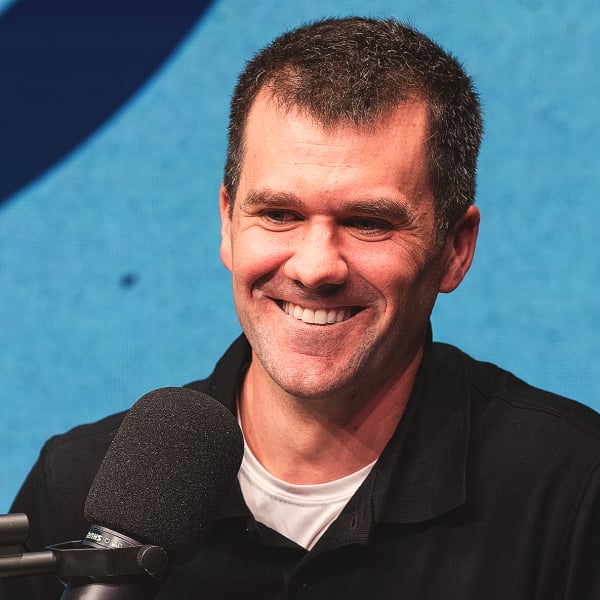
Adam Sylvester
CHARLOTTESVILLE GUTTER PROS AND CHARLOTTESVILLE LAWN CARE
Website: adamsylvester.com
Adam started Charlottesville Lawn Care in 2013 and Charlottesville Gutter Pros in the fall of 2020, in Charlottesville, VA. He likes to say, “I do gutters and grass! When it rains the grass grows and the gutters leak!” He got into owning his own business because he saw it as a huge opportunity to generate great income while living a life that suited him. He believes that small companies can make a serious impact on their communities and on every individual they touch, and he wanted to build a company that could make a big difference. His sweet spot talent is sales and marketing with a strong passion for building a place his team wants to work. Adam values his employees and loves leading people. While operations and efficiency is not something that comes naturally to him, he is constantly working to improve himself and his business in these areas.
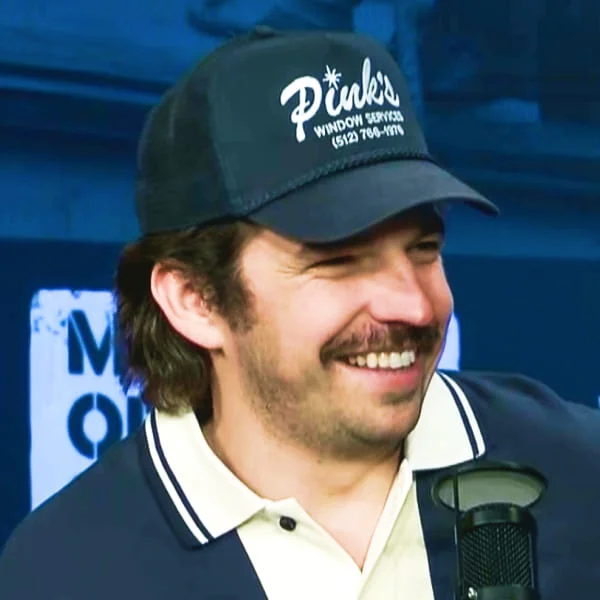
Brandon Downer
Pink’s Windows
Website: pinkswindows.com
Brandon Downer is a Co-Founder and Co-Owner of Pink’s Windows. He plays a key role in supporting franchise growth, operational systems, marketing strategy, and brand development across the Pink’s network. Brandon is passionate about building Pink’s into one of the most trusted and recognizable home-service brands in the country by helping franchisees deliver an exceptional customer experience while running simple, profitable, and scalable businesses. Pink’s exists to “flip the script” on the traditional blue-collar service industry.
SIGN UP FOR the masters of home service newsletter
Get monthly updates with news, tips, and advice on how to run a 5-star business. You don’t want to miss out!
Interested in being a guest on the show?
Are you a home service professional eager to share your insights and experiences? Apply to be a guest on the Masters of Home Service Podcast, and join a community of experts committed to helping others level up through knowledge.
Other Podcasts We Love