 27 Minutes
More Jobs or Higher Prices? The Math Says…
With Gabe Chrismon


-
Gabe (00:00):
If you have 200 customers, that’s 200 people you have to collect from, that’s 200 jobs you have to drive to, that’s 200, hopefully not angry phone calls you have to take, that’s 200 leads you have to take in. All of that is very expensive and it usually doesn’t exponentially grow with the number of leads. It usually grows in a different rate. So you have to hire not double the amount of people, but maybe triple the amount of people to handle the double volume.
Adam (00:25):
Every home service business owner like you and like me come to the fork in the road where we want to double our business. And the question becomes, do we double our prices or do we double our revenue? 65% of home service pros last year increased their prices. Have you? Or are you trying the volume game? My guest today is Gabe Chrismon and he has a lot of thoughts on this topic because he thinks that volume is a trap. And actually I kind of think so too. So Gabe, welcome to the show. Thanks for being here.
Gabe (00:56):
Thank you so much for having me. This is awesome. Yeah, I think the volume trap really traps people at the beginning of starting their business because that’s when it’s really scary. You’ve just taken the leap, you just started, you have no business and you’re saying, “I got to take whatever I can get.” The problem is when you don’t get rid of that and it’s year five and you’re still running the volume game. So the math works out to be, if you’re thinking about increasing your volume, so let’s just say doubling your volume or doubling your prices. If you have 10 customers a month and they’re paying you $100, so 10 times a hundred, I don’t do math in public, but that’s a thousand. So let’s say you’re making a thousand dollars a month on whatever you’re selling there. So doubling your customers, you’re now at 20 customers and they’re paying you the same thing. So now you’re at $2,000. So you go, “Great, I’ve doubled my revenue. I’m doing great.” The thing that happens there is people forget about the administrative tax and the cost to deliver those jobs that really hurts your bottom line. So you’ve doubled your revenue, but you’ve also doubled your cost to run those jobs, which usually ends up being a little bit more than double. So your cost to acquire is the same, your cost to complete those jobs has doubled. Now you definitely are increasing profit because you’ve increased your revenue, but where the math really works out is if you double that cost per job, so not your customers. So you take that same 10 customers and now they’re paying you instead of 100, 200. So you’re now at that $2,000 revenue mark per month. The cost to acquire them stays the same and your cost to deliver those jobs stays the same, but you’ve doubled your revenue.
(02:28)
So essentially what that works out to be is you can see a 5X to 7X in profit and you’re running less jobs, you’re running across town less. And the trickle down effect of that is really amazing. So you’re now running 60% of the jobs you were because you’re getting paid more and you experience some churn, which we can talk about because that’s the number one question. But the trickle down effect there is I’m happier as a business owner.
Adam (02:51):
That matters.
Gabe (02:52):
I’m treating my customers better because I’m not disappointed I’m having to drive across town for a job I know I’m not making money on. I’m treating my employees better. I’m paying them better. We’ll be able to buy better equipment. And ultimately your customer is going to get a better experience and a better service from you no matter what industry you’re in. So it’s really important to pay attention to that stuff when you can, when you get to that point as a business owner.
Adam (03:14):
I remember way back when I would drive out with my crew to cut someone’s house, grass a long time ago and they’d fall asleep in the truck. And that was my sign and that was my indicator. This isn’t right. We shouldn’t have so much time in between stop that they can fall asleep and take a long nap. That was my wake up call. My view of it is that I really like how you said in the beginning, you started out this way, but it shouldn’t stay that way. Every year you should be reducing your customer base by the outliers. You should be removing the outliers and then next year the outliers will be even closer, even closer. Eventually you just have a really, really hot route density. But people don’t do that because they fall asleep at the wheel. They’re not really thinking about that. They have other bigger fish to fry and bigger fires to put out. But this is such a big fire that people don’t realize it’s such a big fire.
Gabe (04:00):
Correct. It’s scary. It’s really scary to say, I’m going to do something that I know is going to decrease my customer base. Because for years we fought to increase our customer base at that point. That’s the only thing we were focused on in the beginning days of our business is how do I get more business? How do I get more business? How do I get more business? And you come to a point where you have to make a decision to say, I’m going to make a decision that’s going to decrease the amount of customers I have. But the important part there is there’s a right and a wrong way to do it. So let’s say you mentioned route density. Let’s say you’re saying, okay, I’ve got five or six of these customers that I know I have guys falling asleep literally, not behind the wheel, but in the passenger seat on the way out to the jobs. And that’s probably too far of a drive. That’s a really good indicator that’s too far of a drive. The best way to do that is to find a competitor in your area and say, “Hey, look, my name’s Gabe. I own X company. I’ve got two customers in your area that I’ve been servicing for a long time. They’re great people. I just can’t keep up with them and service them the way I want to because they’re too far outside of where most of my customers are. I was wondering if you’d be interested in meeting them and seeing if you wanted that business.” And then you can go to that customer and say, “Hey, I love you guys. I’m so sorry. My business is growing. I’ve got to do what’s right for my business and what’s right for you guys. I want you to have the best service you can think of. And I found this company. I’ve vetted them. They’re great. They’re good people. And I was wondering if you’d be okay with me transferring you over to them.” So there is a right and a wrong way to do this to where you’re not just saying, “Hey, good luck. See you later.”
Adam (05:29):
It’s not just about geography though. There’s other variables that are in business that we need to reconsider a client. If you find yourself regretting or loathing or hating your job as soon as you start the truck to drive all the way out there, that’s your sign. Has it been a week already? We got to drive all the way back out here. That’s your sign. You need to listen to that little voice in your head because that is telling you we need to reevaluate, either double their price or get rid of them. It’s not always remove them. You can double and sometimes they’ll pay that.
Gabe (06:03):
Yeah, that’s right.That’s right. And this is not just us saying this. There are tons of studies. I think ProfitWell is a great one where they studied over 500 different companies and they looked at three things and it’s what every business owner is really thinking people use different words for it. It’s like, how do I make more money? And it’s retention, acquisition, and then increasing my prices. So there’s a couple different ways to do this. And they found that in raising your prices, it has a 10X increase in efficiency to your bottom line compared to focusing on retention or acquisition efforts. So what that really means is raising your prices is going to do way more for your business and ultimately your family, your employees and your current customers than trying to acquire new business or trying to acquire new business around Ms. Betty so that way.
Adam (06:52):
That’s the trap.
Gabe (06:53):
Yeah, exactly. Raising your prices, like you mentioned, has a ton of other benefits, but one of them is, is it does lean out your customer base to really who you probably want to serve anyway or who wants you as a business. So that’s another added benefit there for raising your prices.
Adam (07:08):
There’s an inverse here, which is you have an outlier area and somehow you just magically get four clients in that same neighborhood way out there. Well, it’s worth going there because they’re all paying and you go and hit them all. What happens over time? One moves away, you put a rock through a window and they cancel and someone else and now you just have one. You have to drop them or quadruple the price.
Gabe (07:33):
Yes, that’s exactly right.
Adam (07:34):
Because what are you going to do? Just running a business with all these outliers because it happens slowly and one day you’re like, man, I only have one out here anymore. What happened? Well, things changed and life changes. Here’s the not scary part. So many times people think Ms. Betty’s going to just curse them out. So many people think Ms. Betty’s going to spread the word about how bad you are. That never happens. They almost always understand. Even if you tell them you’re going to raise their price, they usually understand. Here’s my little hack on this. King Louis XIII was a bad guy way back in the day. And when he became powerful, he killed all his enemies in the first day. But then after that, he was a good guy. What happened over time? People forgot. What if he had killed somebody every year? He’s always bad. So if you rip the bandaid off and literally double their price instantly and never double again, they’ll forget. But if you’re always increasing their price a little bit, that doesn’t solve the problem. You actually need to figure out what the price needs to be and make it today that price and not try to inch your way there in the next five years.
Gabe (08:32):
It feels purposeful and the customer respects that. If you’re just going, oh, 5% here, 10% here, 10% here, 5% here. It feels like the customer goes, he’s trying to see how much you get from me. And that doesn’t feel good as a customer. So what feels better is there’s a right and a wrong way to do this. And this is important because I know anybody listening is probably thinking like, I can’t raise my prices. Everybody’s going to leave me. Some will and that’s okay. And you got to be very comfortable with that happening. But there’s an easier way to ease into this. So let’s say you’re charging that $10 a month, whatever you’re selling, and you’re getting 10 new customers a month. Raise your prices to that 20 just for those new leads coming in and see what your close rate looks like there. See what happens at that point. And what that’s going to do is make you feel a little bit more comfortable. It’s also going to help you find that true price point. So maybe it’s not double, maybe it’s triple. And then you can go, actually, this is the price point. This is where people are paying me for my services. Then you roll it out to your current customer base. And the way you do that is very purposeful, especially to Ms. Betty. So you go visit her in person and you have a conversation about this in person, or you write her a letter or an email, whatever Ms. Betty needs. And you say, hey, you start it with, I’ve loved servicing your yard or your house or whatever you’ve been doing for X amount of years. Then you mention a specific project or a specific thing that was personalized with her. You remember that one time we put a rock through your window? That was really scary for me and I’m glad that all worked. Whatever it is, make her feel good, make her know that you care. And then you say, I want to continue to do a great job for you guys. And in order for us to do that, we have to raise our prices. And then you go, raising my prices is going to allow me to do X, Y, and Z. I’m going to be able to buy a new lawnmower that’s going to make your grass look better. We’re going to be able to hire new technicians. I’m going to send these guys to training. We’re going to be better for you. And then you say, I’m going to do this in three months and I would love to continue to be your.
Adam (10:27):
Give them a little time. I like that.
Gabe (10:29):
Yeah. Exactly. And at the end, you add a PS, which is like, hey, it’s their out. It’s Ms. Betty’s out to go, if this is going to prevent you from keeping the lights on, my price increase, shoot me a note and we’ll work something out. Very frequently, here’s what’s going to happen. There’s going to be three. Most people, most of your customers are going to say, okay, fine. I knew that was coming.
Adam (10:52):
Should have done this last year. That’s right.
Gabe (10:53):
I was wondering when this is going to happen. Exactly. He’s crazy. And then the other ones are going to cancel. So there’s some that are just going to, hey, cancel me. That’s fine. There’s going to be a small percentage that take advantage of your PS, which is like, hey, we’re really struggling right now. I don’t want to lose you guys. And what I would do for them is you don’t say, Hey, I’ll grandfather you in. You don’t have to increase prices. You say, let’s extend that to six months and then we’ll have another conversation. I’ll keep your prices where they’re at for six months and then we’ll have another conversation. I am very against the grandfathering in and making exceptions there. It’s a very slippery slope for you personally as the business owner to where you start to do that over and over and over again. So there’s a right and a wrong way to raise your prices. And I think you can instrumentally do it to where it makes you feel a little bit better and it’s not as scary and it’s the right way to do it for your customers.
Adam (11:38):
Are there any other factors that go into this? There’s geography, there’s ones that just haven’t been updated in a long time and they’re bringing down your average. Any other factors that go into our pricing that we should be reevaluating?
Gabe (11:50):
Yeah. I mean the obvious ones which are like what is it costing you to run these jobs now? And I think that’s the biggest, most obvious one business owners can start with, especially if you’re sitting in that seat and you haven’t raised your prices in five years. And if you’re in a business where it requires more materials, you certainly are seeing a dramatic decrease in your profit if you haven’t really raised prices significantly. And purposefully, that’s another thing here. It’s like look at what cost materials was, look at what it is now, look at what your margins were, look what they are now. And that’s how you should reflect your price change. And homeowners, your customers are going to be perfectly fine with that. They’re not going to be ecstatic with it, but they know you have no control over that as well. So that’s an easy low hanging fruit one is, hey, what does it cost me to actually run these jobs? What does it cost me to go to the store to buy the materials needed for this, to pay my employees? All of that stuff has increased significantly in the last five years. So that’s a low hanging fruit that any business owner has an understanding and a grasp of that they can affect their prices on.
Adam (12:51):
Yeah. And I also think we all remember those days when we would hire a quote helper for $10 an hour.
Gabe (12:57):
That’s right.
Adam (12:58):
And it’s not $10 an hour now.
Gabe (12:59):
No.
Adam (12:59):
They start at 14, $15 an hour, maybe 18, maybe 20, wherever you are. Well, that’s double.
Gabe (13:05):
That’s double.
Adam (13:06):
And so the cost of that just doubled for your. So we have to understand from a business perspective, that doesn’t float.
Gabe (13:13):
That’s right.
Adam (13:13):
We have to understand that when our costs go up, the client’s cost has to go up. We don’t just absorb all that. We’ve got a business.
Gabe (13:20):
That’s right. And this is why I love doubling the prices and not doubling the volume of work that you’re doing because it reflects all of that already, right? Because your cost to acquire the customer is the same. Your cost to deliver is roughly the same, as long as we’re talking about years apart, but you’re just charging more and you’re making more. The biggest pushback always is like no one’s going to pay it. The data says the exact opposite. So I would say as a business owner, look at the ProfitWell data, pull it all. You don’t have to read it, drop it in Claude, drop it into ChatGPT and try to pull some insights from it and see that the biggest difference you can make to your bottom line is changing your prices. Not only changing them, but doing it on a regular basis, on a yearly basis. And that is going to make the biggest dramatic shift to your business and your bottom line.
Adam (14:12):
And you’ll just feel more confident about your business in general. You’ll just feel more in control of it. Yeah.
Gabe (14:17):
It’s not quite a flex at parties to be like, “Yeah, we do a million in revenue, but we are running on 4% margins.” It’s like, “I’m still broke.” So it’s much more of a flex to say we do 500,000 and we run 40, 50% margins. That’s an incredible business.
Adam (14:33):
Well, the thing is, Jobber helps with a lot of this stuff. How important is it for our listeners, Gabe, to use an app like Jobber to run their business and keep track of this pricing stuff?
Gabe (14:43):
Yeah. So if you’re not using a system like Jobber to track your customers and what you’ve been charging them for years and years and years, then how are you going to know when it’s time to increase your price? So that’s the first and foremost is making sure you have a place where all of this lives and that is Jobber. So if I know I’ve had this customer for seven years and I’ve been charging them $35, I can now make an accurate decision on saying, “Hey, I’ve got to increase these prices.” And I can show the customers all of the proof right there because it’s in Jobber. So if you don’t have a system to track all this stuff, it’s really hard to make decisions off of it.
Adam (15:16):
Yeah. And if our listeners out there are thinking, “I’ve got a couple crews and I have no idea what’s going on, but I’m not making any money,” they need to track their time and they need a job cost and actually see that this crew’s making money, this crew sucks and this crew needs to go. That’s right. And you can do all that with Jobber. So if you’re not using Jobber to run your business, then your product can be as profitable as you would be if you did use Jobber. You can track your time, you can track your expenses, you can see what your revenue is, and you can actually see if you’re making money. Go to jobber.com/podcastdeal. Get the exclusive discount, start using Jobber today, get the pretrial and start building your business on a platform. Get Jobber today.
(15:54)
The other way that I look at this, I want to get to the point, I want to talk about how to offer a premium service in a second, but another way I’ve looked at this is figure out what your average job size is. So if you’re mowing lawns and your average service is 80 bucks, go look at all the clients that bring that average down, the ones that are $30, $35, $50, and be like, “You know what? They might be right in town. They might not be outliers at all geography-wise, but they are outliers in price and think, man, that guy has been $35 for seven years. Things have changed since then. I need to raise his price.” And I like always evaluating whenever I quote a new one or reevaluating existing clients, if there’s a client that’s going to bring the average down, a flag goes up.
Gabe (16:38):
That’s right. That’s right. And I want to point out, that’s such a good point. And I think there’s this emotional feeling for business owners to where they have these customers, seven years they’ve been paying 35 bucks and you’re like, “I don’t want to be that greedy business owner. I got into business because I wanted to enjoy my freedom. I wanted to make my own decisions. I wanted to be an entrepreneur.” But what not charging the right amount does is it ultimately does hurt the customer. And I know that sounds like a cliche and just an excuse to charge people more. I know it does, but if you follow what actually happens, it does make sense. Exactly what you’re describing, that customer who was charged $35 for seven years, you just said it right there. You’re looking at your books and you’re like, “Damn, he’s been charged $35 for seven years.” That right there is just a negative feeling towards that customer, not on purpose, it’s just natural, that is going to come out in other ways. It’s going to come out in your meetings when you’re talking to your crews and then they’re going to take that to the job site and then they’re not going to care as much. That customer’s going to have a worse experience, especially over time.
Adam (17:46):
Whether they should or not isn’t the question. It’s just realistic.
Gabe (17:50):
Exactly right.
Adam (17:51):
It’s just what happens.
Gabe (17:51):
That’s right. That’s exactly right. And especially if you’ve been running your business for five years. So if we talk about the people who started a business and they were really focused on getting business and maybe their prices weren’t right and it’s been five years, and if you’re that company right now that goes, “Ooh, I’ve never raised my prices,” you’re leaving a lot on the table as far as profit and as far as improving your business, as far as scaling your business that you should really look at and pay attention to.
Adam (18:17):
Gabe, why are we always the ones who raise our prices last? Gas goes up, milk goes up, cheese goes up, diapers goes up, everything goes up. Yeah. And we’re like $35 baby for seven years. What is the deal?
Gabe (18:30):
I don’t know. I always talk about that too because I’m like, and then I love also the haggling and negotiation. It’s like no one negotiates at the pump, right? Right. You’re not like, hey-
Adam (18:38):
I’m wrestling the guy.
Gabe (18:40):
Right. You’re not like, “Can I get this for $3 instead of four?” But home services for some reason, it has always been that way. So I do see the tide shifting, especially with where technology is. There’s just more information and it really goes to how buyers are buying now. They’re far more informed. They’ve done some research prior to, because now research is easy, right? It’s a prompt in chat or claude and saying like, “Hey, my yard is this size. What should I be paying?” And then when you come out there and quote them, they go, “Okay, that’s fair. I’m done. I’ll hire you guys.” So yeah, I think that goes to homeowners are, historically, they didn’t have the capability to do the research, so they felt like I can haggle here. And then now they’re much more data driven, homeowners are much more informed, and I see that kind of shifting. Maybe that’s just me being hopeful.
Adam (19:29):
Do you think that raising our prices in a way is something that we earn with our clients? Because there are some people out there that will just go out and flippantly raise their prices. And you gave us a lot of good words and scripts earlier to make it easier and more understandable and more compassionate. So some people go out there and just double their price, but the client’s not getting anything more value. It’s just more flippant. So how do we make sure that we are delivering on a better service like you mentioned earlier and not just jacking our prices up because the guy on the podcast said to?
Gabe (19:59):
That’s right. Yeah. So the letter or email that I went through earlier of how to do this, there was a portion in there where you said, “Hey, I’m raising my prices because I plan to do boom, boom, boom.” And those examples may be, “I’ve got to get better equipment. We’ve had the same mower for seven years and it’s cutting your grass and looks bad.” So maybe that’s one of those or I’m going to send all of my employees to training and we’re going to get really good at drywall, whatever you do. The most important thing is you have to do that. If you don’t do that and you’ve raised the prices, your customer goes, “This guy’s a fraud and he lied to me.” And now they feel taken advantage of again. So it’s like in that sense, you very much do have to earn it. So I would say if you’re going to raise prices and you’re going to tell customers you’re going to do X, Y, and Z with the additional profit, and then they see you driving a brand new truck the next day, that’s probably not a great look. So in that sense, you very much do earn it. And in the other sense, this doesn’t happen year one. It might not happen year two, but eventually it does happen to where you go, “Hey, look, we’ve serviced you. We’ve done a great job. You’ve loved us. We’ve loved you. And we have to raise some prices now for all of these reasons.” Yeah.
Adam (21:07):
I do think that there is a world where just saying, “We just have to raise our prices because we’ve been charging you too little.” I think that’s a fair explanation as well. But if there’s more to it than that, I think that you can be as transparent as you want to. But I do actually think. One time, Gabe, you tell me what you think about this. This was an experiment actually for the listeners actually. So about eight months ago, we had about, I think it was 14 customers that were not paying enough. And instead of making this big hoorah and make. They weren’t extreme. It wasn’t $35, it should be 70. They were just a little low. And so I tried something. I just literally added seven, I think some were five, some were 10%, and I just changed their job in Jobber. And I just put a little note in there that said on the invoice, 5% increase, 5% increase. And it was fine. We’re still cutting all those people.
Gabe (21:58):
How long have you had those customers?
Adam (21:59):
Four or five years, probably.
Gabe (22:00):
Four or five years.
Adam (22:00):
On average, yeah.
Gabe (22:01):
So you’ve earned it. They trust you.
Adam (22:03):
Yeah, good point.
Gabe (22:04):
They trust you. Yeah. I would really push back if you don’t have four or five years with them, just sneaking in, because that’s what it’s going to feel like. Totally. Even if that’s not what you’re doing. It was an
Adam (22:14):
Experiment.
Gabe (22:15):
Yeah, yeah, yeah. And like I said, you’ve earned it, right? Those customers trust you and they trust you enough, they can call you and be like, “What the hell?” You be like, “Oh yeah, we raised our price.” And they’d be like, okay, fine. They don’t really care. So there is a world where that works 100%. You proved it, obviously. Be careful who you do it with if you don’t have the relationship with them, especially if you’re in some businesses that aren’t necessarily repeat, but they’re some recurring. So the lawn care industry is weekly, biweekly, monthly, whatever it is.
Adam (22:42):
Maybe quarterly window cleaning.
Gabe (22:44):
Exactly.
Adam (22:45):
Or something less frequent. Is that what you’re saying?
Gabe (22:49):
Correct. Yeah. It’s recurring or repeat, but not necessarily the traditional repeat, like a pest control, lawn care, et cetera. Yeah. So those ones I would say you have less of a relationship with because you have less touch points. You definitely want to be careful about how you raise prices. Maybe if somebody gets you to power wash their driveway every twice a year. You want to be careful about saying like, “Hey, we doubled our prices.”
Adam (23:11):
It’s usually $500.
Gabe (23:13):
Now it’s a thousand. Yeah. So they’re going to be a little bit more upset about that. For sure. You can still navigate it and it’s probably still worth it at some point, right? But it does differ based on your business.
Adam (23:22):
There might be some clients that you just want to keep. Mrs. Pax, was it for me. She was 95. She found me when I was 13 years old. And I said, “I just don’t care how much she pays. I want her until she leaves this life.” And so instead of putting her in the position of raising her price and then, “Well, this is going to break the budget,” I’m just never going to raise her price.
Gabe (23:47):
That’s right.
Adam (23:47):
And I decided. Now, I can do that.
Gabe (23:50):
That’s okay.
Adam (23:51):
And we can all do that. And I think being proactive with that is fine. There might be a couple people that you just, “I’m just not going to do it.”
Gabe (23:57):
That’s right, dude.
Adam (23:58):
But let’s not make that excuse for all the other ones that really should. We know in our gut who they are, and there’s only a few of them. There might only be one.
Gabe (24:05):
There might only be one. Yeah. And I’ve never said this publicly. This just came to my mind as you were saying that. A good test for that is the Forrest Gump test. So do you remember in Forrest Gump when it’s at the very end and they invested in Apple, so he has a ton of money, and he just cuts grass for the high school. And he’s like, “Since I had so much money, I cut that grass for free.” Yes. That’s like the Forrest Gump test. If you have so much money and you have Ms. Betty and you can cut her grass for free, perfectly fine. But like you said, it’s not a stable foundation to build a business on, obviously. And it should be used sparingly and use the Forrest Gump rule.
Adam (24:42):
I think we’ve laid out a pretty good case. Yeah. All right. I’m ready for the lightning round. You ready for lightning round? I’m going to ask you a bunch of questions. Bam, bam, bam. I’m just giving you the first answer that comes to mind. Give me your best tip for increasing prices on existing loyal long-term customers.
Gabe (24:55):
Do it first to test the price point on new customers and then go meet them in person, have a conversation, like we said earlier, about the why, make it personalized, tell them what you’re planning to do with the money. You don’t have to nickel and dime it. And then give them a three to six months heads up before you do it.
Adam (25:12):
What’s a hidden cost associated with high volume business model?
Gabe (25:17):
Operational and administrative tax associated with it. So if you have 200 customers, that’s 200 people you have to collect from, that’s 200 jobs you have to drive to, that’s 200, hopefully not angry phone calls you have to take, that’s 200 leads you have to take in. All of that is very expensive and it usually doesn’t exponentially grow with the number of leads. It usually grows in a different rate. So you have to hire not double the amount of people, but maybe triple the amount of people to handle the double volume.
Adam (25:44):
What is a common indicator that a company’s too cheap?
Gabe (25:47):
This is easy. You have a 90% close rate on your sales calls. Your prices are probably too low. And if you increase those prices, you’d see a drop in the close rate, but you’d ultimately make more on less customers that you got.
Adam (26:00):
Double your price or double your volume?
Gabe (26:01):
Double your price every day of the week. It’s not just me saying that. There is a ton of data out there to prove this.
Adam (26:06):
Gabe, that was great. Well done. Thanks for being here.
Gabe (26:09):
Yeah, thanks for having me.
Adam (26:09):
How do our listeners find out more about you and what you’re doing?
Gabe (26:12):
Yeah, if you want to go to our socials, oply_app on Instagram, Facebook, et cetera, or just oply.com is our website.
Adam (26:19):
Well, thanks for being here. That was great.
Gabe (26:20):
Thank you.
Adam (26:20):
Yeah, you’re crushing it. Keep it up. Keep serving your customers, and we’ll see you next time.
Gabe (26:24):
Awesome. Thanks.
Adam (26:25):
One accident or false claim can create a massive headache for any business owner. Next week, we’re discussing the systems and the technology that help protect your fleet, your team, and your reputation. That was great. I hope that you learned something today that will help you make more money, not just volume, but raise your prices. Raise your price. Go do it right now. Raise your price. I’m your host, Adam Sylvester. You can find me at adamsylvester.com. Your team and your clients deserve your very best, so go give it to them.
About the speakers
Adam Sylvester
CHARLOTTESVILLE GUTTER PROS AND CHARLOTTESVILLE LAWN CARE
Website: adamsylvester.com
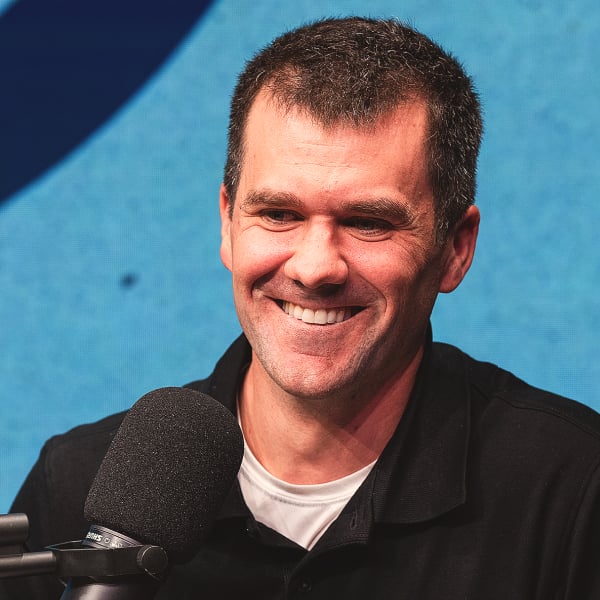
Adam started Charlottesville Lawn Care in 2013 and Charlottesville Gutter Pros in the fall of 2020, in Charlottesville, VA. He likes to say, “I do gutters and grass! When it rains the grass grows and the gutters leak!” He got into owning his own business because he saw it as a huge opportunity to generate great income while living a life that suited him. He believes that small companies can make a serious impact on their communities and on every individual they touch, and he wanted to build a company that could make a big difference. His sweet spot talent is sales and marketing with a strong passion for building a place his team wants to work. Adam values his employees and loves leading people. While operations and efficiency is not something that comes naturally to him, he is constantly working to improve himself and his business in these areas.
Gabe Chrismon
Oply
Website: oply.app
YouTube: @Oply_App
Instagram: @oply_app
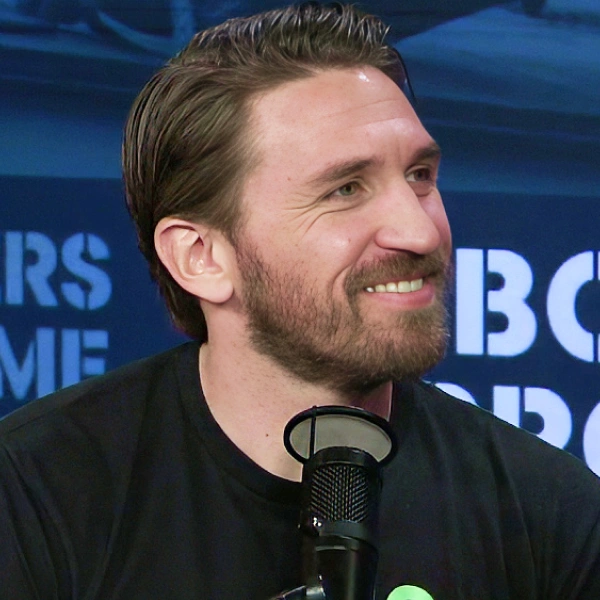
Gabe Chrismon is the Co-founder of Oply, an AI-powered platform built to help homeowners manage their homes and connect with trusted service professionals. A West Point graduate and U.S. Army veteran, Gabe brings the same operational discipline he learned in the military to the world of entrepreneurship. Before starting Oply, Gabe ran a restoration business where he learned the hard way what it actually costs to acquire a customer and what pricing decisions can make or break a company. He’s based in Nashville, was recently named to Nashville’s 40 Under 40, and is passionate about helping home service pros build smarter, more profitable businesses.

SIGN UP FOR the masters of home service newsletter
Get monthly updates with news, tips, and advice on how to run a 5-star business. You don’t want to miss out!
Interested in being a guest on the show?
Are you a home service professional eager to share your insights and experiences? Apply to be a guest on the Masters of Home Service Podcast, and join a community of experts committed to helping others level up through knowledge.
Other Podcasts We Love