 19 Minutes
From a Borrowed Mower to 55 Employees by Age 24
With Beau Batcheller


-
Adam (00:00):
What’s the number one thing you would say to a young business owner?
Beau (00:02):
Try, try, try. You have so much time on your hands to make something of yourself. Don’t waste those years and realize why it didn’t work out for you.
Adam (00:13):
My guest today is Beau Batcheller, and at 15 years old, he started his lawn care business with a borrowed lawnmower. And now he has 55 employees, a huge facility, management, and a whole operation. And we’re going to get into how he did it, what did he learn, the good, the bad, the ugly. Take me back to those early days. You borrowed a lawnmower from who?
Beau (00:35):
So I borrowed it from my grandpa. And where it really started is I was about to turn 16, so I wanted lunch money because I was about to start driving. So I needed gas and lunch money. And I was like, Let me work at a fast food restaurant. It was a local Braum’s burger joint. And they didn’t hire me. And my dad said, If you work for yourself, the sky’s the limit. And I never realized that. And I was like, That’s pretty cool. So I had $60 for my name. I went down to Staples. The Staples employee helped me design an entire flyer and I printed off as many as I could. I think it was like 120 or so. And I went all day, all weekend and I passed them out just door knocking, totally soliciting. But I went and walked and just did it and I put them all out. And every lawn started at $20 and that was way underpriced. I was the cheapest guy by far. Literally the next day the phone started ringing and I had no idea how to cut a lawn, nor did I have any mowing equipment. I had nothing figured out. I was 15. So we go and get my grandpa’s push mower. We get my dad’s string trimmer. I have a broken blower and a broom. Still don’t know how to cut a lawn. And my dad, bless his soul, he showed me how to work and he supported me in this adventure. He didn’t give me anything, but showed me how to work. He showed me how to cut the lawn. The first lawn, we totally got hosed on. It was 20 bucks. It took three and a half hours. The push mower broke, the blower broke. I actually had to come back the next day just to finish it. And I took this guy’s lawn from eight inches all the way down to two for nothing.
(02:06)
And then the next day I had 12 calls. At 12 lawns literally the next day or within that weekend. So out of those first 12, I had one client that said, Hey, do you do flower beds? We’re like, Yes, we definitely do flower beds. I had no idea what I was doing. He’s like, Okay, well how much to completely do my flower bed? Trim all the shrubs, pull the weeds, flip the mulch, put new mulch in, reset the flower bed border. But I was like, Well, how long do you think it would take? And I was like, Oh, probably nine hours. He’s like, How much do you want to make? I was like, Well, at least 10 an hour. And he’s like, Okay.”And he knew better. This was the lesson for me. We worked 12 hours that day straight and did that flower bed. And I realized right then how screwed my pricing was that an hourly wage wasn’t going to cut it on the lawn. I was that guy undercutting everybody else, but I was learning my pace. The guy ended up tipping us 30 bucks, so I did make my $10.
Adam (03:01):
That nice of him. He got the deal of a century.
Beau (03:03):
Yeah. He got $2,000 worth of work for 120 and he tipped that was great. That helped me out. But then we got his daughter’s house and that one was a 10th of the work. We charged $350, did it in two hours and immediately we started stair stepping from there.
Adam (03:20):
Bingo.
Beau (03:21):
And it was one of the biggest lessons I learned in pricing immediately.
Adam (03:25):
So you had a ton of hustle, not so much hustle, you just had a lot of confidence that you would solve it once you got it. Once you build it, they will come sort of mentality, which is let me pass out the business cards first. And if I get calls, then I’ll figure out the next step. And is that how you basically just built each phase of your company?
Beau (03:45):
Yeah. So the one thing I’ve realized is I never had the opportunity to learn under somebody else. I think if I was going to start again, maybe that’s a good place to start so you could actually understand a lot of things quicker and cheaper. It costs me a lot of money to learn these things on the job or be so inefficient at them until you get good at them. And I think in high school, it’s common for a lot of young guys or your friends to say, oh, I want to start a business. I want to do this, I have that. There was a lot of talk. The biggest thing I could do was put my action forward.
Adam (04:14):
Let’s do it.
Beau (04:14):
So pass out the cards, say yes to the job, try something I’ve never done before. That’s the only thing that separated me from somebody else was just that I’m willing to put the action forward and actually go for it.
Adam (04:24):
Tell me what it’s like now. Where are you guys at now? What kind of crews are you running? What facility do you guys have? Tell me what your business looks like now.
Beau (04:31):
Fast forward now, we have 55 employees. We have a 12 acre nursery. So we have plants, trees, flowers, anything in the landscaping realm we have here. We also run eight crews. So I have project managers, account managers, admin people, CFO, general manager. I have designers, just a crazy operation now.
Adam (04:54):
Yeah. How did you decide to go from just a landscaping company to also a nursery? That’s a big change.
Beau (05:01):
I think really landscaping for five or six years. It’s weird saying you’re 21, 22 and I’ve been doing this for five, six years. People look at you all goofy. But what I saw on it on the backside of the business is you’re spending anywhere from 30 to 50% of your money on the material for a service-based company. And that always hurts. You’re like, I want to get those costs down. How can I be more efficient in this? And it’s hard to do that when you’re smaller, but we always dreamed, me and my business partner, Jacob, we always wanted to have a nursery. And even crazy enough so, he had a blank check on the wall to buy this nursery. He had this earshot dream four years ago to buy this nursery when it wasn’t even an idea. But we always looked at like, Gosh, I wish I had the plants. I wish I had a place where clients could come and come see us, see all the plants, see an install and really just vertically integrate where we could have both of those in one spot.
Adam (05:55):
But this is great. I want to take a minute to pause. You use Jobber. I use Jobber. We love Jobber. You have a big operation, 55. Does Jobber scale up to 55 employees and more for you?
Beau (06:04):
Yes, but not in the way you think. So Jobber is great, but to be effective, you have to almost limit access and control, right? Too many people with too many hands in the pot is always a problem. So the only people that have access is the crew leads with a company phone and the truck. They’re the only ones that work it. So they upload their photos daily to it. They clock in and out for the labor. Nobody else is responsible for it. And then you have your salespeople, you have your management in there, but you have to limit it. Not every employee gets to clock in on it. We clock in the entire crew at once. So it’s not he said, she said. It’s the crews clocked in at once. By limiting it, it does scale up. And as the further we get up, the more things I take away from people.
Adam (06:42):
I like that. Yeah, that’s great. I love Jobber. If you’re not using Jobber, you need to. Jobber will scale your business. It’ll help you be more professional, be more organized. It’s like your digital brain. Go jobber.com/podcastdeal, get the exclusive discount and start using Jobber right now.
(06:58)
Tell me what you learned through all of this. Obviously a million things, you learned a million things and you still are learning a lot of things, but you have all these different hires. You hire middle managers and production managers and all these different people. What was it like hiring all these different positions? Did you just hire all people from your high school? Did you hire people who had experience already? How did you do all that?
Beau (07:18):
Yeah, so I think it goes in stages when you’re 15, 16, 17, you hire all your buddies. That’s the first though. Well, then your friends treat it like we’re friends and it’s not serious, right? So I had six people or so in high school that I would rotate through or have two different crews depending on the time of day and you start there. From there, I found two or three individuals that were really serious about it, that really treated it like a job that worked well. And I kept those guys for years towards senior year. And once I got out of there, I started looking for older guys. I started looking for individuals that could have responsibility. And also good character. I’ve met some of the best landscapers in the world that didn’t have the character or that somebody you didn’t want to be around and you want to pay them well, treat them well enough for them to stay around. I’ll say it was very, very hard to find good people when you’re a small guy. When you’re one, two trucks, it’s a storage unit business, very hard to find good people. Once we get into the nursery, the second lesson I learned was we were dealing with so many problems at once because we scaled massively. I went from $1 million to $7 million in under 12 months. Crazy.
Adam (08:22):
Oh my gosh.
Beau (08:24):
Volatile scale instantly right before spring too.
Adam (08:28):
How? I mean, how did you do that?
Beau (08:30):
Honestly, just pure grit and determination. We wanted it. We had about 90 days to plan ahead of time that we wanted to do this merger, but that was,
Adam (08:39):
Merger with the nursery.
Beau (08:40):
With the nursery and Jacob and I’s company. So two service-based companies, the nursery all to one.
Adam (08:46):
So you individually were doing about a million a year, then you add your friends, Jacobs, and you bring on the nursery, which you paid for alone, I assume? Yeah. Okay. And then well that is pretty wild. I mean, that’s quick growth really fast. Very, very fast. And then did you maintain any of those people who worked at the nursery?
Beau (09:07):
Yes. And we still have a ton of them to this day. They’re great help. The cool thing is some of those people at the nursery have been working at that company for 20, 30, some even 40 years.
Adam (09:21):
Wow.
Beau (09:22):
Us jumping in saying, Hey, we’re the new owners or this is now our company. We are really, really reliant on those people. When we first got in the nursery though, we had so many problems a day. You got 20, 30 problems a day. And so we were trying to throw people at it. We were hiring as fast as we can. We had a larger business, so people were trying to come to us for jobs, which is great. Once you get a little bit larger, they come to you.
Adam (09:46):
Line forms. Yeah.
Beau (09:47):
So we were just throwing people at the wall, throwing them positions, trying to help. It was just throwing more people at the problem and it didn’t help at all. So we went up spring of 25 to about 70 employees just trying to handle spring brush.
Adam (09:58):
That’s too many.
Beau (09:59):
Way too many. We didn’t have time to train. We had no systems in place. I mean, just craziness. Now we’re at a much smoother pace where we do have some systems in place. People have the time to train and we’re not just throwing people in. We know kind of now less is more.
Adam (10:14):
What’s it like for the old guys now working for a bunch of young guns? How is that dynamic and how have you managed to lead people who are much older than you? How are you benefiting from all their wisdom and their experience while also being their boss?
Beau (10:31):
It’s a crazy experience and it can be very, very hard for some people. That’s not an easy thing to walk in the door for Jacob and I and say, Hey, we’re these 24, 25-year-old and we’re your boss. I think it comes out from a lot of respect. I think caring is always transparent. So when you care and they know you want to do a good job, they can usually rely on that fact or they can usually trust you in it. And once you get the emotion aside, the first couple weeks there’s a lot of fight, there’s back and forth, all of that. Once that is aside and the emotions are out of the way, we still have a job to do. And I will say the people around us, they care as well. I care, they care, and that makes the dream work. We still have this job to do. We have this task to do. So at the end of the day, age, this, that, there’s still a mission at hand and we can all rally on that.
Adam (11:16):
Yeah. It’s good when the mission trumps age.
Beau (11:19):
Yes.
Adam (11:19):
So what is your job now? What do you do every day?
Beau (11:23):
My job right now is I run internal operations. So I run everything inside. So basically when somebody has a question of something that they cannot solve, they bring it to me. Aside from that, I run all of the scheduling on Jobber. So my job is to make sure all the locates on the properties are done, all the schedule is set accordingly to the amount of labors we’ve budgeted for the job, to make sure all the material sheets are right because we have to pull material ahead of time now, make sure that all the invoicing is correct. I handle client communication as well. In my free time, I do a lot of the marketing, so I’ll make a lot of videos for it. And then I also will help with the nursery whenever it’s needed. Usually it starts in a question form like, Hey, we want to do this. We need to build this out. How do we get there? And they leave Beau alone with it for about six hours to three days and then we come back with an answer.
Adam (12:11):
How do you get leads? Is a lot of your business driven through the nursery?
Beau (12:15):
So I would say probably 20% of it is. You think it would be more, but you kind of have two cracks. You have the DIYers that are coming to buy plants, they’re getting their own. Or you have people, Yes, I want all these plants, but hey, I don’t want to do it. It’s hot out. Those are the leads we get to participate in, which is cool. Most of our stuff is still organic. We have word of mouth. I can pinpoint you a couple exact neighborhoods where we started one job that’s led to seven or eight. We have this one little area where we’ve done really good work and that has come across. As we’ve gotten larger, a lot of builders, developers, those kind of heavy hitting relationships and guys that have jobs at volume are very, very important. We have a few clients that are bringing in work for 15 weeks out of the year. With our video, like we’ve done decently on Facebook and Instagram with our content, and that was my personal way to success too because I had all the guys in place. I had all the crews. I had the knowledge, the know-how. This is when I was like 21, 22. I could do a lot of these jobs in Oklahoma City. Nobody knew who I was. Had everything ready to go, no leads, nobody knew who I was. So I did that awkward thing, putting the phone in front of me, started filming, and that broke the barrier of, oh, this is just another contractor. I’m just getting a quote from. They knew me at the quote. They’ve seen my videos, they’ve seen my guys, they’ve seen our process. So it’s a lot of transparency straight to the person and it skips that step of being a random person door knocking going, Hey, I’m Beau and I’d like to do your…
Adam (13:37):
Yeah, yeah, yeah. There’s a point where you start growing where your leads do have to pace your growth.
Beau (13:43):
Yes.
Adam (13:43):
But it sounds like that wasn’t a problem for you guys. It sounds like you guys did maintain the lead flow and the work coming in, but it’s very diversified. You have homeowners, you have builders, you have some commercial clients, and you have the nursery driving leads. You all these lead channels. It sounds like you guys are good in that department.
Beau (14:00):
Thank God it’s one of our strong suits, but we had to put a serious attention to our marketing budget, to the ads we run at what time. I mean, we’ve done ABC tests where I’m wearing one different color shirt. The size of house is one little different.
Adam (14:12):
Hat, no hat. Which hat?
Beau (14:14):
Seasonality of the ad too. And we have put a huge attention to it, but we knew we needed leads and to get in front of people to keep up at scale. I can’t just turn the ad budget off. I have 50 families to feed. We can’t do it. We have to keep that flow going.
Adam (14:28):
What’s one of the biggest mistakes you made?
Beau (14:30):
Gosh, there’s 800. I think right now, the biggest mistake I can possibly make, as far as the control I have over the business, is hiring the wrong person. So if I bring in somebody and I put him into the team, when I hire somebody, I’m committing to them for three to six months at least. They’re getting a decent amount of time to be in the business, to trial it, to put their effort into it. And when I put that wrong person in a place, it is devastating. If they have a lack of care for the customer or the client or they’re not nice with the team, I have found that they often destroy way more than what they would ever add. At times, you could have been better off or the team would’ve succeeded more if we didn’t put that person in the way.
Adam (15:13):
What’s something that you are absolutely so glad that you did?
Beau (15:16):
The one thing I’m super glad that I did was say yes. We jumped into this nursery. It was one of the scariest things ever. You’re going from eight employees to 55 in the back of your head going, This might not work out. This might not make it. This is a pretty insane pace. Before that, I grew 30 to 34% every year. I knew what it took operationally. I knew what it took in overhead. This was a crazy volatile jump, but it was a risk that was worth it to grow.
Adam (15:40):
What’s next? What’s the next 10, 20, 30 years look like for you guys?
Beau (15:43):
I always take it a little shortsighted. So everyone on the goals, they go in picture, they go really big. I’m a little bit short focused. I would say in the next one to three years, we’re refining our business. We’re finding the things we’re saying no to. We’re restructuring, making sure that we’re in the right profit margin we need to be in for our services. When we get to year five and 10, and let’s say those things are running smoothly, I think it’s multi-location, especially for the garden center. Most garden centers, you can only do X amount at one location. You have so many access to people. When the drive is above 30 minutes, they’re probably not coming in or they’re a really special client that will make that trip. So the next step in that is to go multi-site. You’ve seen a lot of large national landscape providers, they go multi-city and stuff like that. I think if we keep going at the pace we’re going and it all works out where we’re smooth in it, we don’t want to just add more chaos, we want to grow, we’d go multi-location in the city and then from there we’d branch out to other cities around us. But there’s a lot of competition in Dallas and Tulsa and those cities, Kansas City right by us. But I think if we do it right, I think that’s the next step.
Adam (16:47):
Beau, this is great. I’m going to do the lightning round now. Just give me your quick, brief answer. Number one, what’s the most important thing about mindset when you’re talking to a young business owner?
Beau (16:57):
Willingness in every aspect, right? You have to be willing to meet the client where they’re at. You have to be willing to try. You have to be willing to get it done to execute the job fully. If you are not open or willing to be that person or be of service, it’s not going to work.
Adam (17:11):
How do you keep your ego out of your business?
Beau (17:14):
The failures really help you show that. You’ll fail. You’ll look back and go, Man, it was because of this. It was because of maybe how I acted. I though I didn’t need to follow up on that lead. I though maybe I didn’t need to revisit that client or call them or go get them three extra plants that they wanted. Those failures show you that you are in the way or your team will tell you. If you have a really good team, they will tell you immediately, Hey, you’re in the way. Let us do our thing.
Adam (17:38):
What’s the number one thing you would say to a young business owner?
Beau (17:41):
Try, try, try. You have so much time on your hands to make something of yourself. Don’t waste those years and realize why it didn’t work out for you.
Adam (17:49):
What is your favorite, maybe non-popular app on your phone?
Beau (17:53):
FleetSharp. It’s the plugin to Jobber. It tracks all of our vehicles, so that tells me right where everyone’s at.
Adam (18:00):
Beau, that was great. Thanks for being here.
Beau (18:02):
Yeah. Thank you for having me.
Adam (18:03):
Yeah. How do people find out more about you?
Beau (18:04):
To find out more about us, find us at fivestoneslandscape.com. Also Five Stones Landscape, Facebook, TikTok, and Instagram.
Adam (18:10):
Well, you’re crushing it.
Beau (18:12):
Thank you.
Adam (18:12):
You and your business partner, this nursery, you guys are just making a big impact. You have 50 families that you’re feeding and they’re all better for it. Your client’s better for it. So keep it up. You’re really doing a good job.
Beau (18:20):
Thank you. I appreciate you having me out.
Adam (18:22):
Some of the best marketing opportunities aren’t happening online. Next week, we’re talking about how local relationships and community involvement can create trust that ads simply can’t buy. And thank you for listening. I hope that you were inspired today. I hope that you were inspired to go take action and just go build your business no matter where you are. Go make it happen. I’m your host, Adam Sylvester. You can find me at adamsylvester.com. Your team, your clients, and your family deserve your very, very best. So go give it to them.
About the speakers
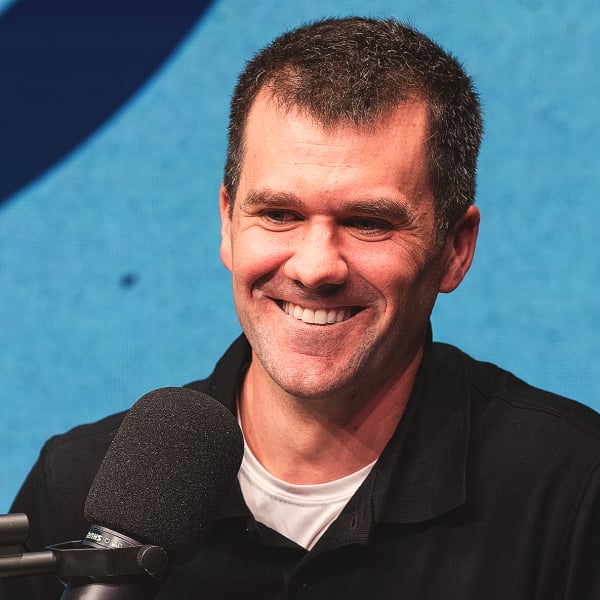
Adam Sylvester
CHARLOTTESVILLE GUTTER PROS AND CHARLOTTESVILLE LAWN CARE
Website: adamsylvester.com
Adam started Charlottesville Lawn Care in 2013 and Charlottesville Gutter Pros in the fall of 2020, in Charlottesville, VA. He likes to say, “I do gutters and grass! When it rains the grass grows and the gutters leak!” He got into owning his own business because he saw it as a huge opportunity to generate great income while living a life that suited him. He believes that small companies can make a serious impact on their communities and on every individual they touch, and he wanted to build a company that could make a big difference. His sweet spot talent is sales and marketing with a strong passion for building a place his team wants to work. Adam values his employees and loves leading people. While operations and efficiency is not something that comes naturally to him, he is constantly working to improve himself and his business in these areas.
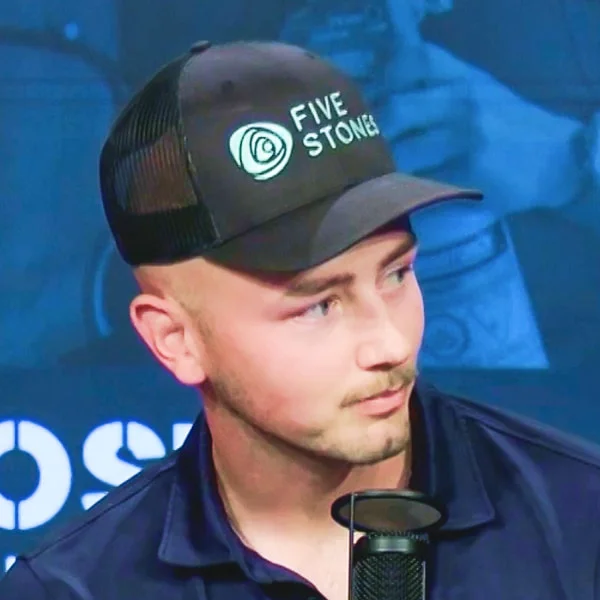
Beau Batcheller
Five Stones Landscape
Website: fivestoneslandscape.com
Facebook: Five Stones Landscaping
TikTok: @b3.au
Beau Batcheller brings an entrepreneurial spirit and innovative marketing approach to every project. Since starting his first landscaping business in 2017, he quickly expanded it into a multi-crew operation with diversified services and a strong community presence. Today, Beau leads Five Stones with a commitment to creativity, professionalism, and delivering exceptional results for every client.

SIGN UP FOR the masters of home service newsletter
Get monthly updates with news, tips, and advice on how to run a 5-star business. You don’t want to miss out!
Interested in being a guest on the show?
Are you a home service professional eager to share your insights and experiences? Apply to be a guest on the Masters of Home Service Podcast, and join a community of experts committed to helping others level up through knowledge.
Other Podcasts We Love