 31 Minutes
Create a Week of Social Media Content in 45 Minutes
With Hunter Patrick and Phil Risher


-
Hunter (00:00):
My best video got 16 million views. I got like 600,000 likes. Okay. At the time I wasn’t even coaching. I got zero leads from that.
Phil (00:06):
I post long form videos on YouTube. We got 147 views and I got a customer out of it and it was close to six figures in the customer relationship because views does not matter. What matters is creating content that someone has a need and they see the need and then they reach out to you. I’d rather talk to 147 people that need gutter cleaning than 16 million people in California who don’t have gutters.
Adam (00:27):
Whenever I talk to home service business owners about social media, it’s often they talk about it with like a shrug like, oh yeah, social media. And I think it’s because they don’t really know what to post. I think it’s because they’re not really convinced it’s worth their time. It’s just a waste of time. And I think some people aren’t even on social media themselves. And so just to get on social media to post for their company is a whole big deal. Have you guys experienced that same social shrug that I mentioned? Are people just like come look at you like, Yeah, social media.
Phil (00:57):
Yeah. I would say the biggest thing for me is that in the home service space, I used to be a director of business development at a home service business. It was like, Okay, I could post something, and I get a like and a comment and like, is this going to actually get business for me? And I’m just doing things to post, but is it actually generating customers and leads?
Adam (01:13):
Yeah.
Phil (01:14):
And I think that’s a big rub that happened a long time ago. In the past two to three years, it’s shifted a lot from just like get a bunch of followers and maybe then I’ll get a lot of customers to it’s actually now it’s interest. It’s the TikTokification of social media where you can post one thing, and you can get customers and leads from that, which I know for a fact you have this experience, and I’ve seen it firsthand that this is the case. And I think we need to reprogram how we think about social media because it’s free. It doesn’t cost anything and you can get customers through it now.
Hunter (01:43):
Yeah. No, I think when we look at service businesses, people are learning from old service businesses. I learned a lot from my dad. My dad owns a service business and I mean, again, he’s pen and paper even to this day. So I think a lot of people, what we’re seeing is people don’t really understand the power of social media yet. And when there’s guys like him, guys like me that are on social media actively showing you that you could just post content of you doing your job and showing your customers what you do, it can bring in leads. You can have customers DM you on Instagram. How many people do you know that run ads on Meta or on Instagram? You can run ads and get customers just, think about how well you can do organically if you’re posting videos of what you do with a CTA at the end of the video, it gets 100,000 views. Think about the reach on that. And the biggest comparison I give to my coaching students is imagine how long it would take you to knock 100,000 doors to get in front of a 100,000 people versus posting a video and getting 100,000 views. Think about the efficiency, right?
Phil (02:39):
So good. And I’ll say this, the study’s found that it takes seven impressions for someone to know your business and to trust you. That’s seven times that they have to see your brand. And if you’re relying on Google search, 87% of people go to Google to find people, and they’re searching for “HVAC repair near me” or “Junk removal near me”. Well, the better search would be your brand name because they already know about you. And this is why you can create content and subconsciously they say, Oh, I need this service. Let me search for that company. And then you don’t have to compete on SEO or ads or anything because you’re in their brain with the brand.
Adam (03:12):
Yeah. Before we get into nitty gritty, I do have a clarifying question. Who sees your social media post? Is it just all based on algorithm and whoever Facebook and Instagram decides to show? Do you have to be following the person to see the ad? So who sees it?
Hunter (03:25):
Pretty much everyone. As time goes on, Instagram will figure out what your audience actually looks like and it’ll target. So let’s say you have 5,000 followers, right? If you post content, it’s going to try and push that content to a lookalike audience to try and get you more traction. So if your content is like a super good hook, like you look at YouTube or like Mr. Beast, for instance, he’s targeting a much younger audience. If you want to target a much older audience, you have to create a different style of content to target that audience. But as a general idea, social media targets pretty much everyone, but you’re in control based on the content and your SEO and stuff that you run who you want to target.
Phil (04:02):
Yeah. I would say for people that run businesses, for the last five years, it’s changed before that. So before 2020, before TikTok really took off, it was about this. Post content, get a bunch of followers, post more content, your followers are going to see it, and then they’re going to interact. That all changed with interest media, which is it has nothing to do with your follower account. It’s about the content that you create is going to put it in front of the people that are going to watch it because what these platforms care about is people staying on their platform and watching more content. So they want to feed it more thing that’s going to be interesting to them. It doesn’t matter about follower account. It just matters about creating something that’s interesting that people want to watch.
Hunter (04:39):
A good example is, have you ever gone on Instagram, you see a video of a car and you’re like, Oh, that’s cool car. You like the video. You scroll down, there’s another video of a car. You’re like, Well, these haven’t been on my feed at all. You like that video. You scroll down, there’s another video of a car. So it’s a super active algorithm that if you like one of my videos, you’ll be like, Oh, that was cool. You like it and then you scroll down and you’ll see another video and then you scroll down to the other one.
Adam (04:57):
Another one from then on.
Hunter (04:58):
Exactly. You literally control your feed through the way you interact with the last five posts, controls your entire feed.
Phil (05:04):
This is a really important point because as business owners knowing this knowledge, how can you harness it to have more people see your stuff? And that’s exactly what we’re talking about today. It’s like, now that this is the case, how do you actually take this information and create content that people want to watch so that they choose you?
Adam (05:20):
So our listeners don’t have to have a bunch of followers, what you’re saying. In fact, they don’t really have to have any.
Phil (05:24):
No.
Adam (05:24):
Are you talking most about video at this point? It’s pretty much all video. It seems like reels changed the game.
Phil (05:30):
Well, it depends on the medium that you use. If you’re B2B and you use LinkedIn, it’s not necessarily just about video content. And on YouTube, it can be long-form or short-form video because if someone watches a reel for 30 seconds or 60 seconds, okay, that’s an impression that they see yourself. But if they stay with you for an hour to watch a whole thing, they’re really invested in you. So there’s a lot of different types of forms of content that you can utilize. And one other thing is you can actually repurpose content. So you could create a long form video and a short form reel and then turn it into another thing and another thing. So it’s not just one short form content.
Adam (06:07):
Like you can make one shape and another shape and another shape. There’s nothing better than when I hear a client call us and I’m listening to a recording or something, and they’re like, Yeah, I watch your videos. Oh, good. I’m not just wasting my time making those. So how do we do it effectively? How do we do social media effectively?
Phil (06:23):
Yeah. I think it’s cool because Hunter and I have two different approaches on this, actually very different approaches and they both work, which is cool. But I want to hear Hunter because he has really good content and I think it’s really good practical for any business.
Hunter (06:36):
I’ll tell you what I do and I did when I started. I never tried to make content to go viral. I simply wanted to build an Instagram account, and I talked about this on the last episode. I wanted to build a simple Instagram account just showing my customers what it would be like if you hired me. This is the experience. Hey, I’m Hunter. Nice to meet you. Do the job, get paid, bounce. That’s all I wanted to show, how I interacted with the customer, so on and so forth. And through doing that, people found that the content was super entertaining. So how can you do that in your own business? Well, I coach people about this all the time. Just start posting. The only way to learn to get good on social media is by posting content. If you want to go watch five people in your industry and figure out what kind of content they’re making and look through it and go, okay, this guy’s video’s pretty cool. Can I do this? Can I do that? Can I do this? And figure out what kind of content you want to create and then just start creating. But don’t create it under the sense that you want to become an influencer. You want to be famous. Create it because you want to create the content and you enjoy doing it. Because I enjoyed junk removal. So I got to enjoy just doing my job, recording it, and then I could enjoy watching the videos back because I think it’s super cool.
Adam (07:35):
Did you post as Dumpire or as Hunter Patrick?
Hunter (07:38):
Dumpire. So I started off as Dumpire Junk Removal, and then as I built the brand, my business partner was like, You got to put your name on it. So I made it Hunter Patrick Dumpire instead of Dumpire Junk Removal.
Phil (07:46):
I want to make a note on this. So if you’re listening to this and you have a home service business, what he does, he puts a GoPro on his head.
Hunter (07:53):
Yep, correct.
Phil (07:54):
Then he goes to the job and does the job and then he cuts down the thing.
Hunter (07:59):
I cut down about 30 minutes of film to a minute and a half.
Phil (08:02):
And you use Opus, right? Or Opus.
Hunter (08:04):
No, I don’t. I actually, I just use CapCut.
Phil (08:07):
Okay. So there’s a tool called Opus where you can upload that 30-minute video, and it will cut it into a short-form content for you and put captions and everything.
Hunter (08:14):
OpusAI, right?
Phil (08:15):
Yeah, OpusAI. If you don’t want to get into old CapCut and all this stuff, you can upload it to Opus and it cuts it down for you.
Adam (08:19):
CapCut is just a regular old video editor, right?
Hunter (08:22):
Yeah. Manually.
Phil (08:23):
So what I’m saying is whatever you do, tree care, moving, electrician, plumber, like put a GoPro on, go out, do the job, interact with the customer and then cut it into a thing and post it. That’s what he did. And he gets tens of thousands of views.
Hunter (08:37):
I’ll actually give you the ticket. You ready? So ever since COVID, things have changed. There’s not as much social interaction. People are more to themselves and don’t want to talk to people. The easiest way to get views is just talk to somebody in a video. Have a GoPro in your head or have Metaglasses or film yourself and have a conversation with somebody. Go on social media and go look at all the videos where people are interviewing people. It could be the stupidest like, What strawberry do you like? Strawberry or lemons? And it’s like, but they’re talking to somebody, so it goes viral. So the social interaction factor really brings in the views because most people aren’t having conversations with other people all the time. People they don’t know, especially because these customers are completely new to me. Every time I go to them, unless they’re recurring, they’re brand new, but you have to have a conversation as if you know them, right?
Adam (09:20):
I think not aiming to go viral takes a lot of pressure off our listeners. And it sounds like you just want to make content that people want to see, especially behind the curtain kind of stuff. How do you actually do your service? What does it look like on a day-to-day basis is really intriguing to people.
Phil (09:35):
I want to ask you this question about the difference between changing it from your business to your actual name because if we’re creating this for our brand and we want customers to come in and use our service and not necessarily just reach out to us personally, how do you balance that, like getting customers through your content, but then also your coaching?
Hunter (09:53):
So here’s the thing. So, essentially the way I structured it is I stopped trying to. Once I got to a certain level on social media, it was like I can no longer, if somebody inquires to me through Instagram about a job, I can no longer see it. It may come through a lead on Meta, but it’s going to come through with a bunch of other leads. So what I try to do is I position my social media as myself, Hunter Patrick Dumpire. I’m the owner of Dumpire Junk Removal. And then what I do is I don’t actually run any business advertisement through my Instagram. I just run ads underneath it. Does that make sense?
Phil (10:24):
Phil (10:24):
Yeah, I got you.
Hunter (10:25):
So instead of like, I’m not positioned as the junk removal company anymore. I’m positioned as me who owns the junk removal company and that goes into obviously the coaching programs and stuff like that.
Phil (10:34):
I wanted to ask about that because a lot of business owners, it’s like, Am I on the screen or is my technician on the screen and then who’s doing it? Who’s talking? Is it attracting customers for me? What do I say? And I think people get stuck asking all these questions. And I think the short answer is you slap on a GoPro or your technician or someone on your team and go out and post content on your company’s social media accounts, and you will get views from that.
Adam (10:55):
Alright, this is great. Let’s pause for a minute, talk about why we like Jobber so much. How has Jobber helped you guys manage your social media accounts?
Phil (11:00):
A really big opportunity for people is to know, well, where did my leads come from and how can I track this and have it go directly into my CRM? So Jobber has these forms, they’re custom forms you can make and you can put them on landing pages. So for example, if you have Instagram, you could have a Linktree and they could go to a form just for Instagram. And then that form, that request form would go into your Jobber just only from that form and you can customize it fully, which is very cool because it streamlines your whole process and you know where it’s coming from.
Hunter (11:28):
Yeah, that’s ridiculous.
Adam (11:29):
Yeah, it’s pretty sweet.
Hunter (11:30):
That’s crazy. No, me personally, the reason that I love Jobber so much, obviously it just makes everything so simple for me. If somebody books through my website, it go straight into my Jobber. So I don’t have to try and, before I had a website and before I connected all of it, it would go straight to my email and it would go into my spam half the time. So I’d have to go into my spam and I’d have to put all the information on my CRM and it was just BS. So having it all connected, it just go straight into my CRM. I check in the morning. I have this book, this book, this book, it’s easy, right? It makes my life so much easier.
Adam (11:53):
Once our listeners start doing all this social media stuff, you’re going to have so many leads and so many new clients. It’s got to go straight into Jobber without any of this nonsense and all this clutter, and who knows. So if you’re not using Jobber and all of its unique request forms, you need to. Go to jobber.com/podcastdeal, get the exclusive discount, and start taking advantage of all the features Jopbber has today.
(12:12)
I go back and forth on this personally because I have, how many friends do I have on Facebook? 2,000 friends, because I’ve been on Facebook for 20 years. But my business Facebook account has like, I don’t know, 100 followers or something. And so I feel way more compelled to post on my personal because more people will see it.
Phil (12:26):
But followers don’t matter. Followers don’t matter. That’s the whole reason why I was saying that followers do not matter. The content matters. So it doesn’t matter.
Hunter (12:34):
No, explain to him what you explained to me yesterday.
Phil (12:36):
What was it?
Hunter (12:36):
The 147 views and the client you got. That is literally testimonial for views don’t matter. I tell people this all the time. My best video got 16 million views. I got like 600,000 likes. Okay? At the time I wasn’t even coaching. I got zero leads from that. And he’s over here, he’ll tell you.
Phil (12:52):
Yeah. I post long-form videos on YouTube. We got 147 views and I got a customer out of it and it was close to six figures in the customer relationship because views does not matter. What matters is creating content that someone has a need and they see the need and then they reach out to you. I’d rather talk to 147 people that need gutter cleaning than 16 million people in California who don’t have gutters.
Hunter (13:12):
Or Pakistan or anywhere across the world.
Phil (13:15):
And this is why it matters so much with the content and the targeting. I also want to talk about, so that’s the way he does content, which is great. There’s a layer to virality versus also adding value and having the local context. And the way that we coach content and we help produce content is more as the thought leader in the space. He’s doing documenting, which is great. There is another part to it, which is helping you stand out as the though leader in the space and creating content around how much do things cost, which you do that, but also like comparisons. So should you do this or should you do that? Should you put it in landfill or should you sell it? Those types of content pieces where.
Adam (13:51):
Yeah. Answering questions that people have.
Phil (13:53):
Yeah. Answering questions because this is a big mind shift for a lot of people is that when you create content, you want likes and shares and comments and customers, of course. But the next tier to this is the content that you’re creating is training AI. The transcripts, it’s taking the transcripts and it’s training the AI platforms on the things that you have to say. So basically what you’re doing by creating content is you’re training the next layer of large language models and AI to know about your business. And about three months ago, Google on their search engine results page, you can do the search, go do your search in your local area. There’s your Google search end results page, and now they have a section for short videos in their results. It’s a short videos, and you can see all the short videos, and it’s going to continue to play into their results.
Adam (14:36):
Let’s talk about the type of content, because if one of my technicians gets a bonus, I want to celebrate him, take a photo with him with his certificate, he gets promoted, whatever it is, and I post a photo congratulating this guy, Hey, keep it up to go to work. Shout out to my… If I post that on Facebook, that’s not a video. Is that going to be seen by anyone that’s not following me?
Hunter (14:55):
It absolutely can be.
Phil (14:56):
Yeah. Followers does not matter.
Adam (14:58):
Even post and not video.
Phil (14:59):
Yeah, anything. They want to put stuff in front of people that they want to see. And as far as what you should post, there’s a big disconnect. There’s ChatGPT fluff stuff that someone’s like, I need to post on social media. Let me go ask ChatGPT what I should say. Then there’s all your expert stuff that’s happening in the field, your CSRs, your salespeople, all of them saying this stuff over here. What you need to do is get all the expert stuff over here into your content. And the way that you do that is you record your calls via call recording, you record your sales calls, you slap a GoPro on and you record yourself, you get the transcripts. Then you can go to ChatGPT to refine the messaging, refine the blog post, find the email newsletter, find the copy inside of the actual post. But you need to take the real stuff and use that. Don’t just default to ChatGPT. And a lot of people do that with social media and it’s killing their brand. It’s just regurgitated. Are you ChatGPT or are you your brand?
Adam (15:47):
Yeah, just watering it down.
Phil (15:49):
Yeah. It’s not adding value. So why would no one want to read it? I can go to ChatGPT and ask that.
Adam (15:54):
All this sounds great, but it sounds like it takes forever. It sounds like all you guys do is post on social media. Is that right?
Hunter (15:59):
No. No. We’re businesses, trust me.
Adam (16:02):
Yeah. So how do you do this fast? How do people manage this and so it’s not just dominating their whole day?
Hunter (16:07):
So the way that I was able to manage it while running my business full-time was I’m not going out of my way to record anything. I’m recording on the job. So I’m not losing any time making content. So I’d record, let’s say, and I can’t record every job, right? You obviously ask permission if they say no, obviously you don’t record. So whenever I get five to 10 videos together, I would throw them all in CapCut. And within 20, 30 minutes, I would literally go to the very end of the video where I collected cash and shook their hand. I take it, put it at the beginning, right? That’s the hook. And then from there, I would go through and I’d cut. If I’m picking something up, I’d cut it and then I’d have a little trim. And then whenever I threw it in the truck, I’d trim it and I would literally rinse and repeat the process. It’d take me five minutes to go through 30 minutes, export, and then either airdrop it to my phone or email it or GoogleDrive it. And then I do that with the other five videos. So within 30 minutes, I have all these videos cut up. I’d import them all to my phone. All I do is I add the plus whatever money sign with a,
Phil (17:01):
Ka-ching.
Hunter (17:03):
A ka-ching, exactly. And then from there, all I do is I upload it and that was it. So I could get a week’s worth of content within 45 minutes to an hour and because I’m not going out of my way to record content. It’s all on my GoPro while I’m actively doing my job. And then I go in and edit it and it’s super easy in CapCut. It’s probably one of the easiest editors and it’s free. So it’s like you spend five minutes per video, you have 30 minutes, five videos, that’s your entire week of content and you didn’t have to go out of your way or spend any time doing It.
Adam (17:30):
Is it safe to say that there’s a learning curve with CapCut? It might take some beginner a little bit longer than that.
Phil (17:35):
Go watch a YouTube video
Adam (17:37):
You trimmed it down to that.
Hunter (17:38):
Yeah. I mean, that’s pretty much a general consensus. Obviously the special effects and stuff are super hard. But when you go into CapCut, if you insert a video, if you click on the video, it’ll say cut at the top left. And all you have to do is click that, click on the other video, delete it. It’s pretty simple. Go watch a simple tutorial on it. In five minutes, you’ll know how to operate it. It’s super easy.
Phil (17:57):
And those videos get tens, if not hundreds of thousands of views.
Hunter (18:01):
Oh yeah, yeah. I get like six to 10 million impressions a month.
Phil (18:04):
The most important thing is the hook. And I think your content is great because the hook is $150 or whatever, $500 and it gets the interest of like, well, what was $500? Let me go look at this and figure this out.
Hunter (18:15):
That’s crazy that you say that because that’s exactly what I said. I said that’s why people watch it because they get hooked because they’re like, How did this guy make $500? And then so they want to watch the rest of the video.
Adam (18:24):
Yeah. Is that how you do it Phil? You use CapCut?
Phil (18:26):
We start at a different point because a lot of times for us, the business owners are very busy running the business. You hear about this and you’re like, Okay, so I’m going to have my technician get a GoPro and then I got to get the GoPro from him and then he’s going to lose it and then I’m going to not have this stuff and it’s going to, that whole thing. So what we do is we get their call recordings. So they use call recording platforms like CallRail or something and then we take the transcripts from those calls and we plug them into ChatGPT and we say, Turn this into 10 or 15 hooks. So we get those hooks. Then we get on a call with them and we say, Okay, Adam, here’s five reasons why your gutters are going to leak and how you could prevent it. We give you the hook. Then after you say the hook, we coach you to say, If you don’t want your gutters to leak, then you should be doing these things. Don’t sell, just add service and educate them. Then at the end, you agitate the problem and then you have a call to action at the end. If you don’t want your gutters to leak, then what you should be doing is contact us and we’ll get out there in 24 hours. So what we do is we take the actual stuff that’s happening out in the field or at the CSRs or in your sales process and turn those into hooks. And then we walk through that process of hook, add value or educate on why that hook is the situation, agitate the problem and then call to action. And if you get that process down, then you can plug it in. We use Opus, which Opus allows you to plug it in, get the captions, make it look nice. And then same thing with him, you’re just ready to roll.
Hunter (19:46):
You got it ready to go.
Adam (19:47):
And do you release, if you do like 10, do you just dump them all out all at once or do you once a day, twice a day?
Phil (19:54):
Once.
Adam (19:54):
A week.
Phil (19:55):
Everyone has a different thought process on this, but I can tell you that the platform.
Adam (19:58):
More the better.
Phil (19:59):
The platforms don’t really care. It’s not really about followers or how much that you post or you don’t post. If you post good content, they’re going to show it to people whenever they want to show it because they want people to watch it. Now, as far as a volume game goes, for my content personally, I was posting one video per day in quarter one of 2025 and I had like 140,000 views. Then I doubled it and in the second quarter I went up to 260,000 views. So it was a direct correlation, double the content, double the views. Then I went through and analyzed, well, what content is best? Do people like this content or that content? So then I refined it and then in third quarter went up to a 360,000 views. So more content gets more eyeballs. And I’ll give you the beauty of this, which really was a big unlock for me. And I think a lot of people is posting on social media is free marketing. And what free marketing can you do to get in front of 100,000 people in your local area? None.
Hunter (20:48):
Within like 24 hours.
Phil (20:50):
Within 24.
Hunter (20:50):
Yeah. I’ve had videos do ridiculous numbers.
Adam (20:52):
It’s like putting a yard sign people’s living room.
Hunter (20:56):
Put 100,000 people’s living rooms.
Adam (20:58):
1000 people’s living room. Yeah.
Phil (20:59):
And it’s free. You don’t have to pay any money.
Adam (21:01):
But how do you make sure that people in a different state if your local business aren’t seeing your, I guess it doesn’t matter if you’re not paying for it, but how do you make sure it’s local?
Phil (21:10):
No, it matters because you’re going to get calls from California and your CSRs are going to be stuck on the phone with these people over and over saying, No, we don’t do this service. We get this all the time. Or your forums are going to come through and they’re from other places. So you don’t want that. So you got to make sure that you optimize your stuff. But how would you do this?
Hunter (21:24):
That’s actually a great question. So whenever I first started making content, what you find is if you want virality, but you also want customers locally, you can’t get both. Let’s say I’m turning to my service areas, 25, 25 miles. My county’s 280,000 population, the odds are all of them are going to see my video, so I might get 2,000, 3,000 views. So if you want virality, you can’t target a specific area.
Phil (21:47):
This is the counterproductive piece in people’s brains. It’s like, my stuff only gets a thousand views. It’s like, that’s a thousand local people seeing
Hunter (21:53):
Yourself. Exactly. Exactly. So that’s the difference. So if you wanted to target your area, you could literally shut off. You can go on Instagram settings and you could shut off areas you don’t want to target, turn off all the other countries, you can literally focus on one state and you can get leads, but you’re not going to get virality. So you have to pick between the two.
Adam (22:07):
You can turn off locations?
Hunter (22:09):
Yes. So you can. That’s what my.
Phil (22:10):
Where you want to target.
Hunter (22:12):
Yeah. Whenever I first started doing coaching, we were targeting a lot of people overseas and we’re like, Well, I don’t know anything about running junk removal in Pakistan, so I don’t know how I’m supposed to help you. And so what my social media manager did was he shut it all off and then you just saw a plummet.
Adam (22:28):
Is that organic or? Are you talking about organic?
Hunter (22:30):
Hunter (22:30):
It’s organic. Yeah.
Adam (22:31):
Really? I didn’t know you could do that.
Phil (22:32):
I’ll tell you a couple of things that we do for this. First is in your hooks, make sure that you put your geographical qualifiers. So how much does it cost to get your gutters cleaned in Charlottesville, Virginia? And for you, if you were to put the dollar sign up, but in the lower corner, have the actual city or location that it’s at, it could be a location qualifier to say, okay, well, this doesn’t make sense for me or it does. The other thing I would say is that organic content, if it goes viral, whatever, here’s the number one thing that you can do. You take the content that actually gets traction on the platforms and you run ads with that content to a local audience, local audience that you can set up the exact zip codes that you want to see. So what we recommend is test your content for virality, interaction, engagement on organic. It’s free. Then take the content and run ads on it targeted to your actual audience because you know that it’s going to get in front of their eyeballs.
Adam (23:23):
Yeah. If you don’t, you just gamble. You’re just hoping if you pay all this money to run ads you’ve never tested before, it’s a waste of money.
Phil (23:29):
Well, you’re testing creative and spending money to test the creative when you could just test the creative organically, which has a much better algorithm and then you run ads on it and you already know it’s going to pop off.
Hunter (23:40):
Yeah, I do that all the time. We’ll do 10 videos at a time. And then out of the 10 videos, which one performs best? And it’s not always views. I’ve had videos that have 500,000 views and 10,000 likes, but I’ve had videos that had 80,000 views and like 12,000 likes and 500 comments. So it’s really all about engagement. It’s not necessarily about views, but whichever video performs the best, then we go underneath it and we start running ads on it because it’s already performed. We know people are going to engage with it. Now we just need to push it to a general area. And that’s really how we’ve scaled.
Phil (24:08):
There’s a huge need for this in people’s process and sales process and marketing in general, is that when you create a piece of content, don’t just let it die after 24 hours. You need to repurpose it and use it over and over and over again on landing pages, inside of your sales funnel, inside of your email newsletter. The more that you can use the content that’s good inside of all these other things that’s happening in your business, the more leverage you can get out of good content that you’re creating.
Adam (24:33):
What are some common tools that you see people just doing DIY stuff like Canva, anything out there that’s useful for this kind of stuff? CapCut you mentioned. Anything else?
Phil (24:42):
I think a lot of people get caught up like, I need this camera and this gimbal and this light on my ring light on my face and stuff. And it’s like, just get your iPhone out. And in fact, the overproduced stuff, it doesn’t perform as well as the real raw cut stuff.
Hunter (24:56):
Yeah, sure.
Phil (24:56):
And you’re going to get in your head by trying to do all this. If you use OpusAI, it will clip it for you. If you use CapCut, it’s,
Hunter (25:03):
Captions. There’s an app called Captions. It’ll literally put all the captions. You can literally put the video in. It’ll cut it up for you to put captions. It’ll put little animations on the screen. It’s really, really
Adam (25:13):
Cool and it’s free. Now does CapCut do captions too?
Hunter (25:15):
It does. It has AI. You can do AI captions, but honestly captions is much better in my opinion unless you’re just going to do them.
Adam (25:22):
So you edit it in CapCut and then put it into Captions and then post it.
Hunter (25:26):
Yes.
Adam (25:26):
Got it.
Phil (25:26):
But you could do it all in captions too.
Hunter (25:28):
Yeah. I mean, you could do it either way, whichever way you want to do it. But the biggest thing is, is always remember that the more you try and make it viral, the less viral it’s going to be.
Adam (25:37):
Give me three types of videos that listeners can go make right now at their team, their company. What can they make right now?
Phil (25:44):
What I would recommend is first, if you have anyone on your team, go to them and say, Hey, what do you like about working here? And you could literally just do a selfie like this and say, Hey, I’m here with Hunter. He works on our team as this. Hey, Hunter, what do you like about working here? Okay, how long have you worked here for, Hunter?
Hunter (25:59):
No, exactly.
Phil (26:00):
What’s your favorite product to work on? That’s a video right there.
Adam (26:03):
Okay.
Phil (26:03):
Another one is tell the origin story. Hey guys, my name is Phil. I’m the owner here. I started this company. I’m local. I went to college here, blah, blah, blah, blah, blah. That’s a great video.
Adam (26:13):
Okay.
Phil (26:13):
And then the last one will be a shop tour. Very simple.
Adam (26:16):
I love shop tours.
Phil (26:16):
Go to your shop, go to your truck and say, Hey guys, here’s how I actually do this. Let me show you this. Here’s where this stuff is. You could do that just on your phone.
Adam (26:23):
How often should you do a shop tour video?
Phil (26:26):
Okay, this is a great question and this is why it’s not just post to post random things all the time. You post things and then you evaluate. Your shop tour might have popped off. It might have got a million views. Okay, people like shop tours. So let me go through and say, Why did I pick this couch over here? Why did I do this? It’s not just post things to post things. It’s post things and then evaluate what’s actually working and then go back and do more of what’s working and what people like.
Adam (26:48):
So if your shop tour video does well, it makes sense to do another one in a month or so.
Phil (26:51):
Yeah. Let me explain the different equipment that we have here. What is this thing? How does this work? How do we use this tool?
Hunter (26:56):
Yeah, no, the first one you touched on is great because I’ve seen a lot of videos where they’ll go into a dealership and they’ll be like, Hey, what car do you drive? And they’ll ask each person at the shop what car they drive. You can do the same thing in your business. What do you do? Oh, I’m the manager. Okay, what do you do? Well, I’m a technician. You can make videos like that. You could show your setup, truck, trailer. How does the dump trailer work? I could lift the dump trailer up. People are super impressed about dump trailers. No, they’re super cool. And people are super impressed by it. You can make a video at the landfill of you dumping and say, Yeah, this is what it costs me. This is how much I made or this is what my operation cost is, whatever the case may be. I could give you infinite video ideas within 10 minutes of just kind of record everything. If you’re in your truck, you can be like, Yeah, I got this many jobs today. Or you could advertise a special, you could be like, Oh yeah, I’m good. It just depends on what you’re trying to do. Are you trying to target, just trying to make general videos in virality or are you trying to target customers? That really depends on what kind of content you need to make.
Phil (27:45):
Okay. Imagine it’s take your child to Workday and your kids saying why, why, why, why, why. And they’re there and you want to say, Hey, check out this cool thing. That’s all the videos that you should make, everything that you would do.
Adam (27:54):
Guys, I can tell that you just love this social media stuff. Super helpful for our listeners. I got it boiled down to three actionable things our listeners can do right now to start building their social media content. Number one is because follower account doesn’t matter anymore, just start posting. Don’t try to go viral. Post stuff that matters to your client base like behind the scenes, job videos, shop tours, all that kind of stuff. Number two is don’t waste money or at least gamble on paid ads if you haven’t tested it first. Use organic to see which videos stick and then run paid ads on those videos.
Phil (28:29):
Yeah. Another important thing you can do with that is on your actual profiles, make sure that you have the city or location that you are targeting so that when someone lands on your profile, they know, oh, you’re in this area.
Hunter (28:38):
And on top of that, you can have it in your bio, but you can also add it to your video. So that way, let’s say I post a video and it says, Forsyth County, Georgia, that video is only going to be put out to people that are incoming Georgia. So it won’t get the virality you’re looking for, but you’re going to target people that are in your area. So if you really want to run an ad for your business and you want to bring in customers, literally tag your location on that video before you post it.
Adam (29:02):
And number three, repurpose your content. You should post it on Facebook, Instagram, email campaigns, on your website, all these different platforms so that it gets used over and over and over again, not just one single time.
(29:15)
Guys, that was great. Any final thoughts on social media?
Phil (29:18):
Talk to your customer, add value, be organic. People want to work with real people.
Hunter (29:22):
Yeah, I would just be yourself. I see a lot of guys on social media that try and copy others content, try and beat somebody they’re not, because it’s viral and they’re getting followers. Honestly, I would just create content, figure out what works for you. But at the end of the day, you want to create content that you enjoy creating, and you don’t want to copy somebody else and then go, Oh, I hate doing this. Now I have a following that only wants to see this content. And then you try and transition and nobody wants to watch anymore.
Adam (29:44):
Yeah, you don’t have to sing and dance in these videos. You can just be yourself and just do the job. How do people find out
Hunter (29:48):
More about you? Yeah, so you can find me on Instagram @hunterpatrickdumpire as well as YouTube, and you can find me on TikTok at @hunterpdumpire.
Phil (29:54):
If you wish you had a digital marketing company that cared about social media and creating content, you can go to Phlash Consulting P-H-L-A-S-H-consulting dot com, and we help with that using your real information to create content.
Adam (30:05):
Cool. Awesome. Thanks guys.
Hunter (30:06):
Thank you.
Adam (30:07):
On the next episode, we’re talking about how small businesses can land big government contracts and actually make them profitable. We’ll cover how to get registered, manage the cash flow, and execute like a pro once you win the job. Follow or subscribe today so you don’t miss out. And thank you for listening. I hope that you heard something today that will help you increase your social media content and inspire you to go start doing it today. I’m your host, Adam Sylvester. You can find me at adamsylvester.com. You can find me there, text me, tell me what you like about the show. I want to hear from you. Your team and your clients and your family deserve your very best, so go give it to them.
About the speakers
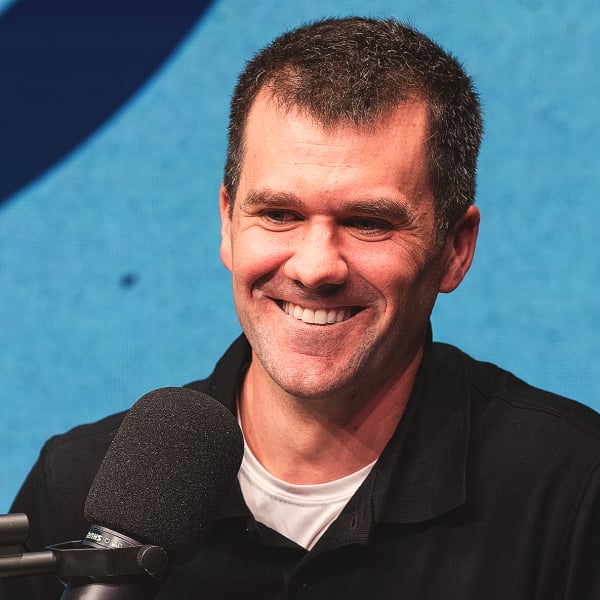
Adam Sylvester
CHARLOTTESVILLE GUTTER PROS AND CHARLOTTESVILLE LAWN CARE
Website: adamsylvester.com
Adam started Charlottesville Lawn Care in 2013 and Charlottesville Gutter Pros in the fall of 2020, in Charlottesville, VA. He likes to say, “I do gutters and grass! When it rains the grass grows and the gutters leak!” He got into owning his own business because he saw it as a huge opportunity to generate great income while living a life that suited him. He believes that small companies can make a serious impact on their communities and on every individual they touch, and he wanted to build a company that could make a big difference. His sweet spot talent is sales and marketing with a strong passion for building a place his team wants to work. Adam values his employees and loves leading people. While operations and efficiency is not something that comes naturally to him, he is constantly working to improve himself and his business in these areas.

Hunter Patrick
Dumpire Junk Removal
Instagram: @hunterpatrickdumpire
YouTube: Hunter Patrick Dumpire
TikTok: @hunterpdumpire
Hunter Patrick is the owner of Dumpire Junk Removal, a fast-growing junk removal and demolition company based in Cumming, Georgia. Since launching in 2021, Hunter has built Dumpire into a trusted local brand by offering transparent pricing and reliable service across home cleanouts, hoarder rehabs, demolition, and debris removal.
After starting with just an idea from a friend and a borrowed trailer, Hunter scaled Dumpire to serve thousands of homeowners and businesses throughout North Georgia. His strong online presence, especially on TikTok, where he’s grown a following of 110,000+, has helped him turn content into a growth engine for his business.
Today, Hunter also teaches aspiring entrepreneurs how to launch and scale junk removal businesses through his mentorship platform, Dumpire Academics.

Phil Risher
Phlash COnsulting
LinkedIn: Phil Risher
YouTube: @phlashconsulting
Website: phlashconsulting.com
Phil Risher founded Phlash Consulting in the Washington, D.C. Metro Area in 2019. He’s a local marketing expert, who specializes in helping businesses scale. His company helps local service businesses boost sales and fill their schedules using the unique “Phlash Customer Journey” framework to create a professional marketing system. This approach has helped clients grow their revenue by over 20% annually. Before founding Phlash Consulting, Phil was a director of business development at a major air duct cleaning company. He was tired of working with generic marketing firms that didn’t understand his industry, so he decided to start his own. Phil’s company combines digital marketing and business development strategies, and works directly with staff and business owners to help them grow. He builds strong partnerships with his clients, and most have stayed with him for over two years.
SIGN UP FOR the masters of home service newsletter
Get monthly updates with news, tips, and advice on how to run a 5-star business. You don’t want to miss out!
Interested in being a guest on the show?
Are you a home service professional eager to share your insights and experiences? Apply to be a guest on the Masters of Home Service Podcast, and join a community of experts committed to helping others level up through knowledge.
Other Podcasts We Love