 18 Minutes
What It Really Takes to Build a $1M Business
With Savannah Revis


-
Savannah (00:00):
I spent the first six years in my business cleaning and running it full-time. And that looked a lot like me never having time or being free, being on the computer until 12 o’clock at night, one o’clock in the morning, waking up at five or six in the morning to get my kids ready for school. My children definitely suffered in ways because I was not present, but I’m so grateful that they’re still really young and we built it to where we are so that I actually can be. And that was kind of like what my prayer and my hope was from all along.
Adam (00:33):
What does it take to run a million-dollar business? What goes into it? Well, today we’re going to talk to Savannah Revis, who is the queen of house cleaning in Colorado. She runs a million-dollar business, but she also has to learn how to manage teams, build teams, how to face your failures and maintain your integrity along the way. We’re going to talk about all that today. And so Savannah, welcome back to the show.
Savannah (00:56):
Thank you.
Adam (00:57):
Briefly, how did you get in house cleaning? Because didn’t you house clean when you were young?
Savannah (01:02):
Yeah.
Adam (01:02):
And then you did it 20 years later or something.
Savannah (01:04):
My father that raised me is in the FBI and at 15 he required me to get a job. It just so happened to be cleaning the office buildings at night. So I would get in this white van. I’d ride around with this older woman and I would vacuum with a backpack on and get the trashes out of the offices. And I remember how much I hated that job. And then fast forward.
Adam (01:27):
Little did you know.
Savannah (01:28):
Yeah. Fast forward 20 years later, my son is one and we’re really struggling to make ends meet with his price of school every day and how much I was making per day. They weren’t adding up. And so I started to kind of brainstorm and I had a girlfriend that was cleaning houses and I asked her how she went about doing it. The story was wild. I was like, okay, so I can just be honest and tell people, Hey, I’m a mom. I’m looking to make extra money. I will clean for 25 an hour at the time. And before I knew it, two weeks later I was quitting my restaurant job because I had a full schedule.
Adam (02:03):
Wow. Yeah.
Savannah (02:04):
It took two weeks.
Adam (02:06):
Two weeks?
Savannah (02:07):
On Facebook.
Adam (02:08):
I don’t think there’s an industry out there that’s better fit for if you do a good job, your name spreads.
Savannah (02:13):
Exactly.
Adam (02:13):
I think that house cleaning is the best. Your skills now are a lot different than they were day one.
Savannah (02:20):
Absolutely.
Adam (02:20):
Right? And you have other interests too. You’re pretty physically active. Were you a big personal trainer then, 10 years ago?
Savannah (02:28):
No.
Adam (02:28):
Is that new?
Savannah (02:30):
I was not into fitness or bodybuilding. I always say that bodybuilding is the reason that my business grew the way that it did.
Adam (02:38):
Really? Interesting.
Savannah (02:39):
Specifically because the amount of discipline and perseverance that goes into putting yourself in that position every day when it’s super difficult, right? Going to the gym when you don’t want to, not eating the cookie when it’s sitting right in front of your face. It’s that mental fortitude that came from competing and starting to put myself in that place that I was then able to transfer it over into my business. It’s like a not give up mentality, right?
Adam (03:04):
Yeah.
Savannah (03:04):
And they go hand in hand. I always say the gym saved my life and my business.
Adam (03:08):
Interesting.
Savannah (03:09):
In a lot of ways because it taught me the self-discipline piece that I know I had, but I hadn’t figured out how to really put it in place.
Adam (03:17):
So what were some of the skills that you learned along the way to go from 100,000 a year, 300,00, five, eight, over a million? What were some of those milestones for you?
Savannah (03:28):
Well, I would tell people the first thing is to check your ego at the door because it’s likely that you’ve made mistakes and there’s likely things that you can do better. And a lot of people live in that space of, Oh, this is good enough. Well, nothing is really good enough for me. I can always strive to do better. There can always be improvement. And so I think it was that mentality or that tenacity of that never give up mentality that I hadn’t really had before. Sometimes I would feel defeated and I would just want to throw in the towel. Whereas over the last probably five to six years, it’s really come in where everything is just a pivot. There is no stopping point. There’s no end. It’s just, okay, this is our problem and how are we going to pivot around it? We’ve got to get creative, right? And willing to think forward thinking constantly. So I’m somebody that thinks like eight steps ahead, what could happen so that I’m prepping myself to avoid those issues, that customer success or me trying to create success for myself by being proactive ahead of time. So proactive behaviors, the operating procedures were huge for us to really get clear on how we expect our business to operate and what are our points that we have to do every time to ensure that the customer is going to feel good and happy with us and come back to us.
Adam (04:47):
What were some things in your business that you just weren’t happy with? This just isn’t good enough, guys. We have to make this better.
Savannah (04:52):
Our systems changed a lot over the last few years because of the checklists. So we have these really intricate checklists for cleaners. And a lot of companies that are cleaning short-term rental, they don’t have these operating procedures in place where they’re giving lists, they’re called consumable lists, and those are the items that the guests use. So coffee, tea, shampoo, paper towels. So how would a client know if they’re starting to run low on those items if they’re not there every single time? So creating lists, systems that we did not have before, things that other people don’t have really kind of sets us up. We have a pretty comprehensive onboarding package for short-term rental. I’ve even had clients not want to sign with us because it was so much information for them and they felt like it was too much for them to fill out and too much for them to answer, but they did not realize that we are asking all these questions to ensure the success in the future and where we’re not going to have to call them during a clean and say, Where’s the breaker box? The breaker blue. We start at the very beginning covering all of those things.
Adam (05:55):
Are they kind of just like, Savannah, why can’t you just come and clean it?
Savannah (05:57):
Absolutely.
Adam (05:58):
All the time. All these details.
Savannah (06:00):
I like to break it down for them in so many ways. I mean, I give them true life stories and examples. I mean, every single time I go against my gut with scheduling a job, we haven’t done the proper communication around or they’re calling us last minute and they want us to come clean that same day, which has happened quite a bit lately. And then they’re frustrated that the cleaner spent 30 minutes more and the bill reflected that in the price, but we never even got the proper information that we needed because it was a phone call. It wasn’t our intake form. There wasn’t all the questions answered. So I really push our clients to follow our procedures to ensure seamless fit start to finish. And there’s not going to be any, Oh, we didn’t know that. Or, Oh, I didn’t know you didn’t do the baseboards unless it was a deep clean. These little things that don’t get talked about when you’re getting these really quick bookings. So it’s kind of knowing where the problems arise and then anticipating them and also finding a way to finesse with the client into, you’re going to follow the way that we do it so that you’re happy at the end.
Adam (07:08):
You’re really talking to the people listening who they just, Oh, checklist. Who needs checklists? We’re just going to go do a good job and the client’s going to be happy. But that doesn’t work after a while. That might work when you only have 10 clients or something, but you need to have something more than just like, Oh, we just do a good job. You have to have some of these things in place to really consistently do a good job.
Savannah (07:30):
Right. And to prove that your rapport is the same each time, right? I mean, places like Chick-fil-A and McDonald’s, they do well because it’s the same everywhere you go. So if you know that you’re going to get this consistent thing every single time, you’re going to put a lot more trust and faith into that person or that company or that product. So that’s why those checklists became so important. And then when Jobber finally added the feature of the forced photos where it requires these photos to be input, it’s just night and day difference. And our clients depend on those photos to come through. Taking a picture of the inside of the oven, taking a picture of the inside of the fridge, taking a picture of under the bed so that we know that even if you forgot to check it, we’ve already double checked it now with your photo. I try to teach the team when they’re training that you’re going to miss things, you’re going to make mistakes, you have to be the person that has your own back and looks for those things before somebody else sees them.
Adam (08:27):
Savannah, this is a great conversation. I want to pause for a minute to talk about why we love Jobbers so much. Let’s talk to the bigger business owners here for a minute. How has Jobber helped you scale to over a million dollars?
Savannah (08:37):
I think the first thing would be the forms and the checklists and the photo submissions that we can use for that. Having that as a quality control is really important because you can’t get behind 56 people every day. And then the time tracking has been really helpful with the GPS location so I know where my cleaners are and if they’re actually clocked in or out and I can always answer those questions when clients reach out. Also, the intake form that we use as a submission form for the requests, that’s customizable so I can change it. And when I realized that it might not be working, I might add something else onto it. So I really just think all of the automation with the forms and the processes that it has and the automatic invoicing has just leveled us up to something that I could not have done on my own.
Adam (09:21):
Yeah, for sure. And I think from a team perspective, our subcontractors or our employees, they don’t want chaos. You don’t want to be texting them in the morning of where to go and what to do. They just pull up their app, they read it and they go. Yeah. They love that.
Savannah (09:36):
Jobber even has push notifications. So it’ll tell you like, Hey, your schedule’s changed for today.
Adam (09:41):
Yeah, yeah, exactly. If you’re not using Jobber, you need to. You need to start today so it grows with you. Don’t wait till it’s too big, too large, start today. Go to jobber.com/podcastdeal, get the exclusive discount and start using Jobber with your business now.
(09:58)
How do you technically speaking transfer that information from the client’s head all the way through management and all the way through technology into, I assume the instructions on the visit and then maybe the recurring visit as well. How do you do all that just functionally?
Savannah (10:12):
So functionally we originally started with like a Google Drive form, but that seemed like it was just too complex because it was like little blocks and it wasn’t all just one page and to get that information was a little bit more complicated. So we created an onboarding packet that has hard copies of all the forms that they’re going to see every time and then it also has their Airbnb intake form. That intake form is what some people find to be obnoxious form with lots of questions.
Adam (10:42):
The necessary evil is what it is.
Savannah (10:44):
It’s necessary for us to get that proper information because a lot of the times if a client doesn’t fill that out, a cleaner’s on a job and they’re like, Where’s the storage closet? Well, it’s in the intake form, but unfortunately sometimes people don’t leave us that information, which leaves us scrambling, right?
Adam (10:58):
Yeah.
Savannah (10:59):
So before we even get them onboarded fully, we make sure their forms are filled out, that if they have stage photos that we get those in, we have their Airbnb link so we know what the guests are expecting to see so the cleaner can also produce that same product and that same final finished result. A lot of properties that have a lot of bells and whistles or hot tubs that are outdoor like games, cornhole, like the things, VR sets, all these different things that have to be tidied and cleaned and put back together. We will put together full laminated photo books that are actually hard copies inside the property.
Adam (11:32):
Who does all that? Who’s responsible for that?
Savannah (11:33):
Me and my management team.
Adam (11:34):
Wow. Okay. So onboarding someone, do they commit to any certain time period?
Savannah (11:40):
No. So we don’t have a contract with commitment on time. It’s more, we want to make sure that you’re happy with our service and then you’ll stay. I don’t feel like it’s a need to sign somebody in because that feels very controlling and I don’t want to be in that kind of control. I’d really like for it to be a partnership and our clients have to know that they are our partner and we are theirs. And in order for us to have a successful property, we have to work together. And that’s why those onboarding packets, I say, this is so that we can be the best that we can be for you.
Adam (12:12):
So if someone doesn’t fill out that onboarding all the way, they don’t get to the next step until someone calls and says, Hey, you still have these three more questions.
Savannah (12:20):
Exactly.
Adam (12:21):
So then once they fill that, it’s all complete, that’s attached. So then in the Jobber instructions for the visit, are those really long or are they mostly blank because they go find the information they need somewhere else? It sounds like it’s.
Savannah (12:32):
It just depends on the job. So some properties will have us, they need us to charge the Ring camera for the day or they need us to set out six extra towels, right? Specific types of cleanings will have those specific instructions if they’re changing. If not, we have a section called pet peeves and 911 notes and those notes are copied and pasted into the instructions for every job so that those 911 notes, even if they are over here in this section, they’re point blank in their face so that they see them and they know, okay, this is something that has been an issue or the client, this is really important to them, this is something we need to pay attention to every single time.
Adam (13:10):
If we ever leave the gate open again, they’ll fire us.
Savannah (13:13):
Exactly. Those are the kind of notes we would leave there.
Adam (13:15):
Yeah. Okay.
Savannah (13:16):
Okay. Sometimes we even leave blocks, like a task note block ahead of the job and it’ll say 911. And then it’ll have all of the information or 911, the guest is coming at 2 PM to drop off bags. Please know they’re not allowed to stay. They’re only allowed to drop. So that way when the cleaner’s there and somebody shows up, they don’t have to reach out to us and say, Guests are here. What am I supposed to do?
Adam (13:42):
That’d be hard to do without Jobber.
Savannah (13:45):
Honestly, I couldn’t. I just couldn’t. I wouldn’t even try. The way I was trying before was such a joke.
Adam (13:51):
At a million plus, what do you think are the necessary people or positions that you need to have peace of mind, not be too cluttered, no chaos?
Savannah (14:02):
You need an HR person or somebody that’s dealing with your staffing kind of directly with your staff. That’s what Taja is. She messages our cleaners every morning that have short-term rentals. She confirms that they’ve seen the notes, that they know the details, that they’ve confirmed their job, that they’re not going to miss it because people do miss stuff. And so we prepare for that by having her. And then we have Tracy who basically handles invoicing a lot of the scheduling, communications via email. She sends out the forms at the end of the night. She communicates with the cleaners and then you have me and I do all of the other stuff, anything that kind of falls into that. Now I do think my business could benefit from an extra person. We did have a test run with a virtual VA for just the weekends, but I realized that it wasn’t super necessary that we could actually turn on a message on our email and just let our clients know we’re out of the office.
Adam (14:59):
Back on Monday. Yeah.
Savannah (15:00):
We’re not out of the office, but we’re not directly in the office either. So if it is an emergency, you can send a message to our business line. Otherwise, you will potentially hear from us before Monday or on Monday.
Adam (15:13):
Do people expect that checklist or after a while are people just kind of like, do you think people look at it every single time? I’m curious, we should do that.
Savannah (15:21):
Absolutely do.
Adam (15:22):
Okay.
Savannah (15:23):
Some clients don’t even know they exist. Jobber lets you know. And you don’t know which ones are which. Yeah. Jobber lets you know when people open the emails, right? The internal workings of that. So there are people that never open them and those are the people that we have cleaners show up and they’re like, There’s no toilet paper. And we’re like, Yeah, well, we told you the last four times on the form that you don’t have any. So yeah, you can see that, but that’s why it’s so important for them to have those filled out. I think majority of the time, I would say 95% of the time, yes, clients are expecting at the end of the day, but they also have to review their guests. In order to review their guests, they need a rating from us on how the property was left and that’s also done in those forms, right?
Adam (16:03):
The place was a mess and they charged more.
Savannah (16:05):
We want to give them a three star and let them know they left trash all over the floor even though the trash can was right there.
Adam (16:12):
Gotcha.That kind of thing. Makes sense. Savannah, this is great. I love that. I’m going to break it down into three things that I think our listeners can start doing right now, especially planning for a million-dollar business that will help them today. Number one is don’t give up on the personal side of your business, you, your body, your health, your time. You have to take care of yourself first. And in Savannah’s case, the gym and working out and being physically fit helped her tremendous amount in her business because it go hand in hand. The discipline that she learned on her personal life helped her be disciplined in her business. Number two is you have to start developing SOPs, standard operating procedures for things in your business because eventually you can’t plug all the holes, you have to delegate and you have to find what frustrates you and then fix it forever. And number three is once you pass $500,000 of revenue, that’s the time to start thinking about bringing in or developing someone who already works with you, a manager, someone who could oversee and support you to run the business together. Savannah, that was awesome. Thanks for being here.
Savannah (17:15):
Thank you. Thank you so much.
Adam (17:17):
How do people find out more about you?
Savannah (17:18):
You can find us at earthlovecleaning.com or you can find me on LinkedIn at Savannah Revis.
Adam (17:23):
Alright. Well, thanks for being here. You’re crushing it, crushing it. And thank you for listening. I hope that you heard something today will help you get to a million dollars in sales and keep crushing it. I’m your host, Adam Sylvester. You can find me at adamsylvester.com. I want to hear from you, your team, your clients, and your family deserve your very best, so go give it to them.
About the speakers

Adam Sylvester
CHARLOTTESVILLE GUTTER PROS AND CHARLOTTESVILLE LAWN CARE
Website: adamsylvester.com
Adam started Charlottesville Lawn Care in 2013 and Charlottesville Gutter Pros in the fall of 2020, in Charlottesville, VA. He likes to say, “I do gutters and grass! When it rains the grass grows and the gutters leak!” He got into owning his own business because he saw it as a huge opportunity to generate great income while living a life that suited him. He believes that small companies can make a serious impact on their communities and on every individual they touch, and he wanted to build a company that could make a big difference. His sweet spot talent is sales and marketing with a strong passion for building a place his team wants to work. Adam values his employees and loves leading people. While operations and efficiency is not something that comes naturally to him, he is constantly working to improve himself and his business in these areas.
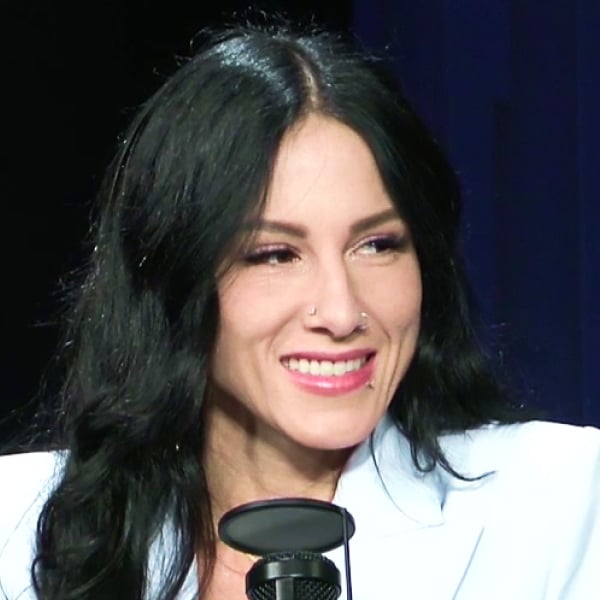
Savannah Revis
Earth Love Cleaning Co.
Instagram: @earthlovecleaningco
LinkedIn: Savannah Revis
Savannah Revis is the founder of Earth Love Cleaning Co., a Colorado based eco-friendly cleaning company she built from the ground up into a seven-figure operation. Starting as a young mom with a vision and a mop, Savannah turned her side hustle into one of the fastest-growing non-toxic cleaning brands in her region, serving hundreds of homes and short-term rentals each month. She’s known for her sharp systems, high standards, and deep commitment to community. Through Earth Love Cleaning Co. and her coaching work, Savannah empowers women to scale service-based businesses with integrity, sustainability, and confidence. Her story is rooted in resilience, grit, and the belief that anyone can build something extraordinary from nothing.
SIGN UP FOR the masters of home service newsletter
Get monthly updates with news, tips, and advice on how to run a 5-star business. You don’t want to miss out!
Interested in being a guest on the show?
Are you a home service professional eager to share your insights and experiences? Apply to be a guest on the Masters of Home Service Podcast, and join a community of experts committed to helping others level up through knowledge.
Other Podcasts We Love