 16 Minutes
How Small Businesses Are Winning Government Contracts
With Anatoly Nasarov


-
Anatoly (00:00):
We were also able to charge them two and a half times what we would charge a residential client because that is just the way the government works. You have a bigger ticket because they give you the allowances for project management. They give you the allowances for overhead and profit. Whereas in a residential, you’re arguing over your two grand profit and you can’t explain to the customer like, Hey, I actually need to take some money home at the end of the whole point here.
Adam (00:26):
Today we’re talking about how to win big profitable government contracts with my buddy Anatoly Nazarov. This is his sweet spot. He has a commercial business, government contracts is his thing. So he’s going to tell us all about it, the pitfalls to avoid and how to win big and how to make a lot of money doing it. How do you even know that they’re asking for proposals? How do you get into the system?
Anatoly (00:46):
Yeah, yeah. Okay. So there are open source platforms. One is called beta.SAM, but beta.SAM is federal money. Then your state is going to have a procurement website for the state money. And then your county will have one for county money and schools will have one for school money. So you could either just scour the internet consistently or you could purchase one of these bid boards you could pay and they’ll just have everything listed on there for you.
Adam (01:07):
Interesting. Okay. So let’s say you get a bid board and you see all these RFQs. What do you then?
Anatoly (01:11):
You read the RFQ or the RFP and there it’s going to tell you if it has a mandatory meeting or a non-mandatory meeting. If it is a mandatory meeting, you must send a representative to sign into the meeting. If you do not sign into the meeting, you are ineligible to bid.
Adam (01:26):
Is that meeting at the job site or like an office?
Anatoly (01:28):
It can be. It often is, but it can be wherever. It might also be via Zoom or via Google Meets. It’s just there’s a mandatory meeting and this is like a big barrier of entry, especially on bigger projects. You can only bid if you go to it. So 100 people are interested, four show up, only four can bid.
Adam (01:44):
Well, that’s nice if you.
Anatoly (01:46):
It’s nice. Yeah, yeah.
Adam (01:47):
If you’re there, okay.
Anatoly (01:48):
We have won a contract where we were the only bidders.
Adam (01:50):
Wow. Good for you, bad for them. Okay. So you show up and then you tell them what the contract’s going to be and then they sign or they tell you?
Anatoly (01:58):
So this RFP is a 50 to 100 page packet. In there, it has the scope of work. It has the deadlines. It has all the terms and conditions. It has their price sheet that you have to fill out. It has all these things that you have to sign. You have to sign a bunch of different things and they request all your qualifications. Now in this giant bid packet, there’s a bid form and it’s basically going to say, include X, Y, Z pages along with your pricing and submit this either via email or drop it off at this location or send it by mail. And so you just do whatever is said there. You have no say in the government contracting game. You just do what the packet says.
Adam (02:33):
Can you even attempt to change the scope or they’ll just laugh at you?
Anatoly (02:35):
You can change the scope in terms of means and method.
Adam (02:39):
Okay.
Anatoly (02:40):
What I mean by that is if I have to build a wall, they’re not going to tell me I can’t bang out concrete to build the wall because that’s how I chose to do it in theory. I can’t charge them for that. And now if there’s change orders that come up in the construction game, it’s not listed that there is concrete. Now we have to bang out the concrete to build the wall. Then yes, I could submit for a change order. For the cleaning game, no, not really. I’ve never seen it that they will allow us to get more money from them.
Adam (03:04):
Do you ever use a lawyer to go through this 100 page document or not really?
Anatoly (03:08):
No. We self-fill it. There are services that you could pay to fill them out for you, but I never found it worth it. It takes me and my wife, what, an hour to fill out a packet maybe. We sit down, we bid it, we fill out. A lot of the pages are pages you filled out before, so you just copy and paste.
Adam (03:24):
Pretty fast.
Anatoly (03:24):
Yeah. Yeah. And so we submit it. There are agencies that will do it for you. They’ll find the bid, they’ll fill it out with all your information, they’ll price it out and then you hope you win it. I’ve never seen the value in that because you have to pay them hundreds of dollars to do that.
Adam (03:38):
So let’s say that you’re one of these bidders and what happens after you submit a bid?
Anatoly (03:43):
After you submit a bid, it is publicly read or publicly released. So if it’s an in- person, they will literally, Oh, I didn’t say this. You submit it in a sealed envelope so no one can see it. It has to be taped up if it’s in person. They unseal it, they read it in front of everybody. So immediately you know who is the lowest qualified bidder. And for those of you listening, all government contracts are won lowest qualified bidder.
Adam (04:06):
Wow. So they literally do take the lowest price.
Anatoly (04:09):
Lowest price.
Adam (04:10):
As long as you’re qualified.
Anatoly (04:11):
As long as.
Adam (04:11):
What does that mean again?
Anatoly (04:12):
Qualified means that you have met all the requirements of the bid, which is listed in your RFP. So maybe they’ll say this one has to be a registered small business or this one has to be a veteran-owned business or this has to be a woman-owned business or maybe this has to be a business that has done $5 million in the past five years. They could put basically whatever in there. You just have to make sure you meet all these qualifications.
Adam (04:32):
Okay. So they take your bid and then do due diligence?
Anatoly (04:35):
Diligence, correct, correct, correct.
Adam (04:36):
Okay.
Anatoly (04:36):
Yeah. So the whole bid process, if we set it down, if we go to a bid today, okay, let’s say there’s a meeting today. We sign in the meeting, we do our walkthrough. Typically one to two weeks later it’s due at that point we submit it, we instantly find out who’s the lowest bidder and then they do due diligence, which is two to four weeks.That point they will announce who actually won the contract. Then you have a project start meeting basically. And at that project start meeting, that’s when you actually launched the contract. So if I won a bid today, like I’m the lowest qualified bidder, I’m probably not starting for three to four months, to just be honest. Yeah.
Adam (05:07):
Okay. So you get the contract. Now I feel like this is where it gets different from commercial. It sounds like commercial is actually way more relational. You know your guy at that company and you take out to dinner and he hires you.
Anatoly (05:17):
Yeah, exactly, exactly.
Adam (05:18):
But government, there’s none of that.
Anatoly (05:19):
Government, no, no.
Adam (05:20):
It’s purely transactional.
Anatoly (05:22):
There is some bureaucracy once you’re in.
Adam (05:24):
Oh, okay.
Anatoly (05:25):
And I’m not going to say too much, but for government contracts, they typically, under 5,000, they don’t need to submit a bid. So if you have a job that’s under 5,000 and you are a contractor with them and they like you, they may have you do a job that’s under 5,000. Or there’s another rule that’s like if it’s under $9,999, they’ll only need two bids. Okay. So now you’re working there, they’re like, Hey, we have something that we want you to do and we need two bids. And now they’re kind of like buddy-buddying up to you, but that’s the extent of what they could do. So once you’re in, if they like you, there is some chance for almost like side work that you don’t have to go through this whole giant process for. But on these big contracts, yeah, no. Even commercial contracts that start as RFPs, I know I have been the lowest qualified bidder on them and I’ll lose them because it’s just who they know the best. That’s what it was.
Adam (06:15):
With commercial.
Anatoly (06:16):
Yeah. It’s commercial. Commercial still has an RFP process, especially on big, big, giant contracts.
Adam (06:22):
It’s phony. It’s a sham. They all know who they’re going with.
Anatoly (06:25):
Yeah, yeah, exactly, exactly.
Adam (06:27):
Yeah. Okay. So when you put your bid in there and they choose your bid, is there a way maybe relationally to keep that contract forever or does it, how long does it last? Years? You said three years.
Anatoly (06:38):
So government contracts, it depends. So like a construction project, maybe they only give you 200 days. That’s it. You’ve built the building, you’re not going to build the building again, right? In my service contract, right now I have them both for three years, and I think one of them has a option to extend one more year. So it’s all dependent on the verbiage of the contract itself and each one’s different. You cannot get it indefinitely. I won’t say that. There’s probably indefinite contracts, which they’ll probably have verbiage like one and winner to perform until unable to perform anymore. They may have that. I don’t know. But for the ones that I’ve seen, they typically have a time limit.
Adam (07:15):
Anatoly, this is great. I want to pause for a minute, talk about Jobber. We both love Jobber. How does Jobber power your business? How has it helped you?
Anatoly (07:22):
Jobber allows us to keep track of all the bids that we’ve submitted so we can accurately see our win and loss rate, which is really nice. And then it is where we manage our schedule for our team and we have really detailed checklists to make sure that the team doesn’t miss out on anything.
Adam (07:35):
If you’re not using Jobber to run your business, then you need to. I’m running it for both my businesses and it’s a game-changer. Go to jobber.com/podcastdeal. Get the exclusive discount and start running your business on Jobber now.
(07:47)
Can a guy who does cleaning, can he afford to wait and wait and wait to get paid? I guess it’s a big payout when he does get paid. But he’s working during the week or something, I guess.
Anatoly (07:57):
I would argue that, let’s say, I bid a bunch of DMVs that are after hours. It’s about four hours a day after hours, five days a week. Somebody who has a cleaning company or somebody who does something completely different, if you could dedicate four hours a night to this contract and you understand that you’re not going to get paid for probably 90 days down the road, yeah, you could go ahead and do it and you could start small. And I always tell people, start small. And first of all, the government won’t even let you get a million dollar contract unless you have a track record. In construction, you have to have a bond for basically anything over 500,000, which a lot of these people won’t even qualify for bonds. I wouldn’t even qualify for like a $2 million bond. So my project size is limited. I’m basically a million and under. So it really just depends. Okay.
Adam (08:40):
Does your wife have anything to do with the business?
Anatoly (08:42):
Yeah, yeah. Me and my wife, we actually started the cleaning company together. She did not work for a few years and then she went back to work at this med spot, absolutely hated it. A couple months later, she’s like, Hey, I just don’t want to do this anymore, but I want to work. I don’t want to be, just at the house with the kids. And so we came together and we’re like, What’s a business that we could start that my skillset could come into and that you can run and manage and take ownership of? And so we decided, let’s start with post-construction cleaning. Why? I’m in construction, and I pay somebody else to do all these post-construction cleanings. I’ll just start giving it to you. And that’s actually how we got started. Now, because I was familiar with government contracting, I was like, Hey, let’s look into government contracting. And then she actually went, registered us as a small business. She owns 51% of the company, so we are a woman-owned business and so now we’re getting access to all these bids and she sources them, we fill them out together. I’m more on the project management side. She’s more like operations, for example.
Adam (09:35):
So she doesn’t go to the job site much or often or ever?
Anatoly (09:39):
We will go together sometimes, but initially after the kickoff meeting, it’s basically on me at that point. She handles a lot of our personal clients and our commercial clients that are non-government. For example, Sunday night, I drove from the Bay Area to Los Angeles at night, got there at one in the morning because I had to meet with our new hire in the morning and then I drove back to the Bay Area. So within 20 hours I’d driven 10 hours back and forth. She’s not going to do that, but she does everything else on the backend to enable me to do that, if that makes sense.
Adam (10:08):
Gotcha. Okay. It sounds like there’s a lot of variation in these government contracts, but it sounds like there is a chunk of them that are not consistent work. For example, you’re cleaning 20 days out of every six months. And so it sounds like it’s not passive income, but it sounds like if you can get it set up and you get these in place, then you’re only on stage for a couple weeks out of the year. And it’s a little bit easier for a husband and wife trio duo to manage because it’s not every single day, like a residential thing.
Anatoly (10:37):
Exactly, exactly. Yeah. So our business philosophy is how do we make things as automated and as smooth as possible and any business owner out there, please automate your business, create an actual business. If you cannot leave your business for a few days, you have a job, you don’t have a business. So create systems that work without you there. So we have created a system for a cleaning business that works without us there. Even if we shut off our phones for the whole week, all our contracts will get serviced. Why? Because we have a janitorial manager and we have staff and everybody knows what to do. We have Jobber, we have checklists, we have a place where we upload photos. These things are all automated out. So we’re basically just doing project management and payroll. And for one of these contracts, the project management is just be on the phone and look at pictures on the weekend. Now, if there’s a problem, sometimes I have to go and go out there. I had to drive to Los Angeles and back. Sometimes I’ll have to go to that Oakland job site on the weekends and all work seven days straight, but it’s not always. You know what I’m saying? So it just depends. Can you do government contracting passively? For sure. You definitely can. If you don’t want it to be a full-time thing, you could win a contract that’s once a year and there is a government contract for everything. You can government contract soap, hand towels, you can contract transportation, weapons, anything. I don’t know. There’s everything that the United States will purchase. You could government contracts. So it’s not limited to cleaning and construction. It’s whatever you want.
Adam (11:59):
That’s interesting. That’s true. Okay. What are some common mistakes that people make when they’re just starting out with getting government contracts? What are the amateur mistakes that people make?
Anatoly (12:07):
If you’re losing, you’re bidding too high. Remember, don’t bid off what you think is time, labor, profit, overhead, bid only off time basically. Okay. That’s what you got to get really good at. Two is just taking too much. Do not take a project that you might bust out on. If you don’t have 90 days of payroll or you don’t have good agreements with subcontractors, don’t take it because in a state like California, for example, once you sign a contract, you are binded to complete it even if you lose money. Okay. You lose $5,000. All right, we lost $5,000. You lose 50, 500, you lose a million. I don’t know how good your insurance is, but mine would be pretty off of the app.
Adam (12:43):
So you do have to have some cash in pocket to go into government contracts because it’s easy for people to get starry-eyed like, Oh, I’m going to make so much money. And they don’t get paid for six months and they have no cash. You have to have some cash in your pockets.
Anatoly (12:56):
You have to have some cash or your contract has to be able to be structured where you pay out people when you get paid and some will allow that, some will not. So it just depends. And also on all these projects in labor, you pay prevailing wage. So you’re not paying people barely anything and scraps and you’re getting all this money. It’s preset. Like for example, we pay around $30 an hour for our cleaners. 15 of that is salary and then another 15 of that is supposed to be benefits, but we just give it to them in a cash package, which you’re able to do. Carpenters, electricians, HVAC guys, they’re getting paid 80, $90 an hour, $200 total package to work on these government bids. So when you hear these people in construction, they’re like, Oh, I’m in a union. I get paid a lot of money. These are the projects that they’re working on to get that salary.
Adam (13:46):
And totally, that was great. I love hearing about the government world. I don’t know this world at all, but now I know more. So I appreciate you sharing. These are the three things I think our listeners really need to absorb from this conversation. Number one is there is a government contract for everything. Buy one of these bid boards, check your state, check your local. They’re everywhere. So if you want to get into it, register and start going down that path right now. Number two is you want to read the RFP very closely. You don’t want to miss these little things that could cost you a lot of money. Go to the pre-bid meeting and make sure you fully understand what you’re signing up for. And number three is you really want to embrace the paperwork, the packet, just the bureaucracy of the whole thing. It’s there. It might not be fun, but that’s just how you have to get into it. You got to do it. You might as well embrace it, take your time and do it the right way. Anatoly, that was awesome.
Anatoly (14:36):
Yeah. Thanks for having me.
Adam (14:37):
Yeah, thanks for being here. How did people find out more about you online?
Anatoly (14:39):
Yeah, you guys can reach me @average.bro.aesthetics on Instagram and TikTok. I also have a Skool, the Blue Collar Baller community, where I do talk about government contracts, how to get them and how to get started.
Adam (14:50):
Cool. Keep crushing it. Thanks, man.
Anatoly (14:52):
Thank you.
Adam (14:53):
On the next episode, we’re talking about how to keep your best people, not by paying more, but by paying smarter. We’ll break down how to build a bonus program that is clear, consistent, and motivating, and how simple systems and coaching can turn incentives into long-term loyalty. Follow or subscribe today so you don’t miss out. And thank you for listening. I hope that you learned about government contracts today. I’m your host, Adam Sylvester. You can find me at adamsylvester.com and I want to hear from you. So go there, text me, email me and tell me what you think about the podcast. Your family, your team, and your clients deserve your very best. So go give it to them.
About the speakers

Adam Sylvester
CHARLOTTESVILLE GUTTER PROS AND CHARLOTTESVILLE LAWN CARE
Website: adamsylvester.com
Adam started Charlottesville Lawn Care in 2013 and Charlottesville Gutter Pros in the fall of 2020, in Charlottesville, VA. He likes to say, “I do gutters and grass! When it rains the grass grows and the gutters leak!” He got into owning his own business because he saw it as a huge opportunity to generate great income while living a life that suited him. He believes that small companies can make a serious impact on their communities and on every individual they touch, and he wanted to build a company that could make a big difference. His sweet spot talent is sales and marketing with a strong passion for building a place his team wants to work. Adam values his employees and loves leading people. While operations and efficiency is not something that comes naturally to him, he is constantly working to improve himself and his business in these areas.
Anatoly Nasarov
N&P Cleaners
Instagram: @average.bro.aesthetic
TikTok: @average.bro.aesthetic
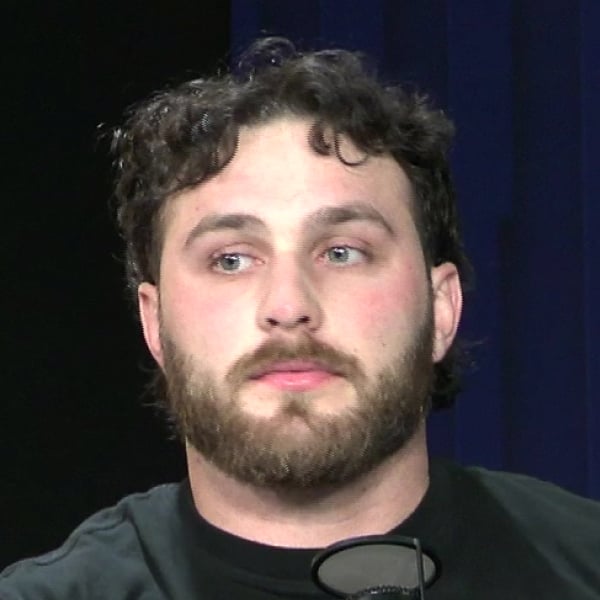
Anatoly is a 3x business owner with companies spanning construction, commercial cleaning, and restoration. Since 2021, he’s built businesses from the ground up across residential, commercial, and government sectors—scaling them to nearly $10M in sales. With a 50% lifetime close rate, Anatoly operates with a simple belief: sales is leadership, and leadership is ownership.
But it hasn’t all been wins. He’s navigated a government contract loss due to compliance issues and faced the difficult decision to shut a business down. Those moments tested his systems, his mindset, and his character. For Anatoly, entrepreneurship isn’t always sunshine and rainbows. He knows firsthand that building something real means pressure, responsibility, and learning the hard way.

SIGN UP FOR the masters of home service newsletter
Get monthly updates with news, tips, and advice on how to run a 5-star business. You don’t want to miss out!
Interested in being a guest on the show?
Are you a home service professional eager to share your insights and experiences? Apply to be a guest on the Masters of Home Service Podcast, and join a community of experts committed to helping others level up through knowledge.
Other Podcasts We Love