 32 Minutes
Want to make $1M Cleaning? Pick Your Path (Residential or Commercial)
With Anatoly Nasarov and Savannah Revis


-
Adam (00:13):
Welcome to Masters of Home Service, the best podcast for home service pros like us. I’m your host, Adam Sylvester, and I want you to crush it in business. Is residential or commercial the best? Is one better than the other? We’re going to settle that debate right now on this show today. I have two guests with me. One is only residential, and the other one is only commercial and government contracts. So it should be fun. We’re going to hash out all the pros, all the cons, all the benefits, all the drawbacks of both. To help you better understand both industries so you can choose what’s best for your company. My first guest today is Anatoly Nazarov. And you do commercial cleaning. Is that right?
Anatoly (00:51):
That is correct, yes.
Adam (00:51):
Why don’t you introduce yourself and tell us who you are.
Anatoly (00:53):
Yeah, most definitely. I’m Anatoly. I own a commercial cleaning company. We do post-construction government contracts and maintenance contracts for commercial buildings. And then I also own two construction companies as well.
Adam (01:05):
Okay. Awesome. Glad you’re here. Thanks for being here.
Anatoly (01:06):
Thank you. All right. Savannah?
Savannah (01:08):
Yeah, my name is Savannah Revis. I own Earth Love Cleaning. We’re a non-toxic, eco-friendly cleaning company.
Adam (01:14):
Awesome. Okay. So you’re all residential. You’re doing some Airbnbs in there. Okay.
Savannah (01:18):
Very small businesses.
Adam (01:19):
Okay. And I get small little office spaces and stuff, but nothing industrial, nothing big commercial.
Savannah (01:24):
No.
Adam (01:25):
Okay. So the complete opposite spectrum of cleaning, you guys are both doing cleaning. And I think it’s so common for people to say, Oh, you do residential. Do you do any commercial? And to commercial people, do you do any residential? And do you guys think there’s value in doubling down and choosing one or the other?
Anatoly (01:41):
I think you need to do one, what you’re familiar and comfortable with because if you take too much, you’ll not be able to handle it. And I’m coming from the perspective of commercial projects. The reason I start a commercial cleaning company is because I’ve done commercial work in construction. And so it’s a very easy swap for, let’s say, right? But even in construction, going from residential to commercial is this big giant leap and a lot of people cannot handle that. And I think if you’re starting a business and cleaning, starting with residential is probably the right choice. 99% of the time, especially if it’s your first time ever running a business. You’re going to get experience with managing crews, you’re going to get experience with customers and payments and invoices, X, Y, Z, and then you could probably grow into it in the future. So yeah, that’s kind of my opinion on it. Yeah.
Savannah (02:23):
Yeah. No, I would definitely agree with that as well. I think commercial, there’s a lot more stipulations and contracts and hoops to jump through and certifications to get and chemicals to buy. So it really adds so many more layers of work to figure out when you’re new. And if you’re somebody that’s young starting, it’s easier to just move into the residential market, I think.
Adam (02:48):
Yeah. Yeah. Do you view it as dipping your toes in the water a little bit without too much risk? In terms of like, you could go out and get a big commercial contract, but then all your people quit, for example, and you can’t fulfill it. Whereas with residential, you have way more clients you’re servicing, but you have more wiggle room, would you say?
Savannah (03:05):
Yeah, I’d say there’s more flexibility, a little more room for error on my side than his.
Adam (03:11):
Yeah.
Savannah (03:11):
I think it also depends on the types of clients that you’re working with.
Adam (03:15):
Which one’s more competitive?
Anatoly (03:18):
I would actually say residential cleaning is significantly more competitive. We’ve taken some residential leads in the very, very early stages of our company while we were bidding these commercial projects, and I mean, I was probably competing against five, 10 people at a time maybe, especially if you’re going through lead platforms, not like word of mouth referrals. Commercial and specifically government contracting
, it’s a bid that is sent out. There’s usually five to 10 people, yeah, but then it’s just lowest qualified bidder wins. And so the bidding process is not a sales, right? It’s not like a sales cycle how we might be used to in construction sales or cleaning sales. It’s literally just whoever has the lowest bid wins this government contract. And so I would actually argue that residential cleaning is harder because you’re competing against so many people, if that makes sense.
Savannah (04:03):
Yeah.
Adam (04:03):
Anatoly, what’s the biggest misconception about, I’m going to ask you the same question about it. What’s the biggest misconception about commercial cleaning and government cleaning?
Anatoly (04:10):
That it’s the right choice. Honestly, I’m going to give you that. I personally would not do residential for a variety of reasons, and I’m sure we’ll discover those through the episode, but I also don’t think that it is for everybody. For one, just the headache that is bureaucracy in itself. You have to be able to get past through a lot of hoops like we were talking about earlier. You also have to be okay with floating payroll and salary for 90, 120, maybe even 180 days, which will destroy some people.
Adam (04:39):
Yeah.
Savannah (04:39):
Yeah.
Adam (04:41):
Okay. What’s the biggest misconception about residential cleaning?
Savannah (04:46):
What a loaded question. I would probably say similar to his, like that it’s easy and that it takes no brain power, but there is a lot of stuff that goes into it, a lot of anticipation of needs and thinking forward-thinking and where you might get caught up, right? Yeah. And also you’re in somebody’s personal home, there’s a lot more that goes into it than a commercial space.
Adam (05:14):
Yeah. What’s the workforce like? And or how is it different between the two, the workforce, the people you hire?
Anatoly (05:21):
I think the actual workforce is probably pretty similar. You hire qualified cleaners or custodians, janitors, whatever it might be, and you just want people who have experience with whatever service you’re providing. So when we do restaurant cleanings, we try to hire people who have restaurant cleaning experience. When we do post-construction, we try to hire people who do post-construction. Now, when it comes to custodial, really, it’s more like following a checklist. So just somebody who is easy to work with, responsible and easy to train. But a lot of our workforces is interchangeable, I would actually say. Yeah.
Savannah (05:51):
Yeah, absolutely. I mean, detail-oriented, right? Somebody they can follow. I always say I’m looking for somebody that is a self-starter, is detail-oriented and can read English.
Adam (06:02):
One of my misconceptions, if we’re going to go there, is that the person who’s cleaning a home needs to be maybe more personal, might need to have better people skills, or definitely English skills, because they’re going to bump into people at their house. But a commercial, they might be cleaning at night or there’s no one around. And so they might not need to have those soft skills that you do. Is that not true?
Savannah (06:27):
No, I would say that’s really true. I definitely think having people that, like I’ve said in the past, having people that are like your move-out clean people or your residential people, your move-out clean people are probably going to not run into a lot of people because it’s an empty home. But the residential staff, they’re going to need to have that personability where they can talk with the client, enter the home, smile, be warm, take their shoes off, do the things that the client’s anticipating them and then move forward, right?
Adam (06:55):
Yeah.
Anatoly (06:56):
Yeah. I agree.
Adam (06:56):
You guys both have insurance, right? How is that different?
Anatoly (07:00):
I mean, we have workers’ comp general liability, then we have to have business auto as well. And without those three, you’re unable to bid on government projects. And typically they want to see at least $2 million policy, and sometimes they want $5 million umbrella.
Adam (07:15):
Wow.
Anatoly (07:15):
Yeah.
Savannah (07:16):
Right.
Adam (07:16):
That’s a lot.
Savannah (07:17):
Yeah. So I’ve actually gotten caught up not having that auto insurance because we don’t really need it with what we do right now, but we were bidding on some really big apartment complexes, and they wanted me to get that insurance. And as I priced it out, I was just like, “This is not worth it for us.”
Anatoly (07:35):
Yeah. It’s $1,000 a month, by the way, for the one car that we have.
Savannah (07:40):
I mean, it’s insane because you’re thinking how much are you going to profit off of this versus that’s what it was. It was like in the thousands. And I think it’s a $2.5 million policy right now and it covers so much, but that one thing that it needed, I didn’t really understand why it needed that. I was like, Why do you need insurance on a car when we’re not doing anything driving why it’s for the job? But obviously, like I said, the hoops, the things that you have to jump through, those weren’t necessarily worth it to me because my business was already over a million. I don’t know if I need to do all of that to continue to grow it. And that’s why I stuck with this market versus going into government contracts because those have always been in the wheelhouse, right? But whether or not they’ve matched how we were running, it makes sense for you, but for me, it’s non-toxic. It just doesn’t really make that much sense.
Adam (08:32):
Yeah. Okay. That makes sense. Anything else in terms of certifications, insurance, licenses, anything like that that we need to know about?
Anatoly (08:40):
Yeah. So most states are different. Not most states. Every state is different. Some states, they don’t require you to be registered with the state to bid. In California, you need to be registered with the DIR, which is the Department of Industrial Relations. In other states, you have to be registered with their government entity. I coach people for cleaning businesses. And so I know Arizona has one and I think Florida also has one because we’ve helped people start in those areas. So you need to be licensed, then you need to be a registered small business. You need to register as a woman-owned business, veteran, or minority-owned business. They only give a certain amount of bids to those groups. And a lot of the cleaning bids are just to those groups. So certified small businesses, anything under 10 million, if I’m not mistaken. So they have bids just for us. Then they have bids just for women-owned businesses, veterans, and minority-owned businesses. So you want to register as much as you can to get those opportunities so you could see it along with higher insurance. And sometimes they want licensing in the state of California for some things like power washing or pressure washing. They want to see, it’s like a C60 license or something, like a non-specific trade license. So in short, yes, you need a lot more licensing to get involved.
Adam (09:50):
Yeah. With residential, you can just basically just start.
Savannah (09:52):
Yeah. Yeah. You just start. There is no thing you need to do really. There are accreditations and things that you can do as time goes on, but we’re not dealing with that level of, I guess, structure. And there’s a lot of rules and there’s a lot of stipulations and there’s a lot of things that have to be done a specific way because they are government, because they are these big buildings with these big insurances and all these different things that are going into it, and there’s much more liability.
Adam (10:23):
Yeah. But the barrier of entry is much easier in residential. So you’re competing against a lot of other people, so that’s the trade off.
Savannah (10:31):
How do you set yourself aside from those people can be one of the reasons?
Adam (10:34):
When it comes to value game, a branding game.
Anatoly (10:36):
Yeah. That’s one of the reasons that we never pursued residential because in the area that I’m at, there might be somebody who’s bidding at 25 or $30 a man-hour for cleaning, for example. And at the end of the day, when I complete a project, I don’t want to make $100. That’s kind of like the mindset because I’m coming from construction. Now I will say in commercial cleaning, government cleaning, it is volume just like it is in residential sometimes. But a lot of times you can get these bigger cleaning projects and it’s a lot lower latency and it’s a much bigger payday. And so it becomes less of a volume game at that point. So that’s kind of when we were thinking, what kind of cleaning business do we want to start? That’s what put us towards this post-construction. That’s the first thing that we started with post-construction and then government and maintenance, if that makes sense.
Savannah (11:20):
Yeah.
Adam (11:21):
This is a great conversation. I want to pause for a minute to talk about Jobber. We’re all Jobber users, both residential and commercial. Anatoly, how has Jobber helped you with run your business, your commercial business?
Anatoly (11:32):
Yeah, it’s quick quotes and easy to provide when we do our private commercial, which I really like. It keeps track of all our government contracts so we could track our close rate pretty accurately. And then those checklists, super, super important for our guys out in the field.
Savannah (11:46):
I would say with the automatic invoicing has been the most helpful for me, especially after a long day and the job checklists and forms. Yeah, they’re very helpful.
Adam (11:59):
If you’re not using Jobber to collect payments, schedule jobs, and do estimates that you are missing out. Go jobber.com/podcastdeal. Get the exclusive discount and go start using Jobber today.
Savannah (12:11):
I think some people like me are just geared towards serving thousands of people and some people are geared the opposite where they just want to have 10 clients. Now, if I lose 10 clients, I’m fine. If he loses 10 clients, he loses all of his clients. But it’s also a lot easier in a lot of ways to manage just 10 clients. So there’s drawbacks to both. Would you say that Savannah, you’re a fan of having high volume, obviously.
Savannah (12:38):
Yeah.
Adam (12:38):
You like having a lot of people.
Savannah (12:39):
Yeah. I prefer volume. I think there’s a little bit more safety in volume. I’ve actually been in a position where after three years, we had put a lot of our eggs into one basket. And when we lost that contract, we lost 75% of the work we had.
Adam (12:56):
Oh, wow.
Savannah (12:57):
And learning that in that hard lesson taught me that I didn’t want to have more in residential or short-term rental like Airbnb. I wanted to have kind of both, but I needed just volume to ensure that if something were to happen, that we have all these other clients to fill the schedule with.
Adam (13:14):
Anatoly, how do you make sure that you don’t lose one big, huge commercial client?
Anatoly (13:19):
In these bids and in these packets, there is a scope of work. As long as you fulfill the scope of work and it gets signed off by the project manager from, we’re doing Department of Transportation. As long as they sign off, we’re completed, we’re getting paid. And to your point too, it’s office buildings, it’s service stations. It is not as intensive to pass as a home cleaning. Because there’s high foot traffic, it’s a lot dirtier. The expectation I’d actually say is slightly lower because of all these existing conditions. If I vacuum this room and then we know 20,000 people are going to walk through it tomorrow, you get what I’m saying?
Adam (13:56):
Yeah.
Anatoly (13:56):
Versus they go clean a house and it’s just a family.
Adam (13:59):
They come home and they see it the first time.
Savannah (14:00):
It’s not absolutely perfect. We have an issue here. Yeah.
Anatoly (14:04):
So I will actually say that to kind of counter your guys’ points, it’s harder to get in, but once you’re in there and as long as you’re executing, it’s pretty hard to get kicked out. You have to be doing a bad job basically, or you have to be not following the structure. Now, a lot of these contracts, they have literally written in the contracts, we could end this contract at any given time for any given moment. Which is direct verbiage, but there’s a process. And usually the people that you work with, they’re understanding. We’ve obviously made mistakes. Our crews have done wrong things. We’ve had to go back for corrections, but as long as everybody’s understanding, we’re okay. Another thing I really like about government work specifically, not post-construction, they’re typically 12 to 36-month contracts. So we clock it in and we know for the next three years, this is on our booklet basically, which is creating that recurring revenue model, which I know you guys do in home servicing too, like recurring cleans or things like that, but we’re able to lock it in for a lot longer. And also the government’s going to pay. Even if they pay late, they’re going to pay. Yeah.
Adam (15:05):
Huh. Okay. So you’ve got a three-year contract, which means that pretty much the same guy is going to the same place, the same time. It’s very consistent. It sounds like to me, and maybe this misconception though, is that there’s a lot more consistency with commercial. Whereas residential, Ms. Jones might ask for this week. She might ask for something different next week and make sure you plug this in, charge that. All these different little specialty things.
Savannah (15:30):
Nuances.
Adam (15:30):
Nuances.
Savannah (15:31):
Yeah. Yeah, absolutely.
Anatoly (15:32):
For us, scope of work, you do the scope of work, nothing extra. There are no change orders on these contracts. You just fulfill them. The service ones, we have a checklist. We put it into Jobber for our people to look at and they just mark it off as they go. I have a floor cleaning contract with the Department of Transportation in the city of Oakland in California, and we only do floors. We do carpets, tiles, and linoleum. That’s all we’re doing. There’s no change orders, there’s no extra money. And so we fulfill it and we go on and it’s there. And we know what we’re doing for the next three years. Exactly.
Adam (16:05):
Yeah. There’s value to knowing and being predictable for the next few years. What about branding is different? Because my perception about commercial is that branding doesn’t really matter that much.
Anatoly (16:14):
Zero.
Adam (16:14):
At all.
Anatoly (16:14):
Zero.
Savannah (16:15):
It doesn’t.
Anatoly (16:16):
We have no reviews. We don’t advertise. Very low overhead. Our philosophy with our businesses, how do we make it as low latency and productive as possible? And commercial, they don’t check reviews, they don’t care about this. They just care that you can fulfill the work and that you are the lowest qualified bidder. That is it.
Adam (16:33):
Well, let’s talk about that a little bit. You’re being the lowest qualified bidder. Do they literally just take the cheapest guy?
Anatoly (16:39):
Yeah, qualified. So that means they’ll do a bid process. And how the bid process works is everything starts as an RFP or RFQ, request for quote, request for proposal. Let’s say we got that today. They’d have a mandatory walkthrough, sometimes it’s non-mandatory like a week from now. After that mandatory walkthrough, they have a due date. It’s like two weeks out. Everybody submits their bids on the due date. Everybody’s bid is read out loud, so everyone knows what you did. So at that point, you know where everyone was at and you know who is the lowest bidder. Then they do a due diligence period, which is typically a month. And in that month, they just make sure you have all the qualifications. Are you a small business? Do you have the right insurance? Do you have this one page that you signed? Are you not an enemy of the state? These are the things we have to sign. And then after that, then they announce the actual winner. So if the person is the lowest bidder, but they’re not qualified, then it goes to the next person up, the next person up. So we’ve won a contract where we have not been the lowest bidder, but the two below us were not qualified, if that makes sense.
Adam (17:39):
Yeah. On average, how many bids do you put in, in a year?
Anatoly (17:43):
Well, I put in four last Monday. I don’t know. We do a bunch. There’s a bunch. There’s hundreds of thousands of these. There’s some through the federal government, which is Beta SAM. Then your local state’s going to have its own procurement. We have eProcure in California, and the county’s going to have one, the housing agency’s going to have one, and you could purchase a bid board and see them all the time, but there’s thousands of them. Yeah.
Adam (18:05):
I’ll be darned. Obviously, Savannah and I, we’re similar. I don’t know anything about this world. It’s pretty fascinating. So you’re constantly putting a lot of bids. That means you don’t get very many bids, it sounds like approved. But when you do get one, you get a big one.
Anatoly (18:19):
Yeah. Yeah. So our average, what? We bid three DMVs and they were all over three years though. They were all like $200,000 contracts. And so you’re just hoping to keep picking them up along the way. And so our goal is to have a few million at a time. Right now we have like 850,000 of GovWork won in this past 12 months. And so we’re just keep bidding it basically and keep going. Yeah.
Adam (18:45):
Last question about that. Do they automatically renew after three years automatically or do you have to rebid?
Anatoly (18:50):
Rebid, new system. In some of them, they even have verbiage that’s like, after three years, we could extend it by a year if we want to. Or they could have it. It’s a three-year contract, but we could cancel after 12 months. And so there’s a bunch of different things, but no, once the contract’s over, new bid, new RFP, whole process starts over.
Adam (19:08):
And who decides the terms of the contract? The bidder or the.
Anatoly (19:11):
The government. Okay. No say. You literally have no say. If you think something’s not supposed to be done this way. One of my cleaners, Carlos, he’s actually the head of our janitorial staff, he’s like, Hey, this should not be done this way because of X, Y, Z. It’s supposed to be done in a reverse order. We go up to them. They’re like, No, that’s how it’s written. That’s how it’s going to be done.
Adam (19:33):
Yeah. Savannah, you’ve never really gotten a commercial for a reason. Your brand matters, your non-eco. Or what is it? Eco-friendly stuff matters, no chemicals, that kind of thing. What’s the main thing that drives you to stay residential?
Savannah (19:47):
My connection with my clients. Yeah. I really love people. I’ve always been a people person. I came from the hospitality industry, so it just feels right to be able to connect with people, to be able to have that personal touch where I know that we’re helping them, their family, their kiddos. The mom’s coming home from work feels relief because the house is super clean. So I really think that social emotional part for me is why I’ve stuck with it. I’m super familiar with all of the government contracts and all of that, but we’ve talked about the hoops and the cost just has not really ever seemed like it was right. Is it always in the back of my mind? Yes. But my families and the people that we work directly with are why my community and my brand is so strong where it is.
Adam (20:35):
Yeah. To me, it sounds like residential is more relational and commercial and government is purely transactional.
Anatoly (20:42):
Transactional.
Adam (20:43):
Both are fine, obviously. Both are fine. Amazon’s transactional. I use them every day. So you just love the relational part of the business. And if in a perfect world, you just have more, more of those relationships, essentially. Absolutely. And in your case, Anatoly, you’re just one of the big-ticket transactions.
Anatoly (21:01):
Yeah, for the most part. I mean, well, for this business specifically, yeah.
Adam (21:05):
Other businesses that’s different.
Anatoly (21:07):
But this business, commercial cleaning. Yeah. We want to do post-construction. We want to do restaurants, which are high ticket, and we want to do these commercial maintenance contracts, and that’s it. We’re building a business. We hope to employ a lot of people, but yeah, that’s it at the end of the day. Yeah.
Adam (21:20):
What do you guys think about the kind of work that your team likes? I once hired a guy who, after about two weeks, because he’d worked commercial before and he came with me and he was like, We go to 20 people in a day. And I said, Well, yeah, what did you expect? He goes, Well, I’m used to going to one place a day and just camping out there for the whole time, eating lunch there, not leaving. And I was like, Well, that’s a lot different, man. He goes, Yeah, I don’t like this. And he left and went back to commercial. Do you find that your different people appreciate and like different things?
Savannah (21:51):
Yeah.
Adam (21:52):
And that goes into the equation, I think.
Savannah (21:54):
I tend to hire people from the service industry, so restaurants. I look for people specifically from restaurants because they know how to multitask, they know how to run a checklist and a task list that has to be done because usually side work at the end of the night requires something like that. They also have the personability. So if they’re speaking to somebody face-to-face, they’re able to execute that in a way that has manners, poise, kindness, empathy, all the things. And then also they tend to know how to clean because usually in restaurants you have to clean up. You got to clean. So you can follow those details. Those people tend to do really well. And anybody that’s been in- home health, like nurse care for elderly people in their home, because a lot of those tasks tend to be taking care of the space and cleaning.
Adam (22:41):
Yeah. And I’m going to make a guess here. I think it’s pretty good guess that if you take one of your house cleaners and then go put them in a dark commercial building over in the night shift to clean, clean floors all by themselves maybe. I’m not sure if it’s alone, they might not like that. They might, I want to work beside somebody. And is that true?
Anatoly (23:00):
Yeah, it might be. And people like different things.
Adam (23:04):
Personalities.
Anatoly (23:05):
Yeah. Yeah. I’ve done commercial construction, which is like, it is like transaction, it is project management, it is paperwork, it is a job. And then residential construction is more like the Wild, Wild West, which is a lot more fun to me, which is probably like relatable in this cleaning sense as well. But I don’t know. A lot of times residential cleaners or people who have been in residential, maybe they’ve never used a carpet extractor to the size that we use or maybe they’ve never done floor buffing or maybe they’ve never done these things. But no, we work in teams for the most part. I have eight to 10 people cleaning this open building. You get swarm.
Adam (23:39):
That’s what we call. We swarm.
Anatoly (23:40):
That team, and shout out my team who’s cleaning the Caltrans building in Oakland, they’re doing like 20, 30,000 square feet a day of cleaning of these floors. Yeah. And then our contract down in Southern California, we have two people, basically one services one outlet, and then the other person services six locations. But I think if you put a residential cleaner into commercial, they would transition just fine as long as they learn how to use the equipment. And I think all the other way, if you take a commercial person and you put them into residential, they’ll also do fine. I think the hard skills are the same, but yeah, maybe some of the commercial guys, they’re a little bit rougher maybe.
Savannah (24:23):
I’d say commercial’s a little bit more masculine, whereas residential’s a little bit more feminine, right?
Anatoly (24:29):
I can see that. Yeah. It’s like a good. Yeah, like Aura. Yeah. Yeah. I feel it. I get that. I can see that.
Adam (24:34):
Totally.
Anatoly (24:34):
Yeah.
Adam (24:35):
I want each of you to take a turn and advise our listeners. If they wanted to get in your industry, maybe they want to switch or not switch, but get into a new industry, what would be the first step for commercial, first step for residential?
Savannah (24:48):
I’d say for residential is knowing what you’re going to be using supply-wise and how you’re going to structure your cleans, like what’s going to be included in your basic package, your deep clean, and are you going to have hourly rates? Are you going to have flat rates? Those are the main important things to really structure out before you start so you can kind of know what your profits are going to be, how much you’re going to be spending, and if it’s even going to be worth it in the long run.
Adam (25:15):
Yeah. Yeah.
Anatoly (25:17):
Yeah, that’s really good. I think a lot of that actually is the same for commercial, but if you’re in residential and you want to switch to commercial, one would be registering with the state or the government. Two is definitely getting that insurance because even if you win a contract or you’re bidding a contract, you’re going to have to get at the end anyways. And then at that point, that’s it. A lot of equipment you could rent, which even we do because the cost of maintenance on a lot of this equipment is very expensive and it’s very expensive to buy. Some of these carpet cleaners or the floor scrubbers, they’re like five, 10, 15,000. We have a $60,000 contract, 30 of it’s going to labor. I can’t have another 30 going to equipment, right? So I definitely don’t think equipment’s the most important. I think it’s more just getting that backend paperwork done.
Adam (26:02):
In residential, your cleaners are subcontractors to 99s, right? Savannah. Are yours to 99?
Anatoly (26:08):
It depends. So we can 1099 people, but we cannot use subcontractors on at least the contracts that I have. Some contracts allow you to use subcontractors. So even if we use somebody who has their own business, they have their own cleaning business or whatever, we have to employ them to 99, or sometimes we have to W2 them. So we have a mix of both.
Adam (26:28):
California is a little bit different, I think.
Anatoly (26:29):
Yeah. It depends on what is written in the contract.That’s basically it. And if I just, in other industries, let’s say contracting, you could use 1099, you could use subs all day. It doesn’t matter. For my two contracts that I have, no subcontractors, everyone has to be employed by me. And we also have to pay prevailing wage. And that is all across the entire United States. You pay prevailing wage, it is a wage that is set by the government and you have no control over that.
Adam (26:55):
Really?
Anatoly (26:56):
Yeah. Yeah.
Adam (26:57):
Whoa.
Adam (26:58):
Interesting.
Anatoly (26:58):
And so ours is in California, it’s $14 or $15 base pay plus $14 or $15 in benefits is what they call it. So if I wanted to cover benefits, I would pay them $15 an hour, and then I would have to cover $14 an hour in benefits, which goes to insurance, pension, whatever, whatever, right? Or you could do cash equivalent. So that’s what we choose to do. So we just pay them the $30 an hour cash instead of the benefit package. So they get a little bit more money, but then we don’t carry insurance on them.
Adam (27:26):
Right. Interesting. Okay. Last question. A lot of times I think people try tow the line between like, Well, I do a little bit of both. And I think that’s possible and here’s why I think it’s possible. I think that if you’re going to have these long floats, like you said earlier, Anatoly, about sometimes you don’t get paid for six months, a residential side of the business that’s cash flowing constantly can be really helpful in a situation like that. But I also think, don’t you guys agree that our listeners just need to be, just do it. They need to be intentional. They need to choose. I really strongly advise people not to wander into one or the other. You need to have a plan. You need to do it intentionally and not to be like, Yeah, wake up one day like, I guess I do both now, commercial and residential. I think they need to have a plan for both. Would you guys agree or add to that?
Savannah (28:11):
I would say you need to have a why for everything, or you won’t have the drive to hold you to that when the problems start to arise, right? So what would be your why? Are you trying to open more revenue in jobs for your cleaners or are you just not doing that well in this department? So it’s really knowing why so that you can use that to fuel every step you take forward.
Anatoly (28:32):
Yeah, I agree with that. And then for us at least these commercial projects that they might net 60 us, which is really like a net, like I said, 90 or plus. That’s why we do have post-construction or we have these restaurant cleanings or service contracts with commercial that is not government, so we bill them weekly. But I am a commercial cleaner and that’s what I’m sticking to and I don’t want to be a residential cleaner and I’m sure you would say the same thing. And so I do agree with you. There are people who do both all the time and maybe they’re successful, maybe they’re not. But for me, I see it like I’m a commercial cleaner and I’m going to clean on the commercial side and that’s what I want to do.
Savannah (29:07):
There is something to be said about niching and choosing a direct path and really focusing on that and being an expert at that before you expand to another form. So I think if you find one and you can stick with it and you can really pour your heart into that, you can grow that better than if you’re trying to get 50% here and 50% there.
Adam (29:29):
Yeah. The largest house cleaning companies don’t do commercial, and the largest commercial companies don’t do residential.
Anatoly (29:36):
Yeah.
Adam (29:36):
There’s a reason for that.
Anatoly (29:36):
100%.
Adam (29:37):
Yeah. Well, this is a great conversation. I appreciate all the insights on between residential versus commercial. These are the three things I see are the biggest differences. Number one is cash flow. With residential, you’re going to be cash flowing every day, every week constantly, and you’re never going to be really waiting for your money for the most part. But with commercial and governments, you might be waiting 30, 60, 90, 120 days, maybe even more to get your money, which might be okay because it’s a big payout, but if you need that cash, it can be really stressful. So you got to plan for that accordingly. Number two is branding. With residential, you’re going to put a lot of emphasis on your brand. It has to be warm, has to be friendly, has to be professional. With commercial and government, that doesn’t really matter that much. And it just becomes an overhead cost that isn’t necessary. And so when you’re looking at residential or commercial, the brand might be a big factor for you. Number three is one is relational and one is transactional. Both are fine, but if you tend to be more of a people person and you really just care about the vibe of the company, residential might be better for you. But if you care about bigger transactions and bigger contracts, then commercial or government is probably the way that you should go. Thanks guys. That was awesome.
Savannah (30:48):
Thank you.
Adam (30:49):
How do people find out more about you, Savannah?
Savannah (30:51):
You can find us at earthlovecleaning.com, or you can find me at Savannah Revis on LinkedIn.
Anatoly (30:56):
Nice. And you can find me @average.bro.aesthetics on Instagram and TikTok, as well as my cleaning page, which is @npcleaners on all platforms.
Adam (31:07):
Cool. Anatoly, you’re crushing it in the commercial. Savannah, you’re crushing residential. Keep it up with you guys.
Anatoly (31:11):
Thank you.
Adam (31:12):
On the next episode, we’re breaking down how simple automations can give you hours back every week. From lead follow-ups and review requests to client check-ins and data dashboards, we’ll show you how to build systems that run in the background so you can focus on growing your business, not just managing it. Follow or subscribe today so you don’t miss out. Thanks for listening. I hope that you heard something today that will help you better understand the differences and the benefits and the pros and cons of residential and commercial. I’m your host, Adam Sylvester. You can always find me at adamsylvester.com. I want to hear from you. Let me know what you think about the podcast. Your family, your team, and your clients deserve your very best, so go give it to them.
About the speakers
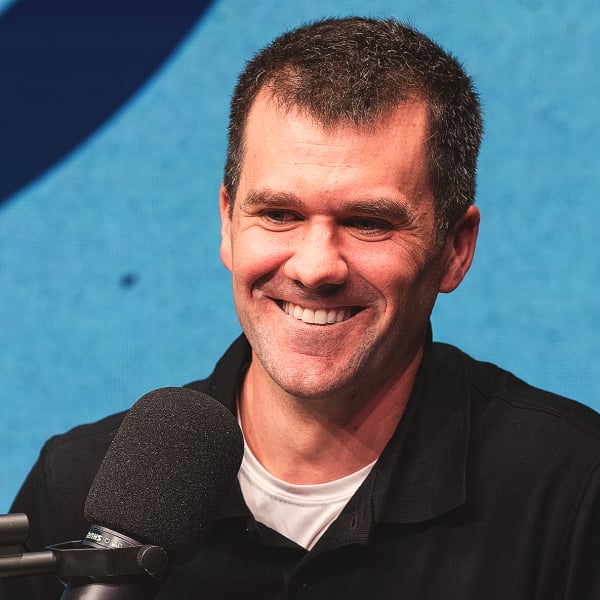
Adam Sylvester
CHARLOTTESVILLE GUTTER PROS AND CHARLOTTESVILLE LAWN CARE
Website: adamsylvester.com
Adam started Charlottesville Lawn Care in 2013 and Charlottesville Gutter Pros in the fall of 2020, in Charlottesville, VA. He likes to say, “I do gutters and grass! When it rains the grass grows and the gutters leak!” He got into owning his own business because he saw it as a huge opportunity to generate great income while living a life that suited him. He believes that small companies can make a serious impact on their communities and on every individual they touch, and he wanted to build a company that could make a big difference. His sweet spot talent is sales and marketing with a strong passion for building a place his team wants to work. Adam values his employees and loves leading people. While operations and efficiency is not something that comes naturally to him, he is constantly working to improve himself and his business in these areas.
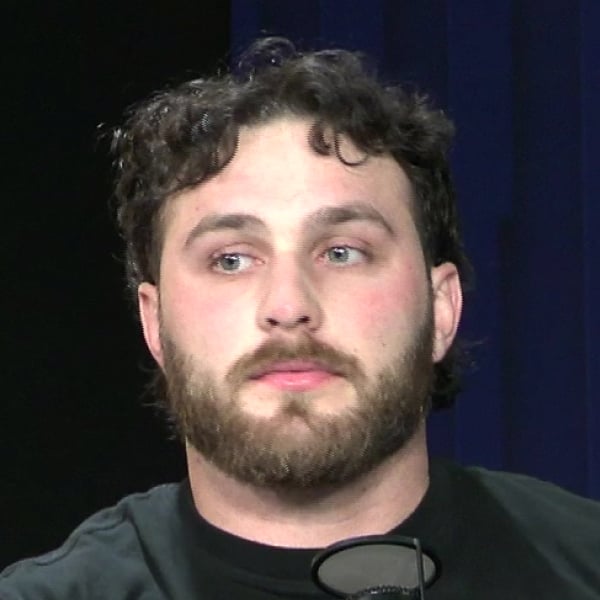
Anatoly Nasarov
N&P Cleaners
Instagram: @average.bro.aesthetic
TikTok: @average.bro.aesthetic
Anatoly is a 3x business owner with companies spanning construction, commercial cleaning, and restoration. Since 2021, he’s built businesses from the ground up across residential, commercial, and government sectors—scaling them to nearly $10M in sales. With a 50% lifetime close rate, Anatoly operates with a simple belief: sales is leadership, and leadership is ownership.
But it hasn’t all been wins. He’s navigated a government contract loss due to compliance issues and faced the difficult decision to shut a business down. Those moments tested his systems, his mindset, and his character. For Anatoly, entrepreneurship isn’t always sunshine and rainbows. He knows firsthand that building something real means pressure, responsibility, and learning the hard way.

Savannah Revis
Earth Love Cleaning Co.
Instagram: @earthlovecleaningco
LinkedIn: Savannah Revis
Savannah Revis is the founder of Earth Love Cleaning Co., a Colorado based eco-friendly cleaning company she built from the ground up into a seven-figure operation. Starting as a young mom with a vision and a mop, Savannah turned her side hustle into one of the fastest-growing non-toxic cleaning brands in her region, serving hundreds of homes and short-term rentals each month. She’s known for her sharp systems, high standards, and deep commitment to community. Through Earth Love Cleaning Co. and her coaching work, Savannah empowers women to scale service-based businesses with integrity, sustainability, and confidence. Her story is rooted in resilience, grit, and the belief that anyone can build something extraordinary from nothing.

SIGN UP FOR the masters of home service newsletter
Get monthly updates with news, tips, and advice on how to run a 5-star business. You don’t want to miss out!
Interested in being a guest on the show?
Are you a home service professional eager to share your insights and experiences? Apply to be a guest on the Masters of Home Service Podcast, and join a community of experts committed to helping others level up through knowledge.
Other Podcasts We Love