How to Start a Commercial Cleaning Business in 2026: 14 Practical Steps

Key takeaways:
Starting a commercial cleaning business in 2026 is a promising venture with strong income potential and high demand from a variety of corporate clients.
- Build your expertise and plan strategically. Develop commercial cleaning skills, consider relevant training or certifications, and create a comprehensive business plan that outlines your services, pricing, target market, and growth strategy.
- Decide how to operate and get financing. Choose between franchising or going independent based on your resources and goals; secure startup funding through savings, loans, grants, or credit as needed for equipment, insurance, and marketing.
- Establish your business legally and financially. Select a legal structure (sole proprietorship, partnership, or LLC), register your name, get necessary licenses, and open a business bank account for organized finances.
- Offer in-demand services and set profitable prices. Identify key commercial cleaning offerings, price services strategically based on market research and job needs, and ensure your business is covered with the right insurance.
- Market and grow your business for long-term success. Implement a marketing strategy using online and offline channels, leverage tools like Jobber to streamline operations and customer experience, and hire staff as your business expands.
Stay up to date with more commercial cleaning business tips—sign up for the Jobber Newsletter. Sign up here.
Starting a commercial cleaning business can generate a steady income and give you a rewarding career. In fact, commercial cleaning businesses can make $200,000 to over $1 million in annual revenue with a 15–20% profit margin.
It’s also an industry with high demand. That’s because commercial cleaners focus on office buildings, hotels, apartments, malls, restaurants, and other corporate facilities that need regular cleaning services.
In this article, we’ll show you how to break into this thriving industry and how to start up a commercial cleaning business. Find out how to offer a high-demand service with great potential for long-term profit.
(Curious about residential cleaning instead? Learn how to start a cleaning businessthat serves residential clients.)
Learn how to start a commercial cleaning business from scratch in 14 steps:
-
Develop your cleaning skills
-
Plan your commercial cleaning business
-
Choose between franchising and operating independently
-
Get business financing
-
Pick a legal business structure
-
Choose a commercial cleaning business name
-
Register your commercial cleaning business
-
Open a small business bank account
-
Decide which cleaning services to offer
-
Price your cleaning services
-
Get commercial cleaning business insurance
-
Purchase equipment and cleaning supplies
-
Create a commercial cleaning marketing strategy
-
Hire cleaners to grow your business
1. Develop your cleaning skills
Make sure you have the cleaning skills needed to service commercial spaces and keep your clients satisfied. If you don’t already have general cleaning skills, it’s a good idea to work at a local commercial cleaning company.
You don’t need any special training or certifications to get started. But if you want, you can pursue optional training at a community college or trade school, or become ISSA-, OSHA-, or IICRC-certified.
Training and work experience can give you an advantage over competitors. It’ll also teach you how to safely use cleaning equipment, apply the correct cleaning chemicals, and provide the best results to clients.
2. Plan your commercial cleaning business
Figure out how your cleaning business will operate and write it down in a business plan. Your business plan clarifies your goals, defines your brand, and helps you make strategic decisions about your company.
It’s also a critical step if you plan to get business financing. Banks and potential investors need this information to understand whether your business is a safe venture to support.
Your commercial cleaning business plan should include the following:
- Cover page and table of contents for easy reading
- Executive summary or “elevator pitch,” including how much funding you need
- Overview that summarizes your business model for commercial clients
- Services list and pricing strategy, showing which commercial cleaning services you’ll offer at specific price points
- Target market research showing how many potential clients are in your service area, what problems you can solve for them, and how much they’re willing to pay for cleaning services
- Competitive analysis that outlines competing commercial cleaning businesses and what sets your company apart
- Marketing plan to reach potential clients, including channels and costs
- Employee planning that describes whether you’ll work alone, add partners, or hire a team of cleaners
- Timeline for growth, including estimates for expanding labor and operational costs
- Financial projections, including how much you think you’ll make in the first year, how many commercial cleaning contracts you need to find, and what you plan to pay yourself
READ MORE:Unique cleaning business ideas to kickstart your company
3. Choose between franchising and operating independently
Decide whether you want to buy into a commercial cleaning franchise or start an independent business. There are pros and cons to each business model, so let’s take a closer look at both.
| Model | Best for | Costs | Pros | Cons |
|---|---|---|---|---|
| Franchise | Entrepreneurs who have investment money and want to launch quickly | • Startup: $1,625 to $2,100+ • Franchise fees: $1,000 to $300,000+ | • Clients may already know and trust the brand • Proven business model with established processes and tools, like a franchise CRM • Brand and marketing support from the head office | • Royalty fees (a percentage of revenue or sales) • Must closely follow the parent company’s business operation requirements |
| Independent | Owners with a smaller startup budget who are willing to put in the work and want full control over decisions | • Startup: $1,625 to $2,100+ | • Lower operating expenses • Can create your own processes and use preferred tools • Full freedom to make business decisions | • No support when getting started (except from your personal network) • More risk in starting the business |
READ MORE: Is a cleaning franchise worth it?
4. Get business financing
Get the startup funding you need to pay for cleaning equipment, supplies, insurance, marketing, transportation, and other business expenses. These are a few common ways to secure the capital you need:
- Personal savings: A common way to fund a new business is by using your own savings. This helps you avoid taking on debt with monthly loan repayments or interest. However, make sure to maintain a personal financial safety net in case the business takes time to earn a consistent income.
- Business loan: Get a small business loan, government funding, or business financing to help cover startup costs. These loans can provide plenty of capital, but they require regular repayments and interest. Your approved loan amount also depends on factors like your credit score, financial history, and business plan.
- Credit card: A business credit card can cover smaller startup expenses, like supplies, fuel, or marketing costs. Credit limits are determined by your credit profile and financial history. While they’re convenient, credit cards usually have higher interest rates than traditional loans. If you use a credit card, do it strategically and pay it off quickly.
- Small business grant: Programs like Jobber Grants provide startup capital to help entrepreneurs get their small businesses off the ground. If you’re selected for a grant, you don’t need to pay it back. This gives you no-strings-attached money to cover all your startup expenses.
How much does it cost to start a commercial cleaning business?
In the United States, you can often start a commercial cleaning company for $1,625–$2,100 (USD). That total includes:
- Business license and registration ($75–$400/year)
- Commercial cleaning business insurance ($450/year)
- Commercial cleaning software ($400+/year)
- Branded uniform and comfortable, waterproof shoes ($50–$200+)
- Commercial cleaning products and equipment ($500)
- Self-made website and business cards ($150)
If you’re starting a commercial cleaning franchise, factor in franchising costs and royalty fees. Franchising costs are anywhere from $1,000 to $300,000, depending on the franchise, and royalties are a percentage of sales or revenue.
5. Pick a legal business structure
Choose a business structure and form a legal entity. Although this process can change based on where you live, you’ll most likely pick from the following options:
- Sole proprietorship: In the U.S., you can register as a sole proprietor, which gives you complete control over your business entity. Sole proprietors assume responsibility for the business assets and debts.
- Partnership: If you’re going into business with two or more people, you can register as a partnership. Because there are different types of partnerships, it’s best to check with your legal representative or within your jurisdiction for specific partner benefits.
- Limited liability company (LLC): If your business is medium or high-risk, or if you want to limit your personal liability, consider forming an LLC. You can also manage liability (and protect your personal assets) by forming an S-corporation.
READ MORE:Should I incorporate my small business?
6. Choose a commercial cleaning business name
Pick a cleaning business name that sounds professional, stands out from competitors, is easy to say and remember, and isn’t already in use. Here are a few ideas to get you started:
- Achieve Cleaning
- Adept Cleaning
- Blue Sky Cleaning
- Cleaning Unlimited
- Guaranteed Clean
- Impact Cleaning
- Inspire Cleaning
- Pinnacle Cleaning
- Pro Cleaning
- Optimum Cleaning
Don’t forget to brand your business and add your branding to your uniform, business cards, and advertising. Hire a designer or create a unique logo, or use free online tools to get started.
7. Register your commercial cleaning business
Once you have a name, register your business with your local registry for tax purposes. Here are a few country-specific requirements you should know about:
- United States: Check to see if anyone else in your state is using the same name, then trademark your small business name and register your domain name.
- Canada: Register your trade name and trademark it to protect your brand. If your business entity has the same name as you, you don’t need to register it.
- United Kingdom: Register as a sole trader or business partnership, make sure your name is available and not trademarked, and register your company name.
- Australia: Register your business name through the Business Registration Service, ASIC, or a private service provider. You don’t have to register if your business operates under your personal name.
Apply for an employer identification number (EIN) if you have employees or plan to hire them in the near future.
You may also need to sign up for a general business license to operate in your town, city, or state. If you don’t know local regulations, just Google “YOUR CITY NAME + business laws”.
8. Open a small business bank account
Sign up for a business bank account to keep business payments and cash flow separate from personal expenses. This makes your business look more legitimate to clients, and it makes your financial reporting easier at tax filing time.
Here’s what you need to set up a business checking account:
- The business’s name and address
- Your legal name, birth date, and address
- Your business’s EIN (or your SSN/SIN)
- Valid government-issued personal ID
While you’re at it, you can also apply for a new business credit card to start building credit history and securing startup materials. Choose a card with a low interest rate that offers rewards for every dollar you spend.
You should also invest in accounting software like QuickBooks Online. This helps track income and expenses so you can file taxes with the Internal Revenue Service (U.S.), Canada Revenue Agency (CA), Companies House (UK), or Australian Taxation Office (AU).
READ MORE:30 small business tax deductions to save money when filing
9. Decide which cleaning services to offer
Determine the types of cleaning services you’ll provide to commercial clients, along with pricing for each. You can offer commercial and industrial cleaning services such as:
- General commercial and office cleaning
- Janitorial service
- One-time cleaning service
- Weekly cleaning service
- Monthly cleaning service
- Floor cleaning
- Floor waxing and restoration
- Trash removal
- High dusting (vents, ceilings)
- Deep cleaning
- Carpet cleaning services
- Window cleaning
- Sanitizing and disinfecting
- Event cleanup
- Construction cleanup
- Flood or fire cleanup
- Power washing
- Hazardous waste disposal
Pro Tip: Check out local commercial cleaners online to find any service gaps. For example, if competitors don’t do ceiling cleaning, offering that service in your cleaning proposals will make you stand out.
What’s the difference between commercial and residential cleaning?
Commercial and residential cleaning have similar types of cleaning tasks, but they vary in several important ways:
- Location: Residential cleaning focuses on private homes such as houses, apartments, or condos. Commercial cleaning, on the other hand, involves cleaning business facilities such as offices, retail stores, medical clinics, warehouses, and schools.
- Focus: Residential cleaning involves maintaining home cleanliness, including vacuuming and mopping floors, wiping down surfaces, and cleaning bathrooms. For commercial facilities, the focus is on sanitation and safety. Tasks can include restroom sanitation, floor care, trash removal, disinfection, and sometimes specialized services like carpet cleaning or floor waxing.
- Contracts: Residential cleaning is usually short-term or recurring. Clients often book services weekly, biweekly, or monthly, and they can cancel or change providers easily. Commercial cleaning is commonly contract-based. Businesses sign agreements lasting months or years, especially for facilities that need regular maintenance.
- Sales: You can quickly get residential cleaning clients through referrals, online listings, or local advertising, often within a few hours or days. Commercial cleaning has a longer sales cycle, usually weeks or even months. Businesses will request quotes, compare vendors, and sometimes issue formal requests for proposals.
- Pricing: Residential cleaning is usually priced per visit or by the hour, with rates depending on the size of the home and level of cleaning required. Commercial cleaning is often priced per square foot, per building, or through fixed monthly contracts, especially for ongoing maintenance services.
- Scheduling: Residential cleaning is usually done during the day, when cleaners can easily access homes. Commercial cleaning is often done after business hours to avoid disrupting normal operations.
- Payments: House cleaning clients pay right after the service or on the same day, often in cash, by card, or by e-transfer. Commercial clients operate on invoicing terms (i.e., net 15, 30, or 60), meaning they pay several weeks after service. This means the cleaning company needs stronger cash flow management to stay afloat.
LISTEN: Want to make $1M Cleaning? Pick Your Path (Residential or Commercial)
10. Price your cleaning services
Set competitive yet profitable prices for your services so you can reinvest in the business. To do that, you’ll need to understand your operating costs, market rates, and the specific needs of each job.
There are a few ways to price commercial cleaning jobs:
- Square footage rate is one of the most common types of cleaning rates. The average rate in the U.S. is $0.07–0.12 per square foot. In large spaces, pricing by square foot adds up fast.
- Hourly rate includes your labor cost per hour, plus overhead. You can charge $25–100 per worker per hour to cover costs and turn a profit. Hourly rates are best for lengthy tasks or if you don’t know how long a job will take.
- Flat rate pricing provides one predictable cleaning cost for the entire job—for example, $300 per cleaning. This rate works well when you know exactly how much time it’ll take to complete the job, since you’re rewarded for working faster.
- Room rate calculates the cleaning cost based on the number of rooms in the building—say, $75 per room. It works best in office buildings with multiple small rooms. (You wouldn’t want to set the same price for larger spaces, like cafeterias.)
To stay profitable, your pricing should factor in labor, supplies, and overhead. You should also charge more for specialty services, like sanitization, carpet cleaning, appliance cleaning, or disaster restoration.
Cleaning pros are fast, friendly, and deeply customer-focused, but often underprice their value.
11. Get commercial cleaning business insurance
Sign up for a commercial cleaning insurance policy that protects your business in case of property damage or employee injury. This reduces the risk to your business and helps protect your personal assets.
Policies start around $450/year for a business owner’s policy, which should include:
- General liability insurance in case of property damage or bodily harm
- Commercial property insurance for damage to your equipment or place of business
- Business income insurance to keep cash flowing after an incident or disaster
You can also add extra coverage to your small business insurance policy to cover the following:
- Commercial auto insurance if you drive a company car or truck
- Workers’ compensation insurance in case an employee is injured on the job
- Professional liability insurance for claims and lawsuits over professional mistakes
- Employment practices liability insurance for employee-related claims
- Crime insurance in case of criminal activity, like theft or vandalism
- Cyber liability insurance in case of a security breach or data leak
- Key person insurance to keep the business going if you physically can’t work anymore
- Commercial umbrella insurance for extra coverage on top of your other policies
Your business should also be bonded, which protects you if an employee steals or damages client property. Many clients prefer to work with bonded cleaning companies, making it a worthwhile expense.
12. Purchase equipment and cleaning supplies
Get the cleaning business supplies you need to do the job properly. Many commercial cleaners use janitorial suppliers like ULINE to save money when buying equipment.
Some of the best products may cost a bit more, but they’re more likely to last without frequent replacements. When you’re starting out, plan to spend $500+ (USD) on commercial cleaning tools, equipment, and supplies like:
- Supply cart
- Mop and bucket
- Broom and dustpan
- Vacuum cleaner (industrial/handheld)
- Multi-purpose cleaner
- Spray bottles
- Disinfectant
- Microfiber cloths
- Sponges, magic erasers, and steel wool
- Dusters (long/short)
- Glass/window cleaner and squeegee
- Oven cleaner, stainless steel cleaner
- Toilet and shower cleaner
- Disposable cleaning brushes
- Paper towels and toilet paper
- Hand soap
- Dish soap and dishwasher detergent
- Garbage bags
- Air freshener
- Ladder or two-step stool
- Wood and leather furniture cleaner
- Vinegar or other descaling agent
- Respirator, rubber gloves, knee pads
- Branded uniform and comfy shoes
- Specialty service supplies (e.g., laundry detergent, carpet cleaner)
Pro Tip: If you already have a personal vehicle, use that to transport cleaning supplies to and from jobs when you’re first getting started. If you want to purchase a business-only vehicle, you can explore used options ranging from $6,000 to $15,000, depending on the make and model.
You’ll also want to get commercial cleaning software like Jobber. This essential tool helps you quote work, schedule visits, invoice, communicate with clients, and get paid, all in one place.
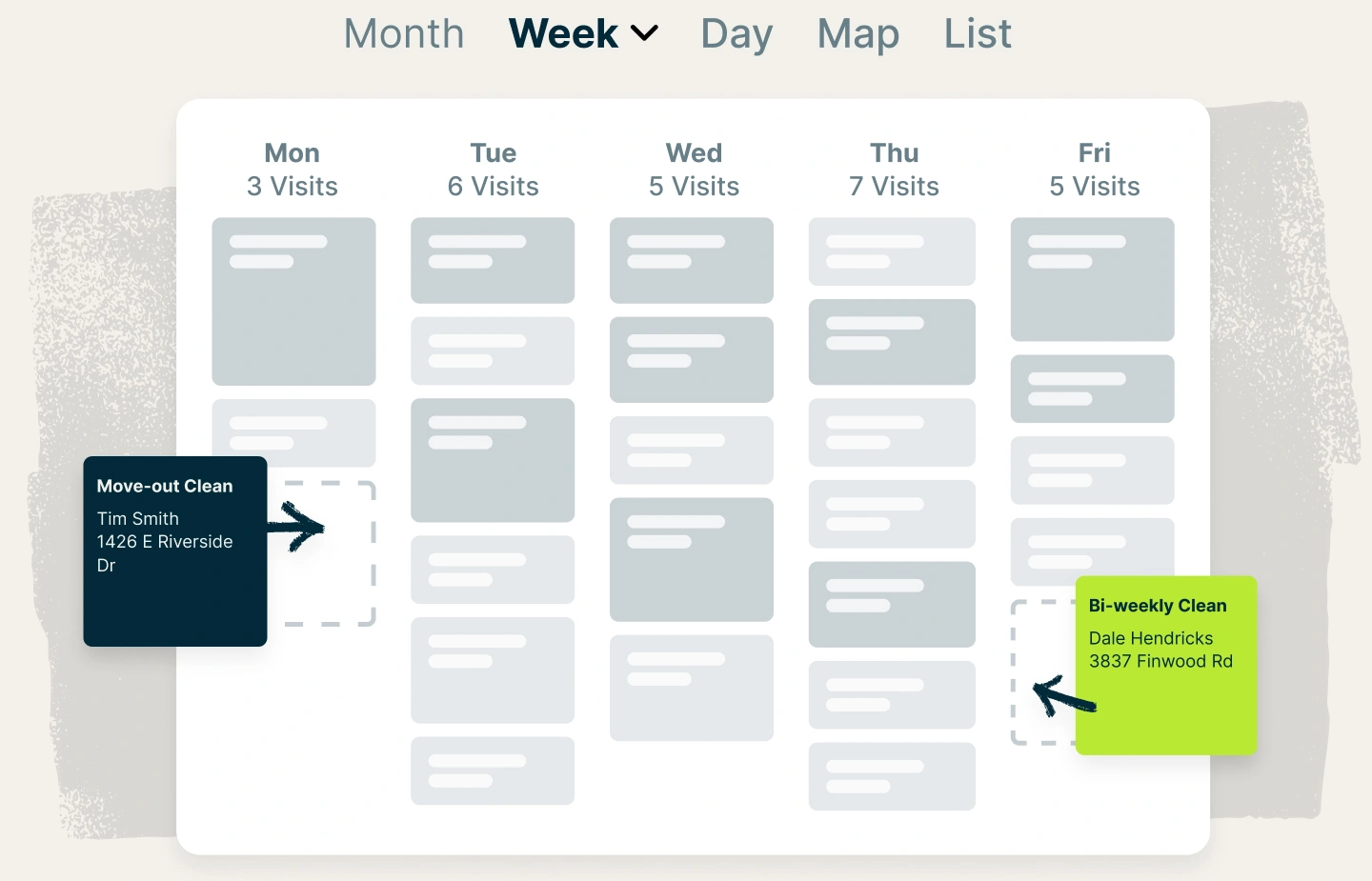
Here are just a few ways Jobber can help streamline your operations:
- Offer customers 24/7 online access to a client hub where they can request your services, approve quotes, check details for upcoming visits, and pay invoices.
- Let customers book services online via a booking page on your website and on your social media profiles.
- Send professional quotes customized with your business branding and service details.
- Provide multiple payment methods for invoices, including credit cards, Apple Pay, Google Pay, or ACH bank payment.
- Communicate with customers before, during, and after the job using automated emails and text messages.
- Use a field service CRM to store client details so you can provide personalized, top-notch customer service.
13. Create a commercial cleaning marketing strategy
Put together a marketing plan to promote your cleaning business and start building a list of potential clients. If you’re starting from scratch, use these tips for commercial client acquisition:
- Build a cleaning website that lists your services and lets your new clients easily book online.
- Set up social media accounts on Facebook and Instagram, and post content that educates or entertains your followers. You can also run paid social media marketing campaigns.
- Run cleaning ads on social media, or use Google Local Services Ads, to promote your business to local clients.
- Hand out business cards with your name, business name, and contact details. You can do the same with cleaning flyers, door hangers, postcards, and fridge magnets.
- Set up business directory listings, like a Google Business Profile (formerly Google My Business), and create accounts on lead generation sites like Thumbtack or TaskRabbit.
- Build relationships with realtors, property managers, and other business owners in your community. You can network, offer special savings, or ask for referrals.
- Start a referral program that rewards current clients for referring a new client. Then, ask satisfied clients to leave positive reviews on your social media.
Your biggest asset in your business is your clients. If you don’t know how to manage and create retention with them, you’re not going to have a sustainable business.
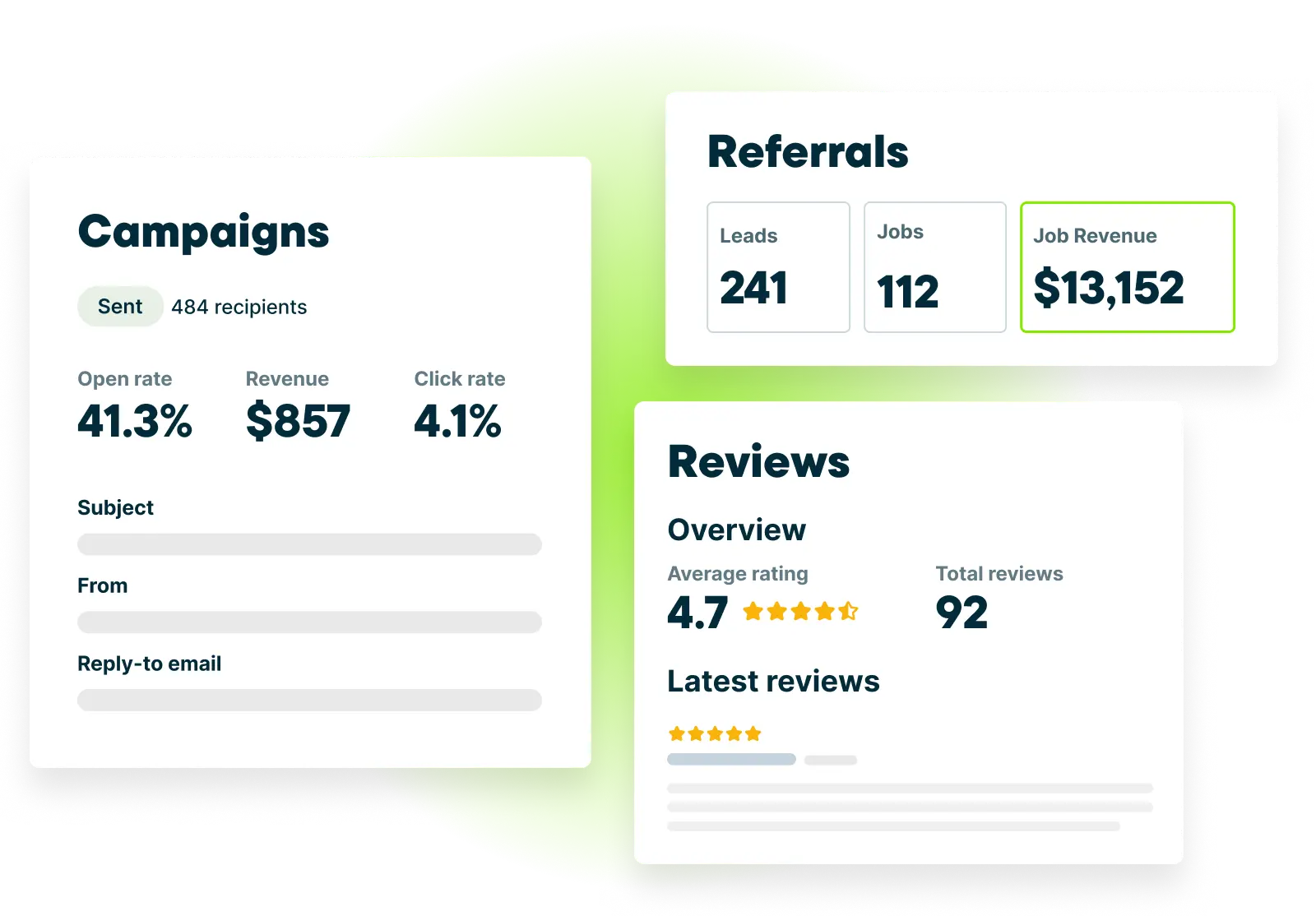
Jobber also comes with a suite of marketing tools to help you advertise your business, all in the same place you manage your work.
- Collect Google reviews from your five-star customers (and respond to them in Jobber).
- Run your customer referral program and apply discounts and credits on future services after each referral.
- Send polished, branded email campaigns to keep your customers informed and engaged.
- Set up a free business website in minutes and collect leads using a work request form.
- Track the success of your marketing efforts with the insights dashboard and see which tactics bring in the most new business.
14. Hire cleaners to grow your business
As your business grows, consider adding more staff to free up your time or to build a bigger operation. Here are a few roles you can think about hiring for when you’re ready to expand:
- Cleaners: More cleaners can help you accept more new cleaning jobs and opportunities. From there, you can keep hiring cleaners and growing your cleaning staff. Just make sure they’re using the same commercial cleaning checklist to ensure consistent, quality service.
- Site supervisor: When you have enough cleaners, assign a supervisor who’s responsible for training cleaners, scheduling teams, and dealing with on-site issues.
- Office manager: An office manager handles paperwork, client relationships, invoices for completed work, and payroll processes.
- Marketing specialist: A social media specialist or ads expert can be helpful for outsourcing marketing needs and helping your business grow.
- Sales agent: A sales rep is responsible for finding and bringing in new clients, winning new contracts, and renewing contracts with existing clients.
Take time to understand the role you’re looking to fill and market it to potential employees in a way that they can see the benefit.
With more employees in place, you can eventually take a step back and work on growing your business, not getting your hands dirty on every job site.
Once you’re up and running a successful cleaning business, you might wish you’d gotten started even sooner.
Originally published in October 2020. Last updated on March 20, 2026.
Frequently Asked Questions
-
Commercial cleaning takes a lot of time, commitment, and elbow grease. You also need to be comfortable working with corporate clients, and they expect you to run a professional operation. Still, this industry might be a good fit if you enjoy making business spaces cleaner and healthier for the people using them.
-
A commercial cleaner in the United States makes $35,930 a year on average ($17.27 per hour). The pay range is typically $27,570–$49,040 a year ($13.26–$23.58 per hour). As a commercial cleaning business owner, however, you can expect to make much more once the company is more established.
READ MORE: How much do janitors make? -
A commercial cleaning business can be very profitable. Let’s say you clean a 3,000-square-foot office twice a week at a rate of $0.10 per square foot. That’s $300 (USD) per cleaning, $600/week, $2,400/month, and $28,800/year. And that’s just one job.
You’ll see even higher numbers when you clean larger spaces or fit more jobs into each day. If you can perform five similar-sized cleans a week, that’s a total of at least $78,000/year.
Keep in mind that you won’t get to take home that full amount. You still have to pay for supplies, labor, overhead, and taxes. After that, your rates and markup will determine your profit margin.
The more efficient you are and the lower your operating costs, the more profitable your janitorial cleaning operation will be.
READ MORE: Is a cleaning business profitable?