 24 Minutes
Close $20K Jobs Without Being Pushy
With Anatoly Nasarov and Kevin Cook


-
Anatoly (00:00):
I will literally tell the customer, Is there someplace I could sit and can you bring me a glass of water? And they will usually put me down on the couch or in the living room. I will grab my glass of water and I will build out the estimate right in front of them. It might take me 10 minutes, might take me 30. It’s taken me up to an hour before, but I’m sitting here. I’m also breaking down that sales wall. We’re bantering. I’m asking them questions and I’m not Anatoly the guy trying to sell anything anymore. I’m Anatoly, the home service pro who’s also almost like your friend at this point.
Adam (00:29):
Do you get tense or scared when you’re talking to clients with big jobs? Do you just get nervous and unsure? When you look at that quote at the bottom when you’re preparing it and you see the big number, do you think there’s no way they’re going to approve this? If that’s you, then today’s your episode because we’re going to give you practical things you can do to change your mindset, some practical things you can do to say, not say, and how to approach the customer with confidence so you close a lot more of those big jobs. 10,000 to $20,000 jobs on average is a big job for most of our listeners.
Kevin (00:59):
It is.
Adam (00:59):
What would you say they’re doing wrong when they go into a house to present or maybe a commercial job? What are they doing wrong in these situations?
Anatoly (01:06):
The first thing is that they’re not presenting their offer right away, which I think is a big giant flaw. I teach all my sales reps, all my estimators to have a quick and efficient way to bid so then we can present the offer on site the first time. And when we track things like speed to close, we really want to put emphasis on that. How fast can we close it? How efficient can we be? Using a platform like Jobber where you’re able to preset all your line items, you’re able to quickly take measurements and calculate them, then present to the customer on site instead of waiting two, three, four, five days to get it back. A lot of times my competitors, they’re taking a few days to get back to the client. So if I’m able to come in with a quick estimate and ask for the sale right there, your chance of closing skyrockets. And I think that’s what a lot of people are missing out on. They’re taking too long, they’re not efficient and they’re kind of falling into this space where there’s so much room for no, basically. And I heard a stat years ago actually when I was working for somebody, he said in the home service industry, every day you don’t close a deal, the likelihood goes down by 25%. So after five, six, seven days, you almost have no chance to close this job basically. Now there are bigger projects, I’d say 10 to 20,000. Maybe it’s a longer sales cycle, maybe not one day, but it definitely shouldn’t be two weeks, three weeks, or a month. It should be significantly faster.
Adam (02:23):
So you’re saying that just that right there gives your salespeople confidence that they’re the first ones to the lead. I hate to say it, but I feel like there’s a laziness in our world in general of getting to the client fast enough and they’re ready. I think that if we take that seriously, then they’ll take us seriously.
Kevin (02:40):
I think that the laziness, and to agree with you, the laziness is, and what I find a lot of clients from coast to coast doesn’t matter, is that they’re going to take a long time doing the estimate. It takes 24 hours. It doesn’t take 24 hours to do an estimate.
Adam (02:52):
That’s so true.
Kevin (02:54):
When you sit down and do it, it might take you an hour or two. It’s just the laziness of not wanting to complete it the same day. And then you get backed up. So when you go into an estimate on a larger job, you’re not planning to close in the first place because you’re not planning to do the work. You’re just planning to talk, tell them how good you are and saying, We’re so busy, we’ll get it back to you at the end of the week or next week.
Adam (03:18):
They don’t care how busy you are.
Kevin (03:19):
They don’t care about that.
Adam (03:20):
They should have an idea of how much it’s going to cost on the phone when they call in. I want to get my bathroom redone. Do you know how much that costs?
Anatoly (03:27):
Yeah, 100%. You need to pre-qualify your customer and the sales process starts way before you ever get to the door. Your sales process starts from the first time they interact with your company. Then when they become a lead, it comes from the first time they contact your company to actually set it. When we get a lead at my original company, we have an admin who actually calls the customer right away. That’s her job. She calls them as fast as she possibly can and she qualifies them. Hey, what’s your budget? When do you want to start? What’s your timeline? All these qualifying questions so that when a sales rep actually goes to an inspection, the probability that we close it is high. So we’re not wasting gas, we’re not wasting time. And when we get there, you’re not just coming in and presenting a number. You’re nurturing, you’re educating. You are following the seven stages of the sales cycle. Go search it up, print it out. I have it in my office. You guys should all have it in your office. You guys are qualifying your prospect, you’re nurturing, you’re educating, and then you are presenting your offer and overcoming objections. This is a cycle that you need to train yourself on and sales is a skill. It’s a literal skill. It’s something that you can do, you can practice and you could get better at.
Adam (04:36):
Okay. I love that. We’re going to unpack that some more. Then Kevin, I know you got some good ways to overcome objections. I’ve told my technicians a lot that there’s three buyers. The first buyer, they’re going to buy no matter what. They love you. Then there’s some people who are never going to buy no matter what. But then there’s people in the middle that can be persuaded and that’s who we’re talking about. We’re not talking about the bottom 20% that’s never going to buy nominal well. We’re talking about the people who are on the fence. They really are considering another company. It really is like pressing their budget, but they might still be able to. That’s who we’re after. What do you say?
Kevin (05:05):
In that situation, borrowing that everything’s good going into it. You really want to don’t assume what they’re talking about and what they even mean. It doesn’t matter what they get, whether they want to talk to their spouse, whether they want to think about it. You need to whip that question out real fast. What exactly do you mean by that? Especially when you’re in a high ticket situation, 10, $20,000 and above. It’s too expensive or whatever it is. What do you mean by that? If it’s too expensive, do you mean the price? Do you mean the deposit or do you mean something totally different? So if we’re talking about they say, well, the overall investment’s too much. We never negotiate the price. The price is the price. Whatever it is, we’re going to direct them back towards the deposit because that’s what we’re agreeing on the deposit. Yes, the number is the number, but if you agree today on the 1000, 4,000, 5,000 of deposit, we can’t come till next month anyway. So that leaves them time to think about it, how they’re going to do the rest. If they’re talking about the deposit and they have a hard time paying the deposit, they want the job, the price is fine, they’re having a hard time making the deposit. The commitment, you can structure it differently. If you can do 25% today before I get here the day before, you can do another 25%. Usually that works for people.
Adam (06:26):
Do you only sit down with husband and wife or are you willing to sit down with one of them? Some companies will say, never, ever do a sales presentation for anyone if the husband and wife aren’t both there because it’s the kiss of death. Is that your strategy too?
Anatoly (06:41):
For me, it depends on who’s actually the decision maker here. Look, I have a great client. Her name’s Sarah. Shout out Sarah. I met her and her husband, but her husband said, Sarah, this is Sarah’s project. At that point, his name’s Mike. I fill Mike in, but Sarah is making all the decisions at this point. Great. I’m going to go through Sarah. If I go to an estimate and they tell me, Oh, I’m going to have to speak to my spouse about this, I will make sure that I have a meeting with them either in person or via Google Meets. And I will say high ticket, something like 10, 20,000 to me, I’m in construction, I’m in California. 10/20 is like a mid-tier ticket. We’re talking something probably like 30 to 50,000, like a more upscale bathroom remodel. Maybe they’re doing a kitchen, something like that. I will present my offer there and then I will schedule a second meeting to review my estimate line item by line item on a Google Meet or in person once again with both parties there and then asking to close there. We were talking about this offline as well. A lot of these bigger jobs, you’re not going to be able to close on the first time and that’s okay, but you have to track these things. And I didn’t really mention tracking, but guys, you guys should be tracking your speed to close. You need to be tracking your close rate and all these things so that you can actually have data to become better.
Adam (07:54):
Guys, this is great. I love this conversation. I want to pause for a minute and talk about Jobber. Anatoly, how has Jobber helped you close more sales and just run your business better?
Anatoly (08:01):
Jobber’s helped me in so many ways. On the job and in the actual sales process, having those preset line items, being able to track everything meticulously with backend reporting on quotes, profit margin per project. And then also with the new releases they always come out with, with the sales lab and then the high-ticket sales tracker that is releasing. These are all such great features and Jobber keeps improving and updating. I’ve been a user for over seven years now and it just keeps evolving with me.
Adam (08:27):
Yeah. I love all the financing options that Jobber has for big ticket sales. People can finance their quote through financing and we’ve got a lot of sales from that. So I love that too. If you’re not using Jobber, you need to. Go to jobber.com/podcastdeal. Get the exclusive discount and start increasing your sales today with Jobber.
(08:46)
Kevin, I feel like a lot of our listeners focus on the job itself and not on the client and what they actually want or the outcome. Can you explain that?
Kevin (08:55):
Yeah. So I teach really selling the outcome for sure because when a customer calls you, they’re calling you as the pro to come in to do the work, not necessarily talk about every fine detail about doing certain things. And what I mean by that is that’s what the check to you is for as a pro, to take care of all the behind the scenes stuff. They want to know that they can drink a cup of coffee while their hard earned money is at work. And so when you’re selling the other things, it gets confusing to some people. And for example, imagine like buying a plane ticket online. And then when you go online to buy a plane ticket before you can even see the price, it says this price includes the salary for the pilot, the copilot, the luggage people, the stewardess and the fuel and the taxi and all this stuff. Well, immediately that’s confusing, but it also sounds expensive, right? The dream would be that the only reason that they logged on to buy a plane ticket is because they didn’t want to take the 14 hour drive and they just wanted to get there in two hours. The sale there is to sell the flight. Not the details because that’s what they called you for.
Adam (10:14):
Yeah. But our listeners, home service business owners tend to be very technically gifted. They’re really good at swinging the hammer. They’re really good at fixing stuff and building stuff. And so it’s hard for them to get away from like viewing the job from their lens instead of viewing it from the prospect’s lens, which is a very different perspective.
Anatoly (10:31):
Yeah. Yeah, most definitely. Put only the information that you need. You will talk your way out of a sale more often than you will win a sale.
Kevin (10:37):
100%.
Anatoly (10:38):
And I used to work in solar sales when I was 18 and the manager was like, the guy who sells the least solar is the guy who knows everything about solar. So he’s trying to explain to the customer how the sun hits it and how it goes through this change and how it get scored. The guy who sells the most solar is the guy who’s like solar panels savings. Okay. Now there is a healthy medium. I personally do not do single line item estimates where it’s like everything is listed out and it’s one price. I break it down into line items. Why? Because if I do have to negotiate on price, I’m able to negotiate a line item versus the total price. You understand? So I’m like, Hey, I charge $2,000 for this dumpster rental. I know the dumpster’s going to cost me, let’s say 1,200. So I know that I have a little bit of wiggle room in this dumpster if I wanted to. I’m like, All right guys, you know what? For you, I’m going to take off $300 off this dumpster. I’ll eat the cost of that. And then everyone’s happy and then we’re negotiating off these little line items. I know there’s contractors or service providers who do like this single line item, but for me, it’s just not what works. And what we say up here is not end all, be all. What you really have to do is you have to take all the information and you need to go test it out yourself. Try it out, get a coach, take some lessons, read a book, and then find your own flows, your own script and your own routine with it.
Adam (11:51):
What about knowing your pricing helps with your confidence? Because I feel like if you go into a big job and a lot of our listeners, let’s be real, they don’t really know why they charge what they charge. They just kind of charge. And so then when someone questions their price, why is it so expensive? Or can you give me an itemized breakdown, they kind of freeze. They freeze. But if you actually know what it costs you to run a job, if you actually know what your overheads are and what your fixed costs are, then you can be confident, Hey, no, this is what we charge because of X, Y, and Z. It just builds confidence.
Kevin (12:24):
That is one of the most frustrating things in our industry is that we’re thinking about ourselves in a deal and that is a part of the equation, but we both have to be happy in the transaction. The customer has to be happy. The contractor has to be happy for two reasons. I mean, the customer has to be happy because they want to get what they want and we got to be happy that we’re getting what we want so we can do a good job. And if we don’t know exactly why we charge something when we get challenged, I don’t care what emotion comes out, you get nervous and embarrassed or you feel shocked, like, how dare you ask me? And it’s like if you’re coming from a place of confidence because you know what it costs you and you know if you give a discount you’re really taking from yourself, like you can’t continue business like that. You’re confidently, before you even get out of the truck, if somebody asks you, Hey man, can you give me a $500 break right here? The answer’s no, not mean or rudely, but I know I can’t do that. And so when you come with a confident no, a confident no is way better than the flimsy one.
Adam (13:33):
Every now and then my technicians will call me and they know, I’m going to say, they know, This guy’s unique. This client is asking for X, Y, and Z. And I always tell them, Dude, you had a chance to say no, but now as soon as you hesitated just a half second, you open the door, now I’m going to say no, they’re going to be disappointed. It’s so much easier if you just say no. Now, if you want to change the scope of the job some and say, Well, we can take a little bit off the price if we do it during our slow season, or if we do it when X, Y, change the scope.
Kevin (14:07):
A lot of times to build on that, a lot of times, and I’ve seen this countless times in my own business and my clients is that when you say no confidently, there’s a large percentage of people who close after that immediately. Hey, we was wondering, we don’t have all the money. Can we get a litle discount because this is what we can afford. No. Okay, let’s go ahead. Let’s just go ahead and do it. We’re by side. And it’s like if that no’s not confident, if that no is like, well, the door swung open. It’s just, no, we can’t do that.
Adam (14:45):
If they say no confidently, a lot of times the yes is just on the other side.
Kevin (14:49):
Right, right behind it. I don’t blame people for asking.
Adam (14:51):
I ask. The worst thing they can say is no, right?
Kevin (14:55):
Worst thing you can say is no.
Adam (14:55):
A lot of times, but we’re shooting ourselves in the foot by saying yes because we’re insecure.
Kevin (15:00):
If you’re getting shut down a lot on your sales, it’s too expensive. Let me ask my wife whatever. First of all, it has something to do with you, for sure. But when you start becoming confident and you start to be your no’s mean no, you wear that more. It sounds imaginary, but it’s not. You wear that firmness more. So when you go in there, you stop hearing those more often because you don’t even look like a guy that’s going to accept it. Your presentation, your estimate doesn’t seem like, That doesn’t seem like this guy’s going to go for that. And they don’t even ask you anymore, which is where you want to be.
Adam (15:36):
And totally, one of the most annoying things that immature inexperienced salespeople hear good salespeople say is, I don’t really get that objection very much. I don’t really hear that. And they just think it’s impossible. They think you’re lying, but it’s true. You want to talk about that?
Anatoly (15:50):
Yeah. I think it’s because when you’re a veteran in sales and you have a good sales process and you’re going through your sales process, you don’t give the opportunity for a lot of these objections to come out because you’re already following the sales process that you’ve set up. And we’re pre-addressing concerns before they even become concerns. Why is it so expensive? I just explained to you, why is it so expensive? Why does it take so long? Well, because X, Y, Z. Why is the material so expensive? I don’t even control material. You can overcome them before they even get to the point to ask the objection, but a rookie sales rep will not have that experience quite yet and they will not know the objections that will come up. When we hire a new guy, we expect him to burn through about 20 leads straight up. 20 leads the first month doesn’t even count. The first two weeks he’s in there, we’re just doing theory in the office where we’re doing role play, we’re teaching him how to close, we’re teaching him about product. Then he’s going out with the sales rep for two weeks just ride along. Then after that, we’re still expecting him to burn through his first 20 while he gets in the flow and gets in the rhythm and starts to understand what sales and home service is actually all about.
Adam (17:02):
One of my favorite things in sales that I learned from my dad in insurance 20 years ago is you can usually tell when it’s coming. You can usually tell when someone’s about to say, Well, Adam, thanks for coming in today. I really appreciate it. Let me think about this and I’ll call you tomorrow. And the inexperienced person says, Great, they’re going to call me tomorrow. They’re going to buy tomorrow. That’s not what happens usually.
Kevin (17:24):
They’re not going to call you.
Adam (17:25):
And so the experienced salesperson can see it coming. There’s a slight pause in the conversation. You can tell that you’ve answered pretty much all their questions that it’s decision time. And so before the words come out of your mouth, because once the words come out of their mouth, you can’t put them back in. And so before they say, Oh, well, I got to talk to my husband, or, Okay, well, thanks for coming. And you say, Before we go any further, can I use the restroom while you’re thinking about it? And you leave, takes all the pressure off. Then asuming it’s the husband and wife, they’re thinking about it. Even if it’s one person, they’re thinking about it without the pressure of you staring at them, all the rush. And they’re like, Yeah, I think we’ll do this one. So when you come back, we’re going to do that one. Great. Let’s write it up. Or if they say, Yeah, I still want to think about it. What do you say then, Kevin?
Kevin (18:12):
In most cases, you’re thinking about one of three things. Do you mind if I share them with you? And you say most people are thinking about whether they like it or not. You don’t want them to answer the question, you just rattle off the questions, whether you like it or not and love it. Okay. Can you afford it and it’s now the right time? Am I the person you want to work with? Which one of those questions is it for you or is it something else?
Adam (18:33):
It’s good.
Kevin (18:34):
Usually in those cases, it’s normally one of those things.
Adam (18:37):
Yeah.
Kevin (18:38):
Totally. It’s already one of those things and then you are able to actually address the objection. Think about it as like a smokescreen. That’s a delay. That’s not a true objection. That’s just a time delay. So you want to get rid of the time delay and get to the bottom of it. And so you want to ask those questions so you can fish it out.
Adam (18:56):
Yeah. I think some people will say, You know what? I get a lot of sales the next day, literally after they talk to the client and I get the approval the next day. That happens in my business all the time. Some people are just a litle bit more aggressive, let’s say. And they do want to try to get that sale now. Maybe it’s different industry. Hey, can I get your husband on the phone? Can we call him? You ever do that?
Anatoly (19:17):
Yeah. Yeah, of course. It depends on a variety of factors. I like to do what I call the assumed close and the low-pressure sales tactic, where I’m just walking the customers through the door and I’m assuming I already closed it at the end of the job. If I think I can get a decision without making them feel like, damn, this guy’s like a car salesman. He’s pushing me.
Adam (19:37):
He’s annoying.
Anatoly (19:38):
He’s uncomfortable. I will. But there’s this very fine line that you need to learn literally and it only comes from experience. So to answer your question, if you can do it, yes. Try your hardest. Even if you don’t get it, keep following up. But sometimes you’ll push a customer to the point where they’re like, This guy just, he was too much. He was too much. And home service sales is different than a lot of other industry sales. And we were talking about this.
Kevin (20:04):
100%.
Anatoly (20:05):
And I think you have to be the perfect cross between a sales rep and a service professional to where people feel comfortable with you, if that makes sense.
Adam (20:13):
Yeah. What do you say if the wife says, Well, I got to talk to my husband about this.
Kevin (20:19):
Immediately. What if he says no?
Adam (20:22):
What if he says no?
Kevin (20:23):
That usually puts the pressure back on them and you want people to think about themselves during the sale. You want the customer to close themselves. And the answer usually a lot of the time is they wouldn’t say no to me. It’s like, then you just be quiet
Adam (20:41):
And smile.
Kevin (20:42):
Just kind of wait.
Adam (20:43):
The first to speak loses at that point.
Kevin (20:45):
First to speak to loses.
Anatoly (20:46):
First to speak. Yeah. 100% guys. When you present your offer and you’re staring at them across the table, just and go like this. Embrace, I’ve been in silence with one of my business partners, Leo, we want sat in silence for three minutes with a customer, just staring at them. We stare to the side and eventually they’re like, Okay, yeah, we’ll do it. But if you talk first, and I know this is like a sales meme almost, like, Oh, first one to talk loses. It’s really true. First one to say anything loses. So when you present your offer, just sit there quietly. Hey, is this something you could do today? Hey, would you pay the deposit with check or card? That’s it.
Adam (21:24):
That’s it. Guys, that was great. Lots of good takeaways here. I’m going to boil everything down that we talked about to the three actionable things that I think that our listeners can do right away to improve their sales. Number one is you need to estimate on site. None of this. I will email you quote tomorrow, none of this next week’s stuff. When you go to a client’s house, be prepared. I prefer on an iPad. Show them the quote right here and get their signature. Let’s get this done now.
Anatoly (21:51):
Jobber gives you the ability to have so many preset line items. And when you create these preset line items, make sure that you’re just accounting for your labor cost, your overhead, profit and a buffer. And this will take some trial and error, but you can figure out the science of how much to charge per unit for almost every single line item, which will make your bidding super fast and efficient.
Adam (22:13):
Number two is you need to have a good sales process. It starts with a good pre-qualification. You shouldn’t go see everyone. You need to build rapport or build trust. You need to educate. Those are the starting points, but you need to have a sales processor that, like Kevin said, you can pinpoint where you lost the sale. And number three, you have to sell the outcome. You have to sell the beautiful backyard. You have to sell the clean home, focus on the dream. That’s what sells jobs. Well, guys, thanks for being here. That was awesome.
Kevin (22:41):
Of course. Thank you.
Adam (22:42):
Guys, how do people find out more about you?
Kevin (22:44):
Real quick, you guys can find me on all social media platforms, @kevincook_official. Also, if you need some sales resources, you can reach me at thedirtywork.io also if you want to get in contact with me there.
Anatoly (22:56):
And you could reach me @average.bro.aesthetic on TikTok, Instagram. Also, I have a Skool, Blue Collar Baller Network.
Adam (23:03):
On the next episode, we’re talking about what it really takes to grow a cleaning business to a million dollars, the tough years, the lessons, and the mindset that keeps you going. We’ll get into how resilience, integrity, and a strong team can turn struggle into success. Follow or subscribe today so you don’t miss out. And thank you for listening. I hope that you heard something today that will make your business better, your sales better, and you’ll close more sales. I’m your host, Adam Sylvester. You can find me at adamsylvester.com. Your team and your clients and your family deserve your very best, so go give it to them.
About the speakers

Adam Sylvester
CHARLOTTESVILLE GUTTER PROS AND CHARLOTTESVILLE LAWN CARE
Website: adamsylvester.com
Adam started Charlottesville Lawn Care in 2013 and Charlottesville Gutter Pros in the fall of 2020, in Charlottesville, VA. He likes to say, “I do gutters and grass! When it rains the grass grows and the gutters leak!” He got into owning his own business because he saw it as a huge opportunity to generate great income while living a life that suited him. He believes that small companies can make a serious impact on their communities and on every individual they touch, and he wanted to build a company that could make a big difference. His sweet spot talent is sales and marketing with a strong passion for building a place his team wants to work. Adam values his employees and loves leading people. While operations and efficiency is not something that comes naturally to him, he is constantly working to improve himself and his business in these areas.

Anatoly Nasarov
N&P Cleaners
Instagram: @average.bro.aesthetic
TikTok: @average.bro.aesthetic
Anatoly is a 3x business owner with companies spanning construction, commercial cleaning, and restoration. Since 2021, he’s built businesses from the ground up across residential, commercial, and government sectors—scaling them to nearly $10M in sales. With a 50% lifetime close rate, Anatoly operates with a simple belief: sales is leadership, and leadership is ownership.
But it hasn’t all been wins. He’s navigated a government contract loss due to compliance issues and faced the difficult decision to shut a business down. Those moments tested his systems, his mindset, and his character. For Anatoly, entrepreneurship isn’t always sunshine and rainbows. He knows firsthand that building something real means pressure, responsibility, and learning the hard way.

Kevin Cook
The Dirty Work Sales System
Website: thedirtywork.io
Instagram: @kevincook_official
TikTok: @kevincook_official
YouTube: @DirtyWorkSales
Facebook: Kevin Cook
Kevin Cook is the founder of The Dirty Work Sales System, a contractor-focused sales and leadership framework built on decades of real, grind-tested experience. A former 10-year police officer who went on to build two 7-figure trades companies in landscaping and 18-wheeler trucking, Kevin now coaches contractors across the country on sales, leadership, and closing deals with confidence on the spot.
His approach blends discipline, identity, and modern communication to help service business owners build companies they’re proud to run. Kevin is also the creator and host of the From the Dirt podcast, where real builders share real stories about growth, grit, and becoming the man your family can count on.



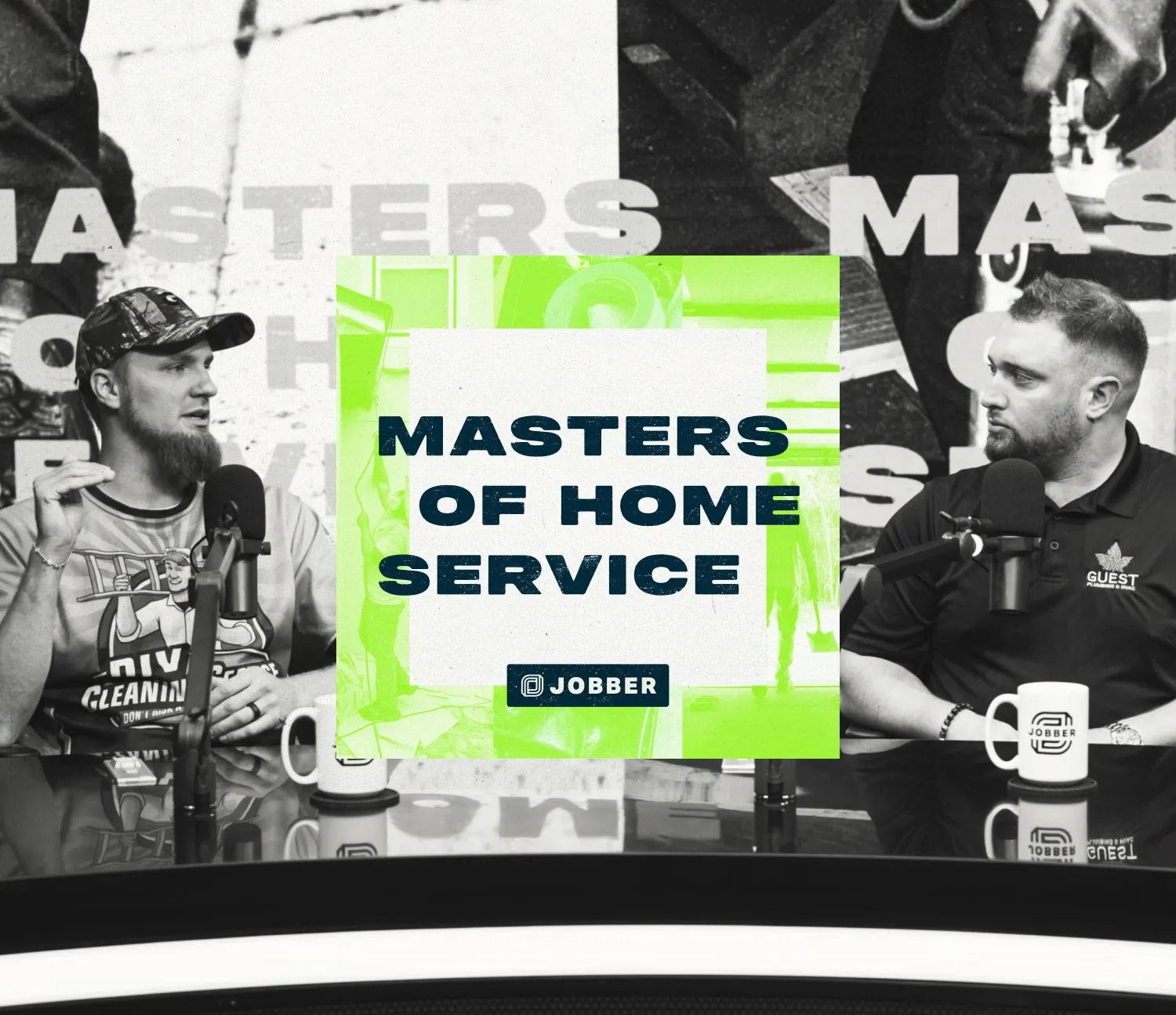
SIGN UP FOR the masters of home service newsletter
Get monthly updates with news, tips, and advice on how to run a 5-star business. You don’t want to miss out!
Interested in being a guest on the show?
Are you a home service professional eager to share your insights and experiences? Apply to be a guest on the Masters of Home Service Podcast, and join a community of experts committed to helping others level up through knowledge.
Other Podcasts We Love