 13 Minutes
Your Website Is Becoming Obsolete (Do THIS Now)
With Phil Risher


-
Phil (00:00):
There’s this thing that’s called no click searches happening. Literally about 58% of searches that are happening end with zero clicks. So as business owners, it’s like, okay, well, if they’re not even going to my website, what are they doing?
Adam (00:14):
Your website could be leaking cash and you don’t even know it. If you haven’t touched your website in a while, maybe your agency hasn’t done it for a while, now is the time to re-evaluate how your website is driving leads to your business. Today we got Phil Risher. Phil, you’re no stranger on the podcast. I’m glad you’re back to walk through this with us. Welcome back. It’s good to see you.
Phil (00:33):
Yeah, thanks. Thanks so much for having me.
Adam (00:35):
Do we still need a website?
Phil (00:37):
Yeah. Okay. So there’s a couple phases that are happening. Probably the past 20 years, it’s been the Google search era. Someone goes to Google, types in a keyword, they go to your website, they do their due diligence. The typical conversion rate, like what we were talking about, is you want to get people at around 10%. A hundred people come to your website, you want 10 of those people to turn into leads. And right now that’s still relevant. People are still doing research, going to websites, reaching out to businesses. But when we talk about a leaking website, for people that are listening to this today, we want to make sure that the website’s converting at 10%. So some of the ways that you do that is you add a pop-up with a promo, a chat widget, on mobile having sticky headers so that way people can click the call on mobile. A lot of people just rely on a contact form and they got to go to contact, find it. We like to tell people, go to your mobile website. About 50% of people do this and just see if it takes you longer than 10 seconds to even fill out your own form.If you can’t do that, something’s not working here.
Adam (01:35):
Yeah. It’s amazing how many people. We have a seven-second form on our website. It’s just like three fields, first name, last name, email, I think. And I’m amazed at how many people fill that sucker out over the longer form. The longer form isn’t long, but people’s attention span, they’re in such a hurry now that they just want the fastest thing.
Phil (01:53):
When they go to the website, they don’t want to be hunting for contact form or phone numbers. So like a seven-second form, you would put that on your homepage right below the first scroll that says, get an estimate. It takes seven seconds. Click right here. There’s no hunting or thought that needs to happen. It passes the grunt test as Donald Miller calls it. Another one is the promo I mentioned, the promo pop-up. We found this out. We were working with this basement waterproofing company. We were like, Hey, why do people work with you? And they’re like, Oh, we give $500 off for every basement waterproofing. We’re like, Well, when do you introduce that? And we give it to them when we give them the estimate. And it’s like, whoa, whoa, whoa.
Adam (02:25):
That’s too late.
Phil (02:25):
That’s way too late. What if we put that at the front of the offer right on your website, a $500 off your basement waterproofing? The first time we implemented it, they got 50 leads from that one thing the next month.
Adam (02:37):
Wow.
Phil (02:37):
A lot of people bury the promos in their ad copy, on the phones, in their estimates when they really need to put it front and center, email newsletters, websites, all that.
Adam (02:45):
Okay. You mentioned Donald Miller. Yes. I’m a big fan. His whole framework is your website should do three things. What do you do? How will I make my life better? And what do I need to do to buy it? And all those three things should be very clear. Is that changing? Because are we building our websites for people still anymore? Is it even changing? Who’s reading these websites?
Phil (03:06):
Yeah. Yeah. So this is the shift from the crawl era to the data era. This is what it’s called.
Adam (03:11):
Explain that. Yeah.
Phil (03:11):
Yeah. So right now, still we’re in a crawl era where you add something to your website, Google crawls the information, and then goes back and says, yep, this is good or it’s not good. But you’re reliant on it crawling your website. The data era is you actually building a knowledge catalog, a knowledge base for your business where you can plug that into Google’s agent and allow it to access the knowledge without it having to crawl anything. So does your website even matter anymore? Right now, yes. But the phase that we’re in in the next probably six months is the agentic search era, which we’re already facing this right now. So about two months ago, Google wrote out the biggest change in Google search in the past 25 years since they lost Google, since they launched it.
Adam (03:59):
Oh my gosh.
Phil (03:59):
The shift is, and if you were to go to Google right now, when you type in something, before it said search was the button. Now it says AI mode. Yes,
Adam (04:09):
I’ve seen that.
Phil (04:10):
And you click that and it doesn’t take you to the typical Google search engine results page. Google LSA, Google Search Ads. It takes you to Gemini. People are not searching for HVAC repair near me. They’re searching for, I turned on my thermostat and my fan is blowing, but no air’s coming out. What’s going on? More conversational diagnosis.
Adam (04:28):
Why isn’t my HVAC system blowing cold air?
Phil (04:31):
Exactly. So what should business owners do right now? There’s this thing that’s called no click searches happening. Literally about 58% of searches that are happening end with zero clicks. They don’t go to a website. Yes.
Adam (04:44):
Wow.
Phil (04:45):
Okay. So as business owners, it’s like, okay, well, if they’re not even going to my website, what are they doing? Where are they going? And this is the whole shift of this agentic search, which is you need to have your business trusted by these AI platforms to show you.
Adam (05:00):
Make sure to grab our website optimization playbook to help you put Phil’s tips into practice today. You can scan the QR code or you can download the link to get your copy today.
Phil (05:11):
So this is the most important piece is what do we need to do as a business to make sure that we prepare ourself for this? It’s happening right now. And there’s three main things. Number one, you have to have a pricing page on your website, a pricing guide, because people are asking how much does it cost to do X, Y, and Z? And if you don’t have anything for it to pull from, you’re not going to be shown in that search. The other one is online scheduling, because people are saying, okay, well, how do I schedule an appointment with this person after they did their due diligence? And more importantly, you can actually. Agentic booking allows people to book right inside of their platform. They got to have online scheduling. But the biggest one, this is the one that most people miss is content. And the reason is because as home service business guys, I was included in this, was I always thought making content was for likes and views and shares and all this stuff and get customers.
Adam (06:01):
Go viral.
Phil (06:02):
Yes.
Adam (06:02):
Yeah.
Phil (06:03):
When now it’s not about that at all. It’s about taking your real customer questions and turning it into content. Because if they’re asking you on the phone, they’re going to be asking it to Google, to ChatGPT, to Claude to diagnose their problem.
Adam (06:15):
People won’t go to websites anymore, but the content still has to be there.
Phil (06:19):
Yes. The data that’s on your website is going to be surfaced in AI search. And there’s two ways that it surface. One is called share of voice. What this means is when you do a search, it shows you all this information, you might be in that share of voice. The other one is mention rate. This is if you’re cited as the actual company to use. So when we talk about share of voice, it’s how much different content can I create? Videos, blogs, everything that it shares my stuff in here. The mention rate is, am I credible and do they trust me to actually mention me, to use me?
Adam (06:47):
But now it seems like the internet’s so saturated with. The internet knows everything now, more or less. There’s nothing I can post about gutters that hasn’t been posted yet, right?
Phil (06:57):
Well, no, no, that’s not necessarily the case.
(06:59)
Okay. Okay.
Adam (06:59):
So Google just put out in their white paper how to rank an AI search, and they talked about the depth of commodity content and creating unique content for your business. And when we talk about unique content for your business, yes, someone might have made a blog post about does it make sense to do six inches gutters versus this or something like that. However, they probably haven’t made content that in your specific area, this neighborhood, the manufacturer put these six inch gutters on there, but they really should have put eight inches. So we’ve been doing that a lot on these. And when they put their downspouts in over here, it was actually an issue with the foundation. So we’ve been moving a lot of these. No one’s ever made content like that before.
Adam (07:35):
Got it.
Phil (07:36):
This is why I know I’ve been preaching content. Every time I talk, I’m like, You got to have the content. It’s because businesses that don’t have a knowledge base about their company, they’re going to want all of these tools, but they’re not going to have any information about their business. So they’re not going to be able to do anything.
Adam (07:50):
Help me better understand where does this knowledge base exist? What are you talking about?
Phil (07:55):
Okay, this is a great point. Now for a home service business, if you’re listening to this, there’s a tool called Google Search Console. Google Search Console is essentially, you can see what people are searching and all the information about your business. What Google now allows you to do is to link your knowledge catalog to verify it with your Google Search Console so that your verified domain is linked to your knowledge catalog.
Adam (08:15):
Hold on, Phil. This is great, but let’s take a break to talk about Jobber. We’re both big fans of Jobber. Tell us why you like Jobber so much.
Phil (08:23):
One thing that Jobber helps with is getting more reviews. And when we talk about building trust with these platforms, reviews is one of the most important things that you can do so that they trust your business. So that’s a big one. Obviously Jobber has online scheduling, which is a really cool tool. You can embed this in your Google Business Profile, which allows people to schedule, not even have to go to your website, right? No clicks, schedule right from there. They also have this really cool integration with Google AI mode where you can connect your Jobber and actually book straight through Google AI mode. So there’s a lot of cool things that Jobber has going to help you prepare for this big shift.
Adam (08:55):
Jobber’s keeping us ahead of the curve. I like that. If you’re not using Jobber, then you’re behind the curve. You need to start using Jobber today, at least a free trial. Test it out. You’ll be surprised at how much it can boost your business. Go to jobber.com/podcastdeal. Hit the exclusive discount and start your trial today.
(09:12)
What else do we need to do to our websites for the next 12 to six, 18 months at least, to make them just better in general?
Phil (09:18):
The most important piece is the knowledge base of information. And that is what agent-to-agent protocol is. And that’s the next shift that’s going to be happening in the next two to three years. The whole goal of right now on websites is to make it easily accessible and crawlable by these agents. So I’ll give you a perfect example. You might hear this and say, okay, I’m going to take my transcript and I’m going to turn it into a blog post. Do not stop there. You need to put three links in your blog post because if you just put a blog post online and hopefully it gets crawled at some point from Google Bots, probably not going to happen. Maybe eventually. But by putting three links in it, it creates it crawlable across all the different pages and it makes it indexable usually. So that’s the first thing is make it easy to navigate. The other thing I’ll say is people are still going to websites to convert.
Adam (10:04):
Okay.
Phil (10:05):
So you got to have a chat widget, the popups, all those things on your website so that it’s easy to use.
Adam (10:10):
Yeah. And the people who just want to call the local business.
Phil (10:13):
So this is a very important piece to this. People hear this and they’re like, We’re all going to die. The world’s over.
Adam (10:18):
What are you even talking about?
Phil (10:20):
I think the pendulum is going to swing back the other way. And I think that in the home service space where we’re at, it’s going to be very, very important to have that great customer experience that people are going to want. Because we already have the trust recession right now. People do not trust things. They think it’s AI or AI slop. I think that there’s going to be a lot of opportunity where people are like, I just want to call people and talk to a real human who lives down the street. I want a real human to come out to my house. I want that experience. And it might be easier to use an agent, but that doesn’t mean that it’s what humans want.
Adam (10:49):
Alright. Anything else we need to know about our website, search?
Phil (10:54):
The knowledge base is really the asset that you want to go for.
Adam (10:57):
Okay.
Phil (10:58):
The pretty website is nice. The call to action, all that stuff, but it’s really that backend knowledge base. So if you’re listening to this, it’s like you got to take the real questions and create the content and start with that. Even if it’s just a video about your pricing, even if it’s a page on your thing about pricing, the knowledge about your business is the backbone of your business.
Adam (11:17):
So step one would be, if you’re not even recording your phone calls on OpenPhone or RingCentral, you got to start recording those suckers.
Phil (11:23):
Absolutely. And if you’re not recording your sales calls, if you’re not creating content or any of those things, start getting some type of repository. In the next two to three years, it’s going to be more mainstream to build these knowledge bases out for people and have the agentic connections. But you got to have the backbone to fill it with.
Adam (11:42):
Alright. Lightning round questions for you, Phil. Number one, if someone listening can only make one single change to their mobile website, what should it be?
Phil (11:50):
Definitely add sticky headers. About 50% of your users are going to be on mobile, so add headers right at the top on mobile. So call button, get a quote.
Adam (11:58):
What is the number one mistake that people make with their web forms?
Phil (12:03):
Way too many questions. So like five to 10 questions. And most importantly, you could set up a nurture sequence afterwards to get the rest of the information, but people don’t want to answer a billion questions to turn into a lead.
Adam (12:13):
What should our listeners who might feel overwhelmed by all the changes do first?
Phil (12:17):
The most important thing, hopefully the summary that you get from this is that your knowledge of your business is probably the most best digital asset that you can have. And you got to be mindful of how am I going to be extracting as much knowledge into my business as I can that’s happening on day-to-day basis? So like call transcripts, recordings, those types of things.
Adam (12:33):
Well done. Great responses. Thanks. Phil, how do people find out more about you?
Phil (12:37):
You can go to phlashconsulting.com, P-H-L-A-S-H consulting.com and click Discuss Your Business and happy to be a resource either way.
Adam (12:44):
Is there really a labor shortage or are we all just looking at it the wrong way? Next week we dig into what younger workers actually want and how to attract the next generation of talent. You always bring the heat. Thanks. Our listeners are better for it. Appreciate you being here.
Phil (13:01):
Absolutely. Thanks for having me.
Adam (13:02):
And thank you for listening. I hope that you learned something today, especially about AI and all the changes. It’s very exciting, a little scary, but Phil broke it down for us. I’m your host, Adam Sylvester. You can find me at adamsylvester.com. Your clients and your team and your family deserve your very best. So go give it to them.
About the speakers
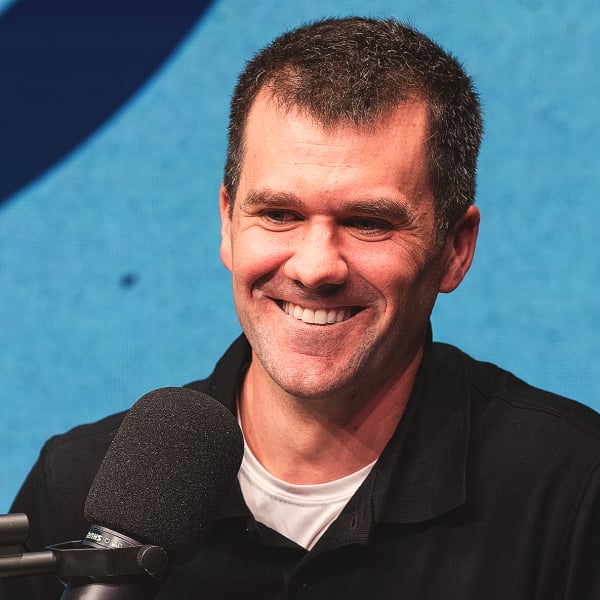
Adam Sylvester
CHARLOTTESVILLE GUTTER PROS AND CHARLOTTESVILLE LAWN CARE
Website: adamsylvester.com
Adam started Charlottesville Lawn Care in 2013 and Charlottesville Gutter Pros in the fall of 2020, in Charlottesville, VA. He likes to say, “I do gutters and grass! When it rains the grass grows and the gutters leak!” He got into owning his own business because he saw it as a huge opportunity to generate great income while living a life that suited him. He believes that small companies can make a serious impact on their communities and on every individual they touch, and he wanted to build a company that could make a big difference. His sweet spot talent is sales and marketing with a strong passion for building a place his team wants to work. Adam values his employees and loves leading people. While operations and efficiency is not something that comes naturally to him, he is constantly working to improve himself and his business in these areas.
Phil Risher
Phlash COnsulting
LinkedIn: Phil Risher
YouTube: @phlashconsulting
Website: phlashconsulting.com
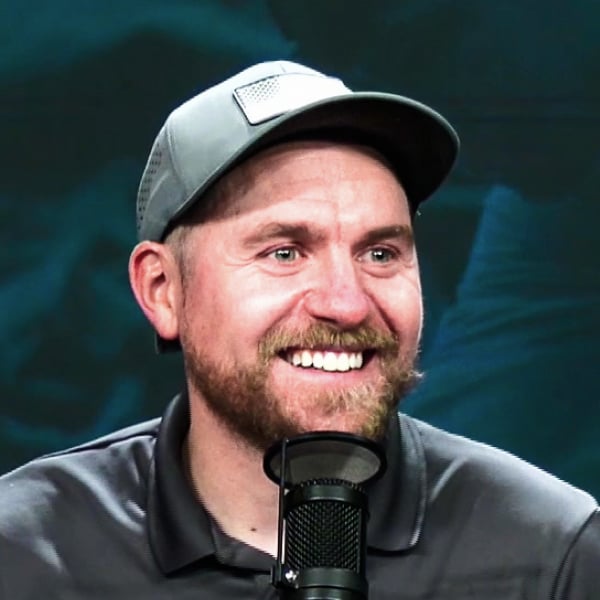
Phil Risher founded Phlash Consulting in the Washington, D.C. Metro Area in 2019. He’s a local marketing expert, who specializes in helping businesses scale. His company helps local service businesses boost sales and fill their schedules using the unique “Phlash Customer Journey” framework to create a professional marketing system. This approach has helped clients grow their revenue by over 20% annually. Before founding Phlash Consulting, Phil was a director of business development at a major air duct cleaning company. He was tired of working with generic marketing firms that didn’t understand his industry, so he decided to start his own. Phil’s company combines digital marketing and business development strategies, and works directly with staff and business owners to help them grow. He builds strong partnerships with his clients, and most have stayed with him for over two years.
SIGN UP FOR the masters of home service newsletter
Get monthly updates with news, tips, and advice on how to run a 5-star business. You don’t want to miss out!
Interested in being a guest on the show?
Are you a home service professional eager to share your insights and experiences? Apply to be a guest on the Masters of Home Service Podcast, and join a community of experts committed to helping others level up through knowledge.
Other Podcasts We Love