How Much Do Landscapers Make? Hourly, Weekly, Monthly, and Yearly Salaries

When you’re expected to get your hands dirty and work under the hot sun, naturally you want to know what the pay is like.
How much you make as a landscaper depends on the region you’re working in, the type of work you’re doing (planting vs. hardscaping), and your experience.
On average, landscapers in the United States earn $29,990 to $53,900 a year. That range ramps up, though, once you specialize or build out your own business.
In this guide, you’ll get an idea of what landscapers make, which regions pay the most, and the numbers that business owners bring in.
Income breakdown for landscapers
If you’re thinking about getting your hands dirty in landscaping, the big question is: what can you expect to earn? Here’s a breakdown.
Annual income
Across the United States, the typical annual income for landscapers runs anywhere from $29,990 to $53,900. That’s a wide range, and a lot of it comes down to where you’re working and what kind of work you’re doing.
Per the U.S. Bureau of Labor Statistics, the median income for landscapers was $38,470 in 2024.
If you’re just starting out and tackling basic jobs like hauling mulch or planting shrubs on residential jobs, you’ll probably be in the $29K range. But once you get a couple of seasons under your belt or handle more technical work (like grading a slope properly for drainage), your pay can go up.
Most people might literally only take home 20 to 30,000 bucks their first year because there are so many learning mistakes and getting your feet wet.

Monthly income
On a monthly basis, most full-time landscapers bring in anywhere from $2,499 to $4,491. Not bad for turning yards into personal paradises.
Paychecks can swing a bit depending on the season, though. And especially if you’re based somewhere with tough winters. In northern states, when the ground freezes and planting season is on pause, things slow down. Meanwhile, in warmer regions like Florida or the southwest, you might be booked all year.
If you’re smart, you’ll pad your slow months with add-ons, like fall cleanups, snow removal, or even simple design consultations. Some landscapers even branch into holiday lighting installs or prepping gardens for spring.
READ MORE: What do landscapers do in the winter?
Weekly income
Weekly income from landscaping isn’t set in stone. It all depends on your hourly rate and how many hours you’re putting in.
Let’s say you’re making $16.95 an hour, which puts you in the 25th percentile. You’re essentially paid more than 25% of others in the industry. A 40-hour workweek puts you at $678 per week before taxes.
Not every week looks the same, so how much you make will vary. During peak season, you could easily be doing 50-60 hours. And if you’re getting overtime pay (time-and-a-half after 40), those paychecks can climb to $847+ in a good week.
On the flip side, a string of rainy days can wash out your schedule. Or maybe you’re waiting on a stone delivery that gets delayed, pausing the landscaping project. You might just end up doing some cleanup gigs, leading to a lighter income that week.
Another thing to keep in mind—different services mean different pay. Installing a pond or hardscaping a patio usually pays better than mowing. If you’ve got some higher-ticket jobs lined up, you’re probably looking at a better weekly paycheck than usual.
Hourly income
Your hourly rate depends on
- What part of the country you’re in
- How long you’ve been in the field
- What kind of work you’re doing
Someone planting flowers won’t be paid the same as a foreman managing a hardscape install that takes two weeks.
But in general, here’s how hourly wages shake out in landscaping:
| 10% | 25% | 50% (median) | 75% | 75% |
| $14.42 | $16.95 | $18.31 | $22.05 | $25.91 |
Source: U.S. Bureau of Labor Statistics
How much you make an hour can also rise if you bring more to the table than just hustle. For example, do you have any experience running irrigation systems? Irrigation techs often earn more because the skill is both technical and essential for hot, dry climates where watering systems are a necessity.
And if you’re leading a crew, that role usually comes with a bigger paycheck. The same goes if you’re a certified landscape technician. Or certified in pesticide application or erosion control. Those credentials tell clients (and employers) that you know your stuff.
Landscaper salaries by region
How much landscapers make varies depending on where in the country they’re working. Your pay is all about local demand and how much homeowners are spending to make their property look nice.
U.S. cities that pay the most
If you’re willing to relocate and follow the money, these are the highest-paying cities for landscapers:
| City | Mean Hourly Wage | Mean Annual Wage |
| San Francisco, CA | $24.95 | $51,900 |
| San Jose, CA | $24.88 | $51,750 |
| Seattle, WA | $24.64 | $51,250 |
| Boston, MA | $23.59 | $49,070 |
| Barnstable, MA | $23.57 | $49,030 |
| Santa Rosa, CA | $23.24 | $48,340 |
| Boulder, CO | $23.16 | $48,170 |
| Napa, CA | $22.94 | $47,720 |
| Fairbanks, AK | $22.60 | $47,010 |
| Mount Vernon, WA | $22.46 | $46,710 |
Source: U.S. Bureau of Labor Statistics
So, why do landscapers get better rates in places like San Francisco and Boston?
For starters, these cities are packed with upscale neighborhoods where appearances matter. You’re working with homeowners who want their yard to look like something out of The Edge Magazine, the official publication of the National Association of Landscape Professionals.
In places like Seattle and Mount Vernon, you’ve got lush landscapes that require serious maintenance, especially with all that rain. There’s work all year, and people will pay a professional who can manage it all without wrecking the soil.
Even smaller markets like Barnstable, MA and Fairbanks, AK make the list because demand is high, and the labor pool is tight. Cold climates have short working seasons, so an experienced landscaper can charge a premium while the weather’s good.
But before you pack your bags, keep in mind that high pay often comes with a higher cost of living. You might make $51,900 in San Francisco, but the cost of living is 70% higher than the national average. That salary might not stretch as far as you think when a burrito costs $15.
Average salary by state
Salaries vary by state, but some are more lucrative than others. First, here are the states that pay landscapers the most:
| State | Mean Hourly Wage | Mean Annual Wage |
| Massachusetts | $23.44 | $48,760 |
| District of Columbia | $23.11 | $48,060 |
| Washington | $23.08 | $48,010 |
| Alaska | $22.29 | $46,360 |
| Connecticut | $21.79 | $45,330 |
Source: U.S. Bureau of Labor Statistics
And on the flip side, here are the states that pay landscapers the least:
| State | Mean Hourly Wage | Mean Annual Wage |
| West Virginia | $14.69 | $30,540 |
| Mississippi | $14.83 | $30,840 |
| Louisiana | $14.83 | $30,850 |
| Arkansas | $15.59 | $32,420 |
| South Dakota | $16.02 | $33,330 |
Source: U.S. Bureau of Labor Statistics
Factors that can increase your earning potential
There’s no magic number when it comes to how much landscapers make, but there are a few things that can move the needle in your favor:
1. Location and demand
Location, which should be no surprise now, is one of the biggest factors in your pay.
In the highest-paying states (like Massachusetts and Washington), the demand is high, and the expectations are even higher. You’re more likely to find clients willing to pay for specialty plantings or complex installations like stonework and water features.
Harsh winters in places like Massachusetts and Alaska also mean yards need help bouncing back in spring.
And in the lowest-paying states (like West Virginia and Mississippi), the pace might be slower, and jobs are more spread out with long drives between properties. Homeowners in rural communities often just handle their yards themselves. And when they do hire a pro, it’s usually for basic maintenance—not a backyard makeover.
The silver lining is that low pay doesn’t mean there isn’t opportunity. Materials in low-paying regions might be cheaper, and competition can be less fierce.
2. Specialization
Basic maintenance will always be in demand, but the real money is in niche skills. If you know how to do hardscape installations like patios or retaining walls, for example, you’re in a much better position to command a higher rate.
A homeowner might pay $40 for a mowed lawn, but they’ll shell out thousands for a properly graded paver patio with a drainage plan. The more technical your role, the higher your value.
3. Experience
Like any trade, landscaping pays more when you know your stuff. If you’ve been in the field a few years, you can troubleshoot issues on the fly, or you know your way around specialized equipment, you’re likely making more than the average landscaper.
Landscape design training and certifications, like horticulture licenses and pesticide applications, can level up your career. It opens the door to high-end projects.
Income for owning a landscaping business
By this point, you know how much a landscaper makes as part of a crew. But when you own the business, your ceiling is higher.
The U.S. landscaping industry is worth $178.4 billion, and there are more than 696,334 businesses in it. So, the average landscaping business brings in $256,198 annually.
As the owner of a small business (let’s say $150K-$200K revenue annually), you might give yourself a salary that’s 35% of the revenue—especially if you’re doing a lot of the work yourself. So, your earnings could range from $52,500 to $70,000 depending on:
- The number of projects
- Your pricing strategy
- The local market
If you’re a one-man operation, I think that $100,000 to $200,000 is something that is very achievable.

Once the business grows and it’s bringing in more than the industry average ($256,198 annually), you might pay yourself 12-15% of that. You’ll have a larger crew to pay and higher overhead.
READ MORE: How to start a landscaping business in 13 easy steps
Additional revenue streams
It’s a good idea to diversify the methods of income for your landscaping company so it won’t just come from replacing shingles. You can bring in money by offering services that go beyond typical landscaping:
- Landscape lighting installation
- Water-efficient irrigation systems
- Sod installation and lawn renovation
- Vegetation management and land clearing
- Seasonal jobs like snow removal and holiday décor
- Erosion control and minor grading
- Pathway and driveway work
READ MORE: What landscaping services to offer your customers
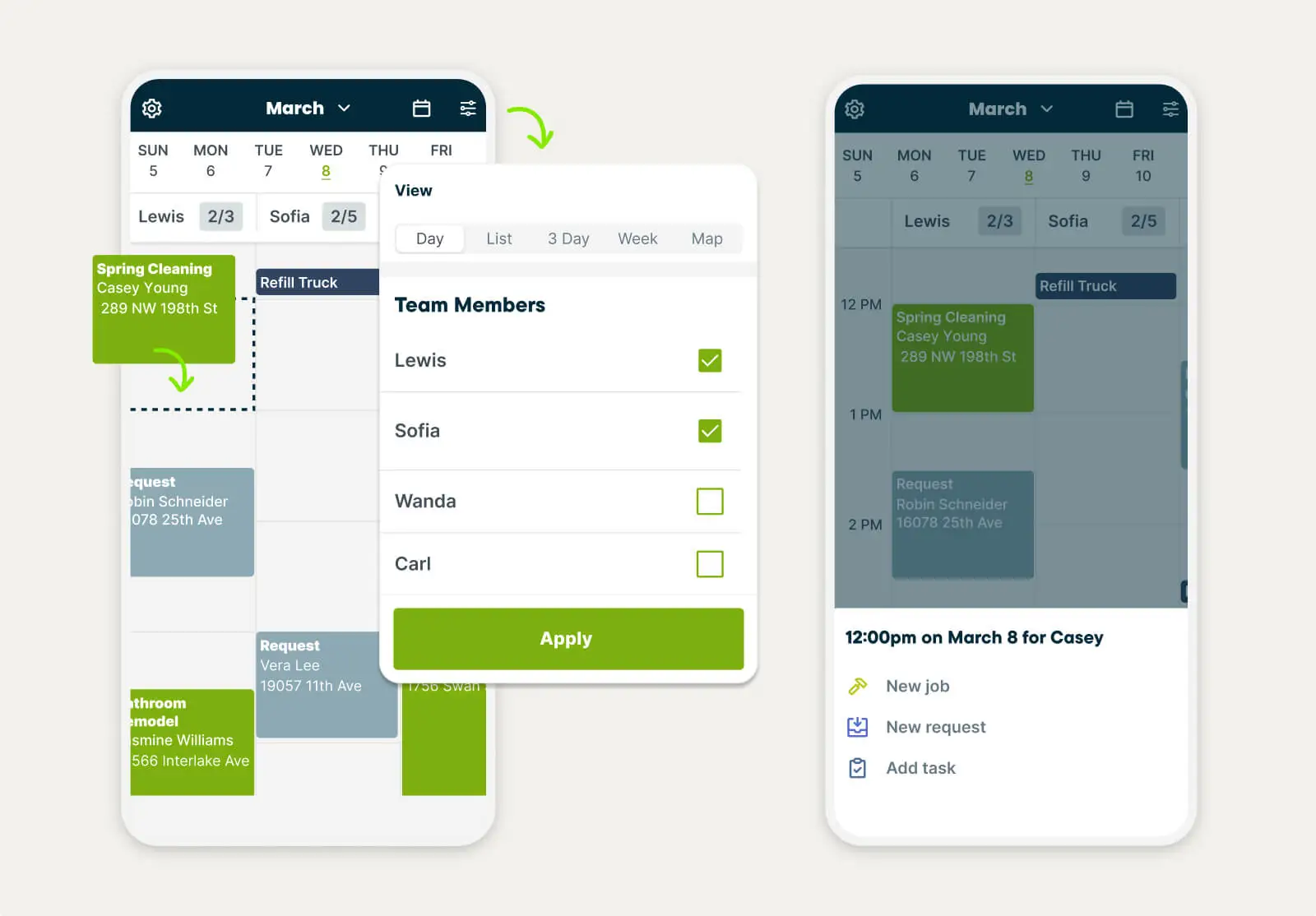
And managing multiple projects with a scheduling system will help you juggle it all.
With scheduling software like Jobber, you can save time and get jobs done sooner. Simply assign the landscaping job to an available worker to get it on their schedule, with all details included. They’ll receive a notification.
Growing the business
Adding more revenue streams is great, but real growth comes from tightening up your operations and finding business opportunities year-round. Here’s how to start scaling something bigger:
- Master the quoting game: Every profitable landscaping job starts with a good estimate. Whether you’re quoting a full backyard overhaul or a paver install, knowing the true costs lets you price for profit. Don’t undercut just to get the gig since you’ll burn out fast.
- Invest in your crew: Your team’s work is your brand. When they plant with care or spot drainage issues early, clients notice. The better your crew, the more confidence you’ll have when it comes time to raise prices. And the more time you’ll have to focus on scheduling, marketing, and the next big opportunity.
- Create a referral program: Word of mouth still wins in this business. Offer clients a perk (like a gift card or discount) for referring a friend. People love showing off their new patio, so give them a reason to recommend you.
- Be the landscaper everyone remembers: Building a reputation for quality and reliability can help get you more jobs and higher-paying jobs. Show up when you say you will. Go the extra mile on a landscaping project. Once clients trust you, they’ll call you back.
[Getting customers] grows faster than you think it will. If you do good work, show up on time, and do what you say you’ll do—the work will come.
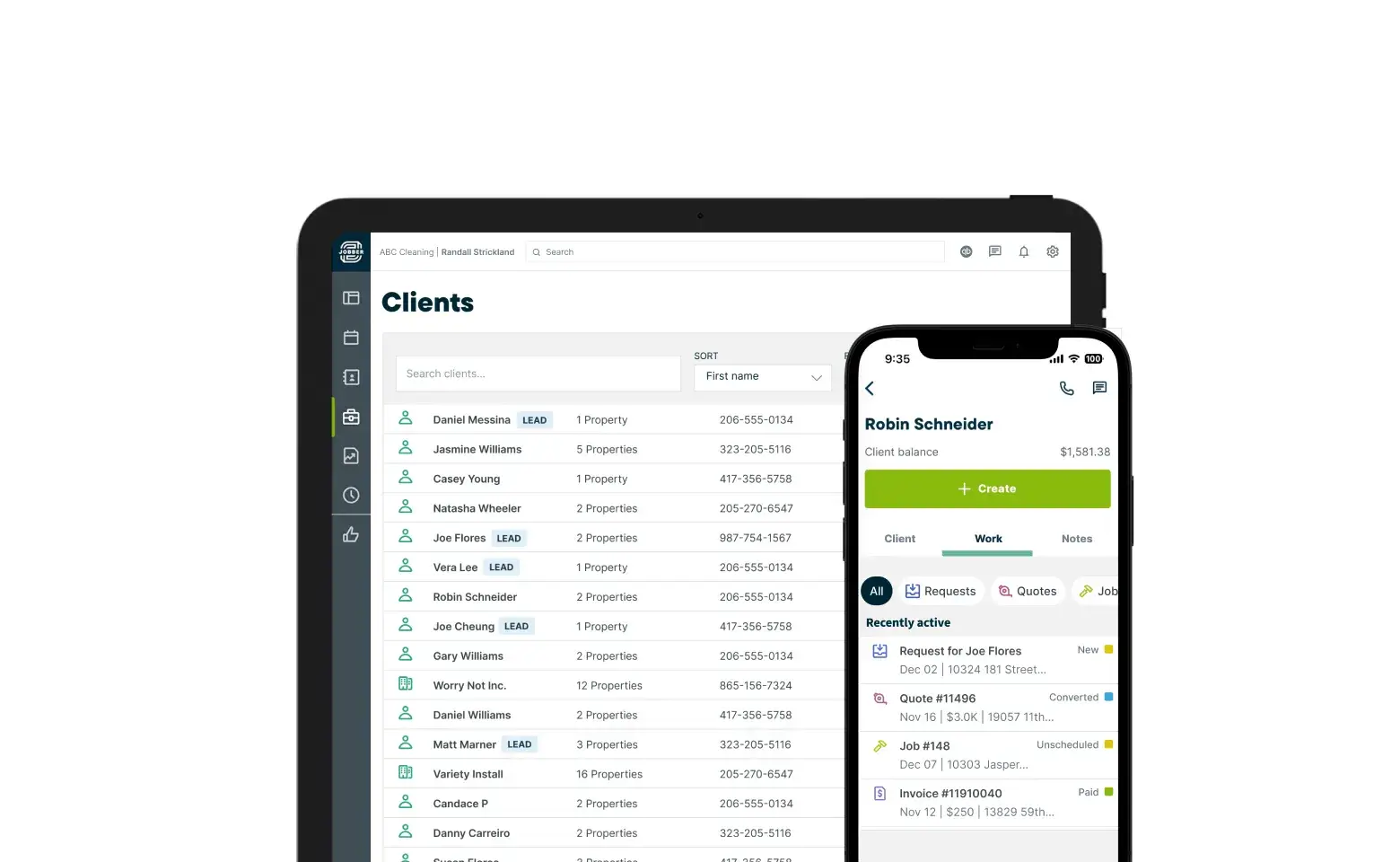
- Use tech like Jobber’s landscaping business software to manage and organize your client details and job history from anywhere. Keep in touch with your customers with on-my-way texts and follow-up messages. And with one click, you can turn your quotes into professional invoices as soon as a job is done.
Because of the time Jobber has saved me on tasks that used to consume my day, I’ve been able to focus on the bigger picture…
…and provide my family with six-figure incomes back-to-back years.

Start turning people’s yards into income
How much you can make as a landscaper comes down to a few things—where you’re working, how much time you’re putting in, and how far you want to take it. Whether you’re just getting started or you have your sights set on becoming a business owner, there’s real income potential in this field.
Landscapers across the United States earn somewhere between $29,990 and $53,900 per year on average, with opportunities for year-round work. And if you’re working in a high-paying state or making a name for yourself in an affluent market, you could scale your income even faster.
If you have the drive to run the show, owning a landscaping company means there’s a path to earning six figures.
Frequently Asked Questions
-
Most landscaping businesses see a profit margin somewhere between 40% and 60%. Smaller jobs or basic maintenance services tend to land on the lower end, while specialized work (like hardscaping or design-build projects) can push your margins higher.
-
States like Massachusetts, D.C., Washington, Alaska, and Connecticut top the charts for landscaper pay. MA is the highest-paying state with an average salary of $48,760. If you have skills in hardscaping, irrigation, or grading, you can earn more than someone sticking to mowing or mulch.
-
San Francisco, CA is the metro area with the highest average salary ($51,900). State-wise, Massachusetts leads with an average of $48,760. Skilled professionals with the right certifications, or those running their own businesses, can earn more.
-
Houston, TX is the metro area with the lowest average salary ($35,160). State-wise, West Virginia has the lowest pay with an average of $30,540. Jobs in these areas are more widespread with long drives, and rural communities usually only pay for basic maintenance.
-
Licensed landscape architects in the U.S. earn a median of $79,660 per year. Entry-level positions start closer to $52K, while the top tier of architects bring in over $132K.
-
On average, landscape designers earn $70,583 annually, based on recent job salary data through June 30, 2025. Rates can vary depending on experience, location, and whether you freelance or work for a larger company.