
Whether you’re a general contractor or run a construction company, nailing accurate estimates isn’t just important—it’s essential. One wrong number can mean losing the job or losing profit.
A clear, accurate construction quote builds trust with clients, protects your bottom line, and sets the stage for a smooth, well-managed project from start to finish.
Follow the steps in this guide to learn how to create the best, most accurate estimate for your construction project and avoid paying expensive professional estimators.
Create a construction estimate in 5 steps
1. Evaluate the project and break down its requirements
To create an accurate construction estimate, start by detailing the full scope of the project, which may include:
- Specific equipment and materials needed
- Specifications or parameters that must be followed (e.g., mechanical, electrical, and plumbing requirements)
- Tasks and sub-tasks (some of which may need to be subcontracted to others, depending on the project)
If you’ve been given a bid package for your construction project, review all of the construction documents (e.g., blueprints, architectural plans, and engineering specs) to put these requirements together. You’ll end up with an overview of the scope of the project, as well as a rough forecast of how much the project will cost. From here, you can start identifying and pricing specific tasks and sub-tasks, including elements such as construction materials and labor.
Pro Tip: Throughout the estimating process, be sure to double-check your work and focus on every detail. A forgotten project requirement or cost here and there can lead to inaccurate cost estimation and complications during project execution.
2. Conduct a site visit
Whether or not a site visit is mandated by the bid, it’s always a good idea to investigate the site while you’re putting together an estimate. Specific conditions at the site, such as drainage or access, can affect work scope and costs.
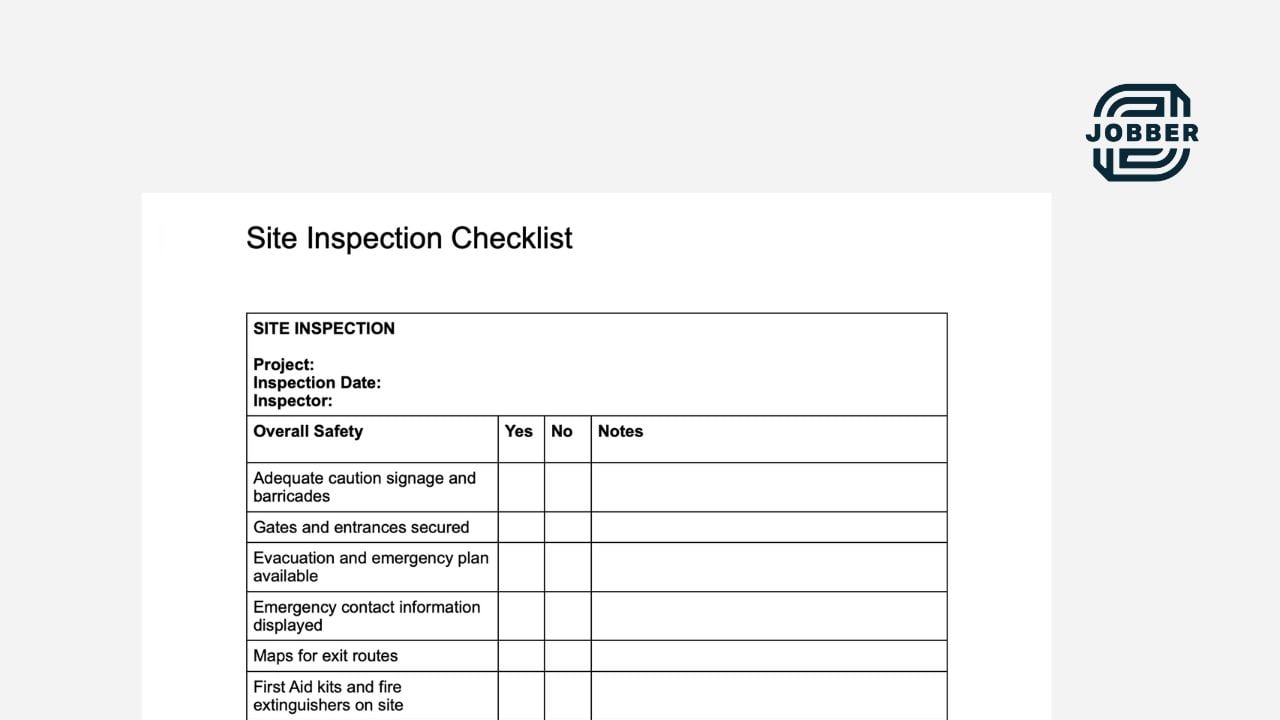
Use this handy construction site inspection checklist to help keep track of all the necessary details from your site visit.
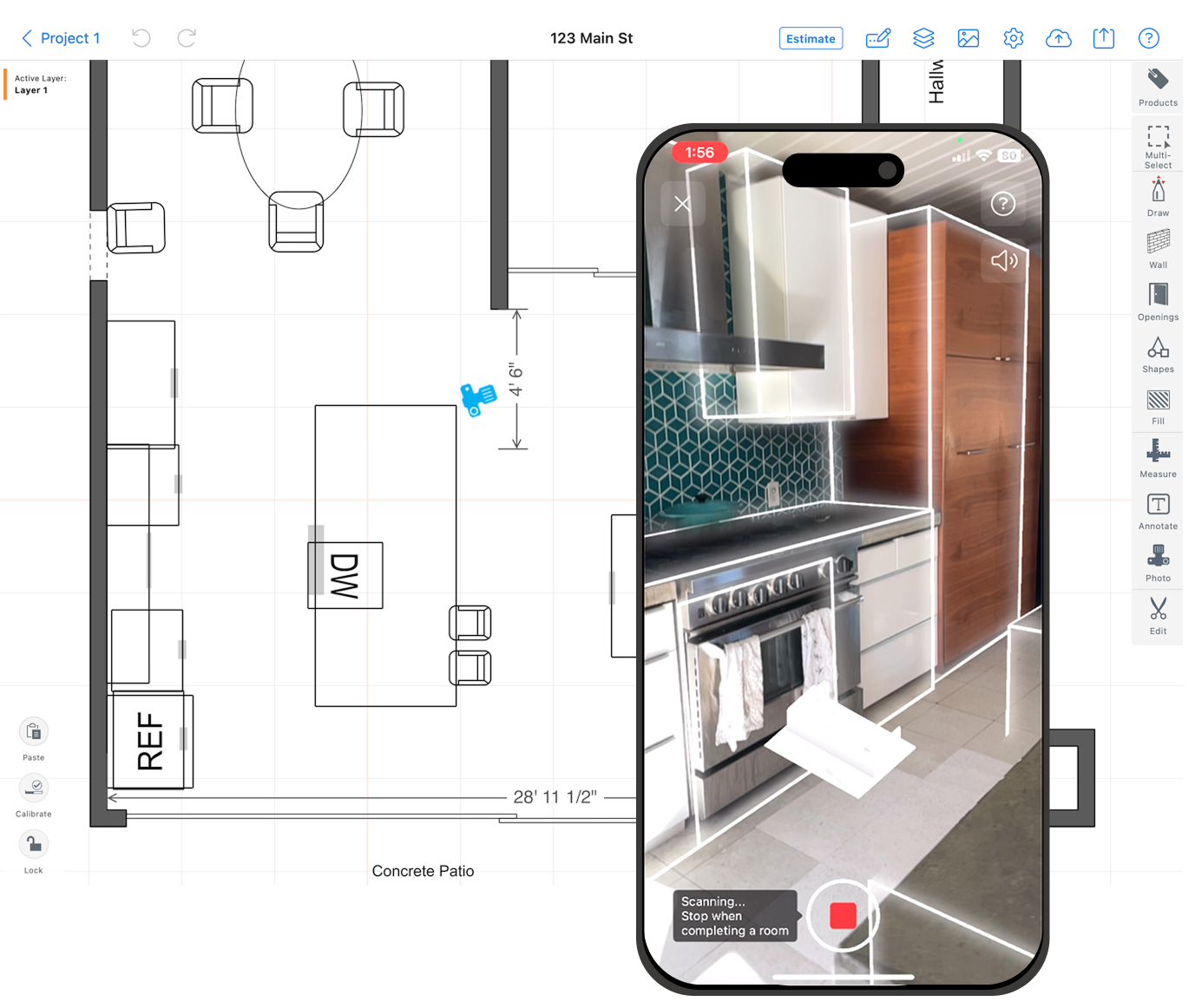
To expedite data collection during your site visit and produce accurate floor plan or construction drawings, you can use construction estimating tools like ArcSite’s AR Room Scanner and floor plan software.
Pro Tip: Keep the major project stakeholders involved throughout the estimating process so everyone is on the same page regarding what is required and how much it will cost.
3. Perform a material takeoff
Think of a material takeoff (also known as a construction takeoff) as the foundation (so to speak) of your construction project. It’s where you list all of the materials you need to complete the job, including their quantities and cost. A takeoff helps you accurately estimate how much time, labor, and equipment you need to complete the project using these specific materials.
You can perform a material takeoff manually (creating your own spreadsheet and filling it in, item by item) or use digital takeoff software.
Pro Tip: Material and supply costs can change over time—be sure to keep up with the latest pricing. and when you create your estimate, provide a date for how long it is valid (e.g., 1-2 months).
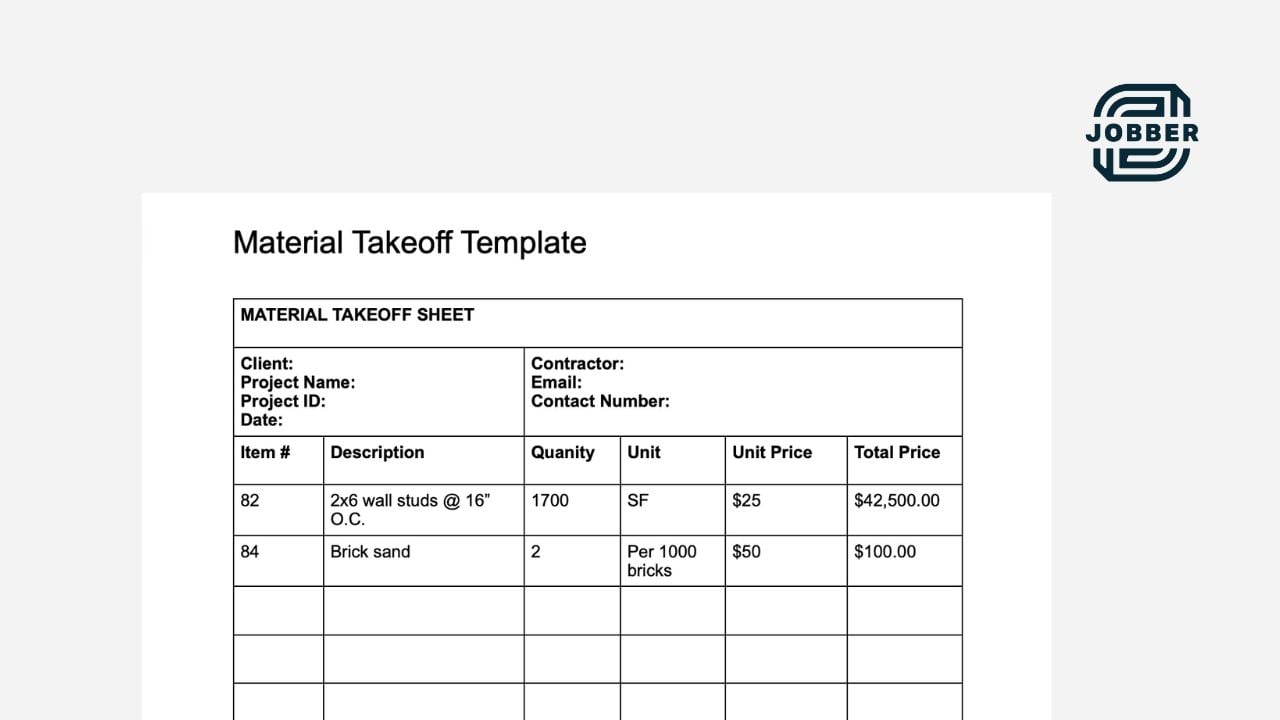
You can use this free material takeoff template for your own takeoff.
4. Calculate associated costs
Once you have your material takeoff in hand, you can calculate all associated costs that are required to complete the project. This includes:
- Labor: The number of people needed for each task, their roles, and the costs for their participation, including wages, insurance, and workers’ compensation
- Suppliers, subcontractors, and vendors: This includes equipment purchases or rentals, or subcontractor labor
- Overhead costs: If your project requires permitting, temporary office rental, supply purchases, or site cleaning
- Indirect costs: This can include insurance (e.g., builder’s risk insurance or general liability), construction bonds (for public and some commercial projects), and site maintenance (e.g., site cleanup, waste disposal)
Pro Tip: Labor costs can add up, especially if the project lasts longer than anticipated. A good rule of thumb is to supply a projected project timeframe that’s 5-10 percent longer than expected. And don’t overlook specialty contractors. Specific tasks or parts of the job, like electrical work, plumbing, or HVAC systems, and their unique costs need to be factored into the estimate. Communicating early with your specialty contractors to get detailed quotes for their services will help you build a more accurate construction cost estimate.
READ MORE: How to price a job as a contractor
5. Put it all together and create your cost estimate
Once you have all this information assembled, you can fill out your construction estimate using construction estimating software. Be sure to specify each individual cost, including necessary materials and labor costs, pricing for specific services (such as equipment rental, subcontractor work, or site cleanup), and an expiration date for how long the estimate is valid (usually a month).
Break down labor into specific tasks and projected times it will take to complete each task to get accurate figures for how much labor will cost.
Pro Tip: Factor in a 5 to 10 percent contingency percentage to cover unexpected costs. For long-term, complex projects, you should also account for potential cost changes in your estimate (e.g., changing costs for materials or labor over time).
Once you’ve finalized your detailed estimate, you’re ready to submit a professional bid or quote, using your estimate as the foundation of your proposal. You should also factor in your own profit margins when coming up with your bid or proposal.
READ MORE: Best construction estimating software
Build a professional estimate or quote with the help of Jobber and ArcSite
Jobber and ArcSite offer an integrated solution that takes you from creating floor plans to creating professional quotes in minutes, through these convenient features:
- Add a client in Jobber and sync it with your ArcSite project: Any ArcSite designs, sketches, and measurements you create will be imported into your Jobber job quotes.
- Customize your proposals: Transfer ArcSite data into Jobber’s branded templates, line-item services, and pricing.
- Get fast approval: Clients can review proposals, approve, or suggest changes right from their phone or computer..
For more on how the Jobber + ArcSite integration can work for you, check out this help article.
Frequently Asked Questions
-
Simply put, a construction estimate is a calculation of total costs for a construction project, taking into account direct costs (such as materials) and indirect costs (such as permitting and insurance). Creating an estimate to present to a client is a key step for getting any project off the ground.
-
A construction cost estimate itemizes all the materials and work needed to complete a project and provides a budget overview, which is crucial when you’re planning or bidding on a project. Clear estimates spell out what the client should expect to pay for your work as well as the scope of work you’ll be expected to complete, and help identify potential risks and uncertainties. Creating complete, accurate construction estimates helps avoid “unpleasant surprises” for you and your clients, and gives you the reputation of being a reliable, thorough contractor.
-
A good construction estimate includes:
Direct costs such as materials, labor, and equipment
Indirect costs such as legal fees, permits, and insurance, as well as overhead costs, which can include equipment mobilization and insurance
Labor costs, including wages for workers and overtime
Subcontractor costs, including pay for labor, materials, and equipment
Once you’ve researched all of these costs and have them listed out in detail, you can use a construction estimate template or construction estimating software like Jobber or ArcSite to create your estimate. -
For construction projects, cost estimates usually fall in one of three categories:
Preliminary estimate: Also known as the conceptual construction estimate or cost modeling, this is a rough estimate project costs, based on general information about its scope. This estimate is useful to have on hand early in the process so that the contractor and client can reach a general understanding about the project’s overall budget.
Detailed cost estimate: This includes a breakdown of all of the project’s elements, from materials to labor, and how much each element costs. This estimate is intended to serve as the blueprint for how the project will be scheduled, resourced, and carried out, and how much it all costs.
Control estimate: Also known as a final cost estimate, this estimate serves as the official project budget as well as a guideline for project management. All costs during the project will be compared to this estimate to ensure the construction project stays on track and on budget.