How to Get Remodeling Leads: 10 Ways to Fill Your Project Pipeline

Key takeaways:
Discover the most effective ways to fill your remodeling project pipeline and keep your calendar booked all year round.
- Optimize your online presence for local discovery. Set up a comprehensive Google Business Profile, showcase real project photos, and launch a professional website with dedicated service pages to attract homeowners searching for remodeling services in your area.
- Use social proof and community connections. Collect and display detailed customer reviews, nurture referrals from past clients, and network with local professionals like real estate agents, designers, and trades for a steady stream of qualified remodeling leads.
- Engage in multiple lead channels to boost visibility. List your business on relevant online directories, run targeted paid ads, join local organizations, and promote your services with yard signs or branded vehicles to reach homeowners wherever they’re searching or living.
- Strengthen your follow-up and lead management processes. Respond promptly to new inquiries, use consistent follow-up on estimates, and qualify leads with set questions to convert more opportunities into booked projects.
- Balance channels for reliable, high-quality lead flow. Track your results, focus on the lead sources that generate the most ideal projects, and adapt your strategy as your business grows and your goals evolve.
For more tips on growing your remodeling business and managing leads like a pro, sign up for the Jobber Newsletter.
Referrals can be one of the best sources of remodeling work, but they aren’t always predictable. One month, you may have more kitchen and bath projects than you can handle. The next month, you might be wondering where your next job will come from.
A strong lead generation strategy gives you more control over your pipeline throughout the year. Instead of relying on word-of-mouth alone, you can combine local search, partnerships, paid channels, and more to reach homeowners who are actively planning remodeling projects.
In this guide, we’ll give you 10 proven ways to get home remodeling leads and keep your schedule filled with opportunities.
10 ways to get remodeling leads:
-
Optimize your Google Business Profile
-
Build a remodeling website
-
Earn more customer reviews
-
Generate repeat business and referrals
-
Partner with local businesses
-
Use online directories and lead marketplaces
-
Invest in remodeling SEO
-
Run paid search ads
-
Get involved in your local community
-
Follow up consistently with remodeling leads
1. Optimize your Google Business Profile to attract local remodeling leads
When homeowners search for terms like “kitchen remodeler near me” or “bathroom remodeling contractor,” a Google Business Profile helps your company appear in local results and Google Maps.
To get more construction leads through your profile, start by choosing the most accurate business categories for the work you do. This might be something like “Kitchen Remodeler,” “Bathroom Remodeler,” or “General Contractor.”
Then, complete your Google Business profile with:
- Your phone number and website
- Local service areas (or zip codes where you work)
- Complete business hours
- Full list of remodeling services
- A clear and concise business description
Photos are especially important for remodelers. On your Google profile, upload real project photos. These can show finished kitchens, bathrooms, additions, and whole-home renovations.
Here’s how your Google Business Profile can show up in local map results:
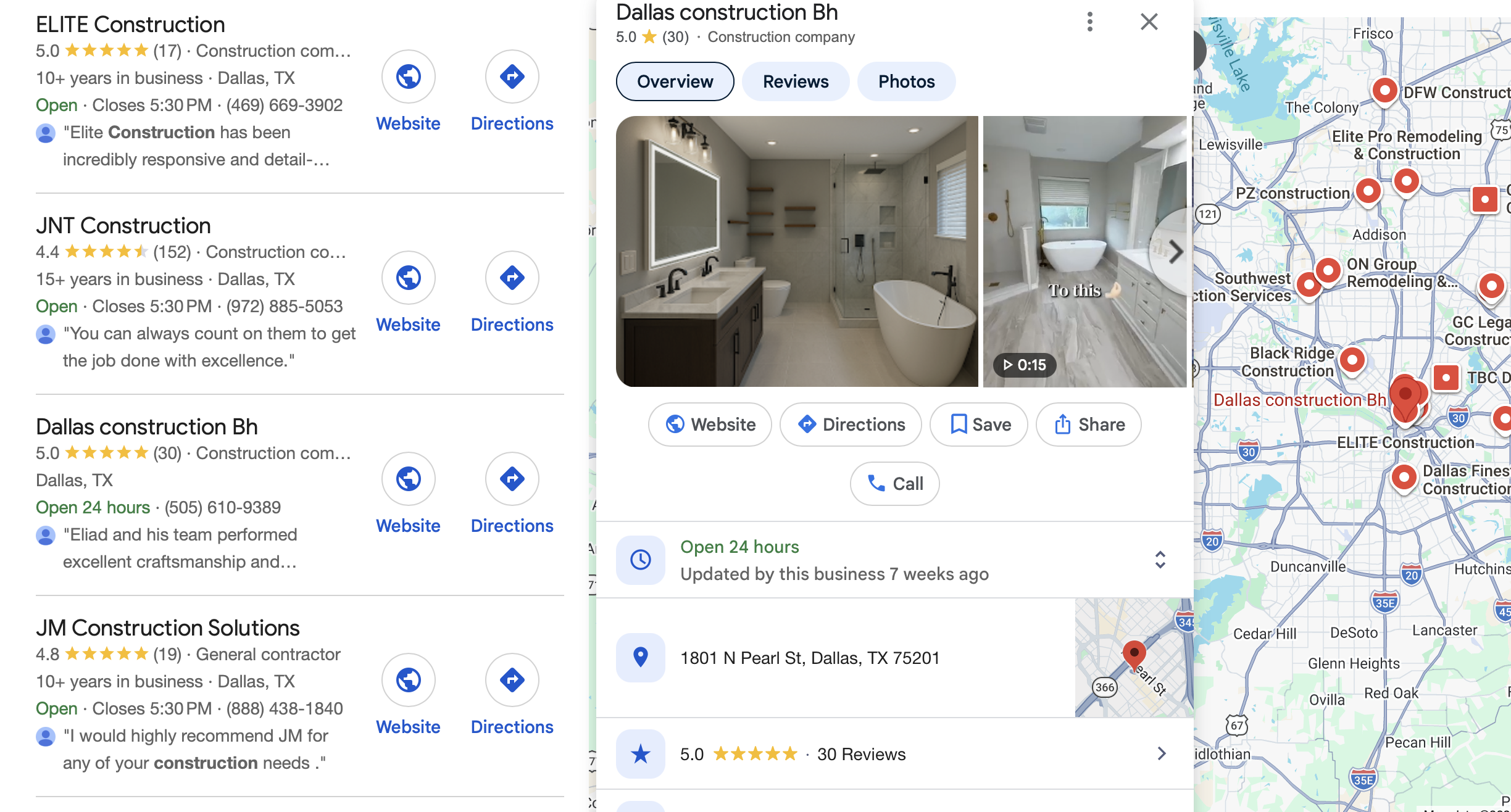
Keep your Google Business profile active by adding new photos, publishing weekly updates, and responding to customer reviews promptly when they come in.
2. Build a remodeling website that turns visitors into leads
Even if someone first hears about you through a referral or lead generation site, there’s a good chance they’ll visit your website before reaching out.
Make sure your brand’s website builds confidence. Here’s how to do it:
- Create dedicated pages for each of your major services. This might include kitchen remodeling, bathroom remodeling, basement finishing, home additions, and whole-home renovations.
- Show examples of your work. Whenever possible, showcase real before-and-after photos from your completed remodeling projects. Avoid using stock photography that could set unrealistic expectations about your work.
- Provide easy ways to request a quote or consultation. Every page on your website should make it easy for potential customers to get in touch. You’ll need to include clear estimate request buttons, click-to-call phone numbers, and simple contact forms.
- Build unique pages for each location or service area. If you serve multiple locations, consider creating city or service-area pages as well. For example, a page targeting “kitchen remodeling in Montview” can help you appear in organic search results for homeowners searching in that market.
If you’re a home remodeler, a lot of people are going to Google ‘home remodeler.’
But also, people are going to do searches for bathroom remodel, and basement remodel, and attic and bathroom, and bedroom remodel, and dining room remodel. And if you have pages for each one of those, you’re going to get all the business.

If you don’t have a professional website yet, Jobber can help you build an online presence that showcases your services and makes it fast for customers to request work.
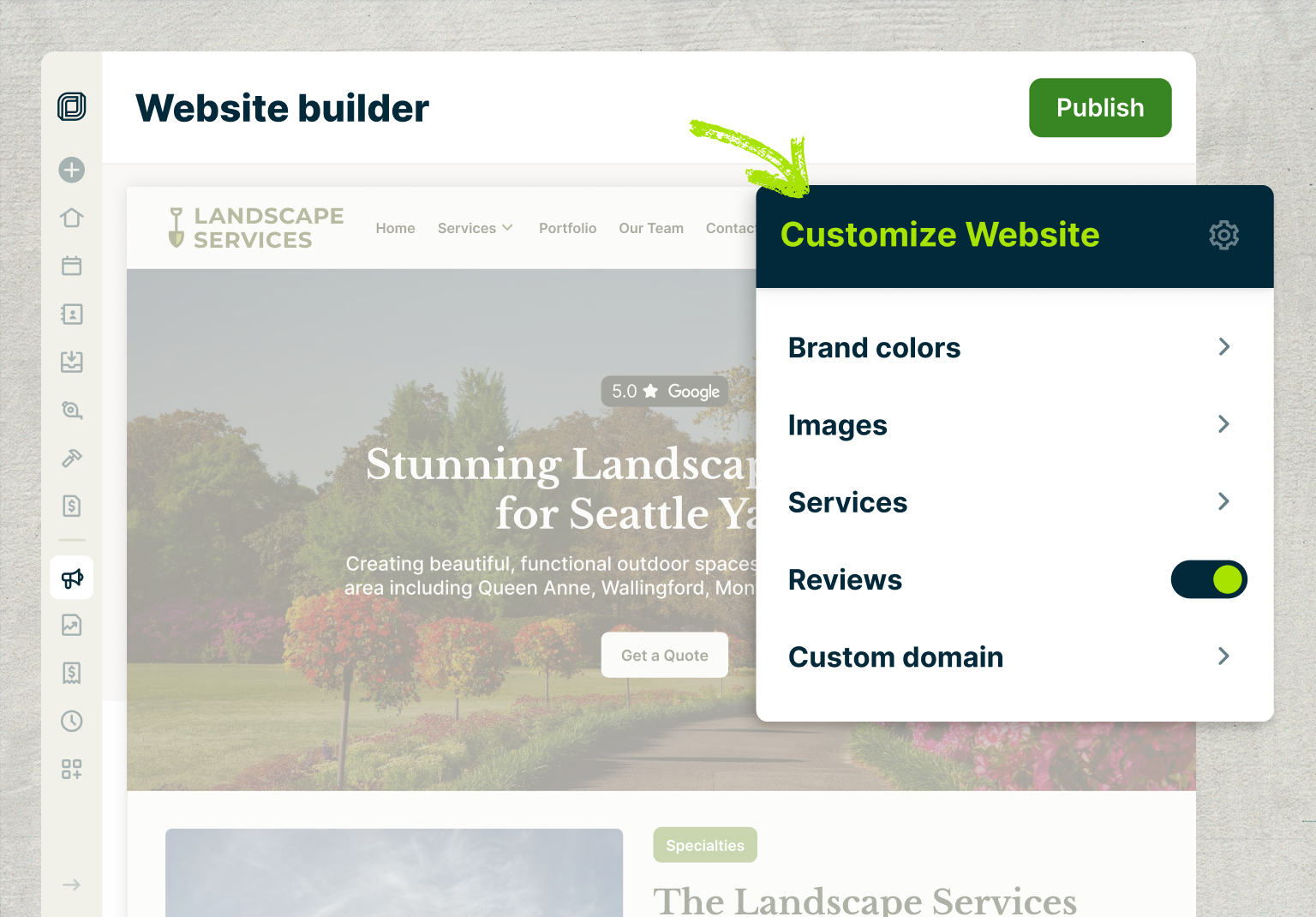
3. Earn more reviews to build trust and win bigger projects
Remodeling is a high-trust purchase. Homeowners might be spending tens of thousands of dollars and inviting your crew into their home for several weeks. As a result, they want to feel confident they’re making the right choice.
Customer reviews build that confidence by showing real client experiences with your business. Ask satisfied customers for a review shortly after completing their project while the experience is still fresh. Make it easy by sending them a direct review link.
The best customer reviews are ones that mention details such as:
- Quality of the finished work
- Communication
- Timeliness
- Cleanliness
- Problem-solving
- Overall customer experience
Showcase your best reviews on your website and Google Business Profile. Pair them with photos of completed projects to give prospective customers more proof of the quality of your work.
With Jobber’s review request features, you can also automatically request feedback from customers after a job instead of sending each request manually.

4. Generate repeat business and referrals from past clients
Past customers can be one of your best sources of new remodeling leads. Start a referral program and make it part of your standard follow-up with satisfied customers after a job.
First, stay in touch after the job is complete. A homeowner who hired you for a bathroom remodel today could come back for a kitchen renovation, basement finishing project, or home addition later.
READ MORE: Customer referral program ideas
When a customer is happy with your work, ask them directly for a referral. Keep the request simple, such as asking whether they know a neighbor, friend, or family member who’s planning a renovation.
You can also offer a referral incentive (like a gift card or credit toward future work) to give customers another reason to recommend your business.
Pro Tip: Use Jobber to easily send customer referral requests, track new leads, and reward customers who bring you new work opportunities. That way, generating referrals becomes part of your process instead of something you have to remember to do.
5. Partner with local businesses to get more remodeling referrals
Other local professionals can be a valuable source of qualified remodeling leads. This is especially true when they already work with homeowners who are planning improvements.
Some of the best potential referral partners include:
- Real estate agents: Agents can connect you with homeowners preparing to renovate before or after a move.
- Interior designers: For contractor lead generation, designers can refer clients who need to bring their designs to life.
- Architects: These individuals can recommend your business for renovation or additional projects they’ve designed.
- Property managers: Property managers might send renovation and improvement projects your way for the properties they oversee.
- Electricians and plumbers: Trade professionals often refer customers whose projects require remodeling beyond their unique skill set.
- Painters, roofers, and other complementary trades: These individuals may pass along projects that fall outside their services but fit yours.
- Insurance professionals: Insurers often connect you with homeowners when covered repair work legitimately overlaps with larger renovation needs.
Make sure your referral partners know exactly what types of home improvement leads you’re looking for. Tell your connections what you specialize in, like higher-end kitchen remodels, home additions, or first-floor renovations within a specific service area.
The more clearly you define your ideal project, the easier it is for partners to confidently send that homeowner your way.
Relationships are what produce revenue. I always ask, ‘How can I meet more people in my local area?’
I know that I’m not looking for a check from that person for three months, maybe six months. But 12 months down the road, they’re more likely to spend money with my business.

6. Get remodeling leads from online directories and marketplaces
Lead generation sites like Angi, Houzz, HomeAdvisor, and Thumbtack can help fill gaps in your pipeline, especially when you’re starting out or trying to generate work quickly.
On each platform, create a complete profile that includes:
- Your remodeling specialties
- Service areas, neighborhoods, and local zip codes
- Customer reviews and testimonials
- Real project photography
- Examples of your completed work
Before paying for leads, learn how each platform sends them to contractors. Some sites sell shared leads, meaning you compete with several remodelers for the same homeowner. Other sites offer exclusive remodeling leads, which cost more but have less competition.
If you’re buying shared leads, always respond as quickly as possible. Homeowners may be contacting multiple contractors at once. Being one of the first to call or text can improve your chances of starting a conversation.
Finally, review your results regularly. Consider reducing your spend or moving budget to other platforms if most leads are outside your service area, don’t have the budget for your typical projects, or never respond to follow-ups.
7. Rank higher in local search with remodeling SEO
Search engine optimization (SEO) helps your website appear in search results when homeowners look online for remodeling services. For example, someone searching “kitchen remodeler near me” or “bathroom remodeling in [city]” could discover your business as they search.
Here are a few ways to improve your remodeling SEO:
- Create dedicated service pages. Build pages for the types of projects you want to book, and pair each service with the locations you serve. For example, you might target search terms like “kitchen remodeling in [city],” “bathroom remodeler in [city],” “basement finishing contractor in [city],” and “home addition contractor in [city].”
- Turn completed projects into case studies. Include photos, the homeowner’s goals, any challenges your team solved, and the finished result. This gives potential customers useful details about your experience while giving search engines more context about the work you do.
- Publish educational content. Reach homeowners earlier in their planning process by answering the same questions potential customers often ask before requesting an estimate. For example, “how much does a kitchen remodel cost,” “how long does a bathroom remodel take,” “do you need a permit for an addition,” or “should you remodel before selling a house?”
Keep in mind that SEO won’t generate results overnight. But consistently creating useful, locally relevant content can help your business show up for more remodeling searches. It can also generate solid leads without relying on paid ads or pricey lead marketplaces.
8. Run paid ads that attract high-intent remodeling leads
Paid search advertising can help you reach homeowners who are actively looking for a contractor. You can run paid campaigns through search engines like Google or use social media platforms to target potential customers based on location, interests, and other criteria.
Here’s an example of what a paid social media ad could look like for a remodeling business:
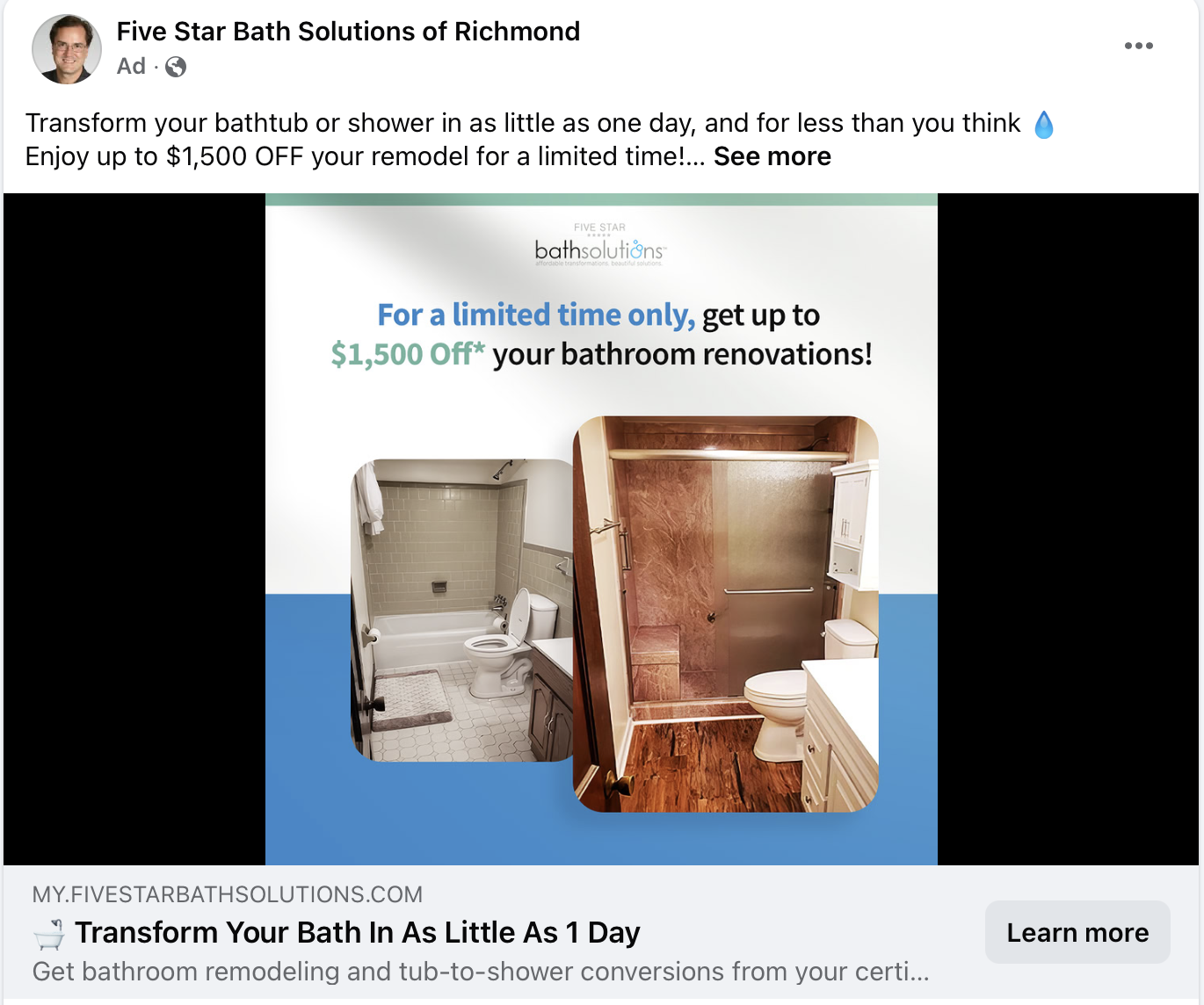
Follow these tips when you’re running paid ads:
- Focus on terms that suggest buying intent. This might include keywords like “kitchen remodel estimate,” “bathroom remodeler near me,” “home addition contractor,” and “whole home remodeling company.”
- Send each ad to a relevant landing page. Use a dedicated web page for each campaign instead of sending traffic to your website home page. For example, a kitchen remodeling ad should direct potential clients to a page featuring kitchen projects, reviews, and a quote request.
- Tell the ad platform which searches aren’t a good fit. Use negative keywords to prevent your ads from appearing for certain terms, focusing your budget on homeowners who are looking to hire a remodeler. For example, adding “DIY” as a negative keyword ensures your ad isn’t shown to someone searching for “DIY kitchen remodeling.”
- Test with a small budget to see what works. Choose one profitable service, target a defined area, set a manageable budget, and track which inquiries become jobs. From there, you can dedicate more budget to the ads that bring in the most—and best—leads.
9. Get noticed in your community and generate local referrals
Remodeling work is highly local, which means visibility in the neighborhoods you already serve can lead to more high-paying projects. Consider joining organizations such as your local Home Builders Association, chamber of commerce, or other online and in-person business groups.
You can also promote your company directly around active projects. To do this effectively, you can choose to use:
- Professional yard signs
- Branded trucks and trailers
- Job-site signage
- Targeted neighborhood flyers or door hangers (where permitted)
For example, you can use a local kitchen remodel project to reach nearby homeowners who may have similar homes or renovation plans.
A simple message like “We’re remodeling a kitchen nearby” makes your contractor marketing strategy feel local, timely, and more relevant than a generic ad.
10. Follow up consistently so more remodeling leads become customers
Getting more remodeling work doesn’t always mean finding higher quantities of fresh leads. You may be able to book more jobs simply by responding faster and following up consistently with the homeowners who have already contacted you.
As a general rule, always respond to new inquiries as soon as you can. This is especially important when you’re paying for shared leads and competing with other contractors.
Then, create a repeatable follow-up process for every estimate you send:
- Send the estimate as soon as it’s ready. Include the project scope, pricing, and clear instructions for what the homeowner should do next.
- Follow up two or three days later. Ask whether they’ve had a chance to review the estimate and if you can answer any questions.
- Check in again about a week later. See where they are in the decision-making process and offer to clarify the scope, timeline, or next steps.
- Send a final follow-up. Let them know you’re available if they decide to move forward and close the loop for now.
Don’t assume a homeowner has chosen another contractor just because you haven’t heard back after the initial conversation. They may still be comparing estimates, working out financing, or deciding when they’re ready to start.
Jobber’s automated quote follow-ups help you stay in touch with prospective customers and follow up on outstanding estimates without having to devote an extra chunk of your day to manual follow-ups.

How to turn remodeling leads into booked jobs
Generating residential construction leads is only the first half of the process. You also need a system for qualifying opportunities and moving the right ones toward a signed project or contract.
Before investing hours writing an estimate, start by asking a few basic questions:
- What type of project are they planning?
- Where is the property located?
- What is the approximate scope?
- What timeline do they have in mind?
- What budget range are they considering?
- Who is involved in the final decision?
Once you confirm the project may be a good fit, schedule a professional walkthrough. This is an in-person conversation with the client to go over project details and budget.
Use that meeting to understand the homeowner’s priorities, inspect the space, explain your process, and establish clear next steps.
Then, provide a professional estimate that clearly outlines the scope of work, pricing, allowances or options where appropriate, payment terms, and what happens next.
Jobber’s Sales Pipeline can help you keep these opportunities organized. With an established and trackable pipeline, you can see which leads are new, which future clients need follow-up, and which are close to becoming booked jobs.
Remodeling lead generation channels compared
There’s no single best lead source for every remodeling company. Your ideal mix depends on your budget, experience, specialty, and how quickly you need work.
Use the comparison below to see which common remodeling lead sources may be the best fit for your business.
| Channel | Cost | Speed | Best for | Watch out for: |
|---|---|---|---|---|
| Google Business Profile | Free | Medium | Local high-intent leads | Requires reviews and regular updates |
| Website + organic SEO | Low to medium | Slow | Long-term owned lead generation | Takes time to rank in organic search |
| Customer referrals | Low | Medium | High-trust leads | Volume can be unpredictable |
| Referral partners | Low | Medium | Qualified local introductions | Requires time and effort to build relationships |
| Lead marketplaces | Medium to high | Fast | Filling pipeline gaps | Shared leads and price competition |
| Paid ads | Medium to high | Fast | High-intent searches | Poor targeting can waste budget |
| Community marketing | Low to medium | Medium | Neighborhood awareness | Results can be harder to track |
Fortunately, you don’t need to launch every home improvement lead generation channel at one time. Start with a few sources, track where qualified leads come from, and invest more in the channels that consistently produce booked work.
Build a remodeling lead system you can rely on
A strong remodeling lead generation strategy uses a mix of channels. Combine referrals, partnerships, paid options, and channels you own to keep qualified leads coming in throughout the year. Focus on the sources that bring you the right projects, not just the most inquiries.
With remodeling business management software like Jobber, you can organize leads, send professional estimates, automate follow-ups, and turn more opportunities into booked work.
Frequently Asked Questions
-
New remodeling companies can start generating leads with low-cost channels that help build local visibility and trust. Set up a complete Google Business Profile and professional website, then connect with complementary trades, real estate agents, and local business groups that may be able to send referrals your way.
As you complete your first few jobs, photograph the work and ask satisfied customers for reviews. These early projects can become testimonials, project galleries, and case studies that show potential customers what you can do. Focus on building a strong local reputation first, then invest in paid lead sources as your budget grows. -
Angi and Houzz can be worthwhile lead sources for remodelers. However, results depend on your market, project value, competition, and how quickly you respond to new inquiries. Instead of judging either platform by the number of leads it generates, track how many leads turn into qualified appointments, estimates, and booked jobs.
Compare the revenue from those projects with what you spend to acquire the leads. If a platform consistently sends poor-fit inquiries or costs more than the work it generates, shift that budget to a better-performing channel. -
Customer referrals are one of the strongest ways to generate remodeling leads without paying for advertising, especially because homeowners often want recommendations from people they trust. You can also use a free Google Business Profile, collect customer reviews, build relationships with local referral partners, and improve your website’s organic search visibility.
Keep in mind that “free” doesn’t mean effortless. These strategies still require time and consistent follow-up, but they can help you build lead sources you control without paying for every click or inquiry. -
For most small remodeling businesses, starting with 2–4 complementary lead sources is more manageable than trying every channel at once. Choose a mix that can generate leads now while also building your pipeline for the future.
For example, you might use:
• Google Business Profile and SEO for long-term visibility
• Customer referrals for high-trust leads
• Paid search ads or a lead marketplace for faster opportunities
Track which sources generate qualified leads and booked jobs, then invest more time and budget in the channels that perform best.