
Key takeaways:
To help your business appear in AI-powered search results, focus on building credibility and making your information clear and accessible to both customers and AI platforms.
- Maintain consistent, accurate business information everywhere online. Ensure your name, address, phone, and service details match across your website, Google Business Profile, social media, and any directory listings.
- Build a strong online foundation with dedicated service and location pages. Create individual pages that clearly describe each service you offer, who you serve, and where you operate, using plain language and real examples.
- Generate and highlight authentic customer reviews. Regularly ask for and respond to customer reviews on platforms like Google, Yelp, and Bing. Positive sentiment and active engagement help AI trust your business as a relevant recommendation.
- Publish helpful, expert-driven content and keep it updated. Answer common customer questions with informative articles, FAQs, and case studies to demonstrate your expertise and reliability. This also makes it easier for AI to match you with the right searches.
- Optimize your website for technical SEO and performance. Use structured data (schema) to help AI understand what your business does, improve website speed, and make it mobile-friendly. Keep your site fresh with up-to-date information, images, and videos.
Stay ahead in the evolving world of AI-driven search by getting practical tips direct to your inbox. Sign up for the Jobber Newsletter.
To get your business to show up in AI searches, you need to make it easy for AI tools like ChatGPT and Google to find, understand, and recommend your business.
More customers are using these tools to find local service businesses online, so showing up in a regular Google search isn’t the only thing that matters any more.
This guide explains how AI finds and recommends businesses and the practical steps you can take to help your business get found and win more jobs.
Learn how to appear in AI search:
-
How AI search is changing how customers find local businesses
-
Is AI replacing traditional search engines?
-
How different AI platforms find and recommend businesses
-
Why isn’t my business appearing in AI?
-
15 ways to improve your chance of appearing in AI
-
How Jobber helps your business get found in AI
-
Common mistakes that hurt AI visibility
-
How to measure your AI search visibility
How AI search is changing how customers find local businesses
Before AI search, customers would type what services/business type they were looking for into the search bar, like “grass cutting services in Memphis,” and Google would provide a long list of websites that matched their request. Your goal as a business was to rank as high in these results as possible.
With AI search, your customers can get much more specific about the types of services they need and get results tailored specifically to them. Instead of long lists of webpages, your potential customers are receiving custom business recommendations—usually pointing at only one or two webpages.
Today they’re choosing [contractors] fast and it’s happening in AI.
Your future customers are deciding whether to trust you before they even pick up the phone, before they visit your website.
The bottom line—people using AI search differently than traditional search. Instead of typing a few words, they can describe exactly what they need and ask tools like ChatGPT to recommend a business:
I own a large commercial building in Memphis and I’m looking for a landscaping company that specializes in hedge trimming and tree maintenance. My budget is X and I am looking for recurring services. Please find a business that will best suit my needs.
And ChatGPT will reply with a reply like this:
For your large commercial property in Memphis, Green Earth is the best overall match. They offer recurring commercial landscaping with hedge trimming, tree maintenance, and general property upkeep.
Your $130 per visit budget may work for routine maintenance, but larger tree or hedge jobs could cost more. A recurring service contract can help reduce the per-visit cost.
Other good options include Hodges Tree & Landscape (tree-focused), Victory Landscape Services (commercial maintenance), and Naturally Green, Inc. (full-service commercial landscaping).
This is why AI search recommendations matters for local businesses. When AI recommends your business based on a customer’s specific needs, that customer may be more likely to be a strong fit for your services—and more likely to become a qualified lead.
Is AI replacing traditional search engines?
Yes and no. 37% of consumers start their search on AI search engines like ChatGPT or Perplexity, making your visibility on AI search increasingly important for attracting new customers.
AI search engines rely heavily on information collected on traditional search engines—specifically Google. This means that to ensure your visibility on AI search, you’ll still need a solid SEO strategy as your foundation.
If your website isn’t showing up in Google search results, it’s probably not going to show up in AI search results either.
How different AI platforms find and recommend businesses
Before you can improve your business’ visibility on AI search, you need to understand how these platforms work.
Google AI Overviews and AI Mode
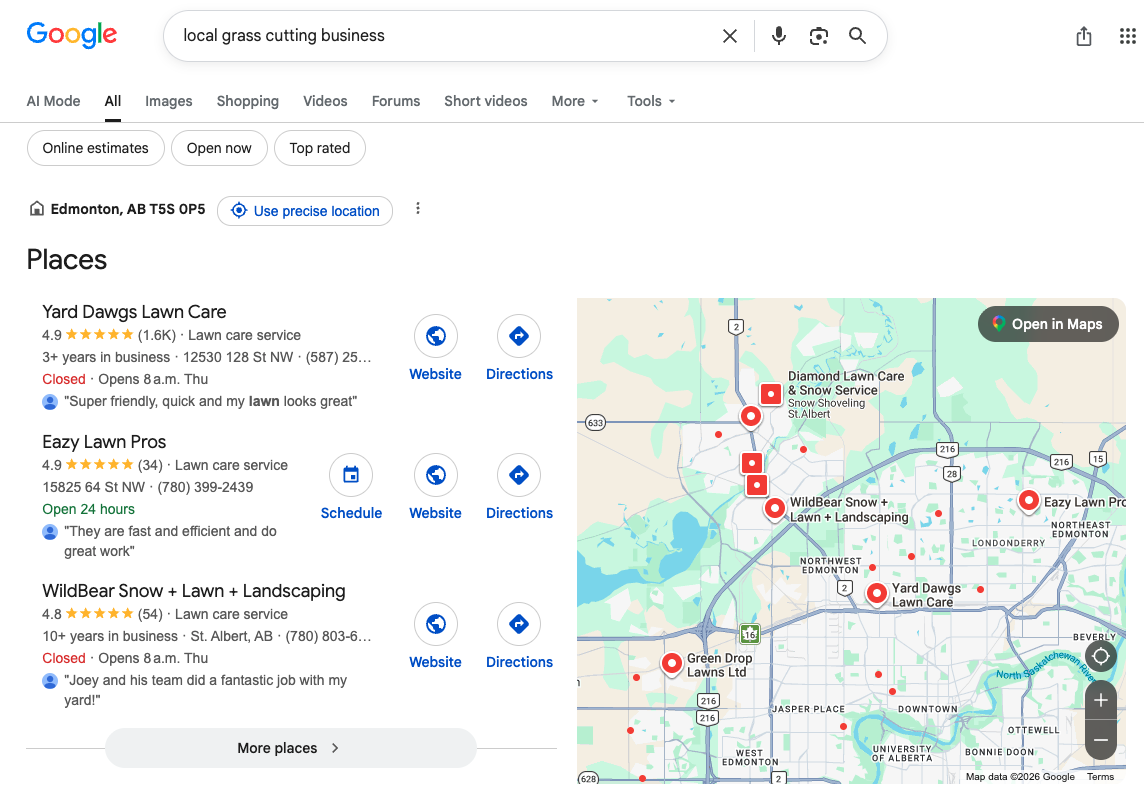
How Google AI works
Google AI Overviews and AI Mode uses information from Google Search to answer customer questions. It looks at your Google Business Profile, website, online reviews, and other trusted sources to decide whether your business is relevant and trustworthy enough to recommend.
If your business is a good match for the search, Google AI may recommend it directly or cite your website in its AI-generated response. Google AI will often only highlight one to three businesses or sources, making it even more important to have a strong online presence.
How Google AI chooses local businesses
Google’s AI looks at many of the same signals that standard Google Search uses:
- Google Business Profile: Business information, service details, operating hours, and location data from your GBP helps Google surface your business to new customers.
- Customer location: For local search queries, businesses closer to the customer are more likely to appear in both Google AI and Google Search.
- Customer reviews: Google AI looks at the number of reviews your business has received, their overall sentiment, and how recently the review was submitted to determine your search visibility.
- Website pages: Service pages, location pages, and solution-driven content all help Google understand what your business does so it can recommend you.
ChatGPT
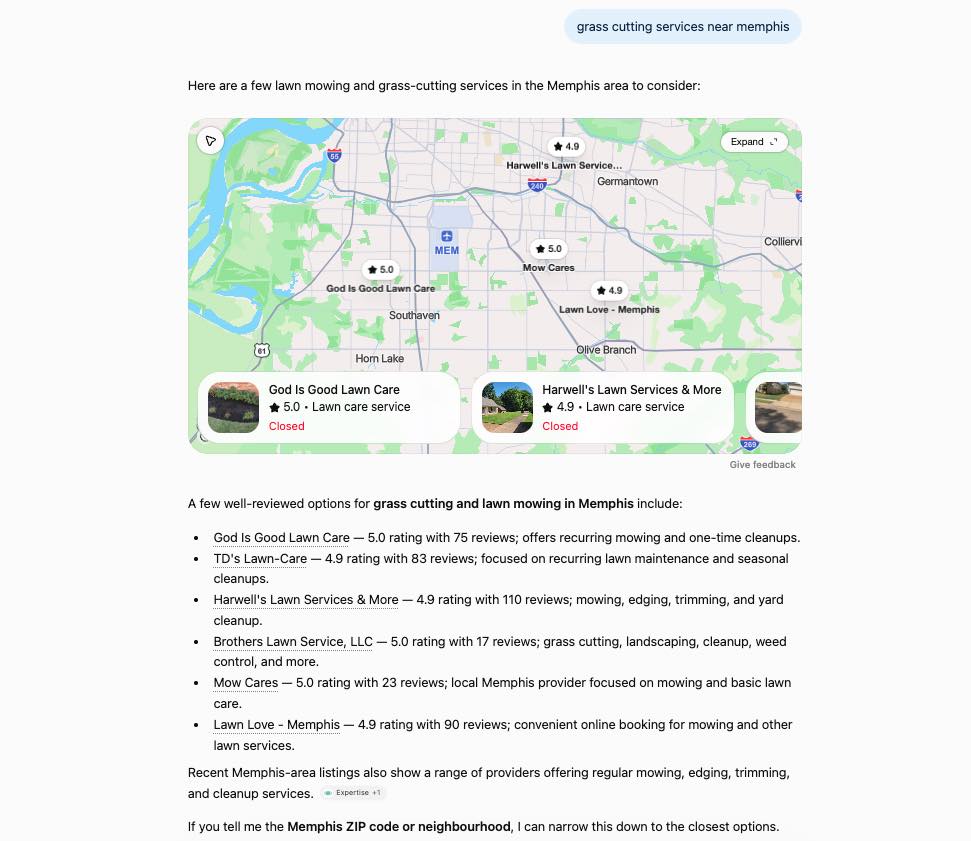
How ChatGPT works
ChatGPT gathers data across multiple search platforms—especially Bing—to determine what webpages it will recommend. It looks at your business data, reviews, and how many times your business is mentioned across multiple platforms.
ChatGPT provides links to its sources, and often references list-focused articles and blogs in its responses. If you’re looking to increase your visibility in ChatGPT, look to either get referenced in popular list articles about relevant topics, or publish your own list-based articles.
How ChatGPT finds local businesses
ChatGPT looks at information on multiple platforms to determine its rankings. ChatGPT uses similar signals to Google when creating responses:
- Brand recognition: This is similar to how traditional SEO operates. Is your brand associated with relevant topics? Are third-party websites mentioning your business? Are you publishing helpful content about your services and expertise? All of these factors impact your brand recognition.
- Review sentiment: Are your reviews mostly positive or negative? The overall sentiment of your customer reviews help ChatGPT assess your business.
- Consistent information: Does information on your website match information hosted on third-party websites? If not, how can ChatGPT determine which information is correct? Consistency matters.
Gemini
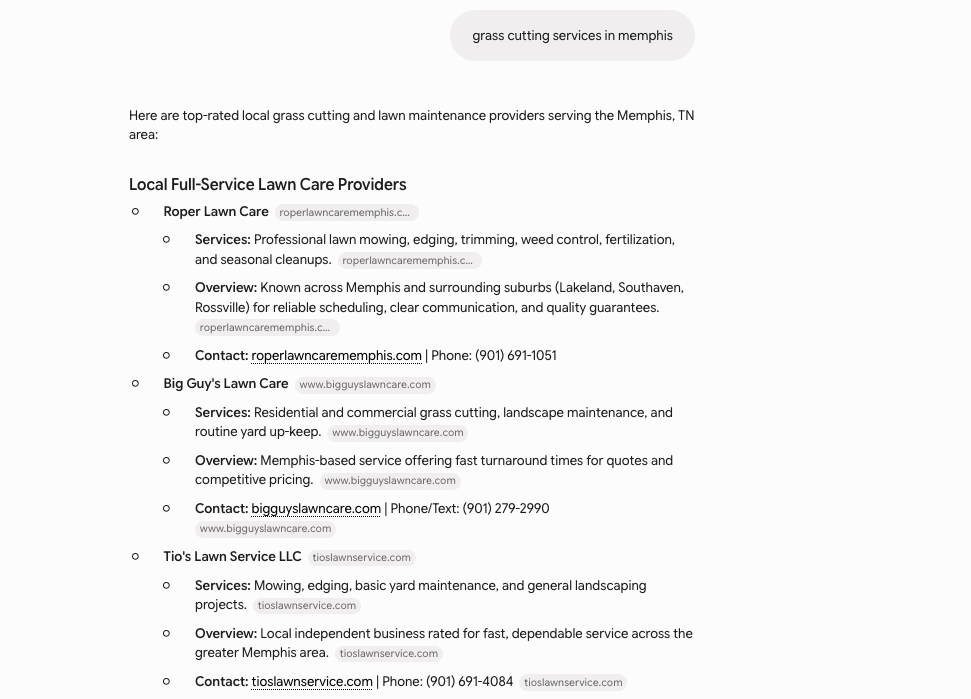
How Gemini works
Gemini relies on information from Google Maps (including, reviews, photos, and Google Knowledge Graph) when a searcher mentions a specific location—think “grass cutting services in Memphis.” Gemini will often include links within its answers pointing back to the recommended pages.
How Gemini finds local businesses
Gemini recommends businesses based on Google’s Business Profile details. These can include: business hours, service categories, review language and sentiment, recent updates, and photo/video content all contribute to Gemini’s decision-making process.
Perplexity
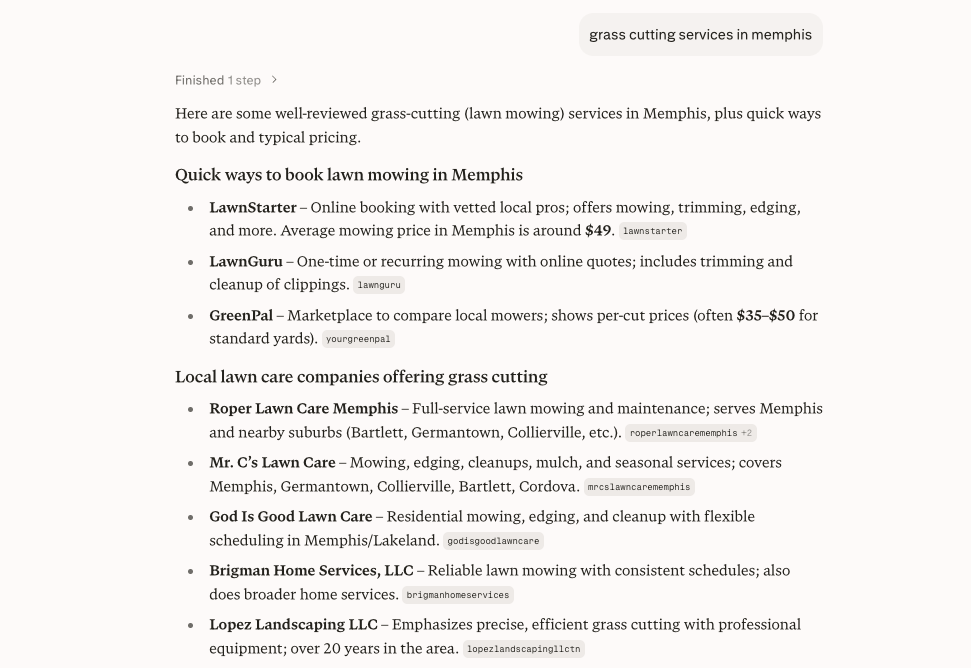
How Perplexity works
Like Gemini, Perplexity relies on your Google Business Profile data—as well as Yelp and other review platforms—in order to create a pool of sources. Every response in Perplexity includes links, usually two or four URLs.
How Perplexity finds local businesses
Perplexity uses the following signals when surfacing a webpage in AI search:
- The last time your webpage was updated
- Your webpage structure
- Your brand authority and expertise, demonstrated by your published content and mentions on third-party websites
- How closely your webpage topic matches what someone is searching for
- The number of third-party websites referencing your business or brand
Microsoft Copilot
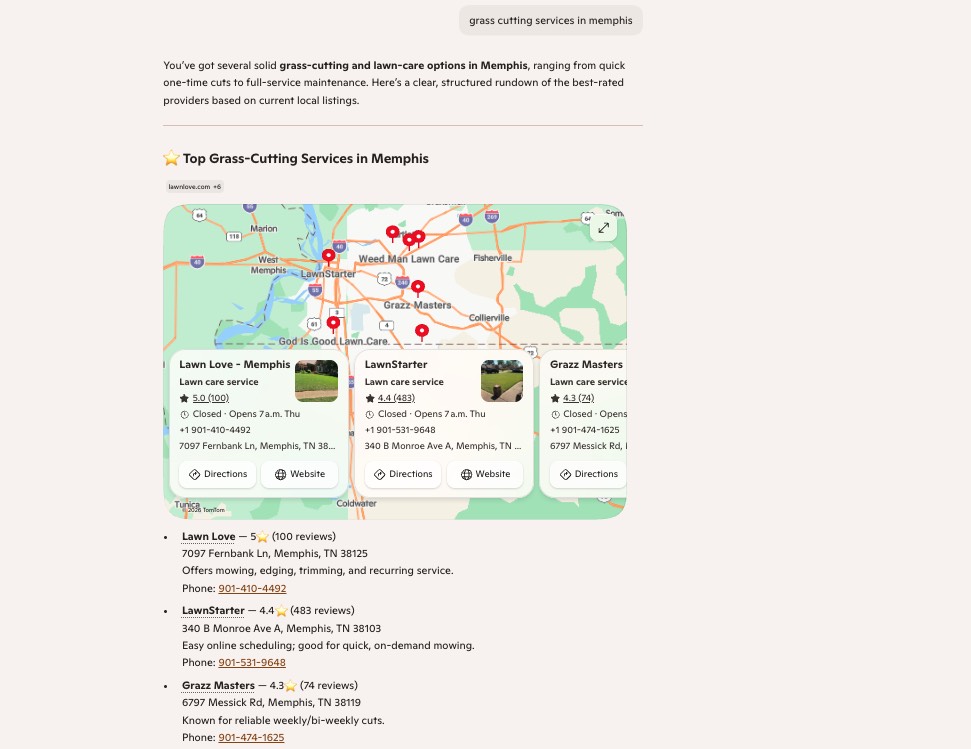
How Copilot works
Copilot relies on information from Bing Places for Business—the same sources that ChatGPT uses. A verified Bing Places listing with your business name, address, phone number, and business hours contribute to your visibility on Copilot.
Copilot includes links to external pages in its responses, so there are opportunities for their AI to recommend your business.
How Copilot finds local businesses
A verified listing on Bing Places has a much higher chance of being mentioned in Copilot, and higher ratings and positive reviews help your website get ranked higher than your competitors.
Grok
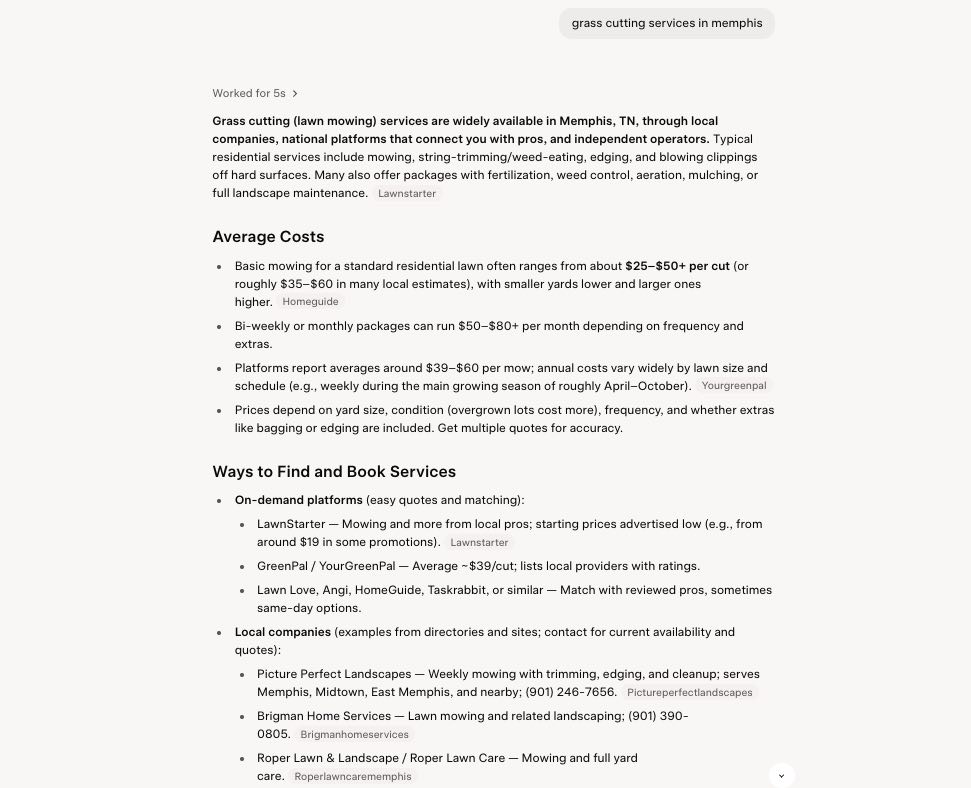
How Grok works
Grok pulls information from across the internet and live X (formerly Twitter) posts. Posting about your business on X—including replies and quote posts—can influence whether Grok will mention or link to your website.
Links are less common in Grok replies, as many of its answers rely on X posts rather than external business webpage.
How Grok finds local businesses
Grok uses information primarily from X, so businesses need to maintain a credible, active presence on the website.
To get your business to appear in Grok, you need to maintain a presence on X that aligns with your website—for example, sharing business insights on X that link back to a webpage with more detail.
Why isn’t my business appearing in AI?
If your business isn’t appearing in AI search results, it’s usually because AI doesn’t have enough confidence that you’re the best answer for a customer’s question.
AI-powered search looks for businesses with accurate information, strong reputations, and clear evidence of expertise. If those signals are missing—or inconsistent—your competitors are more likely to be recommended instead.
Here are the most common reasons you’re not appearing in AI search results:
Your business information isn’t consistent
AI compares information about your business across multiple sources, including your website, Google Business Profile, online directories, and review sites. If your business name, address, phone number, service areas, or hours don’t match, AI has less confidence in your business.
Takeaway: Consistency is key. Keep your business information accurate and consistent everywhere it’s listed.
Your website doesn’t clearly explain what you do
Your website should make it easy for both customers and AI to understand your services, where you work, and who you help.
Takeaway: Create dedicated service and location pages, answer common customer questions, and explain your process using clear, straightforward language.
You don’t have enough reviews
Reviews help AI understand that your business is active, trustworthy, and delivers good service.
Takeaway: Ask satisfied customers for reviews regularly and respond to them. A steady stream of authentic reviews is more valuable than getting many reviews all at once.
AI doesn’t have enough trusted information about your business
AI is more likely to recommend businesses that are mentioned consistently across reputable websites.
Takeaway: Beyond your own website, build your presence on places like your Google Business Profile, industry directories, local business listings, and trusted review platforms.
15 ways to improve your chance of appearing in AI
The same signals that help your business rank in Google also help AI understand and recommend your business. Focus on building a complete online presence, publishing helpful content, and earning customer trust.
Start with these strategies:
1. Optimize your Google Business Profile
Your Google Business Profile tells potential customers who you are, what services you offer, and where you work. It includes information like:
- Business name
- Address
- Phone number
- Operating hours
- Business category
- Photos (storefront, products, services, images provided by customers)
- Reviews
- Social media posts
It’s also one of the main sources Google uses to understand and recommend your business. To keep your profile complete, accurate, and up to date, make sure you:
- Keep things fresh: Your Business Profile includes links to your social media—so post new pictures, offers, and updates regularly. Profiles inactive for 30+ days will likely experience a sharp drop in AI visibility.
- Photos matter: Make sure photos posted to your Business Profile are high quality and contain correct information. Google’s vision AI scans your images to confirm your business category, services, and location match the information within your Business Profile
- Ask for and respond to feedback: Customer reviews are crucial for boosting your AI search visibility. Encourage your customers to leave detailed and positive reviews, and respond to every review you receive (good or bad)—it shows Google’s AI that your Business Profile is active and that you value your customers.
2. Keep your business information consistent across the web
Make a list of all the websites that feature information about your business—both yours and third-party websites. For example:
- Google Business Profile
- Yelp
- YouTube
- Local business directories
- Review websites
- Competitor websites
AI compares information about your business across multiple websites. If your business name, address, phone number, website, or service areas don’t match, it can make it harder for search engines to trust your information.
For the websites you do control, review the information listed there and refresh any out-dated information. For the websites you don’t control, simply reach out to these websites and request they correct any inaccurate information about your business.
3. Build dedicated service pages
Instead of listing all your services on one page, create a dedicated page for each service you offer. Individual service pages make it easier for Google and AI-powered search to understand your expertise and match your business to specific customer searches.
For each service page, include:
- Photos and examples of completed
- Customer testimonials and 5-star ratings
- Frequently asked questions section
- Clear call to action for a booking, trial, or consultation
Build out your service pages and you’ll be rocking it!

Write content specific to your business and include details that only you can provide, like years of experience, certifications, completed projects, or customer results.
For example, “Over 200 local businesses have booked us for their recurring grass cutting services.” Unique information helps your business stand out from competitors.
Use this checklist as a starting point for thinking about your service pages:
- Each of my main services has its own dedicated page.
- Each service page has a descriptive title that includes what I do and where I do it (e.g. “Residential Lawn Care in Memphis”).
- I explained each service in plain language, the way a real customer would search or ask for it.
- Each page includes cities, neighborhoods, or communities I serve.
- Every service page has a clear next step, such as a quote form, booking link, or phone number.
- My pages include real photos (no stock photos), FAQs, and details that help customers understand what to expect.
4. Create helpful content that answers customer questions
Helpful content makes it easier for Google and AI-powered search to understand your expertise and recommend your business. Here are some ideas to get your started:
- Articles that answer questions people ask before hiring a service provider.
- FAQs about your services
- How-to guides and maintenance tips
- Service comparison pages and charts
- Pricing, cost, and buying guides
- Seasonal advice
- Common mistakes to avoid
Think about what problem your business solves for customers, and write about real-world success stories you’ve had in the past.
Not sure what to write about? AnswerThePublic can help you discover common questions people are searching for in your industry.
5. Strengthen your website’s SEO foundation
Now for the more technical side of things. So far we’ve explored what information you should provide and maintain to maximize your AI search visibility—but how you structure that information is just as important.
Here are some basic SEO foundations to consider when creating your website and publishing new content:
Site structure
Organize your website to make it easy for visitors to find what they’re looking for. For example, your homepage should link to your service pages, and those pages should link to other relevant pages like pricing, FAQs, customer testimonials or contact information.
Internal linking
Link related pages on your website to one another. For example, a blog post about lawn care can link to your lawn mowing service page, helping customers find more information and making it easier for Google to understand your website.
Metadata
Give every page on your website a clear title, description, and image alt text that accurately describes what’s on the page. This helps Google understand your content and match it to the right searches.
E-E-A-T
Experience, Expertise, Authorativeness, and Trustworthiness. These are the four qualities that great online content demonstrates. Show customers—and Google—that you’re an expert in your field.
Publish helpful content, answer common customer questions, and share completed projects. Include testimonials, certifications, and years of experience to build trust with your readers.
6. Optimize your content structure for AI search
In the age of AI, the best content answers a specific question accurately and concisely. Well-organized content makes it easier for Google and AI-powered search to understand and recommend your content.
When creating new content, follow these best practices:
- Use clear headings that describe what each section is about.
- Write content in a logical order, starting with what your audience needs to know and then adding supporting details and examples
- Keep paragraphs short (two or three sentences max)
- Use lists, charts, and tables to break up long blocks of text and highlight key information.
For a full list of content structuring best practices, check out our guide on growing your Local SEO visibility.
7. Implement structured data (schema markup)
You can think of structured data—which can also be called schema markup—as the invisible map search engines use to navigate your website. Different schema types help you build out your website with detailed information that search engines can use to recommend your website.
If you’re using a website builder or SEO plugin, some schema may already be added automatically. If not, ask your web developer to add schema for your most important pages.
The most useful schema types for service businesses include:
| Schema | Explanation |
|---|---|
| LocalBusiness | Identifies your business’ name, address, phone number, hours, geographic coordinates, and business category. |
| Service | Describes a specific service your business offers, including service type, area served, and provider. |
| FAQ | Marks a set of questions on a webpage, which helps search engines surface them within question-oriented searches. |
| Review | Labels individual customer reviews or rating data, which allows AI search engines to discover and display your ratings and rankings. |
| Organization | Defines the core identifying information about your business, like legal name, logo, contact details, and social profiles. |
| Video | Describes video content including title, description, thumbnail, and duration. This allows AI search engines to reference and display your video content. |
| Breadcrumb | Defines the navigational path of a page within your website. Think about those little links that appear at the top of webpages (e.g., Home > Services > Grass Cutting Services). |
Learn more about available schema types at Schema.org.
8. Collect more customer reviews
Customer reviews provide AI search engines corroborating data about your business. Reviews act as trust signals for search engines: a business with positive reviews will be interpreted as more trustworthy than one with poor (or no) reviews.
With Jobber Reviews, your customers will receive an automated request for a review right after the job is complete.
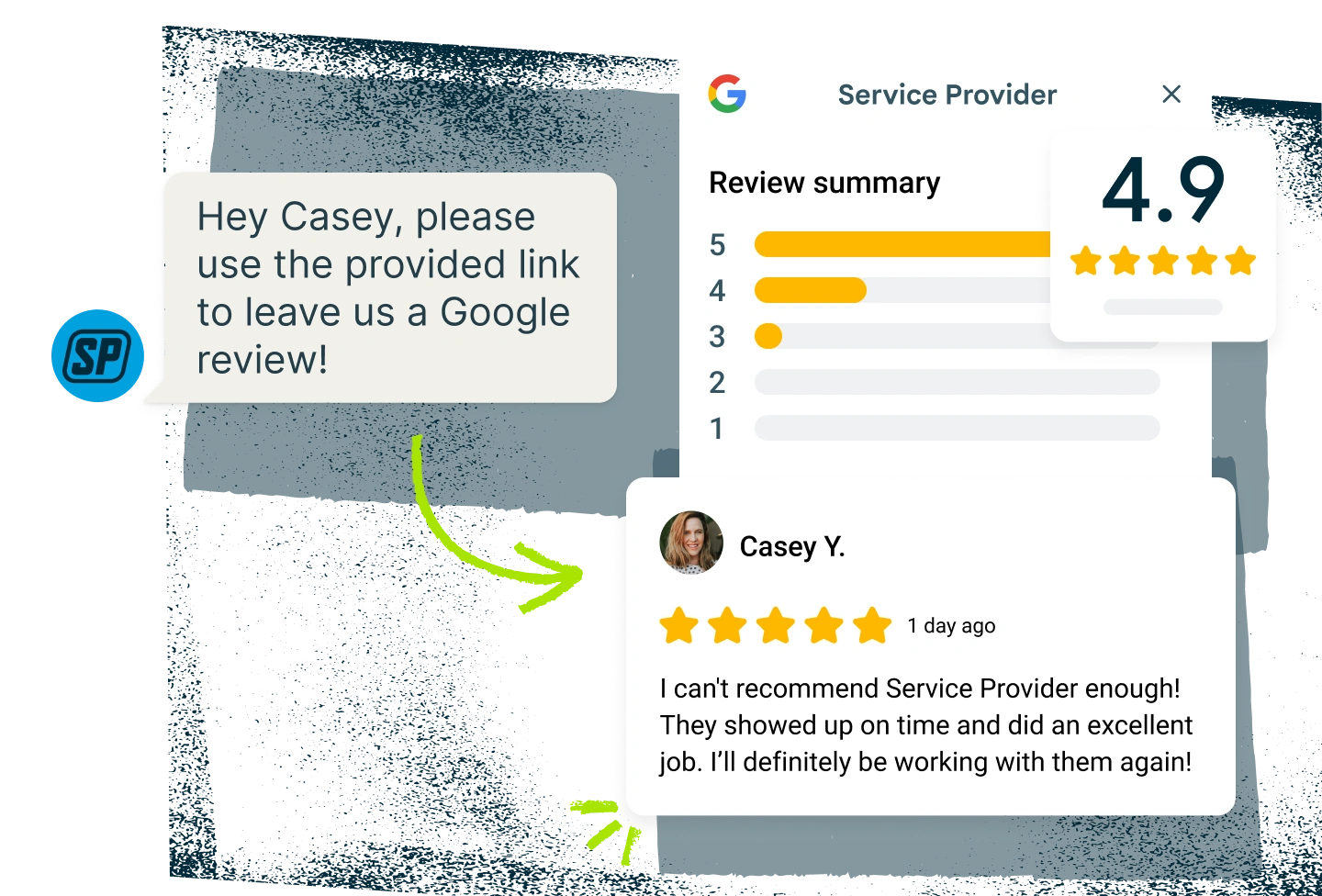
Don’t forget to respond to every review you receive, positive or negative. For positive reviews, reiterate important information from the review in your response:
“Thanks for your review! We’re thrilled you’re happy with our discount grass cutting services.”
For negative reviews, gently correct incorrect information if a review misrepresents your business:
“We’re sorry you feel that way. Our discount grass cutting service applies only to first-time customers, which is why you were not eligible for the discount this time.”
READ MORE: How to respond to negative reviews
You can easily track all the reviews of your business using Jobber’s Review Dashboard. You’ll see how your rating is trending and get notified when customers post new reviews, so you can reply right away.
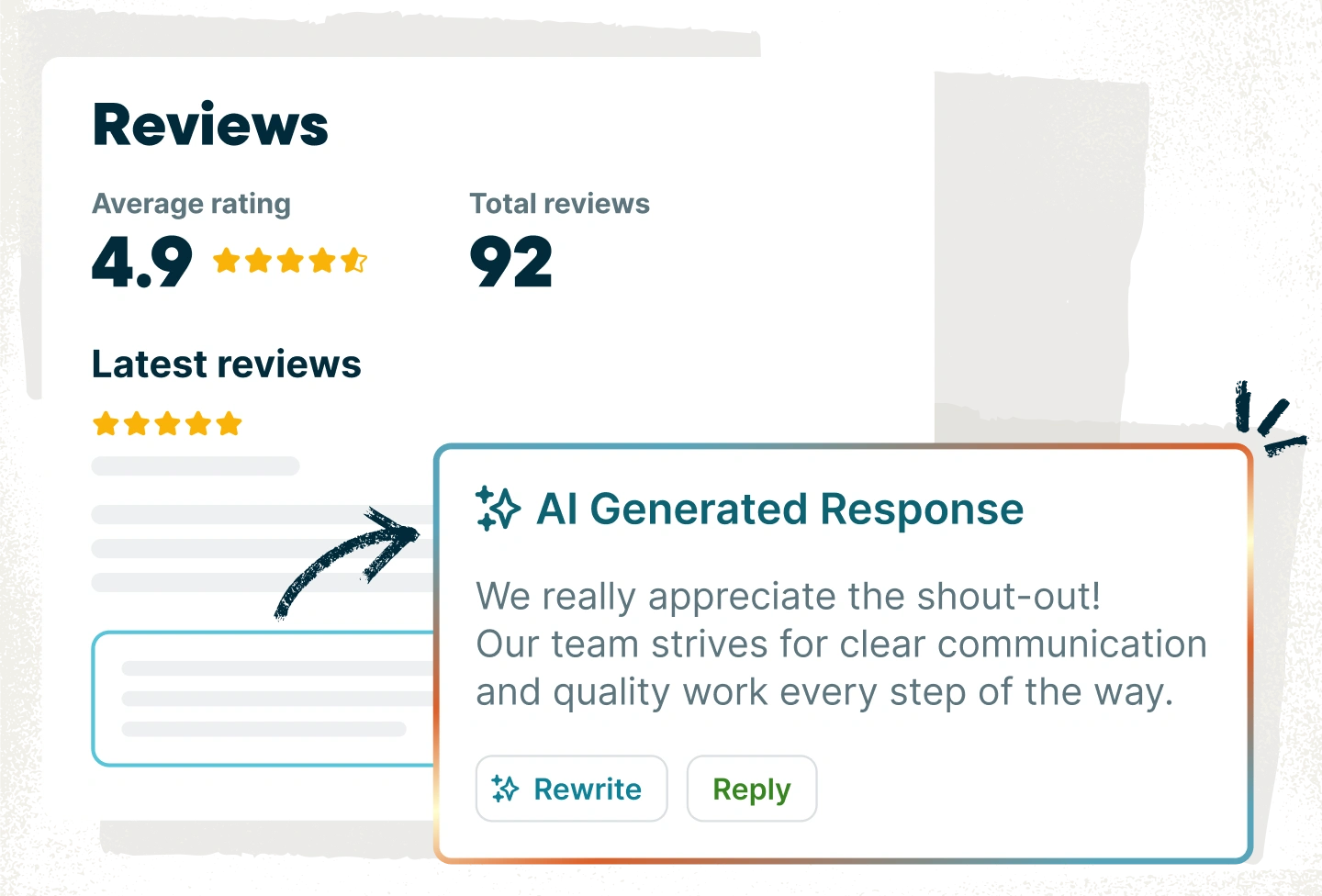
One of our favorite parts of Jobber is the review collection.
In a little over a year, Jobber helped increase our Google reviews from around 20 to over 165. That’s a ~800% jump in Google reviews!

9. Showcase testimonials and case studies
Customer testimonials and case studies help potential customers see the quality of your work. They also give Google and AI-powered search unique information about your business that can’t be found anywhere else.
Highlight successful projects by including:
- Customer testimonials
- Before-and-after photos
- Case studies that explain the customer’s problem, your solution, and the final result
- Project details, including the services provided, timeline, and outcomes
Whenever possible, include real quotes, photos, and project details to make your content more credible and helpful.
10. Build local authority with backlinks and citations
When reputable websites mention your business or link to your website, it increases your chances of being recommended in AI search.
Look for opportunities to list your business on:
- Local directories
- Industry directories
- Local listicles
External websites that point back to your website let AI search engines know that your business is an established authority in your field.
Make sure your business name, address, phone number, website, and service areas are accurate and consistent across every listing.
11. Optimize images and videos
Google’s AI will search through your visual content in addition to your written content. To make it easier for AI search engines to navigate, add the following to all of your images:
- Descriptive filenames for images and videos help AI engines understand what’s being displayed. Think about what’s easier to understand: an image of a ride-on mower with the filename “Screenshot2015-25-01.png,” or that same image with the filename “Custom-Grass-Cutting-Services.png.”
- Alt text is a short but insightful description of your visual content—usually including a relevant keyword. Using the same ride-on mower image, you could apply the following alt text: “Our business provides custom grass cutting services for commercial properties.”
- YouTube videos are a great way to increase your visibility in AI search. Create videos that answer common customer questions, showcase your work, or explain your services. Give each video a clear title and description, and include a link to your website in the video description. You can also embed relevant videos on your website to reinforce your expertise and help customers learn more about your business.
12. Improve website performance
If AI search engines struggle to access your website, you’ll be overlooked for websites that load quickly and smoothly.
Google uses a set of metrics called Core Web Vitals to measure your website’s loading performance, interactivity, and visual stability. These measure how quickly your website loads and determine whether elements are affecting your visitor’s experience, like:
- Large images that take too long to load
- Broken links
- Ads that don’t load properly
- Fonts that slow down the page
- Too much code running in the background
Don’t forget to make your website mobile-friendly. Many customers will visit your website from their phone. Make sure your site loads quickly, is easy to navigate on smaller screens, and makes it simple to call, request a quote, or book your services.
13. Keep your content fresh and up to date
Regularly review your website to make sure the information is accurate and current. Outdated service pages, old pricing, broken links, or inaccurate business information can make it harder for customers—and search engines—to trust your content.
As your business changes, update your website with new services, pricing, photos, completed projects, and customer reviews. For pages that cover topics that change over time, schedule regular reviews to make sure the information stays accurate.
14. Build authority beyond your website
Find communities and forums that discuss topics related to your business, and respond to questions that you’re confident to answer.
Not only will this create third-party content that supports your expertise, it’s also a great way to reach potential customers that wouldn’t otherwise find your business.
Look for opportunities to answer questions or contribute advice on Reddit, Quora, industry forums, and local community websites where people are asking questions or seeking advice.
Pro Tip: Be sure not to be overtly salesy in your replies—many websites will prevent you from contributing if you are only there for self-promotion. Reply with thoughtful, useful advice. If there is a topic that is directly relevant to your business, you may suggest it, but don’t force it.
15. Make it easy for customers to contact or book you
One of the main functions of your website is to bring in new customers, so provide lots of ways for them to get in touch.
On your website, feature clear and obvious call-to-action buttons that direct visitors to intake forms or contact information. Respond quickly to visitors who reach out to you, and give them a chance to describe what services they’re looking for.
How Jobber helps your business get found in AI
Now that you have a full picture of AI search and what you can do to improve your search visibility, where do you start? Jobber helps you manage many of the activities that build trust with customers and make your business easier to find online.
Set up your Google Business Profile
Your Google Business Profile is the backbone of your AI visibility efforts. Our Google Manager feature helps you create and automatically optimize and update your Business Profile directly inside of Jobber to keep your information fresh and accurate.
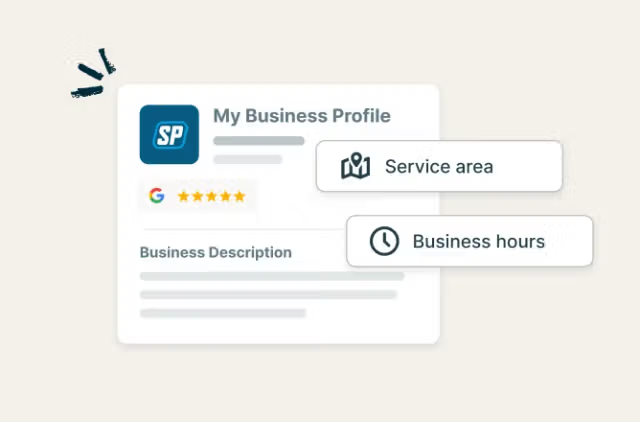
5-star reviews and examples of your work are automatically added to profile to maximize your chances of being discovered in AI search.
Optimize your service pages for AI search
Service pages help AI understand what your business does and where to send people looking for your expertise. With Jobber’s Website Builder, you can easily design and create search-optimized service pages that encourage potential customers to reach out to you:
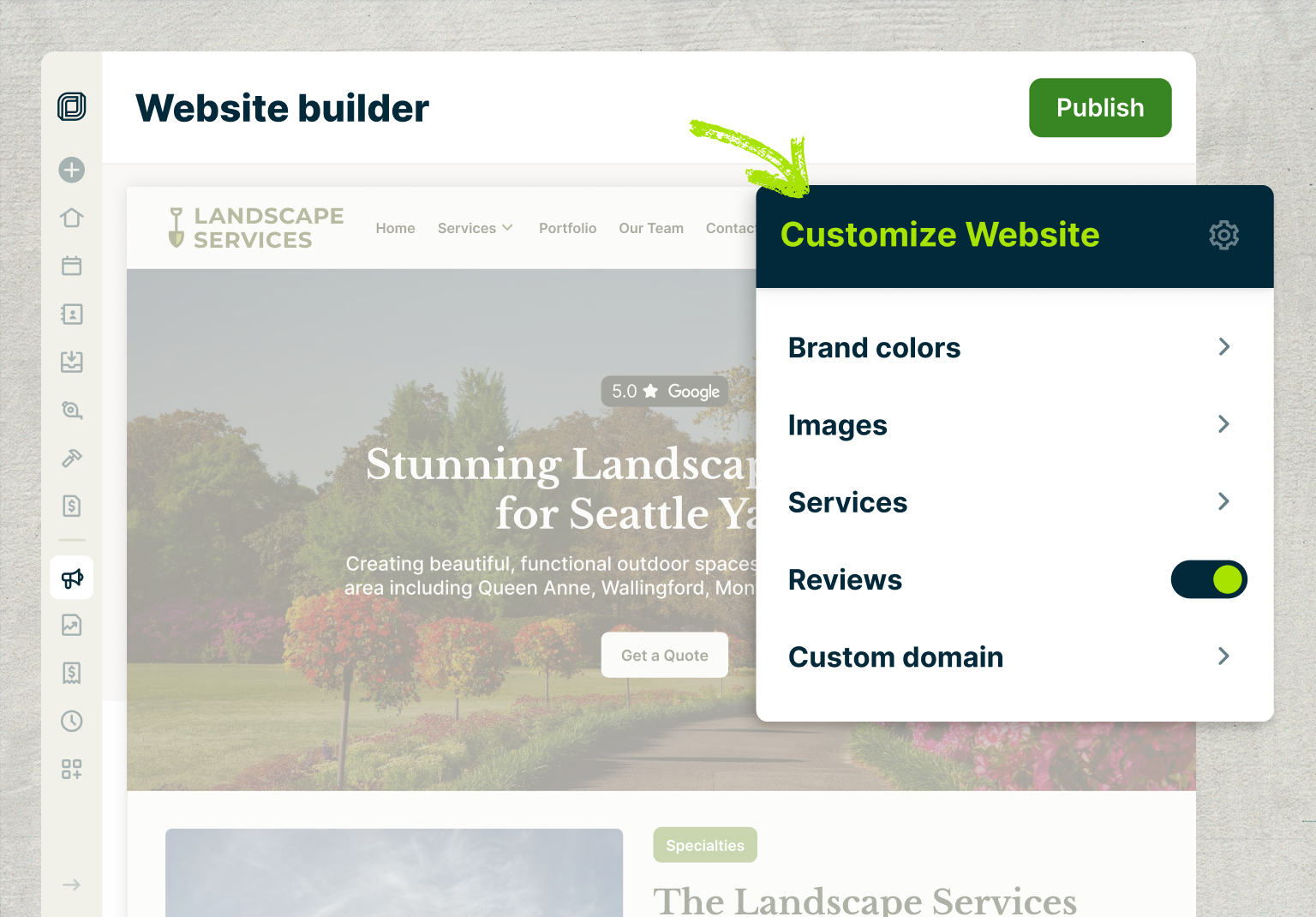
When a customer lands on a page that directly speaks to their unique pain points, they’re much more likely to stay and engage with that page. That signals to AI that the page it recommended was a good choice.
Collect more customer reviews
Set up automatic review requests in Jobber to automatically send review requests to customers as soon as a job is complete, helping you collect more Google reviews with less effort.
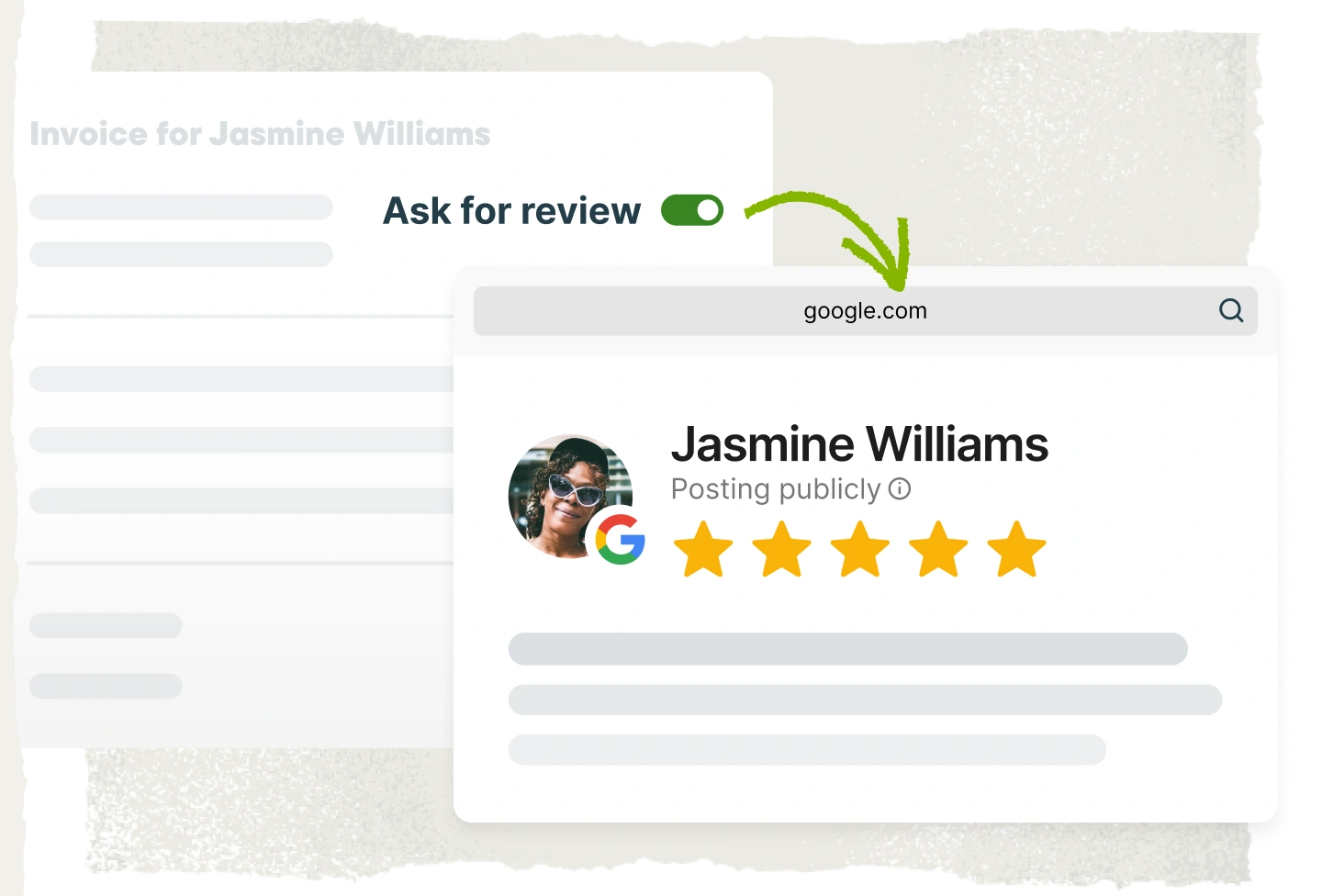
You can respond to reviews directly from your Jobber dashboard so you can respond quickly to new reviews and gather positive reviews to feature on your website.
Common mistakes that hurt AI visibility
When you’re building up your website to increase your presence on AI-powered search engines, watch out for these common issues:
Using duplicate or generic content
Just like your customers, AI search engines are looking for unique content that provides quality answers to specific questions.
Don’t just publish content for the sake of it—research what your customers are searching for, conduct customer interviews, and see what your competitors are writing about.
Be sure to showcase your expertise on your chosen topic, so potential customers can see that you know your stuff.
Relying on AI-generated content
AI tools are a great starting point for your website content—tools like ChatGPT and Gemini can help you get ideas and research topics you want to write about.
But overly relying on AI tools, like generating an entire piece of content and then publishing it without review, can hurt your rankings in AI search.
Google and other AI search engines prioritize unique, expert-driven content—so think about the best way to demonstrate your expertise for a great chance to get found in AI.
Ignoring your Google Business Profile
If you want to be discoverable in search engines, your Google Business Profile needs to be complete with accurate information and updated whenever information changes.
Ensure that all the information in your Google Business Profile is accurate and matches the information listed on your website.
Not updating content
Outdated service pages, old pricing, broken links, and inaccurate business information can make it harder for customers—and search engines—to trust your website. Review your content regularly and update it as your business changes.
Forgetting schema
Your website’s schema markup needs to be accurate and effective. You could have a beautiful, up-to-date website with great content, but without the proper schema markup you make it harder for Google and AI to scan your website.
Adding the right schema helps search engines identify your services, business information, reviews, and FAQs—improving how your website appears in results search.
Having inconsistent business information
Ensure all the information you publish about your business (business name, address, phone number, website, business hours, etc.) are the same everywhere your business is listed. Inconsistent information can confuse both customers and search engines.
Ignoring reviews and local trust signals
Reviews help build trust with both potential customers and search engines. Respond to every review—whether it’s positive or negative—to show that you value customer feedback and are actively engaged with your customers
Negative reviews can really impact your business’ credibility. Take a two-pronged approach to reviews: respond to reviews of your business, either thanking the customer for positive feedback or responding to customer with negative feedback about how you can help.
In addition to responding to reviews, be sure to use Jobber to automatically request feedback from customers who have just used your service.
How to measure your AI search visibility
Once you’ve optimized your website for AI search, the next step is to see whether it’s working. Here are the key metrics you can use to measure whether you’re getting found by AI.
Search for your business using AI platforms
Here’s an easy test you can use to quickly check your AI search visibility. Open an incognito/private browser window and search Google for: “[your city] + [your top service]”.
Does your website appear in the results? Which sites appear before yours, and what do their websites have that yours doesn’t?
You can also try this on different AI search engines like ChatGPT, Claude, and Perplexity.
Track website traffic from AI platforms
Tools like Google Analytics allow you to track how people are finding your website, including from AI sources like ChatGPT, Gemini, Claude, and more. You can analyze how many people are finding your site through AI search, and what devices they’re using to find you.
Monitor brand mentions and AI citations
There are two main ways you can be found within AI search engines: mentions and citations.
- Mentions: AI recommends your business by name when answering a customer’s question. For example, if someone searched “I’m looking for a list of grass cutting services in Memphis for commercial properties,” ChatGPT may create a list of businesses that includes yours.
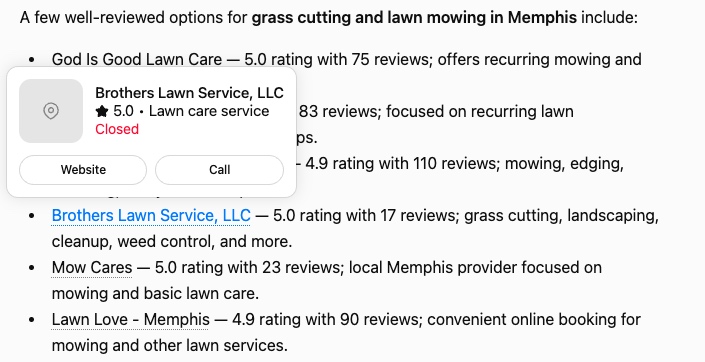
- Citations: AI links to your website as a source for the information in its response. A citation doesn’t always include your business name. AI may link to your website as the source of its information without explicitly recommending your business.
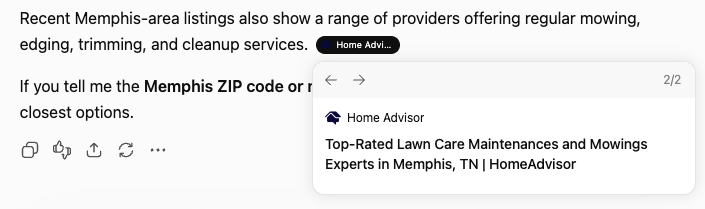
Tools like Ahrefs can help you track where your business is being mentioned or cited across AI search. You can also set up Google Alerts to monitor mentions of your brand.
Compare your visibility against competitors
Getting mentioned in AI search can be competitive, so it’s important to always monitor how your competitors are ranking as well as your own website.
Use the test described in the “Search for your business using AI platforms” section, but try searching for your competitors instead. Where do they rank on search engines? How often are they getting mentioned in various AI search engines?
You can also use tools like Ahrefs to get more detailed information about your competitors’ search visibility, and how your business compares.
Measure local search visibility
Regularly check how your business appears in local search results for the services you offer. Search for terms that include your city or service area, such as “roofing company in Dallas” or “lawn care near me,” and see how your business compares to local competitors.
Pay attention to which businesses consistently rank well. Review their websites, Google Business Profiles, and customer reviews to identify opportunities to improve your own online presence.
Monitor your customer reviews
Customer reviews play an important role in building trust with both potential customers and search engines. Check your reviews regularly, respond to customer feedback, and look for common themes that can help you improve your service and strengthen your online reputation.
Frequently Asked Questions
-
Your business’ AI visibility is impacted most by Organization, LocalBusiness, FAQPage, Review/AggregateRating, Product, and Service schema. These schema give AI your business’ verified brand identity, local data, and trust signals to cite directly.
-
It can range from hours to a few weeks for your webpage to appear in AI search. Your AI visibility depends on many factors—primarily your site authority—but the time it takes your business to appear in AI search varies.
Don’t get hung up on day-to-day or even week-to-week changes in your AI visibility. 2 month and 3 month trends are more representative of your overall performance. -
Yes. Small businesses with plenty of reviews, strong verified data, and that publish expert, trustworthy content can increase their likelihood of being cited by AI search.
-
Yes. Customer reviews improve AI visibility, as AI search engines analyze review text for recurring information, positive sentiment, and responses from the business. These trust signals—combined with Review-related schema—can positively influence your AI visibility.
-
The easiest way to determine your AI visibility is by running prompts your potential customers would ask—like asking for a particular service in combination with their location. For ongoing measurement, use Google Analytics to measure your AI-driven traffic.