 48 Minutes
Shark Tank’s Daymond John on Good Debt, Execution, and the Power of Broke
With Daymond John


How Did Daymond John Make His Money? 7 Lessons for Home Service Business Owners
Daymond John built FUBU into a $6 billion brand and became one of the most recognized investors on Shark Tank, backing Bombas, the show’s most successful product.
In this special episode of Masters of Home Service, Daymond breaks down how he thinks about debt, growth, and execution, and how those same ideas apply to your business.
Watch or listen to learn what he said and how to use it:
In this episode:
- Who is Daymond John?
- Start with the customers you can win, then scale up
- Know the difference between good debt and bad debt
- What investors actually look for before they write a check
- Know your numbers before anyone asks
- The three things a mentor will tell you
- Your idea doesn’t matter. Your execution does.
- Your health is a business asset, so treat it like one
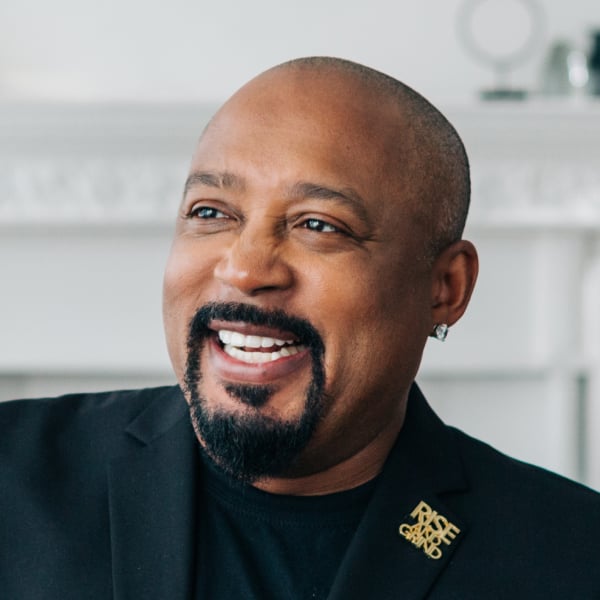
He’s also:
• A longtime investor on ABC’s Shark Tank
• The founder of The Shark Group, a consulting and brand strategy firm
• An investor in Bombas, Shark Tank’s most successful product in history
• The author of five best-selling books including his New York Times best-seller Power of Broke (2016), Rise and Grind (2018), and the most anticipated children’s book of 2023, Little Daymond Learns to Earn, which teaches kids basic money fundamentals
In 2017, Daymond was diagnosed with stage two thyroid cancer. He recovered and has since spoken about the importance of taking your health seriously as a business owner.
He’s also a partner with Jobber, actively helping support home service entrepreneurs through a $250,000 grant program.
Daymond John joined Masters of Home Service host Adam Sylvester in Miami to share business lessons from FUBU, Bombas, and his work mentoring entrepreneurs through Shark Tank.

Start with the customers you can win, then scale up
Your first customers don’t need to be your biggest—they need to trust you enough to talk about you. Build loyalty locally, then use that proof to win larger jobs.
That’s exactly how Daymond built FUBU. The brand was designed for Black culture and the hip-hop community at a time when major department stores weren’t interested. Instead of waiting, he sold to mom and pop stores in urban neighborhoods that understood their customers. Those stores sold out quickly and kept reordering.
“Small business owners—they’re living check by check. And when those kids came into those stores, they would tell them the whole story. They sold out on a Monday. They’re ordering on a Tuesday.” – Daymond John
While big retailers hesitated, those small shops had already grown from one location to 10. By the time the big chains caught up, FUBU had already won the street.
Here’s the move: stop waiting for the perfect big client. Instead, win the jobs you can win now and let those customers sell you to the next ones.
Know the difference between good debt and bad debt
Before you take on debt, ask one question: Will someone else’s revenue cover it? That’s how Daymond defines good debt, and it’s a simple way to make better decisions about financing equipment, vehicles, and growth.
“Good debt is having somebody else pay your bills.” – Daymond John
Here’s how he explains it:
- If you own a rental property with a $3,000 monthly mortgage, and a tenant is paying $3,500? Good debt. Someone else is building your equity.
- If you have a $10,000 mortgage on a property you barely use in a weak market? Bad debt.
The same logic applies to your home service business:
- Financing a new van to run three more routes you already have customers for? Good debt.
- Buying a piece of equipment you’ll use 20% of the time with no plan to rent it out the other 80%? Bad debt.
When Daymond evaluates a business asking for investment, his first question is always: “What are you using the money for?”
- If the answer is “I have more orders than I can fill,” he’s interested.
- If the answer is “I want to make more product and find customers later,” that’s a red flag.
Daymond praised a business owner who bought a boom lift, used it in his core work, and rented it out when it sat idle. To him, that’s how you make an asset pay for itself.
“The wealthy people, they rent their planes out. They rent everything else they have.” – Daymond John
Here’s the move: use debt to serve demand you already have, not demand you hope to get.
What investors actually look for before they write a check
Know your customer better than anyone in the room and back it up with data. That’s the short version of what Daymond looks for when evaluating a business.
On Shark Tank, Daymond invests in roughly 60% of the deals he makes on air. But after due diligence, a lot fall apart. The first thing he verifies is basic:
- Do you own what you’re selling?
- Can you prove the sales you claimed?
- Do your financials match what you said on camera?
If those don’t hold up, the deal is dead. After that, it comes down to the founders. What made Bombas’s founders, Randy Goldberg and David Heath, stand out wasn’t the product—it was their values and their business model.
“I love the fact that there was a charitable component to it. Every time you buy a pair of Bombas, they give a pair to the homeless community—and they don’t just give it. They know the directors, they’re in these communities, they really cared.” – Daymond John
Randy and David also made smart moves early:
- They were selling direct to consumer on Instagram.
- They didn’t blindly follow advice—even Daymond’s.
When Daymond pitched FUBU-branded Bombas socks, they passed. When they wanted to license Sesame Street, he pushed back. But their decisions were backed by data, and that hard work paid off.
“They’re data guys. They’re not guessing. They’re going out to their audience asking, ‘What do you want to see? What do you like?’ They’re really focused on data.” – Daymond John
His daughter even came in wearing matching Elmo Bombas socks and asked him to put his on. He called Randy and David right after and told them they were geniuses.
Here’s the move: know your customer better than the person across the table. Use data to back your decisions, and don’t let outside opinions run your business.
Know your numbers before anyone asks
If you walked into a pitch meeting today, could you answer these five questions right now?
- What are you netting? Not gross revenue, but what you’re actually taking home($200K in revenue doesn’t mean $200K in your pocket).
- What does it cost to add one more crew? Be specific: vehicle, labor, insurance, equipment. If you don’t know the number, you’re guessing.
- What’s your slow season plan? What’s your revenue gap between your busiest and slowest month, and how are you closing? Do you cut costs, add a service, or just go dark?
- Where can you cut costs without hurting quality? If not, you don’t have full visibility into your own operation.
- What else would your best customers pay for? If you’re already in their home, you’re the most trusted vendor they have. What do they need?
Most business owners can’t answer all five. But the last question is where Daymond sees the biggest opportunity.
He shared an example of a Jobber Grant winner and window cleaner in Denver who added holiday lighting installations. It’s a smart way to serve the same customers with a second service.
“Another person in that same situation would have said, ‘I need to cut my staff during this period.’ But instead, he added to his current customer base another way to monetize.” – Daymond John
Here’s the move: stop guessing and start knowing your numbers so you answer every question about your home services business with confidence. Daymond even points to using tools like Jobber to reduce costs and stay on top of operations.
The three things a mentor will tell you
According to Daymond, good mentors will only tell you three things about entrepreneurship:
- Don’t take money too soon
- Don’t spread yourself too thin
- Don’t grow too fast
Not because they’re overly cautious, but because an entrepreneur is wired to push harder for success. A mentor’s job is to hold the line.
“There’s only three things a mentor and business is going to do. Tell you not to take in money too soon, tell you not to spread yourself too thin, and tell you not to grow too fast.” – Daymond John
This idea shows up in how Daymond invests. When business owners he’s invested in come back asking for more money, his answer is often no. Many actually thanked him later, saying, “If you would’ve gave me more money, I wouldn’t have been forced to figure this out.”
That’s the “Power of Broke.” In other words, when you’re forced to work within constraints, those constraints breed creativity, helping you solve problems you’d otherwise ignore.
Here’s the move: before you hire more people, take on a new truck payment, or expand to a new market, ask whether your current operation is actually running well.
LISTEN: How to Protect Your Business From Scaling Mistakes
Your idea doesn’t matter. Your execution does.
Your idea isn’t the asset, your execution is. That’s how Daymond thinks about business, and it’s something most entrepreneurs don’t want to hear.
Everyone on the planet has 10 ideas a day. But the businesses that win aren’t the most original ones—they’re the ones that execute best. Here’s how Daymond puts it:
- FUBU is streetwear, a category with thousands of competitors.
- Bombas sell socks and other apparel.
- Scrub Daddy, one of the other top-selling products in Shark Tank history, is a smiley-face sponge.
None of them is new. All of them are just executed exceptionally well.
“You will never create anything new in this world. Maybe a new form of delivery, you may make it lighter, faster, stronger, find another customer, but it’s not new.” – Daymond John
For home service businesses, this is freeing. You’re not inventing a new trade, but you’re executing better than everyone else in your market:
- Faster quotes
- Cleaner communication
- More reliable crews
- Smarter seasonal planning
The Jobber Grant winner in Denver who runs a window cleaning business? They added holiday lighting services. It’s nothing revolutionary, but it fills their slow season.
Here’s the move: there’s no single right way to do things. Grow through referrals, social media, acquire retiring or struggling competitors, or simply show up more consistently than anyone else in your area.
Your health is a business asset, so treat it like one.
In entrepreneurship, your health is the one asset you can’t replace or outsource. If it goes, everything else stops.
In 2017, Daymond was diagnosed with stage two thyroid cancer. He beat it, but by his own account, he didn’t change his life right away.
“I got to take myself more serious and I got to get on top of my health. And I didn’t for a while.” – Daymond John
It took COVID to force the shift. He stopped drinking, started fasting once a week, and began working with health professionals on a more deliberate approach to his body.
He also started talking about it publicly after noticing the same pattern in other entrepreneurs.
“The one thing us entrepreneurs do also have in common is we take care of everybody else but ourselves.” – Daymond John
This is especially true in home service. You’re doing physically demanding work, managing a team, handling customers, and running the books. Meanwhile, your own health is the last item on the list, and you burn out. “The worst thing that you can do is not take care of your health because once that is gone, you’re done,” said Daymond.
Here’s the move: delegate tasks and block time for your health the same way you schedule jobs. It could be a workout, a doctor’s appointment, or a full night’s sleep. If it’s not on the calendar, it won’t happen. Remember, you built this business, so don’t let it cost you.
For home service business owners interested in the Jobber grant program Daymond mentioned, visit jobber.com/grants.
Frequently Asked Questions
-
Daymond John built his wealth and success primarily through FUBU, the streetwear fashion brand he co-founded in 1992 from his mother’s home in Queens, New York.
Today, FUBU has generated over $6 billion in global sales. He also earns significantly as a Shark Tank investor, most notably through Bombas, which became the most successful product in the show’s history. His marketing firm The Shark Group offers advice for top brands, celebrities and CEOs. -
Daymond John is a successful entrepreneur best known as the founder of FUBU and as a longtime investor on the five-time Emmy Award-winning ABC show, Shark Tank.
He’s also known for his philosophy on the “Power of Broke”, a philosophy that limited resources force better, more creative decisions. Daymond’s also a motivational speaker and an advocate for financial literacy among entrepreneurs and young people. -
Daymond John’s most notable company is FUBU, a streetwear fashion brand he co-founded in 1992. He also owns The Shark Group, his consulting and brand management firm. Daymond has also invested in dozens of businesses through Shark Tank, with his most successful being Bombas.
-
Based on his conversation on Masters of Home Service, Daymond’s core advice for small business owners is:
• Know your numbers
• Don’t take on money before you need it
• Don’t spread yourself too thin or grow too fast
• Focus on execution over ideas
• Take care of your health
His message is clear: run a tight operation, grow at the right pace, and build a business that lasts.
About the speakers

Adam Sylvester
CHARLOTTESVILLE GUTTER PROS AND CHARLOTTESVILLE LAWN CARE
Website: adamsylvester.com
Adam started Charlottesville Lawn Care in 2013 and Charlottesville Gutter Pros in the fall of 2020, in Charlottesville, VA. He likes to say, “I do gutters and grass! When it rains the grass grows and the gutters leak!” He got into owning his own business because he saw it as a huge opportunity to generate great income while living a life that suited him. He believes that small companies can make a serious impact on their communities and on every individual they touch, and he wanted to build a company that could make a big difference. His sweet spot talent is sales and marketing with a strong passion for building a place his team wants to work. Adam values his employees and loves leading people. While operations and efficiency is not something that comes naturally to him, he is constantly working to improve himself and his business in these areas.
Daymond John
Website: daymondjohn.com
Daymond John is an American businessman, investor, and television personality, best known as the founder of the global apparel brand FUBU and a lead investor on the ABC reality series Shark Tank.


SIGN UP FOR the masters of home service newsletter
Get monthly updates with news, tips, and advice on how to run a 5-star business. You don’t want to miss out!
Interested in being a guest on the show?
Are you a home service professional eager to share your insights and experiences? Apply to be a guest on the Masters of Home Service Podcast, and join a community of experts committed to helping others level up through knowledge.
Other Podcasts We Love