Commercial Cleaning Checklist for High-Quality Work [+ Free Template]

Key takeaways:
A well-structured commercial cleaning checklist ensures high-quality, consistent service across all sites and teams. There are several ways that checklists can help your business:
- Standardize cleaning processes. Using detailed checklists for each area—like lobbies, offices, kitchens, restrooms, and entryways—helps your team follow the same steps every visit, reducing missed tasks and rework.
- Boost training and accountability. Clearly documented tasks make onboarding new employees easier and provide a record that supervisors and clients can check, driving accountability and quality control.
- Customize by area and frequency. Effective checklists specify what tasks are required in each space and how often they should be performed—daily, weekly, or monthly—tailored to the needs of each commercial facility.
- Use the format that fits your needs. Print checklists for easy site use or upgrade to digital versions using tools like Jobber for real-time updates, record keeping, and seamless client communication.
- Improve client satisfaction. Consistent documentation of completed work reduces complaints and clarifies the scope of your service, leading to more trust and long-term customer relationships.
Get the latest tips and resources for growing your business—sign up for the Jobber Newsletter. Sign up here.
Running a commercial cleaning operation across multiple buildings requires a clear, repeatable process. A structured commercial cleaning checklist helps teams follow the same standards every visit, reducing missed tasks, client complaints, and costly rework.
This guide provides a practical checklist you can use to train your cleaners, maintain consistent service across sites, and clearly communicate scope and completed work to clients.
Your guide to commercial cleaning checklists:
Why use a commercial cleaning checklist?
A commercial cleaning checklist provides a clear structure for how your employees will complete cleaning work across various facilities. Instead of relying on memory or informal routines, every cleaner has a consistent list of tasks and expectations to follow.
The benefits of using a commercial cleaning checklist include:
- Consistent service quality. Standardized task lists ensure your employees clean every building the same way, no matter who’s assigned to the visit.
- Fewer missed tasks. Clear checklists help your employees follow an approved process so they don’t accidentally overlook any important tasks.
- Simple training. New hires can learn your company’s cleaning procedures faster with documented tasks and expectations.
- More accountability. Your managers and team leads can review completed checklists to make sure employees completed every cleaning task during each visit.
- Clear scope of work. A documented checklist shows property and facility managers which tasks are included in their commercial cleaning service.
- Improved communication. Checklists give cleaners and supervisors a shared reference point for expectations and responsibilities.
- Efficient operations. Structured workflows let your employees know when they’ve completed a task, reducing confusion and helping them move through visits faster.
- Reduced complaints. When your employees complete tasks properly the first time, your clients are less likely to have service issues that require follow-up visits.
What should a cleaning checklist include?
A commercial cleaning checklist should clearly define what needs to be cleaned, how often it should be done, and what standards should be met.
The goal is to create a repeatable process that cleaning employees can follow on every visit, while creating a work record for team leads and clients to check later.
Most commercial cleaning checklists include:
- Areas or rooms to be cleaned, such as offices, restrooms, kitchens, lobbies, hallways, and conference rooms. This makes it easier for cleaners to work through a facility room by room.
- Descriptions of cleaning tasks that your cleaners need to complete. Tasks should be simple and specific so employees understand exactly what needs to be done.
- Cleaning frequency, indicating whether cleaners should complete tasks daily, weekly, monthly, or on a custom schedule.
- Quality standards or expectations so employees know what a finished task looks like. For example, surfaces should be free of dust, floors should be free of debris, and restrooms should be fully sanitized and restocked.
- Completion tracking with space for employee initials, timestamps, or digital confirmation so your team leads can verify completed tasks.
- Notes or issue reporting so cleaners can record any problems they notice during a visit, like maintenance requests or supply shortages.
We use Jobber checklists for commercial maintenance clients.
They are so excited that we send out this very specific detailed checklist to them with the photos of their job.

If needed, you can also include a commercial cleaning supplies checklist for your employees to use. This list can indicate which supplies to bring to each visit, as well as where and how to use them.
Commercial cleaning checklist by area
Commercial buildings contain many different spaces, and each has its own cleaning tasks. Organizing checklists by area will help your cleaners move through a building in a consistent order and ensure they remember everything.
The checklists below outline common daily, weekly, and monthly tasks for common areas in most offices and commercial facilities.
Reception/lobby
The lobby or reception area creates the first impression for visitors to the building. To make it look inviting, do cleaning tasks that keep it free of visible dirt or clutter.
For a commercial space, your reception/lobby cleaning checklist should include:
Daily tasks
- Empty trash cans and replace liners
- Vacuum carpet and sweep/mop hard floors
- Clean and disinfect reception desk surfaces
- Wipe high-touch surfaces (e.g., door handle, push plate)
- Remove fingerprints and smudges from entry glass and interior glass panels
- Straighten furniture and remove visible debris from seating areas
- Dust accessible surfaces like tables and shelves
- Spot clean walls and glass as needed
Weekly tasks
- Dust vents, baseboards, and window ledges
- Clean interior glass partitions and doors
- Wipe down chairs, benches, and waiting area furniture
- Clean and disinfect shared devices like sign-in tablets or kiosks
- Vacuum upholstered seating
Monthly tasks
- Dust high ceilings, light fixtures, and vents
- Clean interior windows and window frames
- Deep clean carpets or machine scrub hard floors if needed
- Wipe and polish metal fixtures and other decorative items
Offices
A clean office space helps maintain a healthy work environment. General office cleaning services can help reduce dust buildup and keep shared work areas looking professional and presentable.
Your commercial office cleaning checklist should include:
Daily tasks
- Empty trash and recycling bins and replace liners
- Vacuum carpets and sweep/mop hard floors
- Dust desks, tables, and accessible surfaces
- Wipe and disinfect high-touch surfaces such as light switches and door handles
- Clean interior glass panels and office doors as needed
- Remove visible debris and straighten chairs or furniture
Weekly tasks
- Dust baseboards, window ledges, and vents
- Wipe desks, tables, and shared workstations thoroughly
- Clean conference room tables and shared equipment
- Vacuum upholstered furniture
- Clean interior glass partitions and meeting room glass
Monthly tasks
- Dust high vents, ceiling corners, and light fixtures
- Deep clean carpets or machine scrub hard floors
- Wipe down cabinets, shelves, and storage units
- Clean interior windows and frames
- Spot clean walls and remove marks or scuffs
Kitchen/break room
Food preparation can quickly lead to odors and bacteria, so your employees should complete extra cleaning and sanitation in kitchens, break rooms, and other common areas.
Here’s what your commercial kitchen cleaning checklist should include:
Daily tasks
- Empty trash and recycling bins and replace liners
- Clean and disinfect countertops and tables
- Wipe sinks and faucets and remove visible residue
- Clean exterior surfaces of appliances such as microwaves and refrigerators
- Sweep and mop the floor
- Wipe cabinet handles, appliance handles, and other high-touch surfaces
Weekly tasks
- Clean inside microwaves
- Wipe interior refrigerator shelves and remove spills
- Clean cabinet fronts and appliance exteriors
- Descale sinks and faucets if needed
- Dust vents and baseboards
Monthly tasks
- Clean inside refrigerators and other appliances
- Deep clean floors or machine-scrub hard surfaces
- Wipe inside cabinets and storage areas if accessible
- Clean light fixtures and ceiling vents
- Wash interior windows and window frames
Restrooms
Bathrooms need to be cleaned often, especially when many people are using them. Your commercial cleaning checklist should include extra cleaning and sanitation tasks to control germs and keep supplies stocked.
Here’s what your commercial restroom cleaning checklist should include:
Daily tasks
- Empty trash bins and replace trash bin liners
- Clean and disinfect toilets, urinals, and surrounding surfaces
- Clean and disinfect sinks, faucets, and countertops
- Clean and disinfect door handles, stall locks, and other high-touch areas
- Refill soap dispensers, paper towel, and toilet paper
- Clean mirrors and polish fixtures
- Sweep floors and mop with disinfectant
Weekly tasks
- Clean restroom partitions and stall doors
- Wipe dispensers and hand dryers
- Remove buildup from tile surfaces and grout areas
- Dust vents, baseboards, and ledges
Monthly tasks
- Deep clean tile, grout, and floor edges
- Wash walls and partitions
- Descale sinks, faucets, and plumbing fixtures
- Dust high vents and light fixtures
Exterior/entryways
Exterior entrances and entryways collect dirt, debris, and fingerprints during the day. Regular cleaning keeps the space looking professional—and keeps dirt outside where it belongs.
Your exterior cleaning checklist should include:
Daily tasks
- Empty exterior trash and recycling bins
- Sweep entryways, sidewalks, and entrance areas
- Clean entry glass surfaces and remove fingerprints
- Shake out or vacuum entrance mats
- Remove visible debris such as leaves, dirt, or litter near entrances
Weekly tasks
- Wash entry doors and surrounding glass panels
- Clean door frames, handles, and push plates
- Sweep or pressure wash entry areas if needed
- Clean exterior light fixtures near entrances
Monthly tasks
- Deep clean entrance mats or replace if needed
- Pressure wash walkways or entry surfaces where required
- Clean exterior windows near entry areas
- Inspect and remove buildup of dirt/debris
How to use these checklists
There are two main ways to use this commercial cleaning checklist. You can print out a simple paper form that you can fill out during a cleaning visit, or you can convert them into digital checklists and have your team complete them in the field using a phone or tablet.
Using the checklist as a paper form
Many cleaning companies print off their checklists and keep them in a clipboard or binder at each facility. Cleaners and team leads work through the list during their visit and mark off completed tasks.
To use a printable office cleaning checklist effectively:
- Print a copy for each site or shift so employees always have the correct task list for that location.
- Check off tasks as you complete them to make sure every detail is taken care of during the visit.
- Sign the checklist after the visit so team leads can verify who completed the work.
- Leave the checklist on site for the client to review, and save a copy for reference during inspection or audits.
- Update the checklist as needed if the scope of work changes, and you need to add new cleaning services to the list.
Paper checklists are simple and inexpensive, but they can be hard to track across multiple buildings and teams, and they can also be lost or damaged.
While they help cleaners complete their work quickly, paper checklists aren’t always reliable or easy to reference if your client has a question or service complaint later on. You might want to move to digital checklists for more accessible records.
Using digital checklists with Jobber
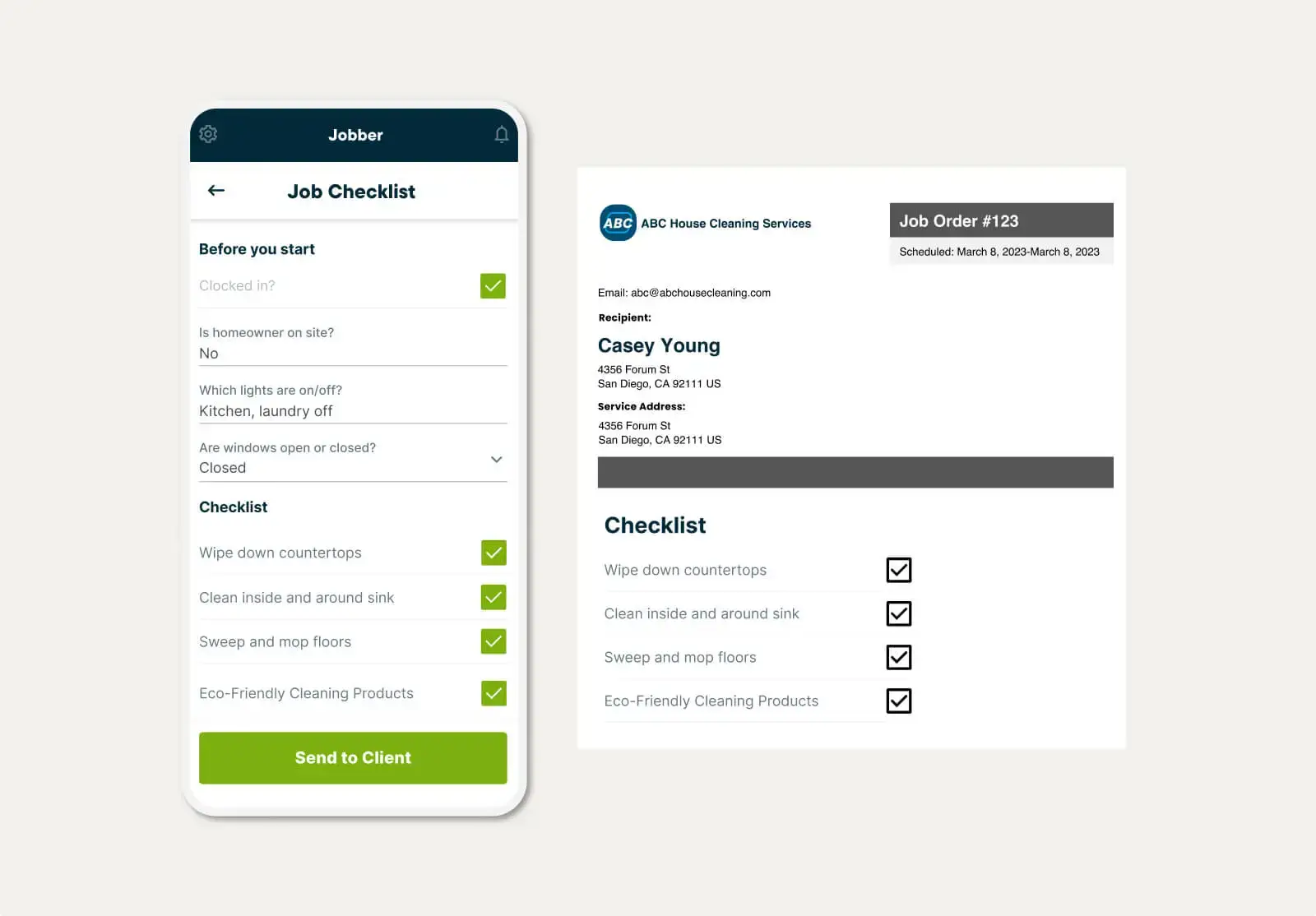
Jobber’s cleaning app lets you turn job checklists into digital forms that your employees can complete during each visit.
You can create custom job forms and attach them to specific jobs or scheduled visits. These forms can include task lists, inspection questions, notes, and other information your employees need to complete on site.
We do our [checklists] through Jobber because Jobber has integrated job forms.
I’m able to visualize the way I want things to take place and then share it with my team.

Here’s how it works:
- Create a job form with sections for each area. You can include text fields, dropdown menus, checkboxes, numerical answers, photo uploads, date pickers, and signatures.
- Attach the form to a scheduled visit so your cleaners see it when they arrive on site. You can do this manually, or set the form to automatically attach itself to all new jobs.
- Complete the checklist in the field using the mobile app. Your employees can check off tasks, add notes, or upload photos as they work through the building.
- Save the form with the job record so you can review the work and confirm your team finished all tasks properly. You can also refer back to it later, if needed.
- Email the checklist to the client after the visit is complete so they know which services you provided.
Start using commercial cleaning checklists
Whether you’re just starting a commercial cleaning business or you’ve been running one for years, cleaning checklists are a must-have for any growing company.
Using a janitorial checklist helps you standardize your processes, train cleaning employees, and keep a clear record of completed work across multiple sites.
Instead of relying on paper forms that can be damaged or lost, you can see which cleaning services your team provided, ensuring high quality and satisfied clients.
Frequently Asked Questions
-
Your employees should clean high-traffic areas and restrooms daily, while most hard surfaces need at least a weekly cleaning. They can complete deep cleaning tasks on a monthly basis.
That said, your cleaning contract should specify how often you complete specific tasks. For example, a client may want floor cleaning or window cleaning services more or less often than you typically provide them. -
A commercial cleaning checklist outlines the tasks your new hires should complete, in which areas, how often, and what a finished job looks like.
Just go through the checklist room by room and show new hires how to do each cleaning task. With your checklist in hand, they’ll always remember what to do.
You can also use the checklist for spot-checks during training or at regular intervals to double-check their work. If they don’t complete an item, use it as a re-training opportunity and show them how to do it again.