
Key takeaways:
If you want to grow your landscaping business, effective marketing is key to reaching new customers and building a trusted brand.
- Define your ideal customer and tailor your message. Identify your target audience based on factors like age, income, location, and project value to ensure your marketing efforts reach the right people.
- Build a recognizable brand and online presence. Develop consistent branding, create a professional website with clear service descriptions, and make it easy for potential clients to contact you or request quotes.
- Leverage multiple marketing channels. Use a mix of local SEO, content marketing, social media, Google and Facebook ads, and direct mail to consistently attract leads and future-proof your business.
- Encourage reviews and referrals. Positive customer reviews and automated referral programs help build trust, boost your reputation, and generate word-of-mouth business in your local area.
- Get involved locally and stand out visually. Network with local businesses, participate in community events, hand out branded gear, use vehicle wraps, and place yard signs to increase local recognition and build lasting relationships.
Want more expert-backed marketing tips for running a thriving landscaping company? Sign up for the Jobber Newsletter.
Landscaping marketing puts your business in front of new customers, educates them about your services, and encourages them to contact you.
Whether you’re just starting your landscaping business or you’ve been operating for years, we’ll show you how to market a landscaping business, impress potential customers, and win new work.
Try these marketing strategies for landscaping business owners:
-
Identify your target audience to reach your ideal clients
-
Develop your landscaping brand to make your business easy to recognize
-
Build a landscaping website to showcase your services
-
Use local SEO to get found online
-
Attract customers with content marketing
-
Use email marketing campaigns to connect with new and existing customers
-
Invest in Google ads to reach customers searching for your services
-
Use social media to reach more potential customers
-
Create a customer referral program
-
Boost your reputation with customer reviews
-
Advertise in local media to attract more attention
-
Hand out branded gear to stay top of mind
-
Wrap your work vehicle to create instant recognition
-
Build business and community connections
-
Send direct mail advertising in your target neighborhoods
-
Put out yard signs while working to promote your services
How to create a marketing strategy for your landscaping business
Below, we outline how to create a landscaping marketing plan for your business. For an effective strategy, you’ll need to define your:
- Ideal customers: Also known as your target audience, this is the group of people who are most likely to want your services. Define each ideal customer based on factors like age, gender, education level, household income, neighborhood, and project value. This lets you craft a marketing message that shows you can meet your customers’ needs.
- Competitors: A competitive analysis helps you understand which companies you’re competing with, how they advertise, and what makes them attractive to customers. Knowing your competitors makes it easier to position your business against them.
- Goals: What are you trying to achieve through marketing? For example, you might want to get 20% more leads, increase revenue by 15%, grow brand awareness in your area, or win more recurring maintenance jobs for predictable cash flow.
- Success metrics: Tracking your performance will tell you whether your marketing is effective. Define which metrics you’ll be tracking and trying to improve, like the number of website visitors, phone calls, or work requests you receive.
- Budget: How much of your annual revenue can you spend on advertising? This will determine the marketing channels you can use, so be as accurate as possible.
Ideally we see companies spending 3–10% of their revenue on their marketing spend.
Let’s say you make $100K. You should be spending $3,000 to $10,000 a year on your marketing.
Helpful tips for your landscaping marketing strategy:
- Landscaping work is seasonal, so plan accordingly. Align campaigns with peak times (e.g., spring cleanup, summer maintenance, winterization) to get more work.
- Test your marketing constantly. The same tactics won’t work forever. Track results, compare performance, and refine campaigns based on what brings in work requests.
1. Identify your target audience to reach your ideal clients
Before you start advertising, you need to understand your ideal client, also known as your target audience. Define this group based on factors like:
- Age and gender
- Education level
- Household income
- Family structure
- Neighborhood
- Project value
Let’s say you want to bring in more jobs worth over $10,000. An ideal landscaping customer for this might be someone who just moved into a new construction home and needs a full backyard design where their family can spend time.
Or maybe you’d like to build structures like decks, patios, and gazebos. Your ideal client might be an empty-nester in a mature neighborhood who’s ready to remove their kids’ swingset and create a more elevated landscape design.
Defining your ideal client and their needs will help you better reach this group with a message they’re likely to respond to. This is an essential part of your landscaping marketing strategy.
2. Develop your landscaping brand to make your business easy to recognize
Branding your business tells a potential or new customer who you are, what you offer, and what makes you different from competitors. Your brand should include:
- A landscaping company name that’s easy to spell, say, and remember.
- A landscaping business logo that customers will recognize (a logo generator like Looka can help with that).
- Consistent brand colors, patterns, icons, and photos.
- A unique selling proposition describing what you do differently from other landscapers. (e.g., same-day communication, sustainable materials, custom structure design).
Your lawn care or landscaping company branding could look something like this:
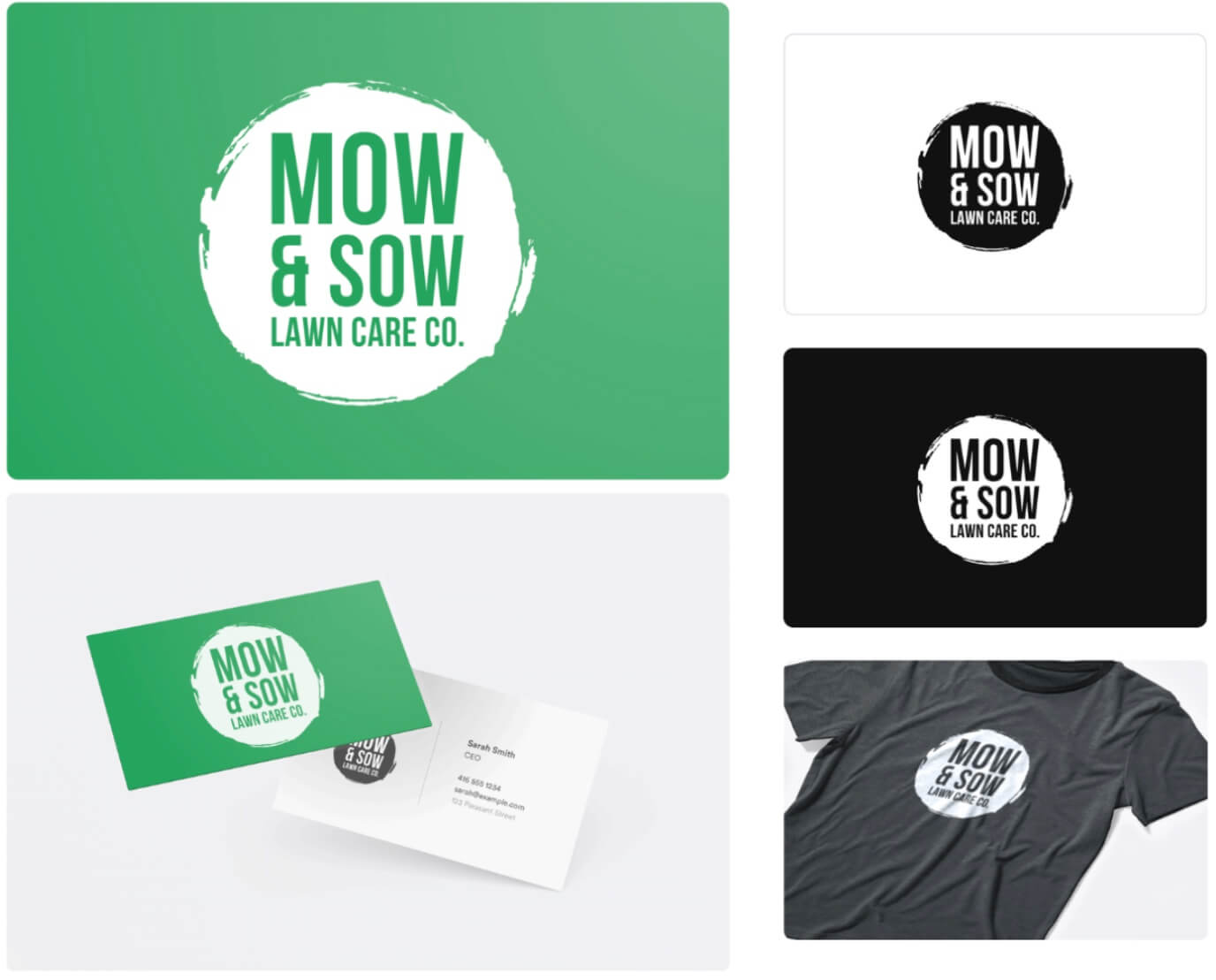
Tips for creating your landscaping business branding:
- Match your brand to your ideal customers. Your visuals and tone should fit the clients you want to attract. A high-end brand should look different from a budget-friendly brand.
- Be consistent everywhere. Your brand should look and sound similar on your website, social media, truck, uniforms, invoices, and yard signs.
- Align your brand with your service experience. If you promise speedy project completion or high customer satisfaction, put processes in place so your team can deliver on that promise.
3. Build a landscaping website to showcase your services
A landscaping website is an essential piece of your business’s online presence. To promote your services and attract new leads, your landscaping website design should include:
- A home page that tells prospective clients who you are, the area you serve, and how they can get in touch.
- A description of your landscaping services, including any winter landscaping options.
- Photos or videos of previous projects—not stock or AI-generated photos—so visitors can see examples of your work.
- Links to your social media pages (e.g., Facebook, Instagram, X, TikTok).
- Customer testimonials that tell visitors why they should work with you.
- An online quote request form that allows visitors to book a consultation or job right from your website.
When you build a website with Jobber, you can use a quote request form to collect, track, and manage new customer requests. Customers can fill out the request form with their landscaping requirements and availability.
For example, JT Madison Landscaping & Snow uses Jobber’s online quote request forms to quickly capture new leads right from their website:

The webform integrates into Jobber’s landscaping software, so JT Madison can turn the work request into a quote, a job, and finally an invoice when the work is done. Work details are automatically carried from one stage of the job into the next.
With their Jobber website, the company can measure the site’s success using a dashboard that tracks the number of site visitors and work requests.
Tips for creating an effective landscaping website:
- Make it easy for people to contact you. Place your phone number and email address at the top of every page, and offer a contact form that’s easy to find.
- Explain your services clearly. Instead of saying you offer “full-service landscaping,” list what you actually do, like hardscaping, planting, patios, ponds, and so on.
- Create a web design with mobile users in mind. Customers visit your site on their phones. Make buttons easy to tap, and photos should look good on small screens.
4. Use local SEO to get found online
Local SEO (search engine optimization) helps local businesses show up on Google and other search engines when potential customers search for landscapers in your service area.
Here are a few ways you can use local SEO marketing for landscapers to advertise your business:
- Claim your free Google Business Profile. This is a free online business listing that appears on Google Search or Maps results when someone in your area searches for a landscaper. It includes important information about your landscaping business, like hours, contact details, photos of completed landscaping jobs, and customer reviews.
- Optimize your website. This will help you appear higher on the search results page when a prospective customer is looking for landscaping services in your service area. For example, it’s a good idea to list the services you provide and the locations where you operate. You should also make sure your website loads quickly and is easy to navigate.
- Get listed in online directories like Google, Yelp, and Bing Places so potential customers can find your business. You can also use WhiteSpark or BrightLocal to find other local directories to list your landscaping business on, or join your local Chamber of Commerce to connect with new customers in your landscaping service area.
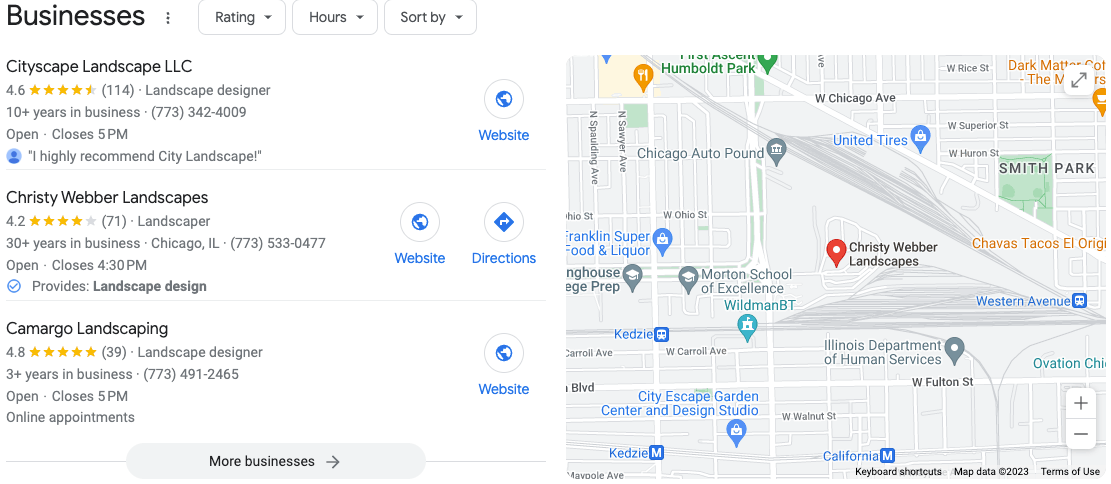
Helpful tips for local SEO:
- Be consistent with your business details. Keep your business name, phone number, and address consistent online to avoid confusion for search engines.
- Build a widespread online presence. AI search tools like ChatGPT pay attention to what third-party sites are saying about your brand, and they’re more likely to reference them in search results.
- Treat local SEO as a long-term investment. Results build gradually over time through consistent activity and positive reviews.
5. Attract customers with content marketing
Content marketing provides useful, relevant information to help ideal customers find your business, get answers to their questions, trust your expertise, and contact you for services.
Instead of simply promoting your business, this involves creating blog content that solves common problems and shows your experience. Over time, this builds visibility and credibility, creating a steady flow of qualified landscaping leads to your website.
Keep these guidelines in mind when you’re creating content for your website:
- Focus on real customer needs. Your content should answer customers’ questions about their yards or properties, like “what is hardscaping?” or “how often should I water my lawn?”
- Explore different content types. In addition to basic posts, you can try creating guides, checklists, and downloadable resources for your customers. See which types of content bring in the most new business.
- Educate first, promote second. Visitors will trust you more if your information is helpful, so provide useful information before talking about your services.
- Use local examples. Reference local weather, plants, and property types so your content feels relevant to your area.
- Show your expertise visually. Use photos or videos of your actual projects whenever possible to make your content more credible and engaging.
- Connect content to your services. After educating, clearly explain how your company can help with maintenance, installations, or seasonal work.
Dragons Landscaping does content marketing very well. They post often, and their topics are specifically targeted to homeowners in the Dallas area:
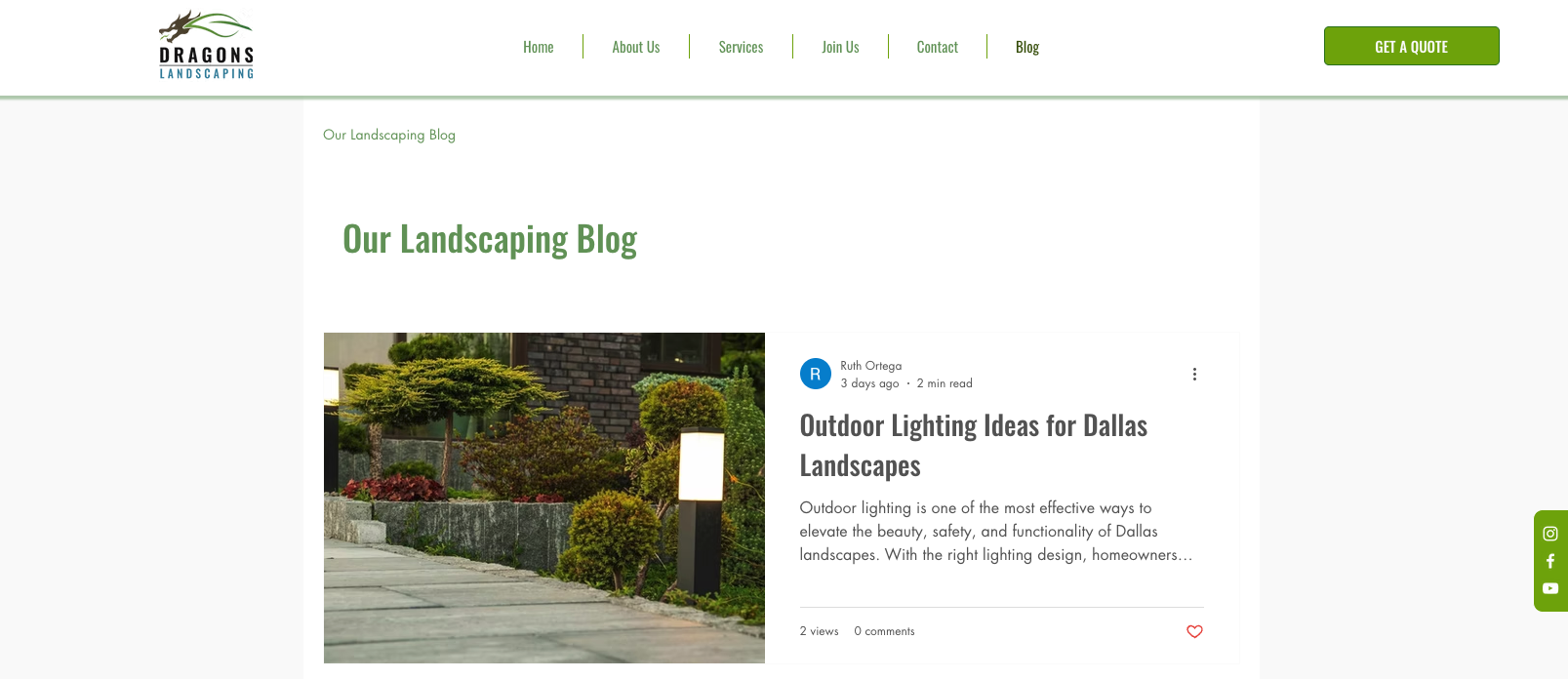
6. Use email marketing campaigns to connect with new and existing customers
Email marketing lets you reach past, current, and potential customers with content that educates or entertains them. Here are a few ways you can use landscaper marketing emails:
- Tell new landscaping leads about your services and encourage them to buy
- Follow up after service asking customers for a review or referral
- Send a feedback survey asking customers about their experience with your business
- Offer special promotions, packages, or discounts
- Share useful information, like how to maintain stone walkways
- Remind subscribers about fall cleanup and yard prep before the snow falls
- Reconnect with old clients and remind them about your services
Jobber Campaigns help you send the right message to the right customer with a professional, branded email marketing campaign.
- Easily create your email campaign using Jobber’s prebuilt templates that include your company logo and brand colors.
- Choose who to send the email campaign to based on their client tags, job history, or by service.
- Then, track your email campaigns’ performance to see which ones drive the most engagement and revenue for your business.
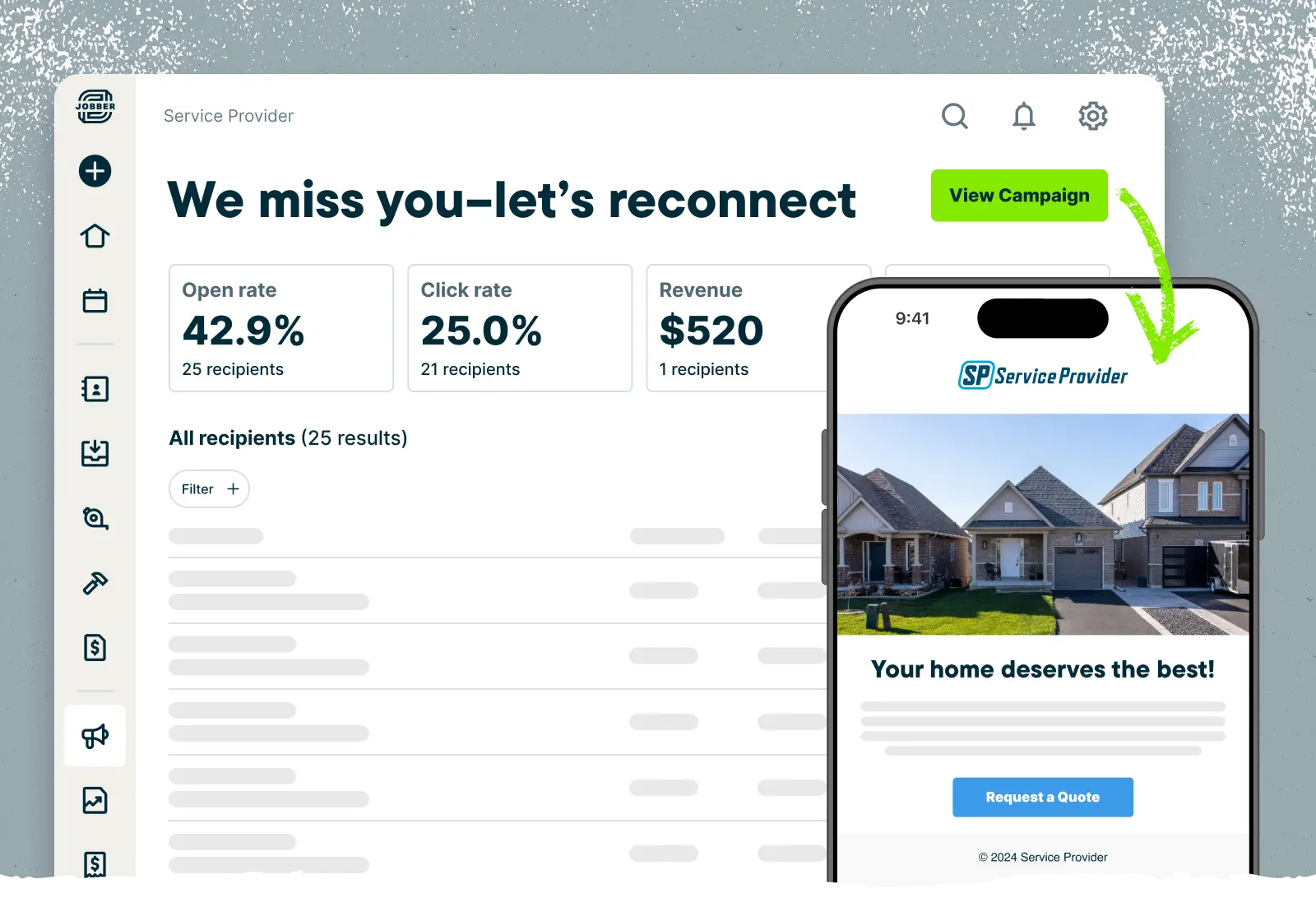
Email marketing tips for landscapers:
- Keep messages simple and useful. Short, clear emails with one main point work better than long, overly detailed ones.
- Focus on quality over quantity. A smaller list of engaged customers is more valuable than a large list that never opens your emails.
- Be consistent, but not annoying. Send emails on a predictable monthly or seasonal schedule, rather than randomly or too often.
7. Invest in Google ads to reach customers who are searching for your services
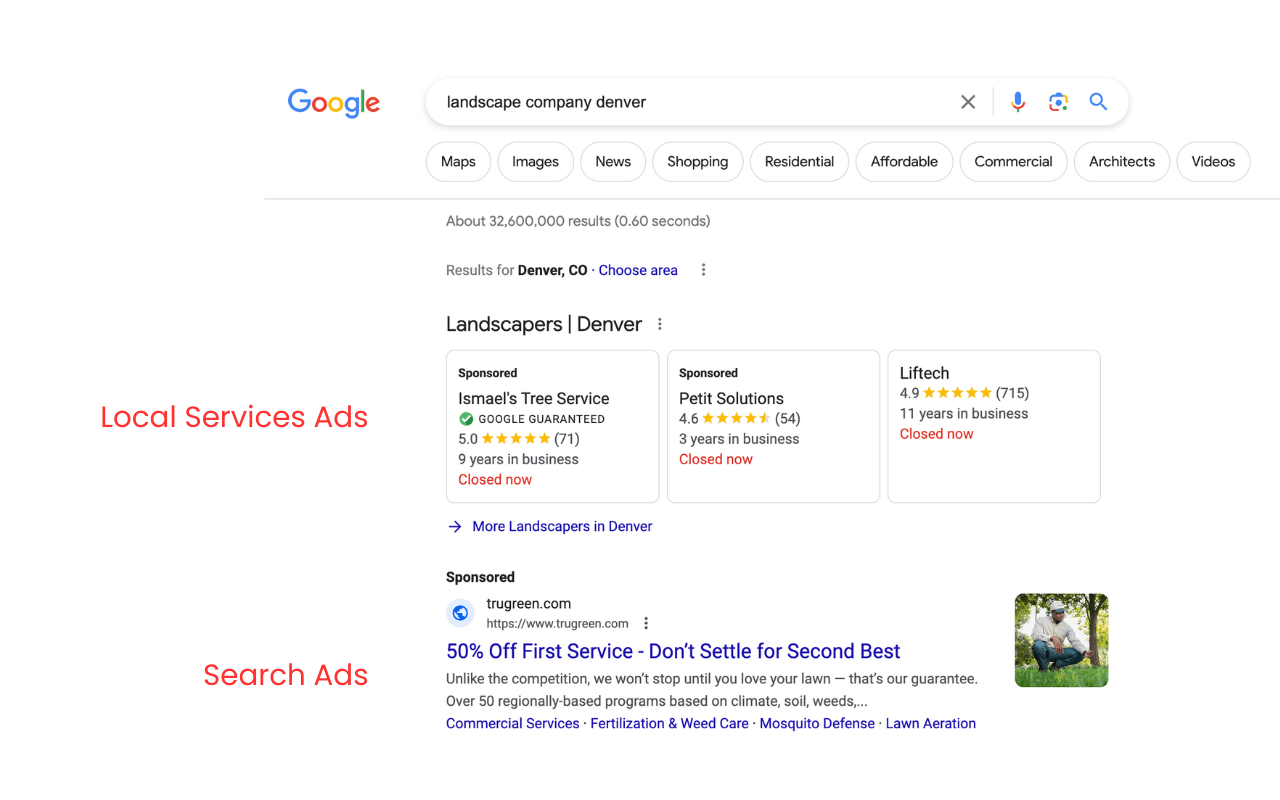
There are two types of Google ads you can use to reach potential customers searching for landscaping businesses: Local Services Ads and Search Ads.
- Google Local Services Ads appear at the top of Google’s search results page when local customers search for landscaping services. Potential customers can book a service or consultation directly from the ad, and you only pay when someone contacts you.
- Search ads appear just below Local Services Ads when you bid on terms a customer may use to search for your services, like “patio builders,” “garden design,” or “deck refinishing.” These ads run on a pay-per-click (PPC) model, so you pay your bid amount every time someone clicks your Google ad, whether they contact your business or not.
In addition to these ad types, you can also use:
- Display Ads to build brand awareness. Display Ads place visual banner ads for your business on other websites, helping you stay visible to your ideal customers even when they aren’t actively searching for a landscaper.
- Retargeting ads to reach customers on other sites. Once someone has already visited your website, retargeting (or remarketing) ads will follow them around the internet as they visit other websites, which helps keep your brand top of mind.
Tips for running effective Google ads:
- Be clear about what you want from ads. Set a goal for your online ads, like getting more installation projects, more recurring maintenance clients, or more consultations.
- Pair ads with strong reviews. Many customers look at your Google reviews before deciding to click your ad, so pay attention to your online reputation.
- Start small and scale up. It’s best to test with a modest budget, learn what works, and then increase spending to focus on the ads that bring in the most leads.

You can also use social media advertising to target potential customers based on their area, gender, age, or income. Use these ads to improve brand awareness, generate new leads, or increase traffic to your website.
Precision’s Landscaping and Grading uses Facebook ads like the one below to promote their sports turf installation. Notice how they list their services and include a phone number to call for a free quote:

Tips for marketing your landscaping business on social media:
- Tailor your content to each platform. For example, Instagram is designed for photo and video posts, while X is best for short text-based updates.
- Include clear calls to action on your promotional posts, such as “Message us for a quote” or “Book your free consultation.”
- Use location tags and relevant area-specific hashtags so local customers can find your posts more easily.
9. Create a customer referral program
A customer referral program turns a satisfied customer into new business for your landscaping company.
After a job well done, ask customers to refer your business to family, friends, and neighbors. You can even offer an incentive like a service discount or upgrade, gift card, or cash reward.
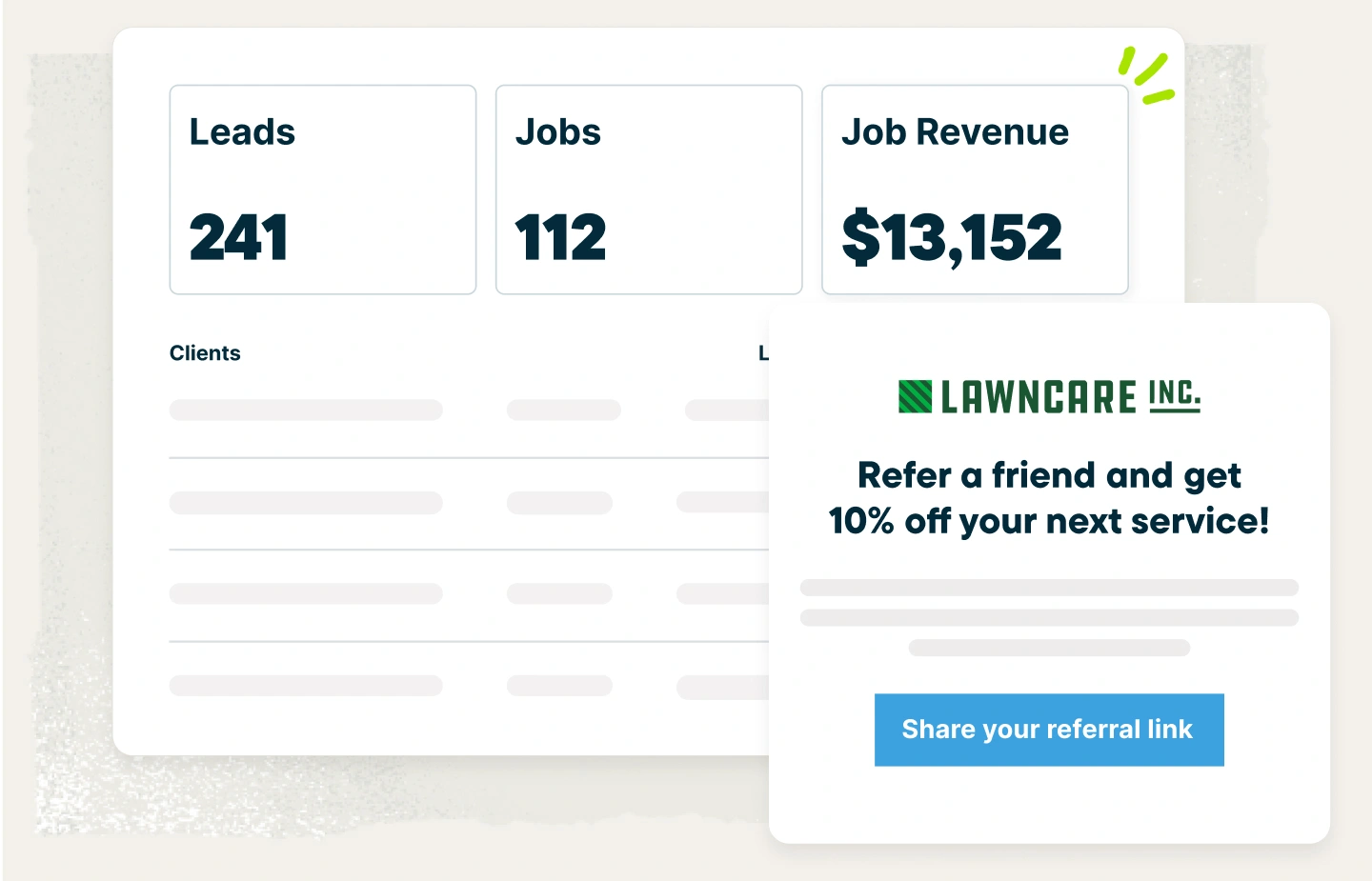
Jobber Referrals help you get more referrals without any extra work. Just set up your customer referral program in Jobber and let it run automatically. Here’s how:
- Automatic referral requests: Encourage more referrals by sending follow-up requests to satisfied customers once a landscaping project is completed.
- Track referrals easily: Ensure every referral is accounted for with shareable links for clients or manual entry options you control.
- Reward your referrers: Show appreciation to clients who refer your business by automatically applying service credits to their next invoice.
- Monitor referral performance: See how referrals contribute to your business by tracking conversions and revenue without any manual effort.
Tips for creating a successful customer referral programs:
- Offer meaningful rewards. Give incentives that customers value and will feel motivated to work for, like service credits, discounts, or small gift cards.
- Recognize every referral. Track each referral and send a thank-you to the customer each time—even if it doesn’t immediately convert to a job—to encourage ongoing participation.
- Align rewards with your business goals. Focus on referrals that bring in the type of work you want, whether that’s high-value projects, maintenance contracts, or repeat customers.
10. Boost your reputation with customer reviews
A collection of positive online reviews can help you build a reputation as a trusted landscaping business and stand out from the competition.
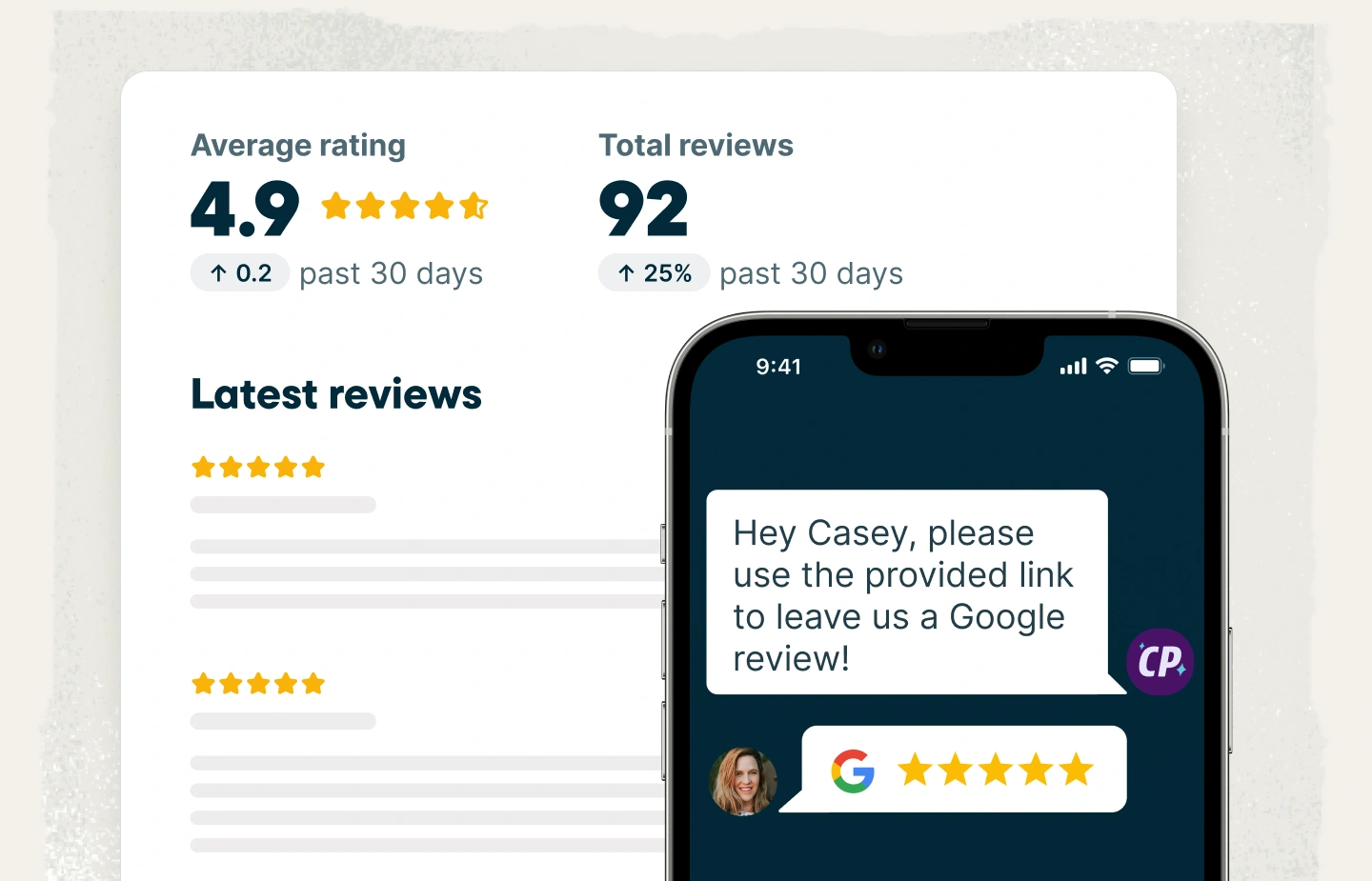
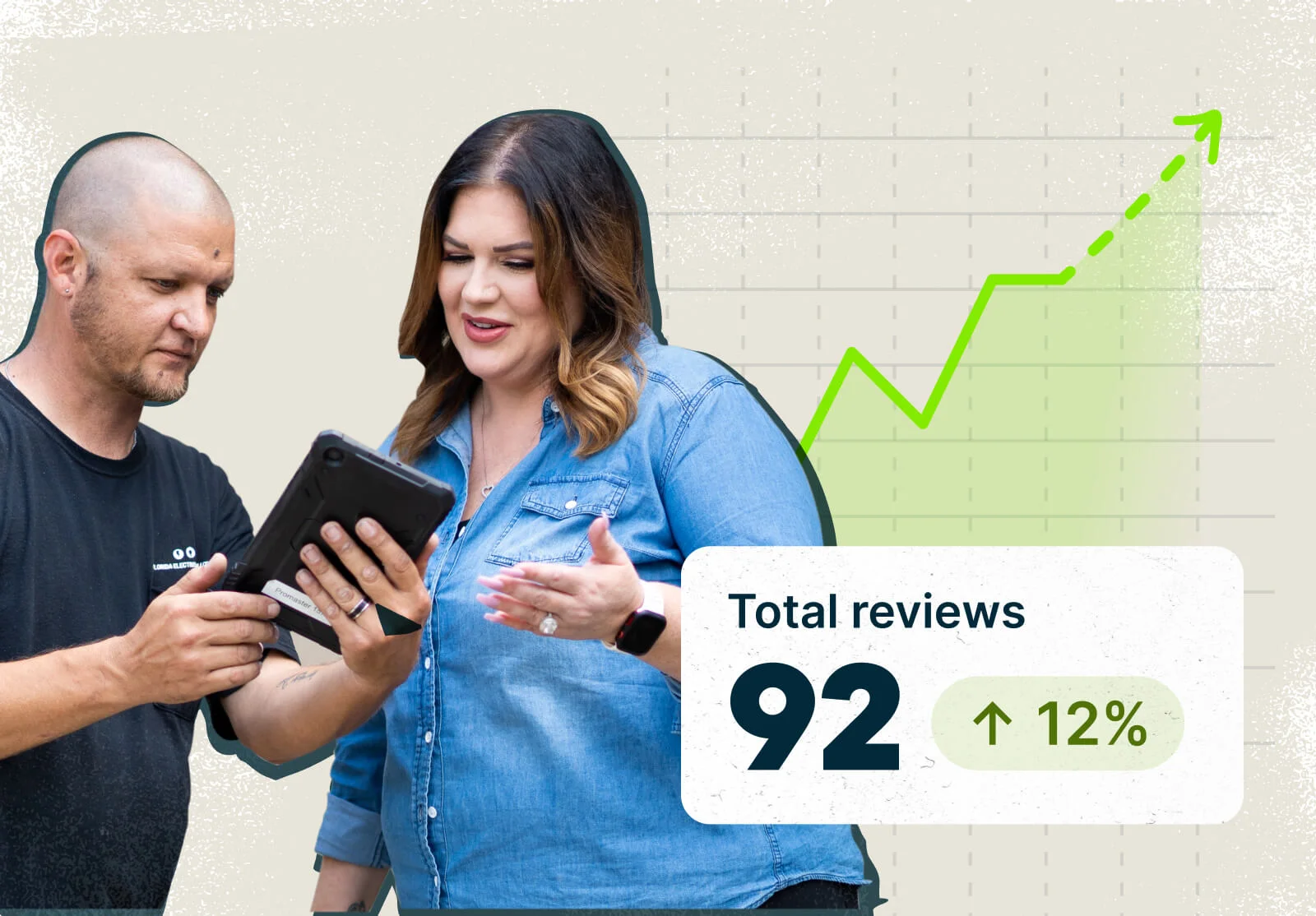
You can ask for reviews in person when the job is complete, over the phone, or automatically with Jobber Reviews. Here’s how:
- Automatically ask clients for a review via text message once they’ve paid their invoice.
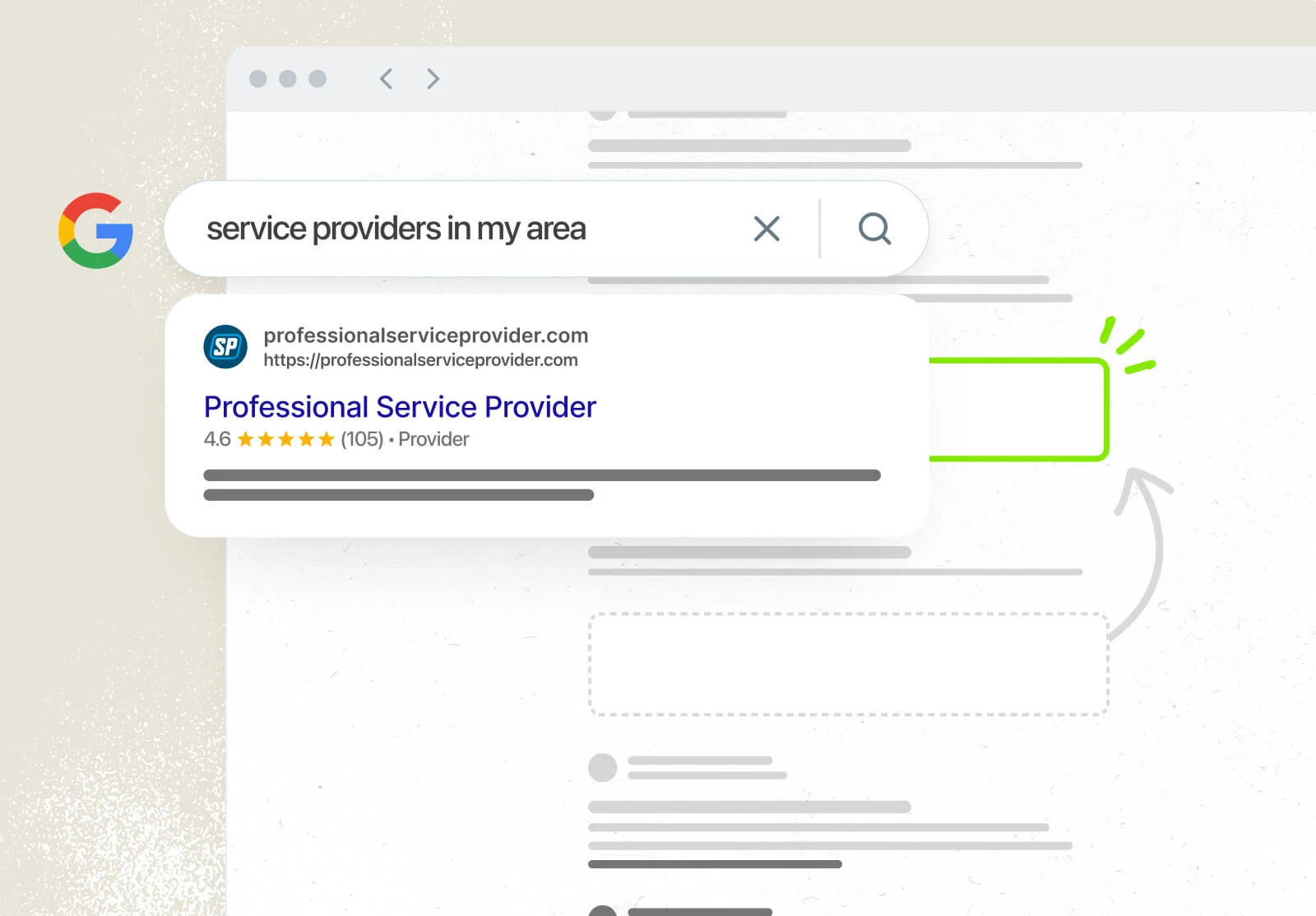
2. Connect Jobber to your Google Business Profile to improve your visibility on Google search.
3. Monitor your Google rating and latest reviews from your dashboard in Jobber. You’ll see your latest reviews, your average rating, and resources on how to manage your business’s reputation.
Tips for collecting more landscaping customer reviews:
- Make it easy for customers. Provide a direct link to your review platform, or give clear instructions so that leaving a review requires minimal effort.
- Respond to reviews. Thank customers for positive reviews, and tell them how you’ll make things right if there’s a negative review. This shows customers that you care about their experience.
- Learn from feedback. Share constructive reviews with your team to identify areas for improvement and make your services even better.
11. Advertise in local media to attract more attention
Traditional local media can help your landscaping business reach a wide audience in your service area. These channels build brand awareness and trust among your ideal customers, who already rely on these channels for information.
Explore local marketing channels like:
- Radio: Local stations let you target your ads to specific towns, neighborhoods, or times of day when homeowners are most likely listening.
- TV: Local cable or broadcast ads can showcase your work in video format, which is especially useful for highly visual services like patios or custom landscaping.
- Billboards: Placing outdoor ads on busy streets or near the neighborhoods you serve can increase awareness and reinforce your brand with passing drivers.
- Print: Run ads in local newspapers, newsletters, magazines, and community publications to reach homeowners who prefer offline media.
Pricing varies quite a bit, depending on the tactics you choose and the types of ads you’re running. Start with smaller, less expensive options that have a dedicated following, and expand into larger formats from there.
Helpful tips for local marketing:
- Know your audience. Instead of advertising everywhere, pick media channels that your ideal customers use and trust.
- Keep your message simple. Focus on your business name, core services, USP, and contact information to ensure your ad is memorable.
- Track which ads generate leads. Use unique phone numbers, promo codes, or landing pages so you can see which channels are most effective.
12. Hand out branded gear to stay top of mind
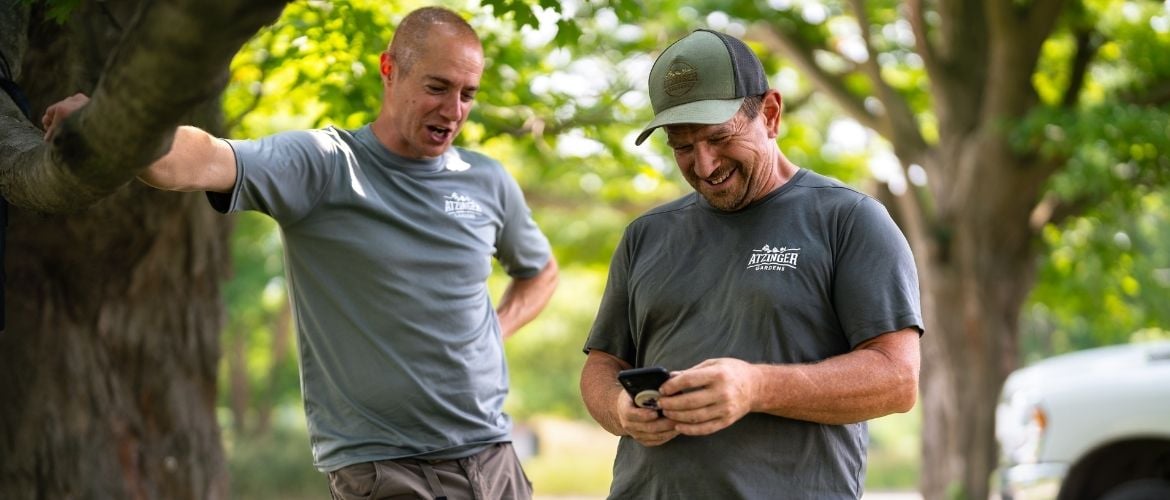
Branded gear like hats, T-shirts, uniforms, or tools can keep your brand in front of potential customers long after the first contact.
Your employees can wear and use branded gear to look more professional while they’re on site and reassure the customer that they represent your business.
You can also give branded gear to landscaping customers and local partners as a thank-you for supporting your company. When they use these items, they’ll advertise your brand in a practical and memorable way.
Tips for creating branded gear:
- Focus on useful items that people want to keep around, like hats, gloves, water bottles, or garden tools.
- Keep your branding consistent. Use the same logo, colors, and style you have on your website, trucks, and signage so people instantly recognize your business.
- Think long term. Choose durable materials and items that won’t wear out quickly. That way, your brand will stay visible over time and be associated with quality.
13. Wrap your work vehicle to create instant recognition
Branded truck wraps are a moving billboard for your landscaping business. You can hire a professional to apply paint, decals, or a full-body vinyl wrap with your name, logo, brand colors, and contact info.
Whether you’re parked at a client’s home or driving around, potential customers will notice your vehicle and get the information they need to learn more about your services.
Mullins Lawn Enforcement uses their truck wrap to get their name out when working on big projects. This eye-catching wrap makes it easy to see who the company is and how to contact them:
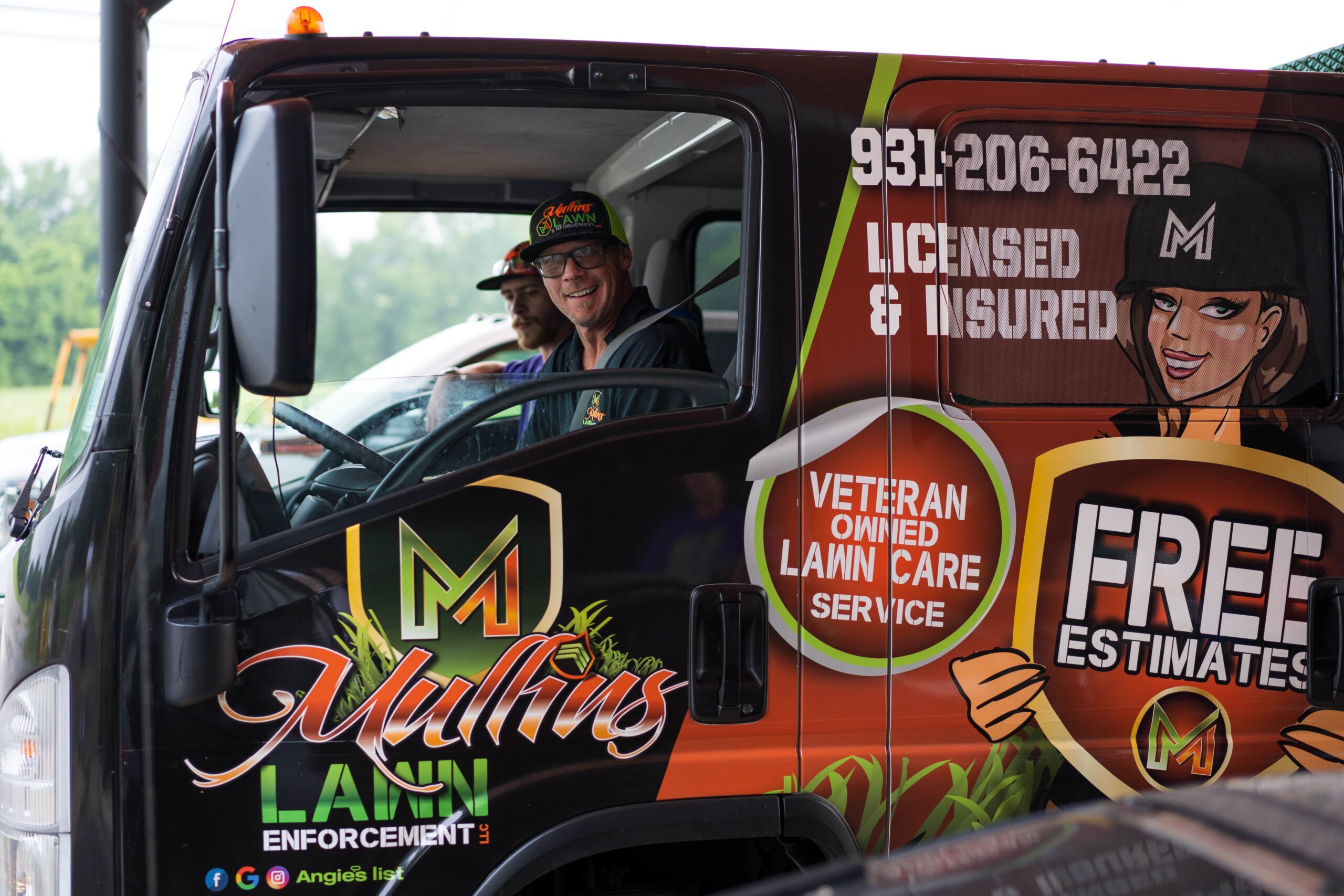
People normally just take a picture of it and call us later if they see that we’re busy
Tips for landscaping vehicle wraps:
- Keep the design simple and readable. Large, clear text and uncluttered visuals work better than trying to fit too much information on the vehicle.
- Design for distance and motion. Most people will see your vehicle from across the street or while driving, so bold elements work best.
- Think about all visible surfaces. You can use the sides, rear, hood, and tailgate of the vehicle to make a big visual impression.
14. Build business and community connections
Business and community involvement are great ways to grow your landscaping company. By connecting with local groups and nearby businesses, you can build a reputation and keep your own business top of mind.
Consider networking and support activities like:
- Join local business groups and community associations, like the Chamber of Commerce, neighborhood leagues, or local Facebook and Nextdoor groups.
- Build relationships with complementary businesses that can refer customers to you, like builders, roofers, or real estate agents.
- Attend trade shows and landscaping industry events to meet other businesses and explore partnership opportunities.
- Stay engaged with your community by supporting local events, fundraisers, or holiday celebrations.
- Consider donating your services to create or improve public spaces, like parks, community gardens, or neighborhood projects.
Helpful tips for business relationships and community involvement:
- Focus on genuine involvement rather than just advertising or sponsorship. People notice businesses that make a meaningful contribution in their communities.
- Stay involved over time. Treat networking and community support as long-term strategies for visibility and trust, not one-time promotions.
15. Send direct mail advertising in your target neighborhoods
Direct mail marketing helps you reach potential customers right in their mailboxes, even if they haven’t heard of your landscaping business before. It’s a great way to increase local visibility and attract new clients.
Here are some common ways that many landscapers use direct mail:
- Get your mail provider to send marketing postcards to homes in a certain ZIP code, or to people who have recently redirected their mail (which often means they’ve moved).
- Print lawn care and landscaping flyers and put them in mailboxes. Just make sure to avoid signs saying “no flyers” or neighborhoods that prohibit ad mail and soliciting
- Go to the neighborhoods where you want to work and place door hangers on all the front doors.
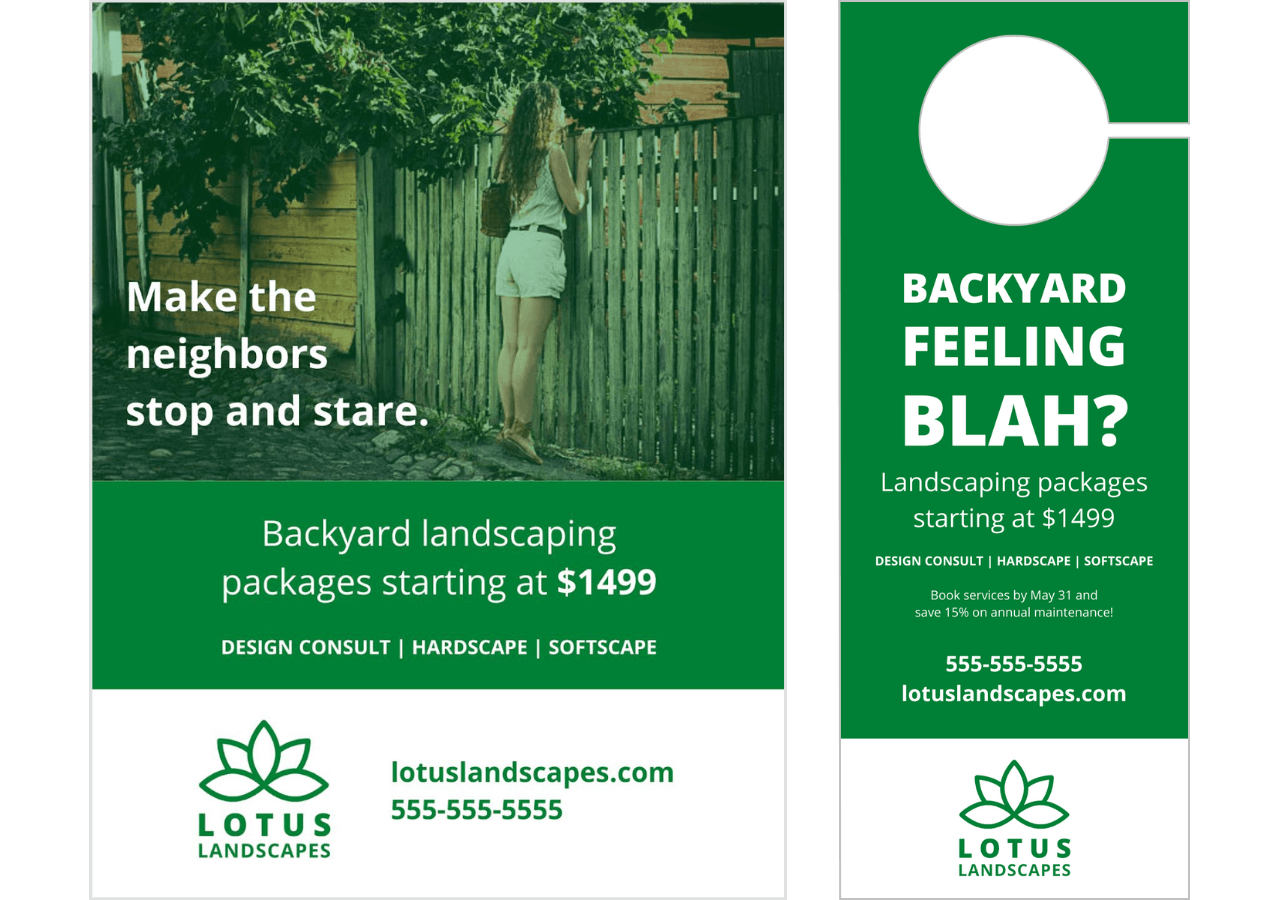
Here are some examples of what your direct mail marketing could look like:
Helpful tips for direct mail marketing:
- Time your mailings. Send mail before peak seasons or when homeowners are most likely to plan landscaping projects.
- Create a sense of urgency. Limited-time offers, seasonal discounts, or early-bird promotions can encourage recipients to take action sooner.
- Include a promo code on your direct mail pieces so you know which postcards, flyers, or door hangers successfully brought in leads.
16. Put out yard signs while working to promote your services
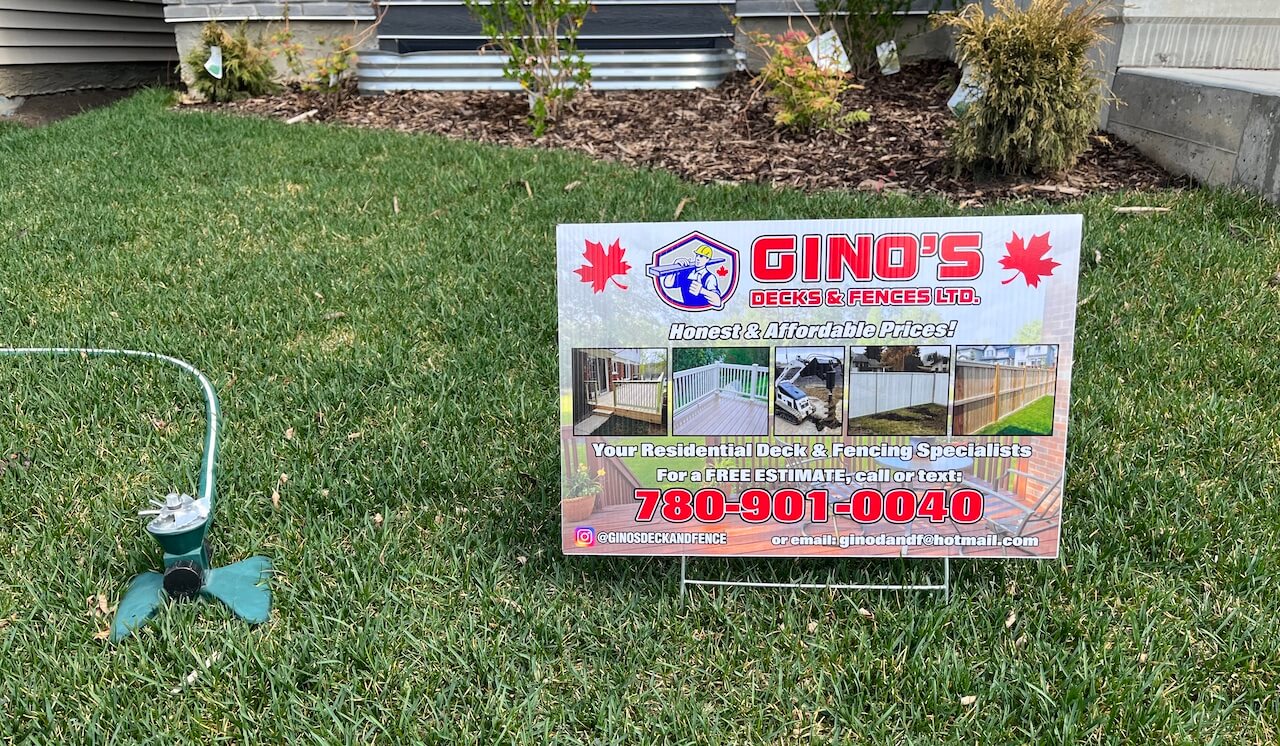
Yard signs are a simple, low-cost way to get local exposure at a time when your work is visible to people passing by.
When you’re working at a customer’s home, place a sign on their front lawn so their neighbors can see who you are and what services you’re performing.
Your sign should include your business name, logo, and contact details. You might also add a brief list of services, a website URL, or a call to action like “Call for a free estimate.”
Here’s one example of an effective lawn sign:
Helpful landscaping tips for yard signs:
- Keep signs readable from a distance. Large text and clear, high-contrast colors help people quickly learn about your business while driving or walking by.
- Place signs strategically. Position them near the sidewalk or street edge so they’re easy for neighbors to notice without obstructing your client’s property.
- Check local rules and permissions. Some neighborhoods or municipalities restrict lawn signs, so make sure you have permission before placing one.
What landscaper marketing tactics will you try?
To create the best possible marketing plan, start with a few of the tactics above, see which landscaper marketing efforts work best, and adjust your strategy as you go.
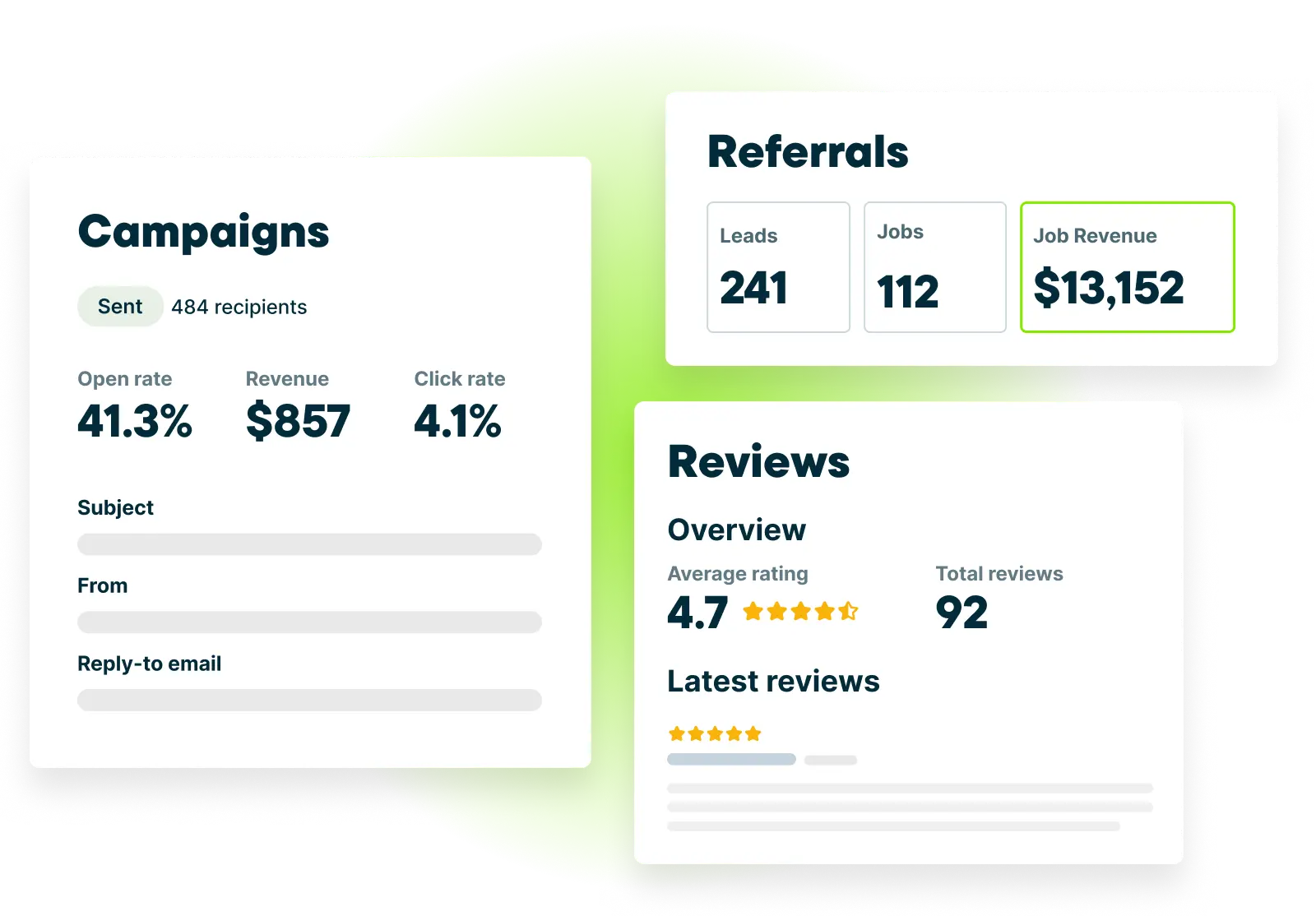
Jobber’s Marketing Suite helps you build a strong reputation that attracts more customers and secures more work with less effort. Here’s what’s included:
- Reviews: Give your online reputation a boost by collecting more Google reviews through automated review requests.
- Referrals: Simplify the referral process with a fully automated referral program, making it easier for customers to send new business your way.
- Campaigns: Increase sales with a user-friendly email marketing tool that turns old customers into new revenue.
Originally published in May 2023. Last updated on January 23, 2026.
Frequently Asked Questions
-
You should spend 3–10% of your revenue on marketing, according to Phil Risher of Phlash Consulting. If your company makes $100,000 a year, your budget should be $3,000–$10,000.
Your actual budget will vary depending on your revenue and which marketing channels are most effective. Some landscaping businesses find that free word of mouth works best, while others need to invest in more costly tactics. -
Landscaping digital marketing helps you connect with potential customers online and share information about your landscape business and services.
You can use a digital marketing strategy to:
• Increase your brand recognition and reach more potential customers online.
• Target ideal customers based on specific locations, demographics, and interests.
• Set and adjust your spending based on your budget and your results.
• Engage with potential customers, build relationships, and establish trust. -
The most effective marketing channel for a landscaper will depend on the business and its local market. Some landscape contractors depend on yard signs, while others find better results with local SEO.
Test out several tactics to see what works best for you. If something isn’t working, remove it from your landscape marketing strategy and try something else. -
When demand for landscaping or lawn care slows down, you can still generate leads and keep your business visible. Here are some strategies to try:
• Stay top-of-mind with past customers by sending seasonal emails, newsletters, or postcards reminding clients of upcoming spring or summer services.
• Run targeted promotions with early-bird discounts or off-season deals.
• Focus on year-round services like snow removal, holiday lighting, or winterizing yards. This helps provide revenue when demand for summer projects slows down.
• Stay visible online. Keep your website, Google Business Profile, and social media profiles active year-round to reach customers who are planning ahead for services.
• Use referrals and loyalty programs to encourage satisfied clients to refer neighbors or schedule future services in advance.
• Network locally, attend community events, join local business groups, or sponsor small local projects to maintain brand awareness during slower months.
8. Use social media to reach more potential customers
Social media marketing involves using your Facebook, Instagram, and other social networks to connect with prospective clients, send visitors to your website, and increase sales.
Here are a few guidelines to help you make the most of your social media profiles:
Primero TX Landscaping uses their Facebook account to share images of completed jobs to show prospects the quality work they do: